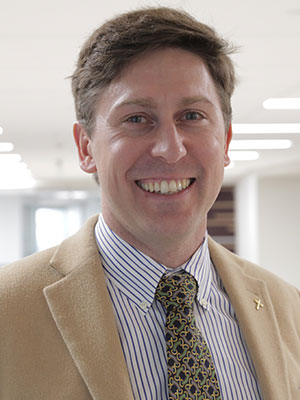
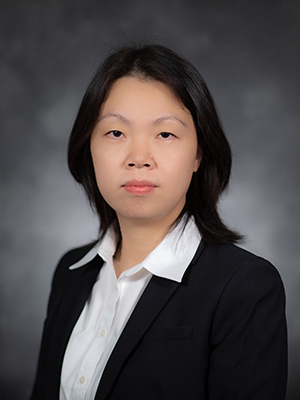
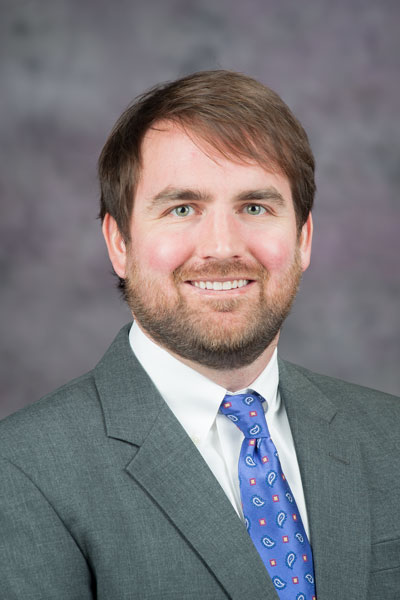
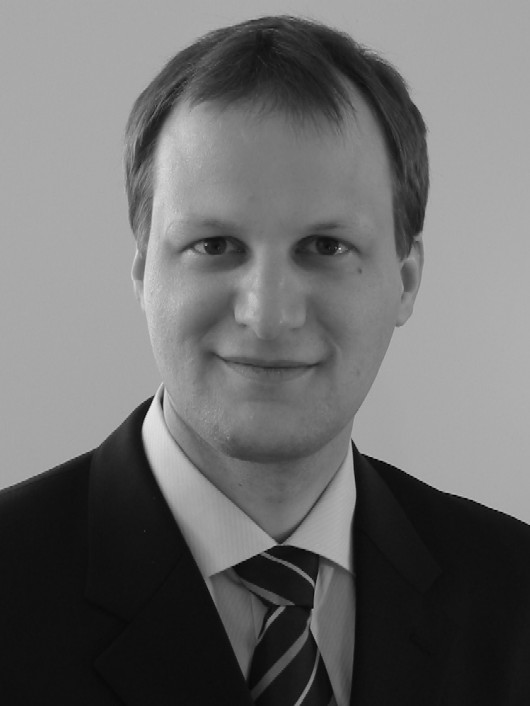
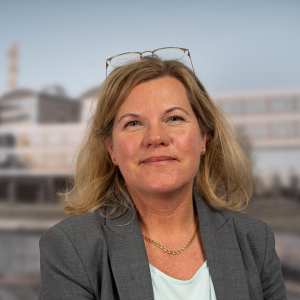
Timothy Jacobs is Professor and Head of Multidisciplinary Engineering at Texas A&M University, with joint appointment in Mechanical Engineering. His research advances combustion science, emission control, and alternative fuel applications. Education: Ph.D. Mechanical Engineering, University of Michigan (2005) M.S. Mechanical Engineering, University of Michigan (2002) B.S.E. Mechanical Engineering, University of Michigan (1999) Research focuses on fundamental combustion processes in natural gas engines, developing low-temperature combustion strategies and aftertreatment integration. Recent work optimizes prechamber ignition systems for large-bore engines and hydrogen production via piston reactors. Experimental diagnostics characterize cycle variability, unburned emissions, and flame dynamics. Publications demonstrate expertise in combustion modeling, engine control algorithms, and emission formation mechanisms. Applied research supports decarbonization of power generation and marine propulsion. Awards recognize teaching excellence and research leadership, including ASME Fellowship and university professorships. Secures funding for engine technology development from federal agencies and industry partners.
Dr. Jingjing Qiu is an Associate Professor in the Department of Mechanical Engineering at Texas A&M University (TAMU), leading the Advanced Materials & Manufacturing (AM²) Lab. Her research focuses on advanced manufacturing, nanomaterials, multifunctional composites, sustainable materials, energy harvesting, and healthcare applications. She holds a Ph.D. in Industrial & Manufacturing Engineering from Florida State University (2008), and M.S./B.S. degrees in Materials Science from Beihang University (2004/2001). Prior to academia, she gained 1 year of industrial experience as a Quality Engineer at SAIC Motor. Research interests include AI-driven nanomaterials synthesis, low-carbon manufacturing processes, and biomedical innovations such as drug delivery systems for brain tumors. The AM² Lab emphasizes interdisciplinary collaboration in materials science, data science, and sensor integration for energy and medical devices. Recent work highlights include AI-assisted microplastics removal, thermoelectric energy harvesting via graphene aerogels, and neuromorphic computing systems. Her team actively pursues postdoctoral and PhD candidates for research in energy/healthcare materials, requiring expertise in nanomaterials characterization (e.g., SEM, XPS, electrochemical techniques) and interdisciplinary problem-solving. Lab facilities support cutting-edge fabrication and testing of functional materials. Publications span over 15 years, with recent trends in sustainable manufacturing, soft robotics, and bio-inspired materials. Ongoing projects include DOE-funded initiatives on rare earth recycling and low-carbon ceramic production. No scientific awards are explicitly listed in the provided texts.
Stefan Hallström is an Associate Professor in Lightweight Structures at KTH Royal Institute of Technology's Aeronautical and Vehicle Engineering School, affiliated with the MATERIAL AND STRUCTURAL MECHANICS department. He specializes in composite materials, structural mechanics, and lightweight design, focusing on aerospace and automotive applications. His research explores advanced composites, sandwich structures, and material behavior under various loading conditions. Hallström teaches courses including Lightweight Design (SD2432), Lightweight Structures and FEM (SD2411), and supervises degree projects in Lightweight Structures and Solid Mechanics. He has published extensively on topics like 3D-woven composites, damage tolerance, and mechanical reinforcement strategies, with over 90 peer-reviewed articles. His work emphasizes material characterization, finite element modeling, and practical applications in structural engineering. Key research trends include optimizing composite joint performance using metal inserts, analyzing moisture effects on composite laminates, and developing frameworks for modeling 3D textile architectures. His contributions address challenges in aerospace materials, energy absorption in beams, and improving simulation accuracy for molded composites. Hallström collaborates on projects involving novel instrumented test rigs for polymer composites and advanced manufacturing techniques for structural reliability. His expertise bridges theoretical mechanics with practical engineering solutions, influencing both academic research and industrial applications.
Dr. Chad Paulk is an Associate Professor in the Department of Grain Science and Industry at Kansas State University. His research focuses on Feed Processing Technologies, Monogastric Nutrition, and Quality Assurance/Feed Safety. He holds a B.S. from the University of Georgia (2009) and M.S./Ph.D. degrees from Kansas State University (2011/2014). Previously, he served as an Assistant Professor of Swine Nutrition at Texas A&M University (2014–2017). His current role involves 60% research and 40% teaching, including courses like GRSC 100 (Foundations in Grain Science) and GRSC 650 (Nutritional Impacts of Processing). He advises Feed Science undergraduate students and co-leads the Feed Science Club. Key research themes include optimizing feed processing parameters, mitigating pathogen risks in feed systems, and evaluating novel feed ingredients like Kernza® grain. Recent work emphasizes viral pathogen detection in feed mills (e.g., African swine fever virus), enzyme supplementation effects, and the impact of feed particle size/pelleting on nutrient digestibility. He collaborates with industry partners to enhance feed safety protocols and sustainable practices. Laboratory affiliations include the BIVAP Feed Quality Assurance Lab and the O.H. Kruse Feed Technology Center. His research has addressed critical issues like mitigating porcine epidemic diarrhea virus contamination and optimizing feed formulations using thermal processing and organic additives.
Dr. Alexander J G Lunt is a Senior Lecturer in Mechanical Engineering at the University of Bath, specializing in micromechanical testing and materials characterization. He leads the Integrated Materials Processing and Structures Research Centre and has a PhD in Mechanical Microscopy from the University of Oxford. His research focuses on advanced materials, composites, additive manufacturing, and synchrotron/neutron-based techniques. He has supervised 5 PhD students and collaborates with industries like Rolls-Royce and Airbus. Notable awards include the John Willis Award and Vice Chancellor's Engage Award. His work contributes to UN SDGs in sustainable materials and manufacturing.
Alberto Macii is a Full Professor in the Department of Control and Computer Science (DAUIN) at Polytechnic University of Turin. He is also a member of the Interdepartmental Center IAM@PoliTo - Integrated Additive Manufacturing and serves on two colleges: College of Computer, Film and Mechatronics Engineering and College of Mechanical, Aerospace and Automotive Engineering. His research interests include: Digital circuits and systems Electronic systems, modeling, and simulation Energy-efficient circuits and systems Energy management and battery systems Embedded systems and cyber-physical systems Low energy building technologies His work aligns with several Sustainable Development Goals including affordable and clean energy (Goal 7), industry innovation and infrastructure (Goal 9), and sustainable cities and communities (Goal 11). His publication record shows a consistent focus on energy efficiency in electronic systems spanning over two decades, with particular emphasis on battery modeling and power management. Recent work has expanded into environmental applications with transformer neural networks for flood forecasting, demonstrating the evolution of his research into new application domains while maintaining core expertise in energy optimization. His scientific awards include: Best paper award ACM/IEEE Great Lakes Symposium on VLSI (2008) IEEE Fellow (2007-) Senior Member IEEE He has served as Editor-in-Chief for the Journal of Embedded Computing (2005) and as Program Chair for EUC2005: Embedded & Ubiquitous Computing. Professor Macii has advised PhD students including Alberto Bocca (2019-2023) whose thesis focused on compact modeling techniques for energy analysis and optimization of complex systems. He has led numerous research projects including CANP (2018-2020), R3-PowerUP (2017-2021), SERENA (2017-2020), AMable (2017-2021), and STAMP (2016-2019), demonstrating sustained research leadership across multiple funding mechanisms. He is active in the EDA - Electronic Design Automation research group and LAB 4 research laboratory at DAUIN, with research spanning VLSI-CAD, Smart City technologies, and Industry 4.0 applications. His work bridges theoretical computer engineering with practical applications in energy conservation across multiple domains.
Dr. Lilianna Wojtynek is a Lecturer at the Department of Logistics, Faculty of Production Engineering and Logistics, Opole University of Technology. Her academic career focuses on logistics, production engineering, and industrial safety. Current Position: Lecturer in Logistics Department: Logistics School: Faculty of Production Engineering and Logistics University: Opole University of Technology Research interests span logistics systems, quality management, and transportation safety. Key themes include: Lean methodologies (5S, supply chain optimization) Industry 4.0 applications in logistics Risk analysis in transportation and logistics Production process planning and decision modeling Articles trends emphasize industrial safety, logistics efficiency, and technology integration in transportation. Notable subfields include dynamic forklift testing, BRT systems, and hazardous material storage.
Nuno Miguel Fonseca Ferreira is a Full Professor at the Instituto Superior de Engenharia de Coimbra (ISEC), part of the Polytechnic of Coimbra, where he currently serves as President of the Scientific Council. His academic career spans over 25 years at ISEC, progressing from Assistant to Professor Coordenador Principal. He has held significant leadership positions including Vice-President of ISEC (2001-2005), Pro-President of the Polytechnic of Coimbra (2009-2010), President of ISEC (2010-2013), and Vice-President of the Polytechnic of Coimbra (2013-2017), where he was responsible for internationalization initiatives. His educational background includes a degree in Electrical Engineering from the University of Porto (1996), a Doctorate in Electrical Engineering from the University of Trás-os-Montes and Alto Douro (2006), and a Habilitation Title (Aggregation) from the same institution (2020). His research focuses on Robotic Systems, with specialization in cooperative robotic systems as evidenced by his Habilitation work. Professor Ferreira's research spans multiple domains of robotics and intelligent systems, with particular emphasis on multi-robot coordination, environmental applications, and medical robotics. His work bridges theoretical control systems with practical applications across diverse fields including forestry, healthcare, manufacturing, and education. He has developed innovative approaches to robotic manipulation, sensor integration, and human-robot interaction, often incorporating advanced techniques from artificial intelligence and machine learning. His recent publications demonstrate a strong trend toward practical applications of robotics in real-world environments, particularly in forestry maintenance, industrial automation, and medical applications. The research shows progression from theoretical control systems to applied robotics in challenging environments, with increasing integration of computer vision, deep learning, and collaborative systems. His work spans both fundamental robotics research and immediate industrial applications, reflecting a balance between academic inquiry and practical implementation. Professor Ferreira has supervised two doctoral theses and participated in numerous research projects with substantial funding. His leadership extends to coordinating 15 of the 33 national and international R&D projects he has participated in, demonstrating significant grant acquisition and management capabilities. His international collaborations through Erasmus+ and other European programs highlight his role in fostering global research partnerships. He is an integrated member of GECAD (Research Group in Engineering and Intelligent Computing for Innovation and Advanced Development), a Portuguese R&D unit classified as Excellent by the Portuguese Science and Technology Foundation. Additionally, he is a member of LASI (Associated Laboratory for Intelligent Systems), the Portuguese laboratory associated with Artificial Intelligence, connecting him to a broader national research ecosystem.
Dario Carugo is an Associate Professor of Biostimulation and Immunological Engineering at University College London (UCL), School of Pharmacy, Department of Pharmaceutics. Previously, he held positions at the University of Oxford (Botnar Research Centre) and University of Southampton. His academic foundation includes a BSc and MSc in Biomedical Engineering from Politecnico di Milano (specializing in Biological Fluid Dynamics & Bio-Machines), and a PhD in Bioengineering Sciences from the University of Southampton. His research spans acoustofluidics , microfluidic drug delivery systems , and biofilm eradication technologies . Key interests include ultrasound-activated drug carriers, mechanistic models for therapeutic physical stimuli, and nano/micro-scale systems for chronic wound treatment, implant infections, and musculoskeletal disorders. His work integrates computational fluid dynamics with experimental models to optimize interventional treatments. Recent publications (2023-2025) reveal a strong trend toward biofilm-targeted therapies using ultrasound-responsive carriers (microbubbles/nanodroplets), oxygen delivery systems for bone healing, and 3D-printed devices for precision drug delivery. Interdisciplinary collaborations span microbiology, urology, and tissue engineering, with emphasis on translating lab innovations to clinical applications for chronic wounds and implant-associated infections. Awards: Italian National Bioengineering Group award IMechE Biomedical Engineering Division award EPSRC Doctoral Prize award FP7 European project funding BBSRC award Junior Research Fellowship at Jesus College, Oxford Carugo teaches Biofluids (Engineering Science) and Micro- & nano-technologies for personalised medicine (MSc Pharmacology), alongside supervising MSc Musculoskeletal Sciences laboratory activities. His Botnar Research Centre lab pioneers vortical flow devices for ultrasound-activated drug delivery and high-speed imaging systems (>1 million fps) to quantify cellular responses to mechanical stimuli.
Jouni Paltakari is a Professor in Bioproducts and Biosystems at Aalto University. His research focuses on paper converting and packaging technology, with particular interest in value-added fiber-based substrates, nanocellulose applications, and intelligent packaging solutions. He leads research activities in material characterization, composite modeling, and sustainable manufacturing processes. Institution: Aalto University Department: Bioproducts and Biosystems Research Areas: Paper converting, Packaging technology, Nanocellulose, Sustainable composites Email: jouni.paltakari@aalto.fi
Dr. Yeshui Zhang is a Lecturer at the School of Engineering, University of Aberdeen, UK, since December 2021. Previously, she held a Faraday Institution Research Fellowship at University College London (2018–2021). University of Birmingham (BSc Environmental Management, 2012) University of Sheffield (MSc Energy and Environmental Engineering, 2013) University of Leeds (PhD Chemical and Process Engineering, 2017) Her research spans chemical and environmental engineering, focusing on: Energy storage materials (e.g., lithium-ion batteries) Pyrolysis-catalysis of waste materials High-temperature quartz crystal microbalance applications Carbon nanotubes synthesis Circular economy strategies for plastics Recent publications emphasize catalytic waste valorization for hydrogen-rich syngas, biomass pyrolysis mechanisms, and hybrid-functional catalyst design. She serves as Associate Editor for Carbon Capture Science & Technology and contributes to standards in battery manufacturing. Emerging Investigator Award, IChemE 2022 IAAM Young Scientist Medal 2022 Best Paper Award, 21st CCSSTA 2020 Dr. Zhang supervises PhD students in chemical engineering and leads the Meston Lab 155 at Aberdeen. Her work bridges academic research with industrial applications through memberships in the Royal Society of Chemistry and IChemE.
Professor Dr. Martin Grepl is a faculty member at RWTH Aachen University, where he holds the Lehr- und Forschungsgebiet Optimierung mit partiellen Differentialgleichungen (Teaching and Research Area in Optimization with Partial Differential Equations). He has been affiliated with RWTH Aachen since 2009, first as a Professor (W1) and since 2014 as a Professor (W2). Education: Diplom-Ingenieur (Aerospace Engineering), University of Stuttgart (2000) Master of Science (Mechanical Engineering), MIT (2001) Doctor of Philosophy (Mechanical Engineering), MIT (2005) His research focuses on numerical methods for partial differential equations (PDEs) , particularly model order reduction , reduced basis methods , finite element methods , and optimal control for parametrized PDEs. He also investigates parameter estimation , inverse problems , and control constraints in elliptic and parabolic PDE systems. The scientific awards he has received include the Studienstiftung des deutschen Volkes (1997-2000), a Fellowship from the Dr. Jürgen Ulderup-Stiftung (1998-1999), and the Lehrpreis der Fachschaft Mathematik/Physik/Informatik (2011). His work spans applications in manufacturing , medical physics , and fluid dynamics , as evidenced by his patents and collaborative research. His publications demonstrate expertise in reduced basis methods for nonaffine/nonlinear PDEs , trust region optimization , and error bounds for real-time and many-query scenarios. His collaborations often involve interdisciplinary applications, including thermal conduction , welding processes , and glomerular filtration modeling .
Sophie Isaksson Hallstedt is a Full Professor at Chalmers University of Technology, conducting research in Sustainable Product Development (SPD) with a focus on strategic sustainability integration in product innovation. She holds appointments at both Chalmers and Blekinge Institute of Technology, and serves on international Design Society committees. Key Research Areas: Strategic socio-ecological sustainability, digital decision support tools, circular value chains, and sustainability in emerging technologies. Notable Projects: SUSTAIN (aerospace sustainability), Circular Design Nexus (user behavior analysis), and Digital Materials Ecosystems. Awards & Recognition: Featured in Royal Swedish Academy of Engineering Sciences (IVA) 100-list (2020, 2023). Publications: Over 80 peer-reviewed works demonstrating methods for sustainability maturity assessment, impact evaluation, and progress visualization. Teaching & Education: Developed master's programs and PhD courses in sustainability-driven product development. Collaborates extensively with industry partners like GKN Aerospace and VINNOVA. Current work examines predictive models for user behavior and sustainability implications of additive manufacturing.
Ebru Turanoglu Bekar is a Senior Lecturer at the Department of Industrial and Materials Science, Chalmers University of Technology, specializing in Smart Maintenance and Production Systems. She contributes to the Production Service Systems & Maintenance research group. Research Interests: Total Productive Maintenance (TPM), Artificial Intelligence applications in manufacturing, Multi-Criteria Decision Making, Performance Measurement systems Recent Focus: Development of data-driven algorithms for predictive maintenance, integration of digital twins in industrial contexts Key Projects: Factory SensAI (2025–2028) - Data integration for AI in manufacturing Trustworthy Predictive Maintenance TPdM (2022–2025)
Tyler Custis serves as an Associate Professor at the University of South Dakota's Beacom School of Business, specializing in Business Law and the Legal Environment. His academic appointments reflect deep engagement with contemporary legal challenges in sports, finance, and corporate governance. His educational background includes: JD from University of South Dakota (2013) MBA from University of South Dakota (2012) BS from Texas A&M University (2007) Custis' research focuses on high-impact legal intersections, particularly NCAA regulations, corporate fraud mechanisms, and healthcare compliance failures. His work bridges theoretical legal frameworks with real-world economic consequences, examining how regulatory gaps enable systemic misconduct in sports leagues and financial institutions. Key themes include Title IX implications for athlete compensation, internal control failures in banking scandals, and antitrust considerations in collegiate athletics. His publication portfolio reveals strong emphasis on sports law evolution (2016-2025), corporate ethics case studies (2018-2022), and financial regulation analysis (2019-2024). The research demonstrates methodological diversity spanning empirical analysis of NCAA labor models, forensic accounting of banking fraud, and policy evaluation of legislative responses to corporate misconduct. Award recognition includes: Beacom School of Business Faculty Excellence Teaching Award (2023) Excellence in Teaching Award Nominee (2023) Best Paper Award at ICTO International Conference (2019) Custis actively disseminates research through scholarly presentations at venues including ASHE Annual Conferences, Academy of Legal Studies meetings, and Beacom Scholar Series. His work engages directly with policymakers on NCAA reform and corporate compliance frameworks, demonstrating applied impact beyond academic circles.