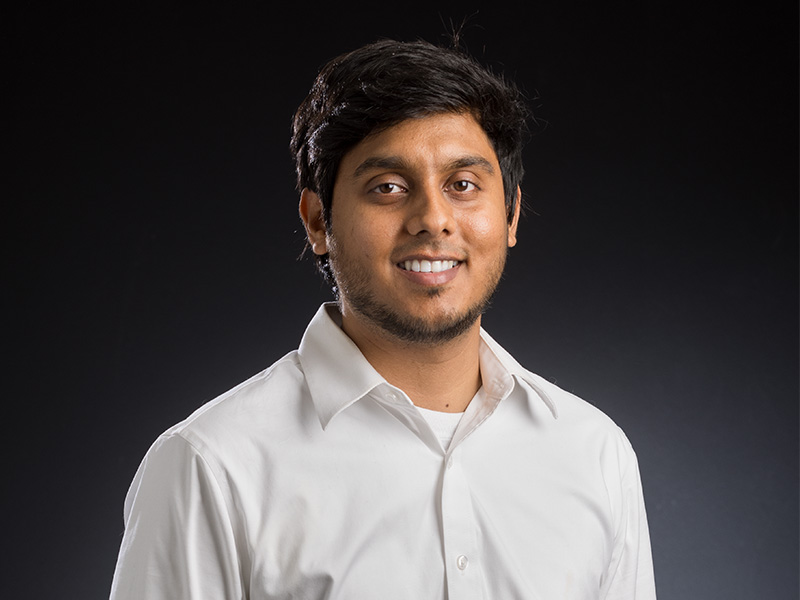
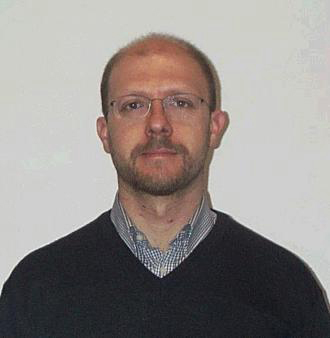
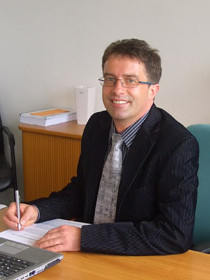
Miloš Matejić serves as an Associate Professor at the University of Kragujevac's Faculty of Engineering Sciences, within the Department of Mechanical Constructions and Mechanization. His academic position involves active research and teaching in mechanical systems design. Research interests center on advanced mechanical engineering topics including: Cycloid drive efficiency optimization and stress analysis Tribological testing methodologies and material interactions Computational modeling of gear systems using FEM Parametric design automation for mechanical components Composite materials performance in dynamic applications Recent publications demonstrate strong focus on experimental validation of cycloid reducers, novel tribometers, and material optimization. No awards, student advisories, or grant activities are documented in available sources. Institutional collaboration occurs through the Faculty of Engineering Sciences' laboratories and research centers.
Alper Taşdemirci is a Professor in the Department of Mechanical Engineering at Izmir Institute of Technology (IYTE). His primary research focuses on high strain rate mechanics, material deformation, energy absorption in structural materials, and computational modeling. He has conducted extensive studies on composite materials, metallic foams, and bio-inspired designs, with a strong emphasis on dynamic loading conditions and finite element analysis. Education: B.S. in Mechanical Engineering, Erciyes Üniversitesi M.S. in Mechanical Engineering, Erciyes Üniversitesi PhD in Mechanical Engineering, University of Delaware Research Interests: High strain rate behavior of materials Energy absorption mechanisms in structural components Dynamic material testing (e.g., Split Hopkinson Pressure Bar) Composite and metallic material design for impact applications Numerical modeling with LS-DYNA Publications: His recent works explore bio-inspired metallic structures, additive manufacturing of composites, and the dynamic compression of syntactic foams. Key themes include strain rate effects, material characterization under impact, and the development of constitutive models for advanced materials. Awards and Honors: No specific awards mentioned in the text. Grants and Advising: No explicit details on grants or advisees provided in the text.
Dr. Srikanthan Ramesh serves as an Assistant Professor in the School of Industrial Engineering and Management within Oklahoma State University's College of Engineering, Architecture and Technology. Since establishing the Advanced Materials and Additive Manufacturing Laboratory in August 2022, he has led interdisciplinary research at the intersection of materials science, physical phenomena, and advanced manufacturing technologies, with applications spanning healthcare, aerospace, and electronics sectors. His educational foundation includes a Ph.D. in Mechanical and Industrial Engineering from Rochester Institute of Technology (2022) and an M.S. in Industrial and Manufacturing Systems Engineering from Iowa State University (2017). This academic background enables his innovative approach to manufacturing science. Dr. Ramesh's research program focuses on biological and micro-scale additive manufacturing (bio-AM), specializing in biomaterial development for tissue engineering and regenerative medicine. His work integrates computational fluid dynamics, machine learning, and real-time process monitoring to achieve precise control over mechanical, biological, and electrical properties of manufactured structures. He develops experimental tools and process frameworks for droplet-based and extrusion-based AM systems, with particular emphasis on wound healing applications and space-compatible microelectronics. Analysis of his 14 publications from 2020-2025 reveals a strong trajectory toward AI-driven manufacturing solutions, with increasing emphasis on multi-objective Bayesian optimization for bioink design, aerosol jet printing process refinement, and bioprinted tissue construct development. His recent work demonstrates sophisticated integration of machine learning with physical manufacturing processes to solve complex biomedical challenges. His scientific recognition includes: Doctoral Dissertation Pitch Competition (Runner-up), IISE, 2021 Best Oral Presentation, Graduate Showcase, Rochester Institute of Technology, 2019 Gilbreth Memorial Fellowship, IISE, 2018-2019 Wakonse College Teaching Fellowship, Iowa State University, 2018-2019 Graduate Research Excellence Award, Iowa State University, 2017 Best Overall Oral Presentation, Nano@IAstate, Iowa State University, 2017 Dr. Ramesh currently leads significant research initiatives including as Principal Investigator for an NSF REU Site on Additive Manufacturing and Cybersecurity ($464,606, 2025-2028) and a NASA EPSCoR Travel Grant for aerosol jet printing in space missions (2024-2025). As Co-PI on an NSF grant for Privacy-aware Collaborative Design in additive biofabrication ($599,981, 2025-2028), he develops frameworks for mass personalization in medical applications while addressing data security challenges. These projects support his lab's mission to advance manufacturing science through rigorous experimentation and computational innovation. The Advanced Materials and Additive Manufacturing Laboratory operates as a collaborative hub where Dr. Ramesh directs research teams in developing novel biomaterials, optimizing printing processes, and creating functional prototypes for wound dressings, liver tissue models, and space-rated microelectronics. The lab's interdisciplinary approach combines expertise in materials characterization, computational modeling, and machine learning to push the boundaries of what's possible in additive manufacturing for critical applications.
Dr. Maya Aghaei is a Lecturer and Researcher in Computer Vision & Data Science at NHL Stenden University of Applied Sciences, part of the Academy Technology & Innovation. She holds a M.Sc. in Artificial Intelligence and a Ph.D. in Computer Vision from the University of Barcelona. Her academic role includes supervising Minor and Master students while focusing on applying cutting-edge AI techniques to real-world challenges. Prior to her current position, she served as a Postdoctoral Researcher at the Italian Institute of Technology, developing AI solutions for industrial applications. Her research spans Computer Vision, Machine Learning, and General AI with a focus on surveillance systems, autonomous drones, hyper-spectral imaging for environmental analysis, and social signal processing through egocentric data. Notable projects include crime scene classification via trajectory analysis, obstacle detection for BVLOS drones, and psychological trait prediction based on clothing analysis. Dr. Aghaei's work emphasizes real-world applicability, bridging theoretical advancements with practical implementations in industries like agriculture, waste management, and public safety. Her interdisciplinary approach combines technical innovation with societal relevance, addressing challenges from plastic recycling to social distancing compliance through computer vision systems.
Dr. Philip Brabazon is a Senior Lecturer at the University of Portsmouth, affiliated with the School of Organisations, Systems and People and the Centre for Operational Research & Logistics. His work focuses on operational research, logistics, and mass customization in industries such as automotive and manufacturing. He has published extensively on topics including order fulfillment systems, supply chain management, and production economics. Dr. Brabazon is currently accepting PhD students and has supervised 7 theses. His research explores themes like automotive order-to-delivery processes, virtual build-to-order systems, and the application of simulation in operational systems. He has contributed to understanding mass customization strategies, risk analysis in offshore operations, and safety case frameworks. His work bridges theoretical models with practical industry applications, particularly in optimizing supply chains and production systems. Notable publications include analyses of automotive logistics, long-tail retail dynamics, and Markovian approximations in fulfillment systems. His research has been cited over 100 times in key journals like the European Journal of Operational Research and Production and Operations Management.
Andrea Carpinteri is a Full Professor of Structural Mechanics in the Department of Engineering and Architecture at the University of Parma, Italy. He has been a leading figure in the fields of fracture mechanics, fatigue of materials, and structural integrity for over three decades. He previously served as an Associate Professor at the University of Parma (1994–2000) and the University of Padua (1988–1994). He earned his degree in Civil Engineering from the University of Bologna in 1980 with top honors (110/110 cum laude). His academic journey reflects a strong foundation in structural engineering, which evolved into a research career focused on material failure mechanisms. His research interests include fracture mechanics , multiaxial fatigue , size effects in structures , fatigue crack propagation , and constitutive modeling of traditional and advanced materials . He has developed influential fatigue criteria, such as the Carpinteri-Spagnoli (C-S) criterion, and applied fractal theories to model fatigue behavior. His work bridges theoretical modeling, numerical simulation, and experimental validation. The 15 most recent publications highlight a consistent focus on multiaxial fatigue , fretting fatigue , crack path modeling , and energy-based life assessment . His research spans metallic alloys (e.g., Inconel 718, Al 7075), composites, and natural fiber-reinforced materials, often using critical plane and damage mechanics approaches. Recent works emphasize random loading, spectral analysis, and innovative modeling of crack morphology. ESIS Fellow (2012) IGF Honorary Member (2017) Publons Reviewer Award (Top 1% in Engineering, 2018) Multiple 'Most Active Reviewer Awards' (2013–2018) Winner of the BANDO OPEN-UP Prize (2018) International Prize on Renewable Energy Projects (2011) He has supervised numerous PhD students and collaborated with researchers globally. He has been the Principal Investigator or Local Coordinator of multiple national and EU-funded research projects, including H2020 and MIUR grants. His editorial leadership includes serving as Guest Editor for 26 special issues and as a board member of 10 international journals. He chairs TC3 (Fatigue) of ESIS and has organized over a dozen international conferences on fatigue and fracture. He leads research in structural integrity, particularly through his involvement in the Laboratory of Materials and Structures Testing at the University of Parma. His team focuses on both theoretical advancements and practical applications in civil, mechanical, and aerospace engineering.
Onur Ulgen is a Professor in the Industrial and Manufacturing Systems Engineering department at the University of Michigan-Dearborn , where he has held positions since at least 2011. His work focuses on applying simulation techniques to solve complex problems in manufacturing and industrial systems. Education Ph.D., Industrial Engineering , Texas Technological University M.S., Industrial Engineering , Texas Technological University B.S., Mechanical Engineering , Robert College Research Interests Professor Ulgen specializes in Discrete-Event Simulation (DES) applications across multiple domains. His work addresses Automotive Manufacturing challenges like assembly line optimization, selectivity bank modeling, and deadlock prevention. He also investigates Steel and Metal Manufacturing systems, high-speed production lines, and Medical Logistics resource allocation. Key subfields include production scheduling, software selection for industrial simulation, and integrated systems modeling. Recent Article Trends His publications from 2015 to 2007 demonstrate a sustained focus on simulation for Automotive , Aerospace , and Healthcare industries. Topics include capacity planning, material handling optimization, and simulation-based design validation. Specific methodologies emphasize discrete-event simulation , throughput analysis , and deadlock prevention in complex systems. Grants and Projects Ford Motor Company (2011-2012): Modeling selectivity buffers for conflicting constraints in vehicle assembly SAP America, Inc. (2000): Nonlinear demand forecasting and inventory management uncertainty SME Education Foundation (1996-1997): Manufacturing engineering support
Suchi Rajendran is an Assistant Professor with a joint appointment in the Department of Industrial and Systems Engineering and the Department of Marketing at the University of Missouri, Trulaske College of Business. She is also the Director of Undergraduate Studies in ISE and actively leads research in prescriptive analytics, operations research, and data-driven decision-making across healthcare, transportation, and business systems. Education: PhD in Industrial Engineering, Pennsylvania State University Her research focuses on applying advanced analytics to solve complex real-world problems. Key areas include optimizing healthcare delivery systems, supply chain and logistics (notably blood supply chains and port operations), marketing data analytics, and emerging transportation systems such as air taxis and electric vehicle infrastructure. She leverages predictive and prescriptive artificial intelligence to forecast demand and recommend optimal operational strategies. Her recent work, highlighted in university news up to 2025, demonstrates a strong trend toward interdisciplinary, AI-powered solutions in logistics, sustainability, and public service. She frequently collaborates with industry partners like Case New Holland and Schneider Electric, and has secured funding from agencies such as the Alaska Department of Transportation and the National Science Foundation. Scientific Awards and Recognitions: Richard Wallace Faculty Incentive Grant Bob Bloss Faculty Enhancement Grant Winemiller Excellence Award in Data Analytics NSF CHOT Scholar (Penn State) Service Enterprise Engineering Fellow DAAD-WISE Fellowship (Germany) Lean Six Sigma Black Belt Dr. Rajendran is actively involved in mentoring students, having advised honors-winning graduate and undergraduate researchers. She leads an NSF-funded Research Experiences for Undergraduates (REU) program that brings 10 students annually to Mizzou to work on AI-enabled operations engineering. Her grants support hands-on, interdisciplinary research that prepares the next generation of engineers and data scientists. She is affiliated with cutting-edge research initiatives involving simulation modeling, digital communication platforms, and AI integration in industrial systems. Her lab and team focus on developing practical, scalable solutions for logistics, healthcare, and sustainable transportation, often through collaborative, real-world projects with public and private stakeholders.
Stefano Invernizzi is an Associate Professor at the Department of Structural, Geotechnical and Building Engineering (DISEG) of Politecnico di Torino. His expertise spans civil and structural engineering, focusing on fracture mechanics, finite element analysis, and numerical modeling of historical masonry and concrete structures. Teaches Statics and structural analysis courses at the Faculty of Architecture. Supervised numerous PhD and degree theses on masonry, concrete, and computational mechanics. Research emphasizes scale effects on material strength, fractal properties of structural materials, contact mechanics, and seismic vulnerability of historical buildings. He co-developed the sequentially linear saw-tooth softening model for robust analysis of reinforced concrete structures. Collaborated with Prof. Jan Rots on computational mechanics and contributed to projects like TOMORROW (additive manufacturing for building walls) and DURA_LAM (nano-materials for timber durability). His work aligns with SDGs 9 (Industry Innovation) and 11 (Sustainable Cities). He leads the Laboratorio di Meccanica della Frattura and has authored over 30 publications in journals like Engineering Fracture Mechanics and International Journal of Fracture . His research integrates statistical theories of strength with nonlinear numerical simulations for disordered materials.
Olga Ristić is an Associate Professor at the Department of Information Technologies, Faculty of Technical Sciences Čačak, University of Kragujevac, Serbia. Her office is located at Svetog Save 65, Čačak (Office No. 237), and she can be contacted via phone (+381 32 302-714) or email. She holds a Diploma in Technics and Informatics (1997), a Master's in Technical Sciences (2006), and a PhD in Information Technologies and Systems (2016), all from the University of Kragujevac. Her research focuses on: Software testing methodologies and quality assurance Modeling and simulation of complex systems Optimization algorithms for industrial applications Educational technology and IT pedagogy Mobile applications and information systems reliability Her recent publications emphasize interdisciplinary approaches, with strong trends in machine learning applications for cybersecurity, optimization in Industry 4.0 systems, educational technology innovations, and sustainable energy management. She frequently employs simulation techniques and algorithm development across diverse domains. She has led or contributed to eight Ministry of Science-funded projects: Curriculum development for IT education programs Software quality assurance frameworks Industrial system reliability modeling Food supply chain optimization Deregulated energy distribution systems At the Faculty of Technical Sciences, she coordinates courses across all academic levels, including Data Structures, Software Testing, Mobile Applications, and Quality of Software. She also conducts professional development seminars on database design and ISTQB certification.
Devesh Ranjan is the Grainger Dean of the College of Engineering at the University of Wisconsin-Madison, appointed in June 2025. He oversees one of the nation's top engineering institutions with 8 departments, 220 faculty, and $120M+ annual research expenditures. Previously, he was Professor and School Chair at Georgia Tech (2014-2025) and held faculty roles at Texas A&M University (2009-2014). His research centers on fluid dynamics, turbulent mixing, and energy systems in extreme environments. Education: Ph.D. in Mechanical Engineering, University of Wisconsin-Madison (2007) M.S. in Mechanical Engineering, University of Wisconsin-Madison (2005) B.E. in Mechanical Engineering, National Institute of Technology-Trichy, India (2003) Research Focus: Ranjan's interdisciplinary work explores power conversion, supersonic/hypersonic flows, hydrodynamic instabilities, and granular thermal energy transport. His lab employs advanced experimental diagnostics and numerical modeling to study turbulence, mixing phenomena, and renewable energy applications. Publications: Recent articles (2023-2025) emphasize turbulent flow analysis, granular dynamics for solar storage, Rayleigh-Taylor instabilities, and supercritical fluid behavior. Methodologies combine high-fidelity simulations with cutting-edge experimental techniques like multi-tracer PLIF and shock tube studies. Awards & Honors: 2023: ASME Gustus L. Larson Memorial Award, USG Executive Leadership Fellow 2021: Inaugural Ring Family Chair (Georgia Tech) 2020: Diversity & Inclusion Fellow 2019: NAE Global Grand Challenges Summit Invitee 2018: Provost Teaching Fellow, Markstein Paper Award 2016: DOE Early Career Award, NAE Frontiers Symposium 2013: NSF CAREER, AFOSR Young Investigator Fellow: ASME, Governor’s Teaching Fellows Leadership: Mentored award-winning students (e.g., 2016 Best M.S. Thesis advisor) and secured major grants including DOE/NSF awards. Directed interdisciplinary initiatives at Georgia Tech spanning pediatric tech, brain imaging, and advanced manufacturing.
Jaafar El-Awady is a Professor in the Department of Mechanical Engineering at the Whiting School of Engineering, Johns Hopkins University (JHU). He serves as Chair of JHU’s Engineering for Professionals’ Mechanical Engineering Graduate Program, founder/director of the Computational and Experimental Materials Engineering Laboratory (CEMEL), and associate director of the Center on Artificial Intelligence for Materials in Extreme Environments (CAIMEE) and the Center for Integrated Structure-Materials Modeling and Simulations (CISMMS). His secondary appointment in the Department of Materials Science and Engineering underscores his interdisciplinary focus.
Professor Jan Mehner is a faculty member at Chemnitz University of Technology, where he holds the Chair of Microsystems and Medical Technology within the Faculty of Electrical Engineering and Information Technology. His work focuses on advanced modeling, simulation, and design automation of microelectromechanical systems (MEMS) with applications across industrial, automotive, and biomedical domains. His research expertise spans MEMS design , coupled field simulations , finite and boundary element methods (FEM/BEM) , and reduced order modeling (ROM) . These methodologies enable efficient development and optimization of complex microsystems. Applications of his work include structural health monitoring, sensor integration, and smart systems for automation and medical technology. Prof. Mehner is actively contributing to the academic and research community, recently recognized through membership in the Saxon Academy of Sciences. He is involved in cross-disciplinary initiatives such as the Robotic Institute Germany (RIG) at TU Chemnitz, demonstrating strong engagement in emerging technological frontiers. He advises students and leads a research group focused on microsystem innovation. While specific grant details are not listed, his participation in DFG-funded research groups like FOR 5242 suggests active involvement in nationally supported scientific projects. The laboratory under his leadership, the Professorship of Microsystems and Medical Technology, develops cutting-edge solutions in sensor-integrated materials and intelligent microsystems, contributing to advancements in smart manufacturing and medical devices.
Dr. Liya Zhao is a Senior Lecturer in the School of Mechanical and Manufacturing Engineering at the University of New South Wales (UNSW Sydney), where she leads the Dynamic Smart Structures and Energy Harvesting Laboratory. She previously held academic positions at the University of Technology Sydney (UTS), first as a Lecturer (2017) and later promoted to Senior Lecturer (2021), before joining UNSW in 2022. Her research is highly interdisciplinary, focusing on smart structures, nonlinear dynamics, and sustainable energy technologies. Education: Ph.D. in Structures & Mechanics, Nanyang Technological University, Singapore (2015) B.Eng. in Civil Engineering, Tongji University, China (2009) Research Interests: Dr. Zhao's work centers on energy harvesting from ambient sources (wind, vibration, human motion, waves), smart materials (piezoelectric, triboelectric), metamaterials, and nonlinear dynamics. She designs adaptive structures for broadband energy harvesting and vibration suppression, with applications in self-powered wireless sensor networks, structural health monitoring, and wearable devices. Her research integrates theoretical modeling, numerical simulation, and experimental validation. Publication Trends: Over the past decade, her research has evolved from fundamental electromechanical modeling toward multifunctional metastructures and real-world deployment. Her recent work emphasizes hybrid energy harvesting, nonlinear tuning for broadband response, and integration with self-powered sensing systems, reflecting a strong trend toward practical, sustainable technologies. Scientific Awards: ARC Discovery Early Career Researcher Award (DECRA), 2021–2024 World's Top 2% Scientists (Stanford University), 2020–2023 Nanyang Engineering Doctoral Scholarship (NEDS), NTU Singapore Grants & Supervision: Dr. Zhao has secured multiple competitive grants, including ARC Discovery Projects and internal university funding, as both sole and chief investigator. She actively supervises research students and welcomes motivated candidates in mechanics, dynamics, and energy systems. Her lab, Dynamic Smart Structures and Energy Harvesting Lab , fosters innovation through experimental and computational research. She also contributes to teaching, including Mechanics of Solids II and Introduction to Aircraft Engineering. Lab & Team: She leads a dynamic research group focused on next-generation smart structures, supported by state-of-the-art facilities at UNSW. Her team develops novel materials and systems for sustainable energy and sensing, aiming to bridge the gap between fundamental science and real-world applications.
Timothy Wright is a distinguished Professor of Applied Biomechanics in Orthopaedic Surgery at Weill Cornell Medicine and a member of the Cornell University College of Engineering Graduate Field of Biomedical Engineering. His groundbreaking work focuses on enhancing orthopedic implant performance through multidisciplinary approaches integrating biomechanics, radiology, orthopedic surgery, biomaterials , and biomedical engineering . With over 300 peer-reviewed publications, he has pioneered implant systems for knee, hip, and elbow replacements adopted globally. Education : B.S. in Materials Science from Lehigh University (1971), M.S. (1972) and Ph.D. (1976) in Materials Science from Stanford University, followed by a postdoc in Biomechanics at HSS (1977). Dr. Wright’s research spans orthopedic implant design, tribocorrosion in modular connections, bone mechanobiology, post-traumatic arthritis , and additive manufacturing . His recent studies, including 3D-printed implants that enable customized bone fixation, reflect his focus on advanced manufacturing and computational modeling. Articles highlight his expertise in joint kinematics, implant retrieval analysis , and biomaterial wear mechanisms , with applications across hip, knee, and elbow arthroplasty . Key scientific awards include the Alfred R. Shands Jr. MD Award (2013), Director’s Special Citation from the FDA (1997), and the Research Career Development Award (1987-1992) and Whitaker Fellowship (1985). He has served as President of the Orthopaedic Research Society (1992), Coordinating Program Director of the NIH-funded Clinical and Translational Science Center, and co-editor of the Journal of Orthopaedic Research for 18 years. Grants : NIH T32 training program (preceptor), Kellen French Foundation projects (PI/Co-PI), Kirby Foundation’s New Directions in Joint Replacement Design (PI), and NIH UL1 Clinical Translational Science Center (Coordinating Program Director). Laboratories : Department of Biomechanics at HSS, Lab of Molecular Osteoarthritis Research , and Lab of Cartilage and Meniscus Mechanics .