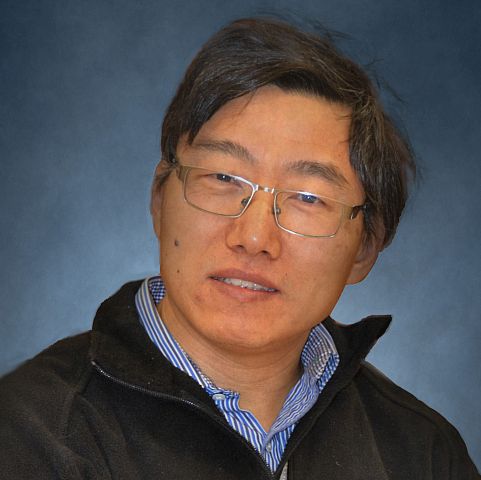
Qingguo Li is a Professor and Associate Head at the Department of Mechanical and Materials Engineering , Queen's University , and a member of the Ingenuity Labs Research Institute . He specializes in biomechanical system design, energy harvesting, wearable sensors, gait analysis, and load carriage systems. His research integrates robotics, biomedical engineering, and sensor technology to develop human-centric devices and mobility aids. Current Roles : Professor, Associate Head, Queen's University Research Institute : Ingenuity Labs Research Institute Lab : Bio-Mechatronics and Robotics Laboratory His work focuses on biomechanical energy harvesting , IMU-based motion analysis , and assistive device development . Key applications include stroke rehabilitation, gait monitoring, and wearable power generation systems. Articles span cable-driven robots , smart walkers , and 3D printing mechanisms , emphasizing human-robot interaction and dynamic modeling . The lab explores sensor calibration , adaptive control algorithms , and human movement optimization . Areas of impact include rehabilitation engineering , load carriage stability , wearable sensor accuracy , and assistive robotics . His team develops solutions for gait asymmetry detection , post-stroke mobility , and low-cost energy systems , leveraging machine learning and kinetic modeling .
Prof. Dr. Markus Zimmermann leads the Chair of Product Development and Lightweight Design at the Technical University of Munich (TUM). With a background in mechanical engineering from TU Berlin and the University of Michigan, and a doctorate from MIT on solid-state singularities, he bridges academic rigor with industrial application. His career spans 12 years at BMW focusing on vehicle development before transitioning to academia. Specializes in solution space engineering for robust design Expert in additive manufacturing and systems engineering Develops methodologies for managing design complexity and uncertainty His research focuses on multidisciplinary design optimization and lightweight structures , particularly in robotics and automotive systems . His team applies digital twin frameworks and attribute dependency graphs to enhance design processes. Recent publications emphasize topology optimization in robotic systems and thermal management for medical X-ray sources. Key trends in his 2024-2025 publications include: Topological optimization for additive manufacturing and robotics Application of solution spaces to manage design uncertainty Development of compact X-ray systems for medical therapy Integration of digital twin technologies in industrial contexts
R. Edwin García is a Professor at the School of Materials Engineering at Purdue University, where he has been faculty since 2005. He holds appointments in the Materials Engineering department within Purdue's College of Engineering, specifically in the School of Materials Engineering located in the Neil Armstrong Hall of Engineering at Purdue's West Lafayette campus. His educational background includes: B.S. in Physics from the National University of Mexico (1996) M.S. in Materials Science and Engineering from Massachusetts Institute of Technology (2000) Ph.D. in Materials Science and Engineering with a minor in Applied Mathematics from Massachusetts Institute of Technology (2003) Professor García's research focuses on the design of materials and devices through the development of a fundamental understanding of the solid state physics of individual phases, their short and long range interactions, and associated microstructural properties and time evolution. His current research emphasizes establishing relationships between material properties and resultant performance and degradation in electrochemical systems. He integrates computational approaches ranging from kinetic Monte Carlo, phase field and level set methods, to finite elements, finite volumes, and symbolic computing. His work particularly addresses microstructure design, crystallographic texture, and grain boundary science and engineering to control the topology of underlying phases and establish practical relations between processing, microstructure, and material properties. His recent publications demonstrate a strong focus on lithium-ion battery technology, ferroelectric materials, and computational modeling of material behaviors. The research trends show increasing integration of machine learning with traditional computational methods, exploration of novel sintering techniques like flash sintering, and deeper investigation into the fundamental mechanisms of material degradation in energy storage systems. His work spans multiple length scales from atomistic to continuum modeling, reflecting a comprehensive approach to materials design and analysis. Professor García teaches several courses including MSE 230 (Structure and Properties of Materials), MSE 350 (Thermodynamics of Materials), MSE 597G (Modeling and Simulation of Materials), MSE 597I (Introduction to Computational Materials), and MSE 597N (Physical Properties of Crystals). He mentors graduate students in areas related to computational materials science, battery technology, and microstructural evolution. His research group, the Laboratory of Computational Microstructures, focuses on developing home-grown analytical theories and algorithms to resolve relevant time and length scales in materials systems. The group's work has significant implications for portable power sources, including rechargeable batteries and fuel cells, as well as for ferroelectric ceramic applications.
Dr. V.M. (Bala) Balasubramaniam is a Professor in the Department of Food Science and Technology at The Ohio State University. He holds editorial roles in food engineering journals and is a Fellow of IFT and IUFoST. His research focuses on clean food manufacturing technologies, particularly high-pressure and nonthermal methods, emphasizing microbial inactivation and nutrient preservation. He teaches unit operations in food engineering and contributes to industry via short courses and pilot plant demonstrations. Education: B.S. (Tamil Nadu Agricultural University), M.S. (Asian Institute of Technology), Ph.D. (Ohio State University). Research Interests: Thermal/nonthermal processing, food safety/quality modeling, and innovative applications of high-pressure technologies. Recent work includes ultra-shear technology development and superheated steam sanitation. Over 100 scientific papers, 20 book chapters, and co-edited books on high-pressure processing. Awards include the 2021 IFT Research & Development Award and 2017 Calvert L. Willey Award. Advising: Supervises graduate students like Liz Astorga Oquendo and Shruthy Seshadrinathan. Industrial outreach includes a USDA consortium for ultra-shear commercialization. Labs/teams focus on pilot-scale equipment testing and microbial efficacy studies.
Farhad Pourkamali Anaraki is an Assistant Professor in the Department of Mathematical and Statistical Sciences at the University of Colorado Denver, part of the College of Liberal Arts and Sciences. His research focuses on Machine Learning, Data Science, and Computational Mathematics, with interdisciplinary applications in engineering, materials science, and uncertainty quantification. He specializes in developing data-driven methodologies for complex systems, including composite materials, seismic response prediction, and additive manufacturing. Key research themes include probabilistic neural networks, adaptive machine learning for sparse data, and computational techniques for engineering challenges. His work integrates advanced algorithms with domain-specific problems, such as optimizing material properties and enhancing predictive models in civil and mechanical engineering contexts. Despite his prolific publication record, no specific scientific awards or grants are explicitly listed in the provided information. He maintains an active profile in teaching and mentoring, though formal advisee details are not documented here.
Dr. Carolyn Conner Seepersad is a Woodruff Professor in the George W. Woodruff School of Mechanical Engineering at Georgia Institute of Technology. She leads the Digital Design and Manufacturing research group and previously founded the Center for Additive Manufacturing and Design Innovation at The University of Texas at Austin. Her research focuses on additive manufacturing, materials design, and process innovation. She holds editorial roles, including Editor-in-Chief of the ASME Journal of Mechanical Design, and has received numerous awards for research and teaching. Education: PhD, Mechanical Engineering, Georgia Tech, 2004 MS, Mechanical Engineering, Georgia Tech, 2001 BA, Philosophy, Politics, and Economics, Oxford University, 1998 BS, Mechanical Engineering, West Virginia University, 1996 Her research interests span design for additive manufacturing, simulation-based materials and structures, and metamaterials. She emphasizes manufacturing-aware design and sustainability. Key contributions include lattice structure optimization, negative stiffness composites, and process-aware manufacturing techniques. Her publications reflect advancements in additive manufacturing processes, materials characterization, and design methodologies. Awards include the ASME Design Automation Award and recognition as a University of Texas System Academy of Distinguished Teachers. Seepersad has advised on grants such as the LEAP-HI GOALI project and contributed to initiatives like the Solid Freeform Fabrication Symposium. Her work bridges academia and industry, emphasizing practical applications and innovation. Labs/Teams: Leads the Digital Design and Manufacturing group at Georgia Tech, previously directed the UT Austin Additive Manufacturing Center.
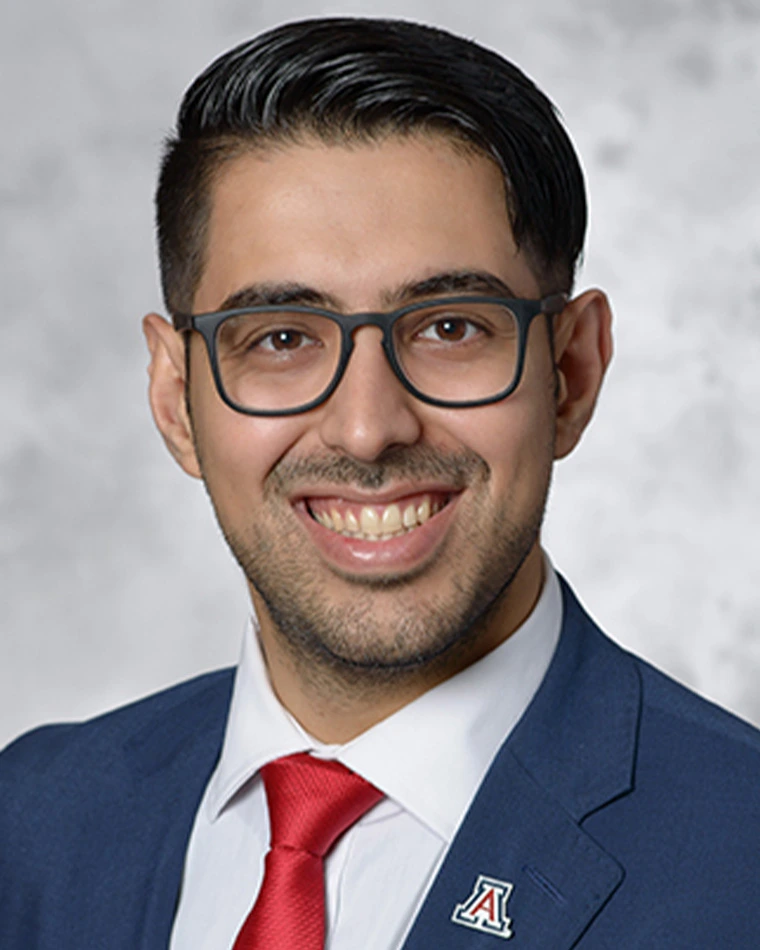
Soheil Salehi is a tenure-track Assistant Professor in the Department of Electrical and Computer Engineering at the University of Arizona, with a joint appointment in Systems and Industrial Engineering. He is the Director of the Privacy-preserving, Intelligent, and Secure Computing (PRISM) Lab, established in August 2022. Prior to this, he was an NSF-Sponsored Computing Innovation Fellow and Postdoctoral Research Fellow at the University of California, Davis. Ph.D., Electrical and Computer Engineering, University of Central Florida, 2020 M.S., Electrical and Computer Engineering, University of Central Florida, 2016 B.S., Isfahan University of Technology, Iran, 2014 Dr. Salehi's research focuses on the intersection of hardware, AI, and security. His work spans hardware and AI-enabled security in IoT , Generative AI for hardware design and security , neuromorphic and biologically-inspired AI hardware , emerging spin-based devices , reconfigurable architectures , low-power VLSI circuits , and digital twins and mixed reality for semiconductor workforce development . He also explores the application of Generative AI in personalized education . His recent publications, spanning 2023–2025, reveal a strong trend toward integrating AI and machine learning into hardware security and design. Key themes include automated secure IC design flows , AI-driven hardware obfuscation , firmware and side-channel attack analysis , security in neuromorphic and spiking neural networks , and educational frameworks using digital twins and generative models . His work appears in top venues like DAC, ICCAD, USENIX Security, IEEE TCAS-I, and ISCAS. Outstanding Reviewer Award, IEEE/ACM Design Automation Conference (DAC), 2023 Best Presentation of the Symposium Award, UC Davis Postdoctoral Research Symposium, 2021 UCF Excellence by a Graduate Teaching Assistant (University-Level), 2016 Nominated for 30-under-30 Award, UCF, 2020 Nominated for Postdoctoral Research Excellence Award, UC Davis, 2022 Dr. Salehi has secured significant research funding as PI and Co-PI, including a $300K NSF SaTC EAGER grant on Generative AI-based Personalized Cybersecurity Tutor, a $174,000 University of Arizona PIF Award, and multiple RII grants totaling over $198K. He has also received industry funding from CHEST. He actively mentors students and leads the PRISM Lab, which focuses on privacy-preserving and intelligent secure computing. His service includes roles as Technical Program Committee (TPC) Member and Session Chair at premier conferences such as DAC, ICCAD, CCS, NDSS, and GLSVLSI. The PRISM Lab, under his direction, conducts cutting-edge research in secure and intelligent hardware systems, with applications in IoT, edge computing, and workforce development. The lab emphasizes interdisciplinary collaboration and innovation in both research and education.
Dr. Jarno Hoekman is an Associate Professor in Innovation Studies at the Copernicus Institute of Sustainable Development, Utrecht University. His research focuses on the dynamics and governance of science in the context of innovation, regulation, and societal challenges, with particular emphasis on sustainability and health. He is affiliated with both the Copernicus Institute of Sustainable Development and the Utrecht collaborating Centre for Pharmaceutical Policy & Regulation in the Department of Pharmaceutical Sciences. Dr. Hoekman serves as the programme leader of the research master in Innovation Sciences and teaches academic integrity courses to Master students and PhD candidates. Dr. Hoekman's research is organized around three interconnected themes: Science in transition , examining how scientific practices and institutional arrangements are evolving through open science, interdisciplinary research collaborations, and alternative recognition systems; Regulatory science and innovation , investigating innovations in tools and standards for assessing risks and benefits of new technologies, including safety assessment methods and regulatory authorization standards; and Geography of science , exploring the role of location factors in scientific knowledge production and diffusion. Analysis of Dr. Hoekman's recent publications (2022-2024) reveals a strong interdisciplinary focus spanning pharmacology, toxicology, innovation studies, and science policy. Key research trends include examining conditional marketing authorization pathways, post-approval studies for conditionally authorized medicines, animal-free safety testing methodologies, and the societal impact of transdisciplinary research projects. His work frequently employs mixed-methods approaches and involves multi-stakeholder perspectives to address complex regulatory and innovation challenges. Dr. Hoekman actively contributes to policy-relevant research, including major European Commission studies on pharmaceutical legislation. His collaborative work extends across multiple institutions and involves interdisciplinary teams working on pharmaceutical policy, sustainable innovation, and science-society interactions. As a member of the Utrecht Young Academy and the UU Open Science Platform, he engages with broader academic community initiatives related to research integrity and open science practices.
Xianguo Li is a Professor in the Department of Mechanical and Mechatronics Engineering at the University of Waterloo, Canada. He holds prestigious fellowships including Fellow of the Canadian Academy of Engineering (FCAE), Fellow of the Engineering Institute of Canada (FEIC), and Fellow of the Canadian Society for Mechanical Engineering (CSME). His primary research focuses on thermal fluid science, energy systems, and fuel cell technology, with a strong emphasis on green energy solutions. **Education**: 1989: Doctorate in Mechanical Engineering, Northwestern University, USA 1986: Master's in Mechanical Engineering, Northwestern University, USA 1982: Bachelor's in Thermal Energy Engineering, Tianjin University, China **Research Interests**: His work spans fuel cells, spray dynamics, fluid dynamics, heat and mass transfer, power generation, and renewable energy systems. He leads the Fuel Cell and Green Energy Lab, advancing innovations in energy storage, propulsion systems, and sustainable technologies. **Awards**: Outstanding Performance Award (University of Waterloo, 2007) Frank Walk Service Award (2001) Best Paper Award (2003) Recipient of the Simpson Fellowship (1988) **Advising & Grants**: He supervises graduate students and research associates in projects funded by NSERC, Auto 21, CFI, and industry partners. His lab collaborates on fuel cell durability, thermal management, and green energy policy initiatives. **Editorial Roles**: Founding Editor-in-Chief of the International Journal of Green Energy , Field Chief Editor of Frontiers in Thermal Engineering , and serves on dozens of editorial boards. He chairs major conferences like the International Green Energy Conference and the World Fuel Cell Conference series.
Professor Thomas Blumensath is a Professor of Signal and Image Processing at the University of Southampton and a Fellow at the Alan Turing Institute. He is the Academic Lead in Image Processing and Reconstruction at the University's μ-VIS X-ray Imaging Centre and Director of Research at the Institute of Sound and Vibration Research (ISVR). His research focuses on advanced algorithms for solving inverse problems in tomographic imaging, combining machine learning, optimization, and statistical methods. Key areas include X-ray tomography strategies, GPU-accelerated reconstruction, and multimodal imaging applications. Education: B.Sc. (Hons) Music Technology and Audio System Design, University of Derby (2002) PhD in Electronic Engineering (Bayesian Signal Processing), University of London (2006) Research Interests: Professor Blumensath's work spans theoretical and applied signal/image processing, with emphasis on tomographic imaging techniques. His current projects address efficient reconstruction methods, spectral X-ray CT, and applications in manufacturing and plant science. He collaborates with advanced imaging facilities like Diamond Light Source and ISIS neutron imaging beamline. Key Contributions: His research bridges computational methods (e.g., compressed sensing) with practical imaging challenges, including limited-angle tomography and stereo imaging strategies. He leads the National Research Facility for Lab X-ray CT and has developed the TIGRE reconstruction toolbox. Grants & Projects: Active funding includes EPSRC projects on tomographic sensitivity monitoring and CT-based manufacturing inspections. Completed projects cover constrained reconstruction, AM process verification, and industrial CT metrology. Awards: Alan Turing Institute Fellowship Teaching & Leadership: He teaches modules on machine learning, biomedical image processing, and robotics. Leads the BEng Control Engineering program at the Joint Education Institute with Harbin Engineering University. Labs/Teams: Active in the Signal Processing, Audio and Hearing research group (SPAH) and the Institute for Life Sciences. Oversees the μ-VIS X-ray Imaging Centre's research initiatives.
Levent Burak Kara is a Professor in the Department of Mechanical Engineering at Carnegie Mellon University (CMU), with a courtesy appointment in the Robotics Institute. He is a leading researcher in AI-driven computational design, additive manufacturing, and intelligent engineering systems, leading the Visual Design and Engineering Lab (VDEL) at CMU. Education: B.S., Mechanical Engineering, Middle East Technical University (1998) M.S., Mechanical Engineering, Carnegie Mellon University (2000) Ph.D., Mechanical Engineering, Carnegie Mellon University (2005) His research focuses on integrating machine learning, optimization, and geometric modeling to revolutionize engineering design and manufacturing. Key areas include topology optimization, CAD intelligence, digital twins, generative design, bioengineering, and electronic design automation. His work enables automation of traditionally labor-intensive design processes using deep learning and reinforcement learning. His recent publications reveal a strong trend toward physics-informed surrogate modeling, real-time simulation, manufacturability prediction, and AI-driven automation in mechanical, biomedical, and electronic systems. These works frequently appear in top journals such as Journal of Mechanical Design and Journal of Applied Mechanics , and at premier conferences like NeurIPS and DAC. Scientific Awards: National Science Foundation CAREER Award ASME Design Automation Society Young Investigator Award Google AI for Social Good Impact Scholar Kara advises several Ph.D. students and has secured significant funding from federal agencies such as the NSF and the U.S. Army Research Laboratory, as well as collaborations with industrial leaders including Cadence Design Systems and NVIDIA. His research is also supported by CMU’s NextManufacturing Center and the Critical Technology Initiative. He is actively involved in developing intelligent design systems that leverage AI to automate product design, optimize manufacturing processes, and improve medical diagnostics, particularly in oral cancer screening and organ preservation. His lab, VDEL, is a hub for innovation in AI-enabled engineering.
Mine Uysal is a Researcher at Yıldız Technical University, Faculty of Mechanical Engineering, Department of Mechanical Engineering. Her academic journey includes a BSc (2005), MSc (2010), and PhD (2015) in Mechanical Engineering from Pamukkale University and Yıldız Technical University, respectively. She began postdoctoral research at the University of Kentucky (College of Engineering) in 2017. PhD, Mechanical Engineering (2015, Yıldız Technical University) MSc, Mechanical Engineering (2010, Pamukkale University) BSc, Mechanical Engineering (2005, Pamukkale University) Her research focuses on advanced materials behaviors, including functionally graded materials, polymers, adhesively bonded joints, and finite element modeling for engineering systems. Key areas include composite structures, thermal/mechanical loading effects, and sustainable manufacturing techniques like nanofluid-assisted machining. Scientific contributions include 15 recent articles spanning topics such as delamination analysis in bonded beams, sustainable machining optimization, buckling behavior of graded polymers, and fracture mechanics in composite materials. Her work integrates finite element methods with experimental validation for adhesive joints and sandwich structures. Collaborative projects include research funded by The Scientific and Technological Research Council of Turkey (TUBITAK) and international postdoctoral work at the University of Kentucky.
Peter Van Puyvelde is a Full Professor at KU Leuven's Faculty of Engineering Sciences, where he leads research at the Soft Matter, Rheology and Technology (SMaRT) unit within the Department of Chemical Engineering. He is an active member of the Applied Rheology and Plastics Processing Division and the Leuven.AM Institute for Additive Manufacturing. His academic responsibilities include membership in the Faculty Council of Engineering Sciences and departmental committees. His core research focuses on: Polymer processing and complex fluid dynamics In-situ characterization of flow-microstructure relationships Flow-induced crystallization phenomena Development of sustainable polymer materials Additive manufacturing technologies Professor Van Puyvelde's recent publications (2023-2025) demonstrate strong emphasis on sustainable polymer systems including lignin-based materials, humins valorization, bioplastics, and green additives. His work frequently employs advanced characterization techniques like fast-scanning calorimetry and synchrotron X-ray scattering to study crystallization kinetics and microstructure development in complex polymer systems. He currently supervises PhD students working on nanofiltration membranes and reinforced polymer parts. His extensive research portfolio includes leadership roles in multiple ongoing projects: Polylactic acid bioplastics development (Co-promoter) Lignin-based flame retardants (Co-promoter) Humins valorization for functional polymers (Co-promoter) Ionic liquids for enhanced oil recovery (Promoter) Competition between crystallization and crosslinking (Promoter) Additive manufacturing of polymer composites (Co-promoter)
Ha-Joon Chang serves as Professor in the Department of Economics at SOAS University of London. His academic work spans development economics, industrial policy, and political economy, with significant contributions to understanding economic development processes in both developing and mature economies. Chang's research interests focus on development economics , industrial policy , and political economy , with particular emphasis on how institutions shape industrialization processes and economic development trajectories. His work critically examines mainstream economic theories while advancing alternative frameworks that emphasize productive transformation and social capabilities. Recent research has expanded into areas including digital industrialization in developing countries, commercial determinants of health, and the relationship between economic pluralism and democratic processes. Analysis of his recent publications reveals a consistent focus on production-centered development approaches, with growing attention to the challenges of digital transformation in developing economies. His work demonstrates strong interdisciplinary connections between economics, political science, and development studies, often challenging conventional wisdom about economic policy and development pathways. The 2021-2024 publications show increased engagement with contemporary issues like the commercial determinants of health and ideological biases in economic thinking. While specific scientific awards are not mentioned in the available information, Chang's extensive publication record in high-impact journals demonstrates significant scholarly recognition. His work appears in leading economics and development journals including Cambridge Journal of Economics, Development and Change, and The Lancet. Professor Chang maintains active research collaborations with scholars across multiple institutions, as evidenced by his co-authored publications spanning economics, public health, and development policy domains. His research outputs indicate engagement with both theoretical economic debates and practical policy applications, particularly regarding industrial policy design and implementation in diverse economic contexts.
Professor Stephen Beeby is a leading academic at the University of Southampton in the Electronics and Computer Science department. His research spans Electronic Textiles , Flexible Electronics , and Energy Harvesting technologies. Research Focus: His work emphasizes the integration of smart printable materials into fabrics, enabling invisible wearable technologies . Projects include energy-harvesting insoles , skin hydration sensors , and thermoelectric devices for sustainable power. Recent Publications highlight advancements in zinc oxide nanoparticle films , flexible antennas , and gold-tooled e-textile circuits , reflecting his interdisciplinary approach to biomedical monitoring and smart clothing . Scientific Honors: Royal Academy of Engineering Chair in Emerging Technologies Fellow of IEEE (FIEEE) Fellow of Institute of Physics (FInstP) Fellow of Institution of Engineering and Technology (FIET) PhD Students: Supervising 10 active PhD candidates in areas like flexible sensors , smart garments , and energy-harvesting systems . Labs & Collaborations: Core member of the Centre for Flexible Electronics and E-Textiles (C-FLEET) and collaborates with European Union-funded initiatives like EnABLES and TEAM-NANO .