Ricardo Zednik is a Professor at the Department of Mechanical Engineering, École de Technologie Supérieure (ÉTS) in Montreal. Holding degrees from Rice University (BA, BS) and Stanford University (MS, PhD), he specializes in piezoelectric materials, fracture mechanics, and microelectronic systems. His research focuses on sensors, innovative materials, and health technologies. Fields of Interest: Piezoelectricity, Fracture Mechanics, MEMS, Smart Materials, Crystallography With over 36 peer-reviewed publications and extensive supervision of graduate research (including 15+ co-directed theses and projects since 2016), Zednik contributes to applied research in materials science and biomedical engineering. He collaborates with LaCIME and PULÉTS laboratories on cutting-edge projects involving ultrasonic transducers, flexible sensors, and high-temperature material characterization. Current courses include Materials Technology (MEC200) and advanced research topics in Functional and Smart Materials (SYS877). His students explore applications like terahertz quality control, piezoelectric earcanal sensors, and Kirigami techniques for wearable electronics.
Dr. Saeed Taheri is a Senior Lecturer at Nottingham Business School, Nottingham Trent University, within the Department of Strategy, Analytics and Operations. With a background in Materials Science and Engineering, he transitioned to academia after a decade in Iranian manufacturing sectors as a production technology specialist and quality manager. PhD in Operations and Supply Chain Management (2018) MSc and BSc in Materials Science & Engineering Research Focus: Specializing in system dynamics modeling of socio-technical systems, with applications spanning humanitarian supply chains, healthcare operations, and lean product development. His work addresses complex organizational and policy challenges through simulation and optimization. External Engagements: Serves as MSc project supervisor at Warwick Manufacturing Group (WMG), maintains professional membership in the System Dynamics Society, and collaborates internationally on research projects. Teaches Operations & Supply Chain Management modules Supervises research across undergraduate to PhD levels Consultant for engineering management journals
Barbara Bigliardi is an Associate Professor at the Department of Engineering and Architecture, University of Parma, with national scientific qualification for full professor in Economic-Management Engineering (SSD ING-IND/35). She serves as President of the Management Engineering Program at University of Parma and Director of Bachelor's/Master's programs at University of San Marino, co-leading double-degree initiatives between the two institutions. Over 100 publications (57 SCOPUS-indexed) with H-index=20 Editorial roles: Cambridge Scholars Publishing (2019), MDPI Sustainability, Sci, European Journal of Innovation Management Key research areas: Open Innovation, Technology Transfer, Food Industry Innovation, Industry 4.0, Supply Chain Sustainability Recent Publications (2024-2025) demonstrate leadership in: Industry 4.0 integration with circular economy AI applications in public administration and healthcare Digitalization of food supply chains Green startup resource orchestration Simulation-based optimization in remanufacturing Sustainable additive manufacturing Scientific Recognition : 2005 Emerald Highly Commended Award 2013 Most Cited Paper in Trends in Food Science & Technology 2019 Highly Cited Paper in Review of Policy Research Research Leadership includes: National Observatory on Start-ups (President since 2021) National Observatory on Reputation (Vice President since 2019) INAIL-funded mobile risk assessment systems (2018-2020) INAF space technology transfer projects (2018-present) Academic Contributions : Supervised over 300 theses Deputy Coordinator of Industrial Engineering Doctoral Program Director of Management Engineering Programs (Parma & San Marino) Founder of academic spin-offs: Sistemi per il marketing di contenuto S.r.l. (2016-present), Univenture SrL (2006-2010)
Dr. Magdalena Schreter-Fleischhacker works at the Technical University of Munich within the Professorship of Simulation for Additive Manufacturing . Her research focuses on physics-based computational modeling of coupled liquid-powder-gas dynamics in metal additive manufacturing, including melt pool dynamics and powder-gas interactions . She specializes in multi-phase flow modeling using cut-element and diffuse interface methods with continuous/discontinuous Galerkin schemes . She also develops constitutive models for quasi-brittle materials like 3D printed concrete and rock, incorporating anisotropy , gradient-enhanced damage mechanics , and micropolar continua . Her computational work leverages matrix-free algorithms and parallel computing , with significant contributions to the deal.II finite element library . Research Interests Physics-based computational modeling of coupled liquid-powder-gas dynamics in additive manufacturing Multi-phase flow simulation using sharp/diffuse interface methods Advanced constitutive modeling for quasi-brittle materials (rock, soils, 3D printed concrete) High-performance computing and matrix-free algorithms Notable Contributions Development of consistent diffuse-interface models for melt-vapor dynamics Improvements to continuum surface flux models in additive manufacturing Formulation of gradient-enhanced damage-plasticity models for geological materials Principal contributor to the deal.II library (version 9.6) Supervised Student Projects Johannes Resch (2024): DG-based thermo-hydrodynamic melt pool simulations Julian Brotz (2024): DEM-FEM coupling for fluid-powder interaction Andreas Ritthaler (2024): Matrix-free cutDG formulation for complex flows Tinh Vo (2023): Laser modeling for melt pool simulations Scientific Awards ERC Starting Grant recipient
Lorenz Dörschel is an Adjunct Professor (Lehrbeauftragter) at the Institute of Automatic Control at RWTH Aachen University. He holds the academic title PD Dr.-Ing. habil, signifying post-doctoral research qualifications. His position is part-time, focusing on advanced control theory and applications. His primary research interests include: Control of distributed parameter systems (e.g., fluid dynamics, thermal processes) Model predictive control for industrial and automotive systems Parameter space methods for robust controller design Model reduction techniques for complex nonlinear systems Dörschel's recent publications (2018-2024) demonstrate broad applications across biomedical engineering, renewable energy, automotive systems, and industrial automation. His work consistently integrates mathematical rigor with practical implementations, emphasizing advanced control methodologies like nonlinear MPC, Lyapunov-based design, and Bayesian optimization. A recurring theme is the development of computationally efficient control strategies for distributed parameter systems. No scientific awards, student advising relationships, or research grants are documented in the available information.
Jie Chen is an Assistant Professor in the Department of Mechanical Engineering at Virginia Tech's College of Engineering. Their research bridges machine learning with engineering analysis and design under uncertainty, focusing on process-structure-property-performance relationships. PhD, Mechanical Engineering (2022) – Arizona State University MS, Civil Engineering (2018) – Beihang University BS, Civil Engineering (2015) – Beihang University Research interests include: physics-informed machine learning, uncertainty quantification, predictive maintenance, materials design, and advanced manufacturing. The SEAD Lab develops methods to integrate engineering analysis into stochastic machine learning algorithms and uses AI for knowledge discovery in uncertain environments. Recent publications emphasize: Digital twin frameworks combining machine learning and Bayesian optimization Graph neural networks for high-entropy alloy and molecular mixture property prediction Physics-guided neural networks for fatigue life analysis of additively manufactured alloys Uncertainty quantification in imbalanced regression tasks and multi-fidelity data fusion Real-time imaging of polymer deformation mechanisms The lab actively mentors students, including PhD candidate Yisheng Lu, and manages projects in predictive maintenance, fatigue modeling, and materials design.
Núria Agell Jané is a Full Professor at ESADE Business School , Universitat Ramon Llull, specializing in Artificial Intelligence and Decision-Making Systems. She leads the JUICE (Judgements and Decisions in the Market Place) research group and the ESADE D3 - Institute for Data-Driven Decisions . Doctorate in Applied Mathematics (Qualitative Reasoning Modelling), UPC-BarcelonaTech Bachelor's in Mathematics, University of Barcelona Her research focuses on Artificial Intelligence , Decision-Making Systems , and Fuzzy Logic , with applications in Business, Marketing, and Sustainability. Recent publications emphasize Hesitant Fuzzy Linguistic Term Sets , Consensus Modeling , and AI in Sustainable Development . She coordinates multiple publicly and privately funded projects applying AI to Business and Marketing challenges. As PhD Programme Director (2005-2013) and current Department Director of Operations, Innovation and Data Sciences , she has shaped academic and research strategies at ESADE. Her work spans collaborations with institutions like LAAS-CNRS (France) and University of Edinburgh Business School , with over 40 journal publications and 50 conference contributions. She has directly supervised 11 PhD students in AI and Decision Sciences.
Patrícia Gomes-Alves serves as Head of the Sanofi Satellite Laboratory and dual Coordinator of iBET's Analytical Services Unit and Mass Spectrometry Unit within the Health & Pharma Division. She has been instrumental at iBET since 2011, initially joining as a Senior Scientist in the Cell Bioprocesses Lab before assuming leadership of the Mass Spectrometry Unit in 2013 and the Sanofi Satellite Lab in 2018. Her expertise centers on advancing biopharmaceutical manufacturing through bioprocessing and bioanalytics, leveraging omics tools and mass spectrometry for process optimization. Dr. Gomes-Alves earned her PhD in Biology in 2009 from ITQB-NOVA (Instituto de Tecnologia Química e Biológica, Universidade NOVA de Lisboa), conducted in collaboration with Instituto Nacional de Saúde Dr. Ricardo Jorge. Her doctoral research pioneered proteomics and mass spectrometry applications for cystic fibrosis biomarker discovery, with international collaborations at the University of Edinburgh and Universidad Autónoma de Madrid. Her research program focuses on developing integrated workflows to characterize bioprocesses for biologics, cell therapies, and gene therapies, emphasizing analytical innovation to enhance product quality and manufacturing efficiency. Current projects bridge fundamental science with industrial applications through omics-driven process understanding and mass spectrometry-based characterization. She has secured significant funding as Principal Investigator and team member in FCT (Portuguese Foundation for Science and Technology) and European Commission projects, while coordinating multiple industry R&D collaborations. Dr. Gomes-Alves actively mentors graduate students and contributes to biopharmaceutical innovation through her leadership in analytical services. Leading the Sanofi Satellite Laboratory within the Animal Cell Technology Unit, she directs strategic initiatives across iBET's Mass Spectrometry Unit (UniMS) and Analytical Services Unit, driving cutting-edge solutions for biopharmaceutical development and quality control.
Cecilia Persson is a Professor at Uppsala University in the Department of Materials Science and Engineering; Biomedical Engineering. She leads the BioMaterial Systems (BMS) research group within the Division of Biomedical Engineering, focusing on the development of new biomaterials through additive manufacturing. She also directs a Competence Centre in Additive Manufacturing for the Life Sciences and the national Research Technology Platform WISE Additive. 2018, Professor in Materials Science, Uppsala University 2015, Docent (Assoc. Prof.) in Engineering Science with Specialization in Materials Science, Uppsala University 2009, PhD in Mechanical Engineering, University of Leeds 2004, MSc in Materials Engineering, European degree (EEIGM) with triple diploma Persson's research focuses on biomaterials, biomechanics, materials science, and additive manufacturing. Her work takes an integrated approach to solving clinical and sustainability problems, combining materials science, mechanical and biological engineering with new technologies like 3D printing and machine learning. Key research areas include magnesium-based alloys for bone substitutes, titanium-based alloys for permanent implants, and machine learning methods to enhance manufacturing efficiency. Analysis of her recent publications shows a strong emphasis on additive manufacturing of biomaterials, particularly magnesium and titanium alloys. Her work explores microstructure control, mechanical properties optimization, antibacterial properties, and patient-specific implant design. The research demonstrates a clear trajectory toward more sustainable, patient-adapted medical solutions using advanced manufacturing techniques. Persson has received funding from prestigious organizations including the Swedish Research Council (VR), the Knut and Alice Wallenberg Foundation (KAW), the Swedish Foundation for Strategic Research (SSF), Sweden's Innovation Agency (VINNOVA), and the EU. As an academic leader, Persson has served as Section Dean of Engineering (2020-2023), President of the Scandinavian Society of Biomaterials (2019-2023), and Coordinator of EU Innovative Training Network NU-SPINE (2019-2023). Her BioMaterial Systems research group takes an integrated approach to solving clinical and sustainability problems, bridging fundamental scientific mechanisms with high societal relevance.
Prof. Dr. Dr. h.c. Gudrun Kiesmüller serves as Full Professor holding the Chair for Operations Management at TUM School of Management, Technical University of Munich, based at Campus Heilbronn since July 2019. She concurrently holds the position of Hedda Andersson Guest Professor at Lund University's Department of Industrial Management & Logistics since January 2021. Previously, she held professorial positions at Otto-von-Guericke-University Magdeburg (2013-2019), Christian-Albrechts-University zu Kiel (2010-2013), and Technical University Eindhoven (2002-2009). Her research program focuses on Operations Management with particular emphasis on the implications of digitization in Industry 4.0, especially in after-sales services. She develops analytical methods to optimize processes across manufacturing and supply chains. Her work spans three interconnected domains: stochastic manufacturing systems design (examining buffer sizing and spare parts planning), safety stock optimization under uncertain demand and supply conditions, and maintenance-reliability integration. She investigates how digitization transforms traditional operations, with growing emphasis on AI applications for supply chain optimization and inventory planning. Prof. Kiesmüller's extensive publication record reveals consistent contributions to operations research methodology with practical business applications. Her work demonstrates increasing integration of data-driven approaches, particularly in the most recent publications which explore AI applications for supply chain optimization. The research shows progression from theoretical inventory models toward more complex, integrated systems that consider multiple uncertainties simultaneously, reflecting the growing complexity of modern supply chains. Her professional recognition includes: 2022 Service Award from the International Society for Inventory Research Multiple Outstanding Reviewer Awards from OR Spectrum (2017, 2020) EURO Best Paper Award (2014) for influential review on lateral transshipments Multiple teaching awards recognizing excellence in both bachelor and master level instruction At TUM, Prof. Kiesmüller teaches a comprehensive curriculum in Operations Management, emphasizing both theoretical foundations and practical applications. Her courses equip students with skills to analyze supply chain planning problems, apply quantitative models, and solve complex operational challenges. She maintains an active research group investigating how digitization transforms operations management practices, particularly in after-sales service contexts where Industry 4.0 technologies enable new optimization possibilities.
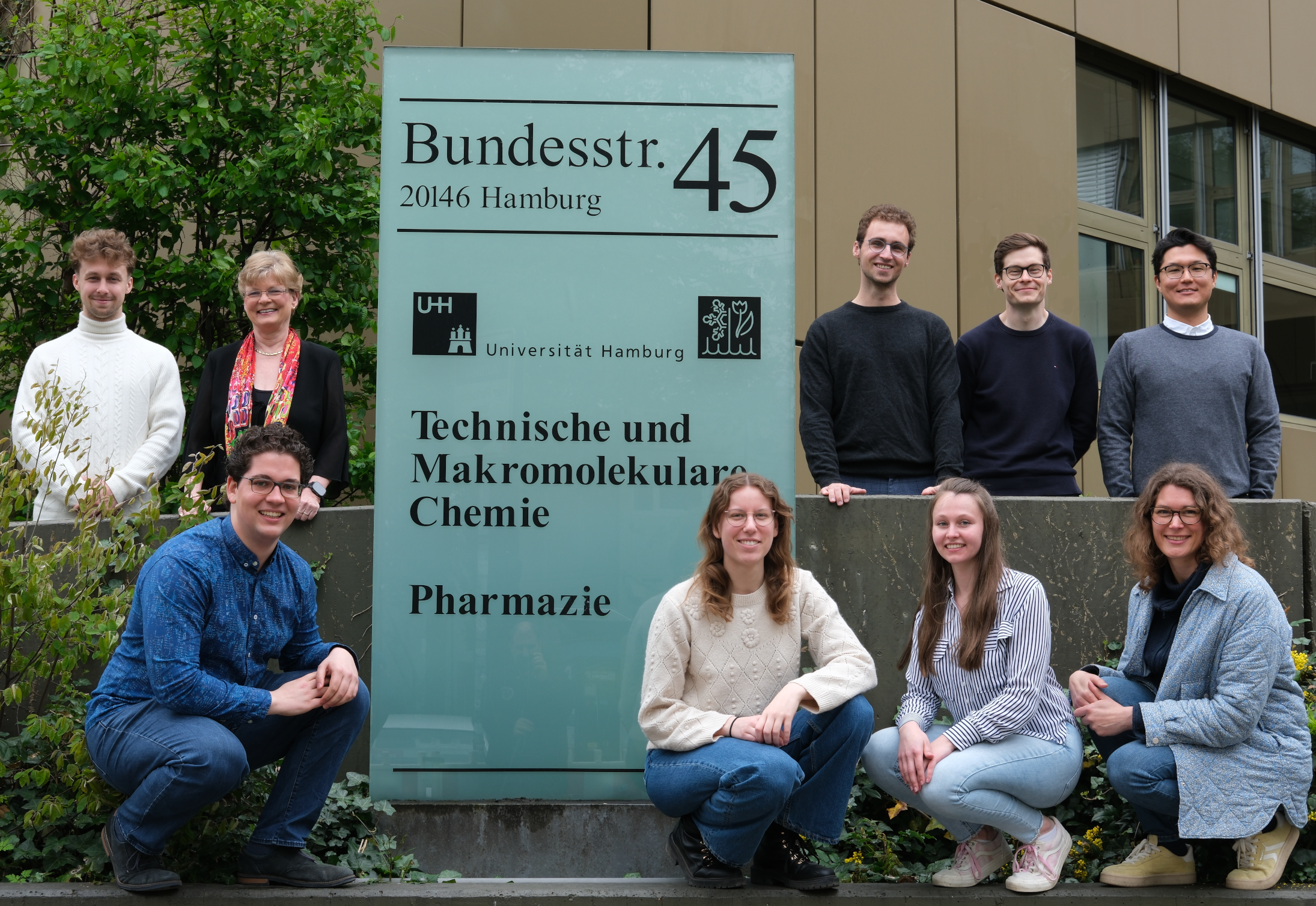
Professor Claudia S. Leopold serves as Professor and Head of the Institute of Pharmacy within the Department of Chemistry at the University of Hamburg's MIN Faculty. With over 35 years of academic experience, she leads the Pharmaceutical Technology Department and maintains an active research program focused on advanced pharmaceutical manufacturing processes and drug delivery systems. Her educational background includes a pharmacy degree from Heinrich-Heine-University Düsseldorf (1981-1985), followed by pharmacist certification in 1987. She completed her doctoral research in 1992 on skin penetration enhancement, conducted postdoctoral research at Stanford Research Institute and UC San Francisco, and achieved her habilitation in pharmaceutical technology in 1999. Her academic progression includes professorial positions at Leipzig University (2000-2005) before joining the University of Hamburg in 2005. Prof. Leopold's research program centers on pharmaceutical technology innovations, particularly in tablet formulation and manufacturing processes. Her laboratory investigates optimization of process flows during tableting, use of co-processed excipients, characterization of dustiness within containment systems, control of drug release through polymer interactions, and improving water solubility of active ingredients through co-amorphization techniques. Her work bridges fundamental pharmaceutical science with practical manufacturing applications, addressing critical challenges in modern pharmaceutical production. Her recent publications (2022-2025) demonstrate a strong focus on continuous manufacturing technologies, co-amorphous drug systems, and advanced process analytical techniques. These works reveal trends toward real-time monitoring of pharmaceutical processes, spatial analysis of powder behavior, and sophisticated approaches to enhancing drug solubility and stability. Her research group has made significant contributions to understanding powder flow dynamics, tablet coating mechanics, and the application of novel spectroscopic methods in pharmaceutical manufacturing. Habilitations-Förderpreis der Deutschen Pharmazeutischen Gesellschaft (1997) Ehrendoktorwürde (Dr. h.c.) (2020) Prof. Leopold has supervised over 25 doctoral students throughout her career, with recent dissertations focusing on powder characteristics, co-amorphous systems, continuous manufacturing optimization, and advanced tablet technologies. Her laboratory maintains strong industry connections through contract research in formulation development, tableting process optimization, drug release measurements, and expert consultation on pharmaceutical-technological issues. The research group operates specialized equipment for pharmaceutical technology studies and collaborates with international partners in continuous manufacturing and drug delivery research. The Leopold research group (AG Leopold) operates within the Institute of Pharmacy at the University of Hamburg, maintaining a comprehensive suite of equipment for pharmaceutical technology research. The team includes multiple scientific associates, research assistants, technical staff, and visiting scientists working collaboratively on various aspects of pharmaceutical development and manufacturing. The laboratory environment supports both fundamental research and applied contract work for industry partners, with particular expertise in tableting processes, drug delivery systems, and analytical method development for pharmaceutical applications.
Leijun Li, PhD, P.Eng., is a Professor in the Department of Chemical and Materials Engineering at the University of Alberta, where he also serves as Chair. With a career spanning institutions including Rensselaer Polytechnic Institute, University of Northern Iowa, and Utah State University, he specializes in physical metallurgy , welding metallurgy , and additive manufacturing . His research focuses on microstructure characterization, mechanical properties, and modeling of non-equilibrium phase transformations during welding and AM processes. Current affiliations: University of Alberta, American Welding Society, ASM International Research themes: Additive manufacturing of alloys, Corrosion science, Pipeline metallurgy, Phase transformations, Welding robotics He has received multiple AWS Hobart Awards (4 times) and Savage Awards (2 times) for his work on pipeline welding and metallurgy. His group has published extensively on topics including delta-ferrite retention in Grade 91 steel, inverse bainite transformations , and welding defect analysis . Recent projects include NSERC Alliance Missions Grant for rare earth mineral recovery and Alberta Innovates Ecosystem Program for advanced manufacturing. Key collaborators: Dr. Tom Lienert, Dr. Xiaoying Fang, Dr. P-Q Xu Labs: Rooms 2-158/3-133 (CME Building), Office 12th Floor DICE Building
Mahsa Derakhshani is a Senior Lecturer (equivalent to Associate Professor) in Digital Communications at Loughborough University's Wolfson School of Mechanical, Electrical and Manufacturing Engineering. She leads research in the Signal Processing and Networks Research Group (SPNRG) and serves as an Associate Editor for the IET Signal Processing Journal. Her academic journey includes a PhD from McGill University (2013), followed by postdoctoral roles at the University of Toronto and Imperial College London. Key awards include the Royal Academy of Engineering/The Leverhulme Trust Research Fellowship (2020-21) and NSERC Postdoctoral Fellowships (2015-2017). Research interests focus on digital communications, machine learning for signal processing, wireless networks, and reinforcement learning applications. Recent work addresses challenges in satellite communications, OTFS modulation, and opto-physiological monitoring. She has authored over 70 publications spanning topics like NOMA systems, MIMO optimization, and edge-assisted live streaming. Education: PhD (McGill, 2013), MSc (Sharif University, 2008), BSc (Sharif University, 2006) Affiliations: IEEE Senior Member, IET Member, Fellow of the Higher Education Academy Grants & Funding: Leverhulme Trust, Royal Academy of Engineering, NSERC Labs/Teams: Active in SPNRG and collaborates on projects involving 5G/6G networks, satellite systems, and biomedical signal processing. Current research emphasizes AI-driven solutions for communication networks and wearable health monitoring technologies.
Aurora del Carmen Munguía-López is a Visiting Assistant Professor in the Department of Chemical and Biological Engineering at the University at Buffalo, School of Engineering and Applied Sciences. She leads the Sustainable Systems Engineering Laboratory, focusing on computational tools for sustainable product and technology design. Education: PhD, Chemical Engineering (Process Systems Engineering), University of Michoacan, Mexico (2021) MSc, Chemical Engineering, Technological Institute of Celaya, Mexico (2017) BSc, Chemical Engineering, Technological Institute of Celaya, Mexico (2014) Research interests span four methodological areas: (1) multi-scale process design, (2) technology pathway analysis, (3) sustainable supply chains, and (4) environmental/social justice. Applications include plastics recycling, waste management, clean energy technologies, and sustainable manufacturing in food, pharmaceuticals, and textiles. Recent publications emphasize plastics sustainability, solvent-based recycling, techno-economic analysis, and circular economy frameworks. Notable works include Process Systems Engineering Approaches for Sustainable Plastics Management and A Fast Computational Framework for Solvent-Based Plastic Recycling . News highlights include her 2025 lab welcoming undergraduate researchers and speaking engagements at SPE Flexible Packaging Division conferences.
Prof. Wim Desmet is a full professor at the Faculty of Engineering Science and head of the Department of Mechanical Engineering at KU Leuven . His research focuses on advanced modeling techniques for mechanical systems, including: noise and vibration control in automotive and industrial systems computational acoustics and interval field uncertainty modeling metamaterials for broadband vibroacoustic performance AI-driven diagnostic systems in renewable energy and manufacturing Current research projects address challenges in electric vehicle drivetrains, wind turbine monitoring, and multi-physical digital twin development. He actively contributes to academic governance as: Managing Director of KU Leuven Head of Subdivision HIST Chair of multiple executive committees Member of 15+ academic and administrative councils