Patrina Paraskevopoulou is a Professor of Inorganic Chemistry at the National and Kapodistrian University of Athens , where she has been affiliated since 2009. Her academic journey at the same institution includes roles as Lecturer (2009), Assistant Professor (2015), Associate Professor (2019), and Full Professor (2023). PhD in Inorganic Chemistry/Catalysis (2003, NKUA) MSc in Inorganic Chemistry/Catalysis (2000, NKUA) BSc in Chemistry (1998, NKUA) Her research spans three core areas: Synthetic Inorganic Chemistry : Transition metal clusters, redox-active ligands, and nanostructured materials Homogeneous Catalysis : Oxidation reactions, atom-transfer processes, and polymerization mechanisms Nanoporous Materials : Metal-doped aerogels for environmental, biomedical, and energy applications Recent publications highlight her work on: Alginate-based aerogels for nuclear waste removal Biopolymer aerogels for sustainable packaging Carbon aerogels for electrochemical energy storage Metathesis polymerization mechanisms Biomedical implant monitoring via ultrasound Scientific Recognition : CAS REGISTRY Innovator (2023) DAAD Research Stay Scholarship (2017-2018) Multiple Greek State Scholarships (academic excellence) She has supervised numerous PhD, MSc, and undergraduate theses while serving as Guest Editor for Polymers and Frontiers in Chemistry . Her laboratory has received funding exceeding €1,000,000 through national and European projects.
Martien Hulsen is an Associate Professor at the Department of Mechanical Engineering , Eindhoven University of Technology (TU/e) . His research focuses on Computational Rheology , with applications in Polymer Processing , Microfluidics , and Additive Manufacturing (3D Printing) . Academic background: PhD in Mechanical Engineering (Delft University of Technology, 1988) Specializes in Numerical Methods for viscoelastic flow simulation Key applications: External Gear Pumps , Cell Sorting , and Micro-rheology Recent research trends: Interface Rheology , Particle Dynamics , and Thermal-Viscous Coupling His work has been published in top journals like Journal of Non-Newtonian Fluid Mechanics and Physics of Fluids . Martien serves on the editorial board of the Journal of Non-Newtonian Fluid Mechanics. Contact: m.a.hulsen@tue.nl
Harald Augustin is a Professor at Reutlingen University's ESB Business School, specializing in Industrial Engineering and Logistics. He leads the Virtual Engineering and Training Center (VETC) and the Steinbeis Transfer Center for Process Management in Product Development, Production, and Logistics. Current roles: Professor for "Fabriksysteme und Logistik", Director of VETC Research focus: Digital Manufacturing, Lean Logistics, Virtual Reality in Factory Planning Education Diplom-Ingenieur (Maschinenbau, Production Engineering), Karlsruhe Institute of Technology (KIT) Dr.-Ing. (Promotion) in Mechanical Engineering, TU Kaiserslautern Research stays in France, Canada, and Australia Research Interests center on optimizing logistics and production systems through digitalization, lean methodologies, and virtual collaboration. His work includes developing immersive planning systems, risk management frameworks, and agile engineering processes. Lab Affiliations : VETC (Virtual Engineering and Training Center) at ESB Business School Steinbeis Transfer Center for Process Management in Product Development, Production, and Logistics
Artur Rusowicz is a Professor at the Faculty of Power and Aeronautical Engineering , Warsaw University of Technology , specializing in the Department of Refrigeration and Building Energy . His research focuses on heat and mass transfer in refrigeration systems, free cooling technologies, plasma coatings, and entropy generation minimization in thermal systems. Key Roles: Prodziekan ds. ogólnych (since 2016), former advisor for the Student Scientific Association of Refrigeration Engineers (until 2017), Editor-in-Chief of Chłodnictwo magazine, and expert for the International Institute of Refrigeration (IIR) in Paris. Projects: Led national and international research on refrigeration, heat recovery, and plasma waste destruction, including grants from KBN, MNiSW, and Warsaw Technology Incubator. Scientific Contributions: Authored 15+ publications in leading journals like Energy , Thermal Science , and Przemysł Chemiczny , addressing thermal optimization, refrigeration cycles, and sustainable energy systems. 2020: Optimized microjet cooling systems for data centers using CFD. 2019: Refrigerant selection for Organic Rankine Cycles with environmental impact analysis. 2017: Thermoacoustic refrigeration performance evaluation. Awards: Recipient of the Rector's Award (II Class) for scientific achievements (2017, 2012) , Golden SIMP Medal (2014) , and Bronze Medal for Long Service (2012) . Also recognized for mentorship in student thesis competitions. Editorial & Organizational Roles: Served as Editor-in-Chief of Chłodnictwo , head of Warsaw SIMP Refrigeration and Air Conditioning Section, and expert in numerous scientific committees.
Hilmi AYGÜN is an Assistant Professor in the Department of Mechatronics Engineering at Karabük University's Faculty of Engineering and Natural Sciences, where he has been serving since 2019. His academic career began as a Research Assistant in the Electrical and Electronics Engineering Department from 2009-2019 before transitioning to his current position in Mechatronics Engineering. He also serves as the Erasmus Coordinator for both the Mechatronics Engineering Department and the university since 2021. Education: PhD in Electrical and Electronics Engineering (2011-2019), Karabük University, Institute of Science MSc in Electrical and Electronics Engineering (2010-2011), Karabük University, Institute of Science BSc in Electrical and Electronics Engineering (2003-2007), Kırıkkale University, Faculty of Engineering Hilmi AYGÜN's research primarily focuses on electrical machines and energy conversion systems, with particular emphasis on motor control algorithms for electric vehicle applications. His work integrates control theory with artificial intelligence techniques, especially optimization algorithms like Particle Swarm Optimization (PSO) and the Yusufcuk Algorithm. He has made significant contributions to field-oriented control of induction motors, DC motor control systems, and wind energy applications. His publication record shows a clear trajectory toward increasingly sophisticated control systems for electromechanical applications, with recent work focusing on metaheuristic methods for motor control, optimization of wind energy systems, and advanced DC motor control techniques. His research bridges theoretical control concepts with practical engineering applications, particularly in transportation and renewable energy sectors. Hilmi AYGÜN has successfully advised at least one Master's student, Hersh Hasan Taha Al Dawoodı, whose thesis focused on field-oriented control of induction motors using metaheuristic methods. He has participated in two major research projects: one on optimal flux reference direct torque control for asynchronous motors used in electric vehicles (2015-2019), and another on controlling bed temperature in fluidized bed boilers using PSO-PID controllers (2011-2013). As an educator, he has taught numerous courses including Electric Machine Dynamics, Modeling and Control of Biomedical Systems, Control of Electric Machines, Electric and Hybrid Vehicles, Industrial Automation, and various electronics courses. His teaching spans both undergraduate and graduate levels, demonstrating his versatility across multiple engineering disciplines within the mechatronics field.
Paolo Castellini is an Associate Professor at the Department of Industrial Engineering and Mathematical Sciences, Università Politecnica delle Marche (UNIVPM). His research focuses on mechanical measurements, vibration analysis, and advanced imaging techniques. He teaches courses in the College of Engineering and has published extensively on applications of hyperspectral imaging, 3D scanning, and neural networks in industrial and biomedical contexts. Office hours: Monday-Friday, 08:30-13:00 Email: p.castellini@univpm.it Location: via Brecce Bianche, 12, Ancona Recent research trends include vibration decoupling metastructures, microplastic detection in biological samples, and UAV-based photogrammetric analysis of olive trees. His publications emphasize non-destructive testing, acoustic beamforming, and uncertainty evaluation in measurement systems. Notable projects involve mmWave radar displacement analysis, cardiac simulators for prosthetic valves, and light-controlled polymer films for mechanical motion.
Miguel Costas Piñó serves as Associate Professor in the Department of Structural Engineering at the Norwegian University of Science and Technology (NTNU), where he has been faculty since 2017 and was promoted to Associate Professor in 2021. His research bridges computational mechanics with practical engineering applications in structural safety and material behavior. Education PhD in Civil Engineering, University of A Coruña (2016), thesis: "Crashworthiness analysis and design optimization of hybrid impact energy absorbers" (awarded Cum Laude, International Distinctions, and Extraordinary Doctorate Award) Master of Science in Civil Engineering, University of A Coruña (2011), specialization in Structural Engineering Research Focus Dr. Costas's work centers on computational and experimental solid mechanics , with particular expertise in metal plasticity , aluminium structures , and crashworthiness under extreme loading conditions. His laboratory investigates ballistic penetration phenomena and structural optimization for energy-absorbing systems, utilizing advanced finite element methods and physical testing protocols. Current projects integrate machine learning with traditional mechanics to model complex failure modes in multi-material systems. Publication Trends His 2020-2025 publications reveal three dominant trajectories: (1) ballistic resistance of additively manufactured metals for defense applications, (2) crash safety of electric vehicle battery systems, and (3) advanced modeling of mechanical joints. These works consistently combine experimental validation with computational innovation, particularly in neural network applications for large-scale structural simulations. Awards Cum Laude Doctorate International Distinctions (PhD) Extraordinary Doctorate Award Professional Activities Dr. Costas actively collaborates with industry partners on structural safety projects and serves as principal investigator for multiple NTNU research initiatives. His teaching includes graduate courses in materials mechanics, and he maintains dual professional engagement as a classical pianist with Norway's collaborative music community. Current work focuses on AI-driven crash simulation frameworks and next-generation armor materials.
Dr. Aniruddha Majumder is a Lecturer at the School of Engineering, University of Aberdeen, UK, since 2014. His academic journey includes a PhD in Chemical and Biomolecular Engineering from Nanyang Technological University (2011) and prior roles at Loughborough University, Purdue University, and Nanyang Technological University. Current Position: Lecturer, School of Engineering, University of Aberdeen (2014–Present) Past Roles: Research Associate (Loughborough), Visiting Scholar (Purdue), Research Assistant (NTU Singapore) Research focuses on: Crystallization (crystal shape control, enantiomer separation, polymorph control), Lattice Boltzmann Method (multiphase flow simulation), Biodegradation (anaerobic digestion), and Carbon Capture (adsorption process optimization). Recent work involves cellulose nanofiber applications and anti-fouling crystallizer design. Recent publications demonstrate expertise in: Pharmaceutical crystallization (2025: sulfathiazole nanocrystallization) Environmental remediation (2024: methylene blue removal via modified cellulose) Continuous manufacturing (2023: SM-PFC crystallizer simulation) Process modeling (2020: LBM for separation processes) Taught modules include Fluid Mechanics, Separation Processes, and Engineering Project. Collaborates with institutions in the UK, USA, and Belgium on topics like chiral resolution and sustainable chemical production. Scientific recognition includes: 2022/23 & 2017/18: Nominee for University of Aberdeen's Excellence in Teaching Award 2012: Best Poster Award (CMAC Open Day) Grants secured: Royal Society International Exchanges (2022, £12k), EPSRC CMAC Feasibility Study (2021, £59,893), and Binks Trust Fund (2018, £2.5k).
Jürgen Eckert is a Professor and Director at the Erich Schmid Institute of Materials Science of the OAW and holds the Chair of Materials Physics at the University of Leoben . He is a Corresponding Member of the Division of Mathematics and Natural Sciences in Austria since 2017. His research spans Materials Science , Condensed Matter Physics , and Metallurgy , focusing on metallic glasses , high-entropy alloys , microstructure engineering , and additive manufacturing . He has pioneered work on crystallization kinetics , phase transformations , and mechanical property optimization . Recent publications (2024-2025) highlight advances in 3D-printed titanium alloys , nitrogen-stabilized nanocrystalline alloys , and multi-stage heterostructures , reflecting his interdisciplinary approach combining experimental physics , computational modeling , and materials engineering . THERMEC 2023 Distinguished Award Gottfried Wilhelm Leibniz-Preis (2009) ERC-Advanced Grant (2013) DGM-Preis der Deutschen Gesellschaft für Materialkunde (2014) Dr. honoris causa, Slovak Technical University (2018) He leads the ERC Project INTELHYB and collaborates with institutions in India , Germany , and Europe , advancing heterogeneous materials design and sustainable metallurgical solutions .
Claudio Gaz is a Senior Lecturer in Mechatronics, Control, and Autonomous Systems at the Department of Mechanical Engineering, Faculty of Engineering, Computing and the Environment, Kingston University London. He holds a PhD in Automation and Operational Research (2016) and a Master's in Control Engineering with top marks (2011) from Sapienza Università di Roma, and was awarded the French national qualification as maître de conférences (class 61) in 2019. His research spans control systems, robotics, and mathematical modeling, with a focus on industrial manipulators (e.g., KUKA LWR, Universal Robots UR10) and biological processes like glucose homeostasis. Recent work involves dynamic parameter identification for collaborative robots and sensorless force feedback in medical robotics. He has collaborated with institutions such as Sapienza Università di Roma, CNR-IASI (Italian National Research Council), and Airbus Group. His scientific awards include: Fellowship of the Higher Education Academy (FHEA) . Gaz has contributed to journals and conferences in robotics, control theory, and biomedical modeling, with a strong emphasis on real-time adaptive algorithms and safety in physical human-robot interaction.
Professor Mahdi Mahfouf holds the Chair in Intelligent Systems at the University of Sheffield's School of Electrical and Electronic Engineering . He obtained his MPhil (1988) and PhD (1991) in Control Systems from the same institution. After postdoctoral research (1992-1996) on Leverhulme-funded projects in Model-Predictive Control and Fuzzy Logic, he progressed through academic ranks at Sheffield to Full Professor (2005). Recipient of the IEE Hartree Premium Award (1992) and MEDIPEX Innovation Award (for ICU Decision Support Systems) Over 370 publications, including 130+ journal papers Head of the Intelligent Systems Research Laboratory Research Themes His work spans fundamental research in Fuzzy Logic (modelling, control), Neural-Fuzzy Systems, Self-Organising Control, and Evolutionary Optimization, alongside applied domains in pharmaceutical manufacturing, aerospace systems, biomedical engineering (ICU monitoring), and intelligent transportation. Recent publications focus on hybrid AI for pharmaceutical processes , type-2 fuzzy control systems , and machine learning in manufacturing metrology . Lab initiatives include multistage process monitoring and human-machine interaction systems for stress management.
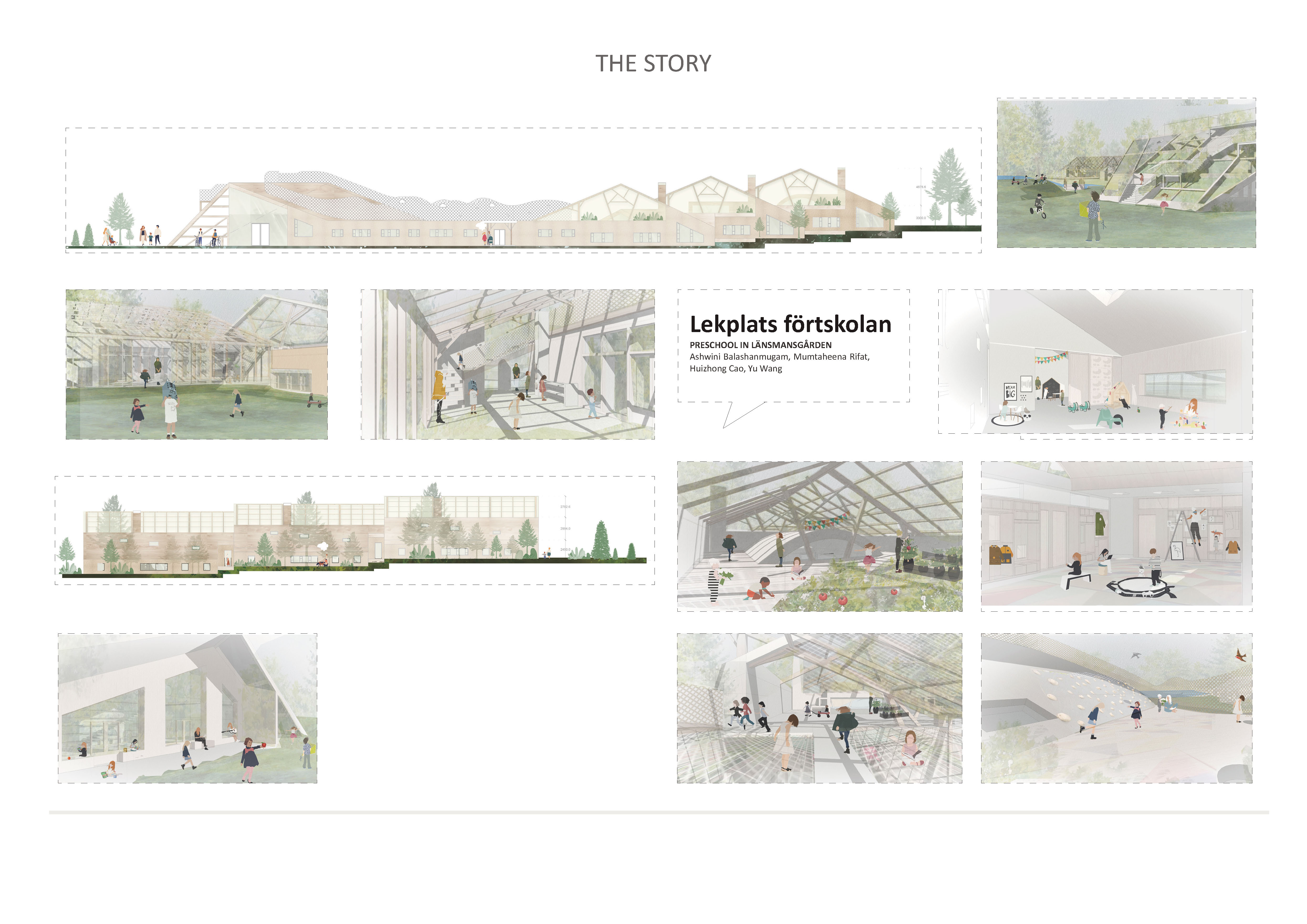
Huizhong Cao is a researcher at Production Systems , Chalmers University of Technology. With a background in architecture and sustainable urban planning, she bridges design and technology through projects involving XR platforms , digital twins , and human-centered design . MSc in Sustainable Urban Planning (Chalmers) BSc in Architecture (Wuhan University) Her research focuses on mental workload assessment , XR interface design , and sustainable smart cities . Key projects include: RILIK - Immersive learning framework XR-TBP - Extended reality training for battery production TRIREME - Digital & Green Skills development DIGITALIS - Cognitive work optimization Recent publications analyze: VR interface design for collaborative manufacturing XR applications in environmental sustainability Digital twin integration with IoT Scientific recognition includes: IPOET Scholarship LEXUS Design Award Finalist KTH Innovative Incubator Program UIA-HYP Cup Third Prize She has contributed to UX design and XR development across multiple projects, often combining participatory design with game engine technology . Contact: huizhong@chalmers.se | huizhongcao1@gmail.com
Maarten Blommaert is an Assistant Professor at the Department of Mechanical Engineering, Faculty of Engineering Technology at KU Leuven. He leads the Applied Mechanics and Energy conversion (TME) unit at the Geel Campus and heads the Subdivisie EnergyVille TME. His research focuses on numerical optimization of thermal systems, particularly district heating networks, additive manufactured heat exchangers, and plasma-facing components for nuclear fusion reactors. Assistant Professor, KU Leuven Head, Subdivisie EnergyVille TME Member, KIES Institute Member, Leuven.AM Institute Member, EnergyVille Blommaert's research explores three main areas: heat network optimization through automated design tools like PATHOPT, additive manufacturing of high-performance heat exchangers, and thermally resistant wall modules for nuclear fusion reactors. His work combines computational modeling with advanced manufacturing techniques to enhance energy efficiency and reduce carbon emissions. Scientific awards include collaborative research contributions in: Optimizing district heating networks for renewable energy integration Developing next-generation heat exchangers Advancing nuclear fusion reactor technology Blommaert actively supervises research projects in thermal-fluid systems and collaborates with institutions like VITO and EnergyVille. His research team IDEAL (Innovative Design for Energy Applications Lab) specializes in free-shape and topology optimization techniques for energy components and systems.
Jean-Daniel Penot is a Researcher at CESI's Research and Innovation Department , with expertise in additive manufacturing, materials science, and industrial integration. His work bridges advanced manufacturing technologies with environmental sustainability and educational innovation. Doctorate in Materials Physics (2010) Engineering Degree in Physics (2007) Research Master in Optoelectronics (2007) Penot's research spans Additive Manufacturing and its applications in automotive, nuclear, and construction sectors. He focuses on Laser-Material Interaction , Machine Learning for process optimization, and Sustainable Engineering through life cycle assessments and geopolymer applications. His recent publications emphasize BIM , AM Modular Plants , and Defect Analysis in 3D-printed metals. Penot leads France Additive initiatives and contributes to International Standards as a board member. Penot supervises PhD students including Maryam Houhou and Amal Khabouchi , with a focus on Industrial Security and Energy Transitions . His projects integrate Thermal Comfort , Ultrasonic Inspection , and Quality Assurance in additive manufacturing systems.
Alejandra Magana serves as the W.C. Furnas Professor in Enterprise Excellence of Applied and Creative Computing and Professor of Engineering Education at Purdue Polytechnic, Purdue University. She directs the ROCkETEd Lab and holds significant editorial roles including Deputy Editor for the Journal of Engineering Education and Co-Editor of the Education Department for IEEE Computer Graphics & Applications. Her leadership extends to multiple editorial boards in engineering and science education journals. Ph.D. in Engineering Education, Purdue University (2009) Post-doc in Engineering Education, Purdue University (2010) M.S. in Educational Technology, Purdue University (2007) M.S. in Electronic Commerce, Instituto Tecnologico y de Estudios Superiores de Monterrey (2003) B.S. in Information Systems Engineering, Instituto Tecnologico y de Estudios Superiores de Monterrey (2000) Magana's research focuses on how students develop computer and data science self-regulated learning skills through computational cognitive apprenticeship and authentic modeling practices. She investigates how learning analytics and AI can support student learning in computing-intensive domains and engineering thinking in K-12 education. Her work bridges educational theory with practical applications in STEM fields, emphasizing the integration of computational thinking across disciplines. She employs design-based research methodologies to create and evaluate innovative learning environments that leverage simulation, visualization, and emerging technologies. Analysis of Magana's recent publications reveals a strong emphasis on collaborative learning in digital environments, with growing attention to AI applications in education. Her work spans multiple domains including virtual reality for STEM education, teamwork dynamics in software development, AI ethics education, and computational thinking assessment for teachers. A consistent theme is the development of representational competence through modeling and simulation practices, with increasing integration of learning analytics to understand student cognition and team processes. Fellow Member, American Society for Engineering Education (2024) Fulbright Specialists Appointment (2024) Purdue Polytechnic Charles B. Murphy Outstanding Undergraduate Teaching Award (2021) W.C. Furnas Professorship (2020) Purdue University Faculty Scholar (2016) ASEE-ERM Apprentice Faculty Grant (2012) Magana leads multiple significant research grants totaling over $15 million, primarily from NSF, focusing on computational education, AI in learning environments, and engineering education transformation. Her ROCkETEd Lab serves as the hub for these research activities, which often involve interdisciplinary collaborations across engineering, computer science, and education. She has mentored numerous graduate students who appear as co-authors on her publications, though specific advising relationships aren't explicitly documented. Her research program demonstrates strong continuity from foundational work on modeling and simulation to current projects integrating generative AI and immersive technologies. The ROCkETEd Lab (Research in Organizing Computational Knowledge for Engineering Thinking and Education) functions as Magana's primary research unit, focusing on computational cognitive apprenticeship approaches. The lab investigates how students develop representational fluency through modeling and simulation practices, with recent expansion into AI-enabled learning environments. Current projects examine hidden curricula in computer science education, high-performance computing virtual environments for AI education, and culturally relevant programming learning experiences. The lab maintains strong industry and international partnerships, particularly with institutions involved in advanced manufacturing and educational technology development.