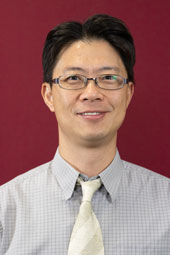
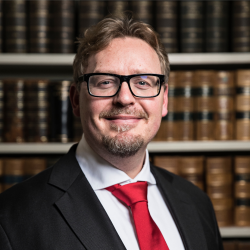
Stefan Schmalz is a Heisenberg Research Group Leader at the Faculty of Political Science of the University of Erfurt , affiliated with the Max Weber Center for Advanced Cultural and Social Sciences . He serves as subproject leader for SFB 294 'Structural Transformation of Property' (Subproject JRT02: 'Struggle or Convergence of Capitalisms'). Research Interests His research focuses on political economy , globalization , and digital capitalism , analyzing: Power dynamics in global labor movements US-China geopolitical rivalry Structural transformations in capitalist systems Informal labor and extractivism Publications His recent work examines comparative digital capitalism models, vaccine distribution geopolitics, and transnational property conflicts. Key themes include: Postcolonial continuities in global value chains State-corporate interactions in China Labor unrest in global manufacturing hubs
Wenting Pan is a faculty member at the School of Economics and Business Administration of Saint Mary's College of California. Her research focuses on supply chain management, decision theory, and economic modeling under uncertainty. Primary Affiliation: Saint Mary's College of California Research Themes: Supply chain optimization, risk analysis, pricing strategies, and behavioral economics Pan's work explores operational strategies for businesses facing supply and demand uncertainty, with applications to solar energy systems, inventory management, and online retail. She employs mathematical models to analyze risk attitudes and develops optimization frameworks for decentralized systems. Her publications appear in journals like Journal of Cleaner Production and focus on topics such as: Vendor-managed inventory contracts Backup and dual-sourcing strategies Game-theoretic approaches to supply uncertainty Creative optimization models for innovation Economic impacts of pricing decisions Pan collaborates with researchers across disciplines to address challenges in sustainable business practices and operational efficiency.
David J. Willis is an Associate Professor in the Department of Mechanical and Industrial Engineering at the Francis College of Engineering, University of Massachusetts Lowell. His research spans computational and experimental aerodynamics, renewable energy systems, and engineering education innovation. Education: Ph.D. in Aeronautics and Astronautics, Massachusetts Institute of Technology (2006) S.M. in Aeronautics and Astronautics, Massachusetts Institute of Technology (2003) B.Eng. in Aerospace, Carleton University (2000) Research Focus: Dr. Willis develops advanced computational models for aerodynamic phenomena including biologically-inspired flight and wind energy systems. His experimental work investigates fluid-structure interactions and material properties for aerospace applications. In engineering education, he creates hands-on learning frameworks to enhance STEM pedagogy and manufacturing instruction. Publication Trends: Recent work (2023-2024) focuses on experimental characterization of parachute materials and aeroacoustic structural monitoring. Earlier publications established computational methods for unsteady flows, flapping flight energetics, and educational technology. His work consistently bridges theoretical modeling with experimental validation across aerospace and renewable energy domains. Sponsored Research: ENG-ED 4.0: Educating Next-Gen Engineers (Davis Educational Foundation) Collaborative Research: Leading Edge Vortex Evolution (NSF) UML-WIND 2016 Collegiate Wind Competition (NREL) Wind Energy Research Workshop (NSF) Hands-on MADE 4 ME (NSF)
Francesco Gallmann is a Senior Lecturer in Operations & Supply Chain Management at SDA Bocconi School of Management and holds a Ph.D. in Management from Neuchâtel University. He serves as a Contract Professor at Bocconi University and is a Visiting Lecturer at the University of Klagenfurt (since 2016), IBSS-International Business School Suzhou (since 2014), and previously at HEC Lausanne (2008-2011). Education: Environmental Engineering (Politecnico di Milano), MBA (SDA Bocconi), Ph.D. in Management (Neuchâtel University) His research focuses on operations excellence through LEAN methodologies, global supply chain optimization, and performance measurement systems. He has led applied projects in automotive, food, fashion, and pharmaceutical industries, emphasizing agility, sourcing strategies, and after-sales services. His publications span journals like Operations Management Research and Economia&Management , addressing alignment of strategy with operational priorities and inventory-logistics integration. Francesco has received multiple SDA Bocconi Innovation and Excellence in Innovation Awards (2008, 2009, 2019, 2022) and designed executive programs for companies including automotive and food multinationals. He is active in EUROMA and APICS networks and has professional experience in management consulting and renewable energy entrepreneurship.
Professor Amarendra Kumar Singh is a distinguished faculty member in the Department of Materials Science and Engineering at Indian Institute of Technology Kanpur, specializing in process modeling and simulation of metallurgical processes. With over three decades of academic and industrial experience, he has established himself as a leading expert in steel refining, solidification processing, and computational materials engineering. PhD, IIT Kanpur, 2003 PG, IIT Kanpur, 1990 UG, IIT Kanpur, 1987 Dr. Singh's research focuses on Steel Refining and Casting, Extractive Metallurgy, Integrated Computational Materials Engineering, Solidification Processing, and Sustainable Manufacturing. His work bridges fundamental scientific principles with practical industrial applications, particularly in the steel industry. He employs advanced computational techniques to model complex metallurgical processes, enabling optimization of manufacturing parameters and improvement of material quality. His research has significant implications for energy efficiency, environmental sustainability, and cost reduction in metal production. His publication record demonstrates a consistent trajectory of research excellence, with a focus on mathematical modeling of steelmaking processes, solidification phenomena, and computational approaches to materials engineering. The publications span from fundamental studies of macrosegregation and solidification to applied research on ladle refining, electric arc furnaces, and inclusion engineering in steel. Recent work shows increasing integration of data science approaches with traditional materials modeling. Metallurgist of the Year Award, Ministry of Steel, Government of India, 2014 Distinguished Scientist Award, TCS, 2011 AICTE-INAE Distinguished Visiting Professor at IIT Bombay (2009-2012) Multiple Best Paper Awards from Indian Institute of Metals As a faculty member at IIT Kanpur, Dr. Singh has contributed significantly to academic programs, mentoring students, and advancing research in materials engineering. His professional affiliations with The Minerals, Metals and Materials Society (TMS), Indian Institute of Metals (IIM), Materials Research Society of India (MRSI), and Indian Society of Heat & Mass Transfer (ISHMT) reflect his standing in the academic community. His research has practical applications in industrial settings, particularly in the steel manufacturing sector where process optimization is critical for competitiveness.
Maxim Yurevich is an Analyst at the Center for Structural Policy Research (HSE University) since 2019. He holds an MA and BA in Economics from Moscow State University. His research focuses on economic development , labor productivity , and industrial policy , with emphasis on multinational corporations , technological sovereignty , and global value chains .
Susanne Gretzinger serves as an Associate Professor in Business-to-Business Marketing and Interactive Innovation at the University of Southern Denmark (SDU), specifically at the Sønderborg campus within the Department of Business and Sustainability. She has held academic positions at SDU since 2008, initially in the Department of Border Region Studies (2008-2014) and subsequently in the Department of Entrepreneurship and Relationship Management before her current appointment. University of Paderborn: Diploma in Economics (Diplom-Kauffrau), specializing in Marketing and HRM (1991-1997) University of Urbana/Champaign: Post-graduate research (2001-2004) University of Paderborn: PhD research on strategic HRM in networks Professor Gretzinger's research centers on business-to-business networks, social capital in business clusters, and innovation management within cooperative networks. Her work particularly examines entrepreneurial milieus in regional business networks, embedded creativity in non-urban settings, and institutional arrangements in business marketing. She employs mixed-method approaches including network analysis, qualitative case studies, and meta-synthesis techniques to investigate how organizations build and leverage relationships for competitive advantage. Her publication record demonstrates consistent focus on rural entrepreneurship, network brokerage, and value creation in regional contexts, with recent work expanding into digital platforms, sharing economy models, and sustainability in rural enterprise. The trajectory shows increasing attention to cross-border collaboration, particularly in the Danish-German border region, and evolving toward digital transformation in traditional business models. BHJ Best Teaching Award 2021 / Campus Sønderborg BHJ Innovation Award 2018 Professor Gretzinger has supervised numerous master's theses and participates actively in research projects including the Interreg 'Benefits for Regions' (B4R) project (€3.8 million) where she coordinated the scientific working package, and the Marie Curie K.I.T.F.E.M project funded by EU Horizon 2020. She has served as guest editor for multiple special issues including 'Innovation Networks' in Management Revue and 'Innovation in peripheries and borderlands' in Journal of Rural Studies. Her teaching portfolio includes Business Marketing, Strategic Management, and Networks and Regional Strategies at both bachelor's and master's levels. She is actively involved in research networks focused on business ecosystems and participates in the 'Energi på havet' project examining energy initiatives in maritime contexts. Her work frequently bridges academic research with practical applications in regional development, particularly in the Danish-German border region where she investigates how micro-enterprises and public organizations collaborate in development projects.
Devarajan Ramanujan is an Associate Professor in the Department of Mechanical and Production Engineering at Aarhus University, Denmark, under the school of AU Engineering. He leads the Design and Manufacturing Section and directs the Life Cycle Design and Manufacturing Research Group, focusing on sustainability and circular economy integration in engineering systems. He joined Aarhus University in 2017 after completing a postdoctoral fellowship at MIT and earning his PhD from Purdue University. Research Interests: His work centers on sustainable design, sustainable manufacturing, circular economy, life cycle assessment, and digital twins. He develops computer-aided tools to embed environmental and circularity assessments early in product and process design. The research is practice-oriented and conducted in collaboration with manufacturing industries, standards bodies, and innovation clusters. Publication Trends: His recent publications (2017–2024) show a consistent focus on integrating sustainability into engineering design and manufacturing. Key themes include life cycle assessment visualization on CAD models, circular disassembly frameworks, digital threads for circular economy, and multiregional analysis of critical material supply chains (e.g., dysprosium). The work spans environmental engineering, industrial systems, and digital manufacturing. Scientific Awards: Award from the American Society of Mechanical Engineering (ASME) Award from the Association of EcoDesign Societies in Japan Award from Aarhus University Award from Purdue University Advising and Grants: While specific student advisees are not listed, he leads a research group and has secured multiple competitive research grants. His funded projects include ACCURATE (2024–2026), Building the Digital Thread (2021–2025), and Realizing Circular Production (2022–2024), among others, indicating active mentorship and project leadership. These projects are supported by national and international funding bodies, though specific agencies are not named. Labs and Teams: He leads the Life Cycle Design and Manufacturing Research Group, which develops computational methods for sustainable engineering. The group emphasizes collaboration with industry and real-world implementation, suggesting strong industrial linkages and applied research focus.
Dr. Danilo Pesce is a Fixed-term Assistant Professor at the Department of Management and Production Engineering (DIGEP), Politecnico di Torino. He serves as a member of the Interdepartmental Center SmartData@PoliTO - Big Data and Data Science Laboratory. Academic Focus: Business models, digital transformation, strategy Key Research Themes: Digital industrial platforms, phygital innovation, organizational adaptation to technology His recent publications analyze digitalization's impact on manufacturing, cultural heritage, and institutional contexts. He supervises PhD candidates Pietro Rombola' and Gabriele Aimonino. Significant Project: Enhancement of the Italian trade fair system through a nationally integrated digital platform (2023)
Professor Vikas Kumar is a Director of Research and Professor of Operations and Supply Chain Management at the Bristol Business School, University of the West of England (UWE). He has over a decade of academic experience and serves as a Fellow of the Higher Education Academy (HEA). Previously, he worked as a Lecturer in Management at Dublin City University Business School (2009-2013). Current collaborations: University of Exeter, Cardiff University, IIT-Kharagpur, Hong Kong Polytechnic University, National Chiao Tung University, Yasar University, and institutions in Brazil, Vietnam, Thailand, Indonesia, India, Mexico, Columbia, Peru, Costa Rica, and Turkey Research funding in excess of £1 million from Innovate UK, EPSRC, British Council, Newton Fund, Royal Academy of Engineering, and Science Foundation of Ireland Editorial roles: Over 10 international journals, including special issue guest editorships His research focuses on sustainable supply chain systems, including Supply Chain 4.0, Circular Economy, Short Food Supply Chains, and Operational Excellence. He has supervised numerous doctoral students and redesigned UG/PG programs like the MSc International Management, which now sees 5x student intake post-redesign. Teaching areas include Strategic Management, Research Methodology, Operations Management, and Sustainable Supply Chains. He has designed modules such as Management Research , Personal and Professional Development , and Systems, Structures and Operations for UWE's academic programs.
Yu Peng Lin is a Professor of Economics and Chair of the Department of Economics at the University of Detroit Mercy, located at McNichols Campus. He holds a Ph.D. in Economics from SUNY Buffalo, an M.S. in Finance from the University of Colorado, and a B.A. in International Trade from Tunghai University, Taiwan. His expertise spans Financial Economics, Labor Economics, and Econometrics, with a focus on executive compensation strategies, human resource management, and productivity analysis. Research Interests: Lin's work examines topics such as top executive compensation in international contexts, managerial incentives and firm survival, information asymmetry in financial markets, and the economic implications of grade inflation in higher education. He has also explored urban economic resilience through case studies like Detroit's bankruptcy and the impact of diversification strategies on city growth. Publications & Textbooks: Lin has authored three textbooks including *Business Statistics and Econometrics I* (2012) and contributed to over 20 referred journal articles. Recent publications address strategic equity compensation in entrepreneurial firms, online learning behavior, and network effects in technology markets. Teaching: Lin teaches core economics courses such as Microeconomics, Macroeconomics, Financial Economics, and Data Analytics. He has advised capstone projects including a 2022 study on specialization's impact on recruiter productivity in staffing industries.
Timo Minssen is Professor of Law at the University of Copenhagen and Founding Director of the Center for Advanced Studies in Bioscience Innovation Law (CeBIL) . He holds affiliations as an Inter-CeBIL Research Affiliate at the Petrie-Flom Center (Harvard Law School) and an LML Research Affiliate at the University of Cambridge. His career spans roles such as TUM Global Visiting Professor (Technical University of Munich), Visiting Scholar at Harvard, Oxford, and Cambridge, and PI for the Novo Nordisk Foundation’s Inter-CeBIL research program. Education: German Staatsexamen (Göttingen), Swedish LL.M., LL.Lic., and LL.D. (Lund & Uppsala Universities). Specializations: Intellectual Property, Competition & Regulatory Law in health/life sciences; focuses on genome editing , AI , big data , and quantum technologies . His research bridges legal, ethical, and commercial challenges in biomedical innovation, emphasizing sustainable R&D regulation , open innovation , and technology transfer . He has published over 220 articles in journals like Science , Nature Biotechnology , and JAMA , with themes spanning pharmaceutical patent law, bioethics, and AI governance. Scientific awards : King Oscar Award (2014), Jorcks Foundation Prize (2017), Awapatent Research Prize (2009). Grants : Novo Nordisk Foundation (50 million DKK), EU Horizon, SSHRC, Wallenberg Project. He advises the WHO , WIPO , and EU Commission on digital health, AMR, and AI policy, and supervises PhD students in areas like CRISPR licensing , antimicrobial resistance , and pharmaceutical regulation . His work appears in media outlets such as The Economist , Politico , and The Lancet Digital Health .
Jan Stentoft is a Professor in the Department of Business and Sustainability at the University of Southern Denmark (SDU), specializing in Supply Chain Management with a focus on practical applications for Danish businesses. His work bridges academic research and industry implementation, particularly with small and medium-sized enterprises across Denmark. Based at the Kolding campus, he maintains an active research profile with over 380 publications and extensive collaboration with Danish manufacturing firms. Stentoft's research concentrates on critical contemporary supply chain challenges including Supply Chain Resilience, Industry 4.0 integration, Cybersecurity applications, and Sales & Operations Planning. His fingerprint analysis reveals strong expertise in Supply Chain Management (100%), Danish business contexts (73%), Industry dynamics (61%), and SME-focused supply chain solutions (26%). He examines how technological innovations impact manufacturing relocation decisions, supply chain risk management, and business continuity in volatile geopolitical environments. His recent publication trends demonstrate a clear shift toward practical applications of supply chain theory, with increasing focus on pandemic-related disruptions, cybersecurity threats, and the implementation challenges of Industry 4.0 technologies. The research shows strong emphasis on behavioral aspects of supply chain management, recognizing that successful implementation depends as much on human factors as technological capabilities. Danish manufacturing SMEs form the primary empirical basis for his work, creating regionally relevant but globally applicable insights. Stentoft actively engages with industry through numerous consulting projects and media appearances, with nearly 500 press mentions. He has led multiple significant research projects including the active Cybersikkerhed og Forretningskontinuitet project running through February 2026, examining cybersecurity and business continuity in Danish manufacturing SMEs. His teaching portfolio includes courses on Supply Chain Resilience, Operations Management, and System Implementation in SMEs. With 47 teaching activities documented, he maintains strong connections between his research and educational offerings, ensuring students receive current, practice-oriented knowledge directly applicable to contemporary business challenges.
Dr. Kipp Krukowski is a Senior Clinical Professor of Entrepreneurship at Colorado State University's College of Business, Department of Management. He also serves as Academic Faculty Director with the Institute for Entrepreneurship and co-creator of the Pivot Jumpstart workshop series for business owners. With over 20 years of practical experience in business valuation, exit planning, and value creation strategies, Dr. Krukowski brings real-world expertise to the classroom. His educational background includes a PhD from Oklahoma State University, an MBA from Carnegie Mellon University's Tepper School of Business (with concentrations in Production & Operations Management, Management of Information Systems, and Entrepreneurship), and a Mechanical Engineering degree from Youngstown State University. Dr. Krukowski's research focuses on entrepreneurial exits, small business valuation, and value creation strategies for businesses preparing for sale. His work examines how business owners can improve various aspects of their companies to maximize value before selling, including product or service value propositions, customer segments, company infrastructure, and financial viability. He has published extensively on signaling effects in entrepreneurial exits, particularly how seller rationale affects deal terms, and how entrepreneurs can effectively pitch to investors. His research portfolio demonstrates consistent focus on practical applications for entrepreneurs and business owners, with recent publications organized around a comprehensive value creation framework for business exits. His work bridges academic theory with practical business applications, particularly in manufacturing and small business contexts. Colorado State University College of Business Excellence in Undergraduate Teaching Award (2022-2023) Colorado State University Department of Management Outstanding Teaching Award (2022-2023) Daniels Fund Ethics Initiative Faculty Fellow (2022-2023) 5-Time Tinberg Teaching Innovation Grant Recipient (2020-2021, 2022-2023, 2023-2024, 2024-2025, 2026-2027) Dr. Krukowski has served as a mentor for Carnegie Mellon entrepreneurs for over 10 years and as a judge for the McGinnis Venture Competition. His industry experience includes founding multiple successful businesses including Equipment Appraisal Services and MFG Valuation Specialists, where he continues to consult on manufacturing business valuations and equipment appraisals. His practical experience informs his teaching of Fundamentals of Entrepreneurship and New Venture Creation courses. He maintains strong industry connections through his consulting work with MFG Valuation Specialists, serving clients including major corporations, government entities, and financial institutions. His team continues to help business owners prepare for successful exits while applying rigorous valuation methodologies.
Beena P L is a Professor at the Centre for Development Studies (CDS) in Trivandrum, India, specializing in Industrial Economics and Indian Economic Development. She holds a Ph.D. in Economics from Jawaharlal Nehru University and has been affiliated with CDS since 2001, progressing from Assistant Professor to Professor. Her career includes prior roles as a consultant at the National Council for Applied Economic Research and Research and Information System for Developing Countries. Her education includes: Ph.D. in Economics, Jawaharlal Nehru University (1993-1998) M.Phil in Applied Economics, Centre for Development Studies (1989-1991) M.A in Applied Economics, Calicut University (1986-1988) B.Sc. in Mathematics, Calicut University (1983-1986) Beena's research focuses on the intersection of globalization, industrial dynamics, and policy frameworks. Key interests include: Corporate Strategies : Mergers, acquisitions, and competition policy in Indian industries Global Economic Integration : Outward FDI, WTO impacts, and regional trade in South Asia Development Economics : Gender enterprises, SME growth, and innovation ecosystems Her work critically examines neoliberal policies while advocating for equitable development models. Her recent publications emphasize antitrust regulations in tech/pharma mergers, Kerala's trade patterns under WTO, and low-carbon economic transitions. Common themes include regulatory challenges in globalization, IPR-antitrust intersections, and regional economic resilience, reflecting her focus on policy-relevant industrial economics. Notable recognitions include: ICSSR General Fellowship (2010-2012) Visiting Fellowships at Oxford University and JNU Membership in Kerala's Public Expenditure Committee (2022) She leads multiple research initiatives: ICSSR-funded study on women-owned enterprises in Kerala Projects on Kerala's non-tax revenue and Cochin SEZ exports Collaborative book on labor mobility during pandemics Administratively, Beena has served as CDS's ICC Chairperson, Ladies Hostel Warden, and coordinator for academic programs including the Kerala and World Economy conference. She currently coordinates CDS's Indian Economic Development course and teacher training initiatives.