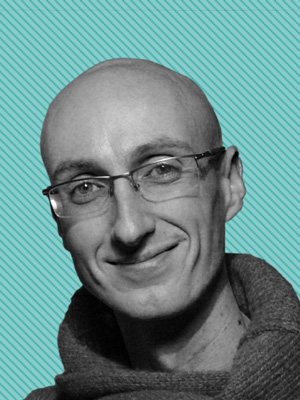
Taylor Dupuy is an Assistant Professor at the University of Vermont in the Department of Mathematics and Statistics within the College of Engineering and Mathematical Sciences. His research bridges arithmetic geometry, differential algebra, and applied model theory. Expertise in Arithmetic Geometry , focusing on abelian varieties and Mochizuki's work Contributions to Differential Algebra through p-differentials and differential equations Applications in Applied Model Theory for mathematical logic Recent publications examine topics like Ford spheres, angle ranks of abelian varieties, and extensions of the Abel-Jacobi map. His work connects number theory with geometric frameworks and computational verification. He teaches courses such as MATH 6441: Theory of Functions of Complex Variables and MATH 2248: Calculus III .
Dmitrij Rappoport is a researcher affiliated with the University of California, Irvine . His work spans theoretical chemistry, reaction networks, and molecular properties, with a focus on quantum chemistry and computational methods. University of Karlsruhe, 2007 (Dr. rer. nat., Theoretical Chemistry) University of Karlsruhe, 2003 (Diplom, Chemistry) His research explores complexity in chemical systems, including reaction network modeling, nonlinear dimensionality reduction for reactive coordinates, and quantum chemical approaches to thermodynamics. He has developed open-source tools like Libkrylov and contributed to the TURBOMOLE software suite. Recent publications include studies on non-Kasha fluorescence, enzyme discovery via machine learning, and reaction mechanisms in dinitrogen reduction. His work bridges computational chemistry, materials design, and biochemical applications. Scientific Awards: Postdoctoral Research Award of the Physical Chemistry Division of the ACS (2010) Proctor & Gamble Graduation Award (2003) German National Academic Foundation Fellowship (1998-2001) He has contributed to software development and computational methodologies, with a particular emphasis on accurate modeling of excited states, charge transport, and reaction dynamics. Collaborative projects include bioluminescence mechanism analysis and machine learning applications in protein function prediction.
GÜL TUĞ is an Associate Professor in the Department of Mathematics at Karadeniz Technical University's Faculty of Science, specializing in differential geometry and mathematical physics. She has held academic positions at KTU since 2010, progressing from Research Assistant to Associate Professor. Education: PhD in Mathematics, Karadeniz Technical University (2011-2017) Postgraduate studies at Ankara University (2008-2010) and KTU (2010-2011) BSc in Mathematics, Ankara University (2004-2008) Research Interests: Her work focuses on geometric structures in relativistic spaces, including lightlike manifolds, accretive growth kinematics, and curve evolution in Minkowski spacetime. She explores applications in mathematical biology and physics through differential geometry frameworks. Publication Trends: Her 14 recent articles predominantly investigate kinematic surface growth, lightlike hypersurfaces, and curve evolution in Lorentz-Minkowski spaces, blending theoretical mathematics with physics applications. Research consistently utilizes Darboux frames, quaternionic methods, and geometric flow models. Advising: Supervised postgraduate research on Ricci solitons in lightlike hypersurfaces (2021). No significant grants or lab affiliations documented.
Jose Ceniceros is an Associate Professor in the Department of Mathematics and Statistics at Hamilton College. He teaches courses such as Calculus I and Multivariable Calculus, and his research focuses on contact geometry, knot theory, and algebraic structures. Ph.D. in Mathematics, Louisiana State University M.S. in Mathematics, Louisiana State University M.S. in Mathematics, California State University, Los Angeles B.A. in Mathematics, Whittier College His primary research explores the classification of transverse knots in contact 3-manifolds and the development of combinatorial invariants for transverse knots. He is also passionate about integrating research into undergraduate education to enhance student engagement. Recent publications highlight his work in knot theory, virtual Yang-Baxter invariants, and optimization principles, reflecting a blend of geometric topology and applied mathematical methods. In his spare time, he enjoys running, hiking, cycling, and watching movies.
Simon Brendle is a German-American mathematician and Professor of Mathematics at Columbia University , having previously served as professor at Stanford University from 2005 to 2016. He also held visiting positions at MIT, ETH Zürich, Princeton University, and Cambridge University. Education: Dr. rer. nat. (2001), University of Tübingen, advised by Gerhard Huisken Research Interests: Simon Brendle works at the intersection of differential geometry and nonlinear partial differential equations . His core areas include conformal geometry , Ricci flow , mean curvature flow , and minimal surface theory . He has resolved celebrated problems such as the differentiable sphere theorem, the Lawson conjecture, and the convergence of the Yamabe flow in all dimensions. His work often involves deep analysis of geometric evolution equations, exploring singularity formation, uniqueness of self-similar solutions, and rigidity phenomena under curvature conditions. Publications Overview: Brendle’s recent articles span breakthrough results on minimal tori in the 3-sphere, rotational symmetry of Ricci-flow singularities, scalar-curvature deformations, and curvature-pinching theorems. Collectively these works advance understanding of geometric flows, global structure theorems, and the interplay between curvature and topology. Awards & Honors: 2024 Breakthrough Prize in Mathematics 2017 Fermat Prize 2017 Simons Investigator Award 2014 Bôcher Prize (AMS) 2012 EMS Prize 2006 Alfred P. Sloan Fellowship Delivered the 2012 Euler Lecture and 2011 Takagi Lectures PhD Advising & Grants: Brendle has mentored doctoral students including Otis Chodosh , now a leading researcher in geometric analysis. His research has been supported by prestigious grants, most notably the Simons Investigator Award. Laboratories & Collaborations: While no formal laboratory is listed, Brendle actively collaborates with leading mathematicians worldwide, including Richard Schoen, Fernando C. Marques, and André Neves, frequently working at the intersection of geometry and analysis.
Giovanni Francesco Calvaruso is a Full Professor at the Department of Mathematics and Physics 'Ennio De Giorgi' , University of Salento, Italy. His research focuses on Riemannian and Pseudo-Riemannian Geometry , with key contributions to Ball-Homogeneous Spaces, Metric Contact Manifolds, Spectral Geometry of Submanifolds, Homogeneous Geodesics, and Lorentzian Manifolds. He has authored over 110 publications in prestigious journals and co-authored a monograph on Pseudo-Riemannian Homogeneous Structures (Springer, 2019). Education : Degree in Mathematics (University of Lecce, 1995, 110/110 with honors) International Collaborations : Catholic University of Louvain (Belgium), University of Payame-Noor (Iran), University of Santiago de Compostela (Spain), University of Madrid (Spain) Research Highlights : Classification of 3D Lorentzian homogeneous spaces Studies on $g$-natural metrics and harmonicity of vector fields Contributions to spectral geometry and curvature-tensor analysis Scientific Awards : National Scientific Qualification (ASN) for Full Professor (2017) VQR excellence recognition (2004-2019) Highest citation in J. Geom. Phys. (2007) Academic Service : Coordinator of the Mathematics PhD program (UniSalento) Guest Editor for international journals Organizer of conferences like 'Curvature in Geometry' (2003) and 'Recent Advances in Differential Geometry' (2007)
Caroline Moosmueller is an Assistant Professor in the Department of Mathematics at the University of North Carolina at Chapel Hill, where she leads the Geometric Data Analysis research group. She holds a B.Sc and M.Sc in Mathematics from the University of Vienna and a Ph.D in Technical Mathematics from Graz University of Technology. Her professional background includes postdoctoral work at Johns Hopkins University (2017-2019) and a Visiting Assistant Professor position at the University of California, San Diego (2019-2022). Her research develops numerical methods for nonlinear and high-dimensional data analysis with focus on structure-preserving algorithms. Key areas include: Computational optimal transport and Wasserstein space analytics Geometric machine learning and classification tasks Approximation theory for biological and medical applications Dimensionality reduction techniques for complex datasets Publication analysis reveals strong focus on optimal transport theory applications in machine learning and biomedicine, with recent work exploring trajectory inference, dimensionality reduction, and stochastic measure transport methods. Her papers consistently integrate theoretical rigor with computational implementations. Awards include: J. Burton Linker Fellowship She leads multiple funded projects: NSF awards DMS 2111322, 2306064, 2410140 UNC School of Data Science Seed Grant for "Spatio-temporal analysis of brain functional connectome" (with Kovalsky/Styner/Wu) and mentors seven graduate students. Her lab focuses on geometric algorithms for cancer research and biomedical data analysis.
Christian Germain is a Professor of Computer Science at Bordeaux Sciences Agro, an engineering school specializing in agronomy. He focuses on information technologies and their applications to agriculture and environmental science, conducting research in image analysis at the IMS laboratory. His work spans remote sensing, embedded agricultural imaging, and digital tool development for vineyards. Key Roles: Co-holder of the AgroTIC business chair (29 corporate sponsors), Scientific Director of DigiLab (open platform for wine-growing experiments). Research Themes: Remote sensing, agricultural imaging systems, covariance pooling in machine learning, and texture analysis for material science. His recent publications highlight collaborations with industry and academic partners, emphasizing applications in vineyard health monitoring, carbon composite modeling, and vine disease detection. Germain’s team utilizes CNNs, Gaussian mixture models, and SAR imaging techniques to advance agricultural and materials engineering. He has contributed to international conferences and journals, integrating computational methods with real-world agricultural challenges, including proximal sensing for crop management and 3D microstructure simulation.
Dr. Rasa Karbauskaitė is a Researcher at the Cognitive Computing Group within Vilnius University's Institute of Data Science and Digital Technologies . She holds a Doctor of Computer Science degree (2010) and specializes in multidimensional data visualization, dimensionality reduction, and intrinsic dimension estimation. Her work combines geometric and statistical methods to analyze high-dimensional datasets. PhD: Computer Science (2010), focusing on local structure preservation in multidimensional data visualization Advanced Training: B2.1 English language course (2016) Research interests include: Fractal dimension analysis for speech emotion classification Manifold learning and topological preservation Optimization of maximum likelihood estimators for dimensionality reduction Geodesic distance applications in data structure analysis Nonlinear data projection algorithms Scientific contributions show a focus on Developing visualization quality assessment frameworks Advancing dimensionality reduction techniques Fractal-based feature selection for emotion recognition Comparative analysis of intrinsic dimension estimation methods Parameter optimization in manifold learning algorithms Awards : Lithuanian Academy of Sciences Young Scientists' Research Prize (2011) Professional Roles : Managing Editor of the Informatica journal Participant in international conferences like Data Analysis Methods for Program Systems (2011-2015) Contributor to IEEE proceedings and specialized workshops
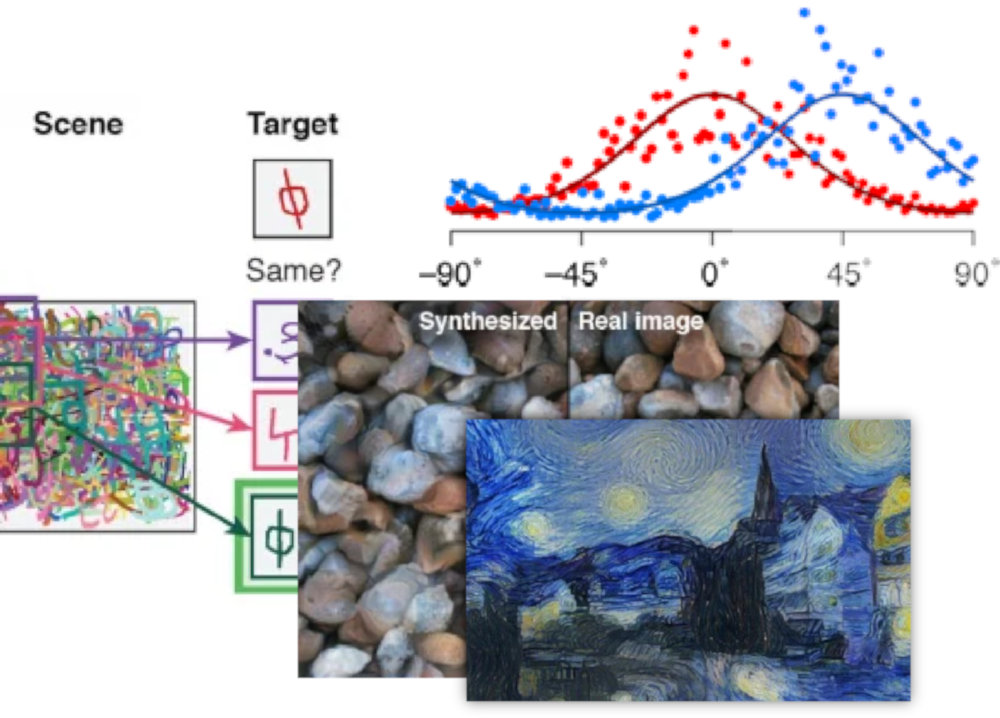
Prof. Dr. Alexander Ecker is Professor of Data Science at the Institute of Computer Science, University of Göttingen, and concurrently holds the prestigious Max Planck Fellow position at the Max Planck Institute for Dynamics and Self-Organization. Since 2020 he also serves on the Executive Board of the Campus Institute Data Science in Göttingen. He leads the Neural Data Science research group, comprising 14 PhD students and 2 postdoctoral researchers, focusing on the interface of machine learning and computational neuroscience. His educational background includes a Dr. rer. nat. in Neuroscience (2014) from the Graduate School of Neural and Behavioral Sciences/IMPRS, University of Tübingen, followed by post-doctoral and group-leader positions at the University of Tübingen and the Max Planck Institute for Biological Cybernetics. Research Interests Machine Learning & Deep Learning: developing novel algorithms for representation learning and generative modeling. Computational Neuroscience: large-scale data-driven modeling of visual cortical circuits. Visual Perception: bridging biological vision and computer vision via biologically inspired architectures. His work has produced a steady stream of influential publications (2019-2025) in leading journals such as Nature Communications , Nature , Nature Methods , PLOS Computational Biology , ICLR , NeurIPS , and CVPR . The publications trend toward integrating high-resolution neural recordings with state-of-the-art machine-learning models to uncover principles of sensory processing, neuron-type classification, and behavior. Scientific Awards & Honors Max Planck Fellow, Max Planck Institute for Dynamics and Self-Organization (ongoing) Executive Board Member, Campus Institute Data Science, Göttingen (since 2020) Teaching, Advising & Grants Regularly teaches advanced courses: “Deep Learning for Image Synthesis”, “Current Topics in Deep Learning”, and “Graph Machine Learning”. Supervises 14 current PhD students and 2 postdocs within the Neural Data Science Group. Offers numerous Bachelor’s and Master’s thesis projects, with topics ranging from neuronal morphology clustering to primate vocalization analysis. Leads or co-leads large collaborative consortia with labs in Göttingen, Tübingen, Baylor College of Medicine, and other institutions across the US and Germany. Labs & Teams The Neural Data Science Group operates at the Institute of Computer Science, University of Göttingen, and is tightly integrated with the Max Planck Institute for Dynamics and Self-Organization. The group maintains active collaborations with over a dozen partner laboratories, including groups led by Fabian Sinz, Andreas Tolias, Thomas Euler, Tim Gollisch, and Viola Priesemann, fostering an interdisciplinary environment that spans computer science, physics, biology, and psychology.
Amanda Burcroff is a mathematician specializing in algebraic combinatorics, currently serving as a President's Postdoctoral Fellow at the University of California, Davis. Starting in September 2025, she will join MIT as a School of Science Dean's and NSF Postdoctoral Fellow. Her research explores the connections between cluster algebras, scattering diagrams, and algebraic geometry, with additional contributions to number theory, graph theory, and combinatorial structures. Harvard University (Ph.D., Mathematics) University of Cambridge (M.A.St, Mathematics) Durham University (M.A.S., Pure Mathematics) University of Michigan (B.S., Mathematics) Burcroff's research focuses on: Cluster algebra positivity and expansion formulas in low-rank settings Scattering diagram combinatorics and tropical geometry Hyperbolic Coxeter polytopes and dimension bounds Ehrhart theory and Hilbert bases for convex cones Combinatorics on words and pattern avoidance Domination polynomials and graph invariants Her publications reveal interdisciplinary trends spanning algebraic combinatorics, geometric structures, and number-theoretic patterns. Recent work examines quantum cluster algebras, continued fractions, and convex geometry. Burcroff's awards include prestigious Marshall, NSF, and President's Postdoctoral Fellowships. Marshall Scholarship (UK study funding) NSF Postdoctoral Fellowship (MIT appointment) President's Postdoctoral Fellowship (UC Davis) Burcroff actively promotes STEM diversity through mentorship programs like the Math Includes Mentorship Program and Graduate Research Opportunities for Women (GROW) Conference. Her mathematical outreach extends to high school initiatives including the Oakland University Summer Mathematics Institute and FIRST Robotics.
Adam Kanigowski is an Associate Professor in the Mathematics Department at the University of Maryland. His research focuses on dynamical systems, particularly smooth flows, spectral theory, and mixing properties. Key Research Areas: Ergodic theory, parabolic systems, area-preserving flows, and spectral analysis. Publication Trends: Recent work examines chaotic properties of smooth systems, multiple mixing phenomena, and spectral singularities across surfaces of varying genus. Articles also address arithmetic applications, including prime number theorems for skew products. Technical Themes: Rigidity, slow entropy, Fourier uniformity, and the interplay between deterministic sequences and dynamical systems.
Fabien Lotte is a Senior Researcher (Directeur de Recherche DR2) at Inria, affiliated with the University of Bordeaux. He leads the Potioc team, focusing on Brain-Computer Interfaces (BCI) and related technologies. Research Interests: Brain-Computer Interfaces (BCI) for motor imagery and neurofeedback Machine learning on Riemannian manifolds for EEG analysis Reproducibility in neural engineering research Passive BCI for cognitive/affective state estimation Neuroergonomics and adaptive systems Scientific Contributions: His recent work explores Riemannian geometry for BCI, including feature fusion, visualization techniques, and performance prediction via median nerve stimulation. He has developed open-source tools like BioPyC and contributed to large datasets for BCI reproducibility. Scientific Awards: 2023 : Nature Mentorship Award (Mid-Career Category) 2023 : Lovelace-Babbage Prize from French Academy of Science Advising and Collaborations: Supervised multiple PhD students (Léa Pillette, Jelena Mladenovic, David Trocellier) and postdocs. Leads ANR projects (STIM-BCI, BCI4IA) and ERC-funded initiatives (BrainConquest, SPEARS).
Zhining Liu is a Postdoctoral Research Fellow at the Center for Complex Geometry , affiliated with the Institute for Basic Science in Daejeon, Korea, from October 2022 to October 2024. Education PhD in Mathematics (2019-2022), supervised by Benoît Claudon and Andreas Höring at an unspecified institution. Master's Degree (2016-2019) at École normale supérieure. Research Interests Complex Geometry : Focus on singular spaces and non-negative canonical classes. Algebraic Geometry : Classification of algebraic varieties and singularities. Differential Geometry : Structural analysis of complex manifolds.
Jonathan Bates is a Lecturer at the Yale School of Public Health, affiliated with the Yale Center for Medical Informatics. His work focuses on applying machine learning and data science to public health challenges, particularly in HIV care, falls prevention, and medical device safety. His educational background includes: PhD in Biomathematics from Florida State University (2013) Postdoctoral Fellowship in Medical Informatics at VA Connecticut/Yale (2015) Dr. Bates' research spans machine learning and health informatics , with expertise in natural language processing , predictive modeling , and causal inference . His work targets vulnerable populations including older adults with HIV and veterans, addressing critical gaps in fall prevention, fracture risk assessment, and healthcare delivery optimization through advanced analytics. Analysis of his 15 most recent publications (2015-2023) reveals three dominant research thrusts: predictive modeling for geriatric falls and fractures in HIV populations, machine learning applications in medical device surveillance , and social network analysis for care coordination . These studies consistently leverage electronic health records and focus on high-impact public health problems affecting marginalized groups. Dr. Bates maintains active collaborations across Yale University, the Veterans Health Administration, and clinical departments including Cardiology and Emergency Medicine, demonstrating strong interdisciplinary integration of methodological innovation with real-world health challenges.