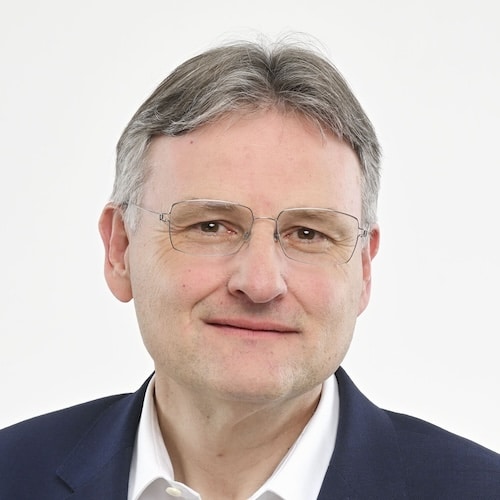
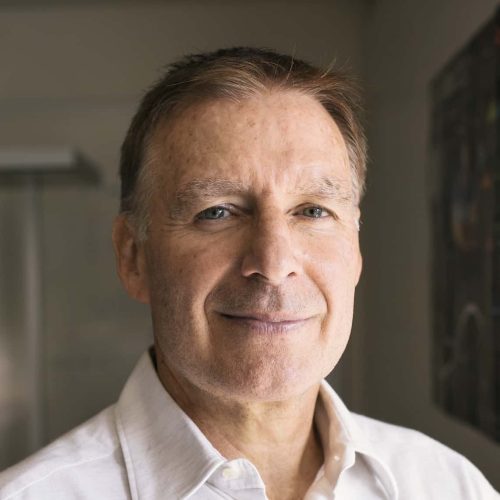
Luka Radic is a Researcher in the Machine Learning Section at the Department of Computer Science, University of Copenhagen. His work bridges theoretical and applied research in machine learning, with a focus on quantum machine learning , large language models , and fairness in AI systems.
Emmanouil Vasilomanolakis is an Associate Professor in the Department of Applied Mathematics and Computer Science at the Technical University of Denmark (DTU). He specializes in Cybersecurity Engineering, focusing on areas such as honeypot technology, cyber deception, IoT/OT security, and network security. His research contributes to the UN Sustainable Development Goals related to innovation and infrastructure. His research interests include: Cyber deception techniques and honeypot design for detecting and mitigating cyber attacks Security of Internet of Things (IoT) and Operational Technology (OT) devices, particularly their exposure to cyber threats Analysis of botnets and cybercrime activities on darkweb markets Social engineering attacks and human aspects of cybersecurity Development of tools for vulnerability analysis and network traffic monitoring His recent publications explore advanced cyber-deception strategies, the security of exposed IoT/OT devices, and the analysis of cybercrime activities. Key areas include device identification, vulnerability detection in industrial systems, and the impact of social engineering in cybersecurity. He currently supervises several PhD students including Kasper Elzer, António Cordeiro Urbano, Aigerim Safargalieva, Davide Maddaloni, and collaborates on projects like "Advanced cyber-deception techniques" and "Defending legacy and modern networks with cyber-deception". His research is supported by grants focused on collaborative security and deception-based defenses. He is part of research teams developing honeypot technologies and cyber deception frameworks, contributing to datasets like the hybrid IoT/OT honeypot collection.
Jakob Eg Larsen is an Associate Professor at the Technical University of Denmark (DTU), affiliated with the Department of Applied Mathematics and Computer Science (DTU Compute) within the Cognitive Systems Section. He leads the Mobile Informatics and Personal Data Laboratory (MILAB). His research focuses on Human-Computer Interaction (HCI), Personal Informatics, Quantified Self, and Information Visualization, with applications in wearable technology, mental health, and healthcare. He teaches courses in Digital Media Engineering, including user experience, mobile application prototyping, and personal informatics. Education: PhD (2005) and MSc in Computer Science (1999) from the University of Copenhagen, with additional studies in cognitive psychology. Research emphasizes wearable devices for mental health interventions (e.g., PTSD treatment), physical activity tracking in pregnancy, and personalized hearing aid systems. Over 98 publications and 12 supervised PhD projects highlight his contributions to HCI, mHealth, and data-driven healthcare solutions. Labs/Teams: MILAB focuses on mobile informatics and personal data interaction. Collaborations span interdisciplinary fields like audiology, clinical psychology, and public health.
Mostafa Mohammadi is an Assistant Professor at the Department of Health Science and Technology, Aalborg University, affiliated with the Faculty of Medicine and Center for Rehabilitation Robotics. His research focuses on neurorehabilitation robotics, human-computer interaction, and telerehabilitation technologies for individuals with disabilities. Ph.D. in Biomedical Engineering (Aalborg University, 2018-2022) M.Sc. in Biomedical Engineering (Polytechnic University of Milan, 2015-2017) B.Sc. in Mechanical Engineering (Sharif University of Technology, 2011-2015) His work spans exoskeleton design, assistive robotics, and innovative interfaces like tongue-computer interfacing. Recent projects include the eMotivo digital health solution funded by Innovation Fund Denmark and intelligent tendon-driven exoskeletons for severe disabilities. Research outputs (33 total) emphasize adaptive robotics, motor impairment solutions, and wearable technologies. Collaborations span robotics, biomedical engineering, and clinical disciplines. Teaching includes courses in rehabilitation robotics, human-computer interaction, and digital systems for biomedical engineering. Scientific activities align with UN Sustainable Development Goals for quality education and reduced inequalities. Notable contributions include advancements in myoelectric interfaces and neurorehabilitation technologies.
Tove Hels is an Associate Professor in the Department of the Built Environment at the Faculty of Engineering and Science, Aalborg University, Denmark. She is a key member of the Traffic Research Group, focusing on transportation safety, road user behavior, and traffic policy. Her work bridges engineering, public health, and social science to improve road safety outcomes. Research Interests: Her research spans traffic safety, cyclist-motorist interactions, speed enforcement, accident risk modeling, and the impact of vehicle technologies. She investigates both infrastructure design and behavioral factors influencing road safety, with a strong emphasis on data-driven analysis and policy evaluation. The recent publications reveal a consistent focus on improving cyclist safety through infrastructure (e.g., advanced stop boxes, roundabout design), addressing under-reporting of traffic injuries, and evaluating behavioral interventions for speeding. Her work integrates epidemiological methods, statistical modeling, and real-world policy applications. Scientific Contributions: Principal Investigator in the Danmarks Trafikulykker cohort study (2025–2029) Project participant in EASE: Intervention against speed offenders (2019–2025) Author of over 29 research outputs including journal articles, reports, and policy briefs Frequent contributor to national media and advisory bodies like Dansk Vejforening Advising and Grants: While no formal students are listed, her leadership in major funded research projects indicates a supervisory role in training junior researchers. She has secured and contributed to significant research grants related to traffic safety monitoring and intervention evaluation. Labs and Teams: She is part of the Traffic Research Group at Aalborg University, collaborating closely with researchers such as H. Lahrmann, T.K.O. Madsen, and A.V. Olesen. The group conducts field studies, data linkage projects, and policy evaluations with national impact.
Peter Danholt is an Associate Professor at the School of Communication and Culture, Aarhus University, affiliated with the Department of Digital Design and Information Studies, the Centre for Science-Technology-Society Studies, and the SHAPE – Shaping Digital Citizenship research initiative. His work spans multiple interdisciplinary domains, focusing on the sociotechnical dimensions of digital systems in healthcare, welfare, and organizational contexts. His research interests include IT in healthcare , pervasive computing , gender and technology , organizational change , and qualitative research methods . He employs ethnographic and fieldwork-based approaches to study how digital technologies reshape work practices, citizenship, and care relations. His work often draws on Science and Technology Studies (STS), Actor-Network Theory, and relational ontologies. The recent publications highlight a consistent focus on digital healthcare systems (e.g., Teledialogue), data-driven governance , and the ethical implications of surveillance in welfare . Themes such as vulnerability, privacy, and citizen agency recur across his research, particularly in projects involving digital interventions in social work and patient care. Principal Investigator : Shaping Digital Citizenship – SHAPE (Independent Research Fund Denmark, 2022–2023) Collaborative Projects : CDC: Cultures of Data Collaboration , Teledialog , Håndhygiejne projektet , Sundhedsbarometer projektet He has contributed extensively to academic discourse through journal articles, conference papers, and book chapters, with a strong emphasis on ethnographic depth and theoretical innovation. His public engagement includes media contributions on AI, digital ethics, and urban technology. He has participated in organizing workshops and conferences, including EASST2010 and SHAPE Workshop (2024), and has delivered lectures on technoscience, surveillance, and welfare technology. His collaborations extend across Denmark and internationally, reflecting a robust network in STS and digital society research.
Per Lynggaard is a Professor of Electronics at the Technical University of Denmark (DTU) , leading the B.Eng. program in Electronics. Previously, he held an Associate Professor role at Aalborg University, combining academic excellence with a robust industrial career in technical-scientific research and development. Education: M.Sc. in Electrical Engineering and Information Technology (EE and IT) Ph.D. in Electronics from Aalborg University Research Interests: Focus on Integrated Circuit Design, Wireless Sensor Networks (WSN), Machine Learning, IoT, and Smart City Technologies . His work emphasizes energy-efficient systems, cybersecurity in IoT, AI-driven interference mitigation, and sustainable energy harvesting solutions. He has contributed to UN Sustainable Development Goals through projects addressing smart infrastructure and environmental monitoring. Projects & Collaborations: Leads and participates in EU-funded initiatives such as InnoTech (2023–2025) for green transition solutions and TransportTech (2023–2026) for Industry 4.0 logistics. Active in cybersecurity research via projects like Jamming Against Critical Wireless Communication , aiming to protect critical infrastructure. Awards: Recognized with multiple honors and rewards during his industrial career, though specific names are not listed. His work has been cited widely, with notable impact in IoT security and energy-efficient systems. Advising & Grants: Supervises Turnip T.N. in a PhD project on 6G security protocols. Engaged in securing funding for projects like F2D2: The Community for Dynamic Data (2021–2030), focusing on dynamic data systems and cybersecurity. Labs & Teams: Collaborates in interdisciplinary teams such as the InnoTech TaskForce and F2D2 Community , advancing IoT and AI integration. His research bridges academia and industry, with outputs spanning smart cities, healthcare IoT, and sustainable energy systems.
Chris Valentin Nielsen is an Associate Professor in the Department of Civil and Mechanical Engineering at the Technical University of Denmark (DTU). His research focuses on metal forming, joining processes, and tribology, with expertise in formability, tool development, and numerical modeling. His work contributes to UN Sustainable Development Goals related to sustainable manufacturing. He supervises PhD students in projects such as sustainable busbars for electric vehicles and adjustable tool design for high-volume production. His research interests include metal forming (e.g., deep drawing, ironing), joining technologies (resistance welding, laser welding), and advanced manufacturing methods like additive manufacturing. He employs finite element modeling and experimental analysis to bridge fundamental and applied research. Collaborations span global institutions, addressing challenges in material behavior, process optimization, and tool durability. Recent publications explore topics such as dieless Nakajima testing for additive materials, punch design improvements, and asperity deformation mechanics. His work emphasizes sustainability, robust production systems, and eco-friendly lubrication solutions. Projects involve interdisciplinary teams, integrating numerical simulations with industrial applications to enhance manufacturing efficiency and material performance.
Klaus Mosthaf is an Associate Professor in the Department of Environmental and Resource Engineering at the Technical University of Denmark (DTU), where he conducts research on contaminant transport and numerical modeling in porous and fractured media. His work focuses on protecting groundwater resources through advanced modeling of contamination from substances like PFAS, chlorinated solvents, and pesticides. He is actively involved in teaching and academic leadership, coordinating the Nordic Masters program Enviro5Tech and the Sino-Danish Center module on Pollutants and Pollution Control. Research Interests: Transport processes in porous media Groundwater contamination and remediation Numerical modeling of reactive transport Aquifer Thermal Energy Storage (ATES) Fractured and variably saturated geologies Coupled porous-medium and free-flow systems His recent publications reveal a strong focus on PFAS fate, bioremediation in ATES systems, and tracer-based characterization of glacial tills. He employs tools like COMSOL Multiphysics, Python, and FEFlow to develop predictive models grounded in laboratory and field data. Scientific Contributions: Active contributor to over 60 publications in hydrogeology and environmental engineering Key developer of models for coupled processes in subsurface systems Organizer and speaker at international conferences on multiphase flow and contaminant transport Advising and Grants: Klaus Mosthaf supervises multiple PhD students and has coordinated significant research projects, including those on PFAS transport and bioremediation. He is the main supervisor of two active PhD projects and has previously co-supervised two others. His leadership extends to board membership in the Danish Academy of Technical Sciences on Soil and Groundwater (ATV Jord og Grundvand), where he fosters collaboration among academia, consultants, and public authorities. Laboratories and Research Groups: His work is conducted within DTU Sustain, a leading research environment in environmental engineering, where he collaborates with experts in hydrogeology, bioremediation, and sustainable technologies. He is deeply integrated into a network of national and international collaborators focused on groundwater protection and sustainable subsurface utilization.
Andreas Kugi is the Scientific Director at the AIT Austrian Institute of Technology and a full professor of Complex Dynamical Systems at TU Wien (Vienna University of Technology) in the Faculty of Electrical Engineering and Information Technology, Institute of Automation and Control. He has held significant academic and leadership roles across Europe, including professorships at Saarland University and offers from TU Dresden and KIT. His research focuses on the modeling, control, and optimization of complex dynamical systems , with strong applications in mechatronics, robotics, and industrial automation . He has led major research centers such as the Christian Doppler Laboratory for Model-Based Process Control in the Steel Industry and the Center for Vision, Automation & Control at AIT. His work bridges theoretical control design and real-world industrial implementation. The recent publications reflect a consistent focus on nonlinear, hybrid, and distributed parameter systems , with applications in robotics, manufacturing, energy, and process industries. His research integrates advanced control theory with practical engineering challenges, emphasizing real-time optimization, robustness, and system efficiency. Scientific Awards: Mechatronic Systems Outstanding Investigator Award (IFAC, 2022) Goldene Stefan-Ehrenmedaille (OVE, 2023) 16 best paper awards Andreas Kugi has supervised over 50 completed PhD dissertations and has been deeply involved in research leadership, including serving as Editor-in-Chief of Control Engineering Practice (2010–2017) and Vice President of the OVE Austrian Electrotechnical Association (2017–2023). He has secured and led numerous research grants, particularly through industrial collaborations in automation and process control. He leads and contributes to major research initiatives, including the Center for Vision, Automation & Control at AIT and the Christian Doppler Laboratory , fostering interdisciplinary teams focused on industrial digitalization and smart systems.
Didier Sornette is Professor of Entrepreneurial Risks at the Department of Management, Technology and Economics (D-MTEC), Swiss Federal Institute of Technology Zurich (ETH Zurich). He is also Professor of Finance at the Swiss Finance Institute, Associate Member of the Department of Physics and Department of Earth Sciences at ETH Zurich, Principal Investigator at the Future Resilient Systems Center at the National University of Singapore, and Specially Appointed Professor at the Institute of Innovative Research, Tokyo Institute of Technology. His research centers on the theory and application of complex systems, particularly focusing on the prediction and control of extreme events—termed 'dragon-kings'—in financial markets, geophysical systems, and socio-economic networks. He employs nonlinear dynamical models, statistical analysis, and feedback mechanisms to detect early warning signals of crises. The available publication highlights his work at the intersection of complexity science and democratic governance, suggesting a growing interest in applying systemic risk methodologies to societal structures. This reflects a broad trend in his research: leveraging quantitative models for real-world systemic instabilities across disciplines. Director, Financial Crisis Observatory (FCO) Co-founder, ETH Risk Center Principal Investigator, Future Resilient Systems, National University of Singapore Specially Appointed Professor, Tokyo Institute of Technology He leads interdisciplinary teams working on InnovWiki, a collaborative platform integrating idea development with prediction markets and data visualization. His lab initiatives emphasize open collaboration, crowd-based evaluation, and real-time risk monitoring. While specific awards and students are not listed in the provided text, his leadership in major research centers and global observatories underscores significant recognition and mentorship activity.
Petar Popovski is a Professor at the Department of Electronic Systems within the Technical Faculty of IT and Design at Aalborg University, Denmark. His research focuses on next-generation wireless communication systems, with a strong emphasis on ultra-reliable low-latency communication (URLLC), Internet of Things (IoT), multiple access, and 6G technologies. He leads several high-impact research projects, including the Classique - Center for Classical Communication in the Quantum Era funded by the Danish National Research Foundation and WATER (Wireless Architectures for intelligent and Trusted connectivity in the posT-5G ERa) supported by Villum Fonden. His research interests span key areas in modern communication theory and systems, including random access , non-terrestrial networks , satellite communication , and machine learning for reliable communication . He is actively involved in advancing the integration of sensing and communication, digital twin technologies, and quantum-era classical communication frameworks. The recent publications highlight a strong trend toward deterministic and reliable access in wireless networks, integration of sensing and communication for industrial automation, and novel physical-layer techniques using reconfigurable intelligent surfaces. These works are published in top IEEE journals such as IEEE Transactions on Communications , IEEE Transactions on Haptics , and IEEE Transactions on Vehicular Technology . Award highlights include the Best Student Paper Award (2021) , recognizing his mentorship and collaborative research excellence. Prof. Popovski serves as a principal investigator (PI) and supervisor in multiple research projects, securing significant funding from national and international bodies such as the Danish National Research Foundation and the European Space Agency (ESA). He hosts visiting researchers regularly and contributes to scientific leadership through editorial roles and conference participation. He is a key figure in the Connectivity section at Aalborg University and leads cutting-edge research in future wireless systems, contributing to both theoretical foundations and practical implementations in smart infrastructure, space communication, and dependable 6G networks.
Dr. Gregor Giebel is a senior researcher and Head of Section in the Department of Wind and Energy Systems at the Technical University of Denmark (DTU), specifically within the Renewable Plants in Energy Systems group. He is actively engaged in advancing wind energy technologies and their integration into modern power systems. His leadership extends to major international and EU-funded initiatives, including IEA Wind Task 51 and the NEST Facilities research infrastructure. Gregor Giebel's research focuses on short-term wind power forecasting , large-scale integration of wind into electricity grids , wind farm flow control , and condition monitoring of wind turbines . His work is instrumental in improving the reliability and efficiency of renewable energy systems. He has made significant contributions to international standardization through the IEC and is a key figure in global wind energy research coordination. The recent publications highlight a strong trend toward weather-driven energy forecasting , modeling wind farm impacts on weather systems , and developing national research infrastructures for energy transition . These works reflect a deep integration of meteorology, energy systems engineering, and policy-relevant research. His scientific recognition includes: Poster Award at the WindEurope Offshore Conference, Copenhagen 2019 Poster Award on WindEurope Conference, Copenhagen 2021 Dr. Giebel is a Principal Investigator (PI) on multiple high-impact projects such as NEST Facilities , IEA Wind Task 51 , and GreenHyScale . He is renowned for his success in research funding, with a proposal success rate exceeding 50%. He has led the EU Marie Curie Initial Training Network Train 2 Wind and previously headed the FarmConners EU Coordination Action on wind farm control. He leads and is deeply involved in the NEST Facilities —a distributed Danish research infrastructure for energy transition—and contributes significantly to the Weather2X and GreenHyScale projects, which aim to advance green hydrogen production and weather forecasting for energy systems.
Leif Christensen serves as Associate Professor in the Department of Accounting at Copenhagen Business School (CBS), bringing extensive professional experience as a state-authorized auditor and former PwC partner with 15 years in that role. His academic career spans over a decade of teaching focused on risk management and audit, complemented by active research since 2013 on internal control optimization through case studies examining auditor influence on business decisions regarding control scope and implementation. Research Focus: Christensen's scholarly work centers on management control systems, internal audit practices, and financial accounting, with particular emphasis on crisis-driven control adaptations in banking sectors and public-sector accounting innovations. His methodology combines qualitative case studies with practical industry applications, addressing critical gaps in how audit quality impacts organizational decision-making and risk mitigation strategies. Publication Trends: Analysis of his 11 publications (2016-2022) reveals sustained investigation into management control systems during economic crises, especially within banking institutions post-2008, and expanding into higher education cost accounting. His collaborative work with Pall Rikhardsson and Carsten Rohde consistently bridges theoretical frameworks with real-world banking and public-sector challenges, producing peer-reviewed articles, book chapters, and policy reports that influence both academic discourse and industry practices. Scientific Awards: No specific awards or fellowships are documented in the source material. Academic Guidance and External Engagement: Christensen supervises master's theses in accounting, auditing, and risk management while maintaining significant external commitments including accounting advisory for NepCon (2018-present), board training for Finansforbundet and CBS Executive (2018-present), and expert consultancy for Jørn Quiste (2019-present). His research on internal control optimization since 2013 demonstrates sustained funding for practical investigations into audit effectiveness and control system design.
Morten Holm is an Associate Professor at the Department of Accounting, Copenhagen Business School. He conducts interdisciplinary research combining management accounting with behavioral and psychological factors affecting financial decision-making. His work focuses on the impact of individual characteristics of managers and auditors on accounting practices, digital transformation in finance functions, and customer profitability management. Primary Research Areas: Management accounting in modern enterprises, psychological underpinnings of economic decisions, individuals' influence on finance decisions, empirical behavioral accounting Current Research Focus: CEO life history strategies, stress effects on audit judgments, management reporting in Danish SMEs Holm's recent publications (2020-2025) demonstrate his focus on customer accounting sophistication, audit services during crises, and financial reporting quality in SMEs. His work frequently appears in top journals like Management Accounting Research and Journal of the Academy of Marketing Science . Teaching includes graduate-level courses in: Strategic Cost Management & Corporate Value Creation Management Accounting (at various levels) Financial Management and Strategic Development