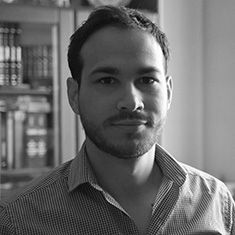
Levy Lorenzo is a Lecturer at The New School's College of Performing Arts, working at the intersection of music, art, and technology. A Filipino-American innovator born in Bucharest, he specializes in custom electronics design, sound engineering, and instrument building, with international experience in installation art and live electronics performance. Doctor of Musical Arts (DMA) in Percussion Performance, Stony Brook University Master of Electrical & Computer Engineering (MEng), Cornell University His research focuses on creating new musical interfaces through interdisciplinary collaboration, including partnerships with artists like Alvin Lucier, Christine Sun Kim, and Leo Villareal. As co-founder of experimental duo Radical 2 and a core member of the International Contemporary Ensemble (ICE), he combines classical percussion with electronic experimentation. At The New School, Lorenzo teaches courses including BEEP Lab (COPA 4570), Electronic Composition Lab (CCMP 5210), and Performing Arts Core: T&E (COPA 1017). His work has been showcased at institutions and festivals such as STEIM, MIT Media Lab, and Burning Man.
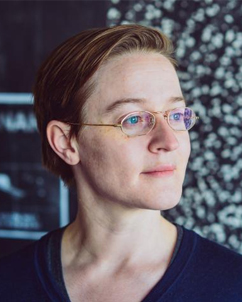
Yun-Ju Lai, Ph.D., MS, RN, is an Assistant Professor in the Susan and Alan Solomont School of Nursing at the Zuckerberg College of Health Sciences, University of Massachusetts Lowell. Her research focuses on the interplay between optimism, inflammation, and recovery in stroke and deconditioned populations, as well as the role of inflammation in SARS-CoV-2 infection and cancer. She is a recipient of the American Heart Association Predoctoral Fellowship and was featured in CNN for her groundbreaking work on optimism's impact on stroke recovery. Education includes a Ph.D. in Nursing from the University of Texas Health Science Center (2019), an MS in Life Science from National Tsing Hua University (2002), and a BSN from the Cizik School of Nursing (2015). Her postdoctoral research at Academia Sinica in Taiwan advanced SARS-CoV-2 pathogenesis studies, leading to a filed patent for viral entry inhibitors. Research interests include mind-body connections in stroke recovery, mental health in cancer patients, and computational approaches to viral pathogenesis. Recent grants include a 2022 study on optimism and veteran rehabilitation outcomes (Bedford VA Collaborative Seed Grant) and a 2022 project on student mental health during the pandemic (Donna Manning Pilot Research Program). Key achievements include identifying SARS-CoV-2 ACE2 transcriptome interactions and developing biomarker strategies for stroke and cancer patients. Her work bridges nursing science with molecular biology, emphasizing translational research to improve clinical outcomes.
Nelson Rodrigues is a Researcher at the Polytechnic Institute of Bragança (IPB) and a Ph.D. candidate at the University of Porto, conducting research since 2010 with involvement in H2020 PERFoRM and GO0D MAN projects, as well as FP7 ARUM and GRACE initiatives. His academic credentials include: Master of Science in Information Systems, Polytechnic Institute of Bragança His research centers on Intelligent and Reconfigurable Manufacturing Control Systems, investigating Artificial Intelligence applications for self-adaptive manufacturing evolution. Additional expertise spans Industry 4.0, Cyber-physical systems, Multiagent systems, Simulation, and Advanced Data Analytics, with emphasis on enhancing manufacturing flexibility through cutting-edge computational methods. Recent publication analysis reveals a strategic pivot toward energy systems optimization, particularly virtual power plants, utilizing high-performance computing, quantum annealing, and evolutionary algorithms. Concurrent research explores intelligent transportation frameworks, assistive robotics, and manufacturing business analytics, demonstrating interdisciplinary technical agility. He maintains active affiliations with LIACC - Artificial Intelligence and Computer Science Laboratory and the IEEE Technical Committee on Industrial Agents, contributing to over 29 publications with an h-index of 11. Research funding derives from European Union projects including H2020 PERFoRM and GO0D MAN, and FP7 ARUM and GRACE, where he developed intelligent manufacturing control architectures and service reconfiguration systems. Within LIACC and IEEE collaborations, he advances industrial agent technologies for real-time manufacturing adaptation, focusing on dynamic reconfiguration and human-in-the-loop cyber-physical production systems.
Agnieszka Lazarowska is an Assistant Professor in the Department of Ship Automation at the Faculty of Electrical Engineering, Gdynia Maritime University. Her research focuses on developing algorithms for safe trajectory planning in maritime systems, emphasizing collision avoidance for autonomous and manned vessels. She holds a PhD(Eng) from Gdynia Maritime University and has conducted extensive studies under the mentorship of Professor Józef Lisowski. Her academic journey includes a TransFormation program at Lund University (2015), enhancing her skills in entrepreneurship and innovation. Lazarowska has led the NOAA project (2018-2019), funded by IAMU and the Nippon Foundation, which involved real-world testing of collision avoidance algorithms aboard the Horyzont II research vessel. She published a monograph, Safe Trajectory Planning for Maritime Surface Ships , with Springer in 2022. Her research integrates real navigational data, algorithm optimization, and maritime regulations to improve shipping safety and environmental protection. Lazarowska advocates for interdisciplinary approaches and student engagement in innovative projects.
M. Lisa Manning is the William R. Kenan, Jr. Professor of Physics at Syracuse University, with affiliations in Biology, Biophysical Science, and Biotechnology. She leads the Manning Research Group, focusing on theoretical and computational approaches to understanding collective behavior in biological tissues and disordered solids, using tools from statistical and soft matter physics. Her work emphasizes emergent phenomena in non-equilibrium systems through experimental collaborations globally. Research Interests: Defects in disordered solids/glasses Surface tension in embryonic tissues Mitotic wave dynamics Constitutive models for friction/shear Recent Scientific Contributions: 2025 PNAS paper on dynamical forces in zebrafish organ morphogenesis 2024 PRX Life study on vertex model universality 2024 Nature Cell Biology work on mechanical forces in tissue architecture Honors: APS Fellow (2021) Chancellor’s Citation for Excellence (2022) Simons Investigator (2016-2022) Grants: NSF NRT-URoL grant (2024-2029) NICHD R01 grant (2020-2025) Simons Foundation awards Leadership: Director, BioInspired Institute (2019-2023) Chair, Physics Department Chair Search Committee (2024) Co-lead, Mechanisms of Development and Disease Focus Group Her group develops computational models for biological tissues and disordered materials, working closely with experimentalists. Recent work explores how vertex models predict tissue rigidity despite oversimplified assumptions, and how dynamical forces shape developing organs.
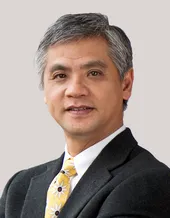
Chin Man Mok is a Rudolf Diesel Industry Fellow at the Technical University of Munich (TUM-IAS) since 2011. He holds adjunct professor roles at the University of Waterloo and a part-time associate engineering professorship at the University of Hong Kong. His expertise spans hydrogeology, computational modeling, and risk management. Mok has over 30 years of consulting experience in environmental, geotechnical, and structural engineering worldwide. Educational Background: B.Sc. in Civil Engineering (University of Hong Kong, 1985) M.S. and Ph.D. in Civil & Environmental Engineering (UC Berkeley, 1980s) Professional Roles: Vice President & Principal Engineer at GSI Environmental, Inc. (2013–present) Former Principal Engineer at Geomatrix Consultants/AMEC (1987–2008) Research Interests: Surface water-groundwater interaction, subsurface characterization, dam erodibility, climate change adaptation, geologic sequestration of CO₂, and dynamic soil-structure interaction. His work emphasizes applied research and decision support systems for natural hazards. Publications & Awards: Over 20 peer-reviewed publications, including works on groundwater optimization and probabilistic risk assessment. Recipient of multiple fellowships and scholarships in the 1980s–90s.
Patricia A. Vargas is an Associate Professor/Reader in Computer Science and Robotics at the School of Mathematical & Computer Sciences, Heriot-Watt University, UK. She is the Founder Director of the Robotics Laboratory and Director of Ethics. Her research focuses on interdisciplinary robotics, including Evolutionary Robotics, Swarm Robotics, Biologically-Inspired Algorithms, Computational Neuroscience, and Neurorobotics. She holds IEEE Senior Member and Fellow of the Higher Education Academy titles. Education: PhD in Robotics, postdoc at the Centre for Computational Neuroscience and Robotics (University of Sussex, UK). She has contributed to over 66 research outputs since 2009, with recent work emphasizing neurorobotics, SLAM systems, and precision robotics. Her research aligns with UN Sustainable Development Goals, particularly in healthcare and industrial innovation. Research interests span from bio-inspired algorithms to human-robot interaction, with notable contributions in Parkinson’s disease modeling and swarm robotics. She co-founded the Edinburgh Centre for Robotics and is an executive member of the IEEE Ro-Man Standing Steering Committee. Awards include the 2017 Spirit of Heriot-Watt Award (Outward Looking). Her work bridges robotics with neuroscience, aiming to advance assistive technologies and ethical robotic systems.
Alex Leitch is a Lecturer at the University of Maryland's College of Information Studies (INFO College) and a PhD candidate. Their work bridges technology and art, focusing on interaction design, creative technology education, and feminist design principles. They co-founded Site 3 Colaboratory and Dames Making Games Toronto, promoting inclusive maker spaces in Canada. Leitch's research explores digital humanities, human-computer interaction, and the societal impacts of social media algorithms. Education: Pursuing a PhD at University of Maryland. Previous roles include technical lead on web projects and exhibiting artist at venues like Toronto International Film Festival and Burning Man. Research Interests: Social media analysis and ethics AI in art and education Feminist approaches to technology Makerspace community dynamics Articles highlight themes like AI art generation, social media discourse analysis, and post-truth media landscapes. Their 2025 studies on cross-platform violence detection and GenAI evaluation frameworks show current focus areas. Awards: No specific honors listed. Teaching and advising: Currently mentoring through their INFO College courses and collaborative maker initiatives. Labs/Teams: Affiliated with the Human-Computer Interaction Lab (HCIL) and involved in Canadian not-for-profit arts organizations.
Justin Pierce is an Associate Professor and Program Director of Business and Hospitality at Torrens University Australia. He has been instrumental in developing the MBA and research programs at the university, leveraging his industry experience to enhance academic programs. Education: PhD in Information Security (2006), Deakin University Master of Business Administration (2016), Deakin University Master of Higher Education and Administration (2016), Deakin University Bachelor of Information Technology (2002), Deakin University Graduate Certificate in Project Management (2022) Research Interests: Strategy, Information Systems, Economics, Education, and Malfeasance. His work focuses on cybersecurity, including authentication mechanisms, penetration testing ethics, and digital marketing ethics. He also explores governance in organizations and green supply chain collaboration through his HDR student supervision. Research Outputs: His publications span cybersecurity methodologies, ethical frameworks for penetration testing, and digital marketing case studies. Notable contributions include enhancing security against Man-in-the-Middle attacks and conceptual models for professional ethics. Awards: No specific awards mentioned, though his h-index of 14 reflects research impact. Advising & Grants: Supervises HDR students on topics like organizational governance and green supply chains. Specific grant details are not provided. Labs/Teams: Affiliated with the Centre for Organisational Change and Agility (COCA).
Samuel Mehr is an Associate Professor Adjunct at Yale University's Child Study Center and a Senior Lecturer in Psychology at the University of Auckland. His research focuses on auditory perception, the psychology of music and speech, and gamified citizen science. He directs The Music Lab, an international team exploring how humans perceive and create music across cultures. Education: EdD in Human Development from Harvard University (2017), BM in Music Education from Eastman School of Music (2007). Key Awards: NIH Director’s Early Independence Award (2017), Royal Society of New Zealand Te Apārangi Prime Minister’s Science Prize (2023). Research Themes: Cross-cultural music studies, infant-directed speech/song, music's role in emotional regulation, and large-scale citizen-science experiments. Lab collaborations span evolutionary anthropology, data science, and developmental psychology. Funding: Supported by NIH, NSF, Royal Society of New Zealand, Harvard Data Science Initiative, and Music Man Foundation. Open-science advocate; data/code openly shared on GitHub/Zenodo.
Dr. Marian Hertrich is a Lecturer at the Department of Earth and Planetary Sciences at ETH Zurich. She is affiliated with the Bedretto Underground Lab (BULGG), focusing on geothermal energy, seismic monitoring, and subsurface processes. Her research combines experimental geophysics with field-scale studies, addressing challenges in hydraulic stimulation, fractured reservoirs, and induced seismicity. Research Interests: Her work spans climate change impacts on subsurface systems, englacial hydrology, and geothermal energy extraction. She investigates fault mechanics, seismic anisotropy in granites, and the interplay between stress fields and fluid flow in crystalline rocks. Key projects include the Bedretto Lab's multi-stage stimulation experiments and HETEROCLIM climate change workshops. Grants & Collaborations: She contributed to ANR-funded projects like MicroCliMite and MAN-PEST, and co-organized the 2014 HETEROCLIM workshop on climate change and thermal ecology. Ongoing collaborations involve the Bedretto Lab's interdisciplinary teams exploring geoenergy and CO₂ storage potential. Labs & Facilities: Her research leverages the Bedretto Underground Lab's advanced instrumentation for seismic, hydraulic, and geophysical monitoring. The lab supports large-scale experiments on reservoir engineering and subsurface connectivity in Alpine settings.
Andrew Blair is a PhD Student and Tutor at the School of Computing Science, University of Glasgow. His work focuses on human-centered design and evaluation of social robots in public spaces and religious institutions. He collaborates with researchers like Prof. Paul Gregory and Dr. Matthew E. Foster on projects exploring stakeholder engagement, particularly involving front-line workers, to ensure ethical and practical deployment of robotics technologies. Education: PhD Student in Computing Science at the University of Glasgow. His research interests emphasize improving long-term interaction success through inclusive design practices. Key themes include: - Ethical considerations in human-robot interaction (HRI) - Stakeholder participation in robotics development - Real-world implementation challenges in public and faith-based settings - Balancing technological advancement with user needs While no scientific awards are listed, his contributions to the field are notable through collaborative efforts such as presenting at IEEE RO-MAN 2025. His publications reflect a progression from theoretical development to applied evaluation in real environments. As a Tutor, he likely supports teaching activities within the School while advancing his doctoral research. Though specific grants or labs aren't mentioned, his research narrative intertwines academic guidance systems with broader societal applications. His work bridges technical innovation and human-centric outcomes, aiming to address gaps between robot design and end-user experiences.
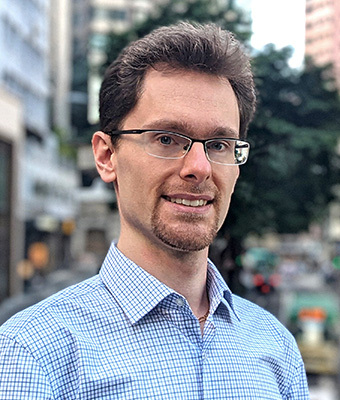
Xavier de Carné de Carnavalet is an Assistant Professor at Radboud University's Digital Security group within the Faculty of Science. His research focuses on network security, privacy, web security, and applications of machine learning in cybersecurity. He holds a PhD from Concordia University (2019) and completed postdoctoral work at Carleton University's CCSL lab. Research Interests: Network Security & Privacy Passwords & Authentication Systems Embedded/Firmware Security Machine Learning for Cybersecurity Home Router Vulnerabilities TLS Interception Mechanisms Publications highlight trends in analyzing security configurations (home routers), detecting vulnerabilities (command injection in firmware), and evaluating TLS interception practices. His work often bridges technical security analysis with human factors influencing secure practices. He has contributed to major conferences like CHI, NDSS, and USENIX Security. Notable projects include analyzing password strength meters and verifying TrueCrypt's build integrity. Current research includes database breach analysis and cryptographic software hardening. Labs/Teams: Active contributor to the Digital Security group at Radboud University, collaborating with institutions like HK PolyU and Concordia's Madiba Security Research Group.
Darryl Stewart is an Associate Professor (Reader) in Education within the School of Electronics, Electrical Engineering and Computer Science at Queen's University Belfast. He is affiliated with the Speech, Image and Vision Systems research group and the Centre for Education and Society (CES). His work bridges technical disciplines like speech recognition and machine learning with educational innovation, focusing on improving learning outcomes and curriculum design. Research interests include AI-driven education solutions, user experience design in computing education, and optimizing learning strategies for large classes. He has contributed to projects such as the 3D Printed Colourimetric Indicator Strip initiative (2019–2023), addressing chronic wound monitoring through interdisciplinary collaboration. Dr. Stewart has received notable awards including the EPS Dean's Award for Sustained Excellence in Postgraduate Teaching (2017), a Northern Ireland Science Park award (2013), and a QUB Innovation Excellence Award (2021). His peer-reviewed contributions span journals like IEEE Transactions on Systems, Man, and Cybernetics, and he actively participates in workshops on topics like lip-reading with deep learning. He has supervised two major academic works and led initiatives to enhance student performance through tailored instruction and modular capstone experiences. His research impacts both educational technology and health sectors, exemplified by economic and health-related outcomes from applied projects.
Luciano Tarricone is a Full Professor of Electromagnetic Fields in the Department of Innovation Engineering at the University of Salento, Italy. He teaches core courses such as Electromagnetic Fields for the Bachelor's in Information Engineering and Applied Electromagnetics for the Master's in Communication Engineering and Electronic Technologies. His office is located at the Ecotekne Center, Pal. O, Lecce-Monteroni. He has been actively involved in academic and research activities at the university since 2001. His research focuses on the interaction between electromagnetic fields and biological systems, numerical dosimetry using parallel FDTD methods, innovative radiopropagation modeling, optimization of radio base station networks, CAD of antennas and microwave circuits, and supercomputing applications in electromagnetics. He coordinates the Electromagnetic Fields research group and has led multiple industrial and fundamental research projects. His expertise spans both theoretical and applied aspects of electromagnetics, with strong interdisciplinary connections to biomedical engineering and telecommunications. The recent publications and teaching materials reflect a consistent focus on bioelectromagnetics, EM safety, wireless technologies (including RFID and IoT), radar systems, and computational methods. His work integrates theoretical modeling, numerical simulation, and practical applications in health, telecommunications, and environmental monitoring. Full Professor of Electromagnetic Fields (ING-INF/02) Chair of Electromagnetic Fields Coordinator, Electromagnetic Fields Research Group Member of various academic committees at department and faculty levels Luciano Tarricone has not received any explicitly mentioned scientific awards in the provided text. However, his leadership in research projects and extensive teaching responsibilities indicate significant academic recognition. He advises students through project-based learning in his Applied Electromagnetics course, where students develop and present practical projects. Although specific grant details are not listed, he has coordinated several basic and industrial research projects. His research group is active in multiple domains, particularly bioEM interaction, human-antenna dosimetry, and computational electromagnetics, with potential collaborations in biomedical and telecommunications sectors.