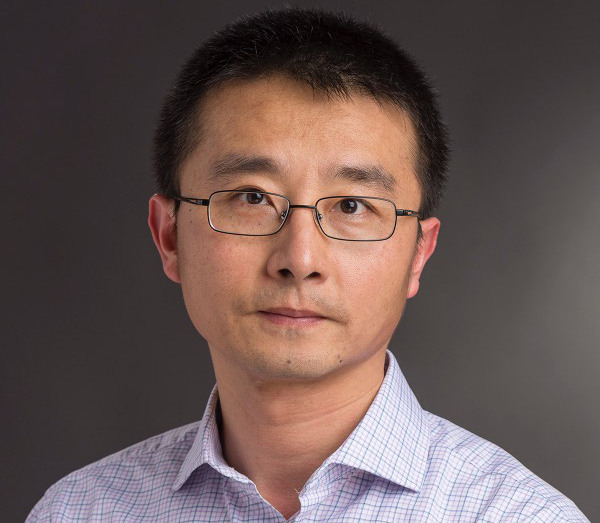
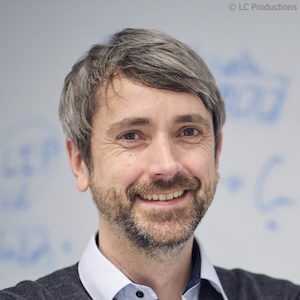
Edgar Weippl is a Professor at the Faculty of Computer Science, University of Vienna, where he serves as Vice Dean and Head of the Research Group Security and Privacy. His work spans cybersecurity, blockchain, and machine learning, with teaching roles in information security and software security courses. Current Positions: Vice Dean (Faculty of Computer Science), Head (Security and Privacy Research Group), Deputy Head (Neuroinformatics & Knowledge Engineering Groups) Research Interests: Cybersecurity, blockchain, IoT security, code obfuscation, privacy technologies, reinforcement learning, and socio-technical systems security Selected Publications: Focus on blockchain privacy, VoWiFi security, code obfuscation, and reinforcement learning applications
Stavros Nikolopoulos is a Professor in the Department of Computer Science & Engineering at the University of Ioannina, Greece. He serves as Director of the Algorithms Engineering Lab and holds a PhD in Computer Science (1991, University of Ioannina). His research focuses on Algorithmic Graph Theory, Parallel Algorithms, Malware Detection, and Software Watermarking. He has published extensively in top-tier journals and conferences, including Discrete Applied Mathematics and Theoretical Computer Science. Education: B.Sc. in Mathematics, University of Ioannina (1982) M.Sc. in Computer Science, University of Dundee (1985) Ph.D. in Computer Science, University of Ioannina (1991) Research Interests: Design and Analysis of Algorithms Graph Algorithms (e.g., permutation graphs, cographs) Malware Detection via System-call Group Analysis Graph-based Watermarking Systems Discrete Event Simulation Awards & Recognition: Best Student Paper Award (WEBIST'13) Best Paper Award (CompSysTech'13) Labs & Projects: Director, Algorithms Engineering Lab Principal Investigator in EU-funded projects (e.g., HRAKLITOS, PENED-05)
Hayretdin Bahsi is an Assistant Professor at the School of Informatics, Computing, and Cyber Systems at Northern Arizona University . His research focuses on cybersecurity, with expertise in malware detection, IoT security, and machine learning applications in defense mechanisms. He collaborates internationally on maritime cybersecurity, healthcare systems, and critical infrastructure protection. Research Interests include Android malware analysis, botnet detection, explainable AI in intrusion detection, and threat modeling for AI-driven systems. His work addresses challenges like concept drift in malware detection and privacy-preserving techniques for IoT networks. Publications span 66 scholarly works since 2009, emphasizing cybersecurity trends in AI, IoT, and healthcare. Recent contributions explore large language model (LLM) applications in vulnerability detection and cyber threat modeling for healthcare systems. Collaborations include projects on maritime cyber-insurance, cyber incident management in low-income countries, and datasets like MedBIoT for IoT botnet analysis. His work bridges theory and practice, addressing real-world cybersecurity challenges.
Dr. Brett J. Borghetti is a Professor of Computer Science in the Department of Electrical and Computer Engineering at the Air Force Institute of Technology (AFIT), Graduate School of Engineering and Management, Wright-Patterson AFB, OH. He was promoted to Professor in July 2022, following prior appointments as Associate Professor (2017) and Assistant Professor (2008/2013). His expertise lies in artificial intelligence, machine learning, deep learning, cybersecurity, and human-machine teaming. Education: Ph.D. in Computer Science, University of Minnesota, Twin Cities (2008) M.S. in Computer Systems, Air Force Institute of Technology (1996) B.S. in Electrical Engineering, Worcester Polytechnic Institute (1992) Dr. Borghetti's research focuses on applying machine learning to physical science sensors (hyperspectral, seismic, RF), cybersecurity, and enhancing human-machine team performance. He teaches graduate courses in machine learning, AI, data security, and algorithm design, and advises numerous MS and PhD students in areas such as sensor exploitation, cognitive workload, and cyber situational awareness. His recent publications demonstrate strong trends in deep learning for multimodal sensor fusion, nuclear security, and neuroergonomics. Scientific Awards: AETC Educator of the Year (2021, Civilian) AFIT Ezra Kotcher Teaching Award (2021) AFIT Teaching Excellence Award (2019) AF STEM Outstanding Science and Educator Award (2015) Multiple Eta Kappa Nu Outstanding Instructor Awards Air Force Meritorious Service Medal and other military honors Dr. Borghetti has advised numerous graduate students and led research projects with significant funding and applications in defense and national security. He has directed research in AI-driven sensor analysis, cyber defense systems, and adaptive automation. His work often involves collaboration with national labs and DoD agencies. He has contributed to major research initiatives in human factors, cyber intruder detection, and machine learning for operational environments. Labs and Research Teams: His work is associated with AFIT's research in cyber security, sensor exploitation, and human-machine systems. He collaborates with teams working on the Cyber Intruder Alert Testbed (CIAT), neuroergonomic modeling, and machine learning for defense applications.
Dr. Tim Oates is a Professor in the Department of Computer Science and Electrical Engineering at the University of Maryland, Baltimore County . His research spans machine learning, artificial intelligence, and brain-machine interfaces, with a focus on weakly supervised methods, human-in-the-loop reinforcement learning, and grounded policy development for robotics. Ph.D., Computer Science, University of Massachusetts, Amherst, 2000 M.S., Computer Science, University of Massachusetts, Amherst, 1997 B.S., Computer Science and Electrical Engineering, 1989 Current research threads include: Developing non-invasive brain injury severity assessment via medical time series Modeling human brain development through computational frameworks Designing algorithms for autonomous robotic learning Recent publications highlight AI security mechanisms (backdoor detection via tensor decomposition, matrix factorization) Medical applications (3D artery reconstruction, skin lesion diagnosis, EEG denoising) Neuro-symbolic integration (holographic representations, language-guided reinforcement learning) Mathematical reasoning (schema-based problem solving, subitizing algorithms) Contact: oates@cs.umbc.edu | Office: 336 Information Technology and Engineering (ITE) Building
Ljiljana Trajkovic is a Professor in the Department of Engineering Science at Simon Fraser University's Faculty of Applied Sciences. She holds a Ph.D. from the University of California, Los Angeles (1986), M.Sc. from Syracuse University (1979), and Dipl.Ing. from the University of Pristina (1974). Her research focuses on communication networks, nonlinear circuits, and machine learning applications for network security. She actively contributes to IEEE initiatives, including roles as conference committee chair and editorial board member. Education highlights include a strong foundation in electrical engineering and advanced studies in circuit theory and systems science. Her work bridges theoretical analysis with practical applications, such as anomaly detection in communication networks using machine learning. She teaches courses like ENSC 220 D100 Electric Circuits I, integrating research insights into education. Research interests emphasize network security, traffic analysis, and distributed systems. Recent articles explore BGP anomaly classification, ransomware detection, and virtual network embedding. She collaborates on tools like VNE-Sim and Anonym for network analysis. Awards and recognitions are highlighted through her leadership roles in IEEE and academic contributions. Advising and grants involve mentoring graduate students in cybersecurity and networking projects. She leads research teams exploring complex networks and their applications in autonomous systems. Her lab focuses on interdisciplinary projects merging electronics engineering with AI-driven network solutions.
Qi Yu is a Professor in the School of Information at the Golisano College of Computing and Information Sciences at Rochester Institute of Technology (RIT). He serves as the Graduate Program Director and directs the Machine Learning and Data Intensive Computing Lab. His research focuses on machine learning, deep learning, and data-driven knowledge discovery, particularly in knowledge-rich domains like medicine and bioinformatics. He holds a B.E. from Zhejiang University, an M.E. from the National University of Singapore, and a Ph.D. from Virginia Tech. His work emphasizes interpretable models, multimodal data fusion, and human-in-the-loop learning. He has secured significant grants, including a $500K NSF award and a $1.6M ONR grant, supporting projects on Bayesian learning frameworks and decision-making under uncertainty. His lab actively explores active learning, few-shot learning, and uncertainty quantification. He advises a vibrant group of Ph.D. and MS students and teaches courses such as Data-Driven Knowledge Discovery and Thesis/Project Capstones. Education: B.E., Electrical Engineering, Zhejiang University (2001) M.E., Computer Engineering, National University of Singapore (2003) Ph.D., Computer Science, Virginia Tech (2008) Research Interests: Machine Learning, Deep Learning, Vision-Language Models, Uncertainty Quantification, Active Learning, Multimodal Data Fusion, Bayesian Methods, and Applications in Healthcare and Cybersecurity. Recent Work Trends: His articles emphasize label-efficient learning, interactive systems, and applying ML to complex domains like medical imaging and anomaly detection. Notable projects include Bayesian learning for dynamic decision-making and evidential optimization for robust models. Awards/Grants: NSF IIS Award ($500K, 2018–2023); DoD/ONR Award ($1.6M, 2018–2023); multiple conference recognitions (NeurIPS, ICML, CVPR). Advising spans over 20 students, many securing roles at Amazon, Samsung, and academia. Labs/Teams: Leads the Mining Lab, collaborating on interdisciplinary projects with domain experts in medicine, cybersecurity, and material science.
Prof. Dr. Johannes Kinder is a Professor and Chair of Programming Languages and Artificial Intelligence at the Institute of Informatics , Ludwig Maximilian University of Munich. His research focuses on software security through program analysis and machine learning, particularly targeting malware detection , vulnerability analysis , and reverse engineering . He has held faculty positions at Royal Holloway, University of London, and Bundeswehr University Munich. Research Interests include: Securing software systems via program and machine learning techniques Detection of software vulnerabilities and malware Preventing exploitation through binary analysis Applications of formal methods in systems security Recent Publications highlight advancements in binary function embedding , malware detection in npm , and speculative execution attack modeling . His work appears in top venues like USENIX Security and IEEE S&P . Education : Diplom from TU Munich (2005), Doctorate from TU Darmstadt (2010). Professional Roles : General Chair, ACM CCS 2019 Doctoral Symposium Chair, ESSoS 2016 Program Committee member for NDSS 2026, IEEE S&P 2022-2025
Andrew D. Ker is Professor and Associate Professor of Computer Science at the University of Oxford's Department of Computer Science, and Tutorial Fellow in Computer Science at University College, Oxford since 2009. He received his BA in Mathematics & Computer Science (1994-1997) and DPhil in Computer Science (1997-2000) from Oxford, followed by academic appointments including Junior Research Fellow (2000-2003), Special Supernumerary Fellow (2003-2009), and Royal Society University Research Fellow (2003-2011). His research focuses on information hiding, particularly steganography (covert communication in digital media) and steganalysis (detection of hidden data), with additional interests in digital media forensics and programming language semantics. His foundational work includes the mathematical formalization of the 'square root law of steganographic capacity'. Recent publications explore practical implementations in social media platforms, GPU-accelerated steganalysis, and linguistic steganography techniques. He has received multiple scientific awards including Best Paper Awards at ACM Workshops on Information Hiding & Multimedia Security, SPIE conferences, and the International Workshop on Digital Watermarking. As Associate Editor for IEEE Transactions on Information Forensics and Security, he maintains active involvement in the academic community. Professor Ker has supervised numerous graduate students in computer security and steganography research, including doctoral candidates and master's students. He leads research within Cyber Security Oxford and has developed four major lecture series: Lambda Calculus and Types, Discrete Mathematics, Computer Security, and Advanced Security: Information Hiding. He remains active in teaching despite administrative responsibilities as Tutorial Fellow.
Alexandru G. Bardas is an Associate Professor at the University of Kansas in the Department of Electrical Engineering & Computer Science (EECS) and the Institute for Information Sciences (I2S) . He received his PhD from Kansas State University under advisors Xinming (Simon) Ou and Scott A. DeLoach. His research focuses on cybersecurity from a systems perspective , including moving target defenses, security operations center (SOC) metrics, DevOps security, power grid cybersecurity, and defensive technologies for political activists. He explores UDP-based DDoS detection, DNS traffic analysis, and the intersection of AI with cybersecurity, emphasizing foundational knowledge over tool-specific training. Key research areas: Cybersecurity, Systems Security, Moving Target Defenses, SOC Metrics, DevOps Security Recent publications in ACSAC 2024 , USENIX Security 2024/2023 , and IEEE Security & Privacy 2022 Dr. Bardas has received significant recognition including: NSF CAREER Award (2022) for SOC automation Bellows Scholar (2021) at KU NSA SoS Honorable Mention (2023) He actively advises students across disciplines, with graduates now at Sandia National Laboratories , Blue Cross Blue Shield , and Pacific Northwest National Laboratory . Dr. Bardas participates in NSF grant reviews , serves on program committees for SOUPS and MILCOM , and leads outreach initiatives like the GenCyber Summer Camp .
Taylor Johnson is an Associate Professor of Computer Science and Electrical and Computer Engineering at Vanderbilt University's School of Engineering. He directs the Verification and Validation for Intelligent and Trustworthy Autonomy Laboratory (VeriVITAL) and serves as a Senior Research Scientist in the Institute for Software Integrated Systems. Previously, he was an Assistant Professor at the University of Texas at Arlington from 2013 to 2016. His research focuses on formal verification techniques for cyber-physical systems (CPS), emphasizing safety, reliability, and security through hybrid systems, formal methods, and control theory. He has published extensively on neural network verification, earning best paper awards and recognition from IEEE, IFIP, and ACM. Education: Ph.D., Electrical and Computer Engineering (University of Illinois at Urbana-Champaign, 2013) M.Sc., Electrical and Computer Engineering (University of Illinois at Urbana-Champaign, 2010) B.S.E.E., Electrical and Computer Engineering (Rice University, 2008) Research Interests: Formal verification of neural networks and CPS, safety-critical systems, autonomous systems, and AI/ML security. His work bridges theoretical foundations (e.g., hybrid systems) with practical applications in aerospace, energy systems, and robotics. Key Contributions: Developed the NNV tool for neural network verification, led the Verification of Neural Networks Competition (VNN-COMP), and pioneered techniques for robust federated learning and malware detection. Awards: AFOSR YIP Award (2016), NSF CRII Award (2015), and multiple best paper honors. His research is funded by AFRL, NSF, Intel, NVIDIA, and industry partners. Labs & Collaborations: VeriVITAL Lab (Vanderbilt), collaborations with United Technologies Research Center, Boeing, and Toyota.
Professor Raja Jurdak is a leading academic in distributed systems and applied data sciences at Queensland University of Technology (QUT), where he directs the Trusted Networks Lab. He holds dual roles as Professor of Distributed Systems and Chair in Applied Data Sciences, alongside leadership in the Centre for Data Science. His research focuses on dynamic network modeling, blockchain-based trust frameworks, and IoT applications, with particular emphasis on cybersecurity, energy efficiency, and mobility-driven diffusion processes. Jurdak formerly led CSIRO's Distributed Sensing Systems Group and maintains a visiting scientist role there. Education: PhD in Information and Computer Science, University of California, Irvine MS in Computer Networks and Distributed Computing, University of California, Irvine BE in Computer and Communications Engineering, American University of Beirut Research Interests: Network science, blockchain technology, IoT security, sustainable energy systems, and data-driven decision-making. His work bridges theoretical advancements with practical applications in smart grids, health surveillance, and urban mobility. Awards: Finalist for the 2019 Eureka Prize, multiple CSIRO accolades, and IEEE Senior Member status. His research has received industry recognition for interdisciplinary innovation, including the DiNeMo project's real-time disease surveillance system. Advisory & Grants: Leads high-impact projects funded by government and industry partnerships. Supervises PhD candidates in areas like decentralized data processing and privacy-preserving AI. Holds editorial roles at journals such as Ad Hoc Networks and PLoS ONE . Labs & Teams: Directs the Trusted Networks Lab at QUT, fostering collaborations with institutions like Oxford University and MIT. His work emphasizes cross-disciplinary teams to address global challenges in cybersecurity and sustainable systems.
Dr. Panagiotis Andriotis is a Lecturer in Computer Science at the School of Computer Science, University of Birmingham, within the College of Engineering and Physical Sciences. He is also a GIAC Certified Forensic Examiner (GCFE, GASF) and a Senior Fellow of the Higher Education Academy (SFHEA). His interdisciplinary research spans Cyber Security, Human Factors, and Mobile and Ubiquitous Computing. He teaches courses in Computer Science, Cyber Security, and Digital Forensics. His educational background includes a PhD in Computer Science from the University of Bristol (2016), an MSc with Distinction in Computer Science from the same institution (2011), and a BSc in Mathematics from the National and Kapodistrian University of Athens (2004). Dr. Andriotis’s research interests focus on user-centered security, particularly in mobile environments. He investigates how users interact with Android’s permission systems, develops novel authentication mechanisms like Bu-Dash, and explores adversarial machine learning in cybersecurity. His work bridges technical and human aspects, aiming to improve both system robustness and user experience. His recent publications reflect a strong trend in adversarial machine learning, mobile malware detection, usable privacy, and the societal implications of AI in education. He has contributed to high-impact journals such as IEEE Transactions on Cybernetics, ACM Transactions on Privacy and Security, and Elsevier’s Journal of Information Security and Applications. Best Paper Award at HCI International 2020 Impact Award, UWE Bristol Student Union GIAC Certified Forensic Examiner (GCFE) GIAC Advanced Smartphone Forensics (GASF) SANS Lethal Forensicator Coin Dr. Andriotis has advised PhD students, including Andrew McCarthy, and has been involved in funded research projects such as those related to fuzzing, software security, and critical infrastructure protection in collaboration with Airbus. He has served as an External Examiner at Cardiff Metropolitan University and is currently on the editorial boards of Digital Threats: Research and Practice (ACM) and the Journal of Responsible Technology (Elsevier). He has held visiting roles at the National Institute of Informatics in Tokyo, including as a JSPS Fellow and Toshiba Fellow. He leads research in digital forensics and security, with a lab focus on mobile ecosystems, behavioral modeling, and AI-driven threat detection. His team explores both technical and human dimensions of cybersecurity, contributing to tools and frameworks that enhance mobile security and user awareness.
Anja Feldmann is Director at the Max Planck Institute for Informatics in Saarbrücken and Professor of Internet Network Architectures at Technische Universität Berlin (since 2006). Previously she held a full professorship at Technische Universität München (2002–2006) and conducted research at AT&T Labs Research , Saarland University , and Carnegie Mellon University , where she earned her Ph.D. in 1995. Education Ph.D. in Computer Science, Carnegie Mellon University, 1995 M.Sc. in Computer Science, Carnegie Mellon University, 1991 Diplom in Computer Science, Universität Paderborn, 1990 Research Interests Anja Feldmann’s research centers on measurement-driven understanding of the Internet. She tackles challenges such as software-defined networking , cloud-network interactions , performance debugging , and traffic characterization . A growing focus is the privacy and security of networked systems, evidenced by recent studies on online tracking, DNS security, and disinformation ecosystems. Her group designs scalable measurement platforms that combine passive and active monitoring , programmable data planes , and machine-learning analytics to dissect phenomena ranging from terabit-scale traffic to covert tracking on illegal streaming sites. Recent Publication Themes The 2021-2025 publications reveal a methodological evolution toward large-scale, longitudinal measurement . Topics include: Impact of global events (COVID-19, CrowdStrike outage) on Internet traffic Cross-country tracking ecosystems and privacy leaks DNS root and routing plane stability and security ML-driven real-time monitoring at terabit speeds Disinformation campaigns on encrypted messaging platforms Scientific Awards Gottfried Wilhelm Leibniz Prize (2011) – Germany’s highest research honor Berliner Wissenschaftspreis (2011) Elected Member of the German National Academy of Sciences Leopoldina (2009) Advising & Grants While individual student names are not listed, Prof. Feldmann leads a vibrant team at MPI-INF’s Internet Architecture department. She has supervised numerous doctoral candidates and post-doctoral researchers whose work is reflected in the co-authored papers. Funding sources include the German Research Foundation (DFG) via the Leibniz Prize and EU Horizon projects, although explicit grant numbers are not provided in the source material. Labs & Teams She heads the Internet Architecture department at MPI-INF, located at the Saarland Informatics Campus . The department operates state-of-the-art measurement infrastructure—including programmable switches, honeynets, and global vantage points—to support empirical network science.
Dr. Erika Leal is an Assistant Professor in the Department of Computer Science at Baylor University, where she teaches cybersecurity and advises the Cyber@Baylor student organization. She also serves as the Director of Research and Development for the Central Texas Cyber Range, contributing to regional cybersecurity infrastructure and education. Her research focuses on innovative approaches to malware analysis, particularly leveraging hardware performance counters to detect and unpack obfuscated malware. She integrates hardware-assisted techniques with machine learning to improve the detection of packed binaries and enhance software security in high-performance computing environments. Dr. Leal's recent publications demonstrate a consistent focus on hardware-based malware detection, binary analysis, and high-performance computing security, with contributions to top-tier conferences such as USENIX Security and IEEE HOST. Her work bridges low-level system behavior with practical security solutions. She actively contributes to the academic community through service as a Technical Program Committee member for SC23 and SC24, Session Chair at ICISSP 2023, and Diversity Chair for SC22. She also mentors the Baylor Cybersecurity Team in national competitions including CCDC and NCL. Dr. Leal earned her Ph.D. in Computer Science from Tulane University and the University of Texas at Arlington, advised by Dr. Jiang Ming, and holds a Bachelor’s in Computer Science with a minor in Business Administration from Texas Wesleyan University. She currently advises one Ph.D. student, Abanisenioluwa Orojo, and has served as an external reviewer for journals and conferences including ACM Computing Surveys and CCS. Her leadership extends beyond research into developing cybersecurity talent and promoting diversity in computing.