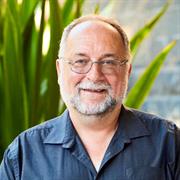
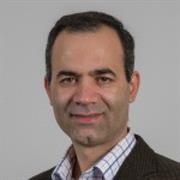
Prof. Paul Stupple is a Professor of Medicinal Chemistry at Monash University, Australia, with over 20 years' experience in pharmaceutical industry and academia. He holds leadership roles at Canthera Discovery and manages the Australian Translational Medicinal Chemistry Facility. His expertise lies in small molecule drug discovery, particularly targeting cancer therapies and epigenetic regulators. Affiliations: Monash University, Faculty of Pharmacy and Pharmaceutical Sciences Canthera Discovery (Director, Medicinal Chemistry) Education: BA and DPhil in Chemistry from the University of Oxford (1992–1999). Early career at Pfizer as a medicinal chemistry leader, delivering 6 clinical candidates. Key contributions include: Licensing deals with Merck (2016) and Pfizer (2018) for preclinical projects Leading the Cancer Therapeutics CRC's medicinal chemistry program Research Interests: Small molecule drug discovery focused on histone acetyltransferase inhibitors, cancer therapeutics, and epigenetic modulation. Notable projects include development of KAT6A/B inhibitors for ER+ breast cancer and STING agonists for immunotherapy. Grants/Projects: Principal Investigator for major initiatives like MedChem Australia (2023–2028) and drug target identification platforms. Collaborates widely with institutions like WEHI and University of Sydney. Over 28 peer-reviewed publications spanning 1997–2025. Labs/Teams: Oversees the Australian Translational Medicinal Chemistry Facility, a key resource for drug discovery in Australia.
Dr. Ly Fie Sugianto is an Associate Professor in the Department of Accounting at Monash Business School, Monash University. Her research focuses on the integration of data analytics, artificial intelligence, and machine learning in accounting and business systems, with applications in the energy sector and organizational behavior. Monash Business School, Monash University Department of Accounting Specialization: Accounting Information Systems, Data Analytics, AI Her research interests span Accounting Information Systems , Agent-Based Simulation , Decision Support Systems , and Technology Adoption . She applies computational methods to study competitive dynamics in deregulated electricity markets and the impact of digital tools on employee well-being and organizational resilience. The recent publications reflect a strong trend in using AI and simulation to analyze complex socio-technical systems, particularly in energy markets and leadership dynamics. Keywords across her work include agent-based modeling , data analytics , servant leadership , and enterprise social media , indicating interdisciplinary research at the intersection of information systems, management, and public policy. Her scientific awards include competitive grants from the ARC (SPIRT/Linkage) , the Australia Indonesia Governance Research Partnership (AIGRP) , and the Sumitomo Foundation . ARC Grant: Dispatch Optimisation in the Australian National Electricity Market Sumitomo Foundation: Technology Use and Employee Well-Being AIGRP: Governance and MSME Resilience during Pandemic Dr. Sugianto has advised research projects and collaborated with industry partners such as Western Power , Ecogen Energy , and AEMO . She is currently accepting PhD students and leads externally funded research initiatives. Her work contributes to UN Sustainable Development Goals related to industry innovation and responsible consumption. She is affiliated with research teams focusing on intelligent decision support systems and digital transformation in business , with active collaborations in Australia and Indonesia.
Mr. Richardo Khonasty is a Senior Research Engineer at the School of Mechanical and Mechatronic Engineering, part of the Faculty of Engineering and Information Technology at the University of Technology Sydney (UTS). He has held appointments at UTS since 2019, including roles at the Centre for Autonomous Systems and Robotics Institute. He also serves as a Tutor since 2016. PhD in Robotics (2020), UTS B.Eng. in Mechanical and Mechatronic Engineering (2014), UTS Khonasty's research focuses on robotics and human-robot collaboration, with applications in surgical robotics (total hip replacement), industrial automation (abrasive blasting), and green wall inspection systems. His work emphasizes kinematic accuracy, adaptive control schemes, and cost-effective robotic solutions. His recent publications explore robotic-assisted burring for orthopedic surgery, damping strategies for singularity management, and exoskeleton design frameworks. Khonasty is currently involved in funded research related to hydraulic tooling safety under the BTP - Stage 2 - IntelliForce Tooling grant.
Dr. Sirui Li is a Lecturer at Murdoch University's School of Information Technology within the College of Science, Technology, Engineering and Mathematics. Her research focuses on Artificial Intelligence, Natural Language Processing (NLP), Machine Learning, Knowledge Graphs, Data Analysis, Temporal Data, and Multi-modal Models, with applications in medicine, agriculture, and mining. She collaborates with industry partners like BHP and has published in journals such as Food Chemistry and Knowledge and Information Systems , as well as conferences like ICSME and IJCNN. Education: Bachelor of Advanced Computing (Honours) in Computer Science at Australian National University Master of Computing (Specialising in AI) at ANU Ph.D. in Information Technology (AI) at Murdoch University Research interests include interdisciplinary applications of AI, such as clinical coding privacy solutions, disease spread modeling, and drug repurposing for pandemics. Her work emphasizes practical industry integration, demonstrated through awards like the 2024 EMNLP Best Demo Award and the 2023 Iron Ore Circuit Hackathon innovation prize. Professional roles include IEEE Western Australia Section committee membership, conference chair positions, and peer review for top journals. She actively mentors students pursuing Honours, Master's, or PhD projects in her areas of expertise.
Prof. Ivan Cole is an Adjunct Professor at RMIT University's School of Engineering, specializing in rapid materials discovery for corrosion protection, nanostructures, and additive manufacturing. His work integrates computational modeling with high-throughput experimentation, focusing on corrosion inhibitors, biocompatible surfaces, and additive manufacturing process optimization. With over 30 years of experience across academia and industry (including leadership roles at CSIRO and Centro-Svilluppo Materiali), he leads the Rapid Discovery & Fabrication Team (RDF) to advance these research areas. Research Interests: Corrosion science, microbially induced corrosion (MIC), additive manufacturing surfaces, nanostructure sensing, multiscale modeling, and green materials discovery. His team addresses challenges in corrosion protection, biomedical implants, and environmental remediation through innovative methodologies. Awards: 2019 Australian Corrosion Medal 2016 CSIRO Lifetime Achievement Award 2013 Best Paper in NACE Corrosion Supervision & Projects: Active in mentoring PhD/Master’s students across corrosion inhibition, additive manufacturing, and nanostructure design. Notable projects include developing quorum sensing inhibitors for biofilm control, in-situ monitoring for metal AM, and eco-friendly corrosion inhibitors. Labs & Collaborations: Leads the Rapid Discovery & Fabrication Team and collaborates with industry partners to translate research into practical solutions for materials durability and sustainability.
Buyung Kosasih is a Professor in the School of Mechanical, Materials, Mechatronic and Biomedical Engineering at the University of Wollongong. He has held this position since 2000 and focuses on teaching and research in mechanical engineering, including Machine Dynamics, Finite Element Methods, and Renewable Energy Technology. His research spans fluid dynamics in industrial processes, renewable energy systems, and aqueous lubrication. Key projects include 3D-printed surfboard fin optimization and steel coating dynamics. Research interests emphasize experimental and computational fluid dynamics, particularly in renewable energy turbines and tribological systems. Notable awards include the 2013 Outstanding Contribution to Teaching and Learning Award. He has supervised numerous students and led over 20 funded projects, including ARC grants for steel innovation and renewable energy. Collaborative work includes the Steel Research Hub and HVAC/cool roof efficiency studies.
Yong-Bin Kang is a Senior Data Science Research Fellow at the ARC Centre of Excellence for Automated Decision Making and Society (ADM+S) at Swinburne University of Technology, affiliated with the School of Social Sciences, Media, Film and Education. He holds a PhD in AI from Monash University and leads numerous transdisciplinary research projects applying artificial intelligence to address complex societal challenges. Education: PhD in Faculty of IT, Monash University, Australia Dr. Kang's research focuses on Responsible AI and Society, with specific interests in developing Societal-AI platforms that integrate social data with ethical principles. His work spans healthcare, humanitech, education, financial planning, environmental health, and justice domains. He investigates how AI can enhance decision-making processes while promoting societal well-being, with particular attention to ethical implementation and human-centered approaches. His expertise encompasses AI, natural language processing, machine learning, and decision-making optimization. Analysis of Dr. Kang's recent publications reveals a strong trajectory toward socially responsible AI applications across diverse domains. His work consistently bridges technical AI capabilities with social implications, particularly focusing on ethical frameworks, community-centered design, and addressing societal inequalities through technology. The publications demonstrate increasing collaboration across disciplines including criminology, environmental science, mental health, and education. Dr. Kang is actively involved in significant research funding initiatives, with multiple ongoing projects that address critical societal challenges through AI. His supervision availability includes Doctorate (PhD) candidates, indicating his commitment to mentoring the next generation of researchers in AI and data science fields. Current Flagship Areas: Digital Capability Innovative Society Manufacturing Futures Sustainable Development Goals: Good Health and Well Being (SDG 3) Industry, Innovation and Infrastructure (SDG 9) Affordable and Clean Energy (SDG 7)
Greg Haff is a Professor of Strength and Conditioning and Director of the Strength and Power Research Group at Edith Cowan University's School of Medical and Health Sciences. He holds a PhD from the United States (1999) and has extensive experience in strength and conditioning research, education, and professional practice. His work focuses on neuromuscular adaptations, training theory, velocity-based training methods, and recovery strategies. Haff has received numerous awards, including the National Strength and Conditioning Association’s Impact Award (2021) and the UK Strength and Conditioning Coach of the Year (2014). Affiliations: ECU School of Medical and Health Sciences, Strength and Power Research Group Education: PhD (1999), MS (1996), BS (1993) in Physical Education from the United States. Research Interests: Haff’s research explores optimal training methodologies, including periodization, eccentric loading, and velocity-based resistance training. He investigates how neuromuscular adaptations enhance athletic performance and reduce injury risk. His work spans sports science, biomechanics, and exercise physiology. Publications & Awards: Over 270 scientific papers, 9 books, and 28 book chapters. Notable awards include the William J. Kraemer Sport Scientist of the Year (2011) and the NSCA Young Investigator Award (2001). His research has been cited over 9,000 times (Scopus h-index 53). Grants & Labs: Leads the Strength and Power Research Group, focusing on applied strength training and performance optimization. Research spans athlete development, recovery strategies, and injury prevention.
Overview Professor Mile Terziovski is a Professor of Entrepreneurship and Innovation at Swinburne University of Technology's School of Business, Law and Entrepreneurship. He previously held leadership roles including Dean of Curtin Graduate School of Business, Head of UniSA's International Graduate School of Business, and Director of the Masters of Entrepreneurship and Innovation program at Swinburne. His academic journey spans over 25 years across multiple Australian universities, alongside a 17-year industrial career at Rio Tinto Group. Education PhD in Quality and Innovation Management (Melbourne Business School, University of Melbourne) MBA (RMIT University) BEng and MEng (University of Wollongong) GAICD (Australian Institute of Company Directors) Research Focus Terziovski's research focuses on innovation strategy, SME innovation practices, quality management systems, and sustainable business practices. His work bridges theory and practice, addressing challenges in manufacturing, healthcare, and energy sectors. He has published 60+ peer-reviewed articles, including in Strategic Management Journal and Journal of Operations Management , and authored books on innovation capability development. Grants & Awards He has secured $3M+ in research grants, including ARC Discovery and Linkage grants. Recognitions include the 2023 Stanford Top 2% Cited Scientists award, two Best Paper Awards from the Academy of Management, and multiple teaching excellence awards. His leadership extends to advisory roles with ACEM, SEAANZ, and Macedonian community organizations. Professional Contributions Terziovski advises global corporations like Motorola, Dow Chemical, and Eurocopter. His visiting professorship at the University of Versailles highlights international academic engagement. He currently supervises doctoral research on AI in entrepreneurship education, leadership in emergency medicine, and cross-border entrepreneurial ecosystems.
Kwan-Wu Chin is a Professor in the School of Electrical, Computer and Telecommunications Engineering at the University of Wollongong, where he also serves as Head of Postgraduate Studies (HPS) and co-directs the Wireless Technologies Lab (WTL). His research focuses on resource allocation problems in Internet of Things (IoT) systems, maritime networks, edge computing platforms, and integrated sensing-communication systems. Chin leads an active research group currently supervising five PhD students working on UAV networks, edge computing, maritime systems, and metaverse resource allocation. He has graduated over 20 PhD students who now hold positions in academia and industry. Chin serves as editor for Elsevier Computer Communications and IEEE Internet of Things Journal. His work develops optimization techniques using graph theory, stochastic processes, and machine learning for next-generation wireless systems.
Dr. Andy Nguyen is a Senior Lecturer in the School of Engineering at the University of Southern Queensland. He holds a PhD from Queensland University of Technology (QUT), an MEng from the National University of Civil Engineering (NUCE), and a BEng from NUCE. His research focuses on structural health monitoring, integrating machine learning and deep learning techniques to assess infrastructure integrity. Key areas include damage detection in bridges, pavements, and buildings, as well as sustainable construction materials like bamboo. Nguyen leads projects such as the 'Next Generation Living Laboratory for Engineering Education and Engagement,' emphasizing real-world applications of technology in civil infrastructure. His work spans crack detection algorithms, finite element model updating, and vibration-based structural analysis. He collaborates on AI-driven solutions for autonomous vehicle object detection and smart maintenance planning. Nguyen’s contributions include over 50 peer-reviewed publications and active supervision of postgraduate research in composite materials and transport infrastructure. His research outputs highlight advancements in computational mechanics, sensor technologies, and data-driven methods for infrastructure resilience. Nguyen’s expertise bridges civil engineering challenges with cutting-edge machine learning, advancing both theoretical and applied solutions for sustainable and safe structures.
Dr. Huadong Mo is a Senior Lecturer at the School of Systems and Computing, University of New South Wales (UNSW) Canberra, Australia. He holds a B.E. degree in automation from the University of Science and Technology of China (2012) and a Ph.D. in systems engineering and engineering management from the City University of Hong Kong (2016). Prior to his current position, he was a research associate at ETH Zurich's Reliability and Risk Engineering Lab (2016-2019) and a Lecturer at UNSW Canberra (2019-2021). Dr. Mo's educational background includes a strong foundation in systems engineering with international experience across China, Switzerland, and Australia. His career trajectory demonstrates a progression from academic research to faculty positions with increasing responsibilities in teaching and research leadership. His research focuses on enhancing the resilience, performance, and security of complex systems using learning-based algorithms, primarily in power and energy systems, cyber-physical systems, and manufacturing systems. He applies data analytics to understand system evolution under uncertainties, with particular emphasis on prognostics and health management, sustainable transportation, robust operation of power systems under extreme events, and reinforcement learning-based asset management. His work bridges theoretical advances with practical applications in critical infrastructure. Analysis of Dr. Mo's recent publications reveals a strong focus on energy systems, particularly in the integration of machine learning with power grid management, battery storage systems, and resilience against cyber threats. His research shows a clear trajectory toward increasingly complex system integration, with growing emphasis on multi-vector energy communities, cross-domain prediction, and uncertainty-aware energy management. The interdisciplinary nature of his work spans electrical engineering, computer science, and operations research. 2024 IEEE SMC Early Career Award 2023 Visiting Research Fellowship (Jean d'Alembert Pour Fellowship) Gold Medal in 2024 China International College Student Innovation Competition (as supervisor) Arc PGC Supervisor Award (2021) IEEE SMC Outstanding Chapter Award (2021) Alumni Achievement Award from City University of Hong Kong (2019) Dr. Mo actively supervises numerous HDR students working on cutting-edge research topics including battery health monitoring, quantum control, reinforcement learning for power systems, and explainable AI for energy management. He leads multiple significant research grants totaling over 3 million AUD, including projects funded by ARC, Energy Innovation Fund, and international collaborations with institutions like ETH Zurich, Cambridge, and Tsinghua University. His research group maintains strong international connections, facilitating student exchanges and collaborative research. As Postgraduate Course Coordinator of Systems Engineering and Chair of IEEE SMC ACT Chapter, Dr. Mo plays a significant role in academic leadership and professional community building. His research team collaborates with industry partners on practical implementations of their theoretical work, particularly in the energy sector.
Professor Asgar Farahnaky is the Deputy Head of Food Technology and Nutrition at RMIT University's School of Science. He holds a PhD in Food Physics from the University of Nottingham and has extensive industry experience in food innovation and research. His academic roles include Deputy Head of Department (Research & Innovation), Program Manager for the Master of Food Science and Technology, and past leadership at Charles Sturt University and Shiraz University. He has secured significant research grants, including a $500k CRC grant and GRDC funding. His research focuses on food innovation, functional foods, and emerging technologies like ultrasound and ohmic processing. Collaborations with national and international industries highlight his emphasis on market-oriented solutions. Awards include research productivity recognitions at Shiraz University. Supervision spans projects on plant protein valorization, starch modification, and food packaging. He leads a dynamic lab exploring food physics, hydrocolloids, and sustainable processing.
Summary Associate Professor Mehrdad Arashpour is an internationally recognized researcher and educator in construction and civil infrastructure, focusing on automation and information technologies. He leads the ASCII Lab at Monash University's Department of Civil and Environmental Engineering. His academic roles include Head of Construction Engineering and membership in the CIB's Working Commission on Off-site Construction (W121) and Infrastructure Task Group (TG91). Education: Ph.D., RMIT University, Australia M.Sc., Grenoble University, France B.Sc., IU University, Iran Research Interests: Digital twins, computer vision, robotics, BIM integration, sustainable construction, and automation in construction processes. His work contributes to UN Sustainable Development Goals, particularly in sustainable cities and communities. Grants & Awards: Over $6M in grants from ARC, Austroads, and industry partnerships. Recognitions include Editor's Choice Paper (ASCE, 2019) and Outstanding Reviewer (Elsevier, 2016). Teaching: Courses like Risk Management in Engineering Projects and Infrastructure Research Project. Advises on PhD topics in computer vision, robotics, and BIM. Labs & Collaborations: ASCII Lab focuses on smart, sustainable solutions for construction. Collaborates with global researchers and organizations like SPARC Hub and Building 4.0 CRC.
Yuxia Hu is a Professor at the University of Western Australia, affiliated with the School of Engineering (Civil, Environmental and Mining Engineering) and the School of Social Sciences, Planning and Transport Research Centre. Her research focuses on geotechnical engineering, particularly in large deformation FE analysis, offshore foundation systems, and soil-structure interaction. She has contributed to advancements in suction caissons, plate anchors, and computational mechanics, with applications in offshore wind energy and infrastructure stability. Research Interests: Large deformation FE analysis of soils, soil-structure interaction, offshore foundation systems, soil mechanics, and pavement engineering. Awards: Telford Premium, British Geotechnical Association Prize, and Significant Junior/Senior Paper Award. Grants: Leads projects on offshore anchors, carbon capture in pavements, and road maintenance optimization. Her work addresses challenges in geotechnical design and sustainable infrastructure, with a focus on numerical modeling and experimental validation. Collaborations span academia and industry, emphasizing practical solutions for complex soil-structure systems.