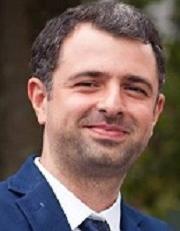
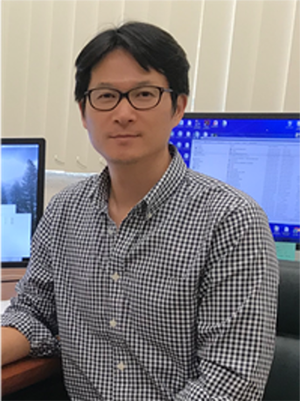
Dr. Mike Katchabaw is an Associate Professor in the Department of Computer Science at The University of Western Ontario. His research focuses on game design and development, including adaptive game systems, believable agents, algorithmic music composition, and networked game optimization. He holds a Ph.D. from Western (2002) and has been with the department since 2002. Teaching responsibilities include courses on open-source projects, software maintenance, game development, and game design. He is affiliated with the Digital Recreation, Entertainment, Art, and Media (DREAM) Group. Key research areas include psychosocial behavior modeling in NPCs, automated difficulty adjustment, and latency management in multiplayer games. Publications span over 30 refereed journal/conference papers, book chapters, and technical reports. Notable achievements include the Best Paper Award at GameOn 2011 and a patent for a flexible music composition engine. He has contributed to commercial games like 'To The Moon' and 'Animal Planet Vet Life' as a consultant/lead programmer.
Dr. Audrey N. Hoffman is an Assistant Professor in the Department of Special Education and Rehabilitation Counseling at Utah State University. She serves as Verified Course Sequence Coordinator for the MS in Applied Behavior Analysis (ABA) program and as Co-Director of the Behavior Support Services (BSS) within the Sorenson Center for Clinical Excellence. PhD in Disability Disciplines (ABA), Utah State University (2017) MS in Special Education (ABA), Utah State University (2014) BS in Psychology, Utah State University (2008) Her research focuses on behavior analysis across three domains: assessment and treatment of challenging behavior, staff training/supervision practices, and translational research on high-tech reinforcers. She specializes in clinical services for individuals with developmental disabilities using functional assessment and evidence-based interventions. Recent publications demonstrate expertise in MSWO preference assessments , token economy systems , and telehealth implementation . Her work appears in journals like Behavioral Interventions and Behavior Analysis in Practice , emphasizing practical applications in educational and residential settings. Delivers courses on single-case designs, functional assessment, supervision, and systems change Mentored 19 graduate students in behavior analysis and special education Licensed Behavior Analyst (2015) and Board Certified Behavior Analyst (Doctoral Level, 2014) Clinical and research work spans school, home, and clinical settings through BSS, focusing on sustainable behavior change and translational research methodologies.
Ahmed Abdelaty is an Assistant Professor of Civil and Architectural Engineering at the University of Wyoming's College of Engineering and Physical Sciences. His research focuses on infrastructure asset management, data analytics in construction management, and digital project delivery. He holds a Ph.D. from Iowa State University and M.S./B.S. degrees from Cairo University. Abdelaty's work integrates emerging technologies like BIM, UAVs, and machine learning into construction safety and efficiency solutions. Education: B.S. Construction Engineering and Management, Cairo University (2010) M.S. Civil Engineering, Cairo University (2013) Ph.D. Civil Engineering (Construction), Iowa State University (2017) Research Interests: Abdelaty explores innovative approaches to preconstruction services, pavement management systems, and data-driven decision-making in construction. His work emphasizes practical frameworks for local agencies, including dynamic pavement treatment evaluation and enhanced life cycle cost analysis. Recent studies involve 3D photogrammetry for safety training and UAV-based infrastructure assessment. Publications: His recent articles address UAV limitations, BIM integration with game engines, and deep learning for energy consumption prediction. Themes include digital transformation in construction, risk mitigation, and regulatory challenges in emerging technologies. Advising & Grants: While specific student advisees are not listed, his research aligns with funded studies on project scheduling, adverse weather modeling, and social media analytics in construction. No awards are explicitly noted in the provided materials. Labs/Teams: Abdelaty collaborates on projects involving the University of Wyoming's Civil Engineering department and external partners like Iowa State University, focusing on data-driven construction solutions.
Michael Mirer is an Assistant Professor in the Department of Communication at the University of Wisconsin-Milwaukee (UWM), affiliated with the Journalism, Advertising, and Media Studies (JAMS) program. His research focuses on sports media ethics, journalism practices, social media dynamics, and political communication. Education: PhD and MA in Mass Communication (University of Wisconsin-Madison), BA in History (Columbia University) Courses Taught: JAMS 201 (Media Writing) and JAMS 660 (Sports, Media, and Society) His work examines boundary work in sports journalism, media ethics in athlete-protest coverage, and framing strategies in digital platforms. Recent publications explore topics like vaccine discourse in sports media, Twitter verification's credibility contests, and digital transition challenges in legacy media. No scientific awards were explicitly mentioned. His advising and grants sections remain underdeveloped in the provided materials. Mirer contributes to discussions on team-operated media's dual roles as promotional tools and public forums, emphasizing audience engagement in evolving media ecosystems.
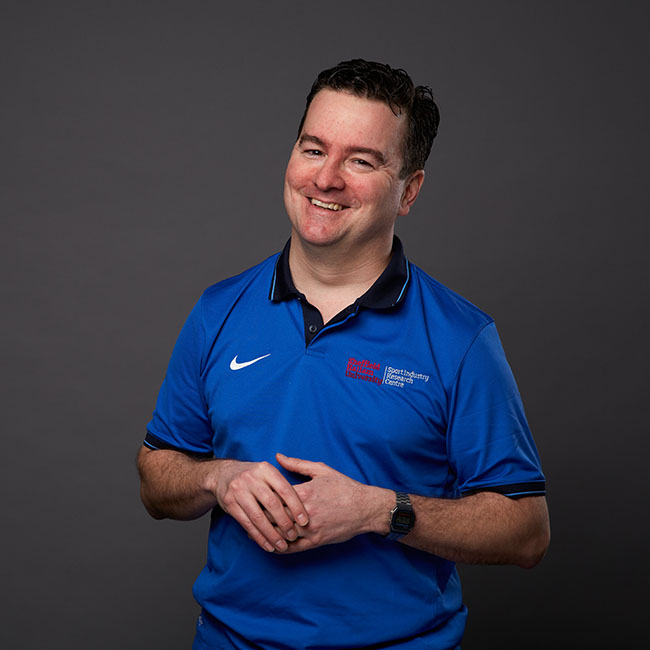
David Barrett serves as a Research Fellow at Sheffield Hallam University's School of Sport and Physical Activity within the College of Health, Wellbeing and Life Sciences, where he has contributed to the Sport Industry Research Centre (SIRC) for over 16 years. Specializing in GIS and spatial data analysis, he partners with national sport organizations across the UK and Ireland—including the Gaelic Athletic Association, Sport England, and UK rugby governing bodies—to enhance research capacity on participation trends, volunteering dynamics, talent pathways, and economic impact assessments. Barrett's research centers on the critical relationship between volunteer workforces and sport participation, particularly examining how voluntary sports clubs sustain participation opportunities amid socioeconomic pressures. His expertise in transforming organizational 'business as usual' data into strategic insights informs studies on cost-of-living impacts, pandemic recovery in grassroots sport, and the socioeconomic value of Gaelic Games. Methodologically, he integrates spatial database management, large-scale surveys, and qualitative stakeholder analysis to address complex sector challenges. Recent publication trends reveal Barrett's focus on external shock resilience (Covid-19, cost-of-living crises), talent pathway inclusion across UK/Irish nations, and the economic-social valuation of sport. His work consistently bridges academic rigor with practical application for sport governing bodies, emphasizing spatial analytics and longitudinal data to track participation shifts and organizational adaptation. Scientific recognition includes: Fellow of the Royal Geographical Society (FRGS) Barrett has led major commissioned research for Sport England, UK Sport, and the GAA—including facility audits across four UK/Irish football associations and the landmark Gaelic Games economic valuation study. His advisory role extends to local authorities and professional clubs like Celtic FC, where he translates data into strategic frameworks for sport development. As an active hockey volunteer and contributor to The Hockey Paper, he maintains direct engagement with community sport dynamics. Based at SIRC, Barrett collaborates within Sheffield Hallam's sport research ecosystem, leveraging partnerships with national governing bodies to advance evidence-based policy. His current projects examine outdoor learning infrastructure and Camogie participation baselines, continuing SIRC's tradition of impactful sport sector consultancy.
Ananth V. Iyer is the Dean Professor of Operations Management and Strategy at the School of Management, University at Buffalo. He holds a PhD and MBA from the University of Florida, along with a BFA from the North Carolina School of the Arts. His research focuses on emergency response logistics, sustainable supply chain systems, and digital education distribution. He has pioneered models for contingency management, supply chain vulnerability analysis, and innovative educational technologies. Key professional contributions include developing frameworks for emergency resource allocation, evaluating recycled content claims in manufacturing, and optimizing winter operations logistics. His work frequently intersects with public policy, as seen in studies on freight infrastructure planning and INDOT project impacts. Education: PhD & MBA (University of Florida), BFA (North Carolina School of the Arts) Affiliations: Decision Sciences Institute, American Production and Inventory Control Society Labs/Teams: Academic Director of Digital Access Education Program, member of Extreme Events Research Area & Geohazards Studies Center His publications span prestigious journals like Journal of Operations Management and European Journal of Operational Research , with a focus on practical applications in public safety and industry. Awards include SUNY’s Chancellor’s Award and multiple Decision Sciences Institute recognitions.
Daniel Peralta Cámara is a Postdoctoral Researcher at Ghent University's Faculty of Engineering and Architecture, Department of Information Technology (EA05). His work spans Machine Learning , Bioinformatics , High Performance Computing , and Biometrics , with a focus on Single-Cell Data Analysis , Image Cytometry , and Missing Value Handling . Affiliation: Ghent University Academic Rank: Researcher Research Disciplines: Data Mining, Parallel Computing, Bioinformatics, High Performance Computing His research designs scalable machine learning frameworks for biological and engineering applications, including SCIP for morphological profiling and MSDeepAMR for antimicrobial resistance prediction. He explores advanced techniques like Polar Encoding for missing data and Fuzzy Rough Sets for classification uncertainty, contributing to one-class classification and novelty detection through Python libraries like Fuzzy-rough-learn 0.2 . Key Trends: Hybrid CNN-LSTM for sports analytics Time-series feature selection in healthcare UWB/IMU wearable integration for animal monitoring Dr. Peralta supervises PhD candidates like Maxim Lippeveld (2025) and Oliver Urs Lenz (2023). His collaborations span Ghent University researchers including Eli De Poorter , Chris Cornelis , and Yvan Saeys . Applications: Badminton strategy analysis Goat activity classification White blood cell identification
Deeptha Sukumar, PhD, serves as Associate Professor and Director of the PhD Program in Nutrition Sciences within the Department of Nutrition Sciences at Drexel University's College of Nursing and Health Professions. Her academic leadership extends to directing key research initiatives focused on bone and metabolic health. Rutgers University, PhD in Nutritional Sciences (2006-2011) Queen Mary’s College, MSc Foods and Nutrition (2002-2004) MOP Vaishnav College, BSc Nutrition, Food Service Management and Dietetics (1999-2002) Dr. Sukumar's research investigates the critical interplay between bone metabolism and energy metabolism, particularly how bone-regulating hormones influence obesity, cardiovascular disease, and diabetes. Her primary focus examines whether dietary interventions involving magnesium and vitamin D can modulate bone-regulating hormones, bone mineral density, inflammatory markers, and energy metabolism. This work addresses significant gaps in understanding micronutrient interactions in cardiometabolic health, with special attention to vulnerable populations including South Asian Indians and individuals on antiepileptic drug therapy. Her laboratory employs clinical trial methodologies combined with biochemical analysis to establish mechanistic links between nutritional status and metabolic outcomes. Analysis of her publication history reveals consistent focus on bone-mineral metabolism within obesity contexts, with recent expansion into pandemic-related nutritional vulnerabilities. Key thematic areas include parathyroid hormone dynamics, micronutrient synergism (particularly magnesium-vitamin D interactions), and ethnic health disparities in metabolic syndrome presentation. ASBMR Young Investigator Award (2011) American Heart Association Research Excellence Award (2016) Mentor/AHA Mentee Award (2016) Multiple American Society for Nutrition awards (2009-2010) Dr. Sukumar has secured significant grant funding as Principal Investigator, including an American Heart Association award examining magnesium and vitamin D supplementation for parathyroid hormone reduction in obesity, and multiple Drexel CNHP Seed Grants investigating bone health in South Asian populations and magnesium's role in antiepileptic drug therapy. She actively mentors doctoral students including May Cheung, Abeer Aljahdali, and Rittane Dustak, with research collaborations spanning institutions including Rutgers University and clinical partners. Her laboratory operates within Drexel's Health Sciences Building, conducting clinical trials and biochemical analyses focused on nutrient-hormone interactions in metabolic health.
Dr. Jason Quinn is a Professor in the Department of Mechanical Engineering at Colorado State University and Operating Director of the Energy Institute. His research focuses on techno-economic assessment, life cycle analysis, and optimization of emerging energy technologies including microalgae biofuels, nuclear systems, and electrified transportation. He holds a Ph.D. in Mechanical Engineering from Colorado State University and an M.S. in Nuclear Engineering from the University of Wisconsin-Madison. Research spans sustainability methodology, biofuel systems, and energy optimization, with emphasis on engineering models validated through experimentation to guide R&D priorities. Current projects address desert agriculture, waste valorization, and grid storage solutions. Honors include the Walter Scott, Jr. College of Engineering Rockwell-Anderson Professorship (2019) and Colorado State University's Mechanical Engineering Energizer Bunny Award (2019).
Mehdi Norouzi is an Associate Professor at the University of Cincinnati in the Department of Computer Science. His research focuses on video structure analysis and deep video understanding, with applications in medical imaging and social media analysis. Research interests include: Video temporal segmentation and scene detection Deep learning approaches for video summarization Language-guided video analysis frameworks Medical video processing applications His publications demonstrate a consistent focus on applying machine learning techniques to structural engineering problems through 2015-2018, shifting toward computer vision and transformer networks in recent years (2022-2023). This reflects an evolution from infrastructure diagnostics to advanced video analysis. Dr. Norouzi has secured multiple research grants from entities including the Federal Highway Administration and Department of Transportation, focusing on video analysis, structural monitoring, and machine learning applications. Current projects involve facial/skeletal tracking for medical applications and soil modulus prediction models.
Kathrin Kirchner is an Associate Professor at the Department of Engineering Technology and Didactics at DTU. Her research focuses on transformative effects of digital technologies in workplaces, including AI, data science, and hybrid work dynamics. She explores how these technologies impact employee well-being, organizational strategies, and business models. Currently, she designs courses on analytics, leadership with data, and AI adoption in organizations. She has held editorial roles at the International Journal of Workplace Health Management and Electronic Markets. Kathrin is also a Board member of the Scandinavian Academy of Industrial Engineering and Management (ScAIEM). Her education includes a PhD in Information Systems from Friedrich Schiller University Jena (Germany), with postdoctoral work in healthcare process mining. She previously taught at the Berlin School of Economics and Law. Research interests span digital platforms, knowledge work, algorithmic management, and virtual collaboration. Notable projects include CVEinAI (Critical Virtual Exchange in AI) and studies on AI’s impact on managerial work. Awards include Researcher of the Year 2024 and ICIS 2023 Best Paper (Runner-Up). Teaching includes master’s courses like “From Analytics to Action” and bachelor-level “Innovation Pilot.” She supervises PhD students and advises on AI implementation challenges. Her work aligns with UN SDGs related to quality education and decent work.
Quintin Williams is a Professor at the Savannah College of Art and Design , specializing in sneaker and accessory design since 2022. He is also a co-founder and Chief Global Designer of Q4 Sports , a performance footwear company established in 2016, and founder of Creative Astronaut Ventures LLC , operating since 2009. His career spans leadership roles in footwear design at PEAK Sports USA (2013–2016), Power Force Apparel (2012–2013), and collaborations with brands like Disney, Native Shoes, and Bata. Education: B.F.A. in Industrial Design, Savannah College of Art and Design Research and Design Focus: Williams specializes in sneaker design , footwear technology , and branding strategies . His work emphasizes performance footwear innovation , seasonal material storytelling , and global production oversight . Publications highlight trends in sneaker industry analysis and design pedagogy , while his entrepreneurial ventures address both market-driven product development and corporate social responsibility . Scientific and Creative Awards: Global Footwear Awards Winner (2021) Coroflot’s Designer of the Week nomination (2011) First Place, Design the "You" Shoe Contest (2012) Featured in Product Sketchbook: Idea, Process and Refinement (global publication)
Dr. Robert K. Chun is a Professor in the Department of Computer Science at San José State University (SJSU), part of the College of Engineering. He holds a BSEE (1979), MSCS (1981), and Ph.D. (1989) from UCLA. With 20+ years in industry, he joined SJSU as a full-time faculty in 2001. His research focuses on Cloud Computing, parallel processing, high-performance architectures, and AI. He received NASA Faculty Fellowships (2002-2003) and holds a U.S. patent for real-time expert systems integration. Education: Bachelor of Science, Electrical Engineering, UCLA (1979) Master of Science, Computer Science, UCLA (1981) Doctor of Philosophy, Computer Science, UCLA (1989) Research Interests: Cloud Computing architectures and scalability High-performance computing and parallel algorithms Software engineering for distributed systems CAD tools for VLSI design verification Artificial intelligence and neural networks Publications highlight advancements in parallel processing, distributed systems, and compiler optimization. Notable works include adaptive transactional memory algorithms, wireless cluster computing frameworks, and EJB performance measurement tools. His NASA-funded research at Ames Supercomputing Center explored parallel computing applications. Advising and Grants: Advised 16 Master’s theses, including topics like dynamic clusters and intelligent debuggers Contributed to industry-university partnerships through NASA collaborations Labs/Teams: Active in SJSU’s parallel processing and computer architecture research groups, contributing to course development in advanced parallel processing and operating systems.
Genady Ya. Grabarnik is a Professor and Graduate Director in the Department of Mathematics and Computer Science at St. John's College of Liberal Arts and Sciences, St. John's University. He holds a Ph.D. from the National Academy of Science. His research focuses on interdisciplinary areas including machine learning, cloud computing, IT service management, and mathematics education. He has contributed to advancements in Kubernetes-based systems, digital twin frameworks, and educational methodologies for STEM prerequisites. His work bridges theoretical foundations with practical applications in cloud infrastructure and automated problem-solving. Education: Ph.D., National Academy of Science Research Interests: Machine Learning and its prerequisites in education Cloud computing, Kubernetes, and microservices IT service management and automation Data-driven methodologies for system optimization Key Contributions: Developed frameworks like Kubetwin for Kubernetes deployments Explored hybrid cloud optimizations via BDMaaS+ Advanced AI-driven ticket resolution systems (e.g., AISTAR ) Studied cross-country educational strategies for mathematics Advising & Grants: No explicit student advising records listed. His grants and collaborations are inferred from his research outputs but not detailed here. Labs/Teams: Not explicitly mentioned, though his work suggests involvement with cloud computing and IT service management research groups.
Dr. Seokgi Lee is an Assistant Professor in the Department of Industrial and Systems Engineering at Youngstown State University (YSU), part of the Rayen School of Engineering. Previously, he served as an Assistant Professor in Industrial Engineering at the University of Miami. He holds a Ph.D. in Industrial and Manufacturing Engineering from Pennsylvania State University and B.S./M.S. degrees in Industrial Engineering from Hanyang University, South Korea. His research focuses on distributed control systems, predictive analytics, and simulation-optimization for service engineering processes in supply chains, transportation, and healthcare. Notable expertise includes energy-aware manufacturing systems, prevention service analytics, and applications of machine learning in logistics and healthcare. Dr. Lee’s educational background includes teaching roles at YSU, the University of Miami, and Penn State, covering courses such as Decision Analysis for Engineering, System Analysis and Design, Operations Research, and Production Systems. He has contributed to institutional service through committees like the New Faculty Search in ISEN (YSU) and PhD recruitment in Industrial Engineering (University of Miami). His research trends emphasize interdisciplinary solutions, blending control theory with machine learning to address energy efficiency, healthcare optimization, and sustainable logistics. Recent publications highlight work on dynamic scheduling algorithms, opioid prescribing disparities, and green transportation systems. While no specific awards are listed, his active engagement in academic service underscores his commitment to institutional advancement. Teaching and advising form a core part of his role, with a focus on graduate and undergraduate engineering curricula. His work integrates real-world applications, such as optimizing infusion center operations and modeling energy costs in manufacturing, demonstrating a strong practical orientation.