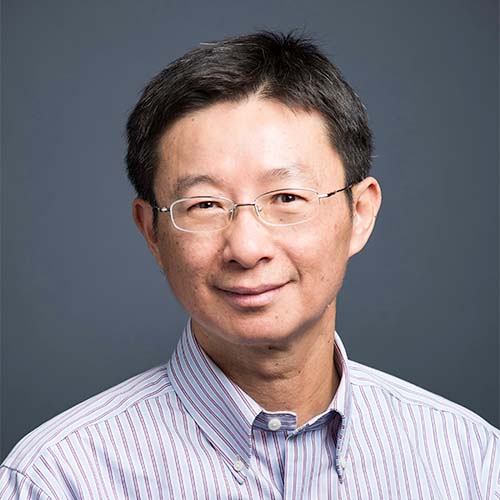
Simon King is a Professor of Speech Processing at the University of Edinburgh , affiliated with the School of Philosophy, Psychology and Language Sciences . He serves as Director of the Centre for Speech Technology Research (CSTR) and teaches courses like Speech Processing and Speech Synthesis , while directing the MSc in Speech and Language Processing . Research Interests His research focuses on: Developing new acoustic models (e.g., Linear Dynamical Models, factorial-HMMs) for speech recognition Advancing unit selection and HMM-based speech synthesis Integrating articulatory measurement data for enhanced modeling Exploring perceptual measures in synthesis criteria Building multilingual speech systems to identify universal speech building blocks Publication Trends Simon's recent work emphasizes deep learning (DNNs, LSTMs) in speech synthesis, multilingual frameworks , and articulatory-acoustic feature integration . His studies often bridge grapheme-based modeling , perceptual error reduction , and noise-robust synthesis . Scientific Awards EPSRC Advanced Research Fellowship (2005-2009) Students & Collaborations He has supervised numerous PhD students including Rasmus Dall, Tom Merritt, and Srikanth Ronanki. Current research fellows like Mirjam Wester and Zhizheng Wu contribute to projects such as Natural Speech Technology (NST) and Simple4All .
Gustavo Alonso is Full Professor at the Department of Computer Science (D-INFK) of ETH Zurich and Head of the Institute for Computing Platforms . He has been at ETH since 1995, first as a post-doc, then as Assistant Professor from April 1998, and promoted to Full Professor in October 2001. Within the Systems Group he leads the Information and Communication Systems Research Group . Education: 1989 – Telecommunications Engineering (undergraduate), Madrid Technical University (UPM-ETSIT), Spain 1992 – M.S. Computer Science, University of California, Santa Barbara (UCSB) 1994 – Ph.D. Computer Science, University of California, Santa Barbara (UCSB) Research Interests: His work spans databases, distributed systems, cloud-computing architecture, FPGAs, hardware acceleration for data science, parallel and reconfigurable computing . The group investigates how modern heterogeneous hardware—from GPUs to SmartNICs—can be integrated into data-processing systems to achieve orders-of-magnitude performance gains, energy savings, and new functionality such as in-network computation and serverless acceleration. Scientific Awards & Honors: Fellow of the ACM (Association for Computing Machinery) Fellow of the IEEE (Institute of Electrical and Electronics Engineers) Distinguished Alumnus, Department of Computer Science, UC Santa Barbara Four Test-of-Time / Most Influential Paper Awards across databases, programming languages, cloud computing, and software engineering Labs & Projects: He directs the Information and Communication Systems Research Group within the Systems Group ( systems.ethz.ch ). The lab develops open-source platforms such as Coyote v2 for FPGA abstractions, Shuhai for HBM benchmarking, and MicroRec for micro-second recommendation serving, while collaborating with industry on SmartNICs, serverless analytics, and cloud-scale data analytics.
Wim Gevers is a faculty member at the Université libre de Bruxelles (ULB) and leads the CS4S – Cognitive Control & Sleep laboratory within the CRCN research centre. His work bridges cognitive psychology, neuroscience and sleep research to understand how the brain exerts control over thoughts and actions and how sleep contributes to these processes. Research Interests Cognitive Control & Metacognition: Investigating how subjective experiences such as confidence and the "urge-to-err" guide strategic adjustments in behaviour. Working Memory & Ordinal Cognition: Examining how order information is maintained and manipulated, and how these processes relate to mathematical competence. Sleep, Memory & Decision Making: Exploring how sleep-dependent consolidation influences motor learning and decision strategies. Across his 2022–2025 publications a clear trend emerges: a focus on metacognitive monitoring —how humans evaluate their own cognitive states—and the role of emotional and temporal context in shaping those evaluations. Studies range from reaction-time introspection and confidence judgements in perceptual tasks to the impact of aging and depression on metacognitive accuracy. Doctoral Supervision & Mentoring Whitney Stee (PhD 2024) – Sleep-dependent structural brain reorganization & motor learning Gaia Corlazzoli (PhD 2024) – Subjective experience in decision-making Myrtille Dewulf (PhD 2023) – Ordinal coding mechanisms in working memory Rebeca Sifuentes-Ortega (PhD 2023) – REM sleep and memory reactivation All dissertations were defended at ULB, Faculté des Sciences psychologiques et de l’éducation, with Wim Gevers formally listed as Promotor . Laboratory & Collaborative Networks As head of CS4S, Gevers coordinates a multidisciplinary team that combines behavioural experimentation, EEG/MEG, computational modelling and sleep polysomnography. The lab is embedded in the larger CRCN ecosystem, fostering collaborations with groups such as CO3 (consciousness), LCLD (language & deafness), and UR2NF (neurofunctional imaging).
Dr. John Francis Clinton is the Director of Seismic Networks and Head of the Earthquake Monitoring Section at the Swiss Seismological Service (SED), ETH Zurich. He leads the Marsquake Service for NASA's InSight mission and oversees Switzerland's broadband and strong-motion seismic networks. His expertise spans earthquake early warning systems, seismic instrumentation, and glacial seismology. Clinton is also a Co-Investigator on the Mars InSight mission and involved in international projects like EPOS and RAMSIS. Education PhD in Civil Engineering (Minor in Geophysics), California Institute of Technology (2004) MSc in Civil Engineering, California Institute of Technology (1998) BEng in Civil Engineering, University College Dublin (1997) Research Interests Dr. Clinton focuses on real-time seismology, seismic instrument design, structural health monitoring, and glacial seismology. His work bridges engineering applications with geophysical data analysis, particularly in earthquake early warning systems and induced seismicity studies. He collaborates internationally on projects such as the Valais Near Fault Observatory and Nicaragua’s Earthquake Early Warning development. Publications Overview His 15 most recent papers (2011–2015) highlight advancements in seismic network optimization, Marsquake detection algorithms, and glacial icequake mechanisms. Key themes include improving early warning accuracy, understanding subglacial dynamics, and validating high-rate GPS for structural monitoring. Awards & Memberships Member, Swiss Academy of Sciences (since 2008) Member, IRIS Quality Assurance Advisory Committee (since 2013) Chair, European Integrated Data Archives (EIDA) (2013–2015) Labs & Teams Clinton directs the SED’s Earthquake Monitoring team and collaborates with ETH Zurich’s Geophysics Masters Program. His group manages Switzerland’s seismic networks and leads the Marsquake Service, which analyzes InSight lander data for Martian seismic events.
David Landriault is a Professor in the Department of Statistics and Actuarial Science at the University of Waterloo, Canada, and a Canada Research Chair in Risk Theory. His research focuses on Actuarial Science, Quantitative Risk Management, Applied Probability, and Stochastic Processes, particularly in ruin theory, drawdown analysis, and stochastic control for insurance and finance applications. Education: PhD in Mathematics (2005), MSc in Mathematics (2003), BSc in Actuarial Science (2002) from Laval University. Affiliations: University of Waterloo (postdoctoral fellowship, 2006); Canada Research Chair in Risk Theory. Research Interests Risk and Ruin Theory Stochastic Control in Insurance and Finance Drawdown and Occupation Time Analysis Regime-Switching Models Reinsurance Design and Optimization Time-Dependent Risk Models Scientific Awards Fellow of the Canadian Institute of Actuaries (F.C.I.A.), 2009 Fellow of the Society of Actuaries (F.S.A.), 2006
Shiyu Su is an Assistant Professor in the Department of Electrical and Computer Engineering at the University of Waterloo. His research focuses on high-speed data converters, wireless transceivers, digital phase-locked loops (PLL), and AI-assisted analog/mixed-signal design automation. He holds a Ph.D. from the University of Southern California (2019) and teaches courses such as ECE 340 (Electronic Circuits 2) and ECE 432 (Radio Frequency Integrated Devices and Circuits). Education: B.S. from Beijing University of Post and Telecommunication (China) and Queen Mary, University of London (UK), 2011; M.S. and Ph.D. from USC, 2013 and 2019, all in electrical engineering. Research Interests: High-speed ADCs/DACs RF/mm-wave transceivers Time-approximation filters (TAF) Analog/mixed-signal design automation Memristor-based computing Biomedical interfaces Key Awards: IEEE SSCS Predoctoral Achievement Award (2017–2018) Best Student Paper Award at IEEE RFIC (2022) Ming Hsieh Institute Scholar (2019–2020) Lab Focus: The Shiyu Su Lab develops integrated circuits for communications, sensing, and computing, with a focus on AI-driven methodologies and digital-analog co-design. Collaborations include work with Prof. Wei Wu (USC) on memristor-based systems.
Professor Yasamin Mostofi is a faculty member in the Department of Electrical and Computer Engineering at the University of California, Santa Barbara. She is also affiliated with the Department of Computer Science and the Center for Control, Dynamical Systems and Computation. Her work bridges wireless systems, robotics, and machine learning. PhD, Stanford University MS, Stanford University MS, Sharif University of Technology Research Interests : Her lab focuses on wireless systems and autonomous agents , developing novel mathematical models for RF sensing and communication-aware robotics. Current directions include WiFi/millimeter wave/6G-based imaging and analytics, networked robotics for cellular systems, human-robot collaboration, and machine learning integration. Recent Publications : Her work spans through-wall crowd analytics , robot-assisted connectivity , and vision-aided wireless sensing , with applications in smart health, security, and retail optimization. Key trends include cross-modal integration (WiFi and vision), synthetic data generation, and real-world clinical validation. Scientific Recognition : Presidential Early Career Award for Scientists and Engineers (PECASE) Antonio Ruberti Prize, IEEE Control Systems Society NSF CAREER Award IEEE Region 6 Outstanding Engineer Award IEEE Fellow (2020) Advising and Leadership : She mentors PhD students in systems research, with graduates joining leading companies like Qualcomm and Google. She co-founded NPJ Wireless Technology (Nature Portfolio) and serves on editorial boards including IEEE Transactions on Control of Network Systems .
Prof. Stefan Wiemer is the Director of the Swiss Seismological Service (SED) and holds the Chair of Seismology at ETH Zurich's Department of Earth and Planetary Science. He obtained a geophysics diploma from Ruhr University Bochum (1992) and a PhD from the University of Alaska Fairbanks (1997). His research focuses on earthquake processes, probabilistic hazard assessments, induced seismicity, and geothermal energy applications. He has published over 200 articles and supervised 30 PhD students, while also lecturing at the University of Bern. Key Roles: Member of ERC Grants Evaluation Panel (2015–present) Scientific Advisor to GFZ German Research Center for Geosciences (2021–present) President of Swiss Geophysical Commission Projects: Leader of Switzerland's national earthquake risk model Coordinator of EU-funded RISE (risk assessments) and DEEP (geothermal de-risking) projects Principal Investigator for ERC Synergy grant FEAR (BedrettoLab fault experiments) His research spans operational earthquake forecasting, CO2 storage monitoring, and the BedrettoLab underground experiments. He has won the Humboldt Foundation Fellowship (1997) and contributed to international initiatives like the Dutch Mining Effects Panel. Teaching includes ETH's Geophysics I course. Scientific contributions include developing seismic hazard models (ERM-CH23), real-time induced seismicity forecasting frameworks, and innovative techniques for fault dynamics analysis. His work integrates field data, laboratory experiments, and computational modeling to address both natural and human-induced seismic risks.
Minjie Chen is an Associate Professor of Electrical and Computer Engineering and the Andlinger Center for Energy and the Environment at Princeton University, serving as Acting Associate Director for Research at the Andlinger Center. He leads the Princeton Power Electronics Lab (PowerLab), which focuses on developing fundamental and novel power electronics solutions for a wide range of applications from mW-scale energy harvesting to MW systems in renewable energy integration. Dr. Chen received his Ph.D. in Electrical Engineering and Computer Science from MIT in 2015 and his B.S. in Electrical Engineering from Tsinghua University in 2009. Before joining Princeton as an Assistant Professor in February 2017, he was a postdoctoral associate at MIT Research Laboratory of Electronics. His research spans power electronics, magnetics design, and machine learning applications in energy systems. The PowerLab develops advanced power conversion architectures that enable order-of-magnitude higher power density through high-frequency designs, addressing circuit timing, parasitics, magnetics, and thermal management challenges. Their work targets applications ranging from portable devices to data centers and renewable energy systems. The research group has produced a remarkable series of high-impact publications, with seven IEEE Transactions on Power Electronics Prize Papers in seven consecutive years (2016-2023). Their recent work increasingly integrates machine learning techniques with power electronics, exemplified by the MagNet project which redefines how power magnetics are studied and modeled. NSF CAREER Award, 2019 IEEE PELS Richard M. Bass Outstanding Young Power Electronics Engineer Award, 2023 Power of Associations Silver Award from ASAE for MagNet project, 2024 Multiple IEEE Transactions on Power Electronics Prize Papers (2016-2023) Princeton Engineering Commendation List for Outstanding Teaching (2019, 2020) Dr. Chen advises approximately 15 graduate students who have received numerous awards including the IEEE PELS John G. Kassakian Fellowship, Princeton SEAS Honorific Fellowship, and multiple IEEE conference best paper awards. His research is supported by significant grants from NSF, DOE ARPA-E, Princeton Innovation Fund, C3.ai DTI, and industry partners including Intel, Google, and pSemi. The lab's MagNet project has become a major international initiative with a $60,000 prize pool challenge. The PowerLab maintains strong industry connections and has launched several collaborative projects with Intel, Google, and pSemi. Their MagNet project has evolved into an international challenge with participation from over 40 teams worldwide, demonstrating the growing impact of their approach to machine learning for power magnetics modeling.
Scott McDougall is an Associate Professor in the Department of Earth, Ocean & Atmospheric Sciences at the University of British Columbia (UBC). He specializes in geohazards, particularly landslides and related risks, with a focus on improving risk assessment and mitigation strategies. His work integrates field data, statistical analysis, numerical modeling, and laboratory experiments to understand landslide dynamics. Education: PhD in Geological Engineering, UBC (2006) BASc in Civil Engineering, University of Toronto (1998) Research Interests: Landslide mobility and runout modeling Tailings dam breaches and their impacts Risk evaluation frameworks for geohazards Shoreline erosion and landslide-generated waves Applications of machine learning in hazard prediction Key Contributions: Development of the UBC Geohazards Research Team to advance landslide risk reduction Leadership in the CanBreach project to improve tailings dam breach analysis Pioneering probabilistic runout prediction models for rock avalanches and debris flows Awards: Engineering Geology Best Paper Award 2024 CDA Published Paper Award Advising & Grants: Supervised over 15 graduate students and postdoctoral fellows Active industry collaborations with mining and engineering firms Funded by NSERC, Mitacs, and industry partnerships Labs & Teams: UBC Geohazards Research Team CanBreach Collaborative Research and Development Project
Allen Husker is a Research Professor of Geophysics at the California Institute of Technology (Caltech), affiliated with the Seismological Laboratory. He manages the Southern California Seismic Network (SCSN) and the Southern California Earthquake Data Center. Previously, he was a professor at the National Autonomous University of Mexico (UNAM), chairing the Seismology Department, and served as Station Manager for the Comprehensive Nuclear-Test-Ban Treaty Organization (CTBTO) seismic stations in Mexico. His academic journey includes a B.S. from the University of Washington (1998), an M.S. from UCLA (2003), and a Ph.D. from Caltech (2008). Research Interests : Husker focuses on geophysical observations of crustal structure, slow-slip events, and seismic network analysis. His work bridges subduction zones (e.g., Mexico) and transform boundaries (e.g., Southern California). He explores planetary seismology, comparing Earth with the Moon and Mars. Recent studies include DAS technology for moonquake detection and seismic monitoring in the Guerrero seismic gap. Publications Trends : His 2024 work emphasizes DAS applications, Mexico’s San Andreas Fault dynamics, and socio-technical aspects of earthquake early warning (EEW) in Mexico. Earlier research (2020s) delves into slow-slip mechanisms, crustal anisotropy, and fault system dynamics in Mexico. He also investigates moonquake behavior and lunar regolith effects. Awards : No explicit scientific awards listed. Advising & Grants : Advises graduate students like Guillermo González (UNAM) and Yuri Tamama (Caltech). Former students include Francesco Civilini (Research Space Scientist) and Jiuxun Yin (Research Geophysicist). Collaborates widely, including with Jennifer Jackson on lunar seismology. Labs/Teams : Leads the SCSN and collaborates with UNAM’s Seismology Department. Engaged with the CTBTO and international seismological networks.
Rima Alaifari is currently an Assistant Professor for Applied Mathematics at ETH Zürich , where she works on applied analysis, inverse problems, and scientific machine learning. Her research emphasizes stability analysis and regularization of inverse problems, applied harmonic analysis, phase retrieval, and operator learning. She is an associated member of the ETH AI Center and will transition to a full professorship at RWTH Aachen University in 2025 as Chair of Analysis and its Applications. Education : PhD in Mathematics (2010–2014, Vrije Universiteit Brussel); MSc in Applied and Industrial Mathematics (2005–2010, Johannes Kepler University) Research Focus : Stability estimates for inverse problems, phase retrieval in wavelet/Gabor transforms, operator learning with neural networks, and deep learning robustness. Article Trends : Her recent work bridges harmonic analysis with machine learning, focusing on phase retrieval stability, adversarial perturbations in imaging, and mathematically grounded neural operator frameworks like ReNO and CNO. Advising : She has supervised PhD students like Tandri Gauksson and Matthias Wellershoff. Former postdoctoral researchers include Francesca Bartolucci (now at TU Delft) and Jesse Railo (Finnish Inverse Prize winner).
Yaoqing Yang is an Assistant Professor at the Department of Computer Science, Dartmouth College. He earned his PhD in Electrical and Computer Engineering (ECE) from Carnegie Mellon University (CMU) and completed postdoctoral research at UC Berkeley's RISE Lab. His work focuses on robustness in machine learning systems, spectral analysis of neural networks, and algorithm design for structured data like graphs and point clouds. PhD in ECE, Carnegie Mellon University Postdoc, RISE Lab, UC Berkeley BS in Electrical Engineering, Tsinghua University Research interests include diagnosing and mitigating model failures through heavy-tailed spectral analysis, decision boundary studies, and loss landscape visualization. He develops methods such as AlphaPruning and SharpBalance to enhance large language models and ensemble learning. Recent work spans 2025 publications on spectral evolution of neural networks, agentic AI for science, and LLM safety. Key collaborations include Michael W. Mahoney and other researchers. Burke Research Initiation Award, Dartmouth (2024) DOE grant for scientific foundation models (2024) DARPA grant for AI robustness (2024) He serves as Area Chair at NeurIPS 2025 and ICLR 2026, and has presented at Google Research, Lawrence Berkeley National Laboratory, and leading universities worldwide. His lab at Dartmouth engages in theoretical and applied research, with connections to UC Berkeley's RISE Lab and collaborations across institutions like CMU and Tsinghua University.
Maurice Smith serves as the Gordon McKay Professor of Bioengineering at Harvard University's School of Engineering and Applied Sciences (SEAS), where he leads the Neuromotor Control Lab. His primary appointment resides within the Department of Bioengineering, focusing on the computational and neural mechanisms underlying human movement control. Smith's research centers on sensorimotor learning , motor adaptation , and neuromotor control systems . He investigates how the brain forms and retains motor memories, particularly examining cerebellar contributions to long-term sensorimotor memory and the dissociation between implicit and explicit learning pathways. His work frequently employs computational modeling to dissect neural tuning properties and motor variability regulation. Analysis of his recent publications reveals a strong emphasis on temporal dynamics in motor learning , cerebellar function in memory consolidation , and Bayesian frameworks for understanding sensorimotor adaptation . His research demonstrates consistent focus on how error processing, uncertainty, and neural plasticity shape motor memory formation across multiple timescales. Smith maintains active collaborations with researchers including Wilsaan M. Joiner, Yohsuke R. Miyamoto, and Nathan Sandholtz, as evidenced by frequent co-authorship patterns. His laboratory investigates fundamental questions in motor control with implications for neurorehabilitation and adaptive robotics.
Professor Chun-Hung Chen is a distinguished academic at George Mason University ’s Volgenau School of Engineering , where he holds the rank of Professor in the Department of Systems Engineering and Operations Research . He has also held professorships at National Taiwan University and visiting roles at institutions like University of Pennsylvania and Microsoft Research Asia . Education: PhD in Decision and Control, Harvard University (1994) MS in Electrical Engineering, National Taiwan University (1989) BS in Control Engineering, National Chiao-Tung University (1987) Research Interests focus on Stochastic Simulation Optimization , particularly his pioneering Optimal Computing Budget Allocation (OCBA) methodology. OCBA enhances simulation efficiency by dynamically allocating computational resources to critical design alternatives, reducing computation time by orders of magnitude. Applications span air transportation , healthcare , power grids , and semiconductor manufacturing . His 15 most recent articles (2022–2025) explore intersections of simulation optimization , artificial intelligence , reinforcement learning , and personalized medicine , emphasizing computational efficiency and stochastic systems in domains like microgrids and organ transplant logistics . Scientific Awards include: IEEE Fellow (2015) K.D. Tocher Medal (2017) Best Paper Awards at IEEE CASE (2019), LOGMS (2019), and IEEE ICC (2021) Harvard’s Eliahu I. Jury Award (1994) Advisory roles include editorial leadership in IIE Transactions , Journal of Simulation , and IEEE Transactions series. He has coordinated graduate programs at George Mason (2006–11, 2015–19) and led conferences like INFORMS International Meeting (2025) and Harvard Control Workshop (2024). His work is funded by organizations such as the National Science Foundation , National Institutes of Health , and Department of Energy , with applications in healthcare logistics and microgrid control .