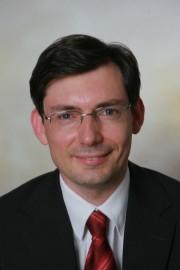
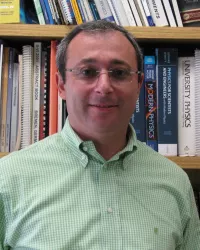
Assoc Prof Ng Teng Yong is an Associate Professor at the School of Mechanical & Aerospace Engineering (NTU), specializing in numerical modeling and simulation. With a background as Research Manager at A*STAR Institute of High Performance Computing, his work spans materials science, nanotechnology, and aerospace engineering. Current focus on graphene-based desalination membranes Expertise in molecular dynamics simulations Investigates nanoscale fluid mechanics and structural dynamics Recent publications highlight advancements in energy-efficient electrodialysis, smart robotics, and nonlinear vibration analysis. His interdisciplinary approach integrates computational methods with experimental validation in additive manufacturing and soft material mechanics.
David Goldhaber-Gordon is a Professor in the Department of Physics at Stanford University, specializing in nanoscale electron behavior and quantum effects. His research spans nanofabrication, materials growth, low-temperature measurements, and scanning probe techniques, focusing on materials like graphene, carbon nanotubes, and topological insulators. Harvard AB in Physics (1994) Harvard AM in History of Science (1994) MIT PhD in Physics (1999) His work explores electron organization and flow in nanoscale systems, emphasizing quantum effects and interactions. Research areas include twisted bilayer graphene, helical trilayer platforms, and topological insulator applications for quantum devices and energy technologies. Recent publications focus on strain effects in twisted graphene, moiré superlattice engineering, and quantum anomalous Hall integration. Themes include topological phases, correlated insulators, and metrology advancements. Co-founder and Director, Center for Probing the Nanoscale (NSF Center) Junior Fellow, Harvard Society of Fellows He teaches advanced physics labs, independent research, and dissertation courses at Stanford. His group collaborates with materials scientists, engineers, and chemists to develop novel electronic applications.
Vanya Darakchieva is a Professor in Solid State Physics at Lund University's Faculty of Engineering (LTH), serving as Principal Investigator at NanoLund: Centre for Nanoscience and Director of C3NiT: Centre for III Nitride technology. She is a core member of Lund's profile areas in Nanoscience and Semiconductor Technology, Light and Materials, and The Energy Transition, reflecting her interdisciplinary impact. Her research centers on wide bandgap semiconductors, particularly gallium nitride (GaN) and gallium oxide (Ga 2 O 3 ), with emphasis on defect engineering, electron transport, and advanced characterization techniques. She pioneers terahertz spectroscopy and electron paramagnetic resonance methods to analyze material properties critical for quantum technologies and energy-efficient electronics. Her work bridges fundamental physics with industrial applications in high-frequency devices and green semiconductor technology. Recent publications reveal a sharp focus on structural optimization of GaN crystals, doping mechanisms, and contact engineering—key bottlenecks in next-generation power electronics. Trends show increasing collaboration with international teams on epitaxial growth techniques and defect-driven property control. No scientific awards were documented in the provided text. She actively supervises PhD candidates including Logotheti, A. and Rindert, V., guiding dissertation projects within major grants. Darakchieva leads nine research projects with 150+ million SEK in funding, including two flagship Knut and Alice Wallenberg Foundation initiatives (2025–2030) on quantum-ready semiconductors and ceramic-to-semiconductor transformation, plus Swedish Research Council and Vinnova grants targeting terahertz characterization and III-nitride technology. Her work is anchored in NanoLund and C3NiT infrastructure, fostering cross-departmental teams for nanofabrication and device prototyping. Current efforts integrate magnetron sputtering, MOCVD growth, and in-situ characterization to solve industry challenges in thermal management and electron mobility for 6G communications and renewable energy systems.
Xi Ling is an Associate Professor in the Department of Chemistry and Materials Science & Engineering at Boston University. They lead the Ling Group, which focuses on the fundamental science and applications of nanomaterials, particularly 2D van der Waals materials. Their research integrates synthesis, characterization via advanced spectroscopy, and device development for energy conversion and chemical sensing. The group utilizes facilities at the Photonics Center for cutting-edge materials analysis. Education: B.A. in Chemistry (Lanzhou University, 2007); Ph.D. in Physical Chemistry (Peking University, 2012). Research emphasizes interdisciplinary approaches to synthesize novel 2D crystals, investigate their physical properties through Raman and photoluminescence spectroscopy, and engineer flexible, transparent devices. Recent publications highlight innovations in strain engineering, ferroelectricity modulation, and exciton dynamics in materials like NiPS3 and GaSe. Students gain expertise applicable to academia and industry roles in semiconductor manufacturing, materials engineering, and instrumentation. The group’s work bridges foundational science and practical applications, addressing challenges in nanoelectronics and sustainable energy technologies.
Jon Schuller is a Professor in the Department of Electrical and Computer Engineering at the University of California, Santa Barbara (UCSB), within the College of Engineering. His research focuses on nanophotonics, metamaterials, plasmonics, and their applications in energy-efficient technologies such as photovoltaics, thermal management systems, and advanced optical devices. He leads the Schuller Lab, which explores engineered metasurfaces and naturally occurring materials to control light-matter interactions at subwavelength scales. His work bridges fundamental science (e.g., quantum phenomena in hybrid perovskites) and engineering (e.g., reconfigurable semiconductor meta-optics). He is affiliated with the California NanoSystems Institute (CNSI) and actively contributes to interdisciplinary research initiatives. Contact: jonschuller@ece.ucsb.edu, Office 3221C Engineering Science Building. Research interests include directional light emission control via metasurfaces, thermal radiation tuning using phase-change materials, and the development of high-efficiency photonic devices. His lab emphasizes fabrication and characterization of nanophotonic structures, with applications ranging from space technology to exoplanet imaging systems. Recent efforts focus on electrically tunable metasurfaces and multipolar optical phenomena in layered materials. Key technical contributions involve designing reconfigurable optical antennas, optimizing metasurface-based LEDs, and exploring magnetic dipole emission in 2D perovskites. His team collaborates across disciplines to address challenges in energy, aerospace, and quantum technologies. Current opportunities include postdoctoral positions in nonlinear optics and photonics.
Geoffrey S.D. Beach is the Toyota Professor in Materials Processing and Professor of Materials Science and Engineering at MIT, and Co-director of the Materials Research Laboratory . His research focuses on spin dynamics, spintronics, and nanoscale magnetic materials, aiming to revolutionize data storage and computation through advanced instrumentation. Education: Bachelor of Science in Physics, California Institute of Technology (1997) PhD in Physics, University of California San Diego (2003) Research Interests: Professor Beach investigates the manipulation of magnetic properties using electric fields, voltage-controlled magnetic order, and the dynamics of skyrmions and domain walls. His work emphasizes materials like ferrimagnetic insulators and garnets, leveraging innovations in solid-state hydrogen gating and interfacial phenomena. Awards: Fellow, IEEE (2023) Junior Bose Award (2009) Labs & Teams: His lab, the Beach Group , develops cutting-edge optical and electrical tools to study magnetization dynamics at nanoscale. Key projects include voltage-gated optical devices and magneto-ionic control of magnetism. Grants & Collaborations: His work is supported by initiatives such as MIT’s Materials Research Laboratory and industry partnerships, though specific grants are not listed here.
Paras N. Prasad is a SUNY Distinguished Professor with joint appointments in Physics, Chemistry, Medicine, and Electrical Engineering at the University at Buffalo. He serves as Executive Director of the Institute for Lasers, Photonics and Biophotonics (ILPB), which he founded in 1999. Dr. Prasad holds the Samuel P. Capen Chair of Chemistry and has pioneered interdisciplinary research at the interface of photonics, nanotechnology, and biomedicine. Education: BSc, Bihar University, India (1964) MSc, Bihar University, India (1966) PhD, University of Pennsylvania (1971) Postdoctoral Fellow, University of Michigan (1971-74) Research Focus: Dr. Prasad's multidisciplinary research spans photonics, nanophotonics, and biophotonics, with emphasis on nonlinear optical processes in nanostructured materials. His work develops photonic technologies for information processing, medical imaging, and cancer therapy through nanoparticle-based drug delivery systems and diagnostic platforms. The ILPB laboratory features state-of-the-art instrumentation for advanced optical research. Publication Trends: Recent articles demonstrate strong focus on nanomedicine applications, particularly cancer theranostics using functional nanoparticles. Key themes include drug delivery systems, chiral photonic materials, bioimaging technologies, and nanoparticle synthesis techniques. The research consistently bridges fundamental materials science with translational medical applications. Honors and Awards: SPIE Gold Medal (2016) IEEE Photonics Society William Streifer Award (2021) American Chemical Society Peter Debye Award (2018) OSA Michael Feld Biophotonics Award (2017) IEEE Pioneer Award in Nanotechnology (2017) Fellow of National Academy of Inventors (2016) Guggenheim Fellowship (1997) Leadership: As ILPB Executive Director, Dr. Prasad leads multidisciplinary teams developing photonic technologies with applications in healthcare, energy, and communications. His research has generated nine spin-off companies, including Nanobiotix currently in advanced cancer therapy trials.
Peter Oppeneer is a Professor in the Materials Theory group within the Department of Physics and Astronomy at Uppsala University, Sweden. His research program focuses on theoretical condensed matter physics with emphasis on ultrafast phenomena and magnetic materials. His research interests span femtosecond magnetism, ultrafast spin and orbital currents, out-of-equilibrium magnon and phonon dynamics, unconventional superconductivity, multipolar and hidden order parameters, and orbitronics. The group develops both analytical theories and numerical simulation codes, combining ab initio methods with model Hamiltonian approaches. Key research thrusts include ultrafast demagnetization mechanisms, spin-crossover materials, molecular spintronics, and topological quantum states in magnetic materials. Analysis of recent publications reveals strong focus on altermagnetism, terahertz spin dynamics, Dirac semimetals, and laser-induced phase transitions. The group's work bridges fundamental quantum theory with applications in next-generation spintronic devices and ultrafast magnetic switching technologies. Collaborative activities include work with experimental groups on ultrafast spectroscopy, X-ray magnetic circular dichroism, and terahertz emission studies. The group maintains active collaborations across Europe and internationally, particularly in the areas of femtosecond magnetism and topological materials. Research infrastructure includes development of specialized computational codes for Eliashberg theory, dynamical mean field theory, and ultrafast spin dynamics simulations. The group contributes to major international facilities including synchrotron and free-electron laser sources for time-resolved studies.
Joel Rosenthal is Professor and Chair of the Department of Chemistry and Biochemistry at the University of Delaware, where he also serves as Associate Dean for Research and Graduate Affairs in the College of Arts and Sciences. His group integrates inorganic synthesis, electrochemistry, and photochemistry to create functional materials and catalysts for energy, environmental, and biomedical challenges. Education & Training B.S. with Honors, New York University (2001) Ph.D., Massachusetts Institute of Technology (2007) NIH Postdoctoral Fellow, MIT (2007-2010) Research Directions The Rosenthal Research Lab pursues four intertwined themes: Environmental & energy sustainability via CO₂ reduction and solar-to-fuel conversion. Design of catalytic platforms for small-molecule up-conversion. Light-activated therapeutics targeting cancer and other diseases. Electrosynthetic routes to advanced inorganic materials and coordination complexes. To tackle these goals, the group synthesizes non-traditional tetrapyrroles, porous inorganic frameworks, and metal alloys, then interrogates them with electrochemical, spectroscopic, and ultrafast methods in collaboration with colleagues across UD, other universities, and National Laboratories. Recent Publication Trends Between 2021-2025 the group has published extensively on (i) selective electrochemical CO₂ reduction using bismuth, tin, and alloy catalysts, (ii) structure–function relationships in palladium and ruthenium tetrapyrrole complexes for singlet-oxygen generation, and (iii) new metal–organic framework (MOF) electrosyntheses. The work bridges fundamental mechanistic insights with practical device demonstrations, including 3-D-printed flow cells and solar-powered reactors. Scientific Awards & Honors While specific awards are not enumerated in the provided text, Prof. Rosenthal has garnered recognition through sustained federal funding, invited colloquia, and extensive peer-reviewed publication records. Students, Collaborators & Infrastructure The group actively recruits graduate students, post-docs, and undergraduates interested in interdisciplinary research. Trainees gain expertise spanning chemical synthesis, electrochemical cell design, ultrafast spectroscopy, computational modeling, and biological assays through partnerships both on campus and at national user facilities. The lab maintains state-of-the-art instrumentation for electrochemistry, photochemistry, and materials characterization, and communicates its latest findings via Twitter @rosenthal_lab .
Arri Priimägi is a Professor at Tampere University's Faculty of Engineering and Natural Sciences, leading the Smart Photonic Materials research group. He focuses on functional soft materials, particularly light-activated systems for applications in soft robotics, photonics, and biomaterials science. His interdisciplinary work bridges physics, chemistry, and engineering, emphasizing collaboration to advance materials for future technologies. Education: PhD in Applied Physics from Helsinki University of Technology (2009), MSc in Physics from Tampere University of Technology (2004). His career includes postdoctoral research in Japan (Tokyo Institute of Technology) and Italy (Politecnico di Milano). Research Interests: Design of stimuli-responsive materials, light-driven actuators, and bioinspired systems. Key projects include ERC Starting Grant-funded work on tunable photonic structures and an ERC Proof-of-Concept Grant for optical humidity sensing. He leads the Chemistry & Advanced Materials research cluster and contributes to the PREIN Flagship in photonics. Awards : Academy of Finland Award for Scientific Courage (2018) ERC Starting Grant (2016) Outstanding Doctoral Dissertation Award (2009) Grants & Projects : ERC Proof of Concept: Optical Sensing of Humidity (2018–2020) ERC Starting Grant: Tunable Photonic Structures (2016–2021) Academy of Finland Fellowship: Halogen-Bonded Materials (2014–2019) Labs/Teams: Active in the Smart Photonic Materials group and collaborates internationally on soft robotics and photonic materials.
Cheong Sang-Wook is a Distinguished Professor at Rutgers University , holding the Henry Rutgers Professor and Board of Governors Professor titles. He serves as Director of the Center for Quantum Materials Synthesis (cQMS) , focusing on advanced materials synthesis and characterization. Key research themes: Quantum Materials , Multiferroics , Topological Defects , and Ferroelectricity . His work spans condensed matter physics , with breakthroughs in magnetoelectric coupling , chiral materials , and quantum spin liquids . Recent publications highlight innovations in polar domain imaging , altermagnetic synthesis , and topological photon emergence , reflecting his leadership in quantum materials and multiferroic oxides . Collaborations include institutions like NJIT and Ho-Am Foundation . Notable awards: James C. McGroddy Prize , KBS Overseas Compatriots Award , and Ho-Am Prize . Recognized as Highly Cited Researcher (2014, 2016, 2018, 2024), with former students like Namjung Hur and Yew San Hor advancing in academia.
Eliana M.F. Vieira is an Assistant Researcher at the Center for Microelectromechanical Systems (CMEMS) within the School of Engineering at the University of Minho (UMinho), Portugal. She is also an integrated member of the LABBELS Associate Laboratory. Her research is conducted in the Department of Industrial Electronics, where she contributes to both R&D and teaching. PhD in Physics (2013), University of Minho BSc in Education of Physics and Chemistry (2008), University of Minho Dr. Vieira's research focuses on the development and application of nanomaterials for energy harvesting and sensing technologies. Her work emphasizes thermoelectric generators, self-powered photodetectors, and magneto-optical sensors, with a strong interest in the relationship between nanostructure and material properties. She investigates thin films, quantum dots, and flexible composites for enhanced micro and nanodevices. Her recent publications highlight advancements in screen-printed thermoelectrics, MEMS-based atomic vapor cells, and pyro-phototronic effects in oxide heterojunctions. These works reflect a strong trend toward flexible, scalable, and self-powered electronic systems with applications in wearable sensors, biomedical imaging, and sustainable energy. 4 awards for best student during BSc Micro&NanoFabs@PT project award (NORTE-01-0145-FEDER-022090) Dr. Vieira has supervised multiple graduate students and currently mentors two MSc and two PhD candidates funded by FCT. She has secured significant research funding, including grants from FCT and EU programs, and has led strategic projects such as CMEMS and NanOx4EStor. She has served as a scientific reviewer, thesis arguer, and evaluator for national fellowship programs. She leads research in the CMEMS-UMinho lab, particularly in thin-film deposition and device fabrication, and collaborates extensively with international institutions in France, Italy, Spain, and the UK.
Rudolf Bratschitsch is a Professor at the Physics Institute of the University of Münster, where he leads an active research group focused on ultrafast phenomena in solid-state nanosystems. His research spans multiple cutting-edge areas of condensed matter physics and nanotechnology with strong connections to international collaborators. His primary research interests include: Ultrafast quantum optics with solid state nanosystems Ultrafast magnetism and THz spectroscopy Ultrafast (magneto-)plasmonics Ultrafast spintronics Two-dimensional materials and transition metal dichalcogenides Spin-wave dynamics and magnonics Bratschitsch's recent publications demonstrate significant contributions to understanding exciton dynamics in 2D materials, spin-wave propagation in magnetic insulators like yttrium iron garnet (YIG), and quantum optical phenomena in hexagonal boron nitride. His work bridges fundamental physics with potential applications in quantum information processing and advanced optical technologies. His group has received substantial funding, including the Collaborative Research Center CRC 1459 'Intelligent Matter' which was extended for four years by the German Science Foundation in December 2024. They have also organized international conferences such as EDISON22 on Electron Dynamics in Semiconductors, Optoelectronics and Nanostructures. Bratschitsch mentors numerous students: PhD Students: Jannis Bensmann, Akhilesh Dubey, Vedhanth Senthiappan Vellaiappan Uthayasurian Master Students: Janne Oskar Becker, Ahmad El Kadri, Pabin Rai, Devika Sivankutty, Richard Sliwka Bachelor Students: Paul Großerhode, Sven Niehues His group has won several awards, including a poster prize for Master's student Janne Becker at the Münster Nanofabrication Facility Day 2024, highlighting the quality of research and training provided.
Thomas Tran is a Full Professor at the School of Electrical Engineering and Computer Science (EECS) at the University of Ottawa. He holds a Ph.D. in Computer Science from the University of Waterloo (2004) and a B.Sc. (Double Major in Mathematics and Computer Science) from Brandon University (1999). His research focuses on Artificial Intelligence, Electronic Commerce, Multi-Agent Systems, Trust and Reputation Modeling, and Recommender Systems. He has published over 80 refereed papers and supervised 27 graduate students (4 PhDs and 23 Masters). Education: Ph.D. in Computer Science, University of Waterloo (2004) B.Sc. (Double Major in Mathematics and Computer Science), Brandon University (1999) Research Interests: AI Applications in E-Commerce and Mobile Business Trust Establishment Models in Multi-Agent Systems Recommender Systems and Deep Learning Clinical Data Analysis for Hidradenitis Suppurativa Awards: Governor General's Gold Medal (2004) NSERC Postgraduate Scholarships (PGS A/B) AAAI Doctoral Consortium Participant (2002) Advising and Grants: Supervised 27 graduate students Recipient of multiple research grants (details unspecified) Labs/Teams: Active in AI and E-Commerce research groups within EECS.
Igor L. Kuskovsky is a Professor & Chair in the Department of Physics at Queens College of the City University of New York (CUNY). He holds a Ph.D. in Applied Physics/Solid State (1998) and an M.S. in Materials Science and Engineering (1995), both from Columbia University. His research focuses on nanoscale materials, particularly type-II quantum dots and their applications in photonic devices, solar energy, and biomedicine. His work includes pioneering studies on the optical Aharonov-Bohm effect in ZnTe/ZnSe quantum dots and developing high-efficiency intermediate-band solar cells. He leads the Laboratory for Fundamental and Applied Nanoscale Physics (LAFANP), collaborating with institutions like Hunter College on bio-detection systems using quantum dots. Key research areas include excitonic phenomena, magnetooptical properties, and colloidal ZnO nanostructures. His team investigates quantum dot stacks, nanowire growth via CVD, and dielectric confinement effects. He teaches PHYS 225: Solid State Electronics and advises graduate students in experimental condensed matter physics. The group’s work bridges fundamental physics with applied nanotechnology, emphasizing interdisciplinary applications.