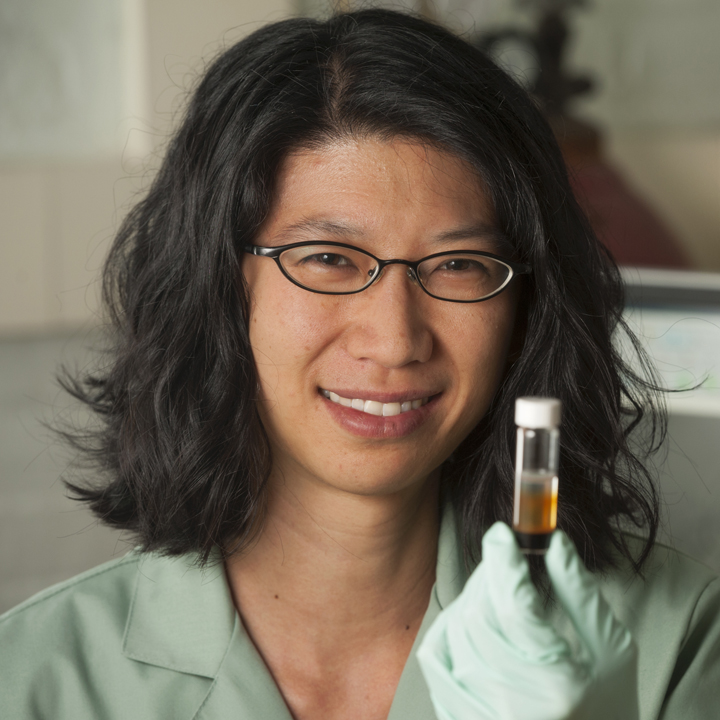
Nathan Yee is a Professor at Rutgers University, where he has held academic appointments since 2004. He earned his B.Sc. from McGill University (1997) and Ph.D. from the University of Notre Dame (2001), followed by postdoctoral research at the University of Leeds (2001-2003). His career progression includes positions as Assistant Professor (2004-2010), Associate Professor (2010-2016), and full Professor since 2016. Research Focus Yee's research integrates geochemistry and geomicrobiology to study: mineral transformation processes, interactions between metal ions and mineral surfaces, microbial influences on inorganic element cycling, and contaminant behavior in environmental systems. His work combines experimental approaches with modeling to investigate biogeochemical processes relevant to early Earth evolution, microbial metabolism, and environmental remediation. Key themes include biologically catalyzed redox reactions, metal isotope fractionation, and geomicrobial controls on contaminant transport. Publication Trends Yee's recent publications (2021-2025) demonstrate strong emphasis on microbial-metal interactions, isotope geochemistry, and planetary science. Dominant themes include: isotopic tracing of metal cycling (Ni, Cu, Hg), microbial redox transformations of contaminants (Se, Te, U), photochemical processes in early Earth systems, and astrobiological investigations of planetary bodies like Mars and Enceladus. Methodologies frequently combine laboratory experiments with geochemical modeling.
Cesare Franchini is a full Professor at the University of Vienna's Faculty of Physics, leading the Computational Materials Physics research group. His work focuses on theoretical understanding and computational modeling of quantum materials using first principles methods, particularly VASP. He maintains an active research program with numerous postdocs, PhD students, and collaborations across multiple institutions including the University of Bologna. Professor Franchini's research centers on quantum materials with many interacting degrees of freedom (lattice, spin, and electron orbital) that enable novel electronic and magnetic phases. His specific interests include metal-insulator transitions, polaron physics (electron-phonon interactions), non-collinear spin orderings, topological Dirac/Weyl phases, multiferroism, and superconductivity. He has increasingly incorporated machine learning data-driven tools and diagrammatic Monte Carlo techniques into his computational approaches. Analysis of his recent publications (2024-2025) reveals a strong focus on polaron physics across multiple material systems, with significant work on hematite, titanium dioxide, and quantum paraelectrics like KTaO3. His research increasingly integrates machine learning with traditional first-principles methods, particularly for studying hydrogen diffusion, surface science phenomena, and electronic structure calculations. There's also substantial work on single-atom catalysis and the application of advanced computational techniques to understand fundamental charge transport mechanisms in energy materials. Professor Franchini actively supervises numerous PhD students and postdocs, including Andrea Angeletti, Viktor Birschitzky, Lorenzo Celiberti, and several others working on diverse aspects of computational materials physics. He leads or participates in major research projects including TACO (Taming Complexity in Materials Modeling), DCAFM (Doctoral College Advanced Functional Materials), and the recently launched Spin-orbit entangled anharmonic polarons project. His group maintains strong collaborations with experimentalists at Charles University, Technical University of Vienna, and other international institutions.
Prof. Dr. Bart Jan Ravoo is a Professor of Organic Chemistry at the University of Münster, Germany, where he leads the "Synthesis of Nanoscale Systems" research group. He is also co-director of the Center for Soft Nanoscience (SoN) and spokesperson of the Collaborative Research Center (CRC 1459) "Intelligent Matter". His research focuses on creating novel nanoscale materials through supramolecular chemistry and molecular self-assembly. Prof. Ravoo received his PhD from the University of Groningen in 1998 and completed postdoctoral work at University College Dublin. He joined the University of Münster in 2007 as a professor, after serving as an assistant professor at the University of Twente. From 2012-2014, he served as Dean of the Department of Chemistry and Pharmacy. His research spans three main areas: biomimetic supramolecular chemistry, surface functionalization by molecular self-organization, and responsive materials. Prof. Ravoo's group is particularly known for developing photoresponsive materials using arylazopyrazoles and cyclodextrin-based systems for applications ranging from drug delivery to smart adhesives. His work often bridges the gap between fundamental molecular design and practical applications in biomedicine and materials science. Prof. Ravoo's recent publications demonstrate a strong focus on light-responsive materials, with particular emphasis on arylazopyrazole and arylazoisoxazole photoswitches. His research shows how molecular photoswitches can be integrated into various material systems including hydrogels, nanoparticles, and surface coatings to create materials with tunable properties that respond to specific wavelengths of light. This work has important implications for drug delivery, sensing, and adaptive materials. Recipient of the Schering-Plough Newman Scholarship in Organic Chemistry Member of the "Cells in Motion" research cluster Supervisor in the CiM-IMPRS Graduate Programme Prof. Ravoo has supervised over 40 PhD students and has been instrumental in establishing interdisciplinary research collaborations at the University of Münster. His group, consisting of approximately 25 researchers, is supported by multiple funding agencies including the Deutsche Forschungsgemeinschaft (DFG), European Union, and Volkswagen Foundation.
Dr. Elizabeth Webb is an Associate Professor in the Department of Earth Sciences at Western University, specializing in stable-isotope biogeochemistry. She holds a Ph.D. from Western University (2000) and leads the Laboratory for Stable Isotope Science (LSIS). Her primary affiliations include the Faculty of Science and involvement with the Richard W. Hutchinson Geoscience Collaborative Suite. She teaches undergraduate courses such as Earth Sciences 1086, 2240, and 3341, and graduate seminars (Geology/Geophysics 9580/9680). Dr. Webb's research focuses on understanding climate-vegetation interactions through isotopic analysis of plant materials, soil systems, and paleoenvironmental reconstruction. Key themes include: soil-plant-atmosphere continuum dynamics, paleoclimate modeling using ancient plant remains, carbon sequestration mechanisms, water resource availability in changing ecosystems, and fire history reconstruction in North American prairies. Her lab (BGS 0159, WSC 54) supports projects like developing multi-proxy paleoclimate models through calcite/calcium oxalate/silica biomineralization studies, Si-isotope indicators of weathering rates, and botanical magnetite-based aridity proxies. Recent work explores thermoregulating plant biomineralization processes and fire frequency-climate links. Dr. Webb collaborates with institutions globally, including fieldwork in Maya archaeological sites (Belize/Guatemala) and Canadian prairie ecosystems. She advises students on topics ranging from phytolith isotope analysis to geochemical cycle modeling. Research facilities include access to the Hutchinson Suite's mineral collections and advanced geochemical labs.
Nico Sommerdijk is a Professor of Bone Biochemistry at the Radboud Institute for Molecular Life Sciences, Radboud University Medical Center Nijmegen. Previously, he held positions at Eindhoven University of Technology, including Full Professor (2014–2019) and Head of the Laboratory of Materials and Interface Chemistry. His research focuses on biomineralization, biomimetic materials, and advanced electron microscopy techniques, particularly cryo-EM and liquid-phase EM. He earned his PhD (cum laude) from Radboud University Nijmegen in 1995 and completed postdoctoral research at the University of Kent (UK), Radboud University, and Eindhoven University of Technology. He pioneered the use of cryo-EM to study organic-inorganic interactions and founded the Radboud Electron Microscopy Center. His work has been supported by prestigious grants, including an ERC Advanced Grant (2018), NWO VICI (2010), and TOP-PUNT (2016). Notable awards include the Royal Society of Chemistry Soft Matter Award (2015) and the NWO VIDI Award (2006). Key research areas include collagen mineralization mechanisms, crystal nucleation, and biomaterial design. His interdisciplinary approach bridges chemistry, materials science, and biophysics, with applications in biomedical materials and geology.
Joel Johnson is a Professor in the Department of Earth Sciences at the University of New Hampshire. He teaches courses in Earth History, Structural Geology, Sedimentology, Geotectonics, Geological Oceanography, and research-focused classes. With a Ph.D. in Geological Oceanography from Oregon State University and an M.S. in Structural Geology & Tectonics from the University of Illinois at Urbana-Champaign, his research spans gas hydrate systems, sedimentology, and methane cycling in marine environments. Ph.D., Geological Oceanography, Oregon State University M.S., Structural Geology & Tectonics, University of Illinois at Urbana-Champaign B.S., Geology, University of Minnesota Duluth His work examines gas hydrate dynamics in settings like Hydrate Ridge (Cascadia margin) and Svyatogor Ridge (Fram Strait), focusing on crustal processes , fluid flow mechanisms , and authigenic carbonate formation . Studies in the Gulf of Mexico and Indian continental margins analyze hydrate accumulation controls, while Arctic lake research explores methane emission temperature sensitivity and microbial influences . Collaborative projects include 3D seismic analysis , tectonic stress modeling , and monsoon-driven sedimentation in the Bay of Bengal and Andaman Sea. Recent publications highlight earthquake-enhanced carbon cycling in deep sediments (2023), primary deposition controls on gas hydrate reservoirs (2022), and crustal-scale methane systems in Arctic regions (2022). His 15 most recent articles span 2023-2014, emphasizing gas hydrate systems , methane seepage , sedimentary diagenesis , and tectonic influences on fluid flow. Subfields include authigenic carbonate formation , 3D seismic imaging , isotopic geochemistry , and late Quaternary climate reconstructions . Contact: Joel.Johnson@unh.edu
Dr. Carl Spandler is an Adjunct Associate Professor at James Cook University, specializing in geochemistry and petrology. His research focuses on Earth’s mantle evolution, basaltic magma formation, subduction zone processes, and the tectonic significance of rare earth element (REE) deposits. Current projects include studies on REE mobility in the crust, crustal evolution of NE Australia, and high-pressure metamorphic rocks. Key research themes include: Geochemical cycling of REEs and critical minerals Magmatic processes in continental arcs and ophiolites Ore genesis in volcanic and carbonatite systems He has led projects such as the 'Jurassic Arc' reconstruction of eastern Gondwana and investigations into the Rukwa Rift Basin’s magmatic history. His work combines field studies, isotopic analysis (U-Pb, Nd), and experimental petrology. Teaching involvement includes mentorship in geology, particularly in analytical techniques and mineral systems. Collaborations span institutions globally, including studies in Tanzania, Peru, and China. His publications emphasize methodological advancements in laser ablation ICP-MS and the application of detrital zircon data to tectonic reconstructions. Laboratory contributions include work on the Gifford Creek Carbonatite Complex and the Tommy Creek Domain, highlighting his focus on interdisciplinary approaches to crustal evolution and mineral resource exploration.
Christoph T. Koch is a Professor of Physics at Humboldt-Universität zu Berlin, where he has held the W3 Chair since 2015. Previously, he held a similar position at Ulm University (2011–2015), supported by the Carl Zeiss Foundation. His research focuses on advanced electron microscopy techniques, including quantitative transmission electron microscopy (TEM), electron holography, and strain mapping. He leads the AG Strukturforschung/Elektronenmikroskopie group, advancing materials science through innovations in imaging and spectroscopy. Education: B.Sc./M.Sc. in Physics at Heidelberg University (1996–1998), followed by an exchange at Arizona State University (1997–1998). PhD in Physics from Arizona State University (2002, advisor: Prof. John C.H. Spence). Postdoctoral research at the Max Planck Institute for Metals Research, Stuttgart (2002–2011). Research interests include: Electron diffraction and phase retrieval Nanometer-scale strain and defect analysis Electron energy-loss spectroscopy (EELS) for plasmonics and bandgap mapping Development of FAIR data infrastructure for materials science Leadership: Managed the Department of Physics at Humboldt University (2020–2024). Collaborates widely, with key co-authors including P.A. van Aken, W. Sigle, and C. Felser. His work bridges experimental microscopy and computational modeling, addressing challenges in semiconductors, ceramics, and 2D materials. Notable contributions include pioneering methods for 3D reconstruction via electron ptychography, dynamic electron diffraction analysis, and strain mapping in advanced CMOS technologies. Current efforts emphasize real-time imaging and AI-driven data analysis in materials research.
Clara Chan is a Professor in the Department of Earth Sciences at the University of Delaware's College of Earth, Ocean & Environment (CEOE), with joint appointments in the School of Marine Science & Policy, Civil and Environmental Engineering, and Biological Sciences. Her research focuses on geomicrobiology, biomineralization, and environmental applications of microbial processes. Dr. Chan's educational background includes: Ph.D. in Earth and Planetary Science from the University of California, Berkeley (2006) M.S. in Civil and Environmental Engineering from Stanford University (1998) B.S. in Geological and Environmental Sciences from Stanford University (1997) Her research spans Geomicrobiology , Metagenomics , and Microbial Ecology and Physiology , investigating iron-oxidizing bacteria, biomineralization mechanisms, and bioremediation applications. She examines microbial-mineral interactions across environments from wetlands to hydrothermal vents, with emphasis on environmental mineralogy and geochemistry. Recent publications (2021-2025) reveal consistent focus on iron-oxidizing bacteria ( Sideroxydans , Gallionellaceae , Zetaproteobacteria), exploring molecular oxidation pathways, genomic adaptations, and biogeochemical roles in modern and ancient Earth systems. Key themes include microbial niche expansion, mineral-microbe coevolution, and environmental applications. No major scientific awards were listed in the current profile. Dr. Chan is affiliated with the Microbiology Graduate Program and likely advises graduate students, though specific advisees are not documented. Research grant details were not provided in available materials. Her work is conducted through the Delaware Biotechnology Institute and Delaware Environmental Institute (DENIN), leveraging cross-departmental collaborations in Earth Sciences, Marine Policy, and Biological Sciences to study microbial processes in environmental systems.
Christoph Dellago is a full Professor of Computational Physics at the Faculty of Physics of the University of Vienna, where he has been a faculty member since 2003. He currently serves as Director of the Erwin Schrödinger Institute for Mathematics and Physics, Head of the Computational and Soft Matter Physics Group, and Project lead of EuroCC Austria - National Competence Centre for Supercomputing. Previously, he served as Dean of the Faculty of Physics (2009-2012) and Coordinator of the Doctoral College Advanced Functional Materials (DCAFM). Full Professor, Faculty of Physics, University of Vienna (2003-present) Director, Erwin Schrödinger Institute for Mathematics and Physics (2017-present) Head, Computational Physics and Soft Matter Group (2024-present) Coordinator, Doctoral College Advanced Functional Materials (DCAFM) Austrian Representative, Council of CECAM Dellago received his PhD in Physics from the University of Vienna in 1996, followed by postdoctoral research at UC Berkeley as a Schrödinger Fellow of the Austrian Science Foundation. His research focuses on developing computational methods to study rare events in condensed matter systems, particularly transition path sampling methodology for simulating nucleation, chemical reactions, and biomolecular reorganizations. He has pioneered the application of machine learning to molecular structure recognition and potential energy surfaces. Recent work examines self-assembly of nanocrystals, biopolymer folding, aqueous interfaces, phase separation in alloys, thermo-polarization, cavitation, and freezing phenomena. Analysis of Dellago's recent publications (2023-2025) reveals a strong emphasis on machine learning applications in computational physics, particularly neural network potentials for simulating water interfaces, crystal defects, and phase transitions. His work bridges traditional statistical mechanics with modern computational techniques, creating powerful tools for studying complex dynamical processes that occur on timescales far beyond conventional molecular dynamics simulations. The publications demonstrate increasing integration of machine learning with rare event sampling methods, reflecting the cutting-edge direction of computational statistical mechanics. Förderpreis der Stiftung Futura zur Förderung junger Südtiroler im Ausland (1997) The Raymond and Beverly Sackler Prize in the Physical Sciences (2005) UNIVIE Teaching Award of the University of Vienna (2014) Dellago leads an active research group with multiple PhD students and postdocs, focusing on computational statistical mechanics. His group develops trajectory-based sampling methods and machine learning approaches for molecular simulation. He has secured significant funding through EuroCC Austria and various research platforms including the Research Platform Accelerating Photoreaction Discovery and the Research Platform Erwin Schrödinger International Institute for Mathematics and Physics. His research has been supported by numerous grants enabling advanced computational infrastructure for high-performance simulations. The Dellago Group operates within the Computational and Soft Matter Physics division at the University of Vienna, with strong connections to the Research Network Data Science. The group collaborates extensively with international research institutions and maintains close ties with the Erwin Schrödinger Institute, which Dellago directs. Their research environment combines theoretical physics, computational chemistry, and machine learning expertise to tackle fundamental questions in condensed matter physics and soft matter systems.
Qing-zhu Yin is a Professor of Geology at the University of California, Davis, specializing in isotope geochemistry and cosmochemistry. His research focuses on using isotopic anomalies in meteorites and planetary materials to study nucleosynthesis, solar system formation, and planetary processes. He is particularly known for analyzing samples from asteroid Ryugu (via the Hayabusa2 mission) to understand water circulation, nucleosynthetic heritage, and compositional links to Earth's building blocks. Key research areas include: Stable and radiogenic isotope systems (e.g., U-Pb, Sr-Nd, Zn, Cr) in meteorites and terrestrial samples. Aqueous alteration processes on asteroids and their implications for early solar system water. Experimental techniques with high-precision mass spectrometry in ultra-clean laboratory conditions. Chronological dating of planetary materials to constrain impact events, volcanic activity, and glacial periods. Recent work highlights contributions to understanding the composition of Ryugu samples, revealing similarities to CI chondrites and insights into s-process nucleosynthesis. He has also investigated the timing of lunar volcanism and the Ediacaran glaciations through isotopic and geochronological methods. Awards include the Meteoritical Society Fellowship (2018) and UC Davis Chancellor’s Fellowship (2011-2012). His research frequently integrates fieldwork, lab experiments, and computational modeling to address fundamental questions about planetary evolution.
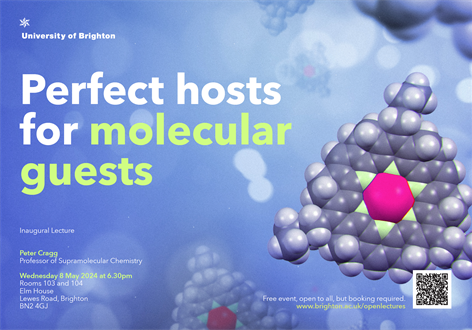
Professor Peter Cragg is a distinguished academic in supramolecular chemistry at the University of Brighton, affiliated with the School of Applied Sciences. He holds the rank of Professor and has been active there since 1993. His research focuses on molecular recognition, macrocyclic chemistry, and computational methods applied to drug delivery, antifungal agents, and chemical warfare agent detection. Education: PhD from the University of Alabama (Tuscaloosa), preceded by a degree from the University of Nottingham. He has conducted postdoctoral research at SUNY Long Island and the University of Reading. Research Interests: Explores supramolecular systems for drug delivery (e.g., vitamin D3, rocuronium bromide), biofilm inhibition, and nerve agent detection. Collaborations include work on nanodiamond antibiofilm agents and photoresponsive drug delivery systems. Grants & Projects: Led or co-investigated projects funded by EPSRC, Leverhulme Trust, US Army Research Office, and EU programs (e.g., DERMA project on regenerative materials). Active in interdisciplinary collaborations bridging chemistry, biology, and pharmacology. Publications: Over 112 peer-reviewed articles and two books on supramolecular chemistry. Recent work emphasizes nanostructured materials, fluorescent chemosensors, and antimicrobial agents. Teaching & Outreach: Delivers lectures linking fundamental chemistry to real-world applications, including historical art analysis and current research examples. Actively mentors PhD students globally and serves as an external examiner for multiple institutions worldwide.
Prof. Robert Meißner is a Professor at the Department of Surface Physics and Technology at TUHH. His research focuses on molecular simulation techniques applied to corrosion processes, energy storage systems, and nanomaterials. He develops computational tools like ELECTRODE and i-PI for electrochemical and advanced molecular dynamics simulations. His work addresses challenges in magnesium battery performance, structural health monitoring of composite materials, and interfacial phenomena in nanoscale systems. Education details are not explicitly provided in the text, but his professional trajectory reflects extensive academic and industrial experience in materials science. Research interests span from fundamental studies (e.g., water imbibition in nanopores, magnetite oxidation dynamics) to applied innovations (e.g., corrosion protection via layered double hydroxides, data-driven electrolyte design). His recent publications highlight trends in data-driven materials discovery, structural health monitoring via vibro-acoustic methods, and computational prediction of corrosion inhibitors. He collaborates on projects involving graphene-based supercapacitors, epoxy resin curing dynamics, and peptide-surface interactions. Advising and grants: While student names are not listed, his research group actively explores corrosion engineering, battery technology, and nanomaterials. Projects include EU-funded initiatives and industry partnerships. Technical expertise includes ATR-FTIR spectroscopy, molecular dynamics, and machine learning for sparse data scenarios. He leads teams focused on surface science and energy storage, maintaining lab facilities for in situ electrochemical analysis and advanced computational modeling. His work bridges theoretical insights with practical applications in materials durability and energy systems.
Shaun Barker is an Associate Professor in the Department of Earth, Ocean & Atmospheric Sciences at the University of British Columbia. His research focuses on magmatic processes, hydrothermal alteration, and porphyry systems, particularly studying postsubduction magmatism and its economic implications. He supervises postdoctoral researchers such as Maria Alejandra Rodriguez Mustafa and has advised graduate theses on topics like the Dawson Range district's Late Cretaceous magmatism. Research interests include tectonomagmatic frameworks, fluid-rock interaction, and exploration methodologies using geochemical datasets and advanced analytical techniques. His work integrates field observations, geochemical analyses, and isotopic studies to unravel the genesis of ore deposits and geothermal systems. Key contributions include defining trace-element haloes around deposits, developing mineral mapping via µXRF, and applying machine learning to geological modeling. His studies span global regions like the Yukon, British Columbia, Nevada, and Peru, with a focus on Carlin-type gold, porphyry copper, and skarn systems.
Devid Maniglio is an Associate Professor at the Department of Industrial Engineering, University of Trento. His research focuses on bioengineering, biomaterials, and tissue engineering, with a particular emphasis on bioprinting, surface modification, and functional materials. He has contributed to advancements in silk fibroin and hydrogel-based systems for medical applications. Research Interests Bioengineering for personalized medicine Biomaterials and surface engineering 3D bioprinting and tissue regeneration Molecular imprinting and biosensors Drug delivery and cell encapsulation Teaching Diagnostic and therapeutic technologies for personalized medicine Engineered materials for precision medicine Fundamentals of biomedical technologies Functional surfaces laboratory Labs & Collaborations Devid Maniglio is affiliated with the Functional Surfaces Laboratory at the University of Trento, collaborating with researchers such as Stefano Rossi and Flavio Deflorian. His work integrates interdisciplinary approaches in biomedical engineering and sustainable medical technologies.