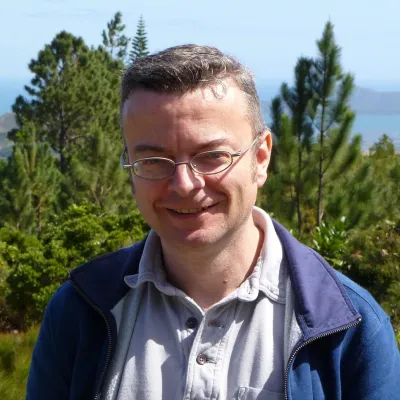
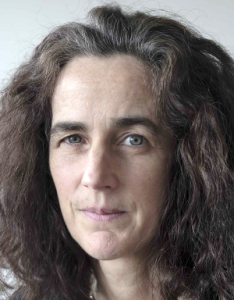
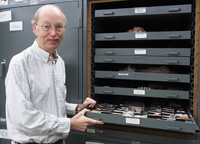
Joshua S. Rest is an Associate Professor and Chair of the Department of Ecology and Evolution at Stony Brook University. His research focuses on evolutionary genomics, molecular evolution, and horizontal gene transfer (HGT) in diverse organisms, including plants, protists, and viruses. Research Interests Evolutionary Genomics Protist Genomics Horizontal Gene Transfer Phylogenetics Stress Response Mechanisms Key Articles 2025: Proteome remodeling in Aurantiochytrium limacinum 2023: Horizontal gene transfer in heterotrophic protists 2021: Drought adaptation and disease susceptibility in Brassica rapa 2019: Kinase promiscuity in inhibitor binding 2016: Rapid genome evolution in Brassica rapa under drought Awards 2021 Zuckerkandl Prize Collaborations Collaborated with experts in plant sciences (Charles C. Davis, Yin-Long Qiu), virology (David P. Mindell), and protist biology (Deborah Faktorová).
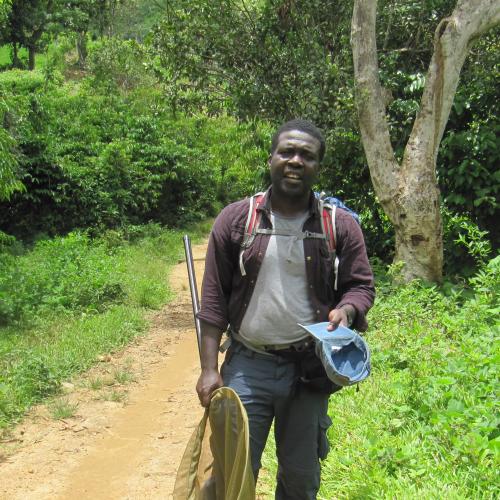
Aduse-Poku Kwaku is an Assistant Professor of Biology at Howard University in Washington, D.C., USA. He specializes in evolutionary ecology, focusing on biodiversity generation and maintenance in butterflies across Old-World tropical regions. His research integrates genomic data with ecological and geological histories to explore factors like host plant use, paleoclimate shifts, and tectonic events influencing butterfly diversification. Educational Background: Postdoctoral Research Fellow at City University of New York (2016–2018); PhD in Ecology and Evolution from the University of Cambridge (2016); PhD in Wildlife Management from Kwame Nkrumah University of Science and Technology (2014); MSc in Ecology and Evolution (University of Groningen, 2009); BSc in Natural Resources Management (KNUST, 2003). Research Interests: Evolutionary mechanisms driving butterfly diversification, biogeographic patterns, phylogenetic systematics, and the interplay between ecological adaptation and genetic change. He uses butterflies as model organisms to address fundamental questions in macroevolution and conservation biology. Publications span over 15 years, emphasizing global butterfly phylogenies, historical biogeography, and the impact of climate change on species distribution. Notable works include studies on Afrotropical butterfly radiations and the role of dispersal in diversification. His work frequently employs cutting-edge genomic tools combined with traditional morphological analysis. Grants & Advising: While specific grants are not detailed, his extensive publication record suggests sustained research funding. He advises students through Howard’s Biology department, though no named advisees are listed here.
Dr. Katrina Jones is a Royal Society University Research Fellow and Presidential Fellow at The University of Manchester. Her research focuses on the anatomy and evolution of the mammal skeleton, particularly the axial skeleton's functional and evolutionary adaptations. She holds a PhD in Functional Anatomy and Evolution from Johns Hopkins University and conducted NSF-funded postdoctoral research at Harvard University's Museum of Comparative Zoology. Her expertise spans mammalian evolution, comparative anatomy, palaeontology, and zoology. Key projects include examining vertebral function in early mammals and the evolutionary origins of locomotor patterns. She collaborates with interdisciplinary teams, including the Interdisciplinary Centre for Ancient Life (ICAL) and the 'Evolutionary mechanisms and dynamics' project. Awards include the American Association of Anatomy Postdoctoral Fellowship (2018), Romer Prize (2014), and Royal Society University Research Fellowship (2020). Her work integrates biomechanical experiments, digital modeling (e.g., AutoBend software), and fossil analysis to explore how vertebral structure influences evolutionary trajectories. She serves as an editor for Zoology and has published extensively on axial regionalization, functional morphology, and evolutionary constraints in mammals and extinct species.
Sean Graham is Professor and former Head (2016-2021) of the Department of Botany at the University of British Columbia. His research program integrates phylogenomics, comparative genomics, and systematic botany to reconstruct plant evolutionary history. Research focuses on three primary areas: plastid genome evolution in mycoheterotrophic plants, deep phylogeny of land plants, and evolutionary biodiversity of understudied lineages. His team develops molecular approaches to resolve contentious relationships in plant phylogeny, particularly in bryophytes, ferns, and early-diverging angiosperms. Honors include Distinguished Fellow of the Botanical Society of America and recognition as an ISI Highly Cited Researcher. He currently advises eight graduate students and has mentored 27 graduate researchers to completion. His laboratory maintains active collaborations with botanical gardens worldwide and contributes to large-scale phylogenomic initiatives like the One Thousand Plant Transcriptomes Project.
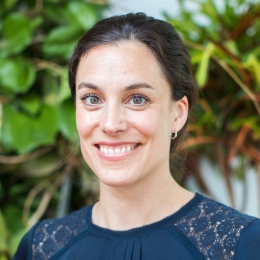
Alison Eyres is a Researcher at the Department of Zoology, University of Cambridge, and a College Research Associate at Emmanuel College. Her work focuses on understanding biodiversity dynamics through macroecology and evolutionary ecology. PhD in Ecological and Evolutionary Dynamics, Senckenberg Biodiversity and Climate Research Centre (Frankfurt) Alison’s research spans macroecology , evolutionary ecology , and conservation biology , with an emphasis on how climatic niches and human disturbances affect avian and mammalian species. She integrates climate data with evolutionary patterns to assess long-term biodiversity responses. Her recent publications highlight trends in agricultural impacts on biodiversity , trait-based vulnerability assessments , and policy frameworks like biodiversity credits and planetary computing . These works address urgent conservation challenges, such as land-use change and species extinction drivers . Alison collaborates with the Conservation Research Institute to advance data-driven environmental policy and sustainable land-use strategies.
Aelys Humphreys is a Lecturer at Stockholm University's Department of Ecology, Environment and Plant Sciences. Leading the Group Humphreys and collaborating with institutions like the Bolin Centre for Climate Research, her work focuses on evolutionary plant biology, climate adaptation, and extinction dynamics. Key projects include Mechanisms of cold tolerance evolution in grasses Geothermal warming effects on plant phenology Macroevolutionary patterns of plant extinction Her research synthesizes phylogenetic analysis , climate modeling , and experimental botany to challenge assumptions about temperature constraints on plant distribution. Recent articles in PNAS and Nature Ecology & Evolution reveal unexpected plasticity in thermal tolerances across Poaceae and Amaranthaceae families. She supervises PhD students in projects spanning North Atlantic grass phylogeography to Madagascar grass taxonomic biases . Teaching includes graduate courses on Plant Diversity and Evolution , Phylogenetics , and Biodiversity Dynamics . Current research is funded by Stockholm University's DEEP program and the Bolin Centre, with fieldwork conducted in Icelandic geothermal valleys and Madagascar's biodiversity hotspots.
Dr Jennifer Hoyal Cuthill is a Lecturer at the School of Life Sciences, University of Essex , with a UKRI Future Leaders Fellowship. She holds a PhD in Palaeobiology from the University of Cambridge (2011), an MSc in Palaeobiology (University of Bristol, 2007), and a BSc in Zoology (University of Bristol, 2005). Her research focuses on: Biological machine learning : Applying computational methods to life sciences Computational palaeobiology : Quantifying evolutionary history Evolutionary convergence : Measuring repeated evolutionary patterns Ediacaran palaeoecology : Studying Earth's earliest macro-organisms Her current projects include machine learning on butterfly phenotypes and computational analysis of the fossil record . She has received the UKRI Future Leaders Fellowship and presented at conferences including the Palaeontological Association Annual Meeting and Open University Geological Society AGM . She supervises PhD student Benjamin James Calvert and collaborates with institutions like the Earth Life Science Institute at Tokyo Institute of Technology .
Professor Nicholas J. Butterfield is a Professor in the Department of Earth Sciences at the University of Cambridge. His research focuses on the early diversification of eukaryotic life, particularly the Proterozoic record of protistan clades and the Ediacaran-Cambrian explosion of animals. He investigates the macroecological and macroevolutionary shift between Earth's microbial-dominated early history and the Phanerozoic macroscopic world. Research interests include Proterozoic microfossil assemblages from Arctic Canada, Montana, and Svalbard; Cambrian Small Carbonaceous Fossils (SCFs); and taphonomic processes affecting exceptional fossil preservation. Collaborations include work with Peter Adamson (Doushantuo-type microfossils in Norway) and Emily Mitchell (Ediacaran/Avalonian macrofossils). His studies explore biogeochemical feedbacks and the top-down ecological impacts of early animals, challenging traditional oxygen-driven evolutionary models. Techniques involve advanced scanning and analytical methods for fossil analysis. Affiliated with the Department's Geobiology and Earth History research group. Based at Downing Street, Cambridge, he contributes to the Bullard Laboratories and teaches within the Earth Sciences undergraduate and postgraduate programs.
Béatrice Albert serves as a Lecturer at Université Paris-Saclay within the Laboratoire Écologie, Société et Évolution (IDEEV), specifically in the “Plant diversity and evolution” research team. She has maintained continuous academic employment since 1998 as an Assistant Professor at Paris XI University (now part of Université Paris-Saclay), teaching genetics, molecular biology, and statistics across multiple institutions including Paris VII, Paris XIII, and the University of Sussex. Her educational foundation includes a PhD in Genetics and Evolution (1993-1996) and a Master in Biodiversity, Genetics and Evolution (1992-1993), both completed at Paris XI University. These qualifications established her trajectory in evolutionary biology and molecular genetics. Albert’s research centers on evolutionary developmental biology (Evo-Devo), with particular emphasis on pollen morphology and aperture pattern formation in angiosperms. She investigates how developmental mechanisms determine aperture patterns while examining the interplay between selective pressures and developmental constraints. Her methodology integrates experimental approaches with theoretical modeling to understand morphological evolution at cellular and organismal levels, bridging molecular genetics with macroevolutionary patterns. Publication analysis reveals a distinct research evolution: early work (1996-2002) focused on mitochondrial genome dynamics in plants and fungi, transitioning to pollen development studies (2003-2013) where she established expertise in microsporogenesis and aperture pattern ontogeny. Her recent publications demonstrate sophisticated integration of comparative phylogenetics with cellular developmental biology, particularly in monocots and eudicots. PhD student: Mohamed DIALLO (2018-2021) on “Interdisciplinary assessment of plant species translocations for conservation purpose” (co-supervised with Bruno Colas) Master’s student: Juliette BARON (2019) on “Cost assessment of exotic invasive species” (co-supervised with Christophe Diagne) She actively collaborates with researchers across France (A. Ressayre, P.-H. Gouyon), the UK (C. Furness), and USA (M. Yang), contributing to international projects while maintaining her core research program within the IDEEV laboratory’s plant evolution team.
Gavin Thomas is a Professor of Macroevolution at the School of Biosciences, University of Sheffield , where he has held Royal Society Research Fellowships since 2015 and NERC Postdoctoral Fellowships earlier. His research explores how phylogenetic relationships among species inform patterns of biodiversity through time. Current affiliations : Royal Society Research Fellow, University of Sheffield Historical affiliations : NERC Postdoctoral Fellow (Sheffield, Bristol), Postdoctoral Associate (Imperial College London) Thomas’s research combines macroevolutionary modeling with extensive empirical datasets, including a citizen science project analyzing bird bill shapes and a plumage evolution study . His work integrates phylogenetic trees, trait data, and biogeographic patterns to address: How species and traits diversify over evolutionary timescales The role of tempo and mode in diversification Impacts of climate, ecology, and social behavior on avian evolution His recent publications focus on avian coloration, bill morphology, and functional trait divergence , with methodological contributions to phylogenetic software like PASTIS and MOTMOT . Key collaborations include the Natural History Museum and Royal Society -funded projects. Notable scientific awards include: Royal Society University Research Fellowship Royal Society Research Fellowship NERC Postdoctoral Fellowships Thomas has mentored over a dozen PhD students and postdoctoral researchers, including current students Yichen He and Emma Hughes . His lab alumni include Jen Bright (now Assistant Professor at University of South Florida) and Mark Puttick (Royal Commission 1851 Fellow).
Joseph Parker serves as Professor of Biology and Biological Engineering at the California Institute of Technology (Caltech), where he also directs the Center for Evolutionary Science (CES). Appointed Assistant Professor in 2017, he advanced to full Professor in 2025 following significant contributions to evolutionary symbiosis research. His work centers on the genetic, genomic, and neurobiological mechanisms underlying interspecies interactions, primarily using rove beetles as model organisms to dissect their symbiotic relationships with ants. His educational foundation includes: B.S. from Imperial College London (2001) Ph.D. from University of Cambridge (2005) Parker's research investigates how organisms evolve cross-species interactions through dramatic adaptations in behavior, chemical communication, and neural circuitry. The Parker Lab pioneers rove beetle studies to understand transitions from free-living to symbiotic lifestyles, examining specialized biosynthetic pathways and sensorimotor systems that enable integration into ant colonies. This work bridges evolutionary theory with molecular mechanisms, revealing principles of ecological relationship formation. Recent publications demonstrate interdisciplinary convergence across genomics, neurobiology, and paleontology, with recurring themes in biosynthetic innovation, neural control of interspecies behavior, and evolutionary replay of symbiotic adaptations. Key journals include Cell , Current Biology , and Nature Communications , reflecting integration of molecular, organismal, and macroevolutionary perspectives. His scientific recognition includes: Chen Scholar (2022-2024) Administrative support is provided by Lilian Porter (lilianp@caltech.edu). While specific grant details and student mentorship records aren't documented in the source material, his lab's experimental framework combines genomic sequencing, neuroanatomical analysis, and behavioral assays to address fundamental questions in evolutionary biology. The Parker Lab operates within Caltech's Division of Biology and Biological Engineering, utilizing specialized facilities in Beckman Behavioral Biology (Mail Code: MC 216-76). Current research emphasizes chemical communication systems in beetle-ant symbiosis, with ongoing work on biosynthetic gene clusters and neural substrates of social integration.
Dr. Tony Gamble serves as Associate Professor and Wehr Distinguished Professor in Marquette University's Department of Biological Sciences, where he leads research on evolutionary processes generating biological diversity in reptiles through genomic, developmental, and biogeographic approaches. His academic foundation includes: B.A. (2001) from Metropolitan State University, St. Paul, MN Ph.D. (2008) from University of Minnesota, St. Paul, MN Post-doctoral Fellowship (2008-2014) at University of Minnesota, Minneapolis, MN Dr. Gamble's research integrates three complementary domains: sex chromosome evolution using molecular genomics, locomotion-related morphological adaptations through developmental biology, and spatial-temporal species diversification via phylogenetics. His lab leverages lizards and snakes as model organisms to unravel complex evolutionary mechanisms, with particular emphasis on gecko clades where these processes intersect uniquely. Analysis of his 2015-2021 publications reveals dominant trends in sex chromosome evolution across diverse reptile lineages, morphological studies of adhesive structures (toe pads and tails), and Caribbean biogeography. His work consistently employs advanced genomic techniques like RAD-seq and transcriptomics, demonstrating methodological innovation while addressing fundamental evolutionary questions about adaptation and speciation. He holds the Wehr Distinguished Professorship, recognizing exceptional scholarly contributions to evolutionary biology at Marquette University. Dr. Gamble actively mentors graduate researchers, currently advising Kathryn Sullivan, Ashmika Behere, and Ryan Cook in their Ph.D. studies. His successful track record includes guiding Shannon Keating (2022), Aaron Griffing (2022), and Brendan J. Pinto (2020) to degree completion. His research program receives external funding enabling genomic sequencing, field expeditions, and student training across multiple continents. The Gamble Lab operates as a collaborative hub within Marquette's Wehr Life Sciences facility, maintaining strong international partnerships evident in his extensive co-authorship network. His team integrates field collection, laboratory analysis, and computational approaches to address macroevolutionary patterns through microevolutionary processes.
Mihaela Pavlicev serves as a Professor in the Department of Evolutionary Biology within the Faculty of Life Sciences at the University of Vienna. Her research program bridges evolutionary theory, developmental biology, and genomics to investigate fundamental questions about mammalian reproduction and phenotypic evolution. Her primary research interests focus on: Evolutionary developmental mechanisms underlying pregnancy Genomic innovations at the fetal-maternal interface Pleiotropy and evolvability in complex traits Comparative analysis of reproductive systems across mammals Evolutionary trade-offs in pelvic morphology and childbirth Analysis of her recent publication trajectory (2023-2025) reveals a concentrated effort to decode cellular and molecular innovations in mammalian pregnancy through single-cell genomics and cross-species comparisons. Her work consistently challenges established paradigms, such as demonstrating that uterine receptivity mechanisms predate placental mammals and re-evaluating the obstetrical dilemma in human evolution. Key methodological approaches include comparative transcriptomics, quantitative genetics, and theoretical modeling of evolutionary processes. Dr. Pavlicev leads significant research initiatives including: Evolutionary trade-offs in the human and mammalian pelvis (2023-2026, active) Evolution of the mammalian maternal-fetal cell-communication (2020-2024, completed) She actively mentors students and postdoctoral researchers while maintaining extensive international collaborations, particularly with the Wagner lab. Her advisory role extends through co-authorship on numerous publications and supervision of research projects focused on evolutionary genomics and reproductive biology. Her laboratory employs cutting-edge single-cell genomic techniques to investigate cell type evolution across mammalian species, with particular emphasis on decidual stromal cells and fetal-maternal signaling networks. Current work integrates computational approaches to model evolutionary trajectories of reproductive traits while examining clinical implications for pregnancy disorders.
Dale A. Winkler is a Research Professor and Adjunct Faculty at Southern Methodist University (SMU), serving as Director of the Shuler Museum of Paleontology. He holds a Ph.D. from The University of Texas at Austin. His research focuses on vertebrate phylogeny and evolution, morphometrics, and paleoecological reconstruction through taphonomy and stratigraphic analysis. Winkler has contributed extensively to understanding Late Pleistocene ungulate distributions in Texas, African sauropod anatomy via 3D reconstructions, and dinosaur eggshell diagenesis in Mongolia. His work bridges anatomical studies with broader paleoenvironmental interpretations, particularly in Cretaceous and Miocene contexts. Key research areas include dinosaur systematics (e.g., Tenontosaurus, Malawisaurus), Cretaceous-Tertiary transition studies in Texas, and integrative analyses of fossil assemblages. Winkler has collaborated internationally on projects involving African and Asian fossils, linking geological processes with faunal evolution. His publications span over three decades, demonstrating expertise in both macroevolutionary patterns and detailed anatomical investigations. Notable contributions include defining new dinosaur species, advancing methodologies for digital paleontology, and elucidating paleoenvironmental conditions through stratigraphic and taphonomic evidence. His role at the Shuler Museum underscores his commitment to paleontological education and public engagement.
Isabel Sanmartín Bastida is a Researcher and Deputy Director of Research and Documentation at the Real Jardín Botánico of the Spanish National Research Council (CSIC). She specializes in biogeography, focusing on evolutionary and ecological processes shaping biodiversity patterns, particularly using Bayesian inference methods and genomic data. Her work addresses macroevolutionary dynamics, island biogeography, and the impact of historical climate change on species distributions. Her research integrates phylogenetic, genomic, and paleoclimatic data to study topics such as plant distribution modeling, extinction patterns in African lineages, and the role of aridification in shaping biomes. Key projects include the ODDMANOUT initiative exploring low plant diversity in tropical Africa and the EUGENIA project on conservation genomics of Euphorbia species. Publications span biogeography, phylogenetics, and evolutionary ecology, with contributions to Journal of Biogeography , Molecular Ecology , and Systematic Biology . She has led multiple research grants and co-authored over 80 peer-reviewed articles. Her work emphasizes bridging micro- and macroevolutionary scales, leveraging Bayesian methods and interdisciplinary approaches. Notable collaborations include studies on insular floras, steppe biota resilience, and the biogeographic history of diverse taxa. She has also contributed to policy frameworks for molecular collections and biodiversity preservation strategies. Her lab at Real Jardín Botánico focuses on advancing methodological tools for biogeographic inference and addressing global biodiversity challenges.