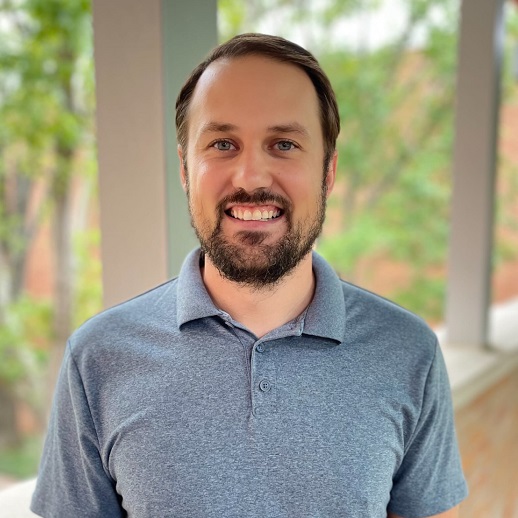
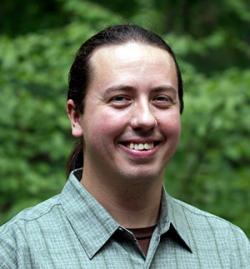
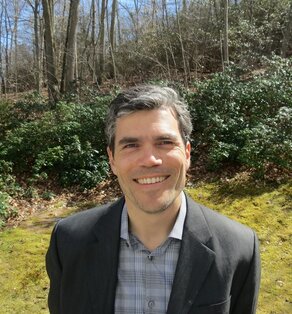
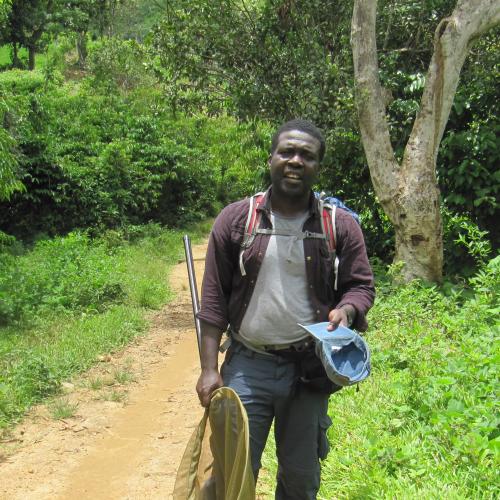
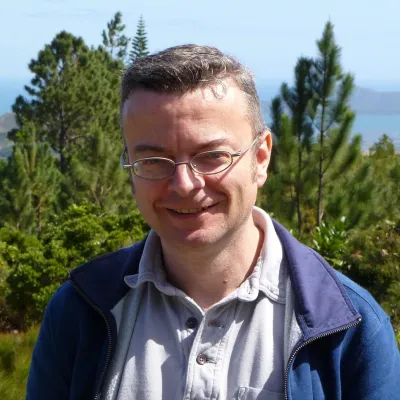
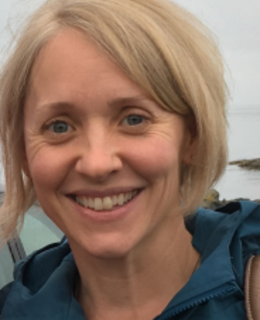
Brian Kreiser is a Professor at the University of Southern Mississippi, specializing in population genetics, phylogeography, and evolutionary biology. He teaches courses including Genetics, Population Genetics, Evolution, Conservation Biology, and Principles of Biological Sciences II. His research focuses on genetic diversity in endangered species, particularly freshwater turtles, fish, and sturgeon, emphasizing conservation strategies and habitat impacts. His work spans topics such as population genetics of gopher tortoises, hybridization in gar species, and mitochondrial genome characterization of imperiled fish. Recent publications highlight critical habitat expansions for Gulf sturgeon and cryptic species discoveries in turtles. He employs molecular techniques like microsatellite loci and low-coverage sequencing to address conservation challenges. Though no awards are explicitly listed, his extensive research portfolio demonstrates significant contributions to biodiversity conservation and evolutionary biology. His grants and advising activities are not detailed here.
Dr. David Moss is an Associate Professor in the Department of Environmental and Geosciences at Sam Houston State University (SHSU), part of the College of Science & Engineering Technology. His research focuses on paleobiology and sclerochronology, examining bivalve lifespan and growth patterns to address macroevolutionary questions. He actively engages undergraduate students in research, including projects funded by his NSF CAREER grant. Dr. Moss teaches courses such as Historical Geology, Oceanography, and Invertebrate Paleontology. His educational philosophy emphasizes connecting students to their environment to foster informed decision-making on environmental issues. He leads the Moss Paleobiology Lab, which investigates topics like latitudinal life history gradients and fossil bivalve longevity. Recent research highlights include a 2024 NSF CAREER grant supporting studies on longevity controls and educational outreach, and collaborative work on Baltic Sea Astarte borealis shells as climate archives. His lab’s equipment includes an ESLR Micromill2 for oxygen isotope analyses. Dr. Moss also prioritizes teacher development through workshops and summer programs for high school and community college students. Key awards include the NSF CAREER Grant. His lab’s activities include fieldwork in Florida and partnerships with institutions like the Smithsonian Museum of Natural History. He balances academic work with family life, having two sons and interests in fishing and college sports.
Dr. Jeff Thompson is a Lecturer in Evolutionary Developmental Biology at the University of Southampton. He holds a Leverhulme Trust Early Career Fellowship and a Newton International Fellowship. His research integrates molecular biology, developmental biology, and paleontology to study animal evolution, focusing on echinoderms as a model system. Education: PhD in Geology from the University of Southern California (201?), postdoctoral positions at Baylor University and University College London, and a short tenure at The Natural History Museum in London. Research interests include: evolution of body plans, macroevolutionary processes, molecular palaeobiology, biomineralisation, and taphonomic biases in the fossil record. Current projects involve 3D morphometrics of sea urchins, gene expression studies in skeletogenesis, and climate change impacts on marine organisms. Scientific awards include the Leverhulme Trust Early Career Fellowship and Newton International Fellowship. Supervises 7 PhD students across Biological Sciences and INSPIRE programs. Labs/Teams: Affiliated with the Institute for Life Sciences, Ecology & Evolution, and Southampton Marine and Maritime Institute.
Christopher Martin is an Associate Professor in the Department of Integrative Biology at the University of California, Berkeley, where he serves as the first Curator of Ichthyology at the Museum of Vertebrate Zoology. He leads the Martin Fish Speciation Lab, which is focused on understanding the origins of biodiversity through the study of rapid evolutionary processes in fish species. Dr. Martin's research centers on adaptive radiation and speciation in fish, with particular focus on three major systems: Caribbean pupfishes exhibiting localized adaptive radiations of trophic specialists in the Bahamas and Yucatan; Cameroon crater lake cichlids, famous as putative examples of sympatric speciation; and Death Valley pupfishes, which are critically endangered desert fishes. His work integrates multiple approaches including large-scale field experiments, population genomics, quantitative and functional genetics, phylogenetic comparative methods, natural history observations, functional morphology, and behavioral ecology. The lab's overarching goal is to map the complex relationships between genotype, phenotype, performance, fitness, and environment to gain a predictive understanding of the processes driving adaptive diversification. Analysis of Dr. Martin's recent publications reveals a consistent focus on the genetic, ecological, and behavioral mechanisms underlying adaptive radiation. His work demonstrates how novel trophic specialists evolve through both genomic and phenotypic changes, with particular attention to craniofacial morphology in pupfishes. The research shows how hybridization, shared adaptive variation, and performance landscapes shape evolutionary trajectories during rapid diversification events. His work bridges microevolutionary processes with macroevolutionary patterns, providing insights into how ecological novelty arises and is maintained. Dr. Martin actively mentors graduate students and postdoctoral scholars, currently advising several PhD candidates including David Tian and Charles Tralka. His lab members pursue diverse research projects spanning from conservation genomics of endangered pupfishes to the developmental genetics of craniofacial evolution. The lab maintains fish colonies in multiple facilities including rooftop field mesocosm ponds, supporting both laboratory and field-based research approaches. The Martin Lab is based within the Museum of Vertebrate Zoology at UC Berkeley, providing access to extensive shared spaces for molecular genetics work, student offices, specimen preparation, and data analysis. The lab maintains growing ichthyology collections and conducts field research in diverse locations including the Bahamas, Cameroon, and Death Valley. Dr. Martin's team includes specialists in genomics, developmental biology, behavioral ecology, and conservation, creating a multidisciplinary approach to studying evolutionary processes.
Jonathan Payne is the Dorrell William Kirby Professor at Stanford University, holding appointments as Professor of Earth & Planetary Sciences and Professor (by courtesy) of Biology . He serves as Senior Associate Dean for Faculty Affairs and Senior Fellow at the Woods Institute for the Environment. His research focuses on the interplay between environmental change and biological evolution in the fossil record, particularly mass extinctions and marine ecosystem dynamics. Ph.D., Harvard University (2005) A.M., Harvard University (2002) B.A., Williams College (1997) Payne's work examines mass extinction causation through geochemical-paleontological records in China, Italy, Turkey, and Japan, and employs global fossil occurrence datasets to study extinction selectivity and body size evolution. His 2022 PNAS article on temperature-size scaling in aquatic organisms and 2020 Science study on marine clade dominance via extinction resistance highlight his interdisciplinary approach combining climate modeling , energetic theory , and macroevolutionary analysis . Scientific accolades include: Fellow, Geological Society of America (2018) Allan V. Cox Medal (2015) Charles Schuchert Award (2015) NSF CAREER Award (2012) National Defense Science and Engineering Fellowship (1999-2002) He advises doctoral students across Earth Sciences and Biology programs, and has mentored over 100 high school and undergraduate researchers . Payne teaches historical geology, invertebrate paleobiology, and graduate-level courses in geobiology and carbonate sedimentology, including his popular course The Sixth Extinction (and the Other Five) .
Joshua S. Rest is an Associate Professor and Chair of the Department of Ecology and Evolution at Stony Brook University. His research focuses on evolutionary genomics, molecular evolution, and horizontal gene transfer (HGT) in diverse organisms, including plants, protists, and viruses. Research Interests Evolutionary Genomics Protist Genomics Horizontal Gene Transfer Phylogenetics Stress Response Mechanisms Key Articles 2025: Proteome remodeling in Aurantiochytrium limacinum 2023: Horizontal gene transfer in heterotrophic protists 2021: Drought adaptation and disease susceptibility in Brassica rapa 2019: Kinase promiscuity in inhibitor binding 2016: Rapid genome evolution in Brassica rapa under drought Awards 2021 Zuckerkandl Prize Collaborations Collaborated with experts in plant sciences (Charles C. Davis, Yin-Long Qiu), virology (David P. Mindell), and protist biology (Deborah Faktorová).
Pascal O. Title serves as an Assistant Professor in the Department of Ecology and Evolution at Stony Brook University, leading the macroEEB Lab focused on large-scale evolutionary and ecological dynamics. His research integrates phylogenetic, trait, and spatial data to unravel biodiversity patterns across continents and through time. His educational background includes: Ph.D. from University of Michigan (2018) Dr. Title's work centers on four interconnected research pillars: Large-scale biodiversity patterns through analysis of museum collections and observational databases for Australian reptiles, marine fishes, and Neotropical birds Species responses to climate change via geographic range shift analyses linked to phylogenetic history Species distribution modeling methodology development addressing data biases and environmental variables Diversification rate quantification through simulation-based evaluation of macroevolutionary metrics His approach leverages global biodiversity networks and computational tools to address fundamental questions in evolutionary ecology. Analysis of his 2014-2025 publication record reveals consistent focus on macroevolutionary processes across diverse taxa, with increasing emphasis on climate change impacts and methodological innovations. Key thematic threads include latitudinal diversity gradients, adaptive radiation mechanisms, and computational tool development for integrating phylogenetic and spatial data. The macroEEB Lab operates as a collaborative hub for researchers investigating evolutionary dynamics across spatial and temporal scales, recently participating in the 2025 Evolution conference.
Derek Turner serves as the Class of '43 Professor of Philosophy at Connecticut College and holds the position of Karla Heurich Harrison '28 Director of the Goodwin-Niering Center for the Environment. He joined Connecticut College in 2001 and is currently scheduled for sabbatical in Fall 2025. His academic work uniquely bridges philosophical inquiry with environmental science and historical reconstruction. Turner's educational background includes a B.A. from American University and both M.A. and Ph.D. from Vanderbilt University. His research focuses on how scientists reconstruct knowledge about the deep past, with particular emphasis on philosophical issues in paleontology and earth sciences. He explores fundamental concepts in macroevolutionary theory including historical contingency, evolutionary stasis, species selection, and large-scale evolutionary patterns. His scholarly work reveals significant trends connecting philosophy of science with environmental concerns. Turner has made substantial contributions to understanding the relationship between environmental aesthetics and paleontology, examining how our sense of place connects with deep time perspectives. His research also investigates parallels between evolutionary stasis and ecological stability concepts, creating interdisciplinary bridges between distinct scientific domains. John S. King Award for Excellence in Teaching 2017 Nancy Batson Nisbet Rash Faculty Award for Excellence in Research Turner maintains active scholarly engagement through visiting fellowships at institutions including the University of Pittsburgh's Center for Philosophy of Science and the KLI in Klosterneuburg, Austria. He has also held the Fulbright Visiting Research Chair in Philosophy of Science at the University of Calgary. As Director of the Goodwin-Niering Center, he fosters interdisciplinary connections between philosophical inquiry and environmental studies across campus. His leadership in creating the 'Extinct' blog demonstrates ongoing commitment to developing the philosophy of paleontology as a distinct scholarly field.
Dr Jonathan Drury is an Associate Professor in the Department of Biosciences at Durham University and serves as Deputy Executive Dean (EDI) in the Faculty of Science. His research focuses on behavioral ecology, evolutionary biology, and species interactions, with particular emphasis on character displacement and citizen science applications. He has supervised at least one doctoral student, Dan Nesbit. Dr Drury’s work explores topics such as interspecific aggression dynamics, reproductive interference mechanisms, and the macroevolutionary impacts of ecological interactions. His recent studies include genomic analyses of damselflies and continent-scale phenotype mapping using citizen science data. He has published extensively in top journals like Molecular Ecology , Current Biology , and Ecology Letters . His research themes highlight the interplay between ecological and evolutionary processes, with notable contributions to understanding how competitive interactions shape species coexistence and trait evolution. Dr Drury collaborates widely, evidenced by his multi-author publications, and actively engages with both theoretical and applied ecological questions.
Aduse-Poku Kwaku is an Assistant Professor of Biology at Howard University in Washington, D.C., USA. He specializes in evolutionary ecology, focusing on biodiversity generation and maintenance in butterflies across Old-World tropical regions. His research integrates genomic data with ecological and geological histories to explore factors like host plant use, paleoclimate shifts, and tectonic events influencing butterfly diversification. Educational Background: Postdoctoral Research Fellow at City University of New York (2016–2018); PhD in Ecology and Evolution from the University of Cambridge (2016); PhD in Wildlife Management from Kwame Nkrumah University of Science and Technology (2014); MSc in Ecology and Evolution (University of Groningen, 2009); BSc in Natural Resources Management (KNUST, 2003). Research Interests: Evolutionary mechanisms driving butterfly diversification, biogeographic patterns, phylogenetic systematics, and the interplay between ecological adaptation and genetic change. He uses butterflies as model organisms to address fundamental questions in macroevolution and conservation biology. Publications span over 15 years, emphasizing global butterfly phylogenies, historical biogeography, and the impact of climate change on species distribution. Notable works include studies on Afrotropical butterfly radiations and the role of dispersal in diversification. His work frequently employs cutting-edge genomic tools combined with traditional morphological analysis. Grants & Advising: While specific grants are not detailed, his extensive publication record suggests sustained research funding. He advises students through Howard’s Biology department, though no named advisees are listed here.
Dr. Katrina Jones is a Royal Society University Research Fellow and Presidential Fellow at The University of Manchester. Her research focuses on the anatomy and evolution of the mammal skeleton, particularly the axial skeleton's functional and evolutionary adaptations. She holds a PhD in Functional Anatomy and Evolution from Johns Hopkins University and conducted NSF-funded postdoctoral research at Harvard University's Museum of Comparative Zoology. Her expertise spans mammalian evolution, comparative anatomy, palaeontology, and zoology. Key projects include examining vertebral function in early mammals and the evolutionary origins of locomotor patterns. She collaborates with interdisciplinary teams, including the Interdisciplinary Centre for Ancient Life (ICAL) and the 'Evolutionary mechanisms and dynamics' project. Awards include the American Association of Anatomy Postdoctoral Fellowship (2018), Romer Prize (2014), and Royal Society University Research Fellowship (2020). Her work integrates biomechanical experiments, digital modeling (e.g., AutoBend software), and fossil analysis to explore how vertebral structure influences evolutionary trajectories. She serves as an editor for Zoology and has published extensively on axial regionalization, functional morphology, and evolutionary constraints in mammals and extinct species.
Sean Graham is Professor and former Head (2016-2021) of the Department of Botany at the University of British Columbia. His research program integrates phylogenomics, comparative genomics, and systematic botany to reconstruct plant evolutionary history. Research focuses on three primary areas: plastid genome evolution in mycoheterotrophic plants, deep phylogeny of land plants, and evolutionary biodiversity of understudied lineages. His team develops molecular approaches to resolve contentious relationships in plant phylogeny, particularly in bryophytes, ferns, and early-diverging angiosperms. Honors include Distinguished Fellow of the Botanical Society of America and recognition as an ISI Highly Cited Researcher. He currently advises eight graduate students and has mentored 27 graduate researchers to completion. His laboratory maintains active collaborations with botanical gardens worldwide and contributes to large-scale phylogenomic initiatives like the One Thousand Plant Transcriptomes Project.
Dr Chris Cooney is a NERC Independent Research Fellow at the University of Sheffield’s School of Biosciences. He holds a DPhil in Zoology from the University of Oxford (2010–2014) and a BSc in Biology from the University of York (2007–2010). His research focuses on understanding large-scale biodiversity patterns, phylogenetic comparative methods, and avian evolutionary dynamics. Key themes include sexual selection, speciation rates, and ecological drivers of diversity. He has held prestigious fellowships, including the Leverhulme Early Career Fellowship (2019–2020). His work combines computational tools (e.g., deep learning for phenotyping) with large datasets to address evolutionary questions. Cooney supervises multiple PhD students, including Jasmine Hardie, Robert MacDonald, and Shriya Uday, and collaborates internationally in avian biodiversity research. Publications highlight innovations in understanding avian morphology, sexual dimorphism, and ecological interactions. Awards include recognition for his contributions to evolutionary biology and biodiversity science. His Cooney Lab at Sheffield fosters interdisciplinary research bridging ecology, evolution, and computational biology.
Jana Vamosi is a Professor in the Department of Biological Sciences at the University of Calgary and Assistant Director of the Herbarium. She holds a B.S. in Biological Sciences from Simon Fraser University (1996) and a Ph.D. in Ecology and Evolution from the University of British Columbia (2001). Her research focuses on biodiversity conservation, particularly Canada’s plant species, with an emphasis on identifying extinction hotspots and understanding climate change impacts. She leads initiatives integrating macroevolutionary and community ecology perspectives to study plant-insect interactions and phylogenetic risks of extinction. Her teaching includes courses such as PLBI 541 Taxonomy of Seed Plants and PLBI 327 Systematics and Diversity of Plants . Her work bridges ecological and evolutionary scales, addressing topics like pollination networks, plant reproductive strategies, and the role of herbarium data in conservation. Recent studies highlight pollinator dependency, climate-driven phenology shifts, and polyploid resilience to environmental changes. Her lab collaborates on projects like the iNaturalist database and explores global pollen limitation patterns. She emphasizes interdisciplinary approaches, combining field studies with phylogenetic analyses to inform conservation strategies for threatened species.
Charles Perreault is an Associate Professor at the School of Human Evolution and Social Change, Arizona State University, and affiliated with the Institute of Human Origins. His research focuses on understanding how culture enabled human ecological success through evolutionary and archaeological frameworks. He holds a Ph.D. (2011) in Anthropology from UCLA, M.Sc. (2007) and B.Sc. (2004) from Université de Montréal. Education: Ph.D., Anthropology, University of California, Los Angeles (2011) M.Sc., Anthropology, Université de Montréal (2007) B.Sc., Anthropology, Université de Montréal (2004) His research integrates mathematical modeling, comparative data analysis, and archaeological records to explore cultural evolution's role in human adaptation. Key themes include the interaction between genes and culture, technological complexity over 3+ million years, and the methodological challenges of interpreting the archaeological record. He advocates for 'macroarchaeology' to address large-scale patterns in human history, as detailed in his book *The Quality of the Archaeological Record* (2019). His recent work examines stone tool complexity and cumulative culture's origins, Tibetan Plateau prehistory, and the impact of population fragmentation on cultural accumulation. He collaborates with institutions globally, including fieldwork in high-altitude regions. Advising includes three graduate students (Jonathan Paige, Cindy Hsin-yee Huang, Pietro Beltrame). Research projects involve interdisciplinary teams focusing on lithic technology, Denisovan genetics in Tibet, and long-term cultural dynamics. Grants and funding support fieldwork in Asia and computational modeling of cultural evolution. Labs/Teams: Active in the Institute of Human Origins and collaborates with ASU's Global Institute of Sustainability through archaeological projects analyzing human-environment interactions over millennia.