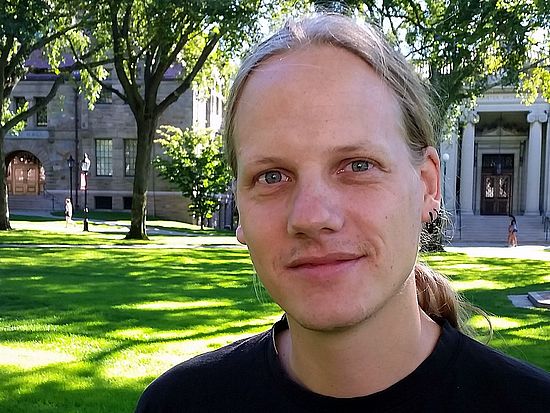
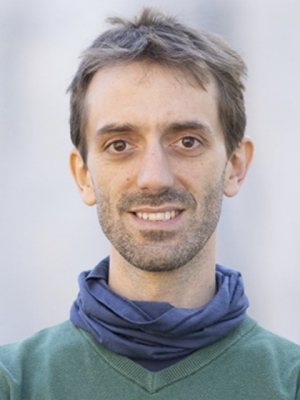
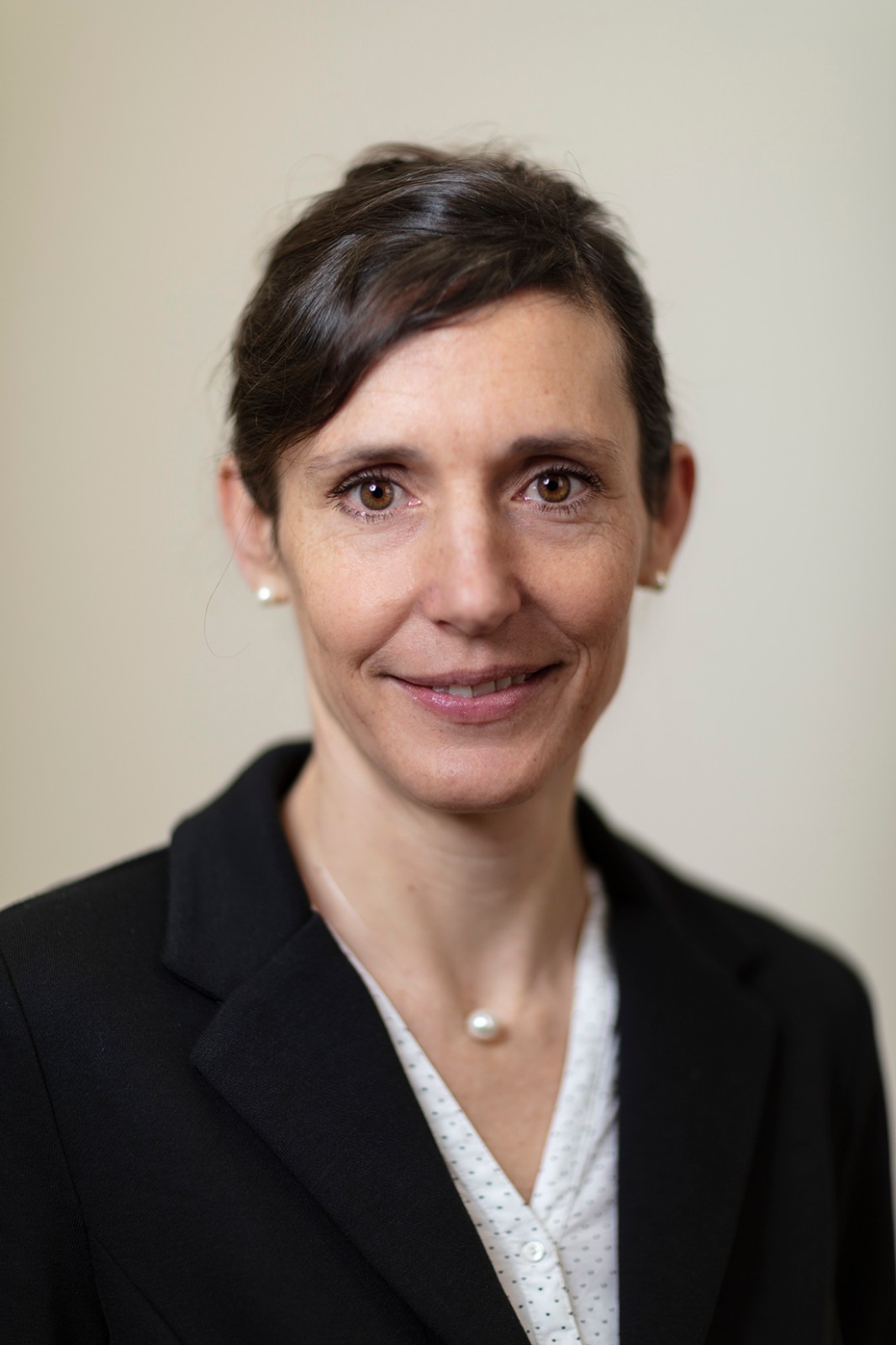
Prof. Dr. Torsten Scheyer is an Adjunct Professor of Paleontology at the Palaeontological Institute, University of Zurich, where he serves as Vice-Director. His research focuses on the osteology, histology, and evolutionary morphology of Mesozoic marine reptiles, including turtles, ichthyosaurs, placodonts, and archosauromorphs. He specializes in Triassic-Jurassic transitional ecosystems and the functional anatomy of fossils. Research Themes: Marine reptile evolution, bone histology, cranial development, and paleoecology. Recent Work: Investigates osteoderms, neck elongation, and dental adaptations in Triassic taxa, leveraging advanced imaging techniques like synchrotron microtomography. Scientific Context: Collaborates on global studies of Lagerstätten and contributes to systematic revisions of key clades (e.g., Tanystropheidae, Placodontia).
Dr. Michael Hautmann is an Adjunct Professor of Paleontology at the University of Zurich, affiliated with the Palaeontological Institute. His research focuses on marine mass extinctions, biotic recovery dynamics, and bivalve evolution across the Permian-Triassic and Triassic-Jurassic boundaries. Specializes in paleoecology of post-extinction ecosystems. Key areas: mollusk evolution, geochemical analysis, and stratigraphy. His publications emphasize the interplay between climatic changes, ocean acidification, and evolutionary responses, particularly in benthic marine communities. Recent work explores size trends in post-Permo-Triassic fauna and microbial reef systems in the Middle Triassic. He has contributed to understanding the Smithian-Spathian boundary in Oman and the ecology of Upper Triassic carbonate platforms in Austria. His studies span diverse regions, including Tibet, the Western USA, and Iran, and incorporate both fieldwork and phylogenetic analysis of mollusks.
Christian Klug serves as an Adjunct Professor of Paleontology and Curator of the Collection and Museum at the Palaeontological Institute, University of Zurich, where he maintains an active research profile in marine paleontology. His work bridges academic scholarship with museum curation, focusing on fossil analysis and collection management. His primary research interests encompass: Cephalopod evolution (ammonoids, nautiloids, and coleoids) Vertebrate paleontology (sharks, ichthyosaurs, and early fish) Mesozoic and Paleozoic marine ecosystem dynamics Taphonomic processes and fossil preservation Paleobiogeographic patterns across geological time Analysis of his 2024-2025 publications reveals a strong emphasis on cephalopod systematics, with recurring themes in morphological variation, evolutionary adaptations, and predator-prey relationships. His work frequently integrates field data from Switzerland, Morocco, and Poland with advanced analytical techniques like finite element analysis and microwear texture studies. Notable contributions include descriptions of new fossil species (e.g., hybodontiform sharks, chimaera egg capsules) and investigations into macroecological patterns across deep time. As Curator of the Collection and Museum, Dr. Klug oversees fossil repositories at the University of Zurich, contributing to both research infrastructure and public scientific engagement. His role exemplifies the integration of academic research with museum-based stewardship of paleontological heritage.
Dr. Jurriaan M. de Vos is a researcher at the University of Basel , Department of Environmental Sciences, where he leads the Plant reproductive diversity across lineages and environments group. His work integrates evolutionary ecology and macroevolution to understand how plants adapt and diversify over evolutionary timescales. Education & Affiliations: University of Basel, Department of Environmental Sciences Swiss Plant Science Web member Research Interests: Dr. de Vos investigates the evolution of plant reproductive traits and adaptation to extreme environments, employing a whole-plant approach. His research spans from population-level studies (e.g., Primula halleri ) to familial-level analyses (e.g., Montiaceae, Cactaceae), emphasizing alpine and arid biomes. He combines phylogenetic comparative methods with fieldwork to test hypotheses about ecological and evolutionary processes shaping plant diversity. Recent Publications Trends: His 2020–2021 publications highlight a focus on molecular mechanisms underlying phenotypic transitions (e.g., homostyly in Primula ), CAM photosynthesis evolution, and biogeographic patterns in plant lineages. Collaborative studies address biodiversity documentation (e.g., Americas flora gaps) and symbiotic interactions (e.g., Wolbachia in butterflies). Contact: Email: jurriaan.devos@unibas.ch Phone: +41 (0)61 207 5846
Daniele Silvestro is a researcher at ETH Zürich's Department of Biosystems Science and Engineering, working within the Computational Evolution group based in Basel, Switzerland. His research spans evolutionary biology, computational methods, and biodiversity science, with a focus on developing and applying novel analytical approaches to understand macroevolutionary patterns. Dr. Silvestro's research interests center on evolutionary biology and computational approaches to understanding biodiversity patterns through time. His work bridges micro- and macroevolutionary scales, with particular emphasis on phylogenetic methods, speciation processes, and the integration of fossil data with molecular phylogenies. He applies machine learning and artificial intelligence techniques to analyze large-scale biodiversity datasets, addressing questions about species diversification, extinction dynamics, and ecological interactions across deep time. His recent publications demonstrate a strong trend toward computational innovation in evolutionary biology, with increasing integration of artificial intelligence methods to tackle complex questions in biodiversity science. His work spans multiple biological systems, from plant-soil interactions to mammalian evolution, reflecting an interdisciplinary approach that combines theoretical modeling with empirical data analysis. Dr. Silvestro collaborates extensively with researchers across institutions and disciplines, contributing to major initiatives such as the 2030 Declaration on Scientific Plant and Fungal Collecting. His research has significant implications for biodiversity conservation, particularly in understanding how species and ecosystems respond to environmental change. His work on computational methods, including software development like DeepDiveR, demonstrates a commitment to creating practical tools for the broader scientific community. His research group at ETH Zürich appears to focus on developing and applying cutting-edge computational approaches to evolutionary questions, emphasizing the importance of integrating multiple data sources and analytical frameworks.
Tanja Stadler is a Full Professor at the Department of Biosystems Science and Engineering , ETH Zürich, and has served as Vice-Chair of the department since February 2024. She is also the president of the Swiss Science Advisory Panel COVID-19 and a member of the German National Academy of Sciences Leopoldina and EMBO. Education: MSc in Applied Mathematics, Technical University of Munich (2006) PhD in Applied Mathematics, Technical University of Munich (2008) Research Focus: Tanja's work integrates computational evolution and phylodynamics to address questions in macroevolution , epidemiology , and immunology . Her lab develops statistical tools to extract evolutionary and population dynamics from genomic data, with applications ranging from biodiversity studies to infectious disease outbreaks like COVID-19 and Ebola. Awards & Honors: ERC Starting Grant (2013) ERC Consolidator Grant (2020) SMBE Mid-Career Excellence Award (2021) Carus Medal (2021) Cloëtta Jubilee Prize (2023) Grants & Leadership: She has led major consortia producing genomic data and has advised the Swiss government through the Swiss National COVID-19 Science Task Force. Her lab continues to push boundaries in Bayesian phylogenetics and real-time pathogen surveillance .