Irene Buj Corral is a Professor in the Department of Mechanical Engineering at the Polytechnic University of Catalonia (UPC). She is affiliated with the TECNOFAB Research Group (Technologies of Fabrication) and the DigiFACT network, focusing on advanced manufacturing processes, 3D printing, and materials science. Her research emphasizes additive manufacturing techniques, surface finishing, and industrial applications of materials like ceramics and polymers. She contributes to projects such as the development of multi-material 3D printers and bio-compatible prosthetic materials. Key areas of expertise include: Additive Manufacturing, 3D Printing, Surface Engineering, Materials Science, and Industrial Process Optimization. She collaborates on initiatives like the PROHIPP project for high-pressure fluid-power products and has expertise in honing processes, Fused Filament Fabrication (FFF), and Direct Ink Writing (DIW). Her work spans academic contributions, including 422 documented activities (publications, projects, etc.), with a focus on innovation in digital manufacturing and sustainable technologies. She leads research in hybrid 3D printing systems, medical applications of 3D models for surgical planning, and circular economy practices in industrial processes.
Ana Muñoz Sánchez is an Associate Professor in the Department of Mechanical Engineering at University Carlos III of Madrid, where she conducts research in composite materials, additive manufacturing, and manufacturing processes. Her work bridges theoretical modeling with practical applications, particularly in drilling processes, ballistic protection, and engineering education. Her research focuses on several key areas within mechanical engineering and materials science: Composite materials machining, particularly carbon fiber reinforced polymers (CFRP) Tool wear analysis and optimization of drilling parameters Numerical modeling of manufacturing processes Additive manufacturing applications in medical and educational contexts Ballistic protection systems Engineering education tools and methodologies Dr. Muñoz Sánchez's publication record demonstrates consistent contributions to both fundamental manufacturing research and practical educational applications. Her recent work shows a strong emphasis on improving manufacturing processes for composite materials while simultaneously developing innovative educational tools, including specialized resources for visually impaired students. Her research combines computational methods with experimental validation to address complex engineering challenges. She has secured funding from multiple Spanish research agencies for projects including "DIGITDRILL - Digitalization of industrial drilling process" and "DISEÑO AVANZADO, FABRICACIÓN Y ENSAYO DE PROTECCIONES BALÍSTICAS DE CABEZA (PROTECT_BAL)". Her work has practical applications in aerospace, medical simulation, and inclusive education.
Javier Verdu Mula is a Professor at the Departament d'Arquitectura de Computadors (Universitat Politècnica de Catalunya - UPC) and a key researcher at the CRAAX - Centre de Recerca d'Arquitectures Avançades de Xarxes . His work focuses on computer architecture, parallel processing, and networking systems. Fields of Research include RISC-V virtualization, multithreaded processor optimization, and performance analysis of stateful networking applications. Scientific Awards include the BDigital Global Congress (2015) and Wayra Barcelona (2012) recognitions. Collaborations span institutions like Barcelona Supercomputing Center and researchers such as Manuel Alejandro Pajuelo, Mateo Valero Cortes, and Mario Nemirovsky. His recent publications address RISC-V hypervisor extensions, deep packet processing in parallel architectures, and statistical thread assignment models. He also holds patents in hardware virtualization and resource control systems.
Javier Tarrío Saavedra is a faculty member in the Department of Mathematics at the University of A Coruña, Spain, where he contributes to the College of Engineering. His academic role centers on statistics and operational research, with extensive teaching and research engagement across multiple engineering and sustainability-focused programs. His research interests span a wide interdisciplinary spectrum, including Statistical Quality Control, Industrial Statistics, Statistical Learning, Materials Science, Thermal Analysis, Rheology, Naval and Ocean Engineering, Energy Efficiency, and Epidemiology . He applies advanced statistical methods to real-world problems in industrial processes, environmental monitoring, and marine technology. His work often integrates machine learning and data science techniques for predictive modeling and process optimization. The recent publications highlight strong trends in applying statistical models to marine engineering, material degradation, energy efficiency, and environmental sustainability . Many studies involve collaboration with interdisciplinary teams, focusing on data-driven solutions for industrial and ecological challenges. His work frequently appears in journals related to chemometrics, thermal analysis, maritime technology, and environmental science. He has directed or co-directed numerous master’s and final-year theses, indicating active involvement in student mentorship. His collaborative research projects are funded by national (Ministerio de Ciencia), regional (Xunta de Galicia), and international (CNRS, Sweden) agencies, reflecting broad academic impact. He is a member of the research group Modelización, Optimización e Inferencia Estadística , contributing to applied statistical modeling in science and engineering.
Alejandro Dominguez Fernandez is a researcher at Universitat Politècnica de Catalunya (UPC) within the Department of Mechanical Engineering, affiliated with the School of Industrial Engineering of Barcelona (ETSEIB). He actively participates in two research groups: TECNOFAB - Grup de Recerca en Tecnologies de Fabricació DigiFACT - Agrupació de Centres per la Factoria Digital Avançada (Xarxa TECNIO / CIT UPC) His research focuses on advanced manufacturing technologies with special emphasis on 3D printing and surface engineering. Key research areas include: Additive manufacturing for biomedical applications Multi-material printing techniques Surface roughness optimization Manufacturing process monitoring Digital factory systems Recent publications demonstrate strong focus on 3D printing applications for medical prosthetics, surface quality analysis in machining processes, and manufacturing process optimization.
Rosa Maria Badia Sala is a Research Professor at the Universitat Politècnica de Catalunya (UPC), affiliated with the Departament d'Arquitectura de Computadors and the Barcelona Supercomputing Center (BSC-CNS). She specializes in distributed computing, heterogeneous systems, and task-based programming models. Her work focuses on advancing high-performance computing (HPC), cloud computing, and workflow management for large-scale scientific applications. She holds a Doctorat en Informàtica and has been actively involved in numerous research projects, including contributions to the COMPSs programming framework and the optimization of HPC workflows. Her collaborations span institutions like BSC-CNS and international initiatives such as JLESC. Recent research includes GPU-accelerated computing, quantum optimization algorithms, and digital twins for power networks. Badia's publications span journals like Future Generation Computer Systems and IEEE Transactions on Parallel and Distributed Systems, reflecting her expertise in parallel computing, distributed systems, and real-time data analysis. She has supervised multiple doctoral theses and contributes to research grants focused on HPC and AI integration.
Dr. Pablo Sánchez Pérez is an Assistant Professor (Part-Time) at the Universidad Pontificia Comillas, specifically within the School of Engineering (ICAI), where he teaches core computer science subjects including Programming, Databases, Algorithms and Data Structures, and Fundamentals of Operating Systems. He earned his PhD in Computer Engineering and Telecommunications from Universidad Autónoma de Madrid (UAM) in 2021, where he was affiliated with the Information Retrieval Group. His current research focuses on recommender systems, machine learning, and information retrieval, with an emphasis on contextual factors such as time, sequence, and user behavior. Research Interests: His primary research areas include Machine Learning , Recommender Systems , Information Retrieval , and Artificial Intelligence . He investigates how contextual information—like temporal patterns and sequential behaviors—can enhance the accuracy and fairness of recommendation algorithms, particularly in tourism and location-based settings. His work also addresses critical issues such as bias mitigation, sustainability in tourism recommendations, and the evaluation of novelty and diversity in recommendations. The recent publications of Dr. Sánchez Pérez demonstrate a strong trend in advancing location-based and tourism-oriented recommender systems , with increasing attention to ethical AI , fairness , and sustainability . His work spans both theoretical contributions—such as new evaluation metrics—and practical applications, including data augmentation and reranking strategies. The interdisciplinary nature of his research connects computer science with tourism informatics and social impact. Scientific Awards: Accésit to Best Scientific Publication in Recommender Systems (2023–2024), ELIGE-IA Premio CAEPIA 2024 for 2nd best paper at SISREC 2024 Outstanding Reviewer Award, RecSys 2023 Honorable Distinction for Best Doctoral Thesis, UAM, 2022 Dr. Sánchez Pérez has been actively involved in academic service, including advising and peer review. He has served as a reviewer for top journals such as IEEE Communications Magazine , User Modeling and User-Adapted Interaction , and Information Processing & Management . He has also contributed to major conferences as a member of technical program committees (e.g., RecSys, RecTour, KaRS) and as Web Chair for HT’2022. While no formal grants are listed, his research has been disseminated through numerous publications and invited seminars, indicating strong scholarly engagement. Labs and Research Teams: He was previously affiliated with the Information Retrieval Group at Universidad Autónoma de Madrid during his PhD and postdoctoral research. Currently, he is associated with the Instituto de Investigación Tecnológica (IIT) at Universidad Pontificia Comillas, where he continues his research and delivers invited seminars.
Francisco de Arriba Perez serves as an Assistant Professor in the Department of Computer Science at the School of Telecommunications Engineering, University of Vigo, where he contributes to the Research Center for Telecommunication Technologies and leads research within the TC1 Group of Information Technologies. He earned his PhD from the University of Vigo in 2019 with a dissertation titled Application of wrist wearables in educational environments for the characterization of sleep and stress , supervised by Dr. Manuel Caeiro Rodríguez and Dr. Juan Manuel Santos Gago. His research centers on Explainable Artificial Intelligence and Natural Language Processing , with pioneering applications in mental health monitoring (postpartum depression, anxiety, cognitive decline), wearable technology integration , and real-time stream analysis for social networks and financial systems. He specializes in developing interpretable machine learning frameworks that bridge theoretical AI advancements with practical healthcare implementations, particularly through large language models for clinical decision support. Analysis of his 15 most recent publications reveals a dominant research trajectory toward healthcare AI (60% of works), with significant contributions to mental health diagnostics using conversational interfaces, followed by applications in social network security (20%) and financial forecasting (20%). His methodology consistently emphasizes explainability , real-time processing , and stream-based adaptation to address data drift challenges. As an active member of the TC1 Group of Information Technologies, he collaborates on interdisciplinary projects advancing telecommunication technologies and information systems, with recent work exploring robotic avatars for social pilgrimage and accessibility enhancements through wearable computing.
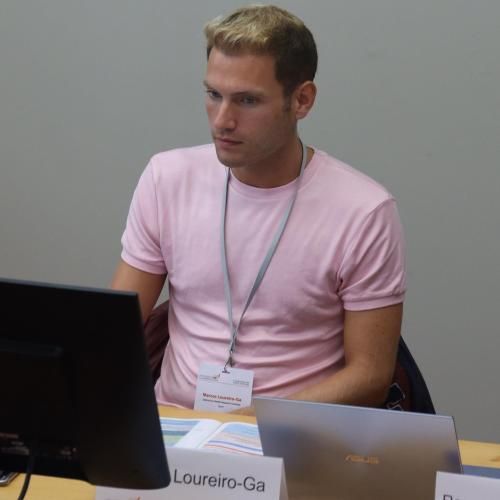
Dr. Marcos Loureiro Garcia is an Assistant Professor at the University of Vigo, affiliated with the Department of Mathematics within the Faculty of Education and Sport Sciences. He obtained his PhD in 2020 with a thesis on "Modeling and numerical approach of aortic valve stages: healthy, stenotic and transcatheter replaced (TAVI)". His career demonstrates interdisciplinary expertise combining mathematics, cardiology, and educational innovation. Doctorate in Mathematics Applied to Cardiology (2020) Master's in Industrial Mathematics Master's in Teacher Training Bachelor's Degree in Mathematics His research focuses on applying mathematical methods to cardiology, particularly for simulating aortic valve pathologies and transcatheter aortic valve implantation (TAVI) procedures. He has developed biomechanical models of aortic valves, investigated TAVI outcomes through numerical simulation, and explored educational technology applications for mathematics teaching. His academic work spans both computational cardiology and mathematics education. He has published on topics including deep learning for TAVI characterization, digital valve twins, and augmented reality applications in teacher training. His research addresses clinical challenges through mathematical modeling while contributing to innovative teaching methodologies. Scientific achievements include: Best Poster Prize in Numerical Simulation at ESC Congress (2018) Six-Year Research Career Recognition Grants from Ministry of Science, Xunta de Galicia, GAIN He collaborates with leading institutions like the Czech Technical University in Prague and the Center for Computational Medicine in Cardiology (Lugano), developed his doctoral research at the Galicia Sur Health Research Institute (IISGS), and currently participates in the RITME research group focused on educational innovation and mathematical modeling.
Francesc Alías Pujol is a Professor at the Department of Engineering, Ramon Llull University (La Salle Campus Barcelona), where he also serves as Director of Teaching and Research Staff Policies since September 2019 and coordinates the PhD Program in Information Technologies since February 2022. He is a researcher in the Human-Environment Research (HER) group, focusing on speech and acoustic signal processing for natural human-machine interaction. His educational background includes: BSc in Telecommunications Engineering (1997) MSc in Electronics Engineering (1999) PhD in ICT and their application in Management (2006) MBA in Business Administration (2013) University Expert Program in Digital Transformation (2023) Dr. Alías's research primarily focuses on signal processing, with special emphasis on speech and acoustic signal processing to achieve natural interaction between humans, machines, and their environment. His work spans from Text-to-Speech (TTS) synthesis to vocal biomarkers for digital health applications, numerical voice simulation, and environmental acoustics. He has developed expertise in expressive speech analysis and synthesis, sound source identification, and smart city applications through wireless acoustic sensor networks. His publication record shows a consistent trajectory in speech and acoustic processing, with recent work focusing on the impact of global events like the COVID-19 pandemic on urban soundscapes, advanced techniques for glottal source analysis, and the development of algorithms for anomalous noise event detection in smart city applications. His research bridges theoretical signal processing with practical applications in environmental monitoring and human-computer interaction. Dr. Alías has received numerous scientific awards including: 3rd six-year research merit (2018-2023) from AQU Catalunya Most cited paper in Noise Mapping (2021) for his work on COVID-19's impact on urban noise 2nd six-year research merit (2012-2017) from AQU Catalunya Best academic record award for his MBA (2013) Multiple best paper awards from the Spanish Thematic Network on Speech Technology He has led and participated in numerous research projects including DISTRESIA (stress biomarker identification), FEMVoQ (3D voice simulation), SUARAMAP (acoustic monitoring for dementia detection), GENIOVOX (expressive voice generation), and DYNAMAP (dynamic noise mapping). His work has been supported by various funding bodies including the European Commission, Spanish Ministry of Science, and Catalan Government. As coordinator of the PhD Program in Information Technologies and former Director of the Department of Engineering (2014-2021), Dr. Alías plays a significant role in academic leadership at La Salle-URL. His research group focuses on the intersection of speech processing, environmental acoustics, and smart city applications, contributing to both theoretical advancements and practical implementations in these fields.
Carlos Guerrero Mosquera is a Contracted Professor at La Salle School of Engineering, Department of Engineering, La Salle University. His research focuses on the intersection of neuroscience, biomedical engineering, and signal processing, with particular emphasis on brain imaging techniques and cognitive processes. Dr. Guerrero Mosquera's research interests span multiple areas including: Electroencephalogram (EEG) signal processing and analysis Functional Near Infrared Spectroscopy (fNIRS) applications in neuroscience Cognitive fatigue and sleep deprivation effects on brain function Neuroergonomics and human performance monitoring Machine learning applications for biomedical signal processing Epileptic seizure detection and characterization His recent publication activity demonstrates a strong focus on multimodal neuroimaging approaches, particularly combining EEG and fNIRS to study cognitive processes. His work has increasingly incorporated machine learning techniques for signal processing and classification, with applications ranging from medical diagnostics to urban soundscapes analysis. The research shows a consistent thread of investigating brain connectivity changes during cognitive tasks and fatigue states, with significant contributions to noise reduction methods in neuroimaging data. Dr. Guerrero Mosquera has been actively involved in several research projects: Human-Environment Research (2022-2025) funded by Agència de Gestió d'Ajuts Universitaris i de Recerca MENTALTIC: Application of Information and Communication Technologies in Mental Health (2021) Deep learning for classification of anomalous acoustic events in real urban and suburban environments (2020) His laboratory work focuses on developing and optimizing methods for neuroimaging data acquisition and analysis, with particular expertise in handling noisy signals and improving the reliability of brain imaging techniques. He maintains an active research profile with publications spanning from 2005 to present, showing increased productivity in recent years with multiple publications in 2023 alone.
Ana Maria Gomez Amador is an Assistant Professor in the Department of Mechanical Engineering at the University Carlos III of Madrid (UC3M). She is affiliated with the Experimental Mechanics, Calculations and Transport Group (MECATRAN) and the Duque de Santomauro Institute of Motor Vehicle Safety. Her research focuses on structural analysis, 3D printing applications, vehicle safety, and educational technology. Her academic work spans mechanical systems, including studies on T-stub connections, soil-structure interaction, and Roman engineering systems. She has contributed to advancements in low-cost mechanical ventilators, automotive braking efficiency, and aerodynamic device design. Her projects include leading studies on roadworthiness testing and developing educational tools for descriptive geometry and engineering design. Dr. Gomez Amador has collaborated on over 30 publications since 2016, with recent work emphasizing additive manufacturing, finite element analysis, and interdisciplinary applications of mechanical engineering. She maintains active roles in both teaching and applied research, addressing modern challenges in transportation safety and sustainable materials science. Her professional activities include patent development (e.g., driving style evaluation systems) and software tools like fBrake-TT for automotive analysis. She has advised on technical reports for organizations like AECA-ITV and Eiffage Energie, contributing to both academic and industrial innovation.
Stefano Discetti is a Full Professor in the Department of Aerospace Engineering at Universidad Carlos III de Madrid, leading the Aerospace Engineering Research Group. His work bridges experimental fluid dynamics, machine learning, and flow control. Key research themes include turbulence characterization, heat transfer enhancement, and advanced measurement techniques like PIV/PTV. He has developed data-driven methods for flow estimation, sensor placement optimization, and physics-informed neural networks. Research Trends from his publications show a focus on: Machine learning for turbulent flow reconstruction (GANs, CNNs, KNN) Non-intrusive sensing from wall measurements Manifold learning and reduced-order modeling Heat transfer control via plasma actuators and passive structures Time-resolved diagnostics using hybrid experimental/numerical approaches Projects include principal roles in EU and national grants like NEXTFLOW (2021-2026) and EXCALIBUR (2023-2026), with industry collaborations at Airbus and TU Delft.
Salvador Garrigues Mateo is a Professor at the University of Valencia in the Faculty of Chemistry and Department of Analytical Chemistry . He leads the research group SOLINQUIANA (Solutions & Innovation in Analytical Chemistry) , focusing on green analytical chemistry and innovative spectroscopic methods. Education: PhD in Analytical Chemistry from the University of Valencia (1993) with a thesis on Quantitative analysis by Fourier Transform Infrared Spectrometry . Research Interests: Green Analytical Chemistry, Fourier Transform Infrared Spectroscopy (FTIR), Ion Mobility Spectrometry (IMS), environmental and biomedical analysis, sample preparation techniques, and forensic chemistry. His recent publications highlight trends in environmental analysis (wastewater drug monitoring, bioaerosol assessment), forensic chemistry (illicit drug detection, synthetic cannabinoids), and green sample preparation (natural sorbents, microextraction techniques). He also contributes to food analysis (oil degradation, essential oil authentication) and biomedical applications (urinalysis for drug exposure, serum diagnostics). His work emphasizes green chemistry principles , focusing on reducing solvent consumption, developing non-invasive testing protocols, and applying chemometrics for improved analytical accuracy. He has published extensively on spectroscopic methods for both environmental and clinical applications, often combining FTIR with ion mobility spectrometry for enhanced detection capabilities. Contact: salvador.garrigues@uv.es
María José Madero Ayora is a Professor at the Department of Signal Theory and Communications , Universidad de Sevilla , specializing in nonlinear system modeling and digital predistortion for wireless communication systems. Her research focuses on Volterra series applications in power amplifier linearization, microwave measurements , and machine learning techniques for signal processing. Principal Investigator for projects like Statistical Signal Modeling for Brain-Computer Interfaces (PID2021-123090NB-I00) Recipient of the Arftg Roger Pollard Student Fellowship in microwave measurement Her work spans 5G waveform linearization , I/Q modulator impairments , and thermal memory effects in RF amplifiers. Recent publications combine sparse Bayesian methods with Volterra models to address nonlinear distortion in OFDM and visible light communication systems. She has supervised doctoral theses and participated in international conferences across the U.S., Europe, and Asia.