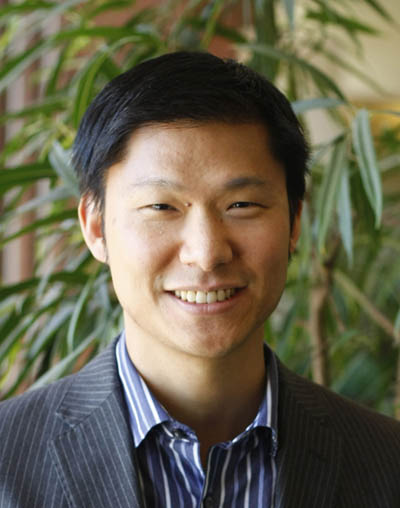
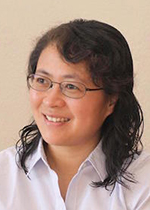
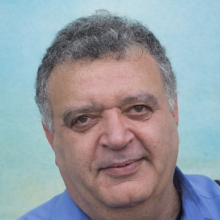
Dr. Richard Jiang is a Senior Lecturer (Associate Professor) at Lancaster University's School of Computing and Communications. His research focuses on Artificial Intelligence, Neurocomputing, Quantum AI, Privacy Computing, and Medical Computing. He has pioneered secure pattern recognition in encrypted domains and quantum neuromorphic computing. With over £1M in research grants from EPSRC and others, he has authored 100+ publications and supervised over 20 PhD students. Dr. Jiang's work includes the Face2Brain method for neurodegenerative assessment and explainable models for brain aging analysis. He contributes actively to academic committees, editorial boards, and conferences like the World Conference on eXplainable AI. His research spans ethical AI frameworks, quantum algorithms for medical imaging, and privacy-preserving biometric systems.
Alexandr Lucas is a Teaching Professor in Robotics at the University of Sheffield's School of Computer Science. He joined in September 2019 and holds roles including Deputy Admissions Tutor (General Engineering) and IPE Tutor. His research focuses on developmental neuro-robotics, cognitive assessment via human-robot interaction, and educational robotics applications. He contributes to courses like COM1005 (Machines and Intelligence) and COM3528 (Cognitive and Biomimetic Robotics), developing teaching materials for MiRo robots and simulators. Publications include work on cognitive skill assessment using cloud computing and robotic systems, visual finger-counting for neuro-robotics learning, and public perception analysis of robots in urban environments. He co-founded the SERAI Network CIC and maintains active roles in robotics education and outreach. Lucas has created extensive teaching resources, including guides for MiRoCloud simulation platforms and visual coding tools (MiRoCODE). His work emphasizes practical robotics education and bridging theory with hands-on experiments in undergraduate and postgraduate programs.
Gaël Georges Marcel Le Mens is a Full Professor at Pompeu Fabra University (UPF), holding a position in the Department of Economics and Business. He is also affiliated with the Barcelona School of Economics and serves as academic co-director of the Executive Master in Business Administration (EMBA) at the UPF Barcelona School of Management. His academic journey includes teaching roles at INSEAD, London Business School, ESADE, and the University of Lugano, alongside positions at the universities of Southern Denmark and New York. Education: Doctor in Business Administration, Stanford Graduate School of Business MSc in Management Science and Engineering, Stanford University Diploma in Engineering, Supélec Bachelor of Economics, University of Paris XI His research focuses on decision-making processes, information sampling, machine learning applications in semantics, and organizational behavior. Key themes include cognitive heuristics, social media impact on political expression, and the interplay between popularity and evaluation dynamics. He has explored how feedback mechanisms shape political communication and developed methodologies to compare human and machine conceptual judgments using models like BERT. His publications span journals such as PNAS , Psychological Review , and Industrial and Corporate Change , reflecting his interdisciplinary approach. Though no explicit awards are noted, his prolific output highlights sustained academic impact. He has advised multiple institutions on curriculum design and executive education, leveraging his cross-university teaching experience. Le Mens is affiliated with the Barcelona School of Management’s research teams and contributes to initiatives bridging artificial intelligence and social sciences. His work often addresses practical challenges in organizational decision-making and digital communication strategies.
Blake Miller is an Assistant Professor of Computational Social Science in the Department of Methodology at the London School of Economics (LSE), affiliated with the Data Science Institute. Their research focuses on computational methods applied to political communication in authoritarian regimes, particularly China, and the intersection of social media with political violence and identity politics. They hold a PhD from the University of Michigan (2018) and conducted postdoctoral research at Dartmouth College. Key substantive areas include: China's surveillance-driven security state and information control mechanisms Political mobilization through moral outrage and outgroup targeting Technological adaptations in authoritarian governance Methodological expertise spans machine learning, text analysis, and fairness in AI applications. Their book project Platforms and Power examines how authoritarian states delegate censorship to private platforms. Teaching focuses on quantitative text analysis and machine learning in political contexts. Research outputs include influential work on: Censorship patterns during China's zero-COVID protests Moral-emotional triggers for violence support Evaluation of active learning algorithms for text labeling Blake's work has been featured in The Washington Post , China File , and the CSIS Pekingology Podcast. They maintain an active presence in interdisciplinary research communities.
Bernadette Bucher is an Assistant Professor in the Robotics Department (primary) and Computer Science and Engineering Department at the University of Michigan. Her research focuses on embodied AI, vision-language grounding, and mobile manipulation, with an emphasis on interpretable visual representations and uncertainty estimation for robotics tasks. She previously worked at Boston Dynamics AI Institute, NVIDIA Research, and Lockheed Martin Corporation. Her academic background includes a PhD in Computer Science from the University of Pennsylvania (GRASP Lab) under advisors Kostas Daniilidis and Nikolai Matni, alongside MA degrees in Mathematics and Economics from the University of Alabama (2014). Research interests include robotics, computer vision, and machine learning intersections, particularly autonomous mobile manipulation. Her work emphasizes uncertainty-aware systems and deployable learning-based methods. Notable achievements include the Best Paper in Cognitive Robotics at ICRA 2024. Her research spans projects like EVORA for off-road autonomy and ASHiTA for hierarchical task analysis. She has contributed to open-source projects like RoboNet and actively publishes in top conferences (CVPR, CoRL, ICRA). Key projects: EVORA, ASHiTA, Vision-Language Frontier Maps (VLFM) Grants and funding: Honda Research Institute (Curious Minded Machines project) Labs/Teams: Active participation in robotics labs at University of Michigan and prior collaborations with industry partners
Frank Tong is a Professor of Psychology at Vanderbilt University in the College of Arts and Science. He leads an active research laboratory investigating the neural mechanisms of human visual perception, cognition, attention, and working memory. His work integrates behavioral experiments, high-resolution fMRI, and computational modeling to decode how visual information is represented and maintained in the brain. Department: Department of Psychology Office: Wilson Hall, Room 531 Email: frank.tong@vanderbilt.edu Phone: 615-322-1780 Education: B.S. in Psychology, Queen's University, Kingston, Canada (Advisor: Barrie Frost) Ph.D. in Psychology, Harvard University (Advisors: Ken Nakayama, Nancy Kanwisher) Postdoctoral Fellow, UCLA (McDonnell-Pew Fellowship, Advisor: Steve Engel) Frank Tong's research centers on understanding how early visual representations interact with higher cognitive functions such as attention and working memory. He has developed pioneering fMRI decoding methods to reconstruct visual features like orientation and object categories from brain activity patterns in the human visual cortex. His lab has demonstrated how these techniques can reveal the neural bases of visual working memory and object-based attentional selection. Current work includes using deep convolutional neural networks as models of human visual processing. His recent publications show a consistent focus on decoding mental states, visual features, and memory contents from brain activity, particularly using fMRI pattern analysis. The research spans visual working memory, attentional modulation, scene perception, and the application of machine learning to neural data. These studies frequently appear in top journals such as Nature , Nature Neuroscience , and Annual Review of Psychology . Scientific Awards: McDonnell-Pew Training Fellowship (1999) Robert K. Root Preceptorship, Princeton (2003) Scientific American Top 50 Award (2004) Young Investigator Award, Cognitive Neuroscience Society (2006) Chancellor's Award for Research, Vanderbilt (2008) Young Investigator Award, Vision Sciences Society (2009) Troland Research Award, National Academy of Sciences Frank Tong has advised numerous graduate students and postdoctoral fellows, many of whom have gone on to successful academic and research careers. His lab has received significant research funding to support its work in cognitive neuroscience and brain imaging. He has also served on the editorial board of the Annual Review of Psychology and as a board member of the Vision Sciences Society, reflecting his leadership in the field. He teaches undergraduate courses including Psy 3760 (Mind and Brain), Psy 3765 (Social Cognition and Neuroscience), and Psy 3780 (The Visual System). His lab continues to explore the interplay between early visual processing and higher cognition using advanced neuroimaging and computational techniques.
Zhu-Tian Chen is an Assistant Professor in the Department of Computer Science and Engineering at the University of Minnesota, Twin Cities, where he leads research in data visualization, human-computer interaction, and augmented reality. Prior to this, he held postdoctoral positions at Harvard University and UC San Diego, working with leading researchers in visual computing and interactive design. Ph.D. in Computer Science, Hong Kong University of Science and Technology B.Eng. in Software Engineering, South China University of Technology His research focuses on augmenting human intelligence through hybrid human-AI systems, particularly in everyday and outdoor environments. He specializes in designing intelligent AR interfaces, embedded visualizations, and language-oriented interactions for applications in sports analytics, education, and data analysis. His work integrates human-centered design with applied machine learning to create intuitive and effective visualization tools. The recent trend in his publications shows a strong emphasis on intelligent AR systems for dynamic scenes, LLM-based code generation interfaces, and real-time augmentation of sports videos using natural language and gaze-based interactions. His work frequently appears in top-tier venues such as IEEE VIS, ACM CHI, and UIST. Best Paper Award, ACM CHI'23 Best Short Paper Honorable Mention, EuroVis'23 Best Paper Honorable Mention, IEEE VIS'22 (twice) Certificate of Distinction and Excellence in Teaching, Harvard University Hong Kong Ph.D. Fellowship Dr. Chen actively mentors undergraduate, master’s, and PhD students, as well as visiting scholars and interns, and is building a new research lab focused on visualization for intelligent AR systems. He has served on program committees for major conferences including ACM CHI, IEEE VIS, and EuroVis, and has been invited to speak at institutions such as Apple, JP Morgan, and multiple universities worldwide. He also contributes to the academic community through grant reviewing for NSF and the Department of Energy. He leads research projects in intelligent AR systems for sports, language-oriented interactions with LLMs, and immersive data visualization, often in collaboration with institutions like Harvard, UC San Diego, and HKUST. His lab welcomes students and collaborators interested in visualization, HCI, and applied AI.
Stella Yu is a Professor in the Department of Electrical Engineering and Computer Sciences at the University of California, Berkeley. She serves as the Vision Group Director at the International Computer Science Institute (ICSI) and is a Senior Fellow at the Berkeley Institute for Data Science (BIDS). Her research bridges computer vision, human perception, and artistic vision. Ph.D. in Robotics (2003), Carnegie Mellon University Dr. Yu's work spans artificial intelligence, signal processing, and computational neuroscience. Her research focuses on multi-perspective visual perception, integrating robotic vision, medical imaging, and artistic analysis. Recent projects explore hyperbolic data visualization and computational MRI. Her publications reflect contributions to data visualization and medical imaging. She has received prestigious recognition including the NSF CAREER award. She has advised graduate students in EECS, such as Ke Wang (2023) and Pat Virtue (2019). Her affiliations include the Berkeley Deep Drive (BDD) center and the FHL Vive Center for Enhanced Reality, reflecting her interests in applied vision science.
Haoyi Xiong is an active academic researcher in artificial intelligence, machine learning, and data science, with extensive publications in top-tier journals and conferences including IEEE TPAMI, NeurIPS, ICML, KDD, and AAAI. His work spans explainable AI, graph neural networks, diffusion models, remote sensing, and large language models. Research Interests: Explainable AI (XAI) and model interpretability Graph Neural Networks and contrastive learning Diffusion models and generative AI Medical and remote sensing image analysis Large language models and autonomous agents Learning to rank and web search His recent publications (2023–2025) show a strong trend toward self-supervised learning , model robustness , and integration of LLMs with structured data and knowledge graphs . He frequently collaborates with researchers from major tech and academic institutions. Scientific Awards: No explicit awards mentioned in the provided text. Advising and Grants: While no direct mention of students or grants, his role as a senior author on numerous papers suggests he advises graduate students and likely leads funded research projects in machine learning and AI. His work on frameworks like COLTR , GS2P , and MUSCLE indicates leadership in developing scalable AI systems. Labs and Teams: Though not explicitly stated, his frequent collaboration with Jiang Bian, Dejing Dou, and Dawei Yin suggests affiliation with a well-established AI research lab or industry-academia partnership focused on data mining, intelligent systems, and large-scale learning.
Valeria Bruschi is a Researcher at the Department of Information Engineering (DII) within the Faculty of Engineering at Università Politecnica delle Marche (UNIVPM) in Ancona, Italy. Her academic profile was last updated on April 13, 2024, and she maintains her office at the Engineering Faculty on via Brecce Bianche, with contact information including phone +39 071-220-4486 and email v.bruschi@staff.univpm.it. Dr. Bruschi's research spans multiple domains within audio and signal processing, with particular expertise in spatial audio systems, automotive human-computer interaction, and biomedical signal applications. Her work bridges theoretical signal processing techniques with practical implementations across diverse fields including automotive safety systems, hearing aid technology, sleep medicine, and agricultural monitoring. She has made significant contributions to head-related transfer function (HRTF) processing, real-time audio enhancement algorithms, and innovative monitoring systems that utilize acoustic signals for various applications. Analysis of Dr. Bruschi's recent publications reveals a strong trajectory in developing practical audio processing solutions with real-world applications. Her work shows increasing integration of machine learning techniques with traditional signal processing approaches, particularly in areas like driver monitoring systems, snoring detection and cancellation, and spatial audio rendering. A notable trend is her focus on creating lightweight, real-time implementations suitable for embedded systems and practical deployment scenarios, while maintaining high performance standards. Her research consistently demonstrates interdisciplinary collaboration, connecting audio engineering with fields as diverse as automotive safety, sleep medicine, and agricultural technology. Dr. Bruschi actively contributes to advancing audio engineering through her research on equalization techniques, noise reduction systems, and immersive audio technologies. Her work on pulse compression techniques for hearing aid distortion measurement represents an important contribution to audiological assessment methodologies. Her publication record demonstrates consistent scholarly output with increasing impact across multiple application domains, reflecting her ability to translate theoretical signal processing concepts into practical engineering solutions.
Amir Shmuel is a Professor at McGill University's Faculty of Medicine, holding appointments in the Department of Neurology and Neurosurgery, Department of Biomedical Engineering, and Department of Physiology. He serves as Director of the Brain Imaging Signals Lab and Core Faculty at the McConnell Brain Imaging Centre of the Montreal Neurological Institute. His leadership includes chairing the 2018 International Society for Brain Connectivity conference and securing an $18.7M Canada Foundation for Innovation grant for Quebec's first large-bore 7 Tesla MRI scanner. Dr. Shmuel's research focuses on understanding neuronal mechanisms underlying functional brain imaging signals and visual information processing. His integrative approach combines fMRI, optical imaging, multi-channel neurophysiological recordings, and optogenetics across multiple spatial and temporal scales. Current research priorities include resting-state functional connectivity mechanisms, cortical lamina-resolved neurophysiology, and computational modeling of brain signals. His lab emphasizes parallel model development with experimental data acquisition. Recent publications demonstrate strong trends in multimodal neuroimaging integration, with emphasis on high-resolution fMRI techniques (especially 7T applications), resting-state connectivity analysis across species, and computational modeling of neurovascular coupling. Key subfields include laminar-specific activity mapping, artifact detection in medical imaging using deep learning, and cross-species functional connectivity frameworks. Dr. Shmuel's research is currently funded by the Canadian Institutes of Health Research (CIHR), Natural Sciences and Engineering Research Council of Canada (NSERC), and the US Department of Defense. His lab maintains active collaborations through initiatives like the International Society for Brain Connectivity and the PRIME-DE database consortium. Operating within the Brain Imaging Signals Lab at the Montreal Neurological Institute, Shmuel's team develops and applies advanced multimodal techniques including simultaneous fMRI-electrophysiology, voltage-sensitive dye imaging, and computational modeling frameworks. The lab maintains strong ties with the McConnell Brain Imaging Centre and participates in major open-science initiatives including the Tanenbaum Open Science Institute.
Nuno Miguel Fonseca Ferreira is a Full Professor at the Instituto Superior de Engenharia de Coimbra (ISEC), part of the Polytechnic of Coimbra, where he currently serves as President of the Scientific Council. His academic career spans over 25 years at ISEC, progressing from Assistant to Professor Coordenador Principal. He has held significant leadership positions including Vice-President of ISEC (2001-2005), Pro-President of the Polytechnic of Coimbra (2009-2010), President of ISEC (2010-2013), and Vice-President of the Polytechnic of Coimbra (2013-2017), where he was responsible for internationalization initiatives. His educational background includes a degree in Electrical Engineering from the University of Porto (1996), a Doctorate in Electrical Engineering from the University of Trás-os-Montes and Alto Douro (2006), and a Habilitation Title (Aggregation) from the same institution (2020). His research focuses on Robotic Systems, with specialization in cooperative robotic systems as evidenced by his Habilitation work. Professor Ferreira's research spans multiple domains of robotics and intelligent systems, with particular emphasis on multi-robot coordination, environmental applications, and medical robotics. His work bridges theoretical control systems with practical applications across diverse fields including forestry, healthcare, manufacturing, and education. He has developed innovative approaches to robotic manipulation, sensor integration, and human-robot interaction, often incorporating advanced techniques from artificial intelligence and machine learning. His recent publications demonstrate a strong trend toward practical applications of robotics in real-world environments, particularly in forestry maintenance, industrial automation, and medical applications. The research shows progression from theoretical control systems to applied robotics in challenging environments, with increasing integration of computer vision, deep learning, and collaborative systems. His work spans both fundamental robotics research and immediate industrial applications, reflecting a balance between academic inquiry and practical implementation. Professor Ferreira has supervised two doctoral theses and participated in numerous research projects with substantial funding. His leadership extends to coordinating 15 of the 33 national and international R&D projects he has participated in, demonstrating significant grant acquisition and management capabilities. His international collaborations through Erasmus+ and other European programs highlight his role in fostering global research partnerships. He is an integrated member of GECAD (Research Group in Engineering and Intelligent Computing for Innovation and Advanced Development), a Portuguese R&D unit classified as Excellent by the Portuguese Science and Technology Foundation. Additionally, he is a member of LASI (Associated Laboratory for Intelligent Systems), the Portuguese laboratory associated with Artificial Intelligence, connecting him to a broader national research ecosystem.
Dr. Gianluca Demartini is a leading researcher in Human-in-the-loop AI Systems with significant contributions to Crowdsourcing , Information Retrieval , and Generative AI applications. His work bridges Machine Learning and Human-Computer Interaction , focusing on Bias Management , Fact-Checking , and Ethical AI . Major Affiliations : L3S Research Center, ScienceWISE platform, and collaborations with institutions like University of Queensland and University of Padua Over 15 years, his research has explored Crowdsourcing Quality Control (Mechanical Cheat 2012), Entity Ranking (2008-2013), and Semantic Search . Recent work (2024-2026) focuses on Generative AI Impacts in domains like Media Literacy , Data Curation , and Visual Analytics . Scientific Recognition : Best Paper Award (Top 1.4%) at ICTIR 2023 Best Short Paper Award (Top 0.6%) at ECIR 2020 Honorable Mention (Top 2%) at CSCW 2020 Best Demo Award at ISWC 2011 3rd Best Paper at LA-WEB 2008 His 15 most recent publications (2024-2026) demonstrate expertise in LLM-based Content Moderation , Immersive Data Visualization , and Trustworthy AI Systems . He has pioneered methods for Bias Detection in Wikipedia (2013), Entity Ranking (2008-2013), and Human-AI Collaboration frameworks. His work consistently addresses ethical challenges in AI for Social Good and Responsible Data Science .
Dr. Adam A. Pack is a Full Professor at the University of Hawaiʻi at Hilo with a joint appointment in the Departments of Psychology and Biology. He chairs the Psychology Department, contributes to the Master of Science Degree Program in Tropical Conservation Biology and Environmental Science, and co-created the LOHE Bioacoustics Laboratory. He has led the Pack Marine Mammal Laboratory since 2008 and served as former chair of the Hawaiian Islands Humpback Whale Sanctuary Advisory Council. Current research focuses on marine mammal behavioral ecology, cognition, and bioacoustics Over 30 years studying dolphin perception, whale social systems, and conservation Collaborations with NOAA, Pacific Whale Foundation, and Wild Dolphin Project Research Trends include: Humpback whale communication, mating systems, and habitat use Dolphin cognitive abilities, echolocation, and social behavior Conservation strategies for marine mammals Acoustic tagging and videogrammetry techniques Scientific Awards : 2017 University of Hawaii Board of Regents Award for Excellence in Teaching 2008 Research Corporation of the University of Hawaii 15-year Service Award 1999 APA Division 6 F.A. Beach Comparative Psychology Award Advising and Grants show mentorship of graduate students in multiple institutions. Notable grants include ONR and NOAA funding for whale endocrine studies and collision mitigation. Labs : Founded the Pack Marine Mammal Laboratory at UH Hilo, contributing to bioacoustics research infrastructure.
Leonardo Becchetti is a Full Professor at the University of Rome Tor Vergata's Department of Economics and Finance, teaching Microeconomics and Topics in Applied Economics for the 2025-2026 academic year. Based in room P2 S55, he maintains an active research profile with email contact becchetti@economia.uniroma2.it. His research centers on Corporate Finance, Corporate Social Responsibility, and Happiness Economics, extending to Sustainable Development and Ecological Transition. He investigates how economic structures influence well-being through relational goods, generativity, and sustainability frameworks, employing game-theoretic and empirical methodologies to analyze climate action, AI impacts, and cooperative behavior. Analysis of his 2024-2025 publications reveals intensifying focus on ecological transition mechanisms, including renewable energy communities, circular economy governance, and sustainable investment models. His work increasingly integrates climate economics with behavioral insights, examining conditional cooperation in environmental actions and AI's disruption of labor markets. No scientific awards or student advising information is publicly documented. He participates in departmental research initiatives including DEF Seminars and ROBO Seminars, contributing to the university's research centers on economic and social impact.