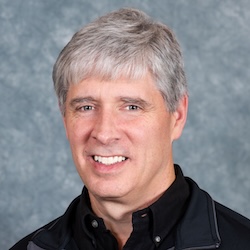
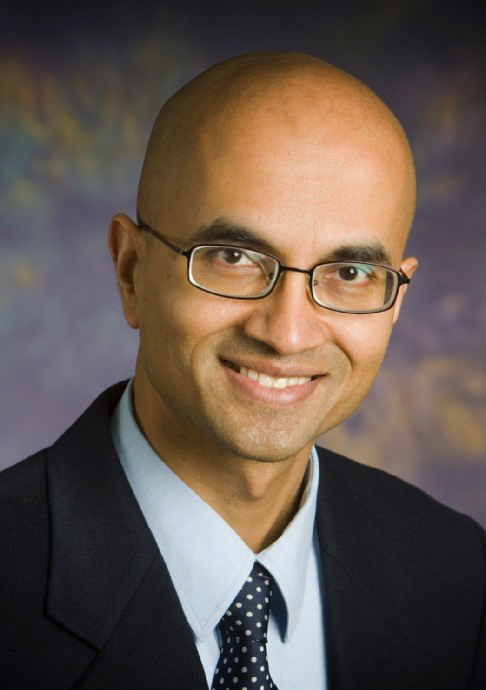
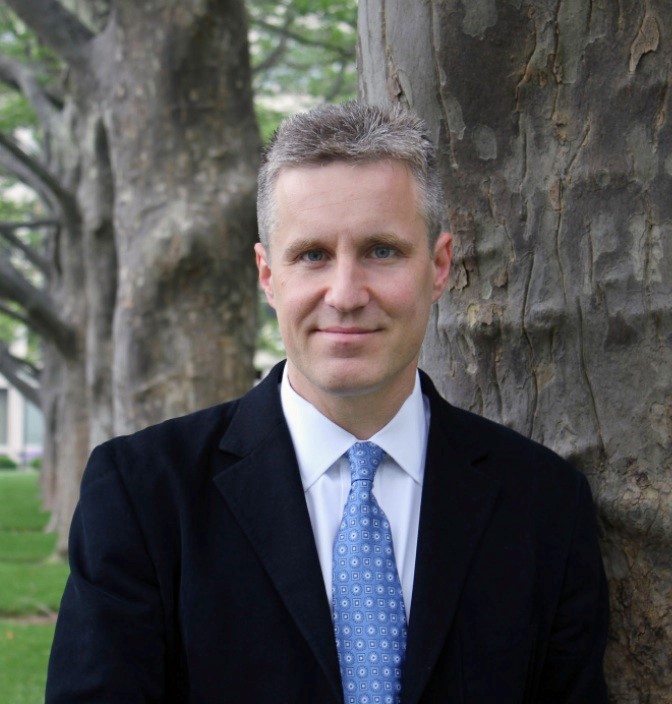
Prof. Senthold Asseng is a Professor of Digital Agriculture at the Technical University of Munich (TUM), leading the Hans Eisenmann Forum for Agricultural Sciences since 2021. His research focuses on climate-plant-soil systems modeling, addressing global food security, sustainable agriculture, and digital technologies like vertical farming and autonomous robotics. He holds a PhD from Humboldt University Berlin and habilitation from TUM, with prior roles at CSIRO Australia and the University of Florida (as Full Professor and Director of the Florida Climate Institute). His honors include AAAS Fellow, Web of Science Highly Cited Researcher, and multiple teaching/mentorship awards. Education: BSc/MSc in Agronomy & Horticulture, Humboldt University Berlin (1989-1990) PhD in Agronomy, Humboldt University Berlin (1994) Habilitation in Agronomy, TUM (2004) Research Interests: Climate change impacts on crops, digital agriculture technologies, systems analysis for autonomous farming, and vertical farming sustainability. His work integrates modeling, robotics, and environmental control to enhance agricultural resilience and productivity. Awards: AAAS Fellow (2019) Highly Cited Researcher (2019) UF Research Foundation Professor (2016-2019) Grants & Leadership: Led interdisciplinary projects like AgMIP-Wheat, SECC, and FAO advisory roles. Active in editorial roles for journals like Global Change Biology and Environmental Research Letters . Labs/Teams: Chair of Digital Agriculture at TUM, collaborating on projects like Smartfield and Proteins4Singapore , focusing on automation, controlled environment agriculture, and climate-smart solutions.
Ari Juels is the Weill Family Foundation and Joan and Sanford I. Weill Professor at Cornell Tech (Cornell University) and a faculty member in the Department of Computer Science. He co-founded and co-directs the Initiative for CryptoCurrencies and Contracts (IC³) and serves as Chief Scientist at Chainlink Labs. His research focuses on blockchain technology, cryptocurrency, smart contracts, applied cryptography, authentication, and privacy. Juels holds a Ph.D. in Computer Science from UC Berkeley and previously held roles as Chief Scientist and Director of the RSA Laboratories at EMC/Dell EMC until 2013. His work spans foundational contributions to decentralized systems, including Chainlink’s oracle networks and Ekiden’s privacy-preserving smart contracts. Juels has authored influential books like *The Oracle* (2024) and *Tetraktys* (2009), blending cryptography with thriller narratives. He advises numerous students and alumni, many of whom have joined prominent blockchain firms like Chainlink Labs, Mysten Labs, and Espresso Systems. Recent publications explore topics such as liquidity in blockchain assets, oracle network security, and economic analysis of smart contracts. His research emphasizes practical applications of cryptographic principles to real-world challenges in digital systems and decentralized finance. Juels’ lab collaborates on projects like HyDRA (automated bug bounty systems) and Lanturn (economic security metrics). He actively participates in academic and industry partnerships, bridging theoretical computer science with applied blockchain innovation.
Danai Koutra is an Associate Professor in Computer Science and Engineering at the University of Michigan, Ann Arbor, and an Amazon Scholar. Her research focuses on large-scale graph mining, graph neural networks, and interpretable machine learning methods for understanding complex networks. Key roles include leading the GEMS Lab and contributing to projects like DeltaCon (graph similarity) and VoG (graph summarization). She holds a PhD from Carnegie Mellon University and has authored over 80 publications in top venues like KDD, SDM, and NeurIPS. Educations: PhD in Computer Science, Carnegie Mellon University (2015) MS in Computer Science, Carnegie Mellon University (2015) Diploma in Electrical & Computer Engineering, National Technical University of Athens (2010) Research Interests: Her work spans graph mining, anomaly detection, knowledge graph completion, and applications in neuroscience, healthcare, and social networks. Recent projects include MAGNET (multi-agent graph networks) and GT2VEC (multimodal graph-text encoders). Grants & Awards: Recipient of the 2025 PECASE award, NSF CAREER Award (2019), and the 2016 ACM SIGKDD Dissertation Award. Active in organizing conferences like KDD and ECML/PKDD. Labs & Teams: Directs the GEMS Lab, collaborating on projects like FIDDLE (clinical data preprocessing) and SpecGreedy (dense subgraph detection). Engages in interdisciplinary efforts, including M-DICE (urban mobility analysis with Detroit).
Andrea Tagliasacchi is an Associate Professor at Simon Fraser University's School of Computing Science, holding the Visual Computing Research Chair. He is also a part-time (20%) staff research scientist at Google DeepMind (Toronto) and an associate professor (status-only) at the University of Toronto's computer science department. His research focuses on 3D visual perception at the intersection of computer vision, graphics, and machine learning. Education: EPFL – Postdoc Simon Fraser University – PhD (NSERC Alexander Graham Bell Fellow) Politecnico di Milano – MSc (Gold Medalist) Research Interests: His work emphasizes 3D reconstruction, neural fields, and applications in robotics, autonomous systems, and augmented reality. Recent advancements include scalable 3D Gaussian splatting, robust neural rendering techniques, and diffusion models for 4D generation. Notable Articles: Recent work spans real-time differentiable ray tracing, stochastic rasterization for 3D Gaussian splats, and generative image composition using neural fields. His publications often blend theoretical contributions with practical applications in CVPR, SIGGRAPH, and NeurIPS. Awards: 2015 SGP Best Paper Award 2020 CVPR Best Student Paper Award 2024 CVPR Best Paper Honorable Mention Advising & Grants: Advised 14+ PhD/MSc students (e.g., Baptiste Angles, Sara Sabour) and co-advised with notable figures like Geoffrey Hinton. Active in grants involving neural field compression, robotic perception, and generative AI. Labs & Teams: Leads a lab at SFU focused on 3D vision and neural fields, collaborating with industry partners like Google Brain and Samsung Research.
Dr. Jérôme Verny is an Associate Professor specializing in transport, logistics, and supply chain management. He is the founder and director of the research institute in innovative transport and logistics, as well as the co-founder of the DISC Master's program (Digital & Innovative Supply Chain) in Paris and the Mobility Accelerator. His expertise spans digitalization in logistics, blockchain applications, and sustainable development. Educated at the University of Lille Nord de France (PhD in Economics and Management) and engineering schools like École Nationale des Ponts et Chaussées, he advises both public institutions (OECD, EU) and private enterprises on transportation strategies. Research Interests: Dr. Verny focuses on supply chain innovation, digital transformation, and strategic logistics. His work integrates blockchain technology for supply chain transparency, optimizes last-mile delivery in urban environments, and analyzes the impact of geopolitical actors like China on global trade networks. He also explores sustainable practices in transportation, including CO2 reduction strategies and pandemic response logistics. Awards: Recipient of the 2009 OECD-FIT Young Researcher Prize in Transport. His contributions bridge academic research with practical applications in industry, policy, and international trade. Key Activities: Co-founded the DISC Master’s program and leads research initiatives on blockchain adoption, Arctic shipping routes, and Mediterranean trade dynamics. He actively contributes to conferences such as the International Association of Maritime Economists (IAME) and publishes in journals like Structural Change and Economic Dynamics and International Journal of Shipping and Transport Logistics . Labs/Teams: Directs the Institut de Recherche en Transport et Logistique Innovante and collaborates with institutions like the OECD and European Commission on transport policy. His interdisciplinary approach involves engineering, economics, and data science to address global supply chain challenges.
Ferdinando Fioretto is an Assistant Professor of Computer Science at the University of Virginia, leading the Responsible AI for Science and Engineering (RAISE) group. His research focuses on foundational challenges in AI, privacy, fairness, and the intersection of machine learning and optimization. He holds a dual PhD in Computer Science from the University of Udine and New Mexico State University. Affiliations: University of Virginia (current), Syracuse University (former), Georgia Institute of Technology (postdoc), University of Michigan (research fellow) Education: PhD (Udine & NMSU), B.S. (University of Parma) Research Interests: Machine Learning, Responsible AI, Optimization, Differential Privacy, Algorithmic Fairness. His work emphasizes practical applications in energy systems, court scheduling, and privacy-preserving machine learning. Recent projects include neuro-symbolic diffusion models, fairness-aware optimization, and privacy guarantees in LLMs. Grants & Funding: NSF CAREER Award, Google Faculty Research Award, Amazon Research Award, NVIDIA Academic Grant, and grants from the LaCross Institute and 4-VA. His group collaborates with institutions like George Mason University and Virginia Tech. Key Awards: NSF CAREER (2022), IJCAI Early Career Spotlight (2022), Caspar Bowden PET Award (2022), ACP Early Career Researcher Award (2021) Labs/Teams: RAISE group at UVA, focused on trustworthy AI, fair optimization, and privacy-preserving systems. Active in organizing workshops like NeurIPS Algorithmic Fairness and AAAI Privacy-Preserving AI.
Dr. Adam Rysanek is an Assistant Professor of Environmental Systems at the University of British Columbia (UBC) School of Architecture and Landscape Architecture (SALA). His expertise spans green building design, construction, and operation, with a focus on parametric tools like Rhino/Grasshopper for performative building design. Education: PhD in Engineering, University of Cambridge BASc and MScE, Queen’s University Dr. Rysanek integrates emerging technologies such as augmented reality and machine learning into architectural design optimization, and investigates building performance through Internet-of-Things (IoT) sensors and data analytics. His research also explores future trends in community-scale energy systems, including building-integrated transportation energy systems (BITES). Research Leadership: Supervises postdoctoral and graduate researchers at UBC SALA and Department of Mechanical Engineering Current projects hosted by the Buildings Decisions Research Group (BDRG): bdrg.io
Taina Bucher is a Professor at the Department of Media and Communication, University of Oslo, specializing in algorithmic studies, digital infrastructure, and human-machine communication. She leads the Screen Cultures research group and serves as Principal Investigator for HumAIn , a five-year humanities hub reimagining AI (2024-2029). Research Focus: Her work examines Algorithmic power and politics Cultural imaginaries of digital technology Temporalities of algorithmic media Feminist epistemologies in digital contexts Monitorial citizenship in platform societies Publications: Bucher has authored two monographs: Facebook (Polity Press, 2021) and IF…THEN: Algorithmic Power and Politics (Oxford University Press, 2018). Her recent articles explore facial recognition systems, algorithmic temporality, and digital divides. Academic Background: PhD in Media Studies (University of Oslo, 2012), MSc in Culture & Society (London School of Economics, 2007), with visiting scholar appointments at The New School, Ryerson University, and New York University. Teaching: She supervises and teaches topics including Digital infrastructure Algorithm studies Screen cultures Media theory Critical data studies Digitalization of public sectors Editorial Roles: Active on editorial boards for Journal of Communication , New Media & Society , and Information, Communication & Society .
Joydeep Biswas is an Associate Professor in the Computer Science Department at the University of Texas at Austin, where he serves as the Director of the Autonomous Mobile Robotics Laboratory (AMRL). He is also affiliated with Texas Robotics, the UT Machine Learning Laboratory, and UT Good Systems. Previously, he was an Assistant Professor in the College of Information and Computer Sciences at the University of Massachusetts Amherst. Dr. Biswas earned his PhD in Robotics from Carnegie Mellon University in 2014 and his B.Tech in Engineering Physics from the Indian Institute of Technology Bombay in 2008. His educational background has provided him with a strong foundation in both theoretical and applied aspects of robotics and artificial intelligence. Dr. Biswas's research focuses on enabling long-term autonomy for mobile robots operating in human environments. His work spans robot perception, motion planning, control systems, and AI, with the ultimate goal of creating self-sufficient autonomous mobile robots that can perform tasks accurately and robustly in real-world settings. He is particularly interested in perception, planning, and failure recovery for autonomous mobile robots, which supports his vision of having autonomous service mobile robots deployed at campus-to-city scale, both indoors and outdoors, performing assistive tasks over deployments spanning years. His IJCAI 2019 Early Career Spotlight talk summarizes much of his research to date and ongoing interests. His recent research has shown a strong trend toward social navigation, human-robot interaction, and the application of machine learning techniques to robotics problems. There's a clear progression from fundamental robotics research toward more complex, real-world applications that require robots to understand and navigate human social spaces effectively. His work increasingly integrates large language models and other advanced AI techniques with traditional robotics approaches, as evidenced by his recent publications on topics like preference-conditioned navigation, social navigation benchmarks, and instruction-following navigation systems. Dr. Biswas has received numerous prestigious awards including the NSF CAREER Award (2021), J.P. Morgan Faculty Research Award (2019), Amazon Research Award (2019), and a grant from Northrop Grumman Mission Systems (2018). These awards recognize his innovative contributions to the field of robotics and autonomous systems. As a dedicated educator and mentor, Dr. Biswas actively supervises PhD and master's students, with his PhD student Sadegh Rabiee winning the student poster award at the Northrop Grumman University Symposium 2019. He has secured significant grant funding from the National Science Foundation for projects including 'Introspective Perception and Planning for Long-Term Autonomy' and 'Interactive Synthesis and Repair For Robot Programs,' demonstrating his ability to secure competitive research funding and his commitment to advancing the field. Dr. Biswas leads the Autonomous Mobile Robotics Laboratory (AMRL), which serves as a hub for interdisciplinary research in mobile robotics. The lab has developed notable resources such as the UT Campus Object Dataset (CODA) for 3D perception research and SOCIALGYM, a framework for benchmarking social robot navigation. His team regularly deploys robots on the UT Austin campus and in urban environments to test and refine their approaches in realistic settings, bridging the gap between simulation and real-world application.
Heather Battey is a Professor in the Department of Mathematics at Imperial College London's Faculty of Natural Sciences. Her work bridges foundational statistical theory with practical scientific applications, focusing on parametrization effects, sparsity, and high-dimensional inference. Education PhD, University of Cambridge (2008-2011) Research Interests Battey's research examines how model structure and parametrization influence inferential procedures, particularly in high-dimensional settings. She investigates the equivalence between sparsity and reparametrization, and challenges traditional Fisherian statistical abstractions through modern practices. Her publications reveal a pattern of innovation in high-dimensional regression, covariance matrix analysis, and statistical methodology for complex data. Collaborations span disciplines including machine learning, economics, and biomedical research. Scientific Awards Fellow of the Institute of Mathematical Statistics (2023) EPSRC Early Career Research Fellowship (2020-2026) EPSRC Postdoctoral Research Fellowship (2017-2020) Advising and Grants Battey supervises PhD students Charlotte Edgar, Jakub Rybak, and Rebecca Lewis, with informal guidance to Henrique Hoeltgebaum. Over 15 pre-doctoral researchers have been mentored in topics ranging from support vector machines to spatial point processes. Current funding includes an EPSRC grant for theoretical foundations of inference with nuisance parameters and prior support for covariance matrix inference.
Kevin M. Lynch is a Professor of Mechanical Engineering at Northwestern University's McCormick School of Engineering, where he also serves as Director of the Center for Robotics and Biosystems. His research spans multiple domains of robotics, with particular expertise in dynamics, motion planning, and feedback control of mechanical systems. Dr. Lynch received his Ph.D. in Robotics from Carnegie Mellon University in 1996, with a thesis on "Nonprehensile Robotic Manipulation: Controllability and Planning" under advisor Prof. Matthew T. Mason. He earned his B.S.E. with honors in Electrical Engineering from Princeton University in 1989. His research interests focus on robotics, particularly dynamics, motion planning, and feedback control of mechanical systems. He investigates mechanics, planning, and control of robotic manipulation (juggling, throwing, pushing, rolling, vibration, etc.) and locomotion. His work also explores self-organizing systems, particularly decentralized control of mobile sensor networks and swarm robotics, underactuated dynamic systems, and physical human-robot interaction with industrial applications. Recent research has expanded into bio-inspired active electrosense, underwater robotics, control and optimization for robot swarms, swarm shape control, and functional electric stimulation. Dr. Lynch's recent publications demonstrate a strong trend toward rehabilitation robotics and human-robot interaction, particularly in lower-limb exoskeletons for gait training and rehabilitation. His work bridges fundamental robotics research with practical applications in healthcare, showing increasing integration of swarm robotics principles with human-centered design. The publications also reveal continued strong contributions to fundamental robotics theory, particularly in swarm formation control and manipulation dynamics. George Saridis Leadership Award in Robotics and Automation (2022) Harashima Award for Innovative Technologies (2017) IEEE Fellow (2010) Charles Deering McCormick Professor of Teaching Excellence (2007-10) Society of Automotive Engineers Ralph R. Teetor Educational Award (2007) Early Career Award in Robotics and Automation (2001) McCormick School of Engineering and Applied Science Teacher Of The Year Award (1998-1999) NSF Career Award (1998) As Director of the Center for Robotics and Biosystems, Dr. Lynch oversees significant research grants and initiatives in robotics. He has made substantial contributions to robotics education through his "Modern Robotics" book and associated Coursera specialization, which has reached thousands of students worldwide. His professional service includes serving as Editor-in-Chief of IEEE Transactions on Robotics, where he oversaw a 90% increase in submissions during his tenure. Dr. Lynch leads research groups focusing on swarm robotics and rehabilitation robotics, with particular emphasis on the Center for Robotics and Biosystems at Northwestern University. His teams integrate expertise from mechanical engineering, electrical engineering, computer science, and rehabilitation medicine to develop innovative robotic systems for both industrial applications and healthcare solutions.
Naresh R. Shanbhag is the Jack Kilby Professor in the Department of Electrical and Computer Engineering and the Coordinated Science Laboratory at the University of Illinois at Urbana-Champaign. He serves as Director of the Systems on Nanoscale Information fabriCs (SONIC) Center and held the D.J. Gandhi Distinguished Visiting Professorship at IIT Mumbai from 2015-2020. Previously, he was a visiting faculty member at National Taiwan University (2007) and Stanford University (2014). Dr. Shanbhag received his doctorate from the University of Minnesota (1993) in Electrical Engineering. From 1993 to 1995, he worked at AT&T Bell Laboratories as the lead chip architect for AT&T's 51.84 Mb/s transceiver chips over twisted-pair wiring for Asynchronous Transfer Mode (ATM)-LAN and very high-speed digital subscriber line (VDSL) chip-sets. His research focuses on the design of energy-efficient machine learning, communications, and signal processing systems on resource-constrained embedded platforms. He explores fundamental trade-offs between energy efficiency, latency and accuracy of decision-making systems implemented in nanoscale technologies, with applications to computer vision, biomedicine, automatic target recognition, and imaging. His work spans four primary focus areas: Resource-efficient Machine Learning for the Edge, In-memory Computing (IMC), Energy-efficient High Data Rate Communications, and Shannon-inspired Statistical Error Compensation (SEC). Analysis of his recent publications reveals a strong emphasis on in-memory computing architectures (SRAM, MRAM, RRAM) for machine learning acceleration. His work consistently addresses energy-accuracy trade-offs, with increasing attention to security aspects of hardware implementations and applications to MIMO signal processing and edge AI systems. His research demonstrates a progression from theoretical foundations to practical silicon implementations. 2024 Semiconductor Research Corporation Innovation Award 2018 Semiconductor Industry Association/Semiconductor Research Corporation University Researcher Award 2018 IEEE International Symposium on Circuits and Systems Best Paper Award 2006 IEEE Fellow 1996 National Science Foundation CAREER Award Professor Shanbhag has mentored over 50 graduate students who now work at leading technology companies including Qualcomm, Amazon, Nvidia, Intel, and Apple. His research has been generously supported by the National Science Foundation, DARPA, AFRL, Semiconductor Research Corporation, Texas Instruments, Sandia National Laboratories, and industry partners including IBM, GlobalFoundries, and Intel Corporation. He led the Alternative Computational Models research theme (2006-2012) and was the founding Director of the SONIC Center (2013-2017), a 5-year multi-university center funded by DARPA and SRC. Currently, he leads research themes in the SRC and DARPA funded JUMP 2.0 Program's Center for Co-Design of Cognitive Systems and the Center for Ubiquitous Connectivity, and in the NSF IUCRC Center for Advanced Semiconductor Chips with Accelerated Performance (ASAP). As Director of the Systems on Nanoscale Information fabriCs (SONIC) Center, Professor Shanbhag leads a multidisciplinary team exploring novel computing paradigms for the nanoscale era. His group has benchmarked an extensive collection of in-memory computing and digital accelerator IC designs, maintaining a publicly available IMC benchmarking repository of metrics extracted from published IC prototypes. His research philosophy integrates concepts from information theory, statistical signal processing, detection and estimation, VLSI architectures, and digital and analog integrated circuits to develop energy-efficient systems from algorithms to silicon implementations.
Claus Lamm is a Full Professor of Biological Psychology at the University of Vienna , where he leads the Social, Cognitive and Affective Neuroscience Unit (SCAN-Unit) . He serves as Vice Dean for Research and Advancement of Early Career Researchers at the Faculty of Psychology and holds affiliations with the Vienna Cognitive Science Hub , Environment & Climate Change Hub , and Austrian Academy of Sciences . His academic career spans international collaborations and formative research experience abroad. Scientific Focus: Lamm investigates the neural underpinnings of empathy and prosocial behavior , employing multi-modal approaches combining neuroimaging, psychopharmacology, and psychoneuroendocrinology . His work extends to comparative studies with ravens and dogs, and explores environmental social neuroscience through climate change decision-making research. Recent publications show trends in cross-cultural psychology , machine learning applications , and neurobiological pathways related to social behavior. Awards & Grants: Recipient of the APS Mentor Award for his support of early career researchers. Funded by European Research Council , Austrian Science Fund , Vienna Science and Technology Fund , and intramural grants exceeding €10 million. Key projects include "Unravelling the opioid system in empathy" and "Comparative dog-human fMRI" . Media Engagement: A prominent public science communicator, Lamm has appeared in Nature , Science Magazine , and Austrian media outlets like Ö1 Mittagsjournal and ORF2 , discussing topics from pandemic psychology to social media effects . He maintains active outreach through Science TV and educational programs .
Giulio Jacucci is a Professor in the Department of Computer Science at the University of Helsinki, affiliated with the Helsinki Information Technology Research Institute. He serves as a Supervisor in the Doctoral Programme in Computer Science, mentoring PhD candidates in human-computer interaction and related fields. His academic career spans over two decades with continuous research productivity from 2006 through 2025. Professor Jacucci's research interests center on Human-Computer Interaction , particularly focusing on Virtual Reality , Brain-Computer Interfaces , and Neuroadaptive Systems . His work explores how technology can adapt to users' cognitive and physiological states, with significant contributions to social virtual reality environments, embodied agents, and information retrieval systems. He investigates how virtual representations affect social behavior, time perception, and communication in digital spaces. His publication record shows a clear evolution from foundational work in information retrieval toward increasingly sophisticated neuroadaptive systems. Recent publications (2024-2025) demonstrate his leadership in examining social dynamics within virtual reality platforms, including votekicking mechanisms, mirror watching behaviors, and communication tools like mutes. His work bridges technical innovation with deep understanding of human social behavior in digital environments. Professor Jacucci currently leads multiple research projects funded by the Academy of Finland, including DataLit: Datalukutaito ja vastuullinen päätöksenteko (2023-2026) and MyModel: Selitettävyys suositusten hallinnassa (2023-2027). These projects focus on data literacy, responsible decision-making, and explainability in recommendation systems, reflecting his commitment to ethical and user-centered technology development. His research has received media attention, particularly around brain-computer interfaces and virtual reality applications, with coverage in outlets discussing how deep learning transforms mobile applications and sensor landscapes. He has presented his work at major conferences including CHI 2017 and continues to be an active contributor to the international research community.
Martin Z. Bazant is the E. G. Roos (1944) Professor of Chemical Engineering and Professor of Mathematics at the Massachusetts Institute of Technology (MIT), holding the Digital Learning Officer role in the Department of Chemical Engineering. His research focuses on mathematical modeling of electrochemical systems, transport phenomena, and applied mathematics, with significant contributions to battery technology and electrochemical energy storage. He is affiliated with MIT’s Department of Mathematics and the MIT Energy Initiative (MITEI), leading initiatives like the Center for Battery Sustainability and D3BATT. Education: Ph.D. from Harvard University (1997), M.S. and B.S. from the University of Arizona (1993, 1992). His work bridges theory and application, addressing challenges in lithium-ion batteries, solid-state systems, and electrolyte dynamics. Notable achievements include pioneering studies on coupled ion-electron transfer mechanisms and phase separation in battery materials. He is an elected member of the National Academy of Engineering (2025) and a Fellow of the Electrochemical Society (2023). As an educator, he develops MOOCs on transport phenomena and contributes to digital learning initiatives. His research group explores advanced battery diagnostics, machine learning for materials science, and environmental applications of electrochemical processes. Key collaborations include startups like Lithios, Inc., and leadership roles in professional societies such as the International Electrokinetics Society.