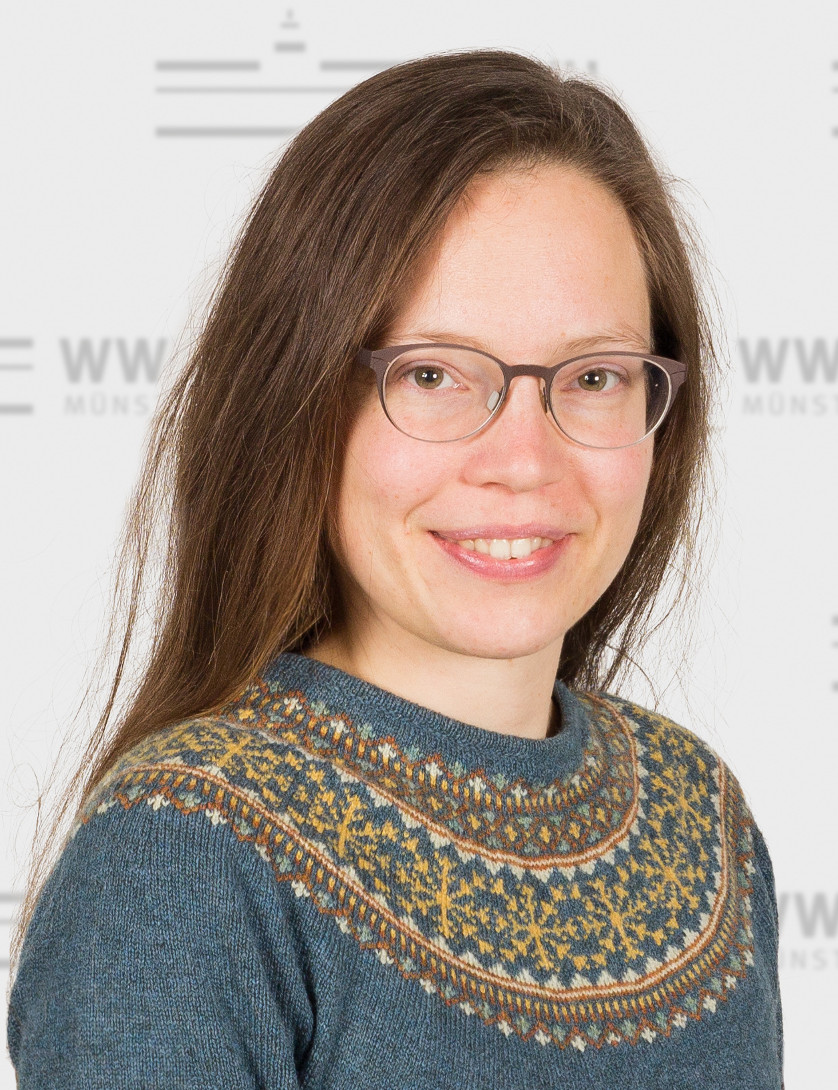
JProf. Dr. Mira Schedensack is a faculty member at the Institute for Analysis and Numerics within the Department of Mathematics and Computer Science , University of Münster. Her expertise lies in Numerical Analysis, Machine Learning, and Scientific Computing , with a focus on finite element methods and numerical solutions for partial differential equations. Research Interests: Numerical methods for PDEs, mixed finite element formulations, adaptive algorithms, and thermo-optical interactions in computational physics. Teaching: Offers courses in Numerical Partial Differential Equations and Adaptive Finite Element Methods. Students: Mentors doctoral student Jonas Ketteler . Publications: Key contributions to non-conforming FEM, Stokes equations, and gradient elasticity.
Pau Colomer is a Researcher at the Technical University of Munich , affiliated with the Theoretical Information Technology department. His work focuses on quantum communication, information theory, and wireless networks, contributing to foundational research in quantum channel identification and network information processing. His research interests span quantum information theory , neural networks , and signal processing , with recent publications addressing deterministic identification over quantum channels, coherence theory in quantum systems, and multi-user quantum communication. These works highlight advancements in quantum channel coding , decentralized processing , and security in wireless networks . Publications demonstrate a trend toward quantum communication and network information theory , emphasizing challenges in interference modeling , entanglement transmission , and information-theoretic security . Key subfields include superlinear rates in finite output channels , decoupling mechanisms , and quantum-enhanced sensing .
Carolin Müller is a Juniorprofessor for the Theory of Electronically Excited States at the Friedrich-Alexander University Erlangen-Nuremberg since November 2023. Previously, she was a Feodor Lynen Postdoctoral Researcher at the University of Luxembourg (June 2022-October 2023) and a Postdoctoral Researcher at Friedrich Schiller University Jena (March 2021-May 2022). Dr. Müller received her B.Sc. (2016) and M.Sc. (2018) in Chemistry from Friedrich Schiller University Jena, followed by her Ph.D. (Dr. rer. nat) in 2021 from the same institution. Her doctoral research focused on "Towards Operando Spectroscopy of Supramolecular Photocatalysts – A Case Study on Ru-dppz-derived Systems" under the supervision of Prof. B. Dietzek-Ivanšić. Dr. Müller's research focuses on the theoretical understanding of photoinduced processes in molecules and materials. Her group (CPC Group) investigates electron transfer processes, isomerization reactions, and excited-state dynamics with the goal of controlling and optimizing light-driven processes for increased reactivity and efficiency. Her work combines computational chemistry, spectroscopy, and machine learning approaches, specifically utilizing methods like TD-DFT, CASSCF, molecular/quantum dynamics, and cheminformatics techniques including SVD, MCR, and global/target lifetime analysis. Her recent publications demonstrate a strong interdisciplinary approach spanning computational chemistry, spectroscopy, and machine learning. Key themes include nonadiabatic molecular dynamics, excited-state simulations, photoswitch design, photocatalysis, and the development of computational tools like KiMoPack for kinetic modeling. Her work often bridges theoretical predictions with experimental validation through close collaboration with spectroscopy research groups. Feodor Lynen Research Fellowship (Alexander von Humboldt Foundation) Thuringian Research Award 2023 for Applied Research Albert-Weller Award (German Chemical Society) Dissertation Award (Faculty of Chemistry and Earth Sciences) FCI Kekulé PhD fellowship As a Juniorprofessor, Dr. Müller leads the CPC Group at FAU, where she mentors students in computational chemistry research. She has developed expertise in combining spectroscopic techniques (resonance Raman, transient absorption, and time-resolved emission spectroscopy) with computational methods and cheminformatics approaches. She also actively contributes to the scientific community through service roles including co-organizing the ESTML 2023 Workshop and serving as an active member in the yPC organization of the German Bunsen Society. Dr. Müller is actively developing the CPC Group research program at the Computer Chemistry Center, focusing on light-induced physical processes and chemical reactions. Her group combines quantum chemistry, chemoinformatics, and experimental spectroscopy to reveal mechanisms behind photoinduced phenomena and optimize light-driven processes.
Maurits Haverkort is a Professor at the Institute for Theoretical Physics, Heidelberg University (Germany). His research focuses on quantum many-body systems , strongly correlated electrons , and X-ray spectroscopy of complex materials under strong fields. University of Cologne (PhD in Physics, 2005) University of Groningen (M.Sc. in Physics, 2002) Research Interests : He investigates orbital and magnetic properties in heavy fermion systems , actinide materials , and correlated oxides using resonant inelastic X-ray scattering (RIXS) , ARPES , and computational tools like Quanty . His work spans crystal field theory , spin-orbit coupling , and ultrafast electron dynamics . Scientific Awards & Activities : 2018 – Editorial Board Member, Physical Review Letters 2017 – Beam Time Allocation Panel, ESRF Grenoble 2016–2018 – Swedish Research Council Panel NT-4 2012–2016 – Scientific Selection Panel, Helmholtz-Zentrum Berlin Recent Publications highlight 5f electron counting , photon-modulated bonding , and precision neutrino mass experiments , reflecting his expertise in quantum materials and advanced spectroscopy .
Prof. Dr. Haris Gačanin is a faculty member at RWTH Aachen University, affiliated with the Institute for Distributed Signal Processing under the College of Electrical Engineering. His research focuses on integrating machine learning with wireless communication systems, particularly in industrial IoT, edge computing, and network optimization. Current academic rank: Professor Contact: harisg@dsp.rwth-aachen.de Research Interests: Wireless systems, machine learning, signal processing, and network optimization. Key contributions include: Adaptive resource allocation in IIoT and vehicular networks AI-driven channel estimation and feedback mechanisms Security-oriented emitter identification via metric learning Federated/transfer learning for edge environments Hardware-efficient deep learning models for mmWave and THz communications Methodological Focus: Combines reinforcement learning, attention mechanisms, and robust neural architectures with practical implementations on FPGA and vehicular systems.
Wolfgang Spohn is a Senior Professor at the University of Tübingen (since 2019) and Principal Investigator of the Cluster of Excellence 'Machine Learning: New Perspectives for Science' . He previously served as Professor (C4) at the University of Konstanz (1996-2018) and as a Senior Lecturer at the University of Bielefeld (1991-1996). His academic career spans multiple prestigious roles including Academia Europaea member (2015) Frege-Preis awardee (2015) Lakatos Award winner (2012) His research focuses on epistemology , philosophy of science , philosophical logic , ontology , and decision/game theory . He developed ranking theory as a foundational framework for belief dynamics and epistemic reasoning. His work bridges formal epistemology with practical applications in legal theory, economic rationality, and artificial intelligence. Recent publications highlight his contributions to Rationality frameworks for law and science Indexical utility theory and time preferences Ranking-theoretic approaches to conditionals and norms Epistemological foundations of induction Scientific honors include Lakatos Award (2012) Frege-Preis (2015) Heisenberg-Stipendium (1985) He has led major research initiatives such as the DFG Forschergruppe on counterfactuals (2011-2019) and the Reinhart-Koselleck project on reflexive decision theory (2020-present).
Dr. Arish Sateesan serves as Professor and Chair of the Institute for Networked Systems at RWTH Aachen University's Faculty of Electrical Engineering and Information Technology, located at Kackertstrasse 9 in Aachen, Germany. His research group operates from House C (Room C046) with direct contact via asa@inets.rwth-aachen.de. His primary research domains center on hardware-accelerated network security solutions, specializing in FPGA implementations for high-speed networking. Key focus areas include: Real-time network monitoring and intrusion detection systems Hardware-optimized cryptographic and non-cryptographic algorithms Machine learning integration for wireless beamforming and LiDAR processing Ultra-high-speed flow measurement architectures His work bridges theoretical computer science with practical hardware constraints, emphasizing throughput optimization for security-critical applications. Analysis of his 15 most recent publications (2021-2025) reveals a pronounced shift toward hardware-software co-design for next-generation networks. The research trajectory shows increasing integration of quantized neural networks with traditional security primitives, particularly for mm-Wave and 5G/6G applications. A consistent theme across all publications is the prioritization of hardware friendliness through algorithmic simplification and architectural innovation. As Institute Chair, he leads a research ecosystem focused on developing deployable security solutions for modern network infrastructures, with current projects targeting autonomous vehicle communication systems and infrastructure protection against distributed denial-of-service attacks.
Prof. Dr. Catrin Misselhorn serves as Professor of Philosophy at the University of Göttingen since 2019, focusing on theoretical philosophy, machine ethics, and human-AI interaction. She is Deputy Director of the Institute of Philosophy and a member of the supervisory board at KIT (Karlsruhe Institute of Technology). Education Studied at University of Tübingen and University of North Carolina at Chapel Hill (1991-1998) PhD in Philosophy (2003) and Habilitation (2010) at University of Tübingen Feodor-Lynen Fellowship at Center of Affective Sciences (2007-2008) Research Interests Her work bridges machine ethics , philosophy of artificial intelligence , and human-machine interaction , with emphasis on moral agency in autonomous systems, empathy in AI, and ethical evaluation of technologies. She explores applications in geriatric care, autonomous weapons, and self-driving vehicles. Recent Article Trends Her 15 most recent publications (2022-2025) highlight intersections between AI governance , robot empathy , and moral implementation . Topics span care robotics , autonomous weapons , AI-generated art , and ethics of language models . Scientific Awards Feodor-Lynen Fellowship (2007-2008) Member, Niedersächsische Akademie der Wissenschaften (2024) Academic Leadership Director of Institute of Philosophy (2012-2019), University of Stuttgart Current editorial roles and media engagements (ARD, Süddeutsche Zeitung, DWIH New York)
Prof. Verena Hafner is a Professor at the Institute of Computer Science within the Faculty of Mathematics and Natural Sciences at Humboldt University of Berlin. She leads the Adaptive Systems group, focusing on interdisciplinary research at the intersection of robotics, AI, and cognitive science. Her work emphasizes human-robot interaction, adaptive learning mechanisms, and embodied cognition. Her research explores: Design and impact of socially interactive robots in educational and cognitive contexts Trust dynamics and transparency in human-robot relationships Development of bio-inspired AI models and sensorimotor learning systems Philosophical and ethical dimensions of artificial consciousness and agency Analysis of her recent publications (2023-2025) reveals strong emphasis on educational robotics, cognitive modeling, and humanoid robot design. Key trends include multimodal learning architectures, trust calibration in HRI, and biologically-inspired AI frameworks. Her work consistently bridges theoretical AI with applied human-centered experimentation. She supervises graduate students including Michael Piechotta (doctoral candidate) and leads the Adaptive Systems laboratory investigating lifelong learning in artificial agents.
Frank Hutter is a Full Professor for Machine Learning at the University of Freiburg since 2016 and an Emmy Noether Research Group Lead since 2013. His research focuses on Automated Machine Learning (AutoML), including neural architecture search, hyperparameter optimization, and meta-learning. He pioneered tools like Auto-WEKA, Auto-sklearn, and Auto-PyTorch, and co-authored the first book on AutoML. Received 2010 CAIAC award for best AI thesis in Canada Won multiple best paper awards and international ML competition prizes Director of ELLIS Unit Freiburg Recipient of 3 European Research Council (ERC) grants His recent work explores the intersection of foundation models and AutoML, including TabPFN (the first foundation model for tabular data) and improved pretraining/fine-tuning frameworks. He co-organized 15 AutoML workshops at top ML conferences and founded the AutoML Conference in 2022.
Ben Rank is a Researcher at the Max Planck Institute for Software Systems (MPI-SWS), focusing on foundational aspects of computer science with a strong emphasis on theoretical rigor and practical applications. His work bridges multiple domains including algorithms, formal verification, and cyber-physical systems. Research interests include: Algorithmic methods in programming languages and verification Cyber-physical systems design and analysis Security and privacy in distributed systems Social and information systems integration Recent publications explore cutting-edge topics such as adaptive reinforcement learning in shifting environments and ethical considerations in AI systems. No scientific awards or grants are explicitly mentioned in the provided materials.
Prof. Dr. Leo van Waveren is a Professor and Head of the Technical Didactics Group at RheinMain University of Applied Sciences (RPTU/Koziel). His academic career includes postdoctoral research at the University of Stuttgart (2018-2022) and academic roles at Technische Universität Kaiserslautern. He holds a PhD (Dr. phil.) from the University of Stuttgart (2017) and a Diplom in Technikpädagogik (Dipl.-Gwl. Informatik/Chemie). His research focuses on vocational education, ICT integration in teaching, and the impact of artificial intelligence (AI) on education. Recent work emphasizes AI's role in curriculum design and teacher training. He actively participates in national and international conferences, delivering keynote speeches on topics like generative AI in classrooms and digital transformation in vocational training. Research interests include technical competency modeling, dual education systems, and educational technology. Notable contributions include studies on vocational competencies in automation technology and teacher job satisfaction across career pathways. His work bridges theoretical frameworks with practical applications, such as smartphone-based experiments in STEM education. Prof. van Waveren leads the RPTU's efforts in digital education initiatives, including the DIGILL@Praxis program. He collaborates with regional and international institutions to advance educational innovation. Despite no listed awards, his extensive publication record and active speaking engagements underscore his scholarly impact.
Gabriela F. Ciocarlie is a Researcher at SRI International, focusing on advancing cybersecurity, IoT security, and formal verification techniques. Her work bridges theoretical computer science with practical applications in critical infrastructure protection and manufacturing systems. She has contributed to over 48 publications across conferences like CCS, NDSS, and IEEE venues. Her research interests span adversarial machine learning, secure manufacturing automation, and resilient biomanufacturing systems. Notable projects include developing frameworks for verifying manufacturing design integrity and creating end-to-end security solutions for cyber-physical systems. She has also pioneered work on deployable adversarial attacks against neural networks and automated attack investigation tools like autoMPI. Key collaborations include partnerships with institutions like Columbia University (former affiliation) and industry leaders. Her work often addresses real-world challenges such as pandemic-resilient biomanufacturing and securing critical infrastructure through cyber-physical integration.
Tobias Erb is a Professor at the University of Marburg and Director of the Department of Biochemistry and Synthetic Metabolism at the Max Planck Institute for Terrestrial Microbiology in Marburg. He received an ERC Advanced Grant (2024) for his project 'pro2neo-RUBISCO', aiming to enhance photosynthetic efficiency through synthetic biology. His research focuses on CO2 fixation, metabolic engineering, and enzyme design to address climate and agricultural challenges. He earned his PhD in microbiology from the University of Freiburg (2009) and held research positions in the US and Switzerland before becoming a Max Planck Director (2017) and University of Marburg professor (2018). His honors include the Leibniz Prize (2024), Otto Bayer Prize (2019), and EMBO membership (2022). Research interests span synthetic carbon assimilation pathways, Rubisco enzyme evolution, and sustainable biotechnology. He leads teams developing new-to-nature metabolic cycles (e.g., the C3/C4 shuttle) and engineered organisms for CO2 conversion. His work bridges foundational biology and applied biotechnology, with implications for bioeconomy and climate mitigation. Key achievements include the THETA cycle (2023), which outperforms natural CO2 fixation, and functional screening of uncultured microbes for novel CO2-reducing enzymes. Collaborations include cell-free systems for pathway testing and machine learning-driven enzyme optimization.
Thorsten Joachims is a Professor at Cornell University with a focus on machine learning, recommendation systems, and algorithmic fairness. His work spans conferences like ICML, NeurIPS, KDD, and SIGIR, emphasizing counterfactual learning, contextual bandits, and ethical AI. Key Research Themes: Fairness in rankings, reinforcement learning, position bias estimation, and NLP applications to recommendation systems. Recent Publications: 2025 work on policy decomposition for contextual bandits, 2024 studies on fairness under uncertainty, and 2023 papers on LLM steerability and bias mitigation. Awards: Recipient of the ACM SIGKDD 2020 Innovation Award . Collaborators: Regularly works with Adith Swaminathan, Tobias Schnabel, Yuta Saito, Ashudeep Singh, and Yi Su.