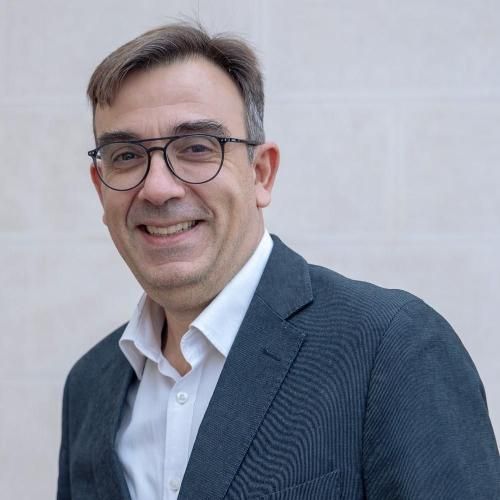
Ignacio Bravo Muñoz is a Professor at the Department of Electronics, Universidad de Alcalá (Spain), affiliated with the GEINTRA research group focusing on Electronic Engineering applications in Intelligent Spaces and Transport. He holds a PhD from Universidad de Alcalá (2007) with a thesis on FPGA-based object detection using computational vision and PCA techniques. His research spans indoor positioning systems (using LED/PSD sensors), sustainable energy frameworks for smart communities, FPGA-based hardware design , and remote laboratory platforms . Key contributions include real-time metrology for ESA's PLATO mission, cooperative demand response algorithms, and innovative pedagogical approaches integrating sustainability into digital electronics education. Recent work emphasizes edge computing for video surveillance , machine learning in human action recognition , and non-cooperative target identification using radar signatures. His interdisciplinary projects bridge electronics engineering with energy systems, biomedical applications, and educational technology. He actively collaborates with industry and academic institutions on EU-funded projects, contributing to advancements in aerospace instrumentation (PLATO FPA qualification), smart grid technologies, and STEM education innovation.
Jens Behley is a Lecturer (Privatdozent) at the Institute of Geodesy and Geoinformation, University of Bonn, where he actively teaches graduate courses in robotics and computer vision while leading cutting-edge research in 3D perception. His work bridges theoretical advances with real-world agricultural and automotive applications, focusing on robust algorithms for unstructured environments. Behley's research centers on 3D point cloud processing, semantic segmentation, and SLAM systems, with specialized expertise in agricultural robotics for crop phenotyping and autonomous vehicle navigation. He develops novel techniques for plant organ-level analysis, fruit shape completion, and radar-based localization, emphasizing solutions that function under real-field conditions with sensor noise and dynamic changes. His methodologies frequently integrate deep learning with geometric computer vision to achieve precision in challenging outdoor settings. Analysis of his recent publications reveals a dominant trend toward neural implicit representations (e.g., Gaussian Splatting) and diffusion models for 3D scene understanding, alongside continued innovation in LiDAR processing for agricultural robotics. Key thematic clusters include plant phenotyping (18% of recent work), neural mapping techniques (24%), and robust sensor fusion for autonomous systems (31%), with growing emphasis on generative models for data synthesis. Scientific Awards Outstanding Reviewer at IEEE Robotics and Automation Letters (RA-L), 2024 Outstanding Reviewer at European Conference on Computer Vision (ECCV), 2024 Best Agri-Robotics Paper Award for “BonnBeetClouds3D...” at IROS, 2024 Best Paper Award in Workshop “Agricultural Robotics for Sustainable Futures” at IROS, 2024 Best Paper Award Second Place in Workshop “AI and Robotics For Future Farming” at IROS, 2024 Outstanding Reviewer at CVPR, 2024 Finalist Best Paper Award in Service Robotics at ICRA, 2024 Best Paper for “KISS-ICP...” by RA-L, 2023 Honorable Mention for “High Precision Leaf Instance Segmentation...” by RA-L, 2023 Outstanding Reviewer at CVPR, 2023 Outstanding Reviewer at ECCV, 2022 Finalist IROS Best Paper Award on Agri-Robotics, 2022 Outstanding Reviewer at RA-L, 2022 Outstanding Reviewer at ICRA, 2022 Outstanding Reviewer at ICCV, 2021 Faculty Award for Geodesy from Agricultural Faculty of University of Bonn, 2021 Outstanding Reviewer at CVPR, 2021 Finalist Best System Paper at RSS, 2020 Diplomarbeitspreis der Bonner Informatik Gesellschaft e.V., 2009 Behley actively mentors students through advanced coursework including “Machine Learning for Robotics and Computer Vision” and “Techniques for Self-Driving Cars,” though specific advisees aren't documented. His research is supported by extensive collaborations with Prof. Cyrill Stachniss's robotics group at Bonn, with publications appearing in top venues like RA-L, ICRA, and CVPR. Current projects focus on neural scene representations for agricultural robotics and robust localization in changing environments, with datasets like BonnBeetClouds3D establishing new benchmarks in plant phenotyping.
Prof. Avishai Wool is a faculty member at Tel Aviv University, serving as Head of the Systems Department in the School of Electrical and Computer Engineering and Deputy-Director of the Interdisciplinary Cyber Research Center. He received his B.Sc. (1989), M.Sc. (1992), and Ph.D. (1997) in Mathematics/Computer Science from Tel Aviv University and the Weizmann Institute. His career includes co-founding cybersecurity companies AlgoSec and Lumeta Corp. Research Interests: His work focuses on computer security , network security , SCADA systems , side-channel cryptanalysis , and firewall technology . Recent publications explore GPU overclocking faults , vehicular radar spoofing , power grid protocol diversity , and password strength estimation . Recent Article Trends: His 2024-2025 research spans SCADA network modeling , DDoS detection via stream analysis , password security via data-driven recommendations , vehicular camera spoofing , and RSA vulnerabilities from GPU faults . Earlier work includes cache attacks on TrustZone , Wi-Fi direction finding , and encrypted IoT traffic classification . Labs & Teams: He leads the Systems Department and contributes to the Interdisciplinary Cyber Research Center, focusing on practical cybersecurity solutions for industrial systems, wireless networks, and embedded devices.
Jeffrey Walker is a Research Fellow in the School of Civil Engineering at the University of New South Wales . His work focuses on soil moisture retrieval using advanced remote sensing technologies, including synthetic aperture radar (SAR), L-band and P-band radiometers, and GNSS-R systems. He integrates machine learning algorithms for spatial downscaling, multi-scale modeling, and time-series analysis to improve hydrological monitoring in agricultural, urban, and infrastructure contexts. Key Research Areas : Soil moisture remote sensing, microwave radiometry, machine learning applications in environmental data, geospatial modeling, sustainable construction, and eco-friendly pavement design. Notable Contributions : Development of LSTM neural networks for pavement moisture prediction, novel downscaling methods using optical trapezoid models, and assimilation frameworks for land surface models. Recent Trends : Emphasis on UAV-based radiometry, multi-frequency sensor fusion, and addressing over-optimism in SAR soil moisture modeling. Applications : Smart rehabilitation of pavements, flood model calibration with crowd-sourced data, and crop yield estimation via satellite imagery fusion.
Ron Anafi, MD, PhD, serves as an Assistant Professor of Medicine with a primary focus on the intricate relationships between sleep, circadian rhythms, and peripheral physiology in disease contexts. His work bridges clinical medicine and computational biology, leveraging advanced methodologies from machine learning and systems biology to decode molecular rhythms influencing drug sensitivity, biomarkers, and physiological processes across multiple organ systems. Dr. Anafi's research program centers on circadian biology and sleep medicine, with particular emphasis on: Mechanistic links between circadian disruptions and neurodegenerative diseases (Alzheimer's pathology, brain aging) Chronotherapeutic applications in oncology (breast, pancreatic cancers) Genetic and actigraphic characterization of chronic fatigue syndrome Development of non-invasive sleep monitoring technologies Sex-specific circadian regulation in metabolism and neurogenesis Computational frameworks for rhythm detection in biological data His interdisciplinary approach integrates molecular, computational, and clinical perspectives to translate circadian science into practical therapeutic strategies. Analysis of his recent publication trends reveals a strong trajectory toward clinical translation of circadian principles. The work spans from fundamental molecular mechanisms in model organisms to population-level human studies, consistently employing multi-omics and machine learning techniques. Key thematic clusters include circadian disruption in neurodegeneration, cancer chronobiology for optimized drug timing, and innovative approaches to sleep disorder diagnostics and management. While specific details about academic advising and grant funding are not provided in available materials, Dr. Anafi's extensive publication record (over 50 publications as indicated by Google Scholar) suggests active mentorship of graduate students and postdoctoral researchers. His contributions to the National Heart, Lung, and Blood Institute Workshop on Circadian Mechanisms of Sudden Cardiac Death demonstrate recognition as a thought leader in the field. Dr. Anafi's research program likely operates within interdisciplinary centers focused on sleep medicine and circadian biology, collaborating with neuroscientists, oncologists, geneticists, and computational biologists. His recent work on contactless sleep technology and circadian biomarker discovery indicates strong translational potential for clinical applications in sleep medicine and personalized chronotherapy.
Abhinav Kumar is a Professor at Indian Institute of Technology Hyderabad , affiliated with the Department of Electrical Engineering, Department of Artificial Intelligence, and Department of Engineering Science. His research bridges Wireless Communication & Networking , Machine Learning , and Green Communication in emerging technologies like V2X , UAVs , and IoT . Education: PhD in Electrical Engineering from IIT Delhi (2013), Dual B.Tech/M.Tech from IIT Delhi (2009) Professional Roles: IEEE Senior Member, Editor of IEEE Transactions on Communications, Reviewer for multiple IEEE journals His research focuses on resource allocation in 5G networks, security in wireless systems, and machine learning applications for UAVs and mmWave radars. Recent projects include funded work on 6G integrated sensing, digital twin networks, and OTFS modems. Students under his guidance explore topics like QoE modeling , drone detection , and energy-efficient IoT protocols . Key publication trends combine machine learning with mmWave radar , VLC , and NOMA systems. He has co-authored over 25 journal articles since 2013, with a focus on 5G/6G , UAV communication , and edge computing . He leads the Wireless Communications and Networking (WiCoN) Laboratory , mentoring 25+ PhD and MTech students on projects ranging from smart triage systems to e-waste battery analysis . His lab has produced multiple IEEE Graduate Congress Best Thesis Award winners.
Dr. Jason Raphael Rambach is a Senior Researcher and Deputy Director at the German Research Center for Artificial Intelligence (DFKI) in Kaiserslautern, leading the team "Spatial Sensing and Machine Perception." His work focuses on Scene Perception and Reasoning using Machine Learning, with affiliations spanning Computer Vision, Augmented Reality, and Robotics. Education Diploma in Computer Engineering, University of Patras, Greece (2012) M.Sc. in Information and Communication Engineering, Technical University of Darmstadt, Germany (2014) PhD in Computer Science, University of Kaiserslautern (2020) Dr. Rambach's research bridges Object Pose Estimation , Semantic Scene Understanding , Hybrid AI , and Robotic Vision . His publications (50+ in top conferences) and projects like EU Horizon HumanTech highlight AI applications in construction and recycling. Recent articles analyze symmetry ambiguity resolution, spherical image segmentation, and radar-camera fusion. Scientific Awards CVPR 2025 Outstanding Reviewer Best Paper Award, ISMAR 2017 Five BOP Challenge Awards (ECCV 2022, ICCV 2023) Best Industrial Paper, ICPRAM 2024 Scan2BIM Third Place (CVPR2023, CVPR2024) As a coordinator of EU Horizon HumanTech and contributor to projects like COPPER, BERTHA, KIMBA, and TWIN4TRUCKS, Dr. Rambach integrates AI into industrial workflows. He reviews for CVPR, T-PAMI, ECCV, ICCV, and organizes workshops on AI in Construction Robotics.
Ludger Schmidt is a Professor of Human-Machine Systems Engineering at the University of Kassel, leading the Human-Machine Systems Technology department. He holds a doctorate in Engineering from RWTH Aachen University (2004) and has held leadership roles at the Fraunhofer/FGAN Research Institute and RWTH Aachen. His academic contributions span multiple institutions and projects. University of Kassel (2008–present): Professor in Mechanical Engineering Fraunhofer/FGAN (2005–2008): Head of Ergonomics and Human-Machine Systems RWTH Aachen (2000–2005): Chief Engineer and Research Group Leader His research focuses on Human-Machine Interaction , Assistive Systems , and Digital Transformation , with specific emphasis on: User modeling and cognitive engineering Augmented/Virtual Reality applications Usability and ergonomic design Smart public transport systems Technology acceptance and trust Adaptive interfaces Recent publications highlight trends in immersive training systems (VR/AR), public transport innovation , and robotic assistance . His work integrates human factors with industrial engineering, particularly in: Work 5.0 and Industry 4.0 Physiological parameter analysis Interactive 3D-360° media Smart city infrastructure Context-sensitive notifications Autonomous mobile robotics Scientific awards include: Best Paper Award (2020) Best Paper Candidate (2024) Outstanding Research Award (2017) He directs the Scientific Center for Information Technology Design and the Institute for Industrial Engineering and Process Management at the University of Kassel, leading projects like U-hoch-3 and RadAR+ (2014–2020). His lab focuses on human-centered technology design for industrial and mobility contexts.
Arslan Shafique is a Research Fellow at the University of Glasgow affiliated with the Autonomous Systems & Connectivity research group. His work focuses on developing secure communication frameworks for emerging technologies in healthcare, automotive, and industrial systems. His core research areas include: Cryptography Internet of Things (IoT) Wireless Communications Medical Imaging Security Machine Learning for Security Radar Signal Processing Analysis of his 2024-2025 publications reveals a strong emphasis on quantum-inspired and chaotic encryption techniques applied to medical telemedicine and automotive safety. His work consistently integrates machine learning to optimize security for resource-constrained IoT devices within 5G/6G networks, demonstrating practical solutions for real-world deployment challenges. No scientific awards were documented in the source material. Details regarding student supervision or research grants were not provided in the available information. He actively contributes to the Autonomous Systems & Connectivity team at the University of Glasgow, which specializes in advanced security solutions for next-generation autonomous communication systems.
John Kerekes is a Research Professor at the Chester F. Carlson Center for Imaging Science within the College of Science at Rochester Institute of Technology (RIT). His research focuses on advancing remote sensing technology through theoretical investigations, data analysis, and modeling of remote sensing systems. Dr. Kerekes approaches the end-to-end remote sensing process as a system with application performance as the metric, developing statistical parametric models to propagate information-bearing characteristics through the remote sensing process. Dr. Kerekes holds a BS, MS, and Ph.D. from Purdue University. His research interests span remote sensing, system modeling and analysis, pattern recognition, digital imaging, and image processing. He has applied his expertise to multispectral remote sensing systems for surface land cover classification, atmospheric temperature and water vapor profiling, surface particulate matter sensing, and sub-pixel object detection and identification. He has also investigated spectral imaging for medical applications. His recent publications demonstrate a strong focus on hyperspectral imaging, methane detection, air quality monitoring, and agricultural applications. The research shows an evolving trend toward integrating machine learning with traditional remote sensing techniques, particularly in environmental monitoring and target detection applications. His work increasingly addresses practical implementation challenges in satellite and airborne remote sensing systems. Dr. Kerekes is affiliated with the Digital Imaging and Remote Sensing Laboratory (DIRS) at RIT and has secured significant research funding, including a grant from the National Geospatial-Intelligence Agency for fundamental research on imaging systems. He mentors graduate students through thesis research (IMGS-790, IMGS-890) and independent study courses (IMGS-799), focusing on advanced topics in imaging science. His laboratory work includes the SpecTIR Hyperspectral Airborne Rochester Experiment (SHARE) data collection campaigns and research on polarimetric synthetic aperture radar systems. Dr. Kerekes also contributes to major community remote sensing experiments such as ROCX 2025 at RIT's Tait Preserve, which involves deploying satellites, planes, drones, and other sensing platforms for comprehensive data collection.
Dr. Grzegorz Nykiel serves as an Assistant Professor at the Department of Geodesy within the Faculty of Civil and Environmental Engineering at Gdańsk University of Technology. His academic work focuses on advanced geodetic techniques and atmospheric research with significant contributions to space physics and meteorological applications. Dr. Nykiel's research interests span multiple interconnected domains of geodetic science. His primary focus involves ionospheric studies using Global Navigation Satellite Systems (GNSS), with particular expertise in analyzing ionospheric responses during solar eclipses and developing innovative methods for ionospheric correction in positioning applications. He also investigates atmospheric phenomena including gravity waves, traveling ionospheric disturbances, and precipitation estimation techniques using both traditional and novel approaches such as commercial microwave links. His recent publications demonstrate expertise in applying advanced computational methods including deep learning to geodetic problems. Dr. Nykiel actively collaborates with international research teams across space physics and atmospheric science disciplines, contributing to high-impact journals in geodesy, space physics, and meteorology. Dr. Nykiel's work with GNSS technology extends to climate research applications, particularly in studying diurnal variability of atmospheric water vapor and precipitation patterns across tropical regions. His research bridges theoretical atmospheric science with practical geodetic applications, creating valuable connections between space weather phenomena and terrestrial measurement systems.
Mario Huemer is a Professor at the Institute of Signal Processing, Johannes Kepler University Linz (JKU), serving as Principal Investigator for 41 research projects including the Christian Doppler Pilot-Laboratory for Steel Industry Signal Processing and Machine Learning and the JKU LIT - SAL Intelligent Wireless Systems Lab. His expertise spans signal processing applications in wireless communications, radar systems, and machine learning. His primary research interests include: Signal Processing Wireless Communications Radar Systems Machine Learning Joint Communications and Sensing Calibration Techniques Automotive Systems 5G/6G Networks Recent publications reveal strong trends in deep learning for signal processing, robust 5G/6G waveform design, and advanced automotive radar techniques. His work consistently bridges theoretical innovation with industrial implementation, particularly in ADC calibration, I/Q imbalance correction, and joint sensing-communication systems. No scientific awards are listed in the provided information. Huemer has supervised 29 students and leads diverse research initiatives including industry collaborations (e.g., automotive radar systems) and publicly funded projects like the Christian Doppler Laboratory. Current projects focus on radar synchronization (2025-2028), steel industry signal processing (2025-2032), and intelligent wireless systems development (2024-2026). He directs the Intelligent Wireless Systems Lab (IWS Lab), a JKU LIT-SAL collaboration advancing interdisciplinary research in wireless communications, sensing, and machine learning with strong industry partnerships.
Shengrui Wang is a Full Professor in the Department of Computer Science at the University of Sherbrooke, specializing in data mining, pattern recognition, and machine learning with applications spanning bioinformatics, business intelligence, and image analysis. His academic credentials include: D.E.A. from Université Joseph Fourier (1986) Ph.D. in Sciences from Institut National Polytechnique de Grenoble (1989) Professor Wang develops statistical and structural approaches for clustering/classification of high-dimensional and complex data (sequences, trees, graphs), addressing challenges in similarity measures, cluster number determination, outlier identification, and graph comparison. His work integrates fuzzy logic, neural networks, and statistical analysis for symbolic processing like hypothetical reasoning. Applied research includes the CLUSS server for global protein sequence analysis, web community identification systems, business intelligence through socio-economic data mining, radar target detection (boats/oil spills), road extraction in satellite imagery, and intelligent environment activity recognition.
Paolo Gaudenzi is a Full Professor at Sapienza University of Rome, affiliated with the Department of Aeronautical and Space Engineering. His research spans aerospace engineering, smart structures, additive manufacturing, and satellite systems, with a focus on integrating advanced technologies like AI and cyber-physical systems into aerospace applications. His work emphasizes: Development of smart materials and piezoelectric energy harvesters for aerospace systems Optimization of additive manufacturing processes for satellite components Design of Earth observation constellations and space mission planning Application of AI in manufacturing automation and pandemic response systems Recent publications highlight trends in: Space-based solar power and lunar resource utilization Cyber-physical systems for industrial automation Advanced composites for cryogenic environments Geospatial AI for public health crises He leads initiatives in sustainable aerospace technologies and collaborates on interdisciplinary projects bridging engineering, data science, and environmental monitoring.
Gholamreza Alirezaei is a Senior Lecturer and Principal Research Scientist at RWTH Aachen University's Faculty of Electrical Engineering and Information Technology, where he holds a position at the Chair for Communications Engineering. He also regularly teaches courses at the Technical University of Munich (TUM). With extensive experience in both theoretical and practical problem-solving, Dr. Alirezaei specializes in Applied Mathematics, Communications Engineering, and Information Processing. Dr. Alirezaei's research spans multiple cutting-edge domains including Data Science, Machine Learning, and Artificial Intelligence; Molecular Communications, Bio-Inspired Systems, and Massive Sensor Systems; Information Theory and Signal Processing; and Detection, Estimation and Classification Theory. His work combines theoretical rigor with practical applications, particularly in extreme environments and sensor networks. His research has gained significant recognition, with numerous awards and publications in top-tier venues. His scientific contributions have been honored with prestigious awards including the Vodafone Young-Researcher Prize, ITG-Literature Prize, and Friedrich-Wilhelm-Prize. He has also received multiple best paper awards for his conference presentations on topics ranging from wireless power systems to sensor networks and communication theory. Dr. Alirezaei has secured substantial research funding through various projects with DFG, BMBF, and EU funding programs. His leadership extends to organizing international conferences and workshops, including the IEEE International Conference on Wireless for Space and Extreme Environments (WiSEE) and workshops on Massive Intelligent Sensor Systems (MISS).