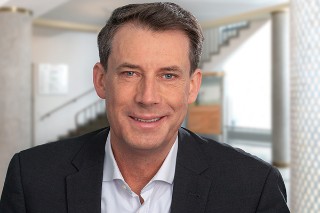
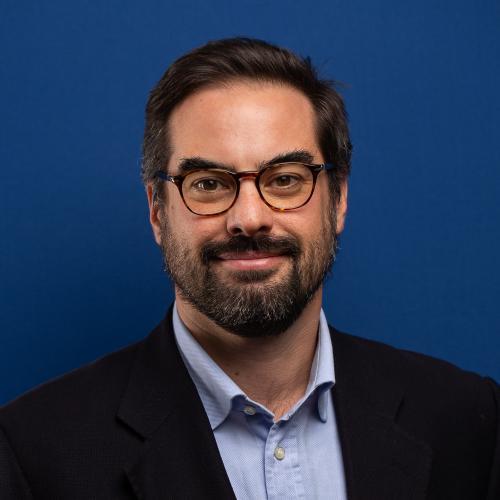
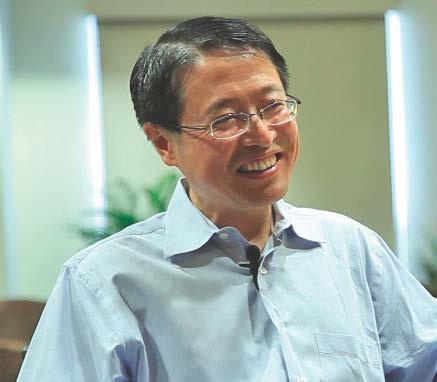
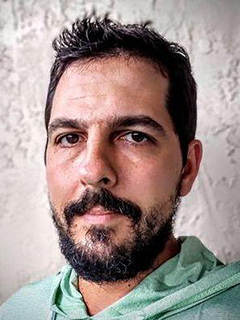
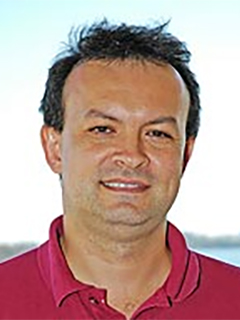
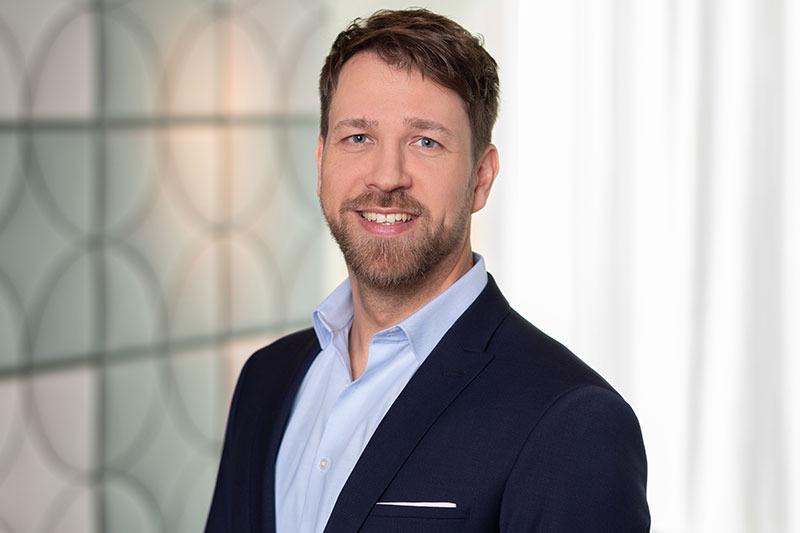
Ciaran Sanford is a Researcher in the Department of Mechanical Engineering at the University of Bath. His work focuses on synthetic aperture sonar (SAS), signal processing, and computational modeling, with applications in underwater acoustics and automatic target recognition.
Dr. Jiali Wang is an atmospheric scientist in the Environmental Science Division at Argonne National Laboratory, holding fellowships with the Northwestern-Argonne Institute of Science and Engineering (NAISE) at Northwestern University and the Center for Advanced Study of Environmental (CASE) at the University of Chicago. Since earning her Ph.D. in Atmospheric Science in 2012, she has established herself as a leading researcher in climate impact assessment and high-resolution modeling. Her educational background centers on her 2012 Ph.D. in Atmospheric Science, which provided the foundation for her expertise in climate dynamics and numerical modeling. Dr. Wang specializes in understanding climate and extreme climate variability and their impacts on water, energy, and infrastructure systems. Her research integrates high-resolution numerical modeling, advanced data analysis, and machine learning to address critical challenges in climate resilience. Key focus areas include regional climate modeling for extreme events, infrastructure vulnerability assessment, and renewable energy applications. Her methodological innovations bridge atmospheric science with practical engineering solutions for climate adaptation. Analysis of her 15 most recent publications reveals a strong trajectory in convection-permitting regional climate modeling, with increasing emphasis on coupled atmosphere-ocean-land systems and machine learning applications. Her work consistently targets high-impact areas including North Atlantic cyclones, Great Lakes regional climate, and infrastructure resilience, demonstrating a strategic alignment with national energy and security priorities. Dr. Wang's exceptional contributions have been recognized through numerous prestigious awards: Argonne Pacesetter Award (2019) HPC Innovation Excellence Award for Risk and Resiliency of Infrastructure Southeastern USA for AT&T (2019) R&D 100 Finalist for Climate Risk and Resilience Analysis technology (2019) Argonne Director’s Award for climate impacts analysis on AT&T infrastructure (2020) Consecutive Impact Argonne Awards (2021-2023) Delivering Impact Award for Commercialization Excellence (2024) As principal investigator and co-investigator, she has secured substantial funding from diverse sources including the Department of Energy (Office of Energy Efficiency and Renewable Energy, Biological and Environmental Research), Department of Defense, Department of Homeland Security, industrial partners (notably AT&T), and Argonne's Laboratory Directed Research and Development program. These projects consistently translate climate science into actionable risk assessment frameworks for critical infrastructure. Within Argonne's Environmental Science Division, Dr. Wang leads collaborative research initiatives that leverage the laboratory's advanced computing resources and national user facilities. Her work integrates closely with university partners through NAISE and CASE, creating a robust research ecosystem focused on solving complex climate-infrastructure challenges through interdisciplinary approaches.
Pengfei Xue is a Geophysical Scientist at the Environmental Science Division of Argonne National Laboratory, with a focus on numerical modeling for hydrodynamic, climate, and environmental challenges in the Great Lakes and coastal oceans. His work involves developing an integrated regional Earth system model (IRESM) that couples atmospheric, lake, ice, wave, sediment, land surface, and biological components. Education Ph.D. in Oceanography, University of Massachusetts Intercampus Marine Science Program Postdoctoral Research, Massachusetts Institute of Technology Research Focus Dr. Xue’s research emphasizes simulating and predicting regional Earth system responses to natural and anthropogenic disturbances, including climate variability, extreme events, coastal hazards, and biophysical processes. His approach integrates data assimilation and machine learning techniques within coupled ocean-atmosphere models, applied across diverse marine environments like the U.S. East Coast, Gulf of Maine, Changjiang Estuary, and the Maritime Continent. Collaborations He collaborates with interdisciplinary teams of scientists and experts to advance predictive understanding of coastal systems at broader scales through IRESMs.
Giulio Boccaletti is the Scientific Director of the CMCC Foundation , an Italian research institution focused on climate change. He holds a PhD in Atmospheric and Oceanic Sciences from Princeton University, earned as a NASA Earth Systems Science Fellow, and previously worked as a research scientist at the Massachusetts Institute of Technology (MIT) on ocean circulation and turbulence theory. Currently, he teaches a course on 'Strategy for Earth' at the Smith School of Enterprise and the Environment , Oxford University, and co-founded Chloris Geospatial , a venture-backed firm leveraging remote sensing and machine learning to assess natural assets. Trained as a physicist at the University of Bologna PhD in Atmospheric and Oceanic Sciences (Princeton, NASA Fellow) Research Scientist at MIT His research spans interdisciplinary areas including climate modeling, water resource security, sustainability strategy, and AI applications in environmental science. He has led global water programs for The Nature Conservancy and advised governments and corporations on natural resource strategy. His publications focus on computational methods in climate prediction and geospatial analytics for natural asset evaluation. Scientific Awards: Young Global Leader by World Economic Forum (2014) NASA Earth Systems Science Fellowship As an author, his book Water: A Biography (Pantheon Books, 2021) was recognized as one of The Economist 's Best Books of 2021. He contributes to Project Syndicate and Il Foglio, and is executive producer of a PBS/BBC Studios series on 'the future of nature.'
Prof. Dr.-Ing. Uwe Freiherr von Lukas is Professor of Maritime Graphics at the University of Rostock , Faculty of Computer Science and Electrical Engineering, and heads the Rostock site of the Fraunhofer Institute for Computer Graphics Research IGD . Since 2010 he has also been Honorary Professor for Virtual Product Development and is a member of the Interdisciplinary Faculty’s Department of Maritime Systems. Education: Diplom in Computer Science, TU Darmstadt (1994) Doctorate (Promotion), University of Rostock Research Focus: His research concentrates on three pillars: Machine Learning for automated image and video analysis with a strong emphasis on underwater imagery , interactive visualization and immersive analytics of large-scale maritime data , and technology-oriented networks for innovation transfer and regional development . These topics converge in applications such as digital twins for the Baltic Sea, VR-based maritime training, and AI-driven ecosystem monitoring. Scientific Output & Trends: Recent publications (2022-2025) reveal an intensified integration of deep learning and computer vision techniques to solve domain-specific challenges in marine and environmental sciences. Studies range from transformer-based seagrass segmentation and unsupervised clustering of ROV imagery to digital-twin frameworks for ocean research, reflecting a clear trend toward AI-supported, data-centric maritime analytics . Professional Service & Networks: Board member, Subsea Monitoring Network e.V. Speaker, BMBF Future Cluster “Ocean Technology Campus Rostock” Managing Director, competence network “OceanTechnologies@Fraunhofer” Member of advisory boards of Society for Maritime Technology, Maritime Future Advisory Board Mecklenburg-Vorpommern, and others Labs & Teams: At Fraunhofer IGD Rostock he leads the Maritime Graphics group, coordinating more than thirty collaborative R&D projects that bridge computer graphics, VR/AR, and maritime engineering. The group operates state-of-the-art VR laboratories, underwater vision testbeds, and high-performance visualization facilities serving both academic and industrial partners.
Joseph Marlow is a Postdoctoral Researcher at the Scottish Marine Institute (SAMS UHI) , focusing on benthic ecology and marine growth monitoring. He previously worked at Rothera Research Station (British Antarctic Survey) and earned his PhD studying bioerosion on Indonesian reefs. Current Research: Photogrammetry and AI for offshore structure ecology Past Work: Antarctic benthic seasonality and reef carbonate budgets Research Themes include developing AI-driven marine monitoring tools, Antarctic benthic adaptations, decommissioning policy analysis, and bioerosion dynamics in tropical reefs. His work aligns with UN SDGs for ocean sustainability and carbon management. Scientific Contributions span 17 research outputs (as of 2025), with recent articles on 3D modeling of marine biomass, creel fleet impacts in Scotland, and environmental targets for decommissioning. He also contributes datasets for open science.
Giuliano Vernengo is an Associate Professor in the Department of Naval, Electrical, Electronic and Telecommunications Engineering at the University of Genoa. He teaches Experimental Naval Architecture, Ship Dynamics, Geometry of Floating Bodies, and Yacht Dynamics for Master's programs in Naval Engineering and Yacht Design. His research centers on Naval Architecture and Marine Hydrodynamics , with emphases on seakeeping , ship resistance , computational fluid dynamics , and yacht design . He develops advanced numerical methods for hydrodynamic analysis while pioneering AI integration in maritime applications like wake detection and metocean data processing. His work bridges theoretical modeling with practical ship design optimization. Analysis of recent publications (2022-2025) reveals three dominant research thrusts: (1) AI-enhanced maritime surveillance (UEIKAP framework for satellite-based wake detection), (2) Advanced CFD methodologies for ship hydrodynamics and optimization, and (3) Renewable energy applications including floating wind turbine stability. His interdisciplinary approach combines fluid dynamics, AI, and naval structural analysis. Dr. Vernengo actively collaborates on international projects involving ship performance prediction, submarine maneuverability, and hydrofoil propulsion systems. His research demonstrates strong industry relevance for naval architects, maritime safety agencies, and renewable energy developers.
Ben Evans is a Researcher affiliated with the University of Cambridge and the British Antarctic Survey (BAS). His work focuses on improving understanding of coupled ice sheet–ocean–climate systems through data-driven approaches, particularly utilizing Earth observation and machine learning to monitor and predict iceberg dynamics in polar regions. His research spans the interface between ice sheets and oceans, examining how icebergs influence freshwater and nutrient inputs, ocean circulation, and global climate mechanisms. He develops predictive models to enhance climate impact assessments and mitigate maritime hazards. Ben integrates satellite data, in-situ measurements, and numerical simulations to study calving processes, iceberg movement, melt, and fragmentation. His projects aim to refine machine learning techniques, hybrid modeling, and multimodal datastreams for fully data-driven simulations of polar systems. His professional activities are linked to the Cambridge NERC Doctoral Landscape Awards (CREATES) and the C-CLEAR Doctoral Training Partnership, where he collaborates on environmental informatics and climate science initiatives.
Laura Cimoli is a physical oceanographer affiliated with the Department of Applied Mathematics and Theoretical Physics (DAMTP) at the University of Cambridge . Her research investigates the role of ocean circulation, particularly deep and abyssal water masses, in sequestering and redistributing heat and carbon globally. She works extensively with observational data, models, and machine learning techniques to address climate-related questions, while collaborating with ocean modellers and participating in international programs. Key Affiliations: Cambridge NERC Doctoral Landscape Awards (Training Partnerships), C-CLEAR DTP, GO-SHIP Research Focus: Mechanisms and timescales of oceanic heat/carbon sequestration, spanning small-scale turbulence to large-scale circulation variability. Methodologies: Global observations, data-driven analysis, machine learning applications in oceanography.
Ozlem Ozgun is a Professor in the Department of Electrical and Electronics Engineering at Hacettepe University, Ankara, Turkey. She serves as Vice Dean of the Faculty of Engineering (2021-present) and previously held leadership roles including Department Vice Chair (2017-2020) and Chair of the Electromagnetic Fields and Microwave Techniques Division (2021-2024). Her academic journey includes positions at TED University as Founding Department Chair (2012-2015) and at Middle East Technical University-Northern Cyprus Campus as Assistant Professor (2008-2012). Education: Ph.D (2007): Middle East Technical University, Dept. of Electrical and Electronics Engineering M.Sc (2001): Bilkent University, Dept. of Electrical and Electronics Engineering B.Sc (1998): Bilkent University, Dept. of Electrical and Electronics Engineering Professor Ozgun's research focuses on computational electromagnetics with emphasis on transformation electromagnetics, finite element methods, and radio wave propagation. Her work bridges theoretical electromagnetics with practical applications in radar systems, antenna design, and wireless communications. She has pioneered techniques using coordinate transformations to solve complex electromagnetic problems, developing innovative methods for modeling scattering phenomena, wave propagation, and metamaterial applications. Her research has significant implications for radar cross-section reduction, microwave imaging for medical applications, and 5G communication systems. Analysis of her recent publications reveals a consistent focus on advancing computational techniques in electromagnetics, particularly through transformation optics and domain decomposition methods. Her work shows increasing integration of machine learning approaches with traditional electromagnetic modeling, especially in radar cross-section analysis and inverse synthetic aperture radar techniques. There's also a strong emphasis on practical tools development, with multiple software packages released for public use including PETOOL, GO+UTD, and VectGUI. Scientific Awards: Hacetepe Science Award (2024) IEEE Antennas and Propagation Society Distinguished Lecturer (2025-2027) Top 2% of the 'career-long impact' category in the world's most influential scientists list (2023-2024) URSI elevation to senior membership (2020) IEEE elevation to senior membership (2013) Prof. Dr. Leopold B. Felsen Award for Excellence in Electromagnetics (2009) Professor Ozgun has supervised 15 graduate students to completion, with research spanning radar cross-section computation, electromagnetic scattering, and microwave imaging. She has secured multiple research grants including TÜBİTAK-TEYDEB and TÜBİTAK-ARDEB projects focused on high-frequency radar analysis and electromagnetic modeling. Her professional service includes significant editorial roles and leadership positions in URSI-Turkey where she served as President of the Steering Committee (2018-2023). She is actively involved in developing computational tools for electromagnetic education and research, with several MATLAB-based applications available for public use. Her research group maintains strong collaborations with international institutions including Penn State University, and she has established a productive research environment focused on advancing computational electromagnetics through innovation in numerical methods and practical applications.
Elie Bou-Zeid is a Professor of Civil and Environmental Engineering at Princeton University and serves as the Director of the Program in Environmental Engineering and Water Resources . He previously directed the Metropolis Initiative for urban technology until 2022. His research integrates theory, numerical simulations, and field observations to study atmospheric flows, heat/pollutant transport, and sustainability in cities . Bachelor's : American University of Beirut Master's : American University of Beirut and Johns Hopkins University PhD : Johns Hopkins University He leads the Thermofluids of Urban and Natural Environments (TUNE) Lab , focusing on urban meteorology, renewable energy integration, and climate resilience . His work addresses inequitable urban environmental conditions and develops technologies for sustainable cities , including the CityReader Project . Recent publications explore urban heat islands, blue infrastructure, machine learning for climate, and boundary layer dynamics . Awards include the 2024 STAC Award , Beyond Bauhaus Prototyping the Future Award , and Fondation Latsis Internationale Prize . Awards : STAC 2024, Beyond Bauhaus 2024, EPFL Latsis Prize 2022 Editorial Roles : Editor of Journal of the Atmospheric Sciences (2020–2025) He advises five Ph.D. students and collaborates with postdocs like Einara Zahn and Young Paul Yi . His lab investigates kirigami-inspired ventilation, agrivoltaic farms, and downscaling climatic variables using Bayesian deep learning .
Dr. Samuel Shen is a Distinguished Professor at the Department of Mathematics and Statistics , San Diego State University (SDSU) and a Visiting Research Mathematician at Scripps Institution of Oceanography, UCSD. He co-founded the SDSU Big Data Analytics (BDA) MS Program and currently serves as Co-Director of the Center for Climate and Sustainability Studies . Previously, he was McCalla Professor at the University of Alberta and President of CAIMS . B.Sc. in Engineering Mechanics (1982) from East China Engineering Institute M.A. (1985) and Ph.D. (1987) in Applied Mathematics from University of Wisconsin-Madison His research spans three major areas: Climate Informatics : Developed Spectral Optimal Averaging (SOA) and Ensemble Canonical Correlation Analysis (ECCA) for climate uncertainty quantification Data Science : Created US Climate Prediction Center's operational prediction tools and filed a US patent on spectral optimal gridding Nonlinear Wave Dynamics : Advanced theoretical understanding of stochastic differential equations for climate modeling Recent publications focus on 4D climate visualization , heat stress mitigation , AI democratization in climate science , and cloud-aerosol interactions . His work has secured major grants including: $2.7M NSF AI Institute grant (2023) $1.9M California Climate Action grant (2023) $2.1M NSF EaSM-3 grant (2014) Scientific accolades include: Arthur Beaumont Distinguished Service Award (CAIMS) US National Research Council Senior Fellowship Chinese Academy of Sciences Well-known Overseas Scholar He leads the SDSU Climate Informatics Lab (founded 2006) and has been featured in New York Times , NASA Top Story , and Nature Geoscience press releases.
Milan Curcic is an Assistant Professor in the Department of Ocean Sciences at the Rosenstiel School of Marine, Atmospheric, and Earth Science, University of Miami. His research focuses on air-sea interaction processes, wind-wave dynamics, and hurricane physics, with significant contributions to coastal meteorology and ocean modeling. 2025: Demonstrated whitecap foam's role in reducing air-sea momentum flux 2025: Quantified nearshore wind patterns using Gaussian Process Regression 2024: Developed open-source Clouddrift Python package for Lagrangian data 2023: Validated aerodynamic sheltering theory in extreme wind conditions His work examines coastal wind dynamics through field studies (CLASI project) and laboratory experiments (SUSTAIN facility), revealing critical insights into wind stress parameterization and wave growth mechanisms. Recent publications analyze: Cyclone-related ocean transport processes Wave-induced pressure fluctuations Coastal bathymetry measurement limitations
Tamay Ozgokmen is a Professor in the OCEAN SCIENCES Department at the Rosenstiel School of Marine, Atmospheric, and Earth Science , University of Miami. His research focuses on ocean dynamics, particularly submesoscale processes, vertical transport mechanisms, and machine learning applications in oceanography. Current research emphasizes eddy splitting events and their role in carbon subduction Develops Gaussian Process Regression techniques for velocity field reconstruction Applies neural networks to Lagrangian trajectory prediction in marine environments Uses SAR imagery classification with Vision Transformers for sea surface analysis Recent studies include drifter-based analyses of submesoscale eddies in the Balearic and Alboran Seas. His work on CALYPSO program data reveals coherent pathways for surface-to-interior ocean transport. Although no awards are listed in the available data, his projects are funded by the Office of Naval Research.
Andy Witt serves as Professor of Business Informatics with a focus on Digitalization at Hamburg School of Business Administration (HSBA) since September 2023. His academic foundation includes a Computer Engineering degree from Hamburg University of Technology (TU Hamburg) specializing in applied mathematics and physics, followed by doctoral research at the same institution from 2013-2017. His educational background includes: Computer Engineering studies at TU Hamburg with concentration in applied mathematics and applied physics Doctoral research (2013-2017) applying nonlinear Schrödinger equations to model extreme ocean wave phenomena Professor Witt's research spans Nonlinear Dynamics, Cost Engineering, Sustainable Production, Machine Learning, and Big Data Analysis. His work demonstrates a clear evolution from theoretical physics toward industrial applications, particularly in digitalizing production systems and integrating sustainability metrics into cost engineering frameworks. Current research emphasizes AI-driven optimization for sustainable industry practices. Analysis of his publication history reveals a strategic shift from fundamental wave dynamics research (2019-2022) toward applied industrial informatics (2021-2023), with growing emphasis on carbon footprint quantification, fusion energy economics, and sustainable manufacturing systems. This trajectory reflects his dual expertise in physical modeling and business-oriented digital solutions. Professor Witt founded and serves as managing director of CALC4XL GmbH, which develops the namesake software platform for integrated product cost and carbon footprint calculation. This venture directly supports his academic mission by providing industry-tested tools for sustainable product optimization, bridging theoretical research with practical business applications in industrial digitalization.