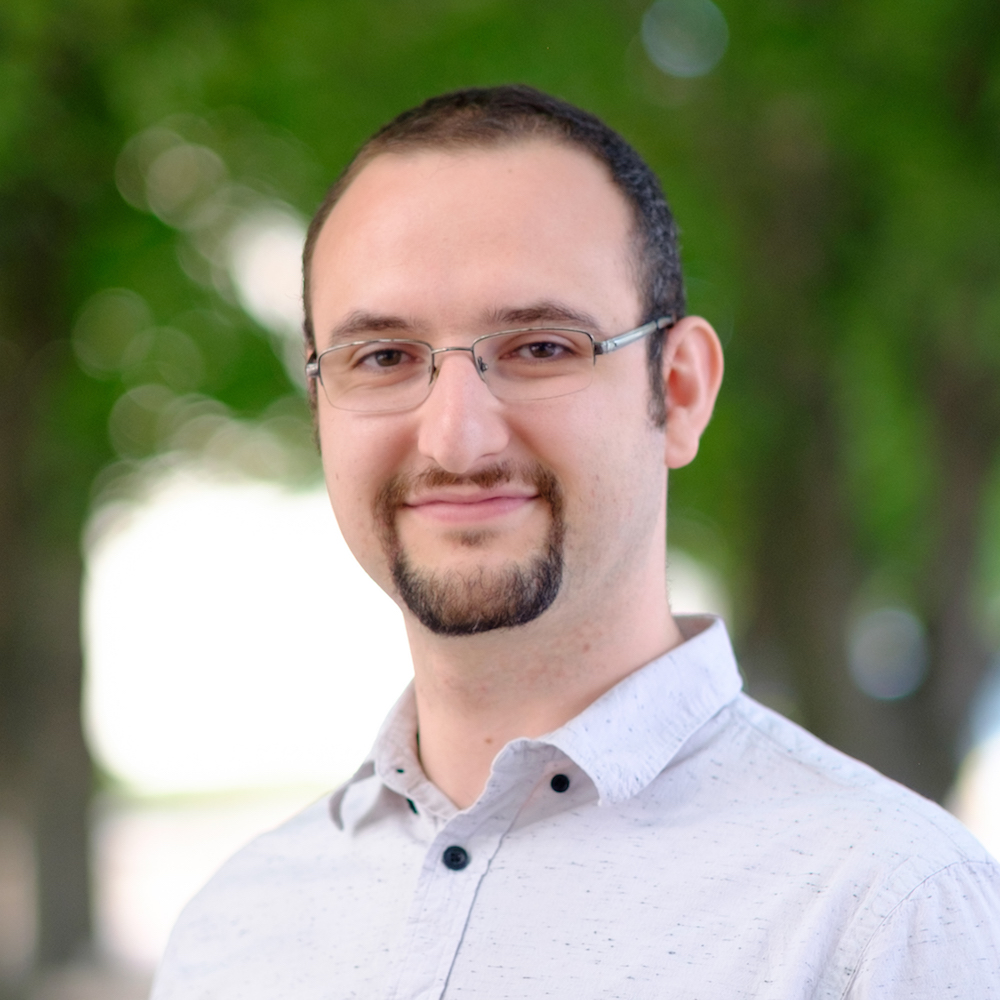
Onur Varol is an Assistant Professor at Sabanci University's Computer Science Department and leads the VIRAL Lab, which focuses on computational social science, network science, and machine learning. He has affiliations with the Center of Excellence for Data Analytics. His research spans social bot detection, misinformation analysis, and online behavior modeling.
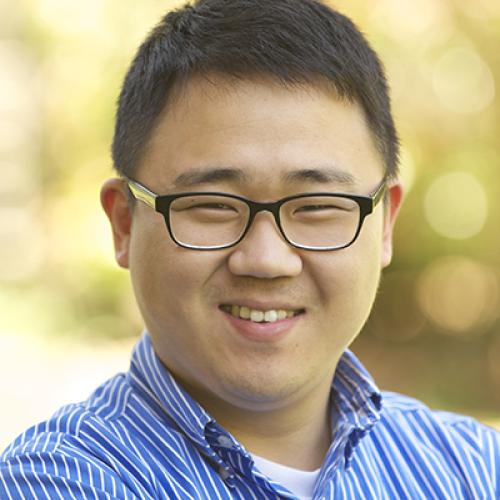
Dr. Heesung Woo is an Assistant Professor of Advanced Forestry at the College of Forestry, Oregon State University , specializing in robotics, sensor integration, and precision forestry. His work focuses on autonomous forestry machinery, AI-driven forest management, and sustainable practices. He advises two graduate students and collaborates internationally through research projects. Research Interests: Autonomous Forest Machinery Development Sensor Integration & ICT Solutions Precision Forestry via Remote Sensing/LiDAR/GIS Machine Learning for Forest Inventory Advanced Forestry Practices for Sustainability Publications emphasize innovative applications of technology in forestry, including LIDAR integration, harvester data analytics, and carbon offset project modeling. His work bridges engineering, environmental science, and policy. Dr. Woo leads the Advanced Forestry Lab at Oregon State, focusing on real-world deployment of cutting-edge technologies to address challenges in forest operations, sustainability, and resource optimization.
Lizi Liao is an Assistant Professor at the School of Computing and Information Systems , Singapore Management University (SMU) , specializing in Artificial Intelligence and Conversational AI . Her research bridges Machine Learning , Natural Language Processing , and Multimodal Systems , focusing on proactive dialogue systems, multimodal conversational search, and task-oriented interactions. Education : PhD in Computer Science (2019) from the National University of Singapore (NUS) , advised by Professor Tat-Seng Chua . Research Interests center on principles of human conversational understanding and machine implementation, particularly in proactive conversational agents , multimodal dialogue systems , and target-driven conversation planning . Key applications include emotional support systems , intelligent shopping assistants , and learning companions . Recent Publications (2024-2025) highlight her work on LLM-based proactive dialogue , multimodal emotion recognition , and dynamic graph modeling , often integrating NLP , Multimedia , and Knowledge Graphs . Collaborative projects with her CoAgent Lab team emphasize human-AI interaction and ethical response generation . Scientific Awards : Google South Asia & Southeast Asia Research Award 2023 Lee Kong Chian Fellow Teaching includes Visual Analytics for Business Intelligence (undergraduate) and Text Analytics and Application (graduate). She also serves as Associate Editor for TOIS and TOMM , and organizes tutorials at ACL , SIGIR , and WSDM .
Gabriel A. Silva is a Professor in the Shu Chien-Gene Lay Department of Bioengineering at UC San Diego’s Jacobs School of Engineering, with a joint appointment as Assistant Professor in Ophthalmology. His research bridges neuroscience, theoretical physics, and applied mathematics to explore how the brain encodes and processes information, leveraging quantum logic and algorithms for advanced neural modeling. University: University of California, San Diego School: Jacobs School of Engineering Department: Shu Chien-Gene Lay Department of Bioengineering Academic Rank: Professor Joint Appointment: Assistant Professor in Ophthalmology Research Interests: Silva focuses on neural computation at cellular and network scales, aiming to abstract biological mechanisms into mathematical models that emulate brain-like processing. His work has implications for understanding neurological disorders, developing neural engineering nanotechnologies, and advancing AI systems through emergent complexity. Recent Article Trends: His publications span quantum-enhanced neural modeling, EEG-based disease detection, nonlinear dynamics in brain networks, and interdisciplinary applications of graph theory. Emerging themes include the integration of category theory for network analysis and AI optimization via emergence-promoting schemes. Labs & Teams: Affiliated with UC San Diego’s Institute of Engineering in Medicine, Silva leads research at the intersection of bioengineering, ophthalmology, and neural systems, fostering collaborations with neuroscience and quantum computing domains.
Professor James Barlow is Co-Director of Imperial College London's Centre for Sectoral Economic Performance and holds a Professorship in the Department of Economics and Public Policy at the Imperial College Business School. He also serves as Academic Director for the MBA programme and Visiting Professor at Halmstad University (Sweden) and Honorary Professor at UCL Bartlett Real Estate Institute. His research focuses on structural challenges in healthcare innovation, housing, and construction sectors, with a particular emphasis on embedding innovations into healthcare systems. Barlow's education includes a background in geography and economics from the London School of Economics. He has held previous roles at the University of Westminster and Policy Studies Institute. His advisory work spans governments, healthcare organizations, and industries including medical technology and pharmaceuticals. He contributes to major initiatives like AGE-WELL (Canada) and the Industry Commons Foundation (Sweden). Research interests include healthcare innovation ecosystems, institutional logics, and frugal innovation. His recent book *Managing Innovation in Healthcare* synthesizes his work. He collaborates across disciplines, addressing challenges in telehealth, AI integration, and regulatory frameworks post-Brexit. Key affiliations include the Centre for Health Economics and Policy Innovation, Policy Innovation Research Unit (PIRU), and the NIHR Health Tech Research Centre. His work bridges academic research with practical policy and industry solutions, emphasizing scalable and sustainable business models.
Sanjeev Dewan is a Professor of Information Systems and Associate Dean of Masters Programs at the Paul Merage School of Business, University of California, Irvine. He also serves as Faculty Director of the Master of Science in Business Analytics program. Prior to joining UCI in 2001, he held faculty positions at the University of Washington and George Mason University. PhD, University of Rochester MS, University of Rochester Bachelor of Technology, Indian Institute of Technology, Delhi His research focuses on the economics of digital platforms , social and mobile analytics , and the valuation of technology investments . He investigates how information technology creates business value, impacts consumer behavior, and influences firm performance. His work spans electronic markets, Web 2.0 technologies, IT productivity, and the digital divide. The most recent publications reveal a strong emphasis on empirical analysis of digital platforms , including studies on gender bias in open source communities, quality certification in the sharing economy (e.g., Airbnb), personalized ranking in app stores, and mobile health applications. His research frequently uses large-scale datasets to examine behavioral patterns, market dynamics, and the economic implications of IT innovations. Faculty Service Award for 2023-24, UCI Paul Merage School of Business Best Paper Award, INFORMS 2019 e-Business Cluster Faculty Service Award for 2016-17, UCI Paul Merage School of Business Best Paper Award, INFORMS Conference on Information Systems and Technology (2009) INFORMS Service Award (2009) INFORMS Certificate of Appreciation (2008) Beta Gamma Sigma Honor Society (1991) University of Rochester Fellowship (1985–1990) Sanjeev Dewan has advised numerous PhD students who have secured faculty positions at leading institutions such as the University of Wisconsin-Madison, HKUST, Penn State, and the University of Hong Kong. His editorial service includes senior editor roles at Information Systems Research and associate editor at Management Science . He has also chaired tracks at ICIS and served as program co-chair for PACIS. There is no indication of external grant funding in the provided text, but his sustained publication record and leadership roles suggest significant research activity and institutional support. He is actively involved in academic leadership and research dissemination, contributing to major conferences and editorial boards. His work bridges theory and practice, particularly in digital platform ecosystems and analytics-driven decision-making.
Patrick Phelan is a Professor and Associate Dean of Graduate Programs at the Ira A. Fulton Schools of Engineering, Arizona State University (ASU). He holds additional roles as a Senior Global Futures Scientist and Editor-in-Chief of Frontiers in Energy Efficiency . His research focuses on sustainable energy systems, thermal management, and energy efficiency, with notable contributions to solar energy, thermal transport processes, and industrial cooling technologies. Phelan has extensive administrative experience, including managing the U.S. Department of Energy’s Emerging Technologies Program and the National Science Foundation’s Thermal Transport Processes Program. Education: Postdoctoral Fellow, Tokyo Institute of Technology (1990–1992) Ph.D., Mechanical Engineering, University of California, Berkeley (1990) M.S., Mechanical Engineering, Massachusetts Institute of Technology (1987) B.S., Mechanical Engineering, Tulane University (1985) Research Interests: Thermal engineering and heat transfer Sustainable energy systems and cooling Energy efficiency in buildings and industry Thermogalvanic systems and advanced materials Decarbonization and community benefit strategies Professional Associations: Fellow, American Society of Mechanical Engineers (ASME) Member, American Society of Heating, Refrigerating and Air-Conditioning Engineers (ASHRAE) Current Activities: Leading the ASU Energy Efficiency Center Contributing to the Energy for Rural Arizona initiative Advancing agricultural cold chain efficiency Teaching courses on heat transfer and energy systems (e.g., MAE 589, MAE 576)
Retsef Levi is the J. Spencer Standish (1945) Professor of Operations Management at the MIT Sloan School of Management, affiliated with the MIT Operations Research Center. He co-directs the Leaders for Global Operations (LGO) Program. His work focuses on data-driven decision models for healthcare systems, supply chain optimization, and risk management. Levi holds a PhD in Operations Research from Cornell University and has led industry collaborations with major hospitals and organizations like the FDA and Walmart Foundation. Education: PhD in Operations Research, Cornell University, 2005 Bachelor’s in Mathematics, Tel-Aviv University, 2001 Research Interests: Levi’s research addresses complex decision-making under uncertainty in healthcare, supply chains, and logistics. Key areas include food safety analytics, risk-based sampling, and predictive modeling for zoonotic diseases. He designs algorithms for inventory control, appointment scheduling, and healthcare resource allocation. Articles Overview: Recent work spans AI-driven epidemiological models, supply chain cybersecurity, and agricultural market interventions. His articles emphasize practical applications of operations research in healthcare and public health. Awards: NSF Career Grant INFORMS Optimization Prize (2008) Wagner Prize (2013) Harold W. Kuhn Award (2016) Advising & Grants: Advised 10 PhD students and 34 master’s students. Led multi-million-dollar projects like the Walmart Foundation initiative for China’s food safety. Active in hospital process optimization and FDA risk management contracts. Labs & Teams: Runs MIT’s Food Supply Chain Analytics and Sensing Initiative, collaborating with global partners on predictive risk tools and healthcare analytics.
Stephane Cotin is a Research Director at Inria and leader of the MIMESIS team, specializing in real-time physics-based medical simulations. His work focuses on surgical training, planning, and image-guided therapy, with over 200 scientific articles and the development of the open-source SOFA framework. He co-founded InSimo, Twinical, and EVE, and previously held roles at Harvard Medical School and Mitsubishi Electric Research Lab. Cotin’s research bridges imaging, robotics, and medicine to improve healthcare outcomes, emphasizing patient-specific biophysical modeling and real-time computation. His awards include the Academy of Sciences Award (2018) and Dirk Bartz Medical Prize (2015). He has advised numerous PhD students and led projects like MediTwin and PREMYOM, advancing digital twin technologies for precision medicine.
Halina Frydman is a Professor in the Department of Statistics and Operations Research at the Leonard N. Stern School of Business, New York University, where she has been a faculty member since 1978. Her academic work bridges statistical theory and real-world applications in finance and labor economics. Institution: New York University School: Leonard N. Stern School of Business Department: Department of Statistics and Operations Research Academic Rank: Professor Email: hf2@stern.nyu.edu Education: Ph.D. in Mathematical Statistics, Columbia University, 1978 M.A. in Mathematical Statistics, Columbia University, 1974 B.S. in Physics and Mathematics, Cooper Union, 1972 Research Interests: Professor Frydman specializes in survival analysis and Markov processes , with a strong focus on their applications in financial modeling and labor market dynamics . Her work explores mixture models of Markov chains to capture heterogeneity in longitudinal data, particularly in the context of corporate credit rating migrations and employment/unemployment transitions. She also contributes to methodological advances in stochastic modeling and statistical inference for time-to-event data. Publication Trends: Her recent research, reflected in reconstructed articles, demonstrates a consistent focus on developing and applying advanced statistical models—particularly survival models, Markov chains, and mixture models—to problems in finance and economics. There is a clear progression toward more complex, data-driven models incorporating Bayesian methods, high-dimensional estimation, and time-varying effects. Scientific Awards: No awards explicitly mentioned in the source text. Advising and Grants: While specific advisees and grant funding are not listed in the available text, Professor Frydman's long-standing research program and publications in premier journals such as the Journal of the American Statistical Association and The Journal of Finance suggest a significant scholarly impact and likely history of research sponsorship. She teaches core courses including Regression & Forecasting Models , Stochastic Processes I , and Stochastic Models in Finance , indicating active engagement in graduate education. Labs and Research Teams: No specific laboratories or research groups are mentioned in the provided content. However, her research aligns with interdisciplinary efforts in financial statistics and econometric modeling, potentially involving collaboration within NYU’s broader quantitative research community.
Helge Langseth is a Professor at the Department of Computer Technology and Informatics , within the Faculty of Information Technology and Electrical Engineering at the Norwegian University of Science and Technology (NTNU). His research focuses on Artificial Intelligence , Machine Learning , and Probabilistic Graphical Models , particularly Bayesian Networks and their applications in Decision Support Systems . Langseth's work addresses Explainable AI (XAI) , Reinforcement Learning , and Recommender Systems . He has contributed to Bayesian Optimization , Probabilistic Modeling , and Robotic Control in oceanic environments. His recent publications emphasize transparency , fairness , and scalability in AI systems, with applications spanning maritime trade, migraine diagnosis, and power grid management. He is affiliated with the Intelligent Systems Research Group at NTNU and actively mentors doctoral and master's students. Co-authored works with Yanzhe Bekkemoen , Sverre Herland , and Jørgen Hanssen reflect his role in advising the next generation of AI researchers.
Dr. Abdallah Chehade is an Associate Professor in the Department of Industrial and Manufacturing Systems Engineering at the University of Michigan-Dearborn , where he leads the Informatics, Reliability, and Data Analytics (IRDA) lab . He holds a Ph.D. in Industrial Engineering from the University of Wisconsin-Madison (2017), with minors in Computer Sciences and Statistics, alongside an M.S. in Mechanical Engineering and a B.E. in Mechanical Engineering from the American University of Beirut. Research Interests span safe and robust deep learning solutions , explainable AI , data fusion for degradation modeling , and Bayesian statistical modeling . His work integrates AI/ML with prognostics and Internet of Things (IoT) to address challenges in reliability analytics and industrial data science . Publications highlight advancements in deep autoencoders , LSTM networks , and hybrid models for warranty forecasting , with applications in battery cells , sheet metal stamping , and rail transportation . His grants from Ford, Honda, and the U.S. Army focus on smart manufacturing , AI for sensor modeling , and digital twins . Lab Members include Ph.D. students working on topics like physics-based AI , computer vision , and deep learning for prognosis . He serves on the INFORMS Quality, Statistics, and Reliability (QSR) Council and maintains affiliations with IEEE , INFORMS , and IISE .
James A. Evans is the Max Palevsky Professor of Sociology and Data Science at the University of Chicago, where he is a faculty member in the Department of Sociology within the Division of the Social Sciences. He is the director of Knowledge Lab and the Faculty Director of the Masters Program in Computational Social Science . He holds additional affiliations as an External Professor at the Santa Fe Institute , External Faculty at the Complexity Science Hub, Vienna , and Visiting Faculty Researcher at Google . Education: B.A. in Anthropology, Brigham Young University (1994) M.A. in Sociology, Stanford University (1999) Ph.D. in Sociology, Stanford University (2004) His research centers on the collective system of thinking and knowing , exploring how ideas emerge, spread, and evolve through social and technical systems. He investigates innovation, collective intelligence, and the science of science , using large-scale data modeling, machine learning, generative AI, and network analysis to study knowledge creation. His work spans domains including science, technology, law, and religion, with a focus on how AI is reshaping discovery processes. The most recent publications highlight trends in AI and scientific discovery , with a strong emphasis on innovation, knowledge systems, and human-machine intelligence . His research increasingly explores AI as a transformative agent in science , including the concept of 'alien intelligence' and the development of complementary AI to augment human capacity. Projects like the $20M NSF-funded APTO initiative aim to build language models that predict technological outcomes by analyzing historical data. Scientific Recognition and Funding: Research supported by the National Science Foundation (NSF) , National Institutes of Health (NIH) , Air Force Office of Scientific Research (AFOSR) , and philanthropic sources Work published in Nature, Science, PNAS , and leading social science journals Featured in The New York Times, The Economist, The Atlantic, Wired, NPR, BBC, Le Monde , and others James Evans advises on science policy and funding strategies, emphasizing the importance of diversity, interdisciplinary collaboration, and demographic balance in fostering innovation. He critiques current academic incentives and proposes alternative discovery regimes. He leads Knowledge Lab , a collaborative research environment that conducts seminars, grants, and employment opportunities in computational social science and AI.
Francesca Rodino is a Doctoral Assistant and Research Fellow at École Polytechnique Fédérale de Lausanne (EPFL), affiliated with the School of Engineering and the Electrical and Microengineering Institute (IEM). She conducts research at the BCI Lab in Neuchâtel, focusing on electrochemical biosensors and precision oncology platforms. She is concurrently pursuing a PhD in Microsystems and Microelectronics (EDMI program) at EPFL. Education: B.Sc. in Biomedical Engineering, Politecnico di Torino (2019) M.Sc. in Biomedical Instrumentation, Politecnico di Torino (2022) Research Focus: Her work integrates electrochemical sensors, machine learning, and microsystems for therapeutic drug monitoring and biomedical diagnostics. Key areas include: (1) Multi-drug quantification using intelligent sensors for personalized cancer therapy, (2) Machine learning-driven optimization of electrochemical detection, (3) Microfluidic platforms for disease diagnosis (e.g., malaria), and (4) Wearable systems for neural prosthetics. Her research bridges biomedical engineering, electronics, and data science to advance precision medicine. Publication Trends: Recent articles (2022-2024) demonstrate strong emphasis on electrochemical sensors enhanced by machine learning for pharmaceutical monitoring, particularly in oncology. Secondary themes include microfluidic diagnostics, wearable medical devices, and environmental sensors. Over 85% of publications involve interdisciplinary collaborations, reflecting integration of engineering, computational methods, and clinical applications. Teaching & Leadership: Teaching Assistant for Bio-nano-chip design (EE-517) and MEMS practicals II (MICRO-503) EPFL team coach for international SensUs biotechnology competition
Professor Vania Sena is a Chair in Entrepreneurship and Enterprise at the Management School of the University of Sheffield. She is a leading scholar in innovation, entrepreneurship, big data analytics, and institutional economics, with a strong focus on productivity, SMEs, and collaborative innovation systems. Her work spans finance, public policy, and technology management, often employing advanced econometric and network analysis methods. Her research interests include big data and performance , open and collaborative innovation , institutional impacts on innovation , entrepreneurship and SMEs , circular economy , and peer-to-peer lending . She has extensively studied the role of human capital, governance, and intellectual property in firm performance and innovation outcomes. The 15 most recent articles reflect a consistent trajectory in data-driven innovation research, with increasing emphasis on AI, machine learning, resilience in supply chains (notably hydrogen), and the circular economy. Her publications appear in top journals such as Technological Forecasting and Social Change , British Journal of Management , Journal of Banking & Finance , and Journal of Economic Literature , showcasing interdisciplinary reach and methodological rigor. Her scientific contributions include influential reviews on appropriability mechanisms and innovation, empirical studies on R&D spillovers, and frameworks for evaluating resilience in emerging energy systems. While specific awards are not listed, her publication record indicates significant recognition in the field. She has supervised doctoral researchers, including recent completions on immigrant entrepreneurship and institutional effects on business survival. Her work is supported by extensive collaborations across Europe and beyond. She is actively involved in PhD supervision and research leadership within the Entrepreneurship, Strategy and International Business group. Professor Sena has contributed to major research themes such as the impact of big data on SMEs, stakeholder diversity in innovation, and the role of policy in enabling circular economy business models. She is also engaged in policy-relevant research on financial inclusion, data intelligence in local government, and the effects of labor market restructuring.