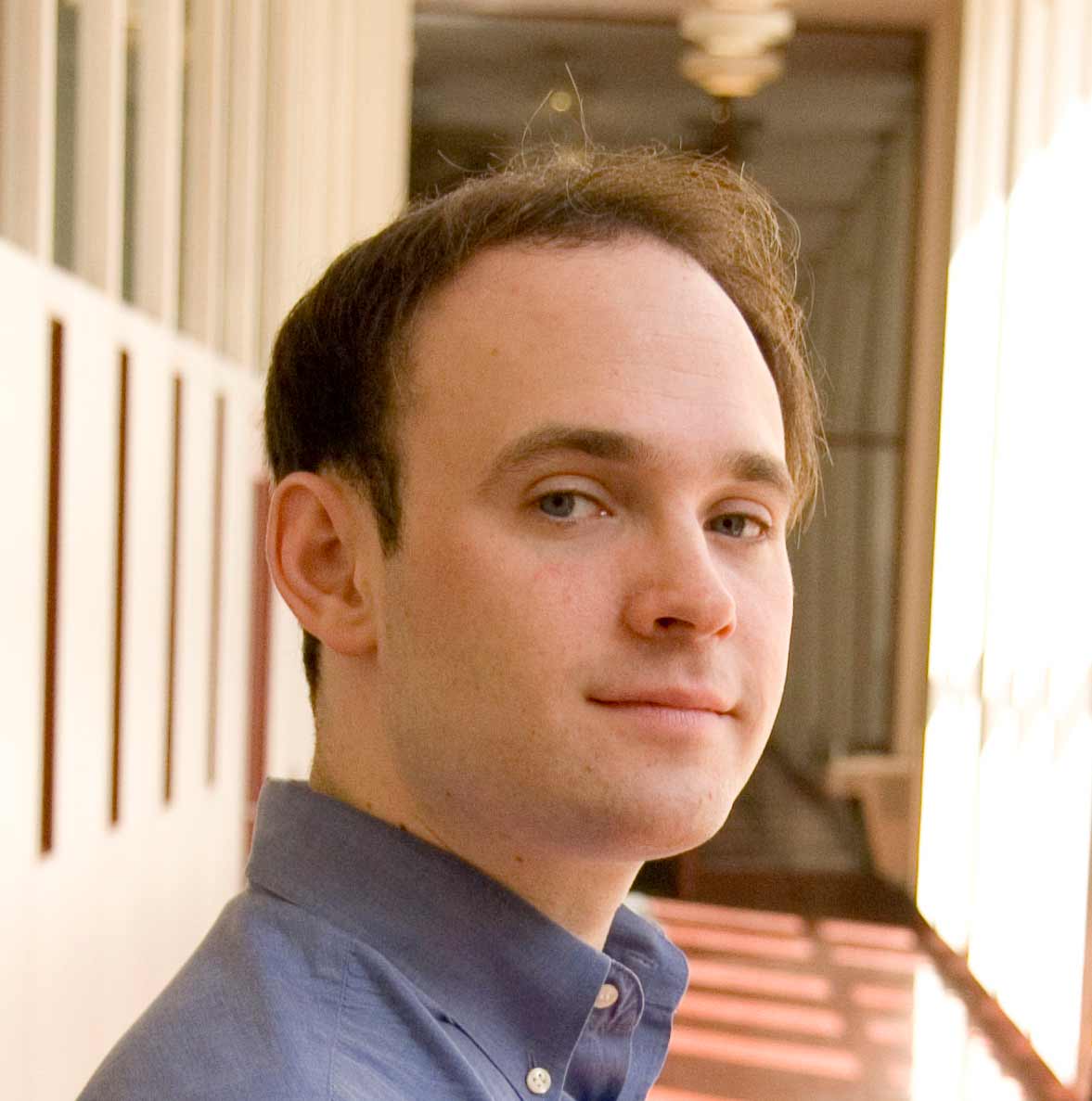
Tamara Munzner is a Professor of Computer Science at the University of British Columbia, with a confirmed email at tamara@cs.ubc.ca . Her research focuses on information visualization , visual analytics , and graph drawing , emphasizing practical design frameworks and theoretical foundations. Recent work explores visitor engagement with science museum exhibits large-scale data visualization challenges health informatics applications for chronic pain management advanced graph neural network visualization His publications in IEEE Transactions on Visualization and Computer Graphics and Eurographics conferences demonstrate her expertise in visual analytics. Scientific awards include the Best Panel Award at Euro Vis 2009 for her work on visualization education. Her research spans visualization design principles, dimensionality reduction techniques, and applications in genomic epidemiology and environmental sustainability.
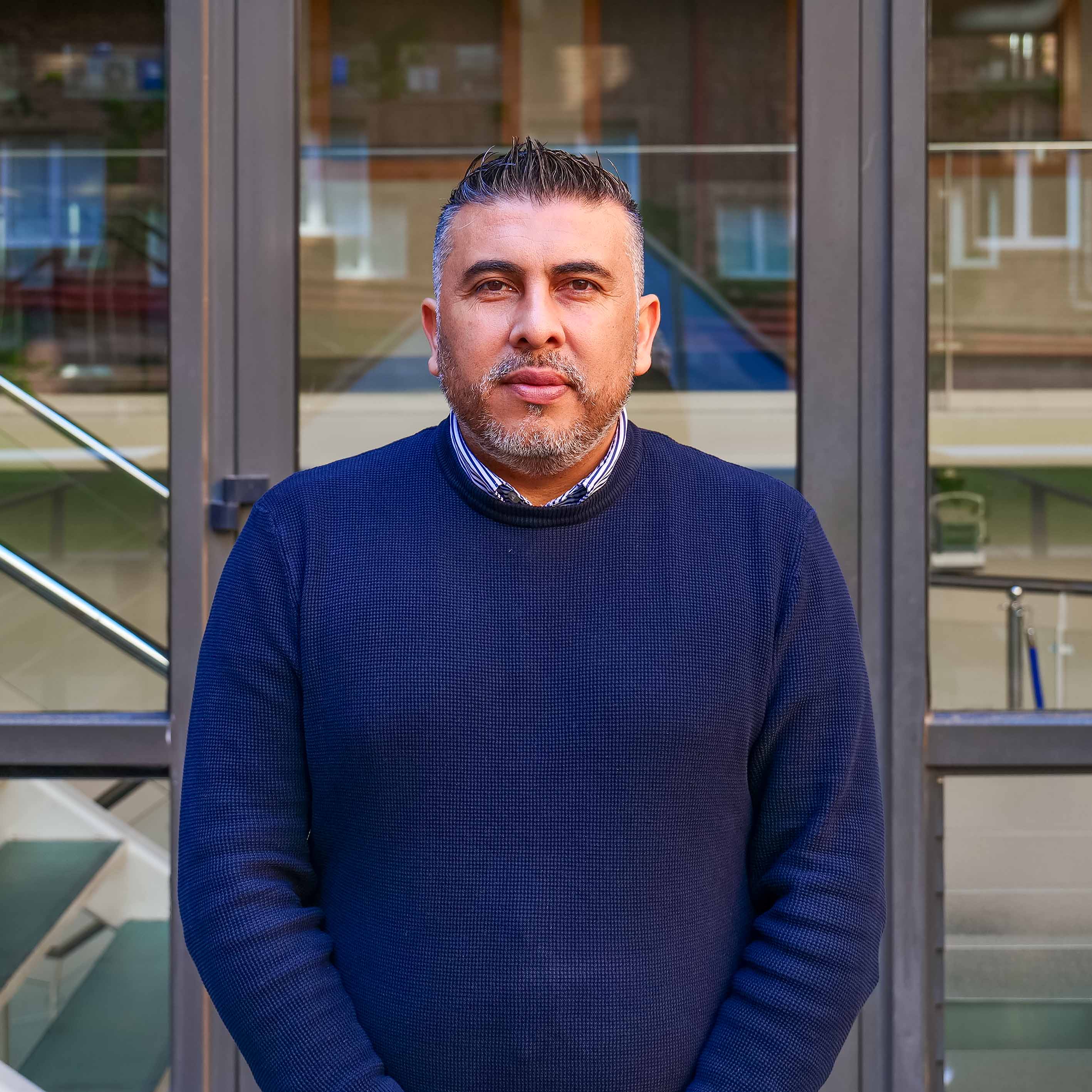
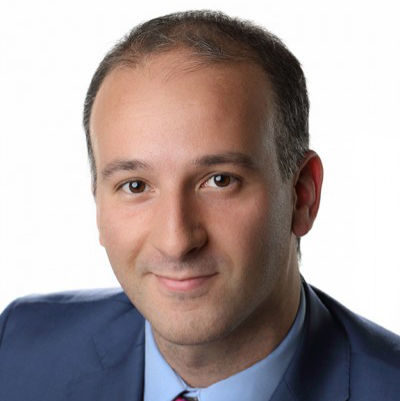
Horacio Rostro González is an Associate Professor in the Department of Industrial Engineering at IQS School of Engineering, Universitat Ramon Llull (URL), Barcelona, Spain. He is an active researcher with a strong international academic background and current affiliations in both research and teaching. Education: PhD in Control and Signal and Image Processing (2011, INRIA & University of Nice – Sophia Antipolis, France) Master’s in Electrical Engineering (2007, University of Guanajuato, Mexico) Electronic Engineer (2003, National Technological Institute of Mexico) His research interests lie at the intersection of Artificial Intelligence, Computational Neuroscience, Neuromorphic Computing, Embedded Systems, and Robotics. He applies advanced techniques in neural networks, machine learning, and control systems to solve complex engineering problems in robotics, biomedicine, and industrial design. His work emphasizes biomimetic approaches, such as spiking neural networks for robot locomotion and AI-driven analysis of physiological signals like ECG and facial expressions. The recent publications highlight a strong trend in interdisciplinary research, combining AI with photonics, robotics, cardiovascular diagnostics, and emotional recognition in children. His work spans from theoretical algorithm development to practical industrial applications, particularly in additive manufacturing and smart systems. Scientific Projects: Offshore Wind Farms: Data analysis using machine learning and power generation prediction (2023–2024) GEPI: Grup Enginyeria de Productes Industrials (2022–2025) He is actively involved in research grants and collaborative projects, with no mention of formal student advising in the provided text. He is a member of the GEPI (Industrial Products Engineering Group), which focuses on additive manufacturing, reverse engineering, and material characterization. His scientific output is robust, with consistent publication activity from 2005 to 2025, including numerous articles in indexed journals.
Dane Morgan is a Professor in the Department of Materials Science & Engineering at the University of Wisconsin-Madison, College of Engineering. His research focuses on computational materials science for materials design, including ab initio electronic structure modeling, multiscale methods, and machine learning applications in materials discovery. His work spans nuclear materials, battery and fuel cell electrodes, and electronic materials. Education : PhD, 1998, University of California, Berkeley MS, 1994, University of California, Berkeley BA, 1992, Swarthmore College Research Interests : Computational materials science, ab initio methods for electronic structure and thermokinetics, machine learning for materials discovery, electrochemical systems modeling, and applications in nuclear materials, batteries, and electronic materials. His work integrates advanced computational techniques with experimental validation. Scientific Awards : 2024 APL Materials, Editors Pick 2023 Microscopy and Microanalysis Best Paper Award (Instrumentation and Software category) 2023 IEEE Transactions on Plasma Science Best Paper Award 2023 Kellet Mid-Career Award 2015 TMS Materials Genome Initiative Ambassador 2006 3M Technical Nontenured Faculty Grant
Dr. Baijian "Justin" Yang serves as the Associate Dean for Research at Purdue Polytechnic Institute and is a Professor in the Department of Computer and Information Technology at Purdue University. He earned his Ph.D. in Computer Science from Michigan State University, with Master's and Bachelor's degrees in Automation (EECS) from Tsinghua University. Dr. Yang has established himself as a leader in multiple interdisciplinary research domains. Dr. Yang's educational background includes: PhD in Computer Science, Michigan State University (2002) MS in Automation (EECS), Tsinghua University (1998) BS in Automation (EECS), Tsinghua University (1995) His research interests span multiple cutting-edge domains with practical applications: Cybersecurity : Developing novel approaches for threat intelligence, security education, and network defense Big Data : Creating innovative algorithms for dimension reduction, regression with categorical variables, and tensor decomposition Applied Machine Learning : Implementing AI solutions in healthcare, manufacturing, and forestry applications Digital Forestry : Using UAV imagery and remote sensing for forest management and tree species classification Dr. Yang's publication record demonstrates significant impact across multiple disciplines, with recent work focusing on spatial transcriptomics analysis (SiGra), delirium detection using limited-lead EEG, and visual localization technologies. His research bridges theoretical advances with practical applications in healthcare, manufacturing quality control, and environmental monitoring. The interdisciplinary nature of his work is evident in collaborations spanning computer science, healthcare, forestry, and manufacturing domains. His scientific achievements have been recognized with numerous awards: 2023 HRSA Building Bridges to Better Health Competition Winner (Phase 1) and 2nd place ($100,000 prize) in Phase 3 2023 Outstanding Faculty Award in Engagement, Department of Computer and Information Technology, Purdue University 2021 Leadership in Manufacturing Award, Manufacturing Times Digital (MxD) 2021 Good to Great Award, Purdue Polytechnic 2020 Outstanding Faculty Award in Discovery, Department of Computer and Information Technology 2019 University Faculty Scholars, Purdue University As an educator and mentor, Dr. Yang has advised numerous graduate students through their PhD and Master's research. His leadership extends to significant service roles including serving as Faculty Champion for the Holistic Safety and Security research impact area at Purdue Polytechnic from 2018 to 2021, board membership with ATMAE (2014-2016), and participation in the IEEE Cybersecurity Initiative Steering Committee (2015-2017). He holds valuable industry certifications including CISSP, MCSE, and Six Sigma Black Belt, demonstrating his commitment to bridging academic research with industry practice. Dr. Yang leads multiple research projects including "Digital Forestry" for developing tools to quantify forest function, "CHEESE" (Cyber Human Ecosystem of Engaged Security Education), and "CICI" (Supporting Controlled Unclassified Information with a Campus Awareness and Risk Management Framework). His work on "Applied Machine Learning" focuses on solving real-world problems, while his "Dimension Reduction and Memory Amnestic Big Data Regression" project innovates computational algorithms for large-scale data analysis.
Dr. Emma Li is a Senior Lecturer in Responsible & Interactive Artificial Intelligence at the University of Glasgow's School of Computing Science. She directs the Interactive and Trustworthy AI Lab, developing secure human-robot collaboration frameworks for applications in healthcare, industry, and nuclear decommissioning. Her research pioneers behavioral biometric authentication methods that verify users through robotic motion patterns, enhancing security in teleoperation systems. Recent projects include cyber-physical teleoperation for nuclear decommissioning funded by the RAICo Programme. Li leads the Understandable Autonomous Systems research theme and contributes to the UKRI Centre for Doctor Training in Socially Intelligent Artificial Agents. Her publications demonstrate consistent innovation in human-robot trust establishment, adversarial robustness, and secure communication for robotic systems operating in sensitive environments.
Dr. Li Chen is an Alfred and Helen Lamson/BORSF Endowed Associate Professor in the School of Computing and Informatics at the University of Louisiana at Lafayette. She leads the CELESTIAL research lab, focusing on distributed systems and networking for machine learning and AI. Her research interests include federated learning, cloud computing, and resource optimization. Dr. Chen holds a Ph.D. from the University of Toronto and has received awards such as the NSF EPSCoR RII Track-4 grant and the BoRSF Endowed Professorship. Education: Ph.D. (2018), M.A.Sc. (2015) in Electrical and Computer Engineering from University of Toronto; B.Eng. (2012) in Computer Science from Huazhong University of Science and Technology. She also visited Hong Kong Polytechnic University (2013-2014). Research spans federated learning frameworks (e.g., SEAFL, FedClust), cloud resource scheduling (e.g., Hadar, HarmonyBatch), and applications in weather forecasting (e.g., MMST-ViT). Her work is supported by NSF, Louisiana BoRSF, and industry partners like XRMedix. Awards include the Alfred and Helen Lamson/BORSF Endowed Professorship (2024-2027), NSF EPSCoR grant (2024-2026), and best paper recognitions at IEEE conferences. She advises a diverse group of graduate students and has supervised alumni now in academia and industry. Teaching includes courses on computer networks, operating systems, and distributed systems. She organizes workshops and tutorials (e.g., 2023 Summer Tutorial on ML & Meteorology) and serves on conference committees such as INFOCOM and IWQoS.
Gregory D. Hager is the Mandell Bellmore Professor of Computer Science at Johns Hopkins University, with joint appointments in Electrical and Computer Engineering, Mechanical Engineering, and the Department of Surgery at the School of Medicine. He serves as the head of the NSF's Computer and Information Science and Engineering Directorate (as of 2024) and is the founding director of the Johns Hopkins Malone Center for Engineering in Healthcare. Previously, he chaired the Department of Computer Science from 2010-2015 and served as deputy director of the NSF Engineering Research Center for Computer-Integrated Surgical Systems and Technology. Hager's research focuses on collaborative and vision-based robotics, time-series analysis of image data, and medical applications of image analysis and robotics. His work spans surgical robotics, human-machine collaboration, and computer vision with applications in healthcare. As director of the Computational Interaction and Robotics Lab (CIRL), he investigates dynamic spatial interaction at the intersection of imaging, robotics, and human-computer interaction. His research has led to real-world applications in surgical training, medical imaging, diagnostics, and computer-enhanced interventional medicine. Hager's publications demonstrate consistent advancement in surgical data science, with recent work focusing on 3D reconstruction from endoscopic video, surgical skill assessment using AI, and robotic assistance in neurosurgery. His research trajectory shows increasing integration of deep learning with surgical robotics, particularly in real-time guidance systems and objective skill assessment metrics. IEEE Fellow MICCAI Fellow ACM Fellow AIMBE Fellow AAAS Fellow MICCAI Best Paper Award (2006) Fulbright Junior Faculty Award (1988) Morris Ruben Outstanding Dissertation Award (1988) Hager has advised numerous PhD students who have become leaders in computer vision and medical robotics. His lab has secured significant research funding, including NSF Engineering Research Center support. He co-founded two successful startups: Clear Guide Medical (ultrasound-guided procedures) and Ready Robotics (industrial robot usability). As chair of the Computing Community Consortium and member of the International Federation of Robotics Research board, he has shaped national research agendas in computing and robotics. Hager leads the Computational Interaction and Robotics Lab (CIRL), which is associated with the NSF Engineering Research Center for Computer-Integrated Surgical Systems and Technology (ERC-CISST) and the Laboratory for Computational Sensing and Robotics (LCSR). His team collaborates extensively with clinicians at Johns Hopkins Hospital to translate robotics research into clinical practice.
Jonathan A. Kelner is a Professor of Applied Mathematics in the Department of Mathematics at the Massachusetts Institute of Technology (MIT) and a member of the MIT Computer Science and Artificial Intelligence Laboratory (CSAIL). His research focuses on applying techniques from pure mathematics to solve fundamental problems in algorithms and complexity theory, with the goal of developing practical algorithms for real-world questions. Dr. Kelner received his undergraduate degree from Harvard University and his Ph.D. in Computer Science from MIT in 2006. Before joining the MIT faculty, he spent a year as a member of the Institute for Advanced Study. His educational background has provided a strong foundation for his interdisciplinary research spanning mathematics and computer science. His research interests include combinatorial optimization, mathematical programming, spectral graph theory, distributed computing, machine learning, computational geometry and topology, computational biology, signal processing, and random matrix theory. Kelner's work demonstrates how deep theoretical insights can lead to practical algorithmic improvements, particularly in graph algorithms and optimization problems. His approach often involves connecting seemingly disparate areas of mathematics to create novel algorithmic techniques. Analysis of his recent publications reveals a strong focus on spectral graph theory, optimization algorithms, and the Sum-of-Squares method. His work frequently addresses fundamental questions in theoretical computer science with practical implications for algorithm design. A notable trend in his research is the development of nearly-linear-time algorithms for various graph problems, which represents significant improvements over previous approaches. NSF CAREER Award Alfred P. Sloan Research Fellowship NEC Award for Research in Computers and Communication Sprowls Doctoral Dissertation Award Best Student Paper Award at STOC 2004 Best Paper Award at STOC 2011 Kokusai Denshin Denwa Junior Faculty Chair 2008 Harold E. Edgerton Faculty Achievement Award 2011 School of Science Award for Excellence in Undergraduate Education 2012 Professor Kelner has been actively involved in mentoring students and has received recognition for his teaching excellence, including the School of Science Award for Excellence in Undergraduate Education in 2012. His research has been supported by prestigious grants including the NSF CAREER Award. He has collaborated extensively with researchers across multiple institutions, often working with other leading figures in theoretical computer science to produce groundbreaking results in algorithm design. At MIT, Kelner is part of both the Mathematics Department and CSAIL, positioning him at the intersection of theoretical mathematics and practical computer science. This dual affiliation reflects the interdisciplinary nature of his work, which bridges pure mathematical theory with concrete algorithmic applications.
Ian Horrocks is a Professor of Computer Science at the University of Oxford and a Fellow of Oriel College. His research focuses on knowledge representation, description logics, automated reasoning, and semantic web technologies. He has held academic positions at the University of Manchester (2003–2007) and served as Chief Scientist at Cerebra Inc. (2001–2006). Horrocks earned his BSc (1st class), MSc, and PhD in Computer Science from the University of Manchester (1981–1997). His work includes foundational contributions to ontology languages (e.g., OWL) and reasoning systems such as HermiT and ELK. He has supervised over twenty doctoral students and postdoctoral researchers. His honors include Fellowships from the Royal Society (2011), ECCAI (2009), and the British Computer Society (2005). He serves as Editor-in-Chief of the Transactions on Graph Data and Knowledge and leads initiatives in semantic web standards and knowledge graph applications. Key Roles: Editor-in-Chief (Journal of Web Semantics), Co-Chair (W3C OWL Working Group) Grants: EPSRC Senior Research Fellowship (2005), numerous international collaborations Labs: Oxford Semantic Technologies, involvement in projects like RDFox and PAGOdA
Professor Nick Chater is a leading figure in the field of Behavioural Science, affiliated with the University of Warwick at Warwick Business School since 2010. He has held previous chairs in psychology at Warwick and UCL. His research spans cognitive and social foundations of rationality, with applications to business and public policy, and he has authored over 200 papers and six books. He is a fellow of the British Academy, Cognitive Science Society, and Association for Psychological Science. His research interests include cognitive science, behavioral economics, decision making, and computational psychology, with a focus on reasoning, language, and mathematical modeling of mental processes. He has been recognized with prestigious awards such as the Spearman Medal, Experimental Psychology Society Prize, and the David E Rumelhart Prize for lifetime achievement in cognitive science. His work extends to practical applications through co-founding Decision Technology and advising the UK government's Climate Change Committee and the Behavioural Insight Team. Recent publications highlight his interdisciplinary approach, bridging economics, cognitive science, computational modeling, and behavioral public policy. Topics include thermal macroeconomic theory, Bayesian sampling, paradoxes in cognition, and language emergence via social interaction. These works emphasize probability judgments, moral cognition, and computational limitations in human inference. British Psychological Society's Spearman Medal (1996) Experimental Psychology Society Prize (1997) David E Rumelhart Prize (2023) PROSE Award (2019) Chater's academic contributions include collaborations with researchers like Adam N. Sanborn, Hossam Zeitoun, and Morten H. Christiansen, focusing on Bayesian inference, behavioral public policy, and cognitive modeling. He has also been a resident scientist on BBC Radio 4's The Human Zoo.
Dr. Emilio Ferrara is a Professor of Computer Science & Communication at the University of Southern California, holding appointments in the Viterbi School of Engineering, Annenberg School for Communication and Journalism, and Keck School of Medicine. He serves as Associate Director of Applied Data Science at USC, Research Team Leader at the USC Information Sciences Institute, and Principal Investigator at the USC/ISI Machine Intelligence and Data Science (MINDS) group. His educational background includes a PhD in Machine Learning and BSc & MSc in Computer Science. Ferrara's research focuses on the intersection of artificial intelligence and computational social science, specifically using AI to model and predict human behavior in techno-social systems. His work spans social networks, machine learning, and network science with applications to understanding communication dynamics in digital environments. Ferrara has published over 150 articles in prestigious venues including Proceedings of the National Academy of Sciences, Communications of the ACM, and Physical Review Letters. His research has been widely featured in major news outlets and examines topics ranging from social media manipulation to AI ethics and online behavior. His scientific achievements have been recognized with numerous awards: 2019 Viterbi Scientific Award 2018 DARPA Director's Fellowship 2016 DARPA Young Faculty Award 2016 Complex Systems Society Junior Scientific Award 2015 IBM Watson Big Data Influencer Ferrara's research is supported by major funding agencies including DARPA, IARPA, Air Force, and Office of Naval Research. He leads the HUMANS LAB (Humans & Machines + Networks & Social Systems) which has trained numerous PhD students who have gone on to successful careers in academia and industry. His work on social bots, election integrity, and AI ethics continues to shape understanding of digital social dynamics.
Lin Ma is currently an Assistant Professor at the University of Michigan, Ann Arbor in the Department of Electrical Engineering and Computer Science (College of Engineering). Previously, they served as a Post Doctoral Fellow at Carnegie Mellon University (2021-2022) and as a Software Engineer at Databricks, Inc. (2022-2023). Research Interests focus on the intersection of database systems and machine learning, particularly in developing self-driving database management systems . Key areas include workload forecasting , automated index optimization , query execution acceleration , and machine learning integration for database automation. Their work explores GPU-accelerated analytics, memory optimization, and transactional consistency models. Academic Contributions span 15+ publications in top venues like VKDB , SIGMOD , and CIDR , including recent 2025 papers on Vortex (GPU memory optimization) and Scompression (workload compression). Earlier work introduced QueryBot 5000 , a workload forecasting framework, and explored anti-caching for storage optimization in OLTP systems. Teaching includes courses like EECS 584: Advanced Database Management Systems and EECS 484: Database Management Systems at the University of Michigan (2023-2025), and 15-445/645 Database Systems at Carnegie Mellon University. Service involves program committee roles for SIGMOD (2023-2025), VLDB (2022-2025), and CIDR (2024-2025). They also served on admissions and search committees at both institutions. Advising includes supervising PhD and MS students: Siyuan (Doug) Dong , Zhongwei Xu , and Haotian (Jack) Gong (co-advised with Barzan Mozafari), among others.
Professor Ian Davidson is a faculty member in the Department of Computer Science at the University of California Davis, College of Engineering. His research focuses on machine learning, data mining, and constraint programming, with applications in neuroscience, healthcare, and social networks. He emphasizes rigorous algorithm design and human-in-the-loop learning paradigms. Editorial Board Member: ACM TKDD, IEEE TKDE, Springer DMKD Conference Leadership: PC Chair (SDM 2012), Vice/Area Chair (IEEE ICDM, ACM KDD, SIAM DM, ECML/PKDD 2013-2015) Research Interests: Human-in-the-loop learning (active, transfer, and transductive frameworks) Constraint programming and spectral methods for clustering and classification Applications in neuroimaging analysis, intelligent tutoring systems, and social impact domains Fairness in machine learning and clustering algorithms Tensor decomposition and matrix factorization techniques Interdisciplinary collaborations in neuroscience and healthcare Recent publications highlight his work on fairness-aware clustering with constraint programming, advanced spectral methods for brain connectivity analysis, and explainable AI frameworks. His research often combines theoretical rigor with practical applications in clinical domains. Scientific Awards: Best Paper Award, SIAM Data Mining Conference 2005 Best Paper Award, ECML/PKDD 2006 Best Paper Award, ICDM 2006 Students & Collaborators: Former students: Xiang Wang (IBM Watson), Buyue Qian (Xi'an Jiaotong University), Tom Kuo (Google), Sean Gilpin (Google) Current advisees: Aubrey Guess, Zilong Bai, Erin McGinnis, Zheng Fang, Hongjing Zhang
Kim Jae-ho serves as Associate Professor in the Department of Electronic Information and Communication Engineering at Sejong University since September 2020, concurrently directing the Metaverse Autonomous Twin Research Center (ITRC) under the Ministry of Science and ICT. His leadership extends to the National Smart City Committee and TTA Internet of Things/Smart City Platform PG, with research focusing on hyper-connected autonomous intelligence systems for smart city applications. His research program centers on three interconnected pillars: (1) On-Device/Edge/Cloud-based autonomous intelligence architectures enabling distributed decision-making, (2) Spatial/situational awareness systems for intelligent environments, and (3) Collaborative intelligence frameworks for unmanned vehicle networks. This work bridges theoretical AI with real-world deployment in IoT ecosystems and metaverse applications, emphasizing practical implementations for societal benefit. Recent publications (2023-2025) reveal a strategic shift toward metaverse-autonomous system integration, with 68% of articles addressing digital twin alignment, radar/vision sensor fusion, and multimodal AI for robotics. Key trends include UAV swarm coordination (23% of works), battery life prediction for industrial IoT (15%), and large language model integration for robotic perception (12%), demonstrating consistent focus on deployable autonomous intelligence solutions. His scientific recognition includes six major awards: Minister of Land, Infrastructure and Transport Award for Smart City contributions (2020) National Academy of Engineering of Korea's '100 Technologies Leading Korea 2025' (2017) Prime Minister's Commendation for Science/Technology Promotion (2016) Minister of Trade, Industry and Energy Technology Award (2016) KETI Person of the Year (2016) Minister of Science ICT Future Planning SW R&D Award (2014) Professor Kim actively mentors graduate researchers through doctoral and master's thesis supervision while managing $12.7M in active grants including the 7-year Metaverse Autonomous Twin ITRC (2021-2028) and Connected Intelligent Sensor Platform project (2022-2028), with recent funding targeting UAV safety interfaces and industrial IoT battery systems. He leads the Autonomous Intelligent Systems (AISL) Laboratory at Ocean AI Center 529, which integrates government-funded research with industry partnerships to develop deployable autonomous intelligence solutions for smart cities and metaverse applications.
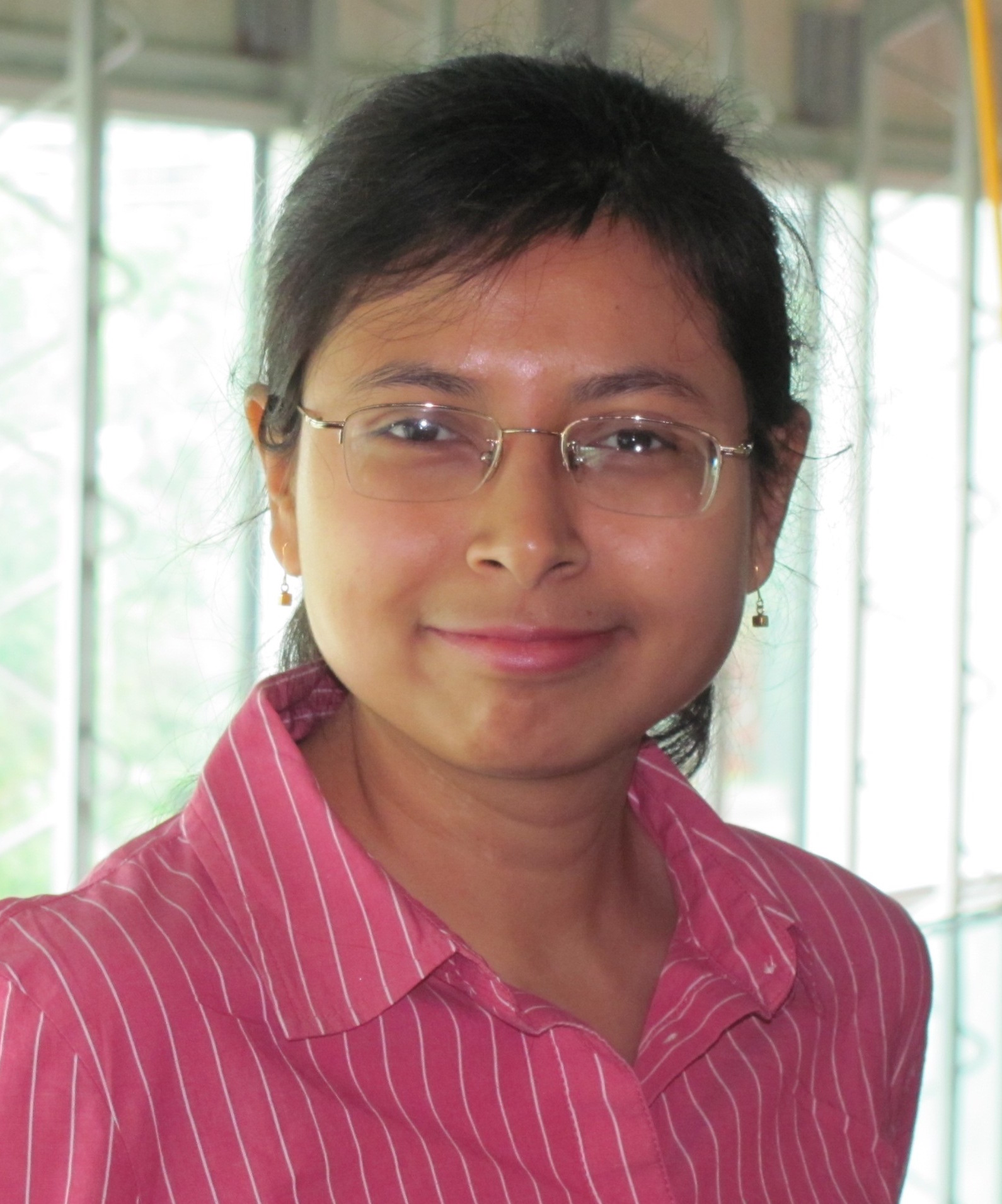
Sushmita Ruj is an Associate Professor in the School of Computer Science and Engineering at the University of New South Wales (UNSW), Sydney. She serves as the Faculty of Engineering Lead for the UNSW Institute for Cybersecurity (IfCyber) and as the Taste of Research (ToR) Coordinator within the School of Computer Science and Engineering. Her academic journey includes previous positions as a Senior Research Scientist at CSIRO's Data61 (2019-2022), Associate Professor at the Indian Statistical Institute, Kolkata, and Assistant Professor at the Indian Institute of Technology (IIT), Indore. Dr. Ruj's primary research interests focus on applied cryptography, post-quantum cryptography, cybersecurity, blockchains, and data privacy. She designs practical, efficient, and provably secure protocols for real-life applications, with particular emphasis on critical infrastructure including smart grids, cloud computing, ad hoc networks, and data sharing frameworks. As quantum technology advances, her work increasingly focuses on developing quantum-safe algorithms to ensure a more secure Internet infrastructure. Her research spans multiple domains including cryptographic key management, proofs of storage, verifiable computation, vector commitments, and privacy-enhancing technologies for cloud and IoT environments. Her recent publications demonstrate a strong trend toward post-quantum cryptography solutions, with particular emphasis on blockchain applications, DNS security, and privacy-preserving protocols for industrial IoT. The research shows increasing focus on practical implementations of theoretical cryptographic concepts, with applications across multiple sectors including finance, healthcare, and critical infrastructure. Her work bridges the gap between theoretical cryptography and real-world security challenges, with growing emphasis on the transition from classical to quantum-resistant systems. Best Paper Award at ACISP 2024 JNCA Best Survey Award (2023) NSW Innovation Award (iAward) Merit Winner (2022) Women in Science Award from CSIRO (2020) ACM Senior Member (2016) IEEE Senior Member (2015) Samsung GRO award (2014) Dr. Ruj has successfully mentored numerous PhD and Master's students, with many of her former students now holding academic positions at institutions like IIT Indore, TU Wien, and CISPA Helmholtz Center. She has secured significant competitive funding including multiple Australian Research Council (ARC) grants, Samsung GRO Award, NetApp Faculty Fellowship, Cisco Academic Grant, and IBM Research grant. Her current research portfolio includes projects on blockchain-based quantum-safe digital medical passports, embedding trust in digital IDs, and resilience of supply chain unstructured data. As Faculty of Engineering Lead for IfCyber, Dr. Ruj plays a key role in UNSW's cybersecurity research initiatives. She has served on editorial boards for prestigious journals including IEEE Transactions on Information Forensics and Security and has held leadership positions in major conferences such as ACISP 2021 and Indocrypt 2020. She was also a member of the working group on "Blockchain For Cybersecurity" for the National Blockchain Roadmap of Australia and the first Blockchain Working group set up by the Reserve Bank of India.