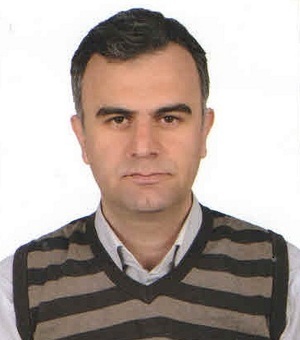
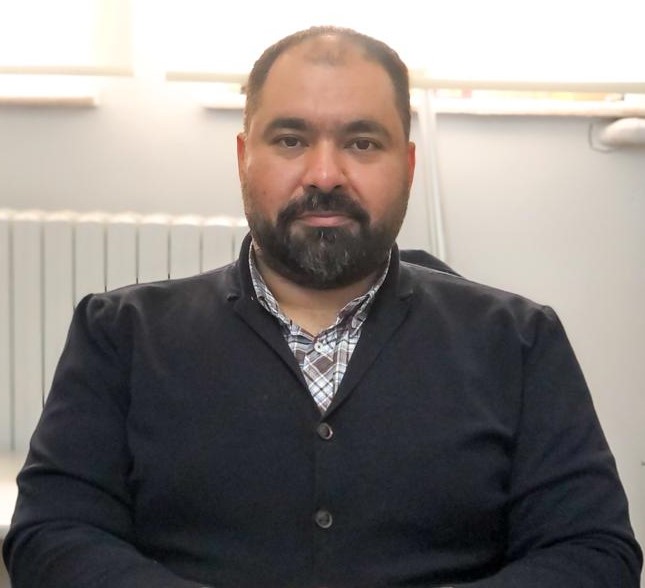
Prof. Dr. K. Nevzat Tarhan is a leading psychiatrist and neuroscience researcher affiliated with Uskudar University. With over four decades of academic experience, he has pioneered interdisciplinary studies integrating EEG, deep learning, and pharmacogenetics in psychiatric diagnosis and treatment. His work spans clinical neuroscience, brain stimulation techniques, and digital mental health innovations. Academic Leadership: Professor at Uskudar University Key Contributions: Developer of multiple psychometric scales (Uskudar Immaturity Scale, Self-Consciousness Scale, etc.) Research interests focus on neuromodulation , EEG-based diagnostics , depression subtypes , and digital behavioral patterns . His recent studies employ artificial intelligence to differentiate treatment-resistant depression with 98% accuracy, and explore social media's psychological impact through novel scale development. Publications (2025-2018) reveal a trajectory from traditional psychiatric biomarkers (hormonal responses, enzymatic pathways) to AI-driven neurodiagnostics (deep learning, hybrid neural networks). Key subfields include brain connectivity analysis , neuroimaging , machine learning in mental health , pharmacogenetic testing , digital addiction , and spiritual neuroscience .
Uğur Murat Leloğlu is a Professor in the Department of Electrical and Electronics Engineering. His research spans remote sensing, image processing, and computer vision, with a focus on hyperspectral imagery analysis and forensic imaging applications. He has collaborated extensively with international researchers across multiple disciplines.
Dr. Lecturer Yasin ÖZTÜRK serves at Süleyman Demirel University's Faculty of Communication , specifically within the Department of Visual Communication Design . Holding the academic title of Lecturer, his work bridges mechanical engineering principles with creative visual communication practices. Educational Background: BSc in Mechanical Engineering (2009) MSc in Mechanical Engineering (2015) PhD in Mechanical Engineering (2022) Research Focus: Specializing in Camera Stabilization Systems and Documentary Film Production , Dr. Öztürk integrates technical engineering solutions with cinematic storytelling. His recent work explores AI applications in virtual production workflows, reflecting his interdisciplinary approach. Publication Trends: Over the past decade, his academic output has concentrated on mechanical stabilization systems (2014-2017) and AI-driven virtual production technologies (2024). These works demonstrate a clear trajectory from technical engineering foundations to modern digital media applications. Teaching Portfolio: Camera and Lighting Techniques in Cinema and Television Production Management in Television Advanced Photography Techniques Postproduction I Digital Photography Video Shooting Applications Editing Applications
Rowanda D. Ahmed is an Assistant Professor in the Department of Computer Engineering at Uskudar University, Istanbul, Turkey, and serves as the Data Science Ambassador for Stanford University in Turkey supporting Women in Data Science (WiDS) initiatives. Her academic credentials include: Bachelor of Science in Computer Engineering from Islamic University, Gaza, Palestine (2011) Master of Science in Computer Engineering from Islamic University, Gaza, Palestine (2011) Doctor of Philosophy in Computer Science from Izmir Institute of Technology, Izmir, Turkey (2019) Dr. Ahmed's research spans Artificial Intelligence, Machine Learning, and Data Mining with specialized expertise in Deep Learning and Natural Language Processing. Her work focuses on developing advanced computational models for text analysis and decision support systems, culminating in a published book and peer-reviewed publications. Her recent publication examines hybrid text summarization techniques that bridge extractive and abstractive approaches to improve cross-domain applicability, reflecting her commitment to advancing NLP methodologies through integrative frameworks. Through her WiDS Ambassador role, she actively promotes gender diversity in data science via mentorship programs and community engagement across Turkey.
Muhammet Ali Gündesli is an Associate Professor at Gaziantep University's Nurdagi Vocational School, Department of Park and Garden Plants. With extensive expertise in horticulture, particularly focusing on fruit tree cultivation, he has made significant contributions to the fields of pistachio, fig, and walnut production. His academic journey began with a Bachelor's degree in Horticulture from Kahramanmaras Sutcu Imam University, followed by a Master's degree and ultimately a Doctorate in the same field from Çukurova University. Dr. Gündesli's educational background includes: Doctorate (2010-2017): Çukurova University, Institute of Natural and Applied Sciences, Department of Horticulture Master's Degree (2002-2005): Kahramanmaras Sutcu Imam University, Institute of Natural and Applied Sciences, Department of Horticulture Bachelor's Degree (1998-2002): Kahramanmaras Sutcu Imam University, Faculty of Agriculture, Department of Horticulture His research primarily focuses on horticultural science, with special emphasis on fruit tree physiology, particularly addressing alternate bearing mechanisms in pistachio and other fruit trees. Dr. Gündesli has extensively studied Mediterranean fruit crops including fig, pistachio, olive, and walnut, examining their biochemical composition, adaptation to environmental factors, and cultivation techniques. His work bridges the gap between plant physiology and practical agricultural applications, with significant contributions to understanding how climate change affects fruit production systems. Analysis of his recent publications reveals a strong trend toward understanding the biochemical and physiological mechanisms underlying fruit quality and production patterns. His research spans from molecular-level investigations of plant hormones related to alternate bearing to broader studies of crop adaptation to climate change. The interdisciplinary nature of his work combines traditional horticultural practices with modern analytical techniques, including machine learning applications for predictive modeling in plant science. Dr. Gündesli has received recognition for his contributions to agricultural science, including a Public Thank You Certificate from the Ministry of Food, Agriculture and Livestock in 2020. His research has been supported through various national projects focusing on fruit tree selection breeding and adaptation to environmental challenges. As an academic advisor, Dr. Gündesli has supervised at least one Master's thesis on almond genotypes. His teaching responsibilities include courses in viticulture, subtropical fruit cultivation, nursery and landscape plant cultivation techniques, and medicinal and aromatic plant cultivation. He has been actively involved in numerous national research projects related to fruit tree selection breeding, particularly focusing on fig, mulberry, pistachio, and walnut. Dr. Gündesli maintains active research collaborations with colleagues across Turkey and internationally. His work on Mediterranean fruit crops has positioned him as a significant contributor to understanding how traditional agricultural systems can adapt to changing environmental conditions while maintaining productivity and quality.
Atakan Ekiz is an Assistant Professor in the Department of Molecular Biology at Izmir Institute of Technology, Turkey, and holds the UNESCO Chair in Biotechnology and Innovation (2023-present). His research focuses on cancer progression and immune evasion mechanisms, with a parallel emphasis on developing high-throughput data analysis tools like the CIPR-Shiny and CIPR-Package R applications. PhD in Molecular Biology/Oncological Sciences (University of Utah, 2018) MS in Clinical Investigation (University of Utah, 2018) BS in Molecular Biology and Genetics (Izmir Institute of Technology, 2011) His work spans immunology , oncology , and bioinformatics , with recent publications examining ARF6 trafficking, microRNA regulation, and microbiota influences on cancer immunotherapy. Articles highlight checkpoint blockade , T-cell senescence , and noncoding RNA functions in melanoma and colon cancer. Scientific awards include the 2025 Science Academy Young Investigator Award, 2024 EMBO Installation Grantee, 2023 Turkish Immunology Association Isil Berat Barlan Award, and multiple grants (Fulbright, HHMI). He teaches courses in immunology , computational biology , and bioinformatics .
Ramazan ALGIN is a full-time Lecturer at Istanbul 29 Mayıs University, Department of Computer Engineering. He earned his PhD in Computer Engineering (English) from Marmara University in 2024, following two master's degrees in Computer Engineering (Marmara University, 2016; Florida International University, 2018) and his bachelor's degree from Marmara University in 2013. Education BSc: Marmara University, Computer Engineering (2013) MSc: Marmara University, Computer Engineering (2016) MSc: Florida International University, Computer Engineering (2018) PhD: Marmara University, Computer Engineering (2024) His research focuses on heuristic and meta-heuristic methods, particularly in solving combinatorial optimization problems through artificial intelligence and machine learning techniques.
Assoc. Prof. Dr. Hatıra GÜNERHAN is an Associate Professor at Kafkas University's Dede Korkut Faculty of Education, Department of Mathematics and Science Education. She has held this position since 2021, previously working as a Doctoral Lecturer from 2017. Her academic career spans teaching various mathematics courses including Analysis, General Mathematics, and Computer Technologies across undergraduate and graduate programs. With over 80 publications and a strong research profile in applied mathematics, she contributes significantly to both education and mathematical research in Turkey. Dr. GÜNERHAN earned her PhD in Applied Mathematics at Atatürk University, Institute of Science, Turkey (2010-2013) following a Master's Degree from Islamic Azad University - Tabriz, Iran (2008-2010). Her primary research focus lies in Applied Mathematics , particularly Fractional Calculus and Differential Equations . She has made significant theoretical contributions to variable-order fractional differential equations and boundary value problems. Her work extends to practical applications in epidemiological modeling, including fractional-order models for smoking dynamics, COVID-19 transmission, and other disease modeling. She has also ventured into interdisciplinary research in medical imaging, machine learning, and mathematical education. Dr. GÜNERHAN's publication record demonstrates a consistent research trajectory with 81 publications including 68 articles, 12 conference papers, and 1 book chapter. Her most recent work shows an expansion into machine learning applications and interdisciplinary modeling approaches. With 1421 citations and an h-index of 19 on Google Scholar, her research has substantial academic impact. Dr. GÜNERHAN has supervised multiple master's theses including research on primary mathematics teacher candidates' views and nonlinear fractional disease models. She collaborates extensively with 146 researchers globally, reflecting successful research partnerships across disciplines. Her editorial work includes serving as guest editor for 'Special Topics in Differential Equations with Applications' (2022) and reviewing for numerous international journals. Though specific laboratory affiliations aren't detailed, Dr. GÜNERHAN's extensive collaboration network spans institutions worldwide, with research teams focusing on mathematical modeling applications across epidemiology, physics, finance, and medical imaging domains.
FİRDEVS AŞANTOĞROL serves as an Assistant Professor and Head of the Department of Oral Diagnosis and Radiology at Gaziantep University Faculty of Dentistry, Turkey. Her academic journey includes a Dentistry degree from İnönü University (2010-2014) and Medical Specialization in Oral, Dental and Maxillofacial Radiology from Erciyes University (2017-2020). She previously worked as a Dentist (2014-2017) and Specialist Dentist in Oral Radiology (2021) at the Ministry of Health before joining Gaziantep University as a Doctor Lecturer (2021-2022). Her educational background is detailed as follows: Medical Specialization in Oral, Dental and Maxillofacial Radiology, Erciyes University Faculty of Dentistry (2017-2020) Dentistry Degree, İnönü University Faculty of Dentistry (2010-2014) Dr. Aşantoğrol's research centers on advanced dental imaging techniques with emphasis on fractal analysis for bone quality assessment, ultrasound elastography for muscle and salivary gland evaluation, and artificial intelligence applications in radiology. Her work bridges systemic diseases (Gaucher disease, acromegaly, diabetes) with maxillofacial manifestations, while investigating anatomical variations in sinonasal regions and their clinical implications. She has pioneered reference values for masticatory muscles using shear wave elastography and developed AI-driven segmentation methods for anatomical structures. Analysis of her recent publications reveals a clear trajectory toward AI-integrated dental diagnostics , with 40% of her 2022-2025 work focusing on machine learning for image segmentation and risk prediction. Her research demonstrates consistent methodology using cone beam CT , ultrasound , and fractal analysis across diverse clinical contexts from pediatric populations to systemic disease management. Scientific Awards: No awards are documented in the available records. Dr. Aşantoğrol has supervised four dental specialization theses on deep learning salivary gland segmentation, smoking effects on mandibular bone, ultrasound assessment of diabetic salivary glands, and masticatory muscle reference values. She actively contributes to academic community through conference organization including Gaziantep University's 1st International Dentistry Congress (2024) and serves on the Oral Diagnosis and Maxillofacial Radiology Association's Ultrasonography Course committee. She maintains active membership in the European Academy of DentoMaxilloFacial Radiology (since 2022) and the Association of Oral Diagnosis and Maxillofacial Radiology (since 2019), regularly presenting at international forums including the European Congress of DentoMaxilloFacial Radiology where she has presented 12 conference papers since 2021.
Dr. Serkan Bulut is an Associate Professor at Çukurova University's Faculty of Communication, Department of Journalism. He earned his PhD in Journalism from Istanbul University (2018) and completed a postdoctoral fellowship at Vrije Universiteit Brussel (2021). His career includes Research Assistant roles at Istanbul University (2013-2018) and international academic collaborations with institutions like University of Wroclaw (Poland) and University of Bucharest (photography). 2017 TRT Documentary Awards Coordination Award 2021 TÜBİTAK 2219 Postdoctoral Fellowship recipient Research interests focus on digital media's transformational impact through AI, SEO, and generative technologies. Key themes include algorithmic journalism, misinformation dynamics, and ethical challenges in digital ecosystems. His work examines social media's role in public discourse, labor rights in media, and platform-specific content adaptation. 15 most recent publications (2020-2023) reveal growing emphasis on AI ethics (2020-2021), misinformation combating (2021), and cross-platform media analysis (2020-2022). Recurring keywords: Digital Journalism , Algorithmic Transparency , Media Ethics , SEO , Social Media Dynamics . Scientific Contributions Authored SEO in Digital News Media monograph Critical editor of Old News New Media and Key Concepts in Journalism Studies translations CLIC research group member at Vrije Universiteit Brussel Contact: Profile Page | Office: +90 322 338 6777 ext.321 | Location: Faculty of Communication, Çukurova University, Adana
Kudret Akpinar is an Assistant Professor at Akdeniz University’s Technical Sciences Vocational School, Department of Property Protection and Safety. Previously, he served as a Lecturer in the same university’s Technical Sciences Vocational School, Makine Bilimleri, and as a Research Assistant in the Faculty of Science, Department of Chemistry. His academic career spans 2009 to the present. Doctorate: 2001–2008, Akdeniz University, Institute of Science, Chemistry. Postgraduate: 1997–2000, Akdeniz University, Institute of Science, Chemistry. Undergraduate: 1993–1997, Karadeniz Technical University, Faculty of Science, Chemistry. His research focuses on Analytical Chemistry , Chemical Engineering , and Fire Risk Assessment . Key areas include Chromatographic Analysis , Thermodynamics , and Machine Learning Applications for fire safety. He has contributed to studies on Maillard Reactions , HMF Formation , and Wildland-Urban Interface Fire Risks . Recent publications highlight interdisciplinary work bridging Chemistry and Environmental Science . Articles in Fire journal (2021–2023) analyze fire hazards using GIS and Multi-Criteria Decision Analysis , while his 2025 study explores Hepatoma Cell Toxicity of plant-derived compounds. Earlier work (2010–2011) focused on Food Chemistry and Chemical Kinetics . He has led Erasmus and TÜBİTAK projects, including fire safety education initiatives and science outreach programs. As Head of Department (2021–Present), he oversees academic operations in Property Protection and Safety. Peer-review contributions include journals like Food Analytical Methods (2012, 2019).
Can Yüzükollar serves as an Assistant Professor in the Department of Computer Engineering at Sakarya University's Faculty of Computer and Information Sciences, where he has been a lecturer since 2018 following 13 years as an expert at the university's Computer Research and Application Center (2005-2018). Education: Doctorate (2007-2018) from Sakarya University's Institute of Science/Computer and Information Engineering with thesis: "Regional based adaptive reversible image watermarking based on interpolation errors". Master's (2005-2007) from Sakarya University's Institute of Science/Computer and Information Engineering with thesis: "Fingerprint and speaker recognition using artificial neural networks". Licence (2000-2004) from Sakarya University's Faculty of Engineering/Department of Computer Engineering. Research Interests: Dr. Yüzükollar specializes in secure image processing , particularly reversible watermarking techniques using interpolation error expansion and histogram modification. His work bridges biometric security (fingerprint/speaker recognition via neural networks) and energy systems optimization , with recent expansion into deep reinforcement learning for image authentication. Core methodologies include neural networks, cryptographic hashing, and algorithmic optimization for digital media security. Publication Trends: His scholarly output reveals an evolving trajectory from foundational biometric research (2007) through intensive image security contributions (2013-2018) to contemporary interdisciplinary work in deep learning (2023) and renewable energy (2021). The 2023 deep reinforcement learning paper signifies a strategic pivot toward AI-driven image authentication, while the 2021 wind energy publication demonstrates applied optimization expertise beyond core computer engineering domains.
Serap ÇAKAR KAMAN is an Assistant Professor at Sakarya University's Faculty of Computer and Information Sciences, Department of Computer Engineering. She has maintained a continuous academic career at the university since 2000, progressing from Research Assistant to Lecturer and finally to Assistant Professor. Her educational background includes: Doctorate in Electrical Engineering (2003-2009) from Sakarya University Institute of Science with thesis on "DIGITAL IMAGE WATERMARKING METHODS BASED ON MOMENT-BASED NORMALIZATION" Master's in Computer and Information Engineering (2000-2003) from Sakarya University Institute of Science with thesis on "DETECTING, TRACKING AND TARGET IDENTIFICATION OF OBJECT MOVEMENTS ON VIDEO IMAGES" Bachelor's in Electrical-Electronics Engineering (1996-2000) from Sakarya University Faculty of Engineering Dr. ÇAKAR KAMAN's research spans multiple domains within computer vision and artificial intelligence, with particular expertise in object detection, deep learning applications, and image processing. Her work bridges theoretical computer vision with practical applications in industrial automation, medical imaging, and electric vehicle technology. She has made significant contributions to metal surface defect detection, autonomous charging systems, and facial expression recognition for healthcare applications. Her research demonstrates a consistent pattern of applying advanced computer vision techniques to solve real-world problems across diverse domains. Analysis of her publication trends reveals a clear evolution from foundational work in digital image watermarking to cutting-edge applications of deep learning in industrial settings. Her recent publications (2023-2025) focus on practical implementations in agricultural technology (hazelnut kernel analysis), business intelligence (employee feedback analysis), and marine infrastructure (shore-to-ship charging). The consistent thread through her research is the development of robust computer vision algorithms that enhance automation and precision in various technical contexts. With an H-index of 4 in Web of Science and 114 citations, Dr. ÇAKAR KAMAN maintains an active research profile. Her academic contributions include teaching in the Department of Computer Engineering and likely supervision of graduate students, though specific student information isn't documented in the available materials. Her work contributes significantly to Sakarya University's research profile in computer engineering and supports Turkey's growing expertise in artificial intelligence applications. Her laboratory work appears to focus on computer vision systems with emphasis on real-time processing applications. The research groups she participates in likely include teams working on industrial automation, electric vehicle infrastructure, and medical image analysis, though specific team structures aren't detailed in the available information.
Prof. Ali Fırat Çabalar is a distinguished academic in Civil Engineering with a focus on Geotechnical Engineering and Environmental Geotechnics. He is affiliated with Gaziantep University (Engineering Faculty, Civil Engineering Department) and served as a Visiting Research Professor at King's College London (The Dickson Poon School of Law) in 2024. His career spans roles such as Professor (2017-present), Associate Professor (2012-2017), and Assistant Professor (2009-2012) at institutions including Gaziantep University, Middle East Technical University, and University of London. PhD: University of Southampton (2003-2007) MSc: Gaziantep University (2000-2002) BSc: Gaziantep University (1995-2000) Additional degrees in Economics, Political Science, and International Relations from Istanbul and Anadolu Universities His research integrates geotechnical principles with AI and sustainability, emphasizing soil stabilization using waste materials (e.g., waste glass, sewage sludge ash, biopolymers), seismic site classification, and grain-scale soil behavior. Recent work explores GIS-based soil characterization, biopolymer applications in subgrade engineering, and machine learning for geotechnical modeling. Key trends in his 89+ publications include waste valorization, sustainable infrastructure, and advanced testing methodologies (bender elements, triaxial tests). He holds 10 national patents for innovative soil stabilization techniques and has led major projects like the 2023 TÜBİTAK study on earthquake-induced slope failures in Kahramanmaras. Stanford University - World's Most Influential Scientist (2023-2024) TÜBİTAK Publication Awards (multiple, 2015-2016) FABED Outstanding Achievement Award (2016) Prof. Çabalar has supervised 35+ graduate theses (7 PhD, 28 MSc) and served as editor for journals like Green Engineering for Global Sustainability and Development (MDPI) and Acta Scientiarum Polonorum (Poland). His administrative roles include Head of the Geotechnical Division at Gaziantep University since 2023.
Professor Halil İbrahim Çelik is a distinguished academic at Gaziantep University's Faculty of Engineering, Department of Textile Engineering, where he has served since 2005, progressing from Research Assistant to his current position as Professor (since 2024). His academic journey includes significant contributions to textile engineering, with particular expertise in machine vision applications, artificial intelligence in textiles, and carpet technology. He has held various administrative positions including Intern Tracking Coordinator, Social Awareness Projects Coordinator, ÖYP Coordinator, and Farabi Coordinator at Gaziantep University. Professor Çelik earned his education at Gaziantep University, completing his Doctorate in Mechanical Engineering (2007-2013), Master's in Textile Engineering (2004-2007), and Bachelor's in Textile Engineering (1999-2004). He also holds an Associate Degree in Foreign Trade from Anadolu University (2004-2006). His research interests span Textile Sciences and Engineering, Textile Technology, Machine Vision Applications, Artificial Intelligence in Textiles, Smart Textiles, Carpet Technology, and Composite Materials Testing. Professor Çelik has pioneered work in AI applications for fabric defect classification, machine vision systems for textile quality control, and innovative testing devices for carpet performance measurement. His research bridges traditional textile engineering with cutting-edge computational methods, creating practical industrial applications. Analysis of his recent publications reveals a strong focus on integrating artificial intelligence with textile manufacturing processes, particularly in quality control and predictive modeling. His work demonstrates a consistent trajectory toward developing smart, automated systems for textile production and quality assessment, with significant contributions in machine vision solutions for fabric inspection, AI-based property prediction, and innovative testing methodologies for carpets and composite materials. Among his recognitions, Professor Çelik received the 'Best University Reviewer' award from Osmaniye Korkut Ata University in 2017. His leadership extends to numerous research projects, including TÜBİTAK 1005 and 1505 projects focused on developing intelligent systems for textile quality control and innovative testing devices. Professor Çelik has supervised numerous graduate students, with completed theses covering topics such as AI applications in textile engineering, machine vision systems, carpet technology innovations, and sustainable textile production methods. His research group has secured significant funding through national research projects, particularly in the areas of machine vision for textile quality control and innovative carpet testing methodologies. His research team has developed several patented innovations, including earthquake warning filter systems, carpet static loading test devices, alternative finishing methods for woven carpets, and artificial vision systems for nonwoven surfaces. These developments demonstrate his commitment to translating academic research into practical industrial applications.