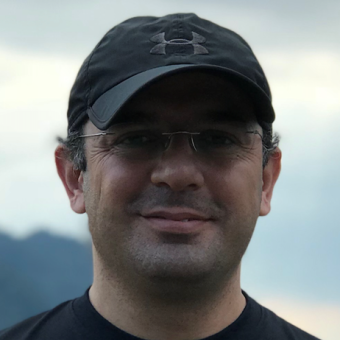
Ferhat Toslak is a full-time Lecturer in the Department of Computer Technologies at Kırşehir Ahi Evran University 's Vocational School of Technical Sciences . His academic work spans embedded systems, human-computer interaction, and security technologies. Education: Bachelor's in Electronics and Computer Education (Süleyman Demirel University, 2010) MSc in Computer Engineering (İnönü University, 2019) Bachelor's in Visual Communication Design (Anadolu University, 2023) Research interests include embedded systems for medical and security applications, human-computer interaction in IoT environments, and renewable energy automation. His publications demonstrate technical expertise in microcontroller-based systems and interdisciplinary applications. Professional activities feature 4 funded research projects and 2 intellectual properties. Collaborations include researchers from Sakarya University, İnönü University, and Bandırma Onyedi Eylül University. He teaches foundational courses in database systems, sensor technology, and microcontrollers.
Ramazan YAZICI is an Associate Professor at the Department of Veterinary Medicine, Çiçekdağı Vocational School, Kırşehir Ahi Evran University, Turkey. His academic career spans roles such as Research Assistant (2013–2021), Assistant Professor (2021–2024), and currently Associate Professor (2024–present). He has also held administrative positions including Department Chair (2020–2022), Institute Deputy Director (2022–2024), and Vocational School Director (2025–). PhD in Biology, Ahi Evran University, 2013–2018 MSc in Biology, Ondokuz Mayıs University, 2011–2013 BSc in Secondary Science and Mathematics Education, Ondokuz Mayıs University, 2006–2011 Ramazan YAZICI’s research focuses on freshwater and marine ecosystems, with a strong emphasis on fish biology, ecological adaptation, and environmental health. His work explores age determination methods , otolith biometry , fish condition factors , and feeding strategies across species like Wels Catfish, Pike, and invasive Prussian Carp. He integrates machine learning and multivariate statistics to assess water quality and ecological risks. His recent publications highlight trends in invasive species dynamics , morphometric relationships , and environmental impacts on aquatic communities. Awardee of the 2023 Yayın Teşvik Award (TÜBİTAK), he has contributed to 59+ publications and led multiple research projects on dam lakes and coastal ecosystems. Collaborative efforts with colleagues like Okan Yazıcıoğlu and Mahmut Yılmaz span 46+ joint works.
MİTHAT ÇAĞRI YILDIZ serves as a Lecturer at Gaziantep University's Oğuzeli Vocational School within the Computer Technologies Department since 2020. He also holds significant administrative positions, serving as Head of Department since 2021 and previously as Deputy Director of the Vocational School from 2022-2022. Education Background: Master's Degree (2014-2016): Hasan Kalyoncu University, Institute of Sciences, Electronics-Computer Engineering Bachelor's Degree (2007-2013): Eastern Mediterranean University, Faculty of Engineering, Department of Computer Engineering Dr. Yildiz's research primarily focuses on advanced computer vision techniques, particularly in facial recognition systems. His work addresses critical challenges in biometric security including illumination variations, occlusions, and appearance changes. He has developed expertise in applying genetic algorithms for feature selection and implementing YOLO-based approaches for object detection in specialized applications. His scholarly contributions demonstrate a consistent research trajectory focused on enhancing the robustness and accuracy of facial recognition systems under challenging conditions, with publications spanning from 2016-2022 that reveal expertise in both theoretical approaches and practical implementations for security applications. Teaching Responsibilities: Over 67 courses taught from 2019-2025 across programming fundamentals, web technologies, and security topics Regular consultation hours: Wednesdays 15:20-17:00, Thursdays 13:30-15:10 Dr. Yildiz's career progression from Computer Engineer (2013-2020) to academic faculty reflects his comprehensive expertise bridging theoretical computer science with practical implementation experience.
Professor İlker Seçkiner is a prominent academic and practicing urologist at Gaziantep University Faculty of Medicine , where he has served as a Professor in the Department of Surgical Medical Sciences since 2013. His career spans multiple institutions, including Bülent Ecevit University and Ankara University, where he previously held academic positions from 1995 to 2000. Specializing in urology , he has published extensively on pediatric urology, renal stone diseases, laparoscopic techniques, and applications of artificial neural networks in clinical decision-making. Current Position: Professor, Gaziantep University Faculty of Medicine Previous Academic Roles: Associate Professor (2008-2013), Assistant Professor (2002-2008) Education: Ankara University Faculty of Medicine (1995-2000) His research focuses on minimally invasive urological procedures , including retrograde intrarenal surgery , percutaneous nephrolithotomy , and laparoscopic applications . He has pioneered the use of machine learning in predicting treatment outcomes for stone diseases. With over 33 book chapters and 104 peer-reviewed articles , his work emphasizes pediatric urology , prostate cancer , and urodynamic studies . His recent articles analyze laser settings in lithotripsy, comparative cost-efficiency of ureteroscopes, and neural network-based predictive models. As a leader in urological surgical education , he has presented at international conferences (International Continence Society, European Congress of Obstetrics) and contributed to national guidelines through Turkish Urology Association publications. His clinical expertise includes complex stone disease management , post-prostatectomy incontinence , and urogenital fistula repairs , often integrating innovative technology into traditional practices.
Lecturer Gökhan BAHADIR is affiliated with Kastamonu University , where he works at the Tosya Vocational School in the Department of Electricity and Energy . He has held administrative roles including Deputy Director of Tosya Vocational School (2017–2019, 2025–) and Department Head (2023–). Education : PhD in Electrical and Electronics Engineering (2022, Düzce University), MSc in Energy Systems Engineering (2014, Karabük University), MSc in Occupational Health and Safety (2018, Kastamonu University), BSc in Electrical and Electronics Engineering (2009, Karadeniz Technical University; 2013, Cumhuriyet University). Research Interests focus on: Electrical Machines and Energy Conversion – Induction/synchronous motors, transformer systems, power electronics Control Theory and Applications – Direct torque control, field-oriented control, programmable controllers Computational Methods – MATLAB simulations, Runge-Kutta numerical analysis, SCADA systems Industrial Automation – Electromechanical systems, hydraulic-pneumatic controls, industrial drivers His publications analyze motor stability in power grids, control methodologies for electric vehicles, and educational approaches to electrical concepts. Collaborations include work with colleagues at Kastamonu and Karabük Universities.
Assoc. Prof. Dr. Kenan Çağrı TÜMER is a faculty member at Kastamonu University, Faculty of Veterinary Medicine , working in the Department of Clinical Sciences since 2022. Previously, he served as a Research Assistant at Fırat University from 2012-2022. Education: Doctorate in Veterinary Internal Medicine (2018) and DVM (2011) from Fırat University Research interests focus on: Veterinary Internal Medicine Cardiac Biomarkers in Animals Vitamin D and Immune Response in Calves Clinical Biochemistry Parasitic Diseases like Theileria annulata Publications (33 peer-reviewed articles, 1 book chapter) include studies on: Tropical Theileriosis in cattle β-hydroxybutyrate measurement in sheep Cardiac troponin I in parturient paresis Canine viral enteritis Vitamin B12 deficiencies in goats Neonatal calf diarrhea Collaborations include researchers from: Fırat University Kastamonu University Dokuz Eylül University Bingöl University International colleagues like Barbara A. Murphy (Ireland), Peter Constable (USA), Francesca Aragona (Italy)
Assoc. Prof. Dr. Seçil Karatay is an Associate Professor at Kastamonu University's Faculty of Engineering and Architecture, Department of Electrical-Electronics Engineering. She holds a PhD in Physics from Fırat University (2010), an MSc in Physics (2005), and a BSc in Physics (2001). Her academic career spans roles including Department Head (2013-2017), Dean Assistant (2013-2016), and Director of Research Application Center (2016-2021). PhD: Physics, Fırat University, 2005-2010 MSc: Physics, Fırat University, 2002-2005 BSc: Physics, Fırat University, 1997-2001 Her research focuses on Signal Processing and Ionospheric Physics , particularly analyzing ionospheric disturbances related to seismic activity and space weather phenomena. She has pioneered algorithms like IONOLAB-FFT and Differential Rate of TEC (DROT) for detecting geophysical effects in ionospheric data. Her work spans machine learning applications for earthquake prediction, GPS-TEC analysis , and seasonal atmospheric variability studies. Recent publications highlight her expertise in 2023 Kahramanmaraş earthquakes ionospheric impact analysis, LSTM algorithm for disturbance classification, and Random Forest models for seismic precursor detection. With over 60 publications and citations exceeding 230, her research has significant SCI/SSCI indexing presence. Collaborations include Feza Arıkan (29 joint works), Ali Çınar (19), and Orhan Arıkan (14).
Faruk ERKEN is an Assistant Professor at the Faculty of Engineering and Architecture , Kastamonu University , Turkey. His academic career spans institutions such as Batman University (2005-2014, 2014-2016) and Kastamonu University (2016-). He holds a Ph.D. (2009-2014) and M.Sc. (1998-2001) in Electrical and Electronics Engineering from Fırat University and Dicle University, respectively, and a B.Sc. (1990-1994) from Fırat University. Research Focus: Electrical Machines and Energy Conversion, with applications in Permanent Magnet Synchronous Motors, Renewable Energy Systems (e.g., Off-Grid Solar Power), Signal Processing for Seismic Activity, and Advanced Control Algorithms (e.g., Genetic Algorithm Optimization, KNN Classification). Recent Publications: Work on ionospheric disturbances for earthquake prediction (2025), forest fire detection UAVs (2023), and torque ripple reduction in PMSMs (multiple years). Projects: Led BAP projects on parameter estimation in PMSMs (2019-2020) and frequency-selective radomes (2017-2018). Currently involved in TÜBİTAK research on ionospheric earthquake precursors (2024). Academic Roles: Served as Department Vice Chair (2017-), Department Chair (2014-2016), and reviewer for journals like Electrical Engineering and Turkish Journal of Electrical Engineering and Computer Sciences .
Assoc. Prof. Dr. Yücel Çetinceviz is a faculty member at Kastamonu University's Faculty of Engineering and Architecture, Department of Electrical-Electronics Engineering, where he serves as a Doctoral Academician since 2018. He also holds administrative positions as Department Chair (since 2022) and Vocational School Director (since 2020). His academic career at Kastamonu University began in 2009 as Teaching Staff at the Vocational School's Electronics and Automation Department before transitioning to his current role. Dr. Çetinceviz received his academic education from Gazi University and Karabük University: PhD : Electrical and Electronics Engineering, Karabük University, Institute of Science (2011-2017) Master's : Electrical Education, Gazi University, Institute of Science (2008-2011) BSc : Electrical Education, Gazi University, Faculty of Technical Education (2002-2006) Dr. Çetinceviz's research focuses on three primary areas: Electrical Machines and Energy Conversion, Power Electronics, and Control Theory and Applications. His work demonstrates a strong emphasis on practical applications of electrical engineering principles, particularly in the domains of electric vehicles, renewable energy systems, and motor control technologies. His research bridges theoretical concepts with real-world implementations, often involving electromagnetic modeling, thermal analysis, and advanced control techniques. Notably, his recent work shows increasing focus on electric vehicle technologies, including in-wheel motor design and battery systems, reflecting industry trends toward sustainable transportation solutions. His publication record reveals consistent scholarly output with increasing impact in recent years, particularly in high-quality international journals (SCI-expanded). The research themes across his publications demonstrate a cohesive progression from fundamental electrical machine design to sophisticated control systems for emerging applications like electric vehicles and renewable energy integration. Dr. Çetinceviz has received prestigious recognition for his scholarly contributions: TÜBİTAK Publication Incentive Award (2017) TÜBİTAK Publication Incentive Award (2012) TÜBİTAK Publication Incentive Award (2011) As an academic advisor, Dr. Çetinceviz has supervised five graduate students to completion, with ongoing supervision of additional students. His research is supported by significant projects including a principal investigator role in a 2020-2022 project on high-torque-density axial flux permanent magnet motors for electric vehicles, and advisory roles in defense industry-related projects. His intellectual property contributions include two patents related to electrical steel production and magnetic composite materials. Dr. Çetinceviz collaborates extensively with colleagues both within and outside Kastamonu University, with notable long-term collaborations with Erdal Şehirli (14 publications since 2014) and Durmuş Uygun (12 publications since 2011). His work appears to involve laboratory research focused on electrical machine testing, power electronics implementation, and control system development, though specific lab names aren't mentioned in the provided information.
Ömür Uğur is a Professor at Middle East Technical University's College of Sciences, specializing in computational mathematics and quantitative finance. His research bridges advanced numerical methods with financial and physical applications, evidenced by 64 WoS-indexed publications and 44 thesis advisements. His primary research interests include computational finance (stochastic volatility models, option pricing), magnetohydrodynamics (MHD duct flows, Hartmann number effects), and numerical analysis (SUPG-stabilized finite element methods, shock-capturing techniques for convection-dominated equations). Recent work integrates machine learning with wavelet analysis for time series and develops hybrid models for financial risk assessment. Analysis of his 15 most recent publications (2021-2025) reveals a strong focus on stabilized finite element formulations for challenging PDEs, with applications spanning finance (option pricing under Heston model), physics (MHD flows), and epidemiology (COVID-19 transmission modeling). Key methodological innovations include SUPG-YZβ formulations and discontinuity-capturing for high-Reynolds-number flows. Scientific Recognition: 210 H-index (Scopus) 269 H-index (Scopus) 323 H-index (Google Scholar) 44 thesis advisements completed His collaborative research spans computational economics, actuarial science, and fluid dynamics, with significant contributions to solving advection-dominated problems and financial market modeling. Current projects include real-time aircraft dynamics control and hypersonic flow modeling.
Reyhan Aydoğan is an Associate Professor and Chair of the Department of Artificial Intelligence and Data Engineering at Ozyegin University, Istanbul, Turkey, and a Research Fellow in the Interactive Intelligence Group at Delft University of Technology, Netherlands. She has held these positions since 2024 and 2015 respectively. Her academic background includes: Doctorate in Computer Engineering, Boğaziçi University, 2011 Master's in Computer Engineering, Boğaziçi University, 2006 Bachelor's in Computer Engineering, Dokuz Eylül University, 2003 Dr. Aydoğan specializes in modeling intelligent agent technologies that integrate reasoning, decision making, and learning. Her research applies machine learning and semantic reasoning to develop agent-based decision support systems, with primary focus on automated negotiation tools where software agents negotiate on behalf of users. She investigates human-computer interaction mechanisms to support human decision makers in complex environments, particularly through preference elicitation techniques. She is a principal organizer of the International Automated Negotiating Agents Competition (ANAC), a major benchmarking event in multiagent systems research. Her career includes faculty positions at Ozyegin University since 2015 (promoted to Associate Professor in 2024), postdoctoral research at Delft University of Technology (2011-2015), and research visits to MIT, Norwegian University of Science and Technology, Nagoya Institute of Technology, and Universidad de Alcala. Her primary research affiliation is with the Interactive Intelligence Group at Delft University of Technology, where she contributes to advancing multiagent system theory and applications in negotiation support.
Sedat Özer is an Assistant Professor in the Department of Electrical and Computer Engineering at Özyeğin University's Faculty of Engineering. His academic journey includes a Ph.D. in Electrical & Computer Engineering from Rutgers University (2013), an M.S. in Electrical Engineering from the University of Massachusetts (2007), and a B.S. in Electronics Engineering from Istanbul University (2002). Research Interests : Dr. Özer specializes in developing scalable and explainable machine learning algorithms, focusing on path planning for autonomous systems, video analysis, data fusion, and computer vision. His work has applications in intelligent and self-driving systems. Awards : TÜBİTAK 2232: International Fellowship for Outstanding Researchers (2019) Professional Roles : He has served as a publicity co-chair for the IEEE Connected and Automated Vehicles Symposium and as a reviewer for top-tier journals/conferences including IEEE Transactions on Image Processing (TIP), IEEE Transactions on Pattern Analysis and Machine Intelligence (TPAMI), NeurIPS, ICML, and RSS. His prior affiliations include the Virginia Image and Video Analysis (VIVA) Lab, MIT's CSAIL, and the University of Central Florida's CRCV.
Hakan Demir is a researcher at Ozyegin University's Faculty of Engineering, Department of Chemical Engineering. His work combines computational chemistry and material science to advance gas separation technologies. Education B.S. Chemical Engineering, Middle East Technical University (2009) M.S. Chemical Engineering, Middle East Technical University (2011) Ph.D. Computational Chemistry, Georgia Institute of Technology (2016) Research Focus Hakan Demir's research centers on: Designing novel porous materials (e.g., MOFs, COFs) Modeling gas adsorption/diffusion in porous media Integrating machine learning with molecular simulations for material prediction Developing solutions for CO2/CH4 separation, CF4 removal, and biogas upgrading His work addresses energy and environmental challenges through computational approaches and has been published in high-impact journals. Projects He leads a TUBITAK 3501 project focused on developing ionic liquid/MOF composites for natural gas separation using classical molecular simulation and machine learning.
C. Emre Dedeağaç is a Researcher and Ph.D. candidate in Computer Engineering at Özyeğin University's Faculty of Engineering. His academic roles focus on Electrical and Electronics Engineering, with research activities spanning advanced computing disciplines. Education: B.Sc. in Electrical and Electronics Engineering, Özyeğin University (2020) Minor in Computer Science/Engineering, Özyeğin University Ph.D. in Computer Engineering, Özyeğin University (ongoing) Research Interests: Specializing in ASIC/SOC/FPGA Design/Automation and Neural Network Accelerators for hardware optimization Contributing to fundamental research in Computer Arithmetic and Embedded Systems Exploring intersections with Machine Learning and High-Frequency Trading (HFT)
Prof. Dr. Özge Sezgin Alp is an Assistant Professor at the Department of Accounting and Financial Management, Faculty of Commercial Sciences, Baskent University. She holds a PhD (2011) and MSc (2006) in Financial Mathematics from Middle East Technical University and a Bachelor's (2004) in Statistics and Computer Science from Baskent University. Research Interests: Financial Markets and Institutions, Probability and Stochastic Processes, Financial Risk Management, and Risk Analysis. Her work often addresses emerging markets, financial modeling, and cross-country comparisons. Publication Trends: Focuses on financial markets in Turkey, including agricultural commodities, oil price impacts, and insurance index dynamics. Recently explored sustainability reporting aligned with UN SDGs and international valuation standards. Projects: Participated in research initiatives like EUfinDiAlog (2024) on finance in the digital era and consulted on insurance industry projects in 2019. Courses Taught: Elements of Probability and Statistics, General Mathematics, Business Finance, Investment Analysis, Portfolio Management, and Risk Analysis.