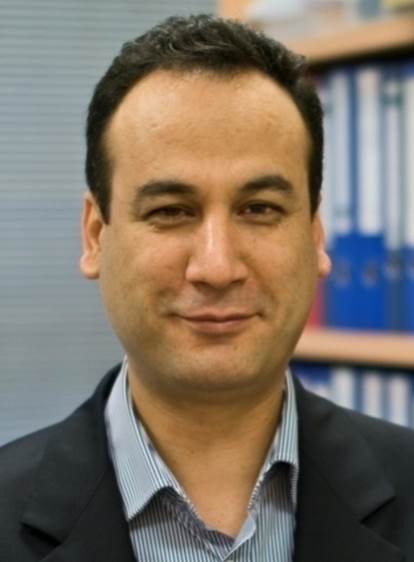
Mustafa Ünel is a Professor and Program Coordinator for Mechatronics Engineering at Sabanci University's Faculty of Engineering and Natural Sciences. He directs the Control, Vision and Robotics Research Lab and serves as a Senior Researcher at SU-IMC. His research spans robotics, computer vision, and machine learning applications in industrial systems. He earned a PhD in Electrical Engineering from Brown University and has held academic positions at Gebze Institute of Technology and Yale University. Current research projects include autonomous vehicle navigation, system health prediction, and aerospace manufacturing technologies funded by TUBITAK and Ford Otosan. He has supervised over 50 graduate theses and teaches courses including Autonomous Mobile Robotics, Nonlinear Control, and Computer Vision. His industrial collaborations focus on AI applications in automotive systems and construction automation.
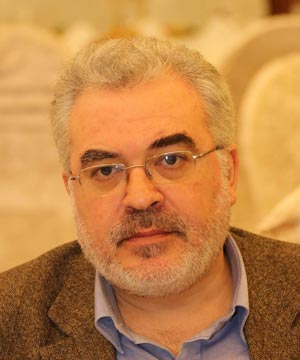
Prof. Dr. Mehmet Reşit Tolun is a full-time Professor in the Department of Software Engineering at Çankaya University (Turkey) since 2022. Previously held full-time professor positions at Konya Food and Agriculture University (2020-2022), Aksaray University (2013-2017), and TED University (2011-2013), along with a part-time professorship at Başkent University (2017-2020). Specializes in Artificial Intelligence , Machine Learning , and Data Mining , with a focus on deep learning applications in aerospace, biomedical data analysis, and software process improvement. PhD in Computer Science (University of Kent, 1985) MSc in Computer Science (University of Kent, 1982) BSc in Physics and Computer Science (University of Kent, 1981) Research Interests span deep learning frameworks, hybrid expert systems, software engineering methodologies, and biomedical signal processing. Publications emphasize practical implementations in medical diagnostics, robotics, and agricultural pest detection. Scientific Awards include the IEEE Third Millenium Medal (2000). Supervised over 55 graduate students, including Burak Çetin, Uğur Özotuk, and Mahinur Doğan. Collaborated with researchers from Orta Doğu Teknik Üniversitesi , Çankaya University , and Aksaray University .
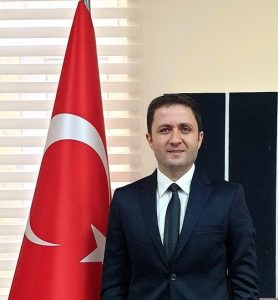
Tayfun Günel is a Professor in the Department of Electronics and Communication Engineering at Istanbul Technical University (ITU) , Faculty of Electrical and Electronics Engineering. He holds a PhD (1993), MSc (1988), and BSc (1986), all from ITU. His research spans microwave circuits, radar systems, antennas, and optimization using genetic algorithms and soft computing. His research interests include Microwave Circuits , Radar and Antennas , Optimization , and Genetic Algorithms . His work focuses on impedance matching, microstrip antennas, noise modeling, and metamaterial-based microwave components. He has taught courses such as Electromagnetic Fields, Radar Systems, and Satellite Communication Systems. The recent publications reflect a strong trend in microwave circuit design , antenna miniaturization , and the application of evolutionary algorithms (genetic algorithms, PSO) and machine learning (neural networks, SVR) in electromagnetic design and optimization. There is a consistent focus on practical microwave components like transmission lines, patches, and amplifiers, often using nanomaterials (e.g., carbon nanotubes) and metamaterials . His work bridges theoretical modeling with computational optimization for real-world RF and radar applications. Email: gunelmur@itu.edu.tr Professor Günel has supervised 2 completed PhD theses, 2 ongoing PhD theses, 23 completed master's theses, and 1 ongoing master's thesis, demonstrating a significant contribution to student mentoring. There are no specific grants or funding sources mentioned in the provided text. He is affiliated with research in microwave systems and antenna design , likely operating within the broader research ecosystem of the Electronics and Communication Engineering Department at ITU, which includes labs such as the Microwave Systems and Antennas Laboratory and the Radar and Microwave Technologies Research Laboratory.
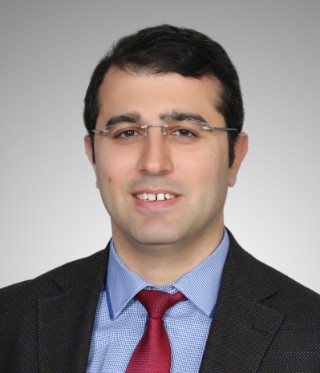
Dr. Veysel Gümüş is an Associate Professor at Harran University's Faculty of Engineering, Department of Civil Engineering, where he has been since 2014. His research focuses on turbulence modeling, computational fluid dynamics, hydrological drought analysis, and time-series trend analysis. Licence (2003), Master's (2006), and Doctorate (2014) in Civil Engineering from Harran and Çukurova Universities. His research interests span hydrological drought , computational fluid dynamics , climate trend analysis , and GIS applications in hydrology . His recent work emphasizes drought risk assessment, wind speed trends, and fluid flow simulations using AI techniques. Publications since 2023 highlight his expertise in Mann-Kendall tests , copula-based drought analysis , and CMIP6 climate projections across Turkey and Morocco. He has supervised over 15 graduate theses and served as an editor/hakem for 10+ journals, including ASCE and Theoretical and Applied Climatology.
Ozgur S. Oguz is an Assistant Professor at Bilkent University , Faculty of Computer Engineering, and the lead of the Learning for Intelligent Robotic Agents (LiRA) Lab . His research focuses on enhancing autonomous agents' capabilities in learning, reasoning, and planning, particularly for robotics applications. Education : PhD in Computer Science from TU Munich , studies at University of British Columbia (UBC) and Koç University , postdoctoral work at University of Stuttgart and Max Planck Institute for Intelligent Systems . His research explores algorithms for autonomous decision-making, with emphasis on deep learning , reinforcement learning , and robotics . Recent work includes diffusion-based reinforcement learning , hindsight experience prioritization , and hybrid manipulation planning , often addressing challenges in sequential task execution and tactile-based control. Key trends in his publications revolve around robotic manipulation , motion planning , and human-robot interaction . He has contributed to conferences like NeurIPS , ICRA , IROS , and journals such as IEEE TRO and Scientific Reports .
Sinan Yıldırım is a Researcher in the Faculty of Engineering and Natural Sciences at Sabancı University, Turkey. His primary research focuses on Bayesian Statistics, Monte Carlo methods, and data privacy, with interdisciplinary applications in machine learning and signal processing. He holds a BSc and MSc in Electrical and Electronics Engineering from Boğaziçi University, followed by a PhD in Mathematical Statistics from the University of Cambridge. Postdoctoral research (2013-2015) at the University of Bristol’s School of Mathematics involved the EPSRC-funded project 'Intractable Likelihood: New Challenges from Modern Applications (i-like).' His work bridges theoretical statistics with practical problems in privacy, control systems, and energy optimization. Research interests emphasize Bayesian methodologies for privacy-preserving data analysis, dynamic modeling of complex systems, and stochastic optimization algorithms. Recent publications explore differential privacy in machine learning, Monte Carlo techniques for high-dimensional inference, and applications of Bayesian methods in robotics and energy systems. Advising and grants include contributions to multi-party resource sharing frameworks and privacy-aware algorithms. His work integrates computational methods with real-world challenges in engineering and policy modeling.
Figen S. Oktem is an Associate Professor in the Department of Electrical and Electronics Engineering at Middle East Technical University (METU), Ankara, Turkey. Her research focuses on advanced imaging systems and algorithms, including computational imaging, inverse problems, and machine learning applications in signal processing. Ph.D., Electrical and Computer Engineering, University of Illinois at Urbana-Champaign (UIUC) (2014) M.S., Electrical and Electronics Engineering, Bilkent University (2009) B.S., Electrical and Electronics Engineering, Bilkent University (2007) Her work bridges physics-informed machine learning and computational optics, with applications in spectral imaging, radar, and microwave systems. She has also explored Fourier phase retrieval, denoising diffusion models, and real-time MIMO radar imaging. Recent publications highlight trends in phase retrieval using deep learning ( prNet , I2I-PR , DDRM-PR ), 3D MIMO imaging, and compressive spectral imaging. Techniques often integrate plug-and-play regularization, stochastic refinement, and physics-based priors. She can be contacted via email at figeno@metu.edu.tr . Curriculum vitae and publications are accessible through her Google Scholar profile.
Prof. Şule Itır Satoğlu is a faculty member in the Department of Industrial Engineering at Istanbul Technical University, holding the rank of Professor since 2019. She has held multiple administrative roles, including Head of Department (2025–present), Vice Rector (2020–2024), and Vice Dean (2018–2020). Her research focuses on supply chain management, optimization, sustainable operations, and disaster response systems. She has a PhD in Industrial Engineering from Istanbul Technical University (2008), an MSc in Engineering Management (2002), and a BSc in Mechanical Engineering (2000). Her work emphasizes practical applications of optimization techniques in logistics, healthcare, and disaster management. Notable contributions include developing models for blood supply chains under uncertainty, UAV-based waste detection, and sustainable urban transport fleet electrification. She has collaborated on projects funded by public and private sectors, addressing issues like lean manufacturing integration with Industry 4.0 and RFID-enabled maintenance systems. Her publications span over two decades, with recent focus on multi-objective optimization in humanitarian logistics, smart waste collection systems, and energy-efficient drone surveillance. She is a member of the TMMOB Chamber of Mechanical Engineers and actively contributes to national technology initiatives through academic leadership roles.
Gökhan Seçinti is an Assistant Professor in the Department of Computer Engineering at Istanbul Technical University, Faculty of Computer and Informatics. He currently serves as Vice Dean and has previously held the role of Vice Department Head. His research focuses on next-generation wireless networks, UAV communications, semantic communication, and AI-driven networking solutions. Research Interests: His work spans Unmanned Aerial Vehicles (UAVs) , Semantic and Task-Oriented Communication , Software-Defined and Cognitive Networks , 6G Communications , and AI in Networking . He develops practical testbeds for deep learning-based communication architectures and explores digital twin applications in aerial networks. Publication Trends: Recent publications emphasize decentralized UAV service deployment, beam alignment using UWB localization, TDMA scheduling for aerial swarms, and semantic flow control. These reflect a strong trend toward intelligent, adaptive, and context-aware communication systems for IoT and mobility. Best Paper Award, IEEE, 2022 Best Conference Paper, IEEE, 2016 Best Poster Paper Award, IEEE, 2015 Advising and Grants: He has supervised 4 academic works and leads multiple funded research projects, including TÜBİTAK and SRP grants on federated learning in flying networks, semantic VANETs, AI-based intrusion detection, and UAV-assisted IoT for crisis management. Labs and Teams: His work is supported by active research teams at ITU, focusing on testbed development using SDRs, digital twins, and real-world deployment of UAV networks. He collaborates internationally, including past affiliations with Northeastern University.
Hüseyin DEMİRCİ is an Assistant Professor at Sakarya University's Faculty of Computer and Information Sciences, Department of Information Systems Engineering. He holds a doctorate in Computer and Information Engineering from Sakarya University, where his thesis focused on designing a novel metaheuristic algorithm inspired by electricity movement in resistive media. Education: PhD (2015), MSc (2014), and BSc (2012) in Computer-related fields His research spans artificial intelligence, optimization algorithms, and decision-making systems, with a particular emphasis on metaheuristic methods like particle swarm optimization and genetic algorithms. He has applied these techniques to problems in surface reconstruction and real-time systems. Hüseyin also contributes to education through his role as a Research Assistant and has explored interdisciplinary domains such as feature selection, data clustering, and sustainable development-aligned computational approaches.
Attila Gursoy is a Professor at the Department of Computer Engineering, College of Engineering, Koç University. He serves as the Dean of the College of Engineering and leads research in computational biology, bioinformatics, and high-performance computing. Education : PhD in Computer Science from University of Illinois (1994), MSc from Bilkent University (1988), BSc from Middle East Technical University (1986) His research focuses on protein-protein interactions , computational structural biology , and systems pharmacology , with applications in drug repurposing and inflammatory disease mechanisms . He has pioneered structural analysis of Ras signaling and developed tools like COSBI for computational systems biology. Recent publications highlight his work on viral protein mimicry , neurodegenerative pathways , and microbiome dynamics . His team maintains datasets like PPInterface and DiPPI for structural drug discovery. 2005 : Werner-von-Siemens Excellence Award
Hüsnü Dal is a Professor at Middle East Technical University (METU) in Ankara, Turkey, specializing in computational mechanics of materials. His research bridges engineering and biomedical applications through advanced computational modeling techniques. Education: Bachelor's Degree, Middle East Technical University, 2001 Master's Degree, University of Stuttgart, 2005 PhD, Dresden University of Technology, 2011 Research Focus: Prof. Dal's work centers on computational micromechanics, multiscale and multifield problems, and materials theory. He investigates fracture in multiphysics media with applications in lithium-ion batteries and tissue mechanics, developing novel constitutive models for complex material behaviors under extreme conditions. His research integrates thermomechanical coupling, viscoplasticity, and data-driven approaches to solve engineering challenges in both synthetic polymers and biological systems. Publication Trends: Recent publications (2023-2025) reveal a dominant focus on data-driven constitutive modeling and phase-field fracture methods. His work spans rubber mechanics, polymeric foams, biological tissues, and battery materials, characterized by strong interdisciplinary connections between materials science, biomechanics, and computational engineering. Key themes include anisotropic hyperelasticity, thermo-viscoplastic fracture, and spatial property variations in additively manufactured materials.
Prof. Ayşegül Aksoy is a faculty member in the Department of Environmental Engineering at Middle East Technical University (METU) since 2002. She holds a Ph.D. in Civil Engineering from the University of Virginia (2000) and has held visiting roles at Stanford University (2015-2016) and the University of California Davis (2001). Her academic leadership includes Vice Chair roles in METU's Environmental Engineering Department (2012-2015 and 2006-2009), and she co-developed UN courses on Black Sea environmental management. Her research focuses on environmental systems engineering, integrated waste management, water quality modeling, and remote sensing applications. Notable projects include developing autonomous systems for lake turnover monitoring, optimizing landfill leachate management, and evaluating solar sludge drying alternatives. She has directed over 20 graduate theses and contributed to research funded by TÜBİTAK, Newton Fund, and EU programs. Key awards include the AQUA 360 Best Paper Award (2021) and TÜBİTAK Fellowships. Her work spans 120+ peer-reviewed publications, with recent focus areas including anaerobic digestion optimization, GIS-based waste routing, and pollutant fate modeling in heterogeneous aquifers. She advises on national environmental policies and manages projects like the 'Turnover Response System Development' (2020-2023) and 'Chlorophyll-a Modeling in Lake Eymir' (2009-2010).
Bekir Taner Dincer is a Professor at Muğla Sıtkı Koçman University, Faculty of Engineering, Department of Computer Engineering. He has been actively teaching courses including Web Development and Programming, Artificial Intelligence, Data Mining, Natural Language Processing, and Senior Design Projects for multiple academic years including the upcoming 2025-2026 term. Dr. Dincer earned his Bachelor's degree in Statistics from Middle East Technical University (1988-1993), followed by a Master's degree in Statistics and Computer Science from Muğla Sıtkı Koçman University (1996-1998), and completed his Doctorate in Computer Science from Ege University's International Computer Institute (1998-2004). His research focuses on Information Retrieval, Natural Language Processing (particularly for Turkish language), and related computational linguistics areas. His work addresses challenges in Turkish language processing including morphological analysis, constituent chunking, information retrieval systems, and term weighting methods. He has made significant contributions to adapting information retrieval techniques for agglutinative languages like Turkish, which presents unique challenges compared to Indo-European languages. His publication record shows a consistent research trajectory with recent work (2013-2018) focusing on risk-sensitive evaluation methods, learning to rank, entity recognition in big data, and specialized approaches for Turkish language processing. His research often bridges theoretical information retrieval concepts with practical applications for Turkish text processing. Dr. Dincer has served as editor for prestigious publications including the International ACM SIGIR Conference proceedings and ACM Transactions on Information Systems journal, demonstrating recognition of his expertise by the international research community. He has supervised numerous graduate students, guiding PhD and Master's theses on topics including unsupervised syntactic disambiguation for Turkish, statistical analysis of word roots and affixes, and information retrieval system design. His research has been supported by TÜBİTAK projects including the Design of a Statistics-Driven Selective Information Retrieval System (2015-2018) and the Design of a Statistical Information Access System (2011-2014).
Barış Ethem Süzek is an Associate Professor in the Department of Computer Engineering at the Faculty of Engineering, Muğla Sitki Koçman University. His academic career spans institutions including Middle East Technical University (BS), Johns Hopkins University (MS), and George Mason University (PhD) in Computational Biology. He specializes in bioinformatics and computational biology, focusing on protein informatics, genetic analysis, and machine learning applications in medical research. Education BS: Middle East Technical University - Computer Engineering (1997) MS: Johns Hopkins University - Computer Science (2000) PhD: George Mason University - Computational Biology (2012) His research integrates bioinformatics with molecular dynamics, particularly in host-pathogen interactions, regenerative medicine, and genomic data analysis. He has developed machine learning tools for viral interaction prediction and variant analysis systems. His work with UniProt and cancer Biomedical Informatics Grid projects demonstrates expertise in large-scale biological data integration. Scientific awards include Collaboration, Outstanding Achievement, and Change Agent Awards from the cancer Biomedical Informatics Grid, plus multiple patent recognitions for biomedical systems. He has supervised numerous graduate students in bioinformatics, computational genetics, and forensic biology projects.