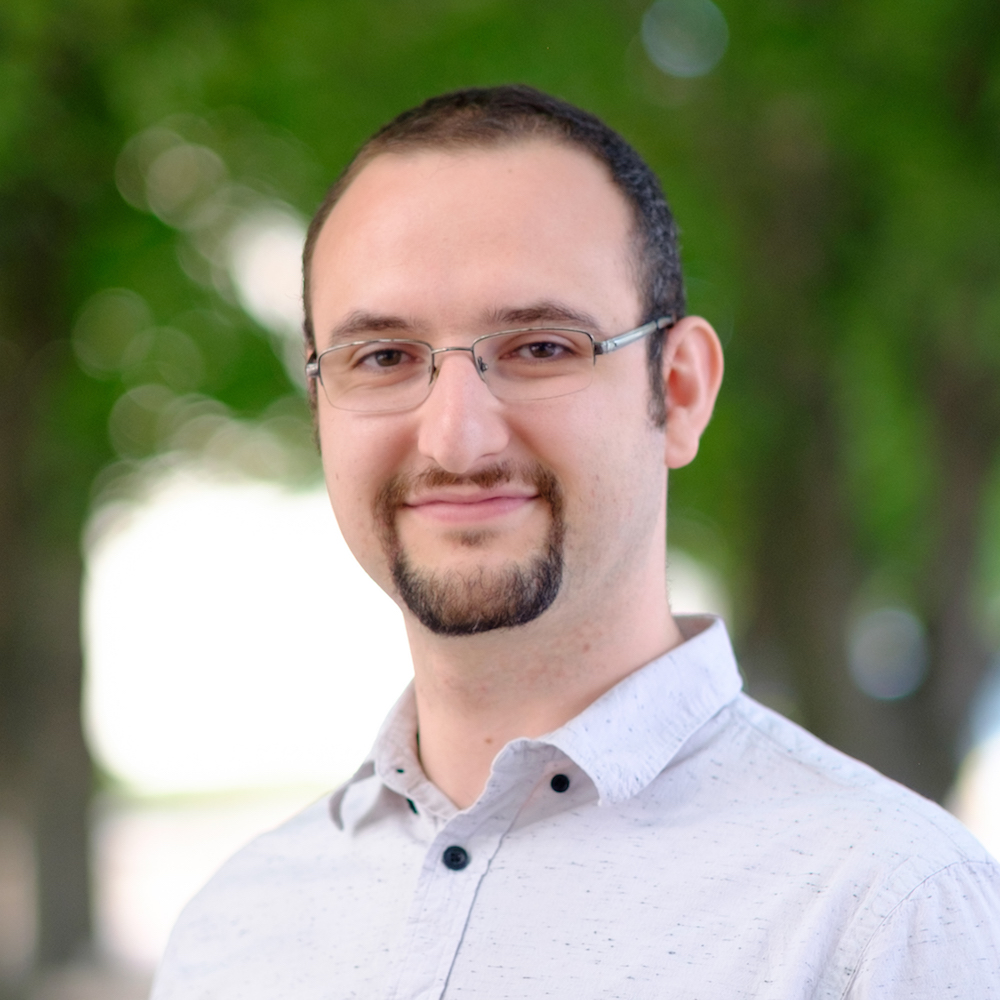
Onur Varol is an Assistant Professor at Sabanci University's Computer Science Department and leads the VIRAL Lab, which focuses on computational social science, network science, and machine learning. He has affiliations with the Center of Excellence for Data Analytics. His research spans social bot detection, misinformation analysis, and online behavior modeling.
Prof. Fatih Terzi is a faculty member in the Department of Urban and Regional Planning at Istanbul Technical University's Faculty of Architecture. His research focuses on sustainable urban development, resilience, ecology, GIS applications, and smart cities. He has held visiting researcher positions at Clemson University (USA), University College London, and Technical University Berlin. He has led projects supported by EU, TÜBİTAK, and others, addressing ecological planning, risk reduction, and urban regeneration. His work bridges academic research with practical urban planning, including projects with municipalities and the Ministry of Environment. He has received multiple awards for research and design, including the Best Paper Award (2025) and TÜBİTAK recognitions. Education: PhD in Urban and Regional Planning from Istanbul Technical University (2010), MSc in Urban Planning (2004), BSc in Urban and Regional Planning from Yıldız Technical University (2000). Research interests include spatial strategic planning, ecological cities, and climate-sensitive urban design. He uses urban modeling and GIS to address sustainability challenges. His recent projects include Istanbul's flood risk analysis, green space strategies, and sustainable city planning in Kayseri and Malatya. Notable awards include the 2024 TÜBİTAK award for urban resilience projects and the 2023 Istanbul Technical University Academic Performance Award. He has also been recognized for design competitions, including the İzmir Ecological Living Area Project (2021) and the 2017 Balkan Architectural Biennale Urbanism Grand Prix. Prof. Terzi holds administrative roles at Istanbul Technical University, including Merkez Danışma Kurulu Üyeliği (2023–present). He oversees academic projects on urban resilience, smart cities, and ecological planning, contributing to both national and international initiatives.
Emine Ayaz is a Professor at Istanbul Technical University's Department of Electrical Engineering. Her research spans fault detection in electric motors, signal processing, and nuclear power plant monitoring, with recent work integrating deep learning (e.g., dual RNN architectures) and medical applications (e.g., parasitology, plant-based wound healing). Key Collaborations : International partnerships in motor diagnostics and nuclear engineering. Projects : Led grants on high-voltage training and predictive maintenance for TEİAŞ and industrial processes. Research Trends : Recent publications emphasize neural networks for motor fault classification, coherence analysis for insulation diagnostics, and interdisciplinary work in plant biotechnology and parasitology. Labs & Teams : Involved in projects analyzing vibration signals, wavelet transforms, and sensor fusion for industrial and nuclear systems.
Dr. Aykut Koç is an Associate Professor at the Department of Electrical and Electronics Engineering and a faculty member of the National Magnetic Resonance Research Center (UMRAM) at Bilkent University, Turkey. He leads the AykutKoc Lab, focusing on interdisciplinary research at the intersection of machine learning, signal processing, natural language processing, and graph signal processing. Education: B.S. in Electrical and Electronics Engineering (2005, Bilkent University); M.S. in Electrical Engineering (2007), M.S. in Management Science and Engineering (2009), and Ph.D. in Electrical Engineering (2011) under Professor Lambertus Hesselink at Stanford University; LL.B. in Law (Ankara University). His research integrates mathematical signal processing techniques (e.g., fractional Fourier and linear canonical transforms) with modern machine learning architectures like transformers and graph neural networks. Recent work explores semantic communication systems, bias mitigation in legal language models, and cross-modal applications in biomedical imaging and radar technology. Dr. Koç has published extensively in IEEE and Springer journals, with recent articles analyzing Fourier-enhanced transformers, graph-based NLP methods, and time-vertex signal analysis. His work addresses both theoretical innovations and practical applications, including schizophrenia diagnosis, legal outcome prediction, and maritime surveillance. Scientific Awards: Science Academy Young Scientists Award (BAGEP), 2023. He has supervised numerous graduate and undergraduate researchers, many of whom have transitioned to top-tier institutions such as MIT, UCLA, and TU Darmstadt. Dr. Koç actively serves as Associate Editor for multiple IEEE journals and participates in conference program committees, including EMNLP's Natural Legal Language Processing (NLLP) workshop.
Başar Öztayşi is a Professor at the Department of Industrial Engineering , Istanbul Technical University , with expertise in fuzzy logic, multi-criteria decision making, and decision science. He has held administrative roles including Associate Professor (2017–present), Deputy Director of the Institute (2016–2017), and Assistant Professor (2013–2017). Fields of Study : Fuzzy Logic, Multi-criteria Decision Making, Decision Science Contact : oztaysib@itu.edu.tr , +90 212 293 1300 Research Interests focus on applying fuzzy set theory to complex decision problems, including financial management, risk assessment, and smart city energy systems. His work extends to industry 4.0 applications and process mining in e-commerce. Recent Publications (2024) analyze fuzzy approaches in financial management, risk assessment, and Industry 4.0, with subfields spanning bibliometric trends, allocation optimization, and sustainable energy planning. Earlier works explore AHP matrix consistency, file distribution models, and customer segmentation. Awards : Best Paper Award, FLINS 2018 Science - Art Awards
Tuğba Dalyan is an Associate Professor in the Department of Computer Engineering at Istanbul Bilgi University, Faculty of Engineering and Natural Sciences. She holds a Ph.D. in Computer Engineering from Yıldız Technical University (2014), an MSc from Kocaeli University (2007), and dual BSc degrees in Mathematics and Computer Science and Business Administration (Minor) from Istanbul Bilgi University (2003). She has been a faculty member since 2016 and previously served as a Teaching Staff member and Research Assistant at the same institution. Her research focuses on Natural Language Processing , Machine Learning , Deep Learning , Text Mining , Data Science , and Big Data Analytics . Her work spans computational linguistics, sentiment analysis, author profiling, machine translation, and smart systems. She has led and contributed to numerous research projects, particularly in AI-driven urban solutions and health technologies. The most recent publications show a strong trend in Turkish NLP, zero-shot classification, multimodal AI (image captioning), emotional robotics, and decision support systems using fuzzy logic. Her work combines theoretical rigor with practical applications in smart cities, education, and healthcare. Best Paper Award , CICLing 2012 TÜBİTAK 2209-A student project awards (2022–2024) Horizon2020 Eşik Üstü Ödülü , MIMOSCSA 2024 TÜBİTAK 2242 competition: 2nd and 3rd place (2016, 2018) She has advised numerous student research projects, many of which have received national recognition. She has directed multiple TÜBİTAK and institutional research grants, including projects on smart homes, blockchain crowdfunding, mental health, and AI for social polarization. Her leadership roles include Head of Department, Vice Dean, and Director of Graduate Programs. Tuğba Dalyan leads research in AI and NLP with a strong emphasis on Turkish language technologies. She is involved in interdisciplinary teams working on emotional robots, smart city platforms, and citizen science ecosystems. Her lab activities focus on neural networks, text analysis, and intelligent systems development.
Asst. Prof. Zehra Evrim Kanat serves as an Assistant Professor in the Textile and Fashion Design Department at Canakkale Onsekiz Mart University's Faculty of Fine Arts since 2020, following research assistant roles at Tekirdağ Namik Kemal University (2014-2020) and Ege University (2009-2014). Her expertise bridges academic research and industry applications in textile engineering. Her educational foundation includes: Doctorate in Textile Engineering from Ege University (2008-2013) Postgraduate in Textile Engineering from Ege University (2005-2007) Undergraduate in Textile Engineering from Ege University (1997-2002) Dr. Kanat's research centers on textile engineering and design, with specialized focus on thermal and moisture management properties of fabrics. She investigates yarn technology, cloth construction, and smart textile applications to enhance comfort in sportswear and technical garments. Her methodological approach integrates artificial neural networks and statistical modeling for predictive analysis of fabric behavior under varying humidity conditions, contributing significantly to thermophysiological comfort research. Publication trends reveal consistent advancement in thermal resistance modeling of knitted and woven fabrics, with recent expansion into smart textiles for sports applications and biomimetic design principles. Her work demonstrates strong interdisciplinary connections between textile science, materials engineering, and functional apparel design. Her research leadership includes: EU-supported project on Textile Insights and Future Aspects (2023-2024) Study on Hatay Silk's fiber properties versus Chinese-Japanese hybrid silk (2022-2023) TUBITAK-funded expert system for woven fabric defect diagnosis (2017-2018) Multiple projects on moisture management properties of technical textiles Dr. Kanat actively contributes to academic discourse through peer review for leading textile journals and participates in interdisciplinary art exhibitions that explore cultural and historical textile narratives.
Professor Atilla Ansal is a distinguished academic in Civil Engineering at Özyeğin University's School of Engineering, where he has served as a full-time professor since March 2012 and previously as the Founding Chair of the Civil Engineering Department from 2012-2019. With an extensive career spanning over five decades, Professor Ansal has held prominent positions at Istanbul Technical University, Bogaziçi University's Kandilli Observatory and Earthquake Research Institute, and has served as a visiting professor at numerous international institutions including Northwestern University, University of California, and Tokyo University. Northwestern University, 1978 (Doctorate) Civil Engineering, Istanbul Technical University, 1969 (Master's) Civil Engineering, Istanbul Technical University, 1969 (Bachelor's) Professor Ansal's research focuses on Earthquake Geotechnical Engineering, Soil Dynamics, Seismic Hazard Analysis, Landslide hazard analysis, Seismic Microzonation, and Laboratory and In-Situ Testing of Soil Properties. His work has significantly advanced our understanding of soil behavior under seismic loading, site response analysis, and seismic microzonation methodologies. His research has direct applications in urban planning, earthquake risk mitigation, and performance-based seismic design. Professor Ansal has pioneered approaches to site-specific earthquake characterization and developed methodologies for seismic microzonation that have been implemented in numerous Turkish cities and adopted internationally. His extensive publication record demonstrates consistent contributions to earthquake engineering, with recent work focusing on probabilistic seismic microzonation, 2D basin effects, site-specific response analysis, and performance-based design approaches. His research shows a clear evolution from fundamental soil behavior studies to practical applications in urban risk assessment and mitigation. 7th Prof.N.Ambraseys Lecturer (2024), European Association for Earthquake Engineering 15th Nonveiller Lecturer (2017), Croatian Geotechnical Society Third Prof.Dr. Rıfat Yarar Lecturer (2015), Turkish Civil Engineers Association Third Ord.Prof.Dr. Hamdi Peynircioglu Lecturer (1988) Professor Ansal has advised 15 PhD students and 27 Master's students, shaping the next generation of earthquake engineers. His leadership extends to editorial roles as Editor-in-Chief of the Springer journal 'Bulletin of Earthquake Engineering' since 2002 and Editor-in-Chief for the Springer book series on 'Geotechnical, Geological and Earthquake Engineering'. He served as Secretary General (1994-2014), President (2014-2018), and Vice President (2018-2022) of the European Association for Earthquake Engineering, significantly influencing the field internationally. His work has been supported by numerous grants from Turkish government agencies, international organizations including UNESCO, and collaborative research projects across Europe. Professor Ansal has been instrumental in establishing geotechnical monitoring systems in Istanbul, including vertical arrays for site response analysis. His leadership in the 'Earthquake Master Plan for Istanbul' and 'Seismic Microzonation for Municipalities' projects has created critical infrastructure for earthquake risk management in Turkey's most populous city. His work with GeoIst, Geotechnical Earthquake Engineering and Consultancy Inc. has translated academic research into practical engineering solutions for seismic risk mitigation.
Professor Hakan Ali Çırpan is a distinguished faculty member at Istanbul Technical University's Faculty of Electrical and Electronics Engineering, where he serves as Professor in the Department of Electronics and Communication Engineering. He also holds the position of Vice Dean at Istanbul Technical University since 2021. With over three decades of academic experience, Professor Çırpan has established himself as a leading researcher in signal processing and communications. His educational background includes: PhD from Stevens Institute of Technology (1993-1997) Master's degree in Electrical-Electronic Engineering (with thesis) from Istanbul University (1989-1992) Bachelor's degree in Electrical and Electronic Engineering from Uludağ University (1985-1989) Professor Çırpan's research spans multiple domains within signal processing and communications. His primary interests include wireless communications, radar systems, machine learning applications in communications, and electronic warfare. His work on channel estimation, orthogonal frequency division multiplexing, and maximum likelihood methods has been particularly influential. He has pioneered research in areas such as source localization, spectrum sensing, and physical layer security. His recent work focuses on 5G/6G networks, AI-enhanced communications, and integrated sensing and communication systems. Analysis of his recent publications (2023-2025) reveals a strong focus on next-generation wireless technologies, particularly 5G/6G networks, AI integration in communications, and electronic warfare applications. His research demonstrates a consistent pattern of addressing fundamental challenges in signal processing while adapting to emerging technological needs. A significant portion of his recent work involves machine learning applications for spectrum management, optimization techniques for radar systems, and novel approaches to network slicing and resource allocation. His notable scientific achievements include: ASELSAN ACADEMY THESIS COMPETITION WINNER (2020) Professor Çırpan has supervised 59 theses throughout his career, mentoring numerous graduate students in the fields of signal processing and communications. He has secured significant research funding, including the "AI-Enhanced 5G/6G Networks with Integrated Camera and ISAC Systems" project (2023-2024) and the "Railway Vehicle Infrastructure New Generation Secure Communication Systems" TÜBİTAK project with a budget of ₺955,000. His research has practical applications in defense systems, railway communications, and next-generation wireless networks. His laboratory work focuses on wireless communications systems, radar signal processing, and AI-enhanced communication technologies. Professor Çırpan leads research teams working on projects related to 5G/6G networks, electronic warfare countermeasures, and secure communication systems. His group collaborates with industry partners like ASELSAN and conducts research with practical applications in national defense and critical infrastructure.
Professor Ali Yapar is a faculty member at Istanbul Technical University in the Electronics and Communication Engineering department. His research focuses on Electromagnetics , Microwave Engineering , and Antenna Technologies , with a particular emphasis on inverse scattering problems and microwave imaging for biomedical applications. He has supervised numerous graduate students and led projects related to breast cancer treatment and rough surface imaging. PhD in Electronics and Communication Engineering from Istanbul Technical University (1997) MSc in Electronics and Communication Engineering (1995) His recent publications analyze advanced techniques for microwave hyperthermia systems, reverse time migration methods, and Newton-based solutions for electromagnetic inverse scattering. Key projects include TUBITAK-funded initiatives on microwave tomography and brain stroke imaging. He serves as a project investigator and executive for electromagnetic research programs. Research areas span Electromagnetic Wave Propagation , Green's Function Applications , and Dielectric Material Analysis . Collaborations include IEEE members and international researchers in computational electromagnetics.
Assoc. Prof. Dr. Yusuf Yaşa is an Associate Professor at Istanbul Technical University, Department of Electrical Engineering, specializing in Electrical Machines, Power Electronics, and Hybrid/Electric Vehicles. He holds a PhD from Yıldız Technical University and has served in academic and administrative roles at Bursa Technical University and Istanbul Technical University. PhD in Electrical Machines and Power Electronics, Yıldız Technical University (2006–2013) Current Vice Dean at Istanbul Technical University (2023–) Founding Partner of Yasa Motor Technologies (2018) and Nardan Power Conversion Systems Ltd. Co. (2023) His research focuses on noise mitigation in switched reluctance machines, battery cooling with graphene-enhanced phase change materials, and efficiency optimization in electric vehicle systems. He has led projects on DC fast-chargers and sensorless control of synchronous reluctance motors. His publications address energy conversion, battery management, and acoustic noise reduction. Recent research trends include advancements in electric vehicle modeling, state-of-charge estimation for Li-ion batteries, and thermal management solutions for battery systems. His work integrates simulation tools like ANSYS and machine learning for efficiency improvements. He has advised PhD and Master’s theses on topics such as battery charge rate estimation, graphene-doped PCM materials, and Kalman filter-based motor control. Collaborations span institutions like The University of Akron and companies in electric propulsion and robotics.
Professor Serdar Özoğuz is a full faculty member at the Department of Electronics and Communication Engineering , Istanbul Technical University . Holding a Ph.D. from ITU (2000) and a M.Sc. from ITU (1993) , he has taught courses like Active Network Synthesis , Basics of Electrical Circuits , and Scientific Research Ethics since 2014. His research focuses on Active RC filters Nonlinear electronic circuits Analog integrated circuit design Network synthesis . His recent publications emphasize machine learning applications in RF/microwave design , quantum computing for CAD tools , and emerging memory devices . The department's Devreler ve Sistemler Laboratuvarı Çok Geniş Ölçekli Tümdevre (VLSI) Tasarımı Laboratuvarı likely support his work. Despite no explicit awards listed, his 15+ recent articles in high-impact journals underscore his technical contributions.
Caner Ünlü is an Associate Professor in the Department of Chemistry at Istanbul Technical University with 39 publications and 10 active research projects through 2025. His work focuses on quantum dot synthesis, photophysical characterization, and applications in environmental sensing and renewable energy systems. Research interests center on carbon dots, chalcogenide quantum dots, and their interactions with biological systems. Key areas include tunable emission design, photosynthetic enhancement for algae biomass production, eco-friendly ATP sensing, and micropollutant removal. His methodology integrates experimental synthesis with computational modeling and machine learning for nanomaterial optimization. Recent publications (2024-2025) demonstrate strong thematic coherence in quantum dot engineering for specific functionalities: dopant-driven metal ion sensing, defect state manipulation in chalcogenides, and spectral modulation of photosynthetic complexes. This work bridges nanomaterials science with biotechnology and environmental engineering. Scientific awards: None mentioned in source material. Ünlü has supervised 14 research students and secured multiple grants including TÜBİTAK funding for quantum dot applications in solar cells and environmental remediation. Current projects involve quantum dot integration with metal-organic frameworks and development of fuel-marking nanomaterials. While specific lab names are unreported, his collaborative projects indicate active participation in interdisciplinary teams advancing quantum dot technology for energy and environmental solutions.
Dr. Emre Sefer is an Associate Professor at the Faculty of Engineering, Özyeğin University, specializing in machine learning and bioinformatics. He holds a Ph.D. in Computational Biology from Carnegie Mellon University (2015), an M.S. in Computer Science from University of Maryland College Park (2011), and a B.S. in Computer Engineering from Boğaziçi University (2008). His research bridges graph machine learning with financial networks, bioinformatics, and data engineering. Ph.D.: Computational Biology, Carnegie Mellon University M.S.: Computer Science, University of Maryland College Park B.S.: Computer Engineering, Boğaziçi University Research focuses on applying machine learning to financial and biological networks: Bioinformatics : 3D genome modeling, protein modifications, transcriptomic analysis Graph Machine Learning : GNNs for fraud detection, drug response prediction, and network evolution Financial Networks : Cryptocurrency investment strategies, asset price prediction His lab (OzU Machine Learning in Finance and Bioinformatics Lab) develops graph-based deep learning methods for cross-domain applications, including NFT market analysis and chromatin structure prediction. He received the Best research paper award at Recomb 2016 for work on 3D genome architecture. Former postdoc at CMU Machine Learning Department Industry experience as Quantitative Strategist at Goldman Sachs and JPMorgan
Mustafa Ünel is a Professor and Program Coordinator for Mechatronics Engineering at Sabanci University's Faculty of Engineering and Natural Sciences. He directs the Control, Vision and Robotics Research Lab and serves as a Senior Researcher at SU-IMC. His research spans robotics, computer vision, and machine learning applications in industrial systems. He earned a PhD in Electrical Engineering from Brown University and has held academic positions at Gebze Institute of Technology and Yale University. Current research projects include autonomous vehicle navigation, system health prediction, and aerospace manufacturing technologies funded by TUBITAK and Ford Otosan. He has supervised over 50 graduate theses and teaches courses including Autonomous Mobile Robotics, Nonlinear Control, and Computer Vision. His industrial collaborations focus on AI applications in automotive systems and construction automation.