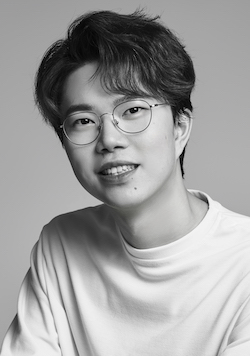
Wenzel Jakob is an Associate Professor and leader of the Realistic Graphics Lab at EPFL's School of Computer and Communication Sciences , currently on sabbatical at the University of Tokyo until Fall 2025. His work bridges inverse graphics , physically based rendering , and compiler/systems research , with a focus on developing robust differentiable rendering frameworks. Key research themes include: Backpropagation through rendering algorithms for inverse problems Material appearance modeling and optical measurement systems Compiler design for differentiable rendering pipelines Manifold sampling techniques and light transport derivatives His group created Mitsuba renderer , Dr.Jit , and Instant Meshes (recipient of the SGP Software Award). Recent publications (2021–2024) explore volumetric rendering, SDF-based differentiable systems, and efficient Monte Carlo estimators. Awards include the ACM SIGGRAPH Significant Researcher Award , Eurographics Young Researcher Award , and ERC Starting Grant . Teaching roles (2016–2024) span Advanced Computer Graphics and Numerical Methods for Visual Computing courses at EPFL.
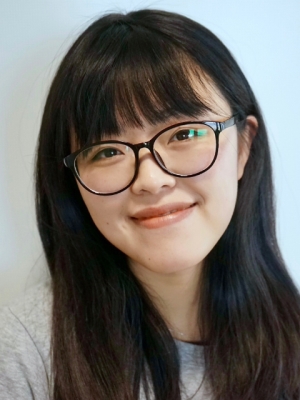
Jinjin Gu is a tenure-track Assistant Professor at Sofia University "St. Kliment Ohridski" 's INSAIT (Institute for Computer Science, Artificial Intelligence, and Technology), leading research on visual cognition and intelligence. Her work spans visual perception, processing, generation, and reasoning. Education: Ph.D. in Electrical and Computer Engineering (2024), University of Sydney B.Sc. in Computer Science and Engineering (2020), Chinese University of Hong Kong, Shenzhen Her research focuses on visual cognition , including agentic systems , diffusion models , GAN architectures , model interpretability , super-resolution , and multimodal vision-language systems . She has developed novel paradigms like HYPIR for diffusion-quality restoration at GAN speeds. Recent publications highlight advancements in image/video restoration , generative modeling , and visual reasoning . Her work addresses critical challenges in model generalization , causal interpretation , and real-world application robustness . Scientific Awards: Stanford University's World's Top 2% Scientists (2024) Yunfan Award at World Artificial Intelligence Conference (WAIC) (2023) She has advised students contributing to TPAMI, CVPR, and ICLR publications, and serves as Area Chair for ICLR 2026, NeurIPS 2025, and ICML 2025.
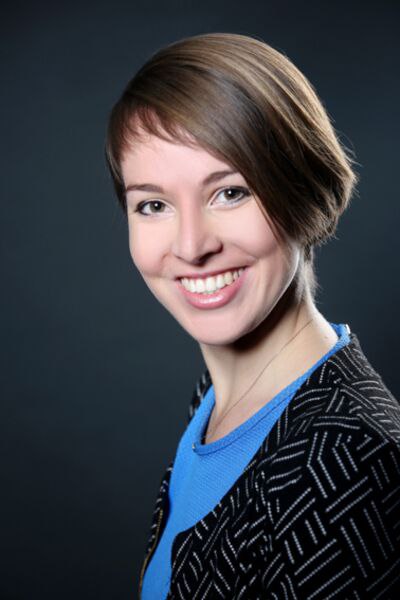
Siyu Tang is an Assistant Professor in the Department of Computer Science at ETH Zürich, where she leads the Computer Vision and Learning Group (VLG) at the Institute of Visual Computing. Her research focuses on computational models for human perception and digitalization through computer vision and machine learning. Her educational background includes: PhD in Computer Science, Max Planck Institute for Informatics (2017), supervised by Prof. Bernt Schiele Master of Science in Media Informatics, RWTH Aachen University Bachelor of Science in Computer Science, Zhejiang University, China Dr. Tang specializes in human-centric computer vision, developing statistical models for motion analysis, pose estimation, and digital human creation. Her work integrates machine learning with optimization techniques to enable machines to interpret human activities from visual data, with applications spanning virtual reality, healthcare, and human-computer interaction. Key research thrusts include generative models for content creation, egocentric vision, and human motion synthesis. Her recent publications (2024-2025) demonstrate intense focus on 3D human modeling and neural rendering, with Gaussian splatting emerging as a dominant technique for efficient avatar creation and scene reconstruction. Significant themes include text-driven motion synthesis using diffusion models, relightable avatars, surgical training applications, and egocentric multimodal pretraining. This work bridges computer vision, graphics, and machine learning to advance human digitalization. No scientific awards were mentioned in the provided text. Dr. Tang leads the VLG research group at ETH Zürich, mentoring PhD and Master's students in human-centric AI. She previously secured an early career research grant from the Max Planck Institute for Intelligent Systems to establish her independent research program. Her group actively pursues funding for projects in human motion analysis, 3D reconstruction, and generative modeling, with strong industry and clinical collaborations. The Computer Vision and Learning Group (VLG) operates within ETH's Institute of Visual Computing, maintaining dedicated facilities for motion capture, 3D scanning, and high-performance computing. The team collaborates internationally with institutions like the Max Planck Society and focuses on scalable solutions for real-world human digitalization challenges, including surgical training systems and immersive virtual environments.
El Mahdi Chayti is a doctoral researcher at the École Polytechnique Fédérale de Lausanne (EPFL), affiliated with the School of Computer and Communication Sciences and the Department of Computer Science. He works under the Machine Learning and Optimization (MLO) lab, focusing on advanced optimization techniques and machine learning theory. Contact: el-mahdi.chayti@epfl.ch . Current Roles: Doctoral Assistant and PhD Student in Computer and Communication Sciences Research Interests: Machine Learning, Optimization Algorithms, Meta-learning, Second-order Optimization, Energy Forecasting His publications highlight expertise in stochastic and cubic Newton methods, hybrid deep learning models, and personalized collaborative learning. Recent works include Improving Stochastic Cubic Newton with Momentum (2025) and Hybridization of Deep Learning with Physical Knowledge for Energy Forecasting (2019) . Key trends in his research span optimization efficiency , meta-learning frameworks , and integration of domain knowledge into AI models. He emphasizes theoretical guarantees and practical scalability in algorithm design.
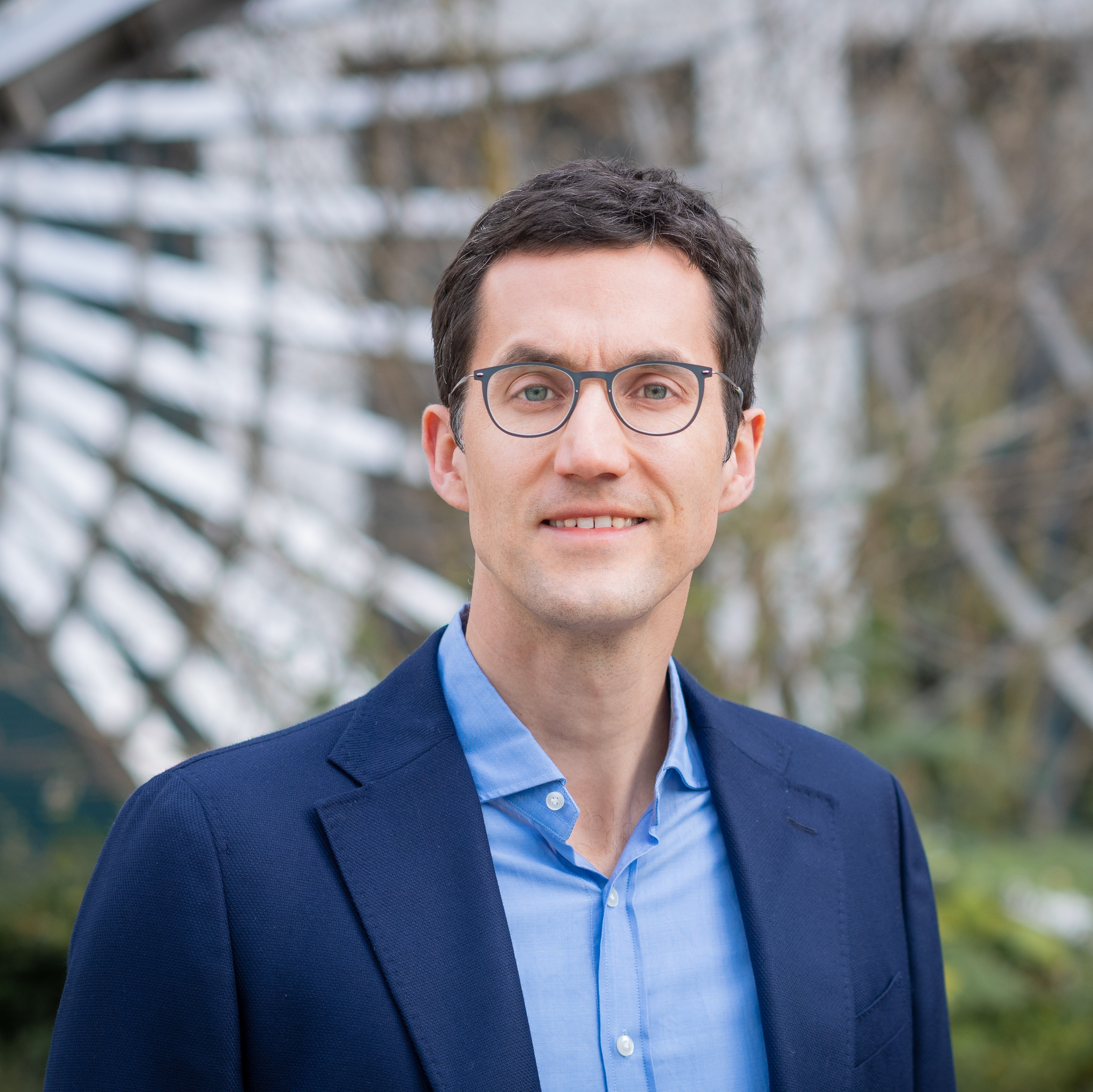
Fabio Sigrist is a Professor of Applied Statistics and Data Science at the Institute of Financial Services Zug (IFZ) , part of the Lucerne University of Applied Sciences and Arts . He also holds a Senior Scientist and Lecturer position at the Seminar for Statistics, ETH Zurich . His career spans academic research, industry consulting, and project leadership in finance and data science. PhD in Statistics (2013), ETH Zurich MSc in Mathematics with distinction (2008), ETH Zurich MEd in Mathematics Education (2008), ETH Zurich Sigrist’s research focuses on integrating Machine Learning with Spatial Statistics for applications in Financial Econometrics and Credit Risk . His work includes developing novel algorithms like GPBoost and KTBoost , advancing spatio-temporal modeling , and applying tree-based boosting to financial problems. Projects such as CreHos (credit risk in hospitality) and NISMO (interpretable real estate modeling) highlight his interdisciplinary approach. His publications address challenges in large-scale spatial data , loss given default modeling , and stock volatility prediction . He contributes to software development with tools like spate (R package) and varycoef (spatially varying coefficients).
Reinhard Heckel is a Tenured Associate Professor (equivalent to Professor) of Machine Learning at the Department of Computer Engineering, Technical University of Munich (TUM), and Adjunct Faculty in Electrical and Computer Engineering at Rice University. He was previously an Assistant Professor at Rice (2017–2019), a postdoc in the Berkeley Artificial Intelligence Research (BAIR) Lab at UC Berkeley, and a researcher at IBM Research Zurich. Education: PhD, 2014 – ETH Zurich Visiting PhD student – Department of Statistics, Stanford University Research Interests: His work centers on machine learning and information processing with three major thrusts: (1) developing algorithms and theoretical foundations for deep learning, especially for accelerated magnetic resonance imaging ; (2) establishing rigorous mathematical and empirical underpinnings for modern machine-learning systems; and (3) leveraging DNA as a digital information-storage medium , including error-correction coding and system design for DNA-based storage. Across more than 100 peer-reviewed papers since 2017, Heckel’s research exhibits a strong interdisciplinary blend of computational imaging , machine-learning theory , and molecular data storage . Recent 2024–2025 publications show intensive focus on robust MRI reconstruction using diffusion priors, evaluation of bias in large web-text corpora, and state-of-the-art error-correcting codes for DNA storage channels. A forthcoming book, Deep Learning for Computational Imaging (Oxford University Press), consolidates his contributions to the field. Outreach & Media: Keynote and panel talks at DLD, TUM, and major ML conferences Op-eds in Frankfurter Allgemeine on ChatGPT and DNA storage Science features on Netflix, BBC, and German television (Galileo, “Gut zu Wissen”) Research Environment: At TUM he leads a group investigating theoretical and applied aspects of deep learning, compressed sensing, and coding for DNA storage. Open-source repositories on GitHub (e.g., dna_data_storage , supplement_deep_decoder ) provide code and data supplements accompanying his publications.
Rasmus Kyng is an Assistant Professor in the Department of Computer Science at ETH Zurich, where he has been since 2019. His research focuses on fast algorithms for graph problems, convex optimization, and their applications in machine learning. He has received grants from the Swiss National Science Foundation, including project grants and a starting grant. Education: B.A. in Computer Science from the University of Cambridge (2011), PhD in Computer Science from Yale University (2017), advised by Daniel A. Spielman. Postdoctoral positions included Harvard University (2018–2019) and a research fellowship at the Simons Institute, UC Berkeley (2017). Research Interests: Development of nearly linear-time algorithms for fundamental graph problems (e.g., maximum flow, minimum-cost flow), dynamic graph algorithms, discrepancy theory, and fine-grained complexity. His work bridges numerical linear algebra and combinatorial optimization, emphasizing practical implementations such as the Laplacians.jl package. Awards: FOCS Best Paper Award (2022), Inaugural ICBS Frontiers of Science Award (2022), Machtey Award (Best Student Paper, FOCS 2017). Teaching: Advanced Graph Algorithms and Optimization (ETH Zurich, 2020–2023), Algorithms, Probability, and Computing (ETH Zurich, 2020–2022). Supervised numerous PhD students and mentored postdocs in theoretical computer science. Labs/Teams: Co-leads a research group with Maximilian Probst Gutenberg, focusing on dynamic graph algorithms and optimization. Collaborations include work on sparsification, spectral graph theory, and machine learning applications.
Rima Alaifari is currently an Assistant Professor for Applied Mathematics at ETH Zürich , where she works on applied analysis, inverse problems, and scientific machine learning. Her research emphasizes stability analysis and regularization of inverse problems, applied harmonic analysis, phase retrieval, and operator learning. She is an associated member of the ETH AI Center and will transition to a full professorship at RWTH Aachen University in 2025 as Chair of Analysis and its Applications. Education : PhD in Mathematics (2010–2014, Vrije Universiteit Brussel); MSc in Applied and Industrial Mathematics (2005–2010, Johannes Kepler University) Research Focus : Stability estimates for inverse problems, phase retrieval in wavelet/Gabor transforms, operator learning with neural networks, and deep learning robustness. Article Trends : Her recent work bridges harmonic analysis with machine learning, focusing on phase retrieval stability, adversarial perturbations in imaging, and mathematically grounded neural operator frameworks like ReNO and CNO. Advising : She has supervised PhD students like Tandri Gauksson and Matthias Wellershoff. Former postdoctoral researchers include Francesca Bartolucci (now at TU Delft) and Jesse Railo (Finnish Inverse Prize winner).
Prof. Dr. Urs F. Greber is an Ordinary Professor of Molecular Cell Biology at the Department of Molecular Life Sciences, Faculty of Mathematics and Natural Sciences, University of Zurich. His research focuses on understanding how viruses interact with host cells, particularly adenoviruses and rhinoviruses that cause human respiratory diseases. He leads the Greber Lab, which investigates viral entry mechanisms, replication processes, and the cellular responses to infection. Greber's research interests span virology, molecular cell biology, and infection mechanisms. His lab explores how viruses take control over membrane and lipid functions, cytoplasmic transport processes, and cellular metabolism to support their gene expression and progeny formation. They employ system-wide profiling, molecular cell biology approaches, light microscopy, and machine learning for image analysis to map the cell state underlying viral infections of cultured and primary human cells, including lung organoids and iPSC-derived macrophages. A key focus is understanding cell-to-cell variability in infection phenotypes and the mode-of-action of antiviral compounds. The Greber Lab has published extensively on adenovirus biology, including viral entry, uncoating, nuclear import, and assembly mechanisms. Their recent work has identified broad-spectrum antiviral compounds, elucidated alternative virus entry pathways, and developed innovative imaging and AI-based approaches for quantifying virus infectivity. Their research contributes to understanding how viruses break down host defense barriers and has implications for antiviral therapy development. Greber has supervised numerous PhD and Master's students including Cornelia Bircher, Alessandro Savi, Franziska Tomas, Alfonso Gomez-Gonzalez, Anthony Petkidis, and Dominik Olszewski. His lab has received funding from the Swiss National Science Foundation, including a grant for coronavirus research during the pandemic. The lab actively collaborates with other research groups at University of Zurich, ETH Zurich, and international institutions. Current projects include exploring how viral DNA interactions contribute to infection outcome variability, investigating adenovirus egress mechanisms, and developing high-throughput screening methods for antiviral compounds.
Barbara Plank is a full professor and chair for AI and Computational Linguistics at Ludwig Maximilian University of Munich (LMU), where she heads the Munich AI and NLP (MaiNLP) lab and co-directs the Center for Information and Language Processing (CIS). She additionally serves as a visiting full professor at the IT University of Copenhagen, maintaining active dual institutional affiliations in computational linguistics and NLP research. Her research focuses on human-centric natural language processing challenges, particularly learning under sample selection bias (domain adaptation, transfer learning) and annotation bias, learning with limited data through continual/semi-supervised/weakly-supervised methods, multimodal learning at language-vision-speech interfaces, and fortuitous supervision for variety-space aware language understanding. She pioneers methodologies addressing human label variation as a critical factor in model robustness rather than mere noise. Recent publications (2024-2025) reveal dominant trends in modeling human label variation across NLP tasks, especially natural language inference and entity recognition, alongside dialectal language processing and LLM evaluation frameworks. Her work systematically investigates how human disagreement in annotations can be leveraged to build more robust, adaptable systems rather than treated as errors. Scientific recognition includes: ERC Consolidator Grant for the DIALECT project advancing natural language understanding for non-standard languages and dialects ACL 2024 Area Chair Award for the paper 'VariErr NLI: Separating Annotation Error from Human Label Variation' Leading the MaiNLP lab at CIS (LMU), she directs research integrated with MCML (Munich Center for Machine Learning), Munich Intelligent Robotics, ELLIS Unit Munich, UniDive, and COST action. Current projects include ERC-funded DIALECT and KLIMA-MEMES, focusing on human-facing NLP solutions for real-world language diversity challenges. She actively shapes the field through ACL leadership as VP-Elect and numerous keynotes emphasizing human-centric approaches. The MaiNLP lab at Akademiestr. 7, 80799 Munich, drives innovation in computational linguistics through interdisciplinary collaboration, maintaining strong ties with European research networks while developing practical applications for language variation and robust NLP systems. The lab's work directly informs her teaching in LMU's Computational Linguistics programs, bridging research and education in cutting-edge NLP methodologies.
Gabriele Facciolo is a Professor at the Centre Borelli, ENS Paris-Saclay, France. He is a Senior Member of the Institut Universitaire de France (IUF) and holds an Innovation Chair (2025). His research focuses on image and video processing, remote sensing, and super-resolution techniques. Current affiliations: Centre Borelli (ENS Paris-Saclay), Institut Universitaire de France His research explores advanced algorithms for satellite stereo pipelines, real-time deblurring, denoising, and explainable AI systems for legal evidence enhancement. He coordinates projects like ANR SURECAVI (Super-resolution for visible camera systems) and ANR IMPROVED (video enhancement for judicial use), with recent work on Gaussian Splatting for Earth Observation and multi-date satellite super-resolution. Notable scientific achievements include the IGARSS 2025 Top 10 Student Paper Award and leadership in projects funded by ANR (€890k) and Prime Minister's entities (SGDSN/ANSSI). His work bridges computational imaging, defense applications, and digital forensics. Project leadership: SURECAVI, IMPROVED, BOFOR Key technologies: GPU acceleration, real-time processing, optical flow estimation, RPC refinement Gabriele actively contributes to open-source tools like S2P (Satellite Stereo Pipeline), MGM (MultiGlobal Matching), and OMNIflip. He teaches in the Master MVA program and collaborates across institutions (ENPC, UPF).
Franziska Boenisch is a tenure-track faculty member at the CISPA Helmholtz Center for Information Security , where she co-leads the SprintML lab for Secure, Private, Robust, Interpretable, and Trustworthy Machine Learning. Her research lies at the intersection of privacy-preserving machine learning and trustworthy ML , with a focus on differential privacy , model inversion attacks , and privacy risks in federated learning . She completed her PhD at Freie Universität Berlin and was a postdoctoral fellow at the Vector Institute for Artificial Intelligence under Prof. Nicolas Papernot. Her work has been recognized with awards such as the Academics Rising Start Award (3rd Prize) and the GI Junior-Fellow honor. Her research spans a wide range of topics including memorization in diffusion models , watermarking generative models , membership inference attacks , and privacy-preserving federated learning . She has published extensively in top-tier venues like ICML , NeurIPS , ICLR , and CVPR . She is actively involved in the academic community, serving as an Area Chair for NeurIPS , Track Chair for ACM AsiaCCS , and co-organizing workshops at ICML . She is currently hiring PhDs, postdocs, and research interns for her group.
Jian Peng is an Assistant Professor in the Department of Computer Science at the University of Illinois at Urbana-Champaign. His research focuses on computational biology, machine learning, and their applications to protein structure prediction, drug design, and molecular modeling. He has contributed to advancements in antibody engineering, protein-ligand docking, and generative models for biological systems. Key research areas include: Machine Learning for Molecular Modeling Protein Structure Prediction Antibody and Peptide Design Genomics and Single-Cell Analysis Structure-Based Drug Discovery His work emphasizes integrating deep learning techniques with biological datasets to address challenges in precision medicine, drug development, and systems biology. Notable achievements include developing the FastFold system to accelerate AlphaFold training and pioneering flow-based methods for antibody design. Awards include the Overton Prize (2020), recognizing contributions to computational biology. His research has been published in top journals and conferences, spanning topics from protein mutation prediction to geodesic-based immune complex modeling.
Dr. Patrick Bianchi serves as a Researcher at the Swiss Seismological Service (SED) within ETH Zurich, Switzerland, where he conducts fundamental investigations into earthquake processes and rock failure mechanisms. His work integrates laboratory experimentation with numerical modeling to advance seismic hazard assessment methodologies. His research spans seismology, rock mechanics, and experimental geophysics with emphasis on fault mechanics and earthquake physics. Dr. Bianchi employs distributed fiber-optic strain sensing, acoustic emission monitoring, and triaxial testing to study strain localization, precursory signals, and the transition from aseismic to seismic deformation in crystalline and siliclastic rocks. His experimental approaches bridge laboratory observations with natural fault behavior, focusing on how surface roughness, wear processes, and fluid pressure influence fault stability and rupture nucleation. Analysis of his 15 most recent publications (2024-2025) reveals consistent investigation of strain heterogeneities, preslip phenomena, and energy dissipation during earthquake preparation phases. Key methodological trends include scaling deep learning applications from labquakes to megathrusts, comparative laboratory-numerical modeling of pre-failure processes, and environmental loading effects on brittle failure thresholds. His work demonstrates particular expertise in distributed strain sensing techniques applied to fault zone deformation. As an integral member of the Swiss Seismological Service, Dr. Bianchi contributes to Switzerland's national seismic monitoring network and fundamental research on earthquake physics. The SED operates as ETH Zurich's center for seismic hazard analysis, maintaining real-time earthquake detection systems while conducting experimental and theoretical research to improve understanding of seismic sources and ground motion prediction.
Edward Andò is a Principal Scientist and Lecturer at École Polytechnique Fédérale de Lausanne (EPFL) , with affiliations to the IMAGING group and the College of Engineering (ENAC) . His work bridges software development, experimental geomechanics, and educational initiatives in image analysis. Principal Scientist, IMAGING-GE (EPFL) Lecturer, Sciences et Génie Civil (SGC-ENS) Lecturer, Enseignement à la Défense (EDEE-ENS) Research Interests Andò specializes in 3D image analysis , with a focus on X-ray tomography , digital volume correlation (DVC) , and micromechanical modeling of granular materials. His work addresses geomechanical failure mechanisms, soil dynamics, and open-source software tools like SPAM for practical material analysis. Publication Trends His recent articles (2025–2023) emphasize X-ray tomography for studying granular deformation , rock failure , medical imaging , and soft particle compaction . Topics span geomechanics, computational modeling, and software development for experimental validation. Labs and Teams Andò contributes to the IMAGING group at EPFL, where he co-develops the SPAM (Software for Practical Analysis of Materials) . His teaching includes courses like Fundamentals of Image Analysis and Quantitative Imaging for Engineers , which integrate hands-on training with theoretical frameworks.