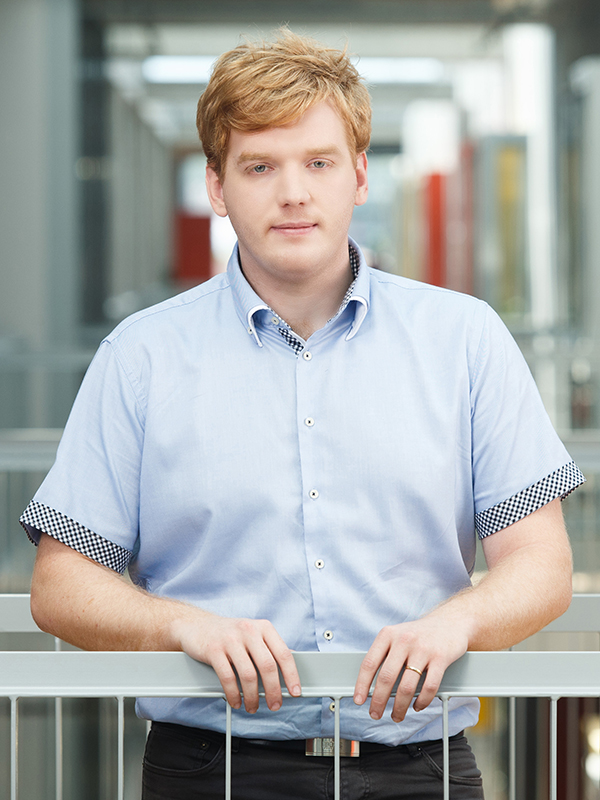
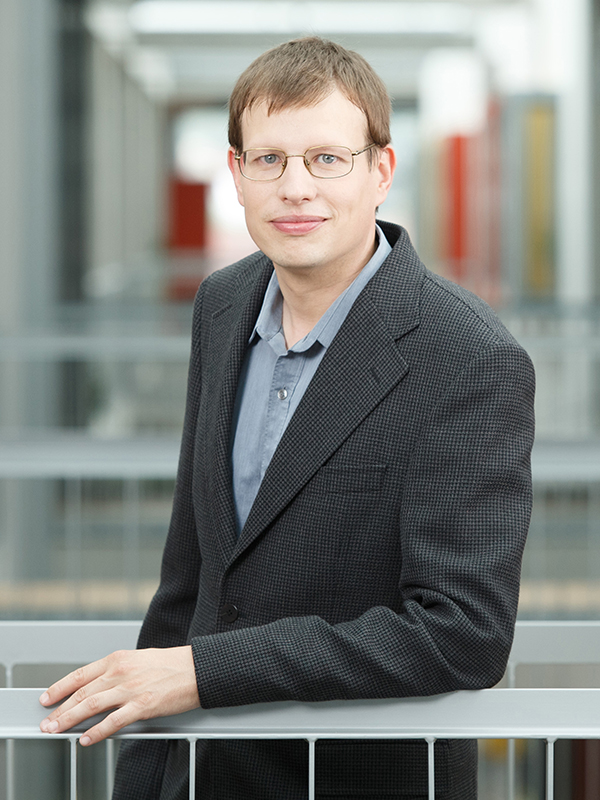
Tadej Škvorc is an Assistant Professor at the Department of Intelligent Systems, Faculty of Computer and Information Science, University of Ljubljana. He is a member of the Laboratory for Machine Learning and Language Technologies and actively engages in research projects related to media applications. Current affiliation: Department of Intelligent Systems, Faculty of Computer and Information Science, University of Ljubljana His research focuses on machine learning and language technologies, particularly vector embeddings for media applications. He contributes to projects such as ARRS (L2-50070) from 2023 to 2026. Research areas: Machine learning, NLP, media technologies As of the latest information, no scientific awards have been specified in his public profile. He is involved in teaching and laboratory activities, including classes on Intelligent Systems Programming and Databases. His office is located in Room R2.26 at the Laboratory for Machine Learning and Language Technologies.
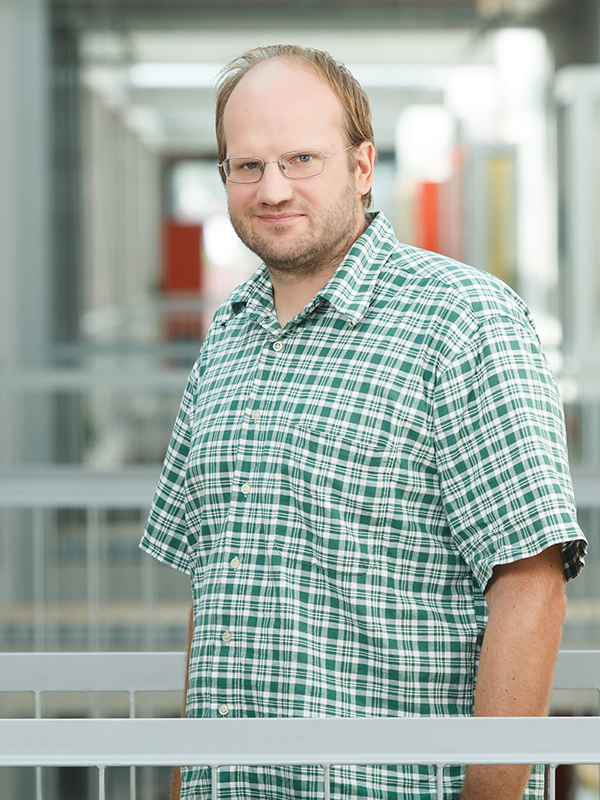
Domen Šoberl serves as an Assistant Professor and laboratory member within an academic institution, teaching the core course Artificial Intelligence 1 while actively contributing to the Artificial Intelligence Laboratory's research initiatives. His scholarly focus centers on Artificial Intelligence, with specific emphasis on Machine Learning methodologies and broader Computer Science applications, driving both educational curriculum development and laboratory innovation. No scientific awards were documented in the source material. Regarding academic mentorship and funding, the provided text contains no references to student advisees or research grants. He maintains an active role in the Artificial Intelligence Laboratory, utilizing office space R2.55 and coordinating through institutional contact channels including direct phone access at +386 1 479 8210.
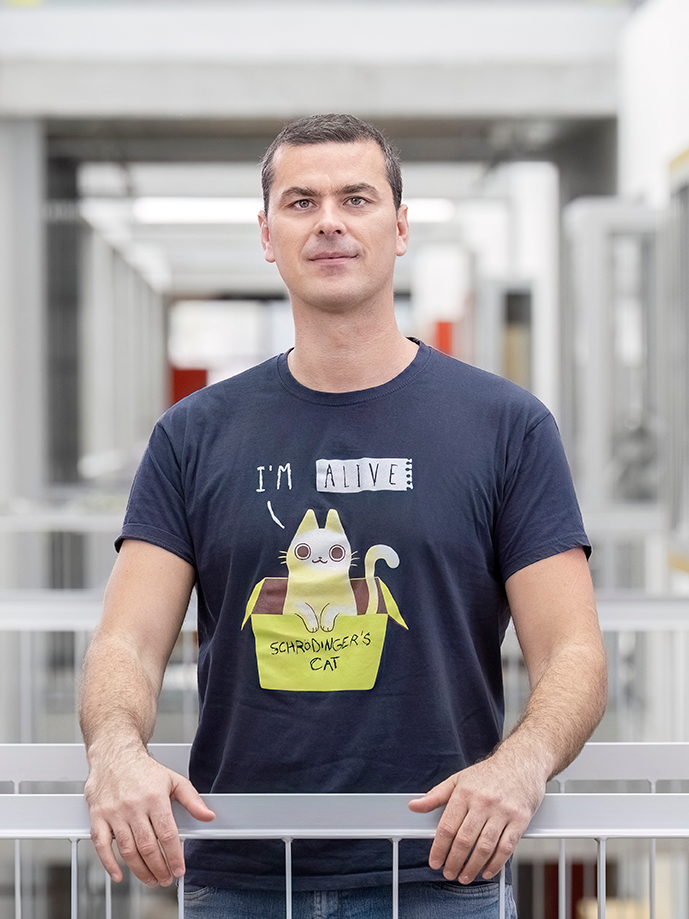
Polona Tratnik is a researcher affiliated with the Laboratory for Machine Learning and Language Technologies . Her work focuses on interdisciplinary research combining computational methods with linguistic analysis. Affiliation : Laboratory for Machine Learning and Language Technologies
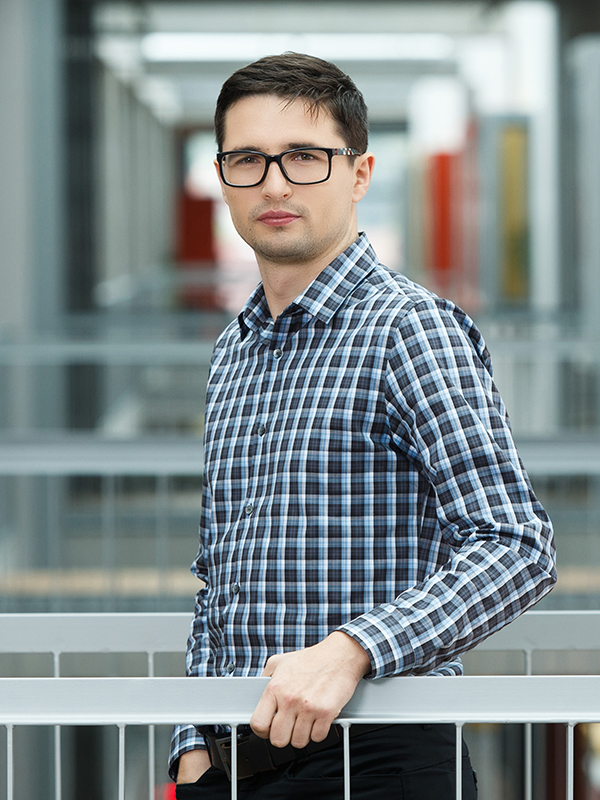
Jure Tuta serves as an Assistant Professor and Collaborator at the Faculty of Computer and Information Science, University of Ljubljana, where he is affiliated with the Laboratory for Intelligent Information Systems (LIIS) in room R2.20. His institutional role encompasses teaching and research activities within Slovenia's premier computer science faculty. His research focuses on Intelligent Information Systems, Artificial Intelligence, and Data Science, with specific emphasis on Computer Communications infrastructure and intelligent data processing. These interests align with LIIS's mission to advance computational methodologies for complex information environments, particularly through machine learning applications in networked systems. As a core member of LIIS, Dr. Tuta contributes to the laboratory's research output in intelligent system design while supporting academic instruction in computer science disciplines. His work bridges theoretical frameworks with practical implementations in data-driven communication technologies.
Matej Vitek is an Assistant and researcher at the Faculty of Computer and Information Science, University of Ljubljana, where he is a core member of the Computer Vision Laboratory (CVL). His work centers on advancing biometric security through innovative computer vision techniques, with primary focus on lightweight sclera recognition systems. His academic journey includes: BSc in Computer Science and Informatics and Mathematics and Physics (2015), University of Ljubljana MSc in Computer Science and Informatics and Mathematics and Physics (2018), University of Ljubljana PhD in Computer and Information Science (2024), University of Ljubljana Vitek's research expertise spans computer vision, biometrics, and deep learning, with specialized focus on sclera recognition. His methodology emphasizes developing computationally efficient models suitable for mobile deployment while addressing critical challenges like model bias and segmentation accuracy. Past explorations include quantum computing circuits and game development, demonstrating interdisciplinary versatility. Current work integrates anomaly detection for deepfake identification and explainable AI frameworks for biometric systems. Publication trends reveal consistent advancement in sclera biometrics through large-scale collaborative efforts, including benchmarking competitions and novel dataset creation. His work demonstrates progression from foundational segmentation studies toward optimized lightweight architectures and bias mitigation strategies, reflecting the field's evolution toward practical, ethical deployment. Vitek actively contributes to two major ARRS-funded projects: J2-50065 'DeepFake DAD' (2023-2026) developing anomaly detection methods for deepfake identification, and J2-50069 'MIXBAI' (2023-2026) creating interpretable mechanisms for explainable biometric AI. Previously, he participated in the P2-0214 Computer Vision research program (2019-2024) and consulting initiatives. As a CVL laboratory member, he collaborates within a specialized biometrics team led by Prof. Peter Peer (supervisor) and Prof. Vitomir Štruc (co-supervisor), working alongside researchers Peter Rot, Žiga Emeršič, and Blaž Meden. His technical environment combines academic research with practical implementation challenges in resource-constrained settings.
Prof. dr. Igor Vobič is a researcher affiliated with the Laboratory for Machine Learning and Language Technologies. His work focuses on advancing machine learning and natural language processing methodologies. Laboratory Member: Machine Learning and Language Technologies
Petar Vračar is an Assistant Professor affiliated with the Laboratory for Machine Learning and Language Technologies. His work spans interdisciplinary domains, integrating AI with healthcare, education, and computer science. Research interests include: Risk stratification and early disease detection using AI Reliable prediction models for imbalanced datasets Machine learning applications in bioinformatics and medical diagnostics Game-based e-learning systems leveraging mobile technologies Computer modeling for coronary artery disease and ischemia detection Currently leading the STRATIFYHF project (2023-2027) focused on heart failure detection, his career demonstrates sustained collaboration through bilateral research initiatives since 2010.
Martin Vuk is an Assistant Professor of Mathematics at the Faculty of Computer and Information Science, University of Ljubljana, where he teaches Linear Algebra, Numerical Mathematics, and Introduction to Probability and Statistics. He is an active member of the Laboratory for Mathematical Methods in Computer and Information Science, contributing to interdisciplinary research at the intersection of mathematics and computational sciences. His research spans theoretical and applied domains including Numerical Analysis (addressing the curse of dimensionality), Complex Analysis (holomorphic mappings and foliations), Dynamical Systems , and Cryptography . He maintains strong focus on Mathematics Education , developing pedagogical frameworks to enhance critical thinking through projects like NA-MA POTI. Dr. Vuk has led significant research initiatives: Holomorphic mappings and foliations, harmonic analysis and hamiltonian systems (ARRS, 2009-2012) Conquering the Curse of Dimensionality by Using Background Knowledge (ARRS, 2013-2016) NA-MA POTI - Natural Science and Mathematical Literacy (Structural Funds, 2016-2022) Cryptogram - cryptography portal development (Structural Funds, 2017) Razvoj pilota mQuiz (Structural Funds, 2019) Within the Laboratory for Mathematical Methods in Computer and Information Science, he integrates theoretical mathematics with practical computing applications, particularly in educational technology and security systems development.
Lan Žagar is an Assistant Professor at the Faculty of Computer and Information Science, University of Ljubljana, Slovenia, and a core member of the Bioinformatics Laboratory. His academic appointment and research leadership in multiple funded projects confirm his faculty status within the institution. His research spans critical computational biology domains with emphasis on: Bioinformatics and Systems Biology for biological network analysis Machine Learning applications in high-throughput genomic data Drug discovery pipelines using knowledge technology approaches Dimensionality reduction techniques for complex datasets Single-cell genomics data visualization and mining Conformal prediction methods implementation Project leadership demonstrates consistent research trajectory: Current : DALI4US (2024-2026) on primary school data literacy; L2-3170 (2021-2024) on prognostic biomarker discovery Past : AXLE (2012-2015) EU big data analytics; BioPharm.si (2016-2020) biologics development; ITzaSKP (2018-2020) agricultural policy analytics; multiple ARRS-funded genomics initiatives As a laboratory member, he contributes to developing computational toolboxes for survival analysis, genomic data integration, and curse-of-dimensionality solutions, maintaining active research engagement through continuous project funding cycles.
Slavko Žitnik is an Associate Professor and Vice-dean at the Faculty of Computer and Information Science, University of Ljubljana, where he is a member of the Laboratory for Data Technologies. His academic career spans multiple research projects and international collaborations focusing on data technologies and natural language processing. His primary research interests include information retrieval, information extraction, natural language processing, entity extraction, relationship extraction, coreference resolution, data merging, redundancy elimination, and ontologies. Dr. Žitnik's work often bridges theoretical computer science with practical applications in various domains including education, healthcare, and smart city ecosystems. Dr. Žitnik has led and participated in numerous significant research projects including P2-0359 on Ubiquitous Computing (2023-2027), PoVeJMo on Adaptive Natural Language Processing with Large Language Models (2023-2026), and the GOBLIN COST Action for building global networks of large-scale knowledge graphs. His recent work demonstrates a strong focus on adapting natural language processing techniques with large language models and creating practical applications of these technologies. His scientific contributions span multiple domains including: Natural Language Processing and Information Extraction techniques Knowledge graph construction and integration Applications in education, healthcare, and smart city ecosystems Development of practical tools and systems for data processing Dr. Žitnik has established international collaborations with institutions including Harvard University's Department of Biomedical Informatics (where he conducted a research visit from July to October 2022), the University of South Florida, and various European partners through COST Actions and other collaborative frameworks.
Bojan Žunkovič serves as an Assistant Professor at the University of Ljubljana, Faculty of Computer and Information Science, where he is affiliated with the Laboratory for Machine Learning and Language Technologies. His teaching portfolio includes Machine Learning, Algorithms and Data Structures 1, Topical Research Themes 2, and Selected Topics in Artificial Intelligence 2. His research spans critical domains in computational science: Machine Learning Artificial Intelligence Quantum Computing Natural Language Processing Tensor Networks Reservoir Computing Current investigations focus on quantum-classical machine learning integration, particularly through tensor network methodologies and NISQ-era quantum advantage exploration in reservoir computing systems. Dr. Žunkovič leads the ARRS-funded project J2-60034 (2025-2027) titled "Practical quantum advantage of reservoir computing on NISQ devices" and previously directed project J1-2480 (2020-2023) on "From classical to quantum machine learning through tensor networks". Based in laboratory room R2.26, he contributes to the Laboratory for Machine Learning and Language Technologies' mission of advancing AI and computational linguistics research through both theoretical frameworks and practical implementations.
Jana Faganeli Pucer is an Assistant Professor at the Faculty of Computer and Information Science, University of Ljubljana, Slovenia. She is affiliated with the Laboratory for Machine Learning and Language Technologies, where she contributes to research and teaching in computational methods and data analysis. Teaching: Programming 2, Big Data Research Focus: Machine learning algorithms, statistical analysis, and language technologies Her work spans interdisciplinary applications, including medical data analysis and environmental monitoring. She has participated in multiple Slovenian Research Agency projects (2016–2022) such as: BI-RS/16-17-052: Ischemia detection via data mining L1-7542: Computationally intensive statistical methods J3-9264: Cognitive mechanisms in working memory J1-1716: Environmental pollutant tracking
Jure Demsar is an Assistant Professor and researcher at the Faculty of Computer Science and Informatics, University of Ljubljana . He collaborates internationally with institutions including Washington University (Human Connectome Project), Yale University (Anticevic Lab), Harvard University (Applied Neuroimaging Statistics Lab), and multiple Slovenian faculties. Research visits: Yale University (2 months), Newcastle University (3 months), Groningen University (3 months), University of Houston (1 month) His research bridges neuroinformatics and computational modeling , focusing on: Brain dynamics and behavior EEG and fMRI data analysis Group behavior simulations Computer game development Recent publications highlight interdisciplinary applications of data science in neuroscience and psychology, with tools like bayes4psy for Bayesian analysis. Awards include recognition for pedagogical excellence and research achievements (2017/2018).
Luka Fürst is an Assistant Professor affiliated with an academic institution, specializing in Computer Science and Software Engineering . His work spans theoretical and applied domains, including Graph Theory , Programming Pedagogy , and Machine Learning . Teaches courses: Programming 2 , Programming 1 , Algorithms and Data Structures 2 , Computability and Computational Complexity Active in the Software Engineering Laboratory as a member Research Focus : Luka Fürst explores graph grammar induction , feature selection in object detection , and innovative programming education methods . His projects include KATARINA (promoting foundational computing knowledge) and legacy work on Computer Vision and Visual Assistant systems. Publications reveal a trajectory centered on formal language processing , machine learning techniques , and interactive educational tools , with recurring themes in software engineering and algorithm design .
Assoc. Prof. Dejan Lavbič is an Associate Professor at the University of Ljubljana, Faculty of Computer and Information Science with 15+ years of academic experience. His research focuses on intelligent agents, multi-agent systems, ontologies, and blockchain-based smart contracts , particularly in semantic web technologies, AI services ecosystems, and information quality assessment . Doctor of Philosophy in Computer Science, University of Ljubljana (2010) Bachelor of Science in Computer Systems and Informatics, University of Ljubljana (2004) His scientific contributions span semantic web frameworks, blockchain applications, and machine learning systems, with 20+ peer-reviewed publications. Recent works include: Smart contract classification with AI Cardano blockchain identity systems Information quality metrics with gamification Awards include Cambridge CAE certification and multiple industry certifications. He mentors students in decentralized applications, AI development, and smart city ecosystems , having guided 6+ diploma/master theses on topics like automated essay grading and air quality data collection.