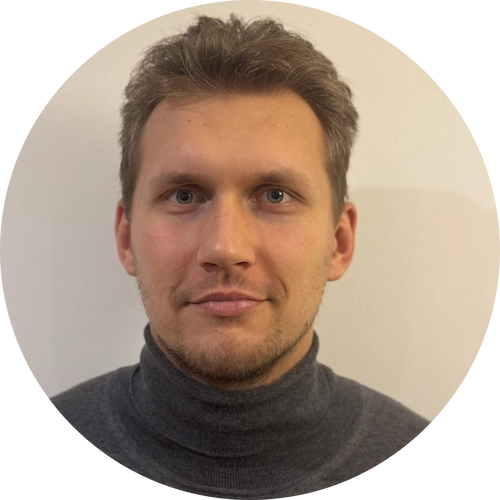
Rokas Bendikas is a Visiting Lecturer at ISM and a Doctoral Candidate in Foundational AI at University College London and University of California, San Diego. His research focuses on model-based Reinforcement Learning and 3D scene understanding for robotic control, with a secondary focus on biomedical engineering applications in cardiac electrophysiology modeling. PhD Supervisors: Prof. Danail Stoyanov (UCL) and Prof. Hao Su (UCSD) Education: Master's in Robotics at Imperial College London (Dyson Robotics Lab) Bachelor's in Biomedical Engineering at King's College London Research Interests: Combining spatial understanding and model-based RL for robotic autonomy. Previously applied deep learning to atrial fibrillation mechanisms during his biomedical engineering studies. Specializes in simulation-based approaches for medical device development and surgical planning. Articles Trends: Dominated by robotics control (2023) and cardiac modeling (2020-2021), reflecting dual focus between foundational AI and biomedical applications. Strong emphasis on simulation-driven innovation in both domains. Professional Experience: Software engineering at MathWorks and Qualcomm, research in CEMRG (atrial fibrillation computational modeling). Labs/Teams: Dyson Robotics Lab (Imperial), Cardio-Electro Magnetic Research Group (KCL), and current collaborations at UCL/UCSD AI labs.
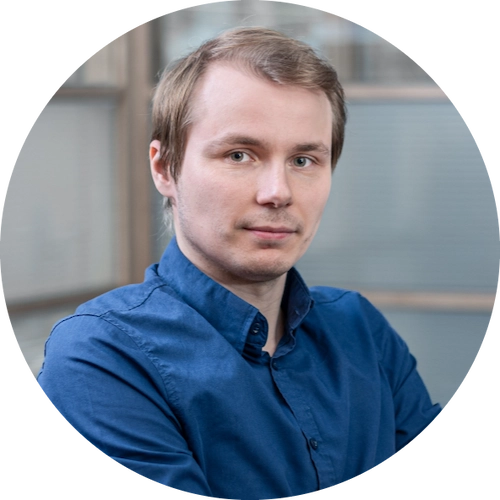
Aleksandr Christenko is a Senior Researcher at Visionary Analytics, affiliated with ISM University of Management and Economics. His work bridges statistics, machine learning, and economic policy analysis to address labor market dynamics and EU-level challenges. BSc in Economics and Politics from ISM University MSc in Computer Modeling from Vilnius University His research interests include: Novel statistical approaches (survival analysis, synthetic control methods) Machine learning applications in labor markets Automation and AI impact on occupational mobility EU policy evaluation for training programs and innovation schemes Recent publications analyze automation's effects on work intensity, AI's role in occupational safety, and skill shifts during economic transitions. His teaching spans statistics, data mining, and econometrics, including courses like Financial Econometrics (GRAE018) and Research Methodology (GRAE001).
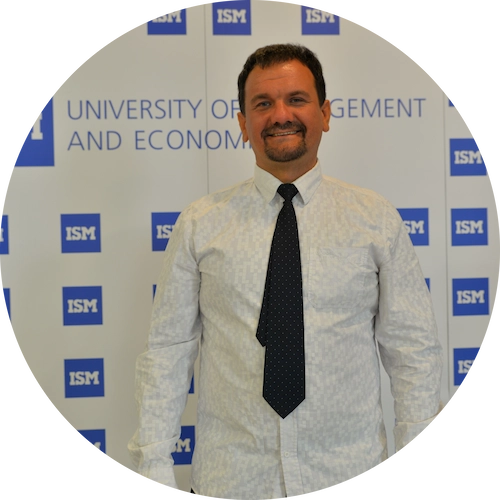
Dr. Mindaugas Kavaliauskas holds dual affiliations: he is a Visiting Professor at ISM and an Associate Professor at Kaunas University of Technology. His expertise spans applied mathematics, mathematical statistics, and machine learning, with a focus on applying these methods in medicine, industry, and business. Education: Bachelor's and Master's in Mathematics at Kaunas University of Technology PhD in Mathematics (2005) from the Institute of Mathematics and Informatics (Vilnius) Research interests include data analytics leveraging mathematical and machine learning techniques. He actively contributes to interdisciplinary projects, integrating statistical methods into diverse sectors. Teaching areas encompass multivariate statistical analysis, time series analysis, stochastic processes, and machine learning methods in economic forecasting.
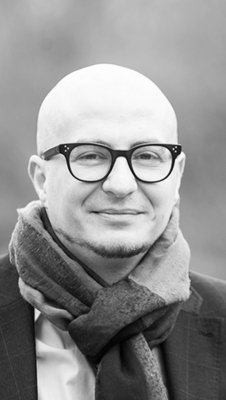
John Antonakis is a Professor of Organizational Behavior at the University of Lausanne’s Faculty of Business and Economics (HEC). He also serves as a Visiting Scholar at ISM. His research focuses on charisma, leadership development, crisis management, and research methodology. Antonakis has secured over $2.45 million in research funding and has been recognized as a Clarivate-Web of Science Highly Cited Researcher (2019) and ranked in the world’s top 2% researchers by PLOS Biology (2020). His work spans prestigious journals like Science, Nature Human Behavior, and Academy of Management Journal. Notable contributions include studies on charismatic leadership’s economic impact, crisis rhetoric effects, and methodological critiques of statistical techniques. Antonakis has held editorial roles including Editor-in-Chief of The Leadership Quarterly and served on top journal boards. Media outlets such as the New York Times and BBC frequently cite his research. Key Research Themes: Charismatic leadership, crisis leadership, leadership measurement, and statistical methodology. Recent Focus: Deep learning applications in leadership detection, gender gaps in venture funding, and pandemic leadership strategies. His publications emphasize rigorous experimental design and transparency in research practices, contributing to methodological advancements in organizational studies.
Prof. Tomas Krilavičius is the Dean of the Faculty of Informatics at Vytautas Magnus University (VMU) and Head of the Artificial Intelligence Laboratory at the Research Institute for Natural Sciences and Technology. He earned his PhD in 2006 from the University of Twente in the Netherlands with the thesis "Hybrid Techniques for Hybrid Systems". His research focuses on applications of artificial intelligence, data visualization, and language technologies in domains such as defense, logistics, financial technology (fintech), and insurance technology (insurtech). In addition to his academic roles, he serves as: Vice President of the INFOBALT Association Board member of UAB kevin EU Member of the Lithuanian Artificial Intelligence Association Member of the Kazimieras Simonavičius University Council Lithuanian representative in the NATO Science and Technology Organization (STO IST) He actively contributes to startup development, organizes international conferences, leads scientific projects, and played a key role in shaping the Lithuanian Artificial Intelligence Strategy.
Dr. Egidijus Anisimovas serves as a Professor at Vilnius University's Institute of Theoretical Physics and Astronomy (ITPA), where he conducts research in Theoretical and Computational Physics with a focus on quantum systems. His academic career spans multiple decades, with publications extending from 2002 to 2025, demonstrating sustained research productivity and evolving scientific interests. His primary research interests include: Cold atomic gases and their quantum properties Optical lattices for quantum simulation Quantum dynamics in periodically driven systems Floquet engineering of quantum matter Topological phases in engineered quantum systems Machine learning applications in quantum physics Anisimovas has made seminal contributions to the field of periodically driven quantum systems, particularly through his development of the high-frequency approximation from a Floquet-space perspective. His work has enabled significant advances in quantum simulation using ultracold atoms, especially in creating and manipulating topological phases like Chern insulators in optical lattices. Recent research directions include exploring higher-dimensional quantum systems through time-space crystalline structures and integrating machine learning techniques with quantum state analysis. His scientific impact is evident through numerous publications in high-impact journals including Physical Review A, Physical Review B, New Journal of Physics, and Physical Review Letters. His 2015 paper in New Journal of Physics on high-frequency approximation for periodically driven quantum systems has become particularly influential in the field. Professor Anisimovas maintains an active research program that bridges fundamental quantum mechanics with practical applications for quantum technologies. His work demonstrates a consistent evolution from earlier research on quantum dots to contemporary investigations of neural quantum states and topological phenomena in higher dimensions.
Dr. Lena Golubewa is a Trainee Researcher at the Institute of Chemical Physics (ICP) of Vilnius University, specializing in biophysics and nanomaterials research. Her work bridges physics, materials science, and biomedical applications, with a particular focus on developing novel sensing and imaging technologies for cancer diagnostics and therapy. Her research interests span multiple interdisciplinary fields including Biophysics , Carbon-based nanomaterials , Spectroscopy , Hyperspectral imaging , and Machine learning . Dr. Golubewa has made significant contributions to surface-enhanced Raman spectroscopy (SERS) using black silicon substrates with gold coatings, diamond color centers for thermometry, and carbon nanotubes for cancer theranostics. Her work consistently combines experimental nanomaterial development with sophisticated data analysis techniques, showing an evolution from fundamental nanomaterial characterization toward direct biomedical applications. Dr. Golubewa's recent publications demonstrate a strong trend toward integrating machine learning with advanced optical microscopy for medical diagnostics. Her 2024 work particularly highlights applications in thyroid cancer diagnostics and analysis of pulmonary arterial hypertension. This represents a significant shift from her earlier work on nanomaterial characterization toward clinical applications. Dr. Golubewa leads significant research projects including: "Spatial distribution of diatom photosystems: machine learning-based reconstruction from nonlinear optical microscopy images" (Research Council of Lithuania, Nr. S-PD-24-158) "Persistent phosphors based on luminescent spinel nanocrystals exhibiting quantum-cutting effect for bio-imaging" (Polish-Lithuanian research project DAINA-3, agreement No [S-LL-24-11]) These projects reflect her expertise at the intersection of nanomaterials, optical imaging, and computational analysis.
Dr. Alytis Gruodis is a Senior Research Fellow (0.5 FTE) at the Institute of Chemical Physics within Vilnius University's Faculty of Physics. His research spans molecular electronics, quantum chemical simulations, and computational chemistry with a focus on conformational studies and molecular structure-property relationships. His scientific interests center on conformational studies , ground state/excited state geometry optimization , and understanding the role of substituents for polar molecular compounds . His work bridges theoretical chemistry with practical applications in semiconductor materials and optoelectronic devices. Dr. Gruodis has made significant contributions to the understanding of molecular charge transport, semiconductor materials design, and quantum chemical modeling approaches. Analysis of his publication record reveals a strong focus on molecular electronics applications, particularly in the development of organic semiconductor materials for solar cells and light-emitting devices. His research demonstrates expertise in quantum chemical calculations applied to complex molecular systems, with special attention to structure-property relationships that govern electronic behavior in organic materials. Dr. Gruodis has served as Editor-in-chief for the scientific journal "Innovative Infotechnologies for Science, Business and Education" from 2008 to 2018, and has been Editor-in-chief of the journal "Applied Business: Issues and Solutions" since 2022, demonstrating leadership in academic publishing. His collaborative research spans multiple international partnerships, with publications in high-impact journals including Journal of Physical Chemistry, Advanced Functional Materials, and Dyes and Pigments. His work shows consistent productivity across decades, with recent publications focusing on novel semiconductor materials, quantum chemical simulations, and applications of artificial intelligence in materials science.
Dr. Donatas Narbutis is an Associate Professor at the Institute of Theoretical Physics and Astronomy (ITPA), Faculty of Physics, Vilnius University. His research spans astrophysics and computational methods, with a focus on machine learning applications to star cluster analysis and multi-modal imaging. Research Interests: Astrophysics, Data Visualization, Machine Learning Teaching: Data Analysis with Python, Fundamentals of Astrophotometry, Advanced Data Analysis for Masters and PhD students Leadership: Program Committee member for the International Conference on AI in Finance
Rimantas Kybartas , Associate Professor at Vilnius University's Faculty of Mathematics and Informatics , specializes in machine learning and software systems architecture . His research focuses on multi-class classification methodologies, including pair-wise classifiers and fuzzy template systems. Current academic affiliation: Vilnius University Key research domains: Neural Networks, Ensemble Learning, Pattern Recognition Teaching focus: Software Systems Architecture and Design His publication record from 2010-2012 demonstrates expertise in solving multi-classification challenges through innovative ensemble architectures and similarity feature engineering. Notably, he has developed frameworks for mineral recognition and generalized multi-category neural network systems. Recent publications reveal emphasis on: Optimizing pair-wise classifier ensembles Addressing complexity in neural network design Domain adaptation techniques for classification tasks Statistical learning in multi-class contexts
Prof. habil. dr. Gintautas Dzemyda is a leading Lithuanian computer scientist, Professor and Senior Researcher at Vilnius University Institute of Data Science and Digital Technologies (VU DMSTI), and Head of the Cognitive Computing Group . He is simultaneously affiliated with the Institute of Mathematics and Informatics (MII) in Vilnius, where he has built an internationally recognized scientific school in visual data analysis. Education & Qualifications 1984 – Candidate of Technical Sciences (PhD equivalent), thesis on “Problem Structure Analysis – a Tool for More Effective Optimization”. 1997 – Habilitation Doctor of Technical Sciences, dissertation on “Isolation of Necessary Knowledge to Improve Optimization Efficiency”. 1992 – Associate Professor, Institute of Mathematics and Informatics, Vilnius. 1998 – Professor, Kaunas University of Technology. Research Interests Prof. Dzemyda’s research integrates data science, artificial intelligence, optimization, and cognitive computing . Core topics include dimensionality reduction, multidimensional data visualization, neural-network–based analytics, parallel and distributed computing, multi-criteria decision support, and advanced AI applications in medicine (ophthalmology, cardiology, oncology). His work has pioneered Lithuanian capabilities in visual analytics and large-scale data exploration. Publication Trends Across 270+ refereed works and 2 Springer monographs (2013, 2023), recent outputs (2021–2025) emphasize geometric multidimensional scaling for big-data visualization, deep learning for pancreatic-cancer detection on CT images, reinforcement learning for autonomous navigation, and fraud-detection techniques for highly imbalanced financial datasets. These contributions appear in Springer LNCS/LNNS, Informatica, Journal of Global Optimization, Engineering Applications of Artificial Intelligence , and other top venues. Awards & Recognition Lithuanian State Science Prize (2001 & 2021) Honorary Doctor of the University of Latvia (2019) Knight's Cross of the Order “For Merit to Lithuania” (2007) Doctoral Supervision & Committees He has mentored 28 doctoral graduates (15 direct, 13 through academic descendants) and currently supervises: Dalia Breskuvienė – Classifier training-set optimization Modestas Motiejauskas – Emotion recognition in photographs Victor Bulava – Machine-learning methods for cyber-incident early detection He also chairs or serves on doctoral and habilitation committees at VU, KTU, VGTU, VMU and MII. Laboratory & Projects As Head of the Cognitive Computing Group , Prof. Dzemyda coordinates several national and EU projects, including the current Lithuanian Research Council grant “Geometric Method for Multidimensional Scaling” (S-MIP-20-19, 2020-2022) and the SMART programme project “CognitiveSTATS” (2021-2023) focused on combating misinformation during pandemics. His team develops open-access tools for large-scale data visualization and contributes to the MIDAS national research-data archive.
Assoc. Prof. Dr. Gintautas Tamulevičius serves as Director of the Institute of Data Science and Digital Technologies at Vilnius University. His primary affiliation is with the Image and Signal Analysis Group, where he contributes as a Senior Researcher and Chief Researcher in projects. Doctor of Science in Technology (2008) Pedagogical Title: Associate Professor (2014, Vilnius Gediminas Technical University) Active in IEEE Computer Society and Signal Processing Society Dr. Tamulevičius specializes in speech signal processing, with research spanning three core domains: Speech Modeling : Autoregressive/linear prediction, nonlinear fractal modeling, non-parametric approaches Recognition Systems : Deep learning-based methods, Hidden Markov models, Wave-U-Net architectures Quality Assessment : Voice phonation evaluation, vocal fold condition analysis using acoustic methods His publication trends show strong focus on: Deep learning applications for speech processing 2D feature space analysis for recognition tasks Fractal dimension-based emotion classification Language preservation through technological development Human-centered AI applications Biomedical signal processing As an educator, he has taught: Digital Signal Processing (VGTU 2012–present) Speech Signal Processing (VGTU 2008–present) Data Visualization (VGTU 2015) User Interface Design (VU 2018–present) Audio Signal Processing (VU 2020–present) His editorial contributions include reviewing for: Informatica IEEE Access Neurocomputing Baltic Journal of Modern Computing Nonlinear Analysis: Modeling and Control IEEE Journal of Biomedical and Health Informatics International Journal of Applied Mathematics and Computer Sciences He has supervised doctoral research including: Daniel Zakševski (2023–2027): Deep learning models for speech enhancement Monika Danilovaitė (2020–2026): Voice quality assessment methods Tatjana Liogienė (2012–2016): Multistage speech emotion classification
Prof. Dr. Virginijus Marcinkevičius is a Professor at Vilnius University , serving as the head of the Smart Technologies Research Group and the Artificial Intelligence Laboratory within the Institute of Data Science and Digital Technologies . He is also a Senior Researcher , Project Lead Researcher , and Group Leader . Based in Vilnius, Lithuania, he has been instrumental in advancing research in machine learning , artificial intelligence , cybersecurity , and natural language processing . Research Interests: Machine Learning & AI Cybersecurity & Threat Detection Natural Language Processing Hyperspectral Imaging & Remote Sensing Autonomous Systems & Robotics Big Data & Cloud Computing His work spans both theoretical and applied aspects, including IoT security , visual analytics , and intelligent decision support systems . Recent projects include the development of propaganda detection systems , hyperspectral unmixing algorithms , and autonomous driving agents . Doctoral Supervision: He has supervised 19+ PhD students and 5+ consultants , covering topics from machine learning in cybersecurity to neural machine translation and autonomous UAV navigation . Projects & Grants: He has led or contributed to 15+ national and EU-funded projects , including: CognitiveSTATS – COVID-19 data literacy platform Propaganda and Disinformation Research – ML-based detection DAMIS – Data mining system for national research Raštija 2 – Lithuanian language resource integration Publications: He has authored or co-authored 60+ peer-reviewed publications in journals like IEEE Access , Informatica , Frontiers in Psychology , and Machine Vision and Applications . Professional Memberships: He is a member of the Lithuanian Computer Society , Lithuanian Mathematical Society , and Lithuanian Operations Research Society .
Prof. Dr. Remigijus Paulavičius is a Senior Researcher, Professor, and Group Leader at the Blockchain and Quantum Technologies Group of Vilnius University. He earned his Doctor of Science degree in Computer Science in 2010 from Vilnius University's Institute of Mathematics and Informatics, focusing on global optimization with simplex subdomains under the supervision of Dr. J. Žilinskas. Research Interests : His work bridges global optimization methods with blockchain and quantum computing. Key areas include non-convex bilevel programming, derivative-free optimization algorithms (e.g., DIRECT), and applications in blockchain scalability, consensus protocols, and quantum circuit design. Scientific Awards : Best Paper Award, Journal of Global Optimization (2014) Funding from Lithuanian State Science and Studies Foundation for doctoral students (2007–2009) Member, Young Academy of the Lithuanian Academy of Sciences (since 2019) Projects & Leadership : Leads research on blockchain simulators, quantum machine learning frameworks, and optimization toolboxes (e.g., DGO, DIRECTGO). Involved in international collaborations and conference committees, including AIChE and EUROPT. Publications : Over 70 works on global optimization algorithms, blockchain applications, and quantum computing, with recent focus on generative AI, energy consumption in blockchains, and reproducibility in machine learning.
Dr. Ernestas Filatovas is a Senior Researcher and Chief Researcher in the Project at Vilnius University's Institute of Data Science and Digital Technologies (formerly Institute of Mathematics and Informatics), where he has been affiliated since 2013. He leads the Blockchain and Quantum Technologies Group, focusing on cutting-edge research at the intersection of quantum computing, blockchain, and artificial intelligence. Previously, he served as an Associate Professor and Lecturer at Vilnius Gediminas Technical University's Faculty of Fundamental Sciences from 2013 to 2019. Dr. Filatovas earned his Doctor of Technology in Computer Science Engineering from Vilnius University Institute of Mathematics and Informatics in 2012. His dissertation, supervised by Prof. Dr. Olga Kurasova, focused on the interactive solution of multi-criteria optimization problems. His research spans multiple high-impact domains, with particular expertise in blockchain technologies, quantum computing, artificial intelligence, and machine learning. He has pioneered work in quantum blockchain implementations, reproducibility of AI research through blockchain verification, and quantum machine learning applications. His research bridges theoretical computer science with practical applications in financial markets, healthcare, and distributed systems. His extensive publication record—over 50 scientific papers, with more than 25 in Clarivate Analytics-indexed journals—demonstrates consistent productivity and international collaboration. Recent work shows a clear trajectory toward quantum-enhanced AI systems, blockchain-based research verification frameworks, and quantum algorithms for practical problems. Laureate of the 4th LMA Young Scientists' Conference (2014) INFOBALT scholarship 2nd place winner (2014) Lithuanian State Science and Studies Foundation funding recipient (2009, 2010) Recognized as one of Lithuania's most active doctoral students Master's degree with honors (2006) Dr. Filatovas leads multiple significant research projects, including the 2021-2024 project 'Solving the problems of reproducibility of scientific research in the field of artificial intelligence using blockchain technologies' as team leader, and the 2023-2027 project 'Development and validation of quantum machine learning methods using prepared datasets' as Chief Researcher. He has also contributed to international collaborations such as the Spanish-funded 'High Performance Solutions for Modern Scientific Computing Challenges' (2019-2021). His popular science contributions, including the VU news portal article 'Quantum Computing: Who and Why?', demonstrate his commitment to science communication. As a key member of Vilnius University's Blockchain and Quantum Technologies Group, Dr. Filatovas contributes to Lithuania's growing reputation in quantum computing research and blockchain innovation, working closely with international collaborators across Europe.