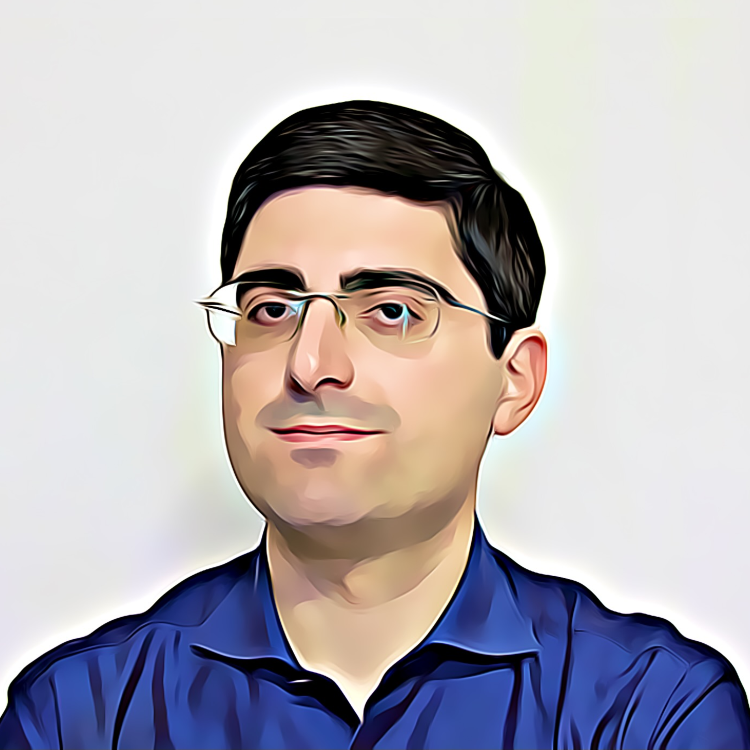
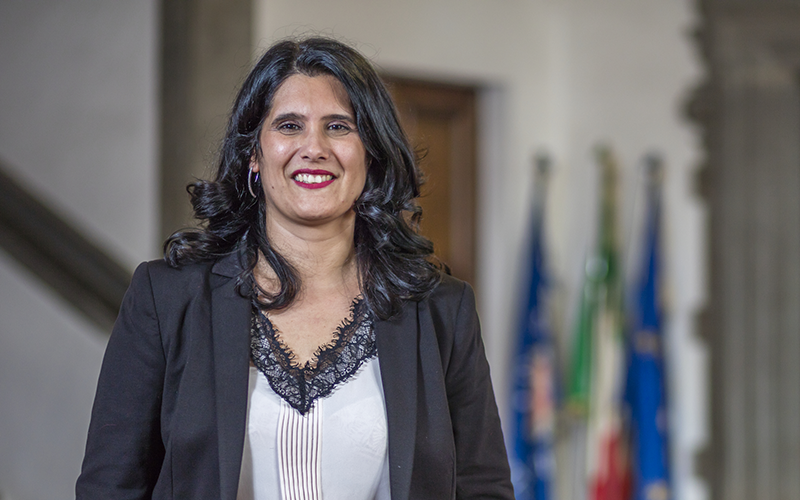
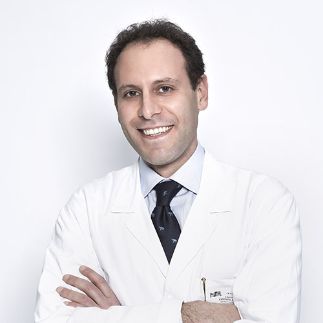
Domenico Tortorella is an Assistant Professor (RTD-A) in the Department of Computer Science at the University of Pisa, Italy. He earned a PhD in Computer Science (cum laude) in 2024, an MSc in Computer Science (cum laude) in 2020, and a BSc in Computer Engineering (cum laude) in 2017. His research focuses on graph neural networks , reservoir computing , and deep learning on graphs , particularly addressing challenges like heterophily, over-squashing, and structural encoding. He contributes to conferences such as ICANN, ESANN, and NeurIPS, and is part of the Computational Intelligence and Machine Learning (CIML) research group. Research Trends: His recent publications emphasize Graph topology encoding (e.g., Randomized Ising Models) Efficiency in graph kernels and neural networks Explainable AI for deep graph models Stability analysis in echo state networks Handling heterophilic graphs via reservoir computing Temporal resolution in recurrent architectures Grants & Service: He received funding from the Future AI Research (FAIR) project (2024–2025) and served on program committees for ICANN, NeurIPS workshops, and GbRPR. He was Vice-Chair of the IEEE Student Branch of Pisa (2023–2024) and holds memberships in IEEE, ACM, ENNS, and IAPR's CVPL.
Anna Monreale is an Associate Professor of Computer Science at the University of Pisa and serves as the Delegate for Masters and Continuing Education. She concurrently holds an Adjunct Professor position at Dalhousie University's Faculty of Computer Science. Her institutional leadership includes vice-coordinating the National Doctorate in Artificial Intelligence for Society and chairing the Internships Committee for the Master's in Data Science & Business Informatics. She earned her Bachelor's and Master's degrees with honors in Computer Science from the University of Pisa in 2007 and completed her PhD there in 2011. Prior to her faculty appointment, she conducted research on European projects from 2011-2014 and has been affiliated with the CNR's Institute of Information Science and Technologies since 2008. Professor Monreale's research centers on ethical AI development, with core expertise in data mining, explainable AI, and privacy-by-design methodologies. Her work bridges technical innovation with societal impact, particularly in healthcare applications, mobility data analysis, and social media systems. She emphasizes transparency and legal compliance in algorithmic decision-making. Her recent publications (2023-2025) reveal a concentrated focus on trustworthy AI frameworks, with significant contributions to federated learning privacy, trajectory data protection, and real-time explainability systems. She actively addresses emerging challenges in content moderation regulation and healthcare AI deployment. As an educator, she teaches Data Mining and Data Science Lab courses while directing major academic initiatives. She leads a PNRR-funded national project and a European research project, with over 90 publications and 3,200+ citations reflecting her scholarly impact. She is a key member of the University of Pisa's KDD Lab and maintains strong ties with CNR research units.
Alessandro Avenali is Full Professor of Economic-Management Engineering (ING-IND/35) at Sapienza University of Rome, member of the Antonio Ruberti Department of Computer, Control and Management Engineering, and serves on both the Management-Engineering and Information-Engineering area councils. Since 2002 he has taught Economics & Business Organisation in the B.Sc. in Management Engineering and since 2011 Procurement Management in the corresponding M.Sc. programme. Education & career: 1998 – Professional engineering qualification 2002 – Ph.D. in Operations Research, Sapienza University of Rome 2002-2006 – Research fellow, “Economics & Management of Network Services” 2006-2011 – Assistant (researcher) professor 2011-2022 – Associate professor 2022-present – Full professor Research interests lie at the intersection of industrial economics, operations research and mechanism design , with a long focus on the techno-economic analysis and regulation of network industries —especially telecommunications and transport. Specific themes include bottleneck access pricing, dynamic access-regulation models, infrastructure-investment incentives, asymmetric regulation, vertical relationships, bundling, auction design for scarce network resources, top-down/bottom-up cost models and the efficient allocation of public funds in network services. His recent publications (2023-24) revolve around sustainable public transport : decarbonisation strategies for bus fleets under macro-economic and technological uncertainty, cost-prediction of local bus services via machine-learning, adoption drivers for zero-emission buses, and cost-effectiveness assessments of alternative bus technologies. Complementary work addresses higher-education policy, efficiency of universities under resource constraints, and interdisciplinary legal-economic views on dematerialised business branches. Scientific awards & memberships: While no specific prizes are listed, Prof. Avenali is an active member of several international academic associations: EARIE, EEA, WCTRS, ITEA, AiIG, SIEP, SIET and SIPOTRA. Research funding & supervision: He has been scientific director of projects commissioned by the Italian Ministry of Infrastructure, Lazio & Puglia Regions, the National Association of Passenger Road Hauliers, Vodafone Italia and Fastweb SpA, among others. Since 2002 he has advised numerous B.Sc. and M.Sc. theses on business economics, industrial-systems economics and procurement. Labs & teams: No dedicated laboratory is mentioned; his activities are embedded within the DIAG department and interdisciplinary master programmes detailed above.
Renato Bruni is Associate Professor at the Department of Computer, Control and Management Engineering of Sapienza University of Rome , Italy. He teaches in the Management Engineering and Bioinformatics study programs. His research focuses on Optimization, Machine Learning, and Bioinformatics , with applications spanning spacecraft control, biomedical engineering, and financial portfolio management. Research Interests His scientific activity is centered on: Combinatorial Optimization Data Mining and Classification Derivative-free Optimization Computational Molecular Biology Information Reconstruction Recent Research Trends The analysis of his publications reveals a strong focus on: Power distribution network optimization Spacecraft attitude control via mathematical programming Higher education data quality and institutional heterogeneity Robust classification with limited training data Stochastic dominance in portfolio selection Physician scheduling optimization Grants and Collaborations Principal Investigator in Sapienza-funded projects (2013–2019) Member of EU H2020 RISIS 2 project (2019–2022) Collaboration with international experts: Peter L. Hammer (Rutgers), Fabio Tardella (Sapienza), and Istat (Italian National Statistical Institute)
Paolo Di Giamberardino is an Associate Professor in Control Engineering (09/G1, ex ING-INF/04) at the Department of Computer Science and Systems Engineering 'Antonio Ruberti', Sapienza University of Rome. He holds a Master's degree in Electronic Engineering and a PhD in Systems Engineering from the same institution. Currently teaching Digital Control Systems (Master's in Control Engineering) and Fundamentals of Automatic Control (Bachelor's in Information Engineering), his academic career spans over 25 years with significant contributions to university governance as a member of Departmental and Faculty Councils. Education: Master's in Electronic Engineering, PhD in Systems Engineering (Sapienza University of Rome) Research Interests focus on systems analysis and control, with applications to biomedical systems (HIV/AIDS dynamics, portal hypertension diagnosis), epidemic modeling (arboviruses, measles, multi-group populations), optimal control for resource allocation, photonic control systems, and MEMS-based biomedical devices. His work bridges theoretical control methodologies with practical implementations in healthcare, robotics, and energy management. Recent Publications highlight innovative applications in photonic logic gates, advanced epidemic containment strategies, and machine learning integration for medical diagnostics. A unifying theme is the use of control theory to address complex biological and medical challenges. Scientific Awards : 2018 Best Short Paper/Poster Award at ICINCO Academic Contributions include leadership in national research projects (PRIN 2005, 2008), participation in international conferences (WSEAS CSCC, ICINCO), editorial roles (IEEE ICRA Associate Editor, International Journal on Computer Methods in Biomechanics), and extensive supervision of undergraduate and graduate theses. His career demonstrates a commitment to both theoretical advancements and real-world applications in systems and control engineering.
Mirko Giagnorio is an Assistant Professor of Management Engineering at Sapienza University of Rome's Department of Computer, Control, and Management Engineering 'Antonio Ruberti' (DIAG). He holds a PhD from the same university, awarded the Best Doctoral Thesis Award 2023 by the Italian Society of Transport Economics and Logistics (SIET). Research Focus: His work centers on transport cost-benefit analysis, electrification, zero-emission buses, and sustainable network industries with emphasis on economic, environmental, and social dimensions. Publications: His research appears in journals like Transportation Research Part A/D/E and Renewable & Sustainable Energy Reviews, covering themes such as electric mobility economics, policy frameworks for decarbonization, and machine learning applications in transport cost modeling. Grants & Projects: Funded by institutions including the Ministry of Transport and Infrastructures, ANAV, ISFORT, Lazio Region, and Metropolitan City of Rome. Visiting Positions: Conducted research at Swedish National Road and Transport Research Institute (VTI) in 2022 and Cornell Tech in 2023. Awards: Best Doctoral Thesis Award 2023 (SIET)
Francesco Leotta is a Tenure Track Assistant Professor in the Department of Computer, Control and Management Engineering at Sapienza University of Rome, specializing in ubiquitous computing, human-computer interaction, and digital humanities with applications in smart spaces, smart manufacturing, and cultural heritage. His educational background includes a PhD in Engineering in Computer Science (2014), Master Degree in Computer Science Engineering (2010), and Bachelor Degree in Computer Science Engineering (2006), all with honors from Sapienza University of Rome. He has been qualified to practice as a Computer Science Engineer since 2010. Leotta's research pioneers 'habit mining' for learning human behaviors from unlabeled sensor data, focusing on usability for technicians through readable process models and for end users via accessible interfaces including chatbots and solutions for people with disabilities. His recent work centers on Industry 4.0, developing AI-driven digital twin architectures for industrial automation. Key projects include privately funded Rotalaser Fustella 4.0 and publicly funded initiatives FIRST and ElectroSpindle 4.0. Analysis of his 2024-2025 publications reveals strong interdisciplinary trends bridging business process management with IoT and AI, particularly in smart manufacturing maturity models, digital twin composition, and multimodal human-robot interaction. His work consistently integrates theoretical frameworks with practical industrial applications. Scientific recognition includes: Best Paper Award at IEEE International Conference on Web Services (ICWS 2019) Leotta actively contributes to research groups in Human-Computer Interaction, Data Management, and Semantic Technologies, with current projects focusing on adaptive smart manufacturing systems. His grant portfolio demonstrates successful collaboration between academic research and industrial applications in the manufacturing sector. He maintains active involvement in the computing continuum ecosystem through projects like DataCloud, addressing big data pipelines and dark data utilization in industrial contexts.
Daniele Nardi is a Full Professor at Sapienza University of Rome, affiliated with the Faculty of Information Engineering, Computer Science, and Statistics, and the Department of Computer, Control, and Management Engineering "A. Ruberti". He has held this position since 2000 and previously served as a researcher (1988) and associate professor (1992) at the same institution. His academic journey began with a Laurea in Electronic Engineering from Politecnico di Torino (1981) and a Specialization in Control Systems Engineering from Sapienza (1984). Research interests include: Cognitive Robotics Robotic Soccer Emergency Response Robotics Assistive Robotics for Elderly Precision Agriculture Robotics Recent article trends focus on: Synthetic data generation for agricultural monitoring LLM-driven multi-agent planning systems Signal temporal logic applications in robotics Self-supervised learning techniques Virtual reality-based HRI evaluation Embodied AI and online grounding Scientific recognition includes: IJCAI Publisher's Prize 1991 Intelligenza Artificiale award 1993 RoboCup Mid-Size II Place 1998 AAMAS Best Robotic Demo 2008 ECCAI Fellow 2009 He leads the Cognitive Robot Teams laboratory and serves as President of the RoboCup Federation since 2011. As Presidente del Consiglio d'Area in Computer Engineering since 2004, he has shaped academic governance. His teaching includes Seminars in Artificial Intelligence and Robotics at the Master in AI and Robotics program, and Complements of Programming at the undergraduate level.
Enrico Tomelleri is a Professor at the Free University of Bozen-Bolzano (unibz), Italy, where he is affiliated with the Faculty of Agricultural, Environmental and Food Sciences. His research focuses on forest ecology, climate change impacts on mountain forests, and sustainable forest management practices in the Alpine region. His research expertise spans multiple critical areas in forest science: Forest ecology and disturbance ecology Climate-sustainable forestry and silviculture Phenology and eddy covariance measurements Biogeochemistry and global change ecology Biodiversity assessment and conservation Forest geomatics, remote sensing, and drone applications Dr. Tomelleri's recent publications demonstrate a strong focus on understanding how mountain forests respond to climate change and disturbances such as windstorms and bark beetle outbreaks. His work integrates field observations with remote sensing technologies to develop more effective forest monitoring and management approaches. A significant portion of his research examines the impacts of climate change on forest ecosystems in the Alps, with particular attention to phenological changes, carbon cycling, and biodiversity conservation. His research on ancient fruit trees in South Tyrol has provided valuable insights into historical climate patterns through dendrochronological analysis. Dr. Tomelleri teaches courses including Wood Anatomy and Productive Forestry, Forest Inventory, and Management of Mountain Forests in both Italian and English language programs at the university. His recent projects include studying the impacts of the Vaia storm on forest ecosystems and developing innovative monitoring techniques like the TreeTalker system. He maintains an active research profile with numerous publications in 2025 alone, reflecting his significant contributions to understanding forest dynamics in a changing climate.
Anil Jain is a University Distinguished Professor in the Department of Computer Science & Engineering at Michigan State University, where he also served as Department Chair from 1995 to 1999. His extensive career has been dedicated to advancing the fields of pattern recognition and biometrics. His educational background includes: B.Tech. from Indian Institute of Technology, Kanpur (1969) M.S. from Ohio State University (1970) Ph.D. from Ohio State University (1973) Professor Jain's research focuses on statistical pattern recognition , data clustering , texture analysis , document image understanding , and biometric authentication . He is renowned for his contributions to biometrics, holding six patents in fingerprint matching and authoring several authoritative books, including the Springer Handbook of Fingerprint Recognition which received the PSP award. His highly cited survey paper "Data Clustering: A Review" has been instrumental in shaping the field of data clustering. While the provided text does not list multiple recent articles, his 1999 survey paper remains one of the most influential works in computer science, demonstrating enduring impact in data clustering and machine learning. His accolades include: Multiple best paper and outstanding contribution awards from the Pattern Recognition Society (1976, 1979, 1987, 1991, 1992, 1997, 1998) IEEE Transactions on Neural Networks Outstanding Paper Award (1996) IEEE Computer Society Technical Achievement Award (2003) PSP award from the Association of American Publishers (2003) Fellow of IEEE, ACM, and IAPR Fulbright Research Award, Guggenheim fellowship, and Alexander von Humboldt Research Award Delivered the 2002 Pierre Devijver lecture Although specific details about his advisees and research grants are not provided in the text, his leadership as Editor-in-Chief of IEEE TPAMI and his extensive publication record indicate a strong history of mentoring and securing research funding. Professor Jain is currently serving on the National Academies study team on Whither Biometrics, reflecting his ongoing engagement in high-impact collaborative research initiatives in biometrics.
Dr. Hojjat Adeli is a Professor at The Ohio State University , affiliated with multiple departments: Aerospace Engineering, Biomedical Engineering, Biomedical Informatics, Civil and Environmental Engineering and Geodetic Science, Electrical and Computer Engineering, and Neuroscience. He holds the Lichtenstein Professorship and has authored over 400 research publications and ten books since earning his Ph.D. from Stanford University in 1976. Research Interests: Spanning Computer Science , Engineering , and Neuroscience , his work focuses on Machine Learning , Neural Networks , Genetic Algorithms , Fuzzy Systems , Control Systems , and Robotics , with applications in Smart Structures and Wavelets . Scientific Awards: Distinguished Scholar Award from The Ohio State University (1998) Editorial Roles: Founder and Editor-in-Chief of Computer-Aided Civil and Infrastructure Engineering , Integrated Computer-Aided Engineering , and International Journal of Neural Systems . He also served as a Keynote Speaker at ICINCO 2006.
Letizia Bergamasco is a Ph.D. candidate in Computer and Control Engineering at Politecnico di Torino, currently in her 38th cycle (2022-2025). She is affiliated with the SMILIES research group (reSilient coMputer archItectures and LIfE Sciences) within the Department of Control and Computer Engineering (DAUIN), and collaborates with the LINKS Foundation. Bergamasco received her B.Sc. in Electronics Engineering (2018) and M.Sc. in ICT for Smart Societies (2020) with a Double Degree from Politecnico di Torino and Politecnico di Milano through the Alta Scuola Politecnica program. LINKS Foundation researcher since 2020 Focus on medical/industrial AI solutions Her research combines computer vision and AI for clinical applications, particularly in early dementia detection through facial expression analysis and pediatric pain assessment using camera-based vital parameter evaluation. Recent publications demonstrate her work in: Deep learning for cognitive impairment detection Digital twin architectures for energy optimization Neonatal pain assessment systems LLM applications in pediatric emergency diagnostics Current projects involve developing non-invasive biomarkers for dementia diagnosis and AI algorithms for infant monitoring systems. Bergamasco's work bridges computer engineering with healthcare applications, integrating multimodal data analysis and real-time processing systems.
Antonio Ancona is a Full Professor in the Department of Physics at the University of Bari, Italy, specializing in laser-based manufacturing and microfluidic systems. His research bridges fundamental physics with industrial applications, particularly in advanced materials processing and biomedical device development. Professor Ancona's primary research domains include: Laser Materials Processing : Pioneering adaptive beam shaping with deformable mirrors for precision welding, gap bridging in autogenous joints, and surface texturing for functional properties. Microfabrication : Developing femtosecond laser techniques for polymeric lab-on-a-chip devices enabling high-throughput cell sorting and liquid biopsy applications. Surface Engineering : Creating superhydrophobic, anti-icing, and friction-reducing surfaces through laser texturing for aerospace and marine industries. Photonics : Innovating in laser-welded optical components, black quartz photodetectors, and micro-resonator fabrication. Analysis of his 2023-2025 publications reveals three dominant research trajectories: (1) AI-integrated laser welding systems using deep learning for real-time gap classification, (2) Femtosecond laser fabrication of biomedical microdevices focusing on inertial particle sorting, and (3) Laser surface texturing for antimicrobial and acoustic camouflage applications. His work consistently integrates optics, fluid dynamics, and materials science to solve industrial challenges. Scientific Awards: No major scientific awards were documented in the provided materials. Advising and Grants: While specific grant information isn't provided, his extensive publication record (50+ papers 2015-2025) indicates substantial research funding. No doctoral students are listed in available records, though his position suggests graduate student supervision in physics and engineering programs. Labs and Teams: Professor Ancona leads laser processing research within Bari's Department of Physics, collaborating with biomedical engineers on lab-on-a-chip development and industrial partners on advanced manufacturing solutions. His team specializes in femtosecond laser systems, microfluidic prototyping, and surface characterization facilities.
Alessandro Fasso is a full professor of Statistics at the School of Engineering, University of Bergamo, Italy, where he has been teaching since 2000. He serves as Editor in Chief of Environmetrics (2019-) and has held various editorial positions for prestigious journals including Stochastic Environmental Research and Risk Analysis and Advances in Statistical Analysis. His international recognition includes serving as President of The International Environmetrics Society (TIES) from 2017-2019 and as a member of the Council of the International Statistical Institute (ISI) from 2013-2017. Professor Fasso's research focuses on statistical methods and applications to environmetrics, air quality, climate variables, and spatio-temporal data analysis. His work spans functional data analysis for atmospheric profiles, multivariate spatio-temporal modeling of air pollution, and statistical approaches for environmental monitoring networks. He has made significant contributions to understanding collocation uncertainty using heteroskedastic functional regression models and studying vertical smoothing mismatch uncertainty when comparing satellite and radiosonde data. His recent publications (2023-2025) demonstrate a strong focus on PM2.5 pollution modeling, particularly examining livestock-related emissions in the Lombardy region using advanced spatio-temporal techniques. His work increasingly integrates functional data analysis, regularization methods, and uncertainty quantification in environmental applications. The articles show a progression from theoretical statistical developments to practical environmental problem-solving with policy implications. President of The International Environmetrics Society (TIES) (2017-2019) Member of the Council of the International Statistical Institute (ISI) (2013-2017) Elected member of the International Statistical Institute (ISI) Founder and previous Coordinator of GRASPA (2013-2015) Member of WG-GRUAN, Working Group on Atmospheric Reference Observations (2013-) Professor Fasso has successfully supervised numerous PhD students including Emilio Porcu, Michela Cameletti, and Francesco Finazzi. His research has been supported by significant grants including EU Horizon 2020: GAIA-CLIM (budget €500,000), Project AQ2009-EN17 (budget €850,000), and PRIN-2006 (budget €260,000). He has served on evaluation committees for the Italian Research Quality Exercise (VQR 2015-2019) and as a referee for international research councils. His international lecturing activities include PhD courses at Peking University and the University of Bolzano-Bozen.
Antonio Esposito serves as Full Professor of Radiology at Vita-Salute San Raffaele University in Milan, Italy, holding multiple leadership positions at IRCCS Ospedale San Raffaele including Scientific Director of Clinical Trial Center and Deputy Scientific Director IRCCS. With over 250 peer-reviewed publications, his academic career spans from Researcher positions to his current professorship, demonstrating continuous advancement in the field of medical imaging. MD degree (summa cum Laude), 1997-2003, Vita-Salute San Raffaele University Specialization Degree in Radiology (summa cum Laude), 2003-2007, Vita-Salute San Raffaele University Professor Esposito maintains extensive expertise in cardiovascular and oncological applications of advanced imaging technologies, particularly MRI and CT. His research focuses on clinical and preclinical imaging, with specialization in cardiovascular MRI studies and CT examinations. He leads the Preclinical Imaging Facility equipped with high-resolution CT, 7T MRI, Optical, US, and Photoacoustic imaging technologies for experimental disease modeling. His work bridges clinical practice with cutting-edge research methodologies, emphasizing translational applications of imaging technologies in cardiovascular medicine. His recent publications reveal a strong emphasis on cardiac imaging applications, particularly in valvular heart disease, cardiomyopathies, and the integration of machine learning with radiomics. The research demonstrates sophisticated analysis of left ventricular outflow tract dynamics, novel diagnostic approaches for cardiac sarcoidosis, and genetic markers associated with cardiomyopathy. His work consistently combines clinical insights with advanced imaging techniques to address complex cardiovascular conditions. President of the Italian College of Cardiac Radiology by SIRM (2019, 2021) Board member of European Society of Cardiac Radiology Scientific Committee (2017-2020) National Scientific Qualification for Full Professor of Radiology (2017) National Scientific Qualification for Associate Professor of Radiology (2014) Best scientific presentation at National Meeting of Thoracic and Cardiac Imaging (2005) Professor Esposito actively contributes to doctoral education across multiple programs including Molecular Medicine and Cognitive Neuroscience at UNISR. His research leadership extends to directing the Strategic Programme Cardiovascular Radiology and Preventive Imaging, overseeing more than 1,000 cardiovascular MRI studies and 4,000 CT examinations annually. He serves as reviewer for prestigious journals including JACC: Cardiovascular Imaging, European Radiology, and European Heart Journal, demonstrating his standing in the international imaging community. He leads the Preclinical Imaging Facility at IRCCS San Raffaele Hospital, a comprehensive research center equipped with high-resolution CT, 7T MRI, Optical, US, and Photoacoustic imaging technologies dedicated to experimental disease modeling in small animals. Additionally, he directs the Cardiovascular Imaging Functional Unit, providing extensive clinical imaging services while advancing research in cardiovascular applications of medical imaging.