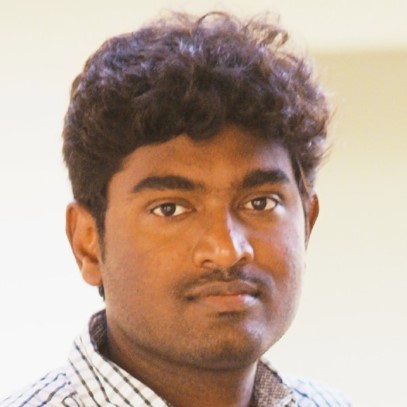
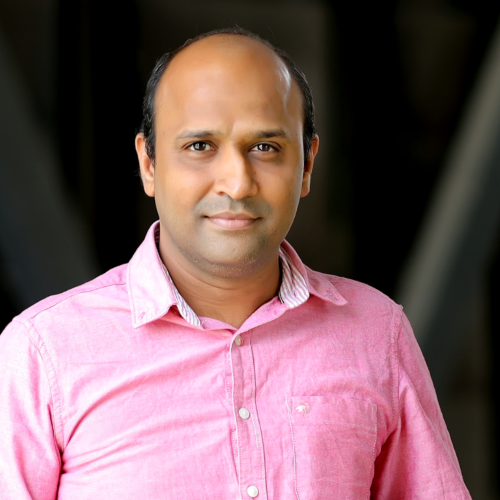
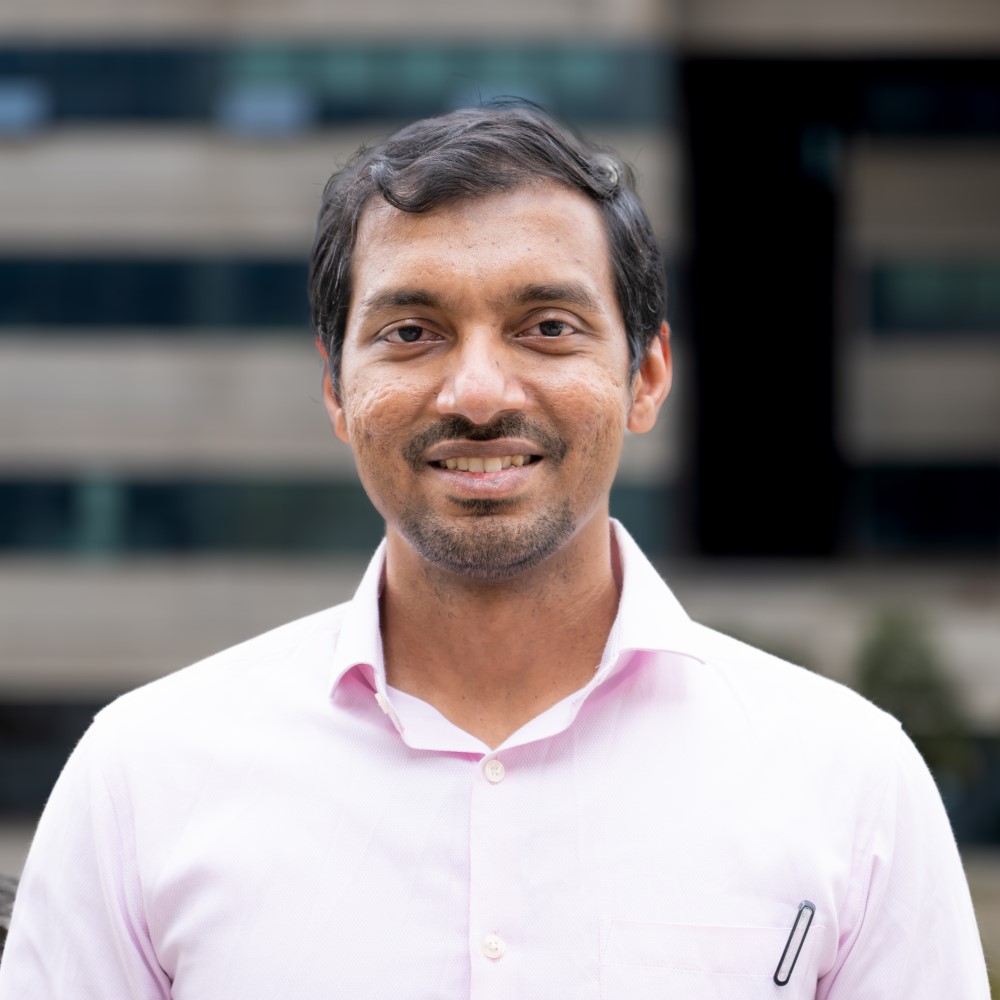
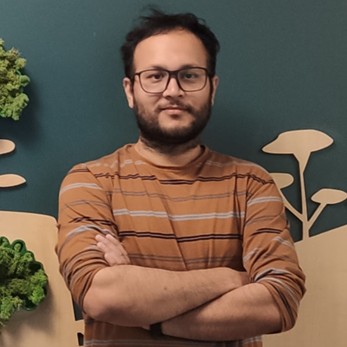
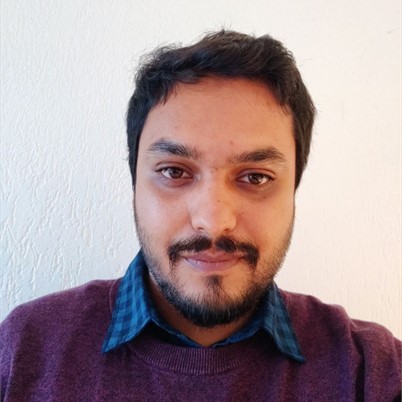
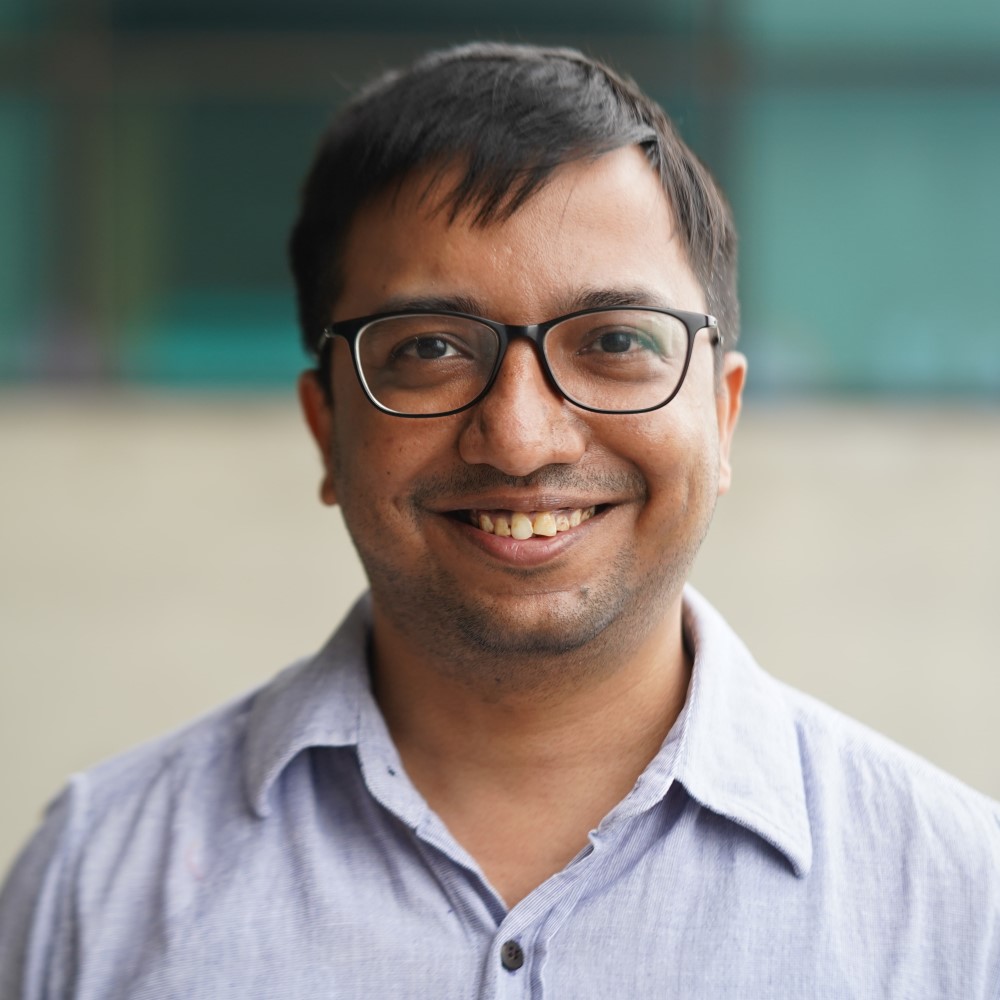
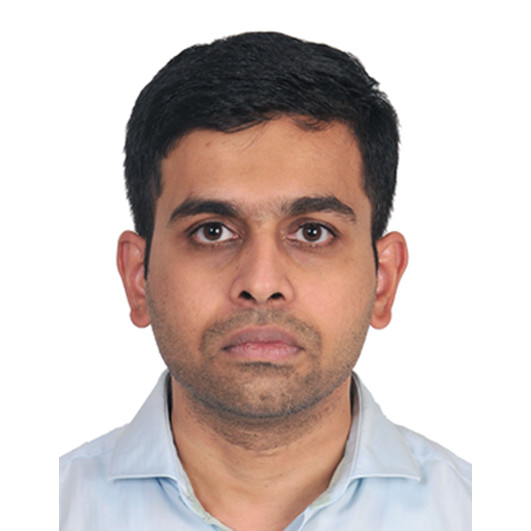
Konda Reddy Mopuri is an Assistant Professor at the Indian Institute of Technology Hyderabad , leading the Data-Driven Intelligence & Learning Laboratory (DiL) . He holds a PhD from Indian Institute of Science, Bengaluru , where he worked under Prof. R. Venkatesh Babu. His research spans Artificial Intelligence , Deep Learning , Computer Vision , and Optimization , with recent work focusing on coreset selection , fairness in ML , and medical imaging . Awards include the IUPRAI Best Doctoral Dissertation Award and SPCOM Best Doctoral Dissertation Award in 2018, and the Young Alumni Achiever Award from IISc in 2022. Notable publications include work on data-free knowledge distillation , adversarial perturbations , and medical AI applications . He has advised students like Saumyaranjan Mohanty , Nikita Malik , and Naveen George , and teaches courses on Machine Learning and Deep Learning .
Lakshmi Prasad Natarajan is an Associate Professor in the Department of Electrical Engineering at the Indian Institute of Technology Hyderabad. His research focuses on coding techniques for distributed computation and storage, network coding, wireless communications, and applied mathematics. He earned his Ph.D. from the Indian Institute of Science (IISc) in Bengaluru. His research interests include: Coding for distributed computation and storage Index coding with side information Network coding for wireless systems Space-time codes Wireless communication & networks Applied mathematics Recent work involves developing capacity-achieving codes (BiD Codes, Recursive Subproduct Codes) for 6G communication systems. He actively mentors PhD candidates, emphasizing theoretical research in code constructions and decoder design under the Qualcomm 6G University Research India Program. He acknowledges support from: Department of Science and Technology, Government of India Science and Engineering Research Board, Government of India Qualcomm Inc. He collaborates on projects targeting next-generation communication systems, focusing on algebraic coding and channel optimization. The group provides rigorous theoretical training and academic mentorship to students.
Maheswaran R. is an Assistant Professor in the Department of Civil Engineering at the Indian Institute of Technology Hyderabad. His research focuses on Stochastic Hydrology, Hydrologic Forecasting, Multiscale Processes and Modeling, Climate Change, and applications of AI/ML in hydrological systems. Education: Ph.D. from IIT Delhi Contact: Room A-717/D, Academic Block A, Kandi-502284, Sangareddy, Telangana, India | Office Phone: (040) 2301 - 6324
Rakesh Venkat is an Assistant Professor in the Department of Computer Science and Engineering at the Indian Institute of Technology Hyderabad. His research focuses on Theoretical Computer Science, including approximation algorithms, hardness of approximation, and communication complexity. Education : Ph.D., Tata Institute of Fundamental Research (TIFR), Mumbai. Research Trends : His work addresses fundamental challenges in algorithm design, such as optimizing cache misses, improving clustering algorithms, analyzing graph expansion, and exploring embedding techniques. Publications span top-tier conferences like APPROX, FSTTCS, ICALP, and ITCS, with collaborations at institutions including HUJI, TIFR, and IIT-Bombay. Teaching : Courses taught include Approximation Algorithms, Advanced Data Structures, Discrete Mathematics, and Spectral Graph Theory.
Sangkha Borah is an Assistant Professor in the Department of Physics. He earned his Ph.D. from IIT Guwahati and focuses on interdisciplinary research at the intersection of computational methods and fundamental physics. His research interests span four key areas: Applying Machine Learning to solve complex problems in physics Advancing Quantum Control techniques for quantum systems Exploring foundational and applied aspects of Quantum Computing Developing Neuromorphic Computing models inspired by biological systems
Saranya Ghosh is an Assistant Professor in the Department of Physics at the Indian Institute of Technology Hyderabad. Her research spans experimental and computational domains within high-energy physics, with additional interests in sensor technology, artificial intelligence/machine learning, and high-performance computing. Ph.D. from Tata Institute of Fundamental Research Her work bridges fundamental particle physics experiments with advanced computational techniques, focusing on detector development and data-intensive scientific computing.
Saurabh Sandilya is an Assistant Professor in the Department of Physics at the Indian Institute of Technology Hyderabad. His research focuses on fundamental particle physics, detector development, and interdisciplinary applications in biomedical devices and AI/ML. He has been associated with the Belle and Belle II experiments at KEK, Japan since 2011. Specialized in particle identification detectors for Belle II Investigates B-meson rare decays for new physics beyond Standard Model Works on detector performance analysis and sensor development Email: saurabh@phy.iith.ac.in
Sourav Das is an Assistant Professor in the Department of Civil Engineering at the University of British Columbia, Canada. His research focuses on interdisciplinary applications in renewable energy systems, structural dynamics, and computational engineering. Research Interests : Wind energy conversion, aerodynamic modeling, energy harvesting technologies, reliability analysis, uncertainty quantification, and machine learning applications in civil infrastructure. Das holds a Ph.D. from the University of British Columbia, where his work bridges civil engineering with advanced data-driven methodologies.
Sri Rama Murty Kodukula is a Professor at the Indian Institute of Technology Hyderabad, affiliated with the Departments of Electrical Engineering and Artificial Intelligence. Education: Ph.D. from IIT Madras Research Focus: Signal Processing, Speech Analysis/Recognition/Synthesis, and AI/ML applications Contact: Room C-507, Academic Block C, IIT Hyderabad, Sangareddy, Telangana, India | Phone: (040) 2301 - 6451
Swarnendu Biswas is an Assistant Professor in the Department of Computer Science and Engineering at the Indian Institute of Technology Kanpur. He teaches courses including Programming for Performance (CS 610), Analysis of Concurrent Programs (CS 636), and Compiler Design (CS 335), demonstrating his expertise across multiple areas of computer systems. His research interests center on Programming Languages, Compilers, Runtime Systems, and Parallel Software Systems. He leads the PROSPAR (Programming Languages and PARallel Systems) research group, which focuses on developing techniques to build efficient and correct parallel software through program analysis, compiler optimizations, and runtime systems. His recent publications reveal a strong trend in addressing fundamental challenges in parallel computing, with work spanning cache coherence, false sharing detection, data race analysis for GPUs, verification of neural networks, and thermal-aware management of heterogeneous systems. His research bridges theory and practice with significant contributions to both hardware and software aspects of parallel systems. His scientific achievements have been recognized through multiple prestigious awards: Google India Research Award 2021 Google Explore CSR 2022 Research Grant from Intel Corporation SERB Start-up Research Grant 2019 Google Cloud Platform Research Credits (2019, 2020) IITK Initiation Grant 2019 As an advisor, he mentors several PhD and MTech students working on cutting-edge research in parallel systems. His PROSPAR group has secured significant funding from industry and government sources, supporting innovative research in programming languages and parallel systems. The group actively collaborates with industry partners including Google and Intel, addressing real-world challenges in parallel computing. He leads the PROSPAR research group at IIT Kanpur, which brings together faculty, PhD students, and MTech researchers to tackle challenging problems at the intersection of programming languages, compilers, and parallel systems. The group maintains strong industry connections and focuses on practical solutions that can be deployed in real systems.
Dr. Deepak Dhingra is an Associate Professor in the Department of Earth Sciences at the Indian Institute of Technology Kanpur. He holds a Ph.D. from Brown University (2014) and specializes in planetary geology. His research leverages remote sensing data to study surface morphology and composition of extraterrestrial bodies, including the Moon, Mars, Mercury, and Saturn's moon Enceladus. Research Focus His work integrates spectral, imaging, and topographic data to address fundamental questions in planetary evolution. Key themes include: Lunar Geology: Mg-spinel distribution, impact crater processes, polar volatiles. Planetary Surface Dynamics: Boulder falls, granular segregation on asteroids. Methodological Innovation: Machine learning applications for mineral mapping and data filtering. Mission Involvement Chandrayaan-1: Scientist at Physical Research Laboratory (PRL), Ahmedabad. Chandrayaan-2: Science team member for NASA/JPL/Brown University's Moon Mineralogy Mapper (M³). Academic Activities He actively recruits PhD students and postdoctoral researchers for planetary science projects. His interdisciplinary approach bridges geology, data science, and space mission operations. Additional Contributions Beyond research, he engages in science communication through articles, blogs, and outreach initiatives focused on lunar exploration.
Tushar Sandhan serves as an Assistant Professor in the Department of Electrical Engineering at the Indian Institute of Technology Kanpur (IIT Kanpur), one of India's premier technical institutions. He maintains his office in room 205-B of the Electrical Engineering department building on the IIT Kanpur campus in Kanpur 208016. Dr. Sandhan earned his PhD from Seoul National University in South Korea, indicating substantial international research experience prior to joining IIT Kanpur's faculty. His educational background reflects a strong foundation in advanced technical disciplines. His research expertise spans three rapidly evolving and interconnected fields: computer vision , which focuses on enabling machines to interpret visual information; machine learning , which develops algorithms that allow computers to learn from data; and robotics , which integrates these capabilities into physical systems. These research areas have significant applications across multiple industries including autonomous vehicles, medical imaging, industrial automation, and consumer electronics. While specific research projects aren't detailed in the available information, his work likely contributes to both theoretical advancements and practical implementations in these cutting-edge domains. As an Assistant Professor at IIT Kanpur, Dr. Sandhan is actively involved in teaching electrical engineering courses while pursuing research in his specialized areas. His position suggests he is in the early to mid-career stage of his academic journey, building his research program and contributing to the academic community at one of India's most prestigious technical institutions.
Subrahmanya Swamy Peruru is an Assistant Professor in the Department of Electrical Engineering at the Indian Institute of Technology Kanpur (IIT Kanpur). His research focuses on wireless networks, artificial intelligence, and probabilistic graphical models, contributing significantly to the field of network optimization and machine learning applications in communication systems. Dr. Peruru completed his educational journey with excellence: PhD in Electrical Engineering from Indian Institute of Technology Madras (2018) M.S. (by Research) from Indian Institute of Technology Madras (2018) B.Tech in Electronics and Communication Engineering from Sastra University (2011) Dr. Peruru's research interests lie at the intersection of wireless communications and artificial intelligence. His work primarily focuses on developing efficient algorithms for wireless network scheduling, leveraging reinforcement learning and graph neural networks to optimize network throughput and minimize delays. He has made significant contributions to CSMA (Carrier Sense Multiple Access) protocols, particularly in adapting them to SINR (Signal-to-Interference-plus-Noise Ratio) models using advanced approximation techniques from statistical physics. His research on probabilistic graphical models has enabled more efficient network resource allocation and has potential applications in 5G and beyond wireless systems. Dr. Peruru's interdisciplinary approach bridges theoretical computer science, electrical engineering, and machine learning to solve practical challenges in modern communication networks. His publication record demonstrates a consistent focus on wireless network optimization, with a recent shift toward incorporating machine learning techniques. Starting with foundational work on CSMA protocols and regional approximations (2015-2018), his research has evolved to include reinforcement learning (2023) and graph neural networks (2021) for network scheduling. This progression reflects the broader trend in networking research toward data-driven and AI-enhanced approaches. His work spans both theoretical contributions (approximation algorithms, convergence analysis) and practical implementations (scheduling algorithms with throughput guarantees). Dr. Peruru previously served as a Senior Research Engineer in the Machine Learning R&D team at Pramati Technologies, Chennai (2018-2020), where he likely applied his academic expertise to industry challenges before joining IIT Kanpur as faculty.
Nikunj Arunkumar Bhagat serves as an Assistant Professor in the Department of Electrical Engineering at the Indian Institute of Technology Kanpur, with a joint appointment in the Department of Biological Sciences and Biosciences. His research focuses on neural engineering, rehabilitation technologies, and biomedical instrumentation. Dr. Bhagat's research interests include Neural & Bio-signal processing, Medical Instrumentation, Brain-machine interfaces, Functional Electrical Stimulation, and Rehabilitation Engineering. His work bridges electrical engineering with neuroscience and rehabilitation medicine, developing technologies to assist individuals with neurological impairments. His publication portfolio shows a strong focus on brain-machine interfaces, rehabilitation robotics, and neural decoding techniques. The research spans from fundamental neural signal processing to practical applications in stroke rehabilitation, tetraplegia assistance, and hand movement restoration. His most recent work (2023) continues to advance state-space control approaches for neuromuscular stimulation and object detection applications for hand rehabilitation. Dr. Bhagat has established collaborative research with prominent institutions and researchers in the field of neurorehabilitation and brain-computer interfaces, as evidenced by his publications in high-impact journals such as IEEE Transactions on Human-Machine Systems, NeuroImage: Clinical, and Frontiers in Neuroscience. His academic journey includes a Ph.D. in Electrical Engineering from the University of Houston (2017), an M.Tech in Electrical Engineering from IIT Bombay (2011), and a B.E. in Electronics Engineering from Sardar Patel College of Engineering, University of Mumbai (2007).
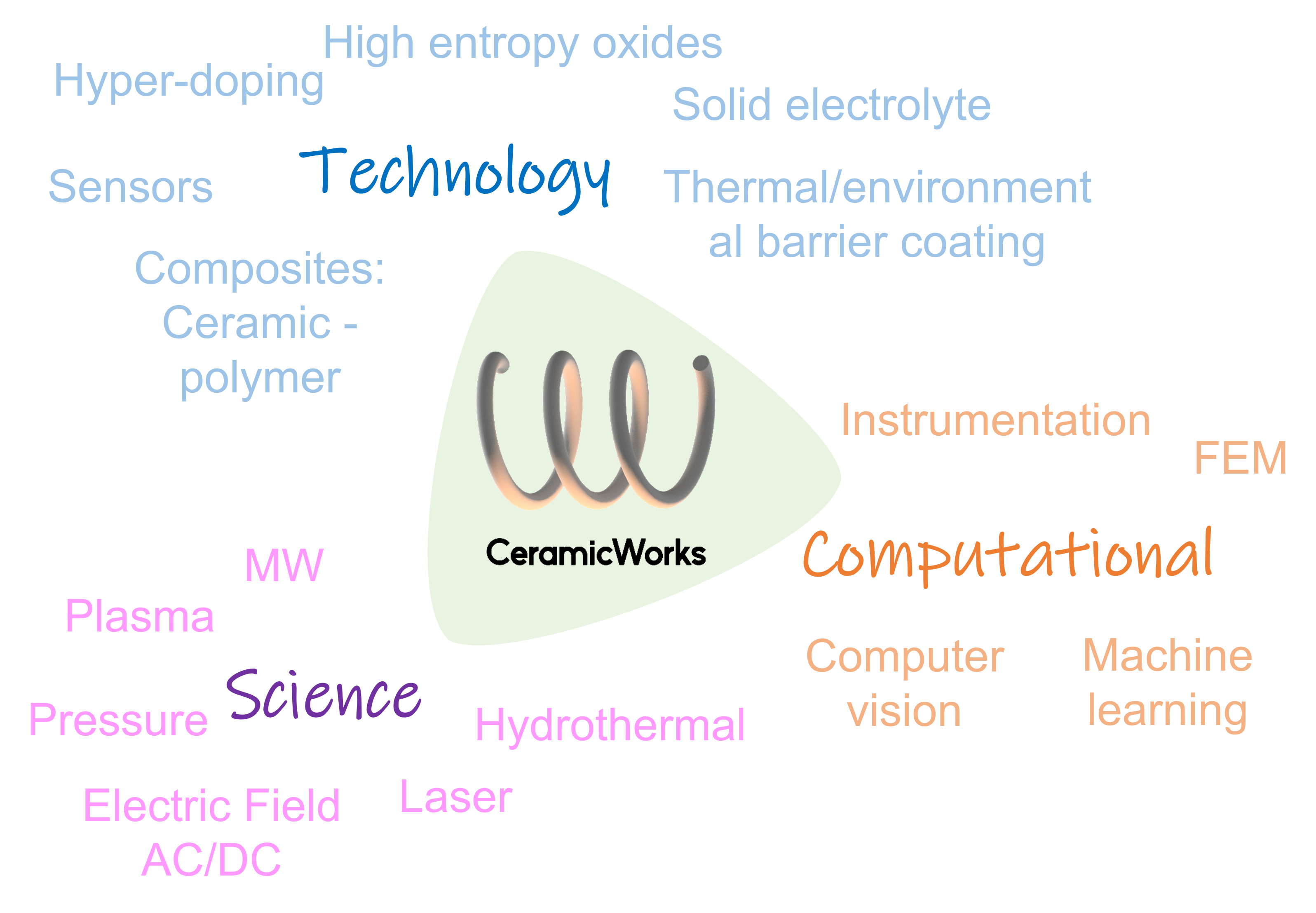
Shikhar Krishn Jha is a faculty member at the Department of Materials Science & Engineering, Indian Institute of Technology Kanpur (IITK) . He leads the CeramicWorks Lab, focusing on interdisciplinary research at the intersection of ceramics, composites, field-assisted processing, and machine learning. His educational qualifications include: Ph.D. from CU Boulder (2015) M.Tech. from IISc Bangalore (2011) B.Tech. from IIEST Shibpur (2009) Jha's research spans advanced materials processing , composite design , and machine learning applications in material science . His lab explores technologies like oxygen concentrators , thermal barrier coatings , and bio-inspired armor systems , leveraging scientific foundations in ceramics and composites to address societal challenges. Key research trends include: Integration of field-assisted sintering techniques (e.g., flash sintering) to reduce energy consumption and enhance material properties. Application of machine learning for microstructure analysis, grain boundary detection, and phase identification. Development of energy storage devices , gas sensors , and bio-ceramics through interdisciplinary collaboration. The lab collaborates with researchers like Prof. Amitabha Bandyopadhyay (BSBE, IITK) and Prof. Suman Saurabh (IME, IITK) , and has produced notable alumni such as Pulkin Gupta (PMRF fellowship recipient) and Mukesh Kumbhakar (DAAD'21 fellowship). Projects involve IITK technical staff and alumni networks for real-world technology implementation.