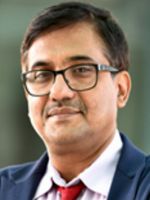
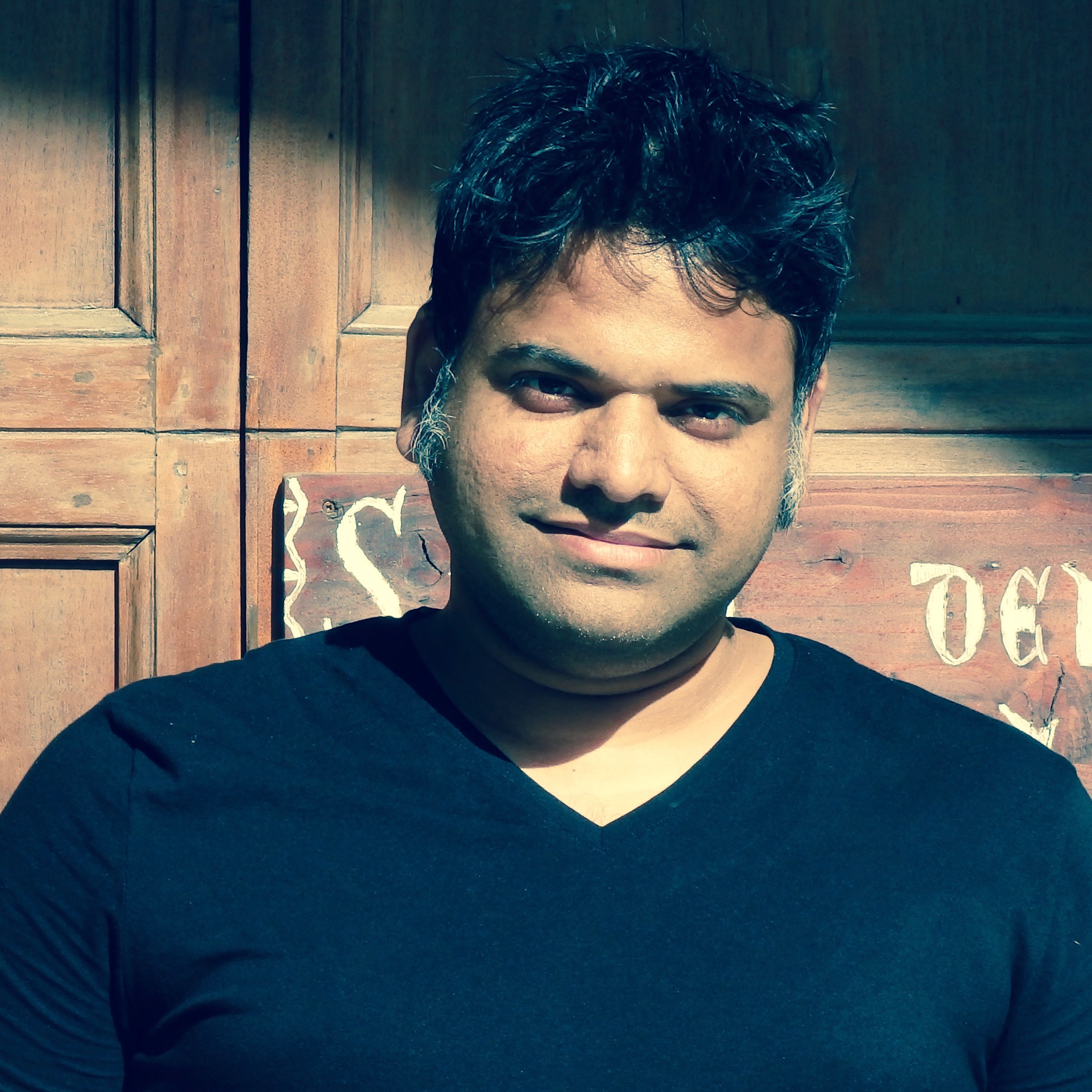
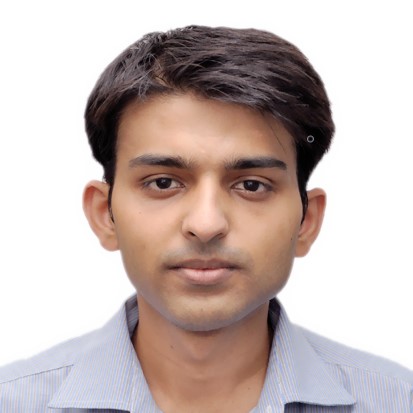
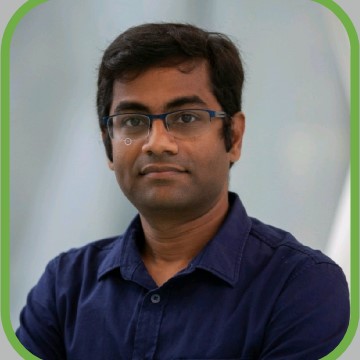
Mohua Banerjee is a Professor in the Department of Mathematics & Statistics at Indian Institute of Technology Kanpur. Her research focuses on Rough Set Theory , Modal Logics , and their applications in computer science and mathematical logic. Education : PhD (University of Calcutta) Contact : mohua@iitk.ac.in , +91-512-259-7634 Her work bridges foundational logic with computational methods, particularly in reasoning under uncertainty and feature selection for biological data. Recent publications highlight interdisciplinary applications in gene expression analysis and algebraic structures for rough sets. Scientific Awards : INSA Young Scientist Medal (1995)
Prof. Ram Bilas Pachori is a Professor (Higher Administrative Grade) in the Department of Electrical Engineering at IIT Indore. He holds multiple prestigious fellowships, including IEEE, IET, IETE, IEI, and AAIA. His research focuses on signal processing for biomedical applications, machine learning, and AI in healthcare. Pachori has supervised numerous PhD, M.Tech., and M.S. students, contributing significantly to the field through over 240 thesis examinations and 300+ invited talks. Education: Ph.D. in Signal Processing from IIT Kanpur (2008) M.Tech. in Signal Processing from IIT Kanpur (2003) B.E. in Electronics and Communication Engineering from Rajiv Gandhi Proudyogiki Vishwavidyalaya (2001) Research Interests: Biomedical signal processing for disease diagnosis Non-stationary signal analysis Brain-computer interface systems Machine learning and IoT in healthcare Professional Roles: Associate Dean of Academic Affairs (UG Programs) at IIT Indore (2020–2023) Editorial roles in journals like IEEE Transactions on Neural Systems and Rehabilitation Engineering Organized over 30 workshops and conferences, including the International Conference on Machine Intelligence and Signal Processing (2017) Awards: AAIA Fellow (2025) IEEE Fellow (2025) IETE Fellow (2017) Labs/Teams: Leads the Signal Analysis Research Lab (SARL) at IIT Indore, focusing on advanced signal processing techniques for healthcare applications.
Prof. Sashikumaar Ganesan is a Professor at the Indian Institute of Science (IISc), Bangalore, where he leads the AI for Research and Engineering eXcellence (AiREX) Lab. He also serves as the Founder and Chief AI Officer of Zenteiq AiTech Innovations and has held leadership positions including Chairman of the CDS Department (2018-2024) and Programme Director for Advanced Programs in Gen AI, Computational Data Science and AI, and AI & MLOps since 2020. His research interests include: Scientific Machine Learning (SciML) Physics-Informed Neural Networks (PINNs) High-performance computing Hardware-aware numerical methods Machine Learning Operations (MLOps) Computational Science Prof. Ganesan's work focuses on integrating scientific computing with machine learning to advance AI applications in scientific and engineering domains. His research spans AI for aerospace and defense applications, scientific machine learning, MLOps frameworks, and computational science including finite element analysis and fluid dynamics modeling. He has developed science-native Foundation Models through his company Zenteiq.ai to enhance AI-driven R&D in aerospace and defense sectors. His significant projects include the Indo-German Partnership Program (2020-2024) focused on hardware-aware numerical schemes for multi-GPU supercomputers and the Shell India project on Large Scale Simulation augmented by AI for wind turbine farms. He has mentored over 25 students and published more than 60 works, including the book 'Finite Elements: Theory and Algorithms' (Cambridge University Press, 2017). Prof. Ganesan teaches courses including 'Generative and Agentic AI in Practice' (2025), 'AI and Machine Learning' (2024), and 'High-Performance Computing and Data Science,' while also contributing to societal discourse through COVID-19 projections featured in major Indian media outlets.
Pushpak Bhattacharyya is a distinguished Professor in the Department of Computer Science and Engineering at the Indian Institute of Technology (IIT) Bombay. He holds the prestigious title of Abdul Kalam National Fellow and is a Fellow of the National Academy of Engineering (FNAE). His academic leadership extends to roles such as Professor Incharge of the IIT Bombay-Monash Australia Academy and Chairman of the MEITY Committee for Indian Language Standards. Professor Bhattacharyya's research spans multiple domains within computational linguistics and artificial intelligence. His work focuses on Natural Language Processing, Computational Linguistics, Machine Learning, Sarcasm Detection, Sentiment Analysis, Multilingual Processing, and Cognitive NLP. He has made significant contributions to Indian language technology, leading NITI Aayog's initiative on creating an Indian Language NLP stack and Virtual Agents. His recent publications reveal a strong focus on multilingual NLP for Indian languages, bias detection in language models, sarcasm and humblebragging detection, mental health applications of NLP, and code generation. His work bridges theoretical advances with practical applications in education, healthcare, and government services. The research demonstrates increasing integration of cognitive aspects with traditional NLP approaches and a growing emphasis on ethical AI considerations like bias detection and cultural competence. FNAE (Fellow of National Academy of Engineering) Abdul Kalam National Fellow Listed among top 10 Machine Learning Researchers in India Listed among most prolific NLP-ML researchers 2012-17 Professor Bhattacharyya has mentored numerous PhD and Masters students who have gone on to make significant contributions in academia and industry. His research has been supported by various grants from government agencies and industry partners, enabling large-scale projects in Indian language technology and NLP. He has led the development of comprehensive NLP resources for Indian languages and has been instrumental in establishing research collaborations between IIT Bombay and international institutions. He leads a vibrant research group at IIT Bombay focused on Natural Language Processing, with active projects in sarcasm detection, multilingual processing, cognitive NLP, and applications of NLP in healthcare and education. His team has developed several notable systems including those for Indian language translation, sarcasm detection, and mental health analysis through text.
Dr. Sujoy Bhore is a faculty member at the Indian Institute of Technology (IIT) Bombay in the Department of Computer Science & Engineering. He is also associated with the Center for Machine Intelligence and Data Science (C-MInDS) and the IIT Bombay Trust Lab. Additionally, he serves as a visiting fellow in the Department of Mathematics at the London School of Economics. Affiliation: IIT Bombay (Department of Computer Science & Engineering) Associated Labs: Center for Machine Intelligence and Data Science (C-MInDS), IIT Bombay Trust Lab Visiting Position: London School of Economics (Department of Mathematics) Research Interests: Algorithms & Data Structures Discrete & Computational Geometry Combinatorial Optimization Theoretical Machine Learning Dr. Bhore welcomes postdoctoral researchers and highly motivated Ph.D. students with strong mathematical backgrounds. He also pursues creative interests in Painting, Photography, and Poetry, reflecting his holistic approach to academia.
Ashutosh Trivedi is an Associate Professor of Computer Science at the University of Colorado Boulder, currently on leave from his position as Assistant Professor in the Department of Computer Science and Engineering at the Indian Institute of Technology Bombay. He is affiliated with multiple research initiatives including the Centre for Formal Design and Verification of Software (CFDVS) at IIT Bombay, Free and Open Source Software for Education (FOSSEE), and the Indo-French project on Algorithmic Verification of Real-Time Systems (AVeRTS). At CU Boulder, he leads the Programming Languages and Verification (CUPLV) research group focusing on trustworthy AI systems. Trivedi's research centers on bridging formal methods with artificial intelligence to create more trustworthy systems. His work spans formal verification of cyber-physical systems, reinforcement learning with formal guarantees, and developing techniques for ensuring software fairness and accountability. He specializes in using formal languages, automata, and logic to transform vague natural-language instructions into precise specifications for AI systems. His recent projects include developing reinforcement learning algorithms for cardiac pacemaker design based on formal safety requirements, using SAT solvers to ground large language model outputs in logical reasoning, and encoding state representations in reinforcement learning using formal languages. His publication trends reveal a strong focus on neurosymbolic approaches that combine neural networks with symbolic reasoning, particularly for safety-critical applications. Recent work demonstrates increasing integration of formal methods with reinforcement learning, with applications spanning medical devices, tax preparation software, and puzzle-solving AI. His research shows a clear trajectory toward making AI systems more explainable, accountable, and verifiable through principled mathematical frameworks. Distinguished Paper Award at CAV for Regular Reinforcement Learning (2024) NeuS 2025 Disruptive Idea Award for Stochastic Neural Simulation Relations for Transferring Control under Uncertainty ACM Senior Member recognition (2024) Royal Society Wolfson Visiting Fellowship (2024) Trivedi has successfully advised multiple PhD students to completion, including Shadi Tasdighi Kalat (2025), Mateo Perez (2025), John Komp (2024), Vishnu Murali (2024), and Taylor Dohmen (2024). His teaching portfolio includes foundational courses in automata theory, digital logic design, and cyber-physical systems at both IIT Bombay and CU Boulder. He has served on program committees for major conferences including FSTTCS, HSCC, and FORMATS, and organized workshops such as ICLA 2015 and ALC 2015. As leader of the CUPLV research group, Trivedi directs projects focused on formal verification of AI systems, reinforcement learning with safety guarantees, and software fairness. His group collaborates with medical researchers on cardiac device verification and with legal scholars on tax software accountability, reflecting his commitment to applying formal methods to real-world problems with significant societal impact.
Abhinav Kumar is a Professor at Indian Institute of Technology Hyderabad , affiliated with the Department of Electrical Engineering, Department of Artificial Intelligence, and Department of Engineering Science. His research bridges Wireless Communication & Networking , Machine Learning , and Green Communication in emerging technologies like V2X , UAVs , and IoT . Education: PhD in Electrical Engineering from IIT Delhi (2013), Dual B.Tech/M.Tech from IIT Delhi (2009) Professional Roles: IEEE Senior Member, Editor of IEEE Transactions on Communications, Reviewer for multiple IEEE journals His research focuses on resource allocation in 5G networks, security in wireless systems, and machine learning applications for UAVs and mmWave radars. Recent projects include funded work on 6G integrated sensing, digital twin networks, and OTFS modems. Students under his guidance explore topics like QoE modeling , drone detection , and energy-efficient IoT protocols . Key publication trends combine machine learning with mmWave radar , VLC , and NOMA systems. He has co-authored over 25 journal articles since 2013, with a focus on 5G/6G , UAV communication , and edge computing . He leads the Wireless Communications and Networking (WiCoN) Laboratory , mentoring 25+ PhD and MTech students on projects ranging from smart triage systems to e-waste battery analysis . His lab has produced multiple IEEE Graduate Congress Best Thesis Award winners.
Abhishek Subramanian is an Assistant Professor in the Department of Biotechnology at the Indian Institute of Technology Hyderabad, affiliated with the Biotechnology and Biomedical Engineering Building. His research focuses on computational systems biology, integrating omics data with network modeling to uncover molecular mechanisms in biological systems. Key Research Areas: Computational Systems & Network Biology, Omics Data Analysis, Metabolism & Gene Regulation, Mathematical/Statistical Modeling, Machine Learning, Parasitology, Immunology. Approach: Uses constraint-based genome-scale modeling, graph theory, and machine learning to analyze biological networks (metabolism, gene regulation, protein interactions). Projects: Investigates condition-specific metabolic adaptations, interspecies interactions during infections, and disease-specific changes in immunometabolism. Supported by undisclosed funding agencies. Contact via his homepage for collaborations or inquiries.
Balasubramaniam Jayaram is a Professor at the Indian Institute of Technology Hyderabad, affiliated with the Department of Mathematics. His research focuses on Approximate Reasoning, Connectives in Multi-Valued Logic, Artificial Intelligence/Machine Learning, and Applied Mathematics. Education: Ph.D. from Sri Sathya Sai Institute of Higher Learning Office Address: Room C-504, Academic Block C, Indian Institute of Technology Hyderabad, Kandi-502284, Sangareddy, Telangana, India.
Biswarup Bhattacharyya is an Assistant Professor in the Department of Civil Engineering at the Indian Institute of Technology Hyderabad . He holds a Ph.D. from Université Claude Bernard Lyon 1, France . His research focuses on Uncertainty Quantification , Reliability Analysis , Global Sensitivity Analysis , Physics-Informed Machine Learning , and Stochastic Dynamical Systems . Office Address: Room B-220, Academic Block B, Indian Institute of Technology Hyderabad, Kandi-502284, Sangareddy, Telangana, India. Contact: Office Phone (040) 2301 - 6322.
C. Krishna Mohan is a Professor in the Department of Computer Science & Engineering at the Indian Institute of Technology Hyderabad , a premier institution in India. His research focuses on cutting-edge areas within artificial intelligence and machine learning, particularly advancing methodologies for video content analysis and deep learning. Education: Ph.D. from Indian Institute of Technology Madras. His work emphasizes sparsity-based techniques and their applications in AI/ML systems. He is based in the Computer Science Building (Room CS-203) and actively contributes to academic research and teaching in the field of computer science.
Chandrika Prakash Vyasarayani is a Professor in the Department of Mechanical & Aerospace Engineering at the Indian Institute of Technology Hyderabad, India. His research focuses on nonlinear dynamics and control systems, with applications in artificial intelligence/machine learning and applied mathematics. He holds a Ph.D. from the University of Waterloo, Canada. His office is located in Room C-408, Academic Block C, IIT Hyderabad, Kandi, Telangana, India.
Debasish Koner is an Assistant Professor in the Chemistry department. His research focuses on interdisciplinary applications of machine learning in chemistry and physics, particularly in chemical reaction dynamics and spectroscopy. Research Interests : Machine Learning in Chemistry and Chemical Physics Medical Diagnosis Chemical Reaction Dynamics High Performance Computing (HPC) Atomic Molecular and Optical Physics (AMO)
G Thulsiram is an Assistant Professor in the Department of Mechanical & Aerospace Engineering at the Indian Institute of Technology Hyderabad. Education: Ph.D. from IIT Madras Research Interests: Nondestructive Evaluation, Materials Characterization, Wave Propagation, Ultrasonic Imaging, and Applied Machine Learning Office Address: Room C-518, Academic Block C, Indian Institute of Technology Hyderabad, Kandi-502284, Sangareddy, Telangana, India
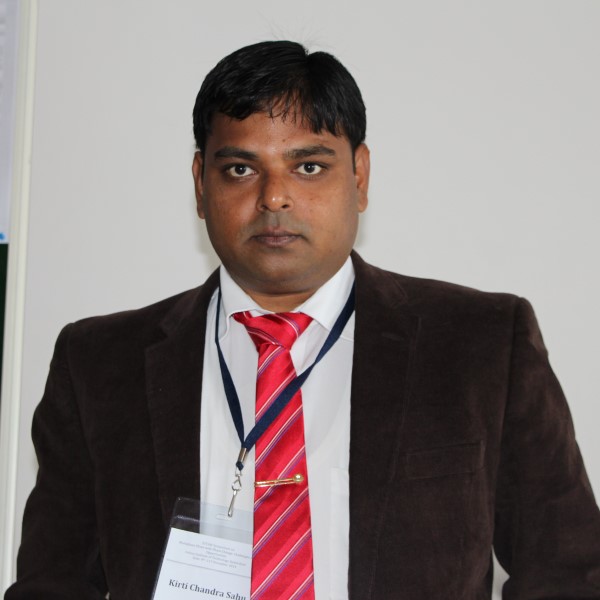
Prof. Kirti Chandra Sahu is a Professor at the Department of Chemical Engineering, Indian Institute of Technology Hyderabad. His research focuses on fluid dynamics, particularly studying bubbles, drops, multiphase flows, viscosity-stratified flows, and hydrodynamic instabilities. He leads the Multiphase Microphysics Laboratory and has developed advanced facilities like the Raindrops Research Facility for atmospheric studies. PhD in Fluid Mechanics from Jawaharlal Nehru Centre for Advanced Scientific Research (2003-2007) Postdoctoral Research at Imperial College London (2006-2009) Research interests span: Microfluidics and small-scale flow instabilities Numerical solvers using GPU acceleration Thermocapillary and interfacial phenomena Applications in atmospheric science and biomedical engineering His 15 most recent publications highlight advancements in droplet fragmentation, evaporation dynamics, coalescence mechanisms, and computational methods. Awards include Fellowships from INAE (2025), Indian Academy of Sciences (2023), and Institute of Physics, UK (2021), along with recognition as a top 1% reviewer for Journal of Fluid Mechanics. He has mentored 18 PhD students and multiple postdoctoral fellows while serving on editorial boards and international committees. Collaborations extend to institutions in France, Greece, USA, and UK.