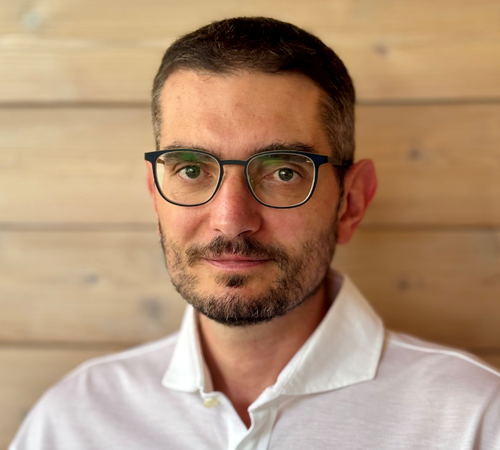
Andrea Vedaldi is Professor of Computer Vision and Machine Learning at the University of Oxford, where he co-leads the internationally renowned Visual Geometry Group. Concurrently, he serves as Research Scientist and Technical Lead at Meta, focusing on 3D computer vision and generative AI research. His research spans fundamental and applied aspects of computer vision and machine learning, with specializations in 3D reconstruction and generative models. He has made influential contributions recognized through major awards and leadership roles, including chairing the European Conference on Computer Vision. Awards & Honors: Royal Society Faraday Discovery Fellowship IEEE Thomas Huang Memorial Prize IEEE Mark Everingham Prize Two Best Paper Awards (CVPR) ACM Test of Time Award FREng (Fellow of Royal Academy of Engineering) ELLIS Fellow
Goran Oreški is an Associate Professor and Head of the Laboratory at the Faculty of Informatics in Pula (University Jurja Dobrile, Croatia), where he has been employed since 2019. He teaches courses on databases, object-oriented programming, data warehousing, and artificial intelligence at both undergraduate and graduate levels. Education: Ph.D. in Informatics (2016), Faculty of Organization and Informatics Industry Experience: 9 years as software architect and programmer in banking sector Research Focus: Artificial Intelligence systems, classical machine learning algorithms, and deep learning architectures. His work bridges theoretical advancements with practical applications in autonomous vehicles, traffic monitoring, and financial risk assessment. Recent Publication Trends: 2023-2025 works emphasize generative AI for synthetic credit data, traffic object segmentation with monocular cameras, and context-aware detection models (YOLO*C). Earlier works focus on genetic algorithms and ensemble learning for imbalanced datasets. Awards: Google RFP Award for autonomous vehicle research Highly Cited Paper (Web of Science, top 1%) Best Paper at CECIIS conference Leadership: Director of FIPU Laboratory since 2022, leading projects like ai.Shuttle (autonomous mini-bus) and CenAI (industry collaboration with Cenosco).
Mislav Balković is an Associate Professor at Algebra University of Applied Sciences, where he has served as Director and Dean since 2000 and 2009, respectively. He drives strategic development for the Algebra Group and contributes to national education policy through roles in expert bodies like the National Council for Science, Higher Education and Technology, and the Accreditation Council of the Agency for Science and Higher Education. Education: PhD (2016) from Faculty of Electrical Engineering and Computing, University of Zagreb Bachelor’s and Master’s degrees from Faculty of Electrical Engineering and Computing, University of Zagreb Research Interests: Mislav’s work bridges Data Science with applications in labor market dynamics , education policy , qualification frameworks , and energy systems . His projects focus on smart grid optimization, digital identity protection, and AI-driven educational reforms. Publications Trends: His recent articles emphasize cross-disciplinary applications , including brain-computer interfaces for image generation, EU labor market analysis , and smart grid resilience . Earlier works explore blockchain-based academic credentials and data analytics in auditing . Grants and Projects: He has led ~50 EU and domestic projects , spanning smart tourist management , lean methodologies for screen creators , and ICT services for alternative communication . His policy work includes drafting laws on adult education and higher education reform. Leadership: Vice President of the Croatian Employers' Association in Education (HUP-UPO) and past President of the Sectoral Council for Electrical Engineering and Computing.
Prof. Mile Šikić is a Full Professor at the Department of Electronic Systems and Information Processing, Faculty of Electrical Engineering and Computing (University of Zagreb). His research spans computational biology, genomics, and machine learning applications in sequencing technologies. Focus on nanopore sequencing analysis, genome assembly, and protein interaction prediction Developed tools like GraphMap , RiNALMo , and Orthobalancer Active in metagenomics, RNA structure prediction, and CUDA-based algorithm acceleration Scientific contributions include: Advances in de novo genome assembly for error-prone long reads Deep learning models for base modification detection Efficient algorithms for sequence alignment and similarity searches Technical implementations cover: GPU-accelerated sequence alignment libraries (e.g., SW# ) Web platforms for comparative protein analysis Simulation tools for epidemic spread on complex networks
Prof. Dr. Igor S. Pandžić is a Full Professor at the Department of Telecommunications , Faculty of Electrical Engineering and Computing (FER) , University of Zagreb . He is also affiliated with the Center of Excellence for Computer Vision , actively contributing to research in computer graphics, virtual humans, and interactive systems. Education: While specific degrees are not listed in the provided text, his title "prof. dr. sc." (Croatian for Full Professor with a Doctor of Science degree) indicates he has completed doctoral studies and achieved the highest academic rank. Research Interests: Virtual Humans & Avatars: Creation, animation, and behavioral modeling of lifelike virtual characters for interactive applications. Facial Animation & Biometrics: Real-time speech-driven facial animation, facial expression recognition, age/gender estimation, and biometric data filtering. 3D Graphics & Virtual Environments: Real-time rendering, networked collaborative virtual environments (e.g., VLNET), and 3D visualization on mobile/web platforms. Human-Computer Interaction: Multimodal interfaces combining speech, gesture, and facial cues for embodied conversational agents (ECAs). Computer Vision: Face alignment, landmark detection, pattern recognition with decision trees, and efficient algorithms for mobile deployment. Research Trends from Publications: His recent work (2022-2023) emphasizes efficiency in computer vision (e.g., fast face alignment, memory-efficient models), unsupervised learning for biometric data quality improvement, and real-time applications on mobile devices. Earlier foundational work spans MPEG-4 facial animation standards, networked virtual environments, and virtual human frameworks. Scientific Awards: No specific awards are mentioned in the provided text. Advising & Grants: While individual students are not named, his extensive publication record and leadership in research centers imply active supervision of PhD and Master's students. Grant details are not specified. Labs & Teams: He leads or heavily contributes to the Center of Excellence for Computer Vision at FER, fostering interdisciplinary collaboration in visual computing and AI.
Damir Regvart is a lecturer at Algebra University of Applied Sciences , specializing in Cybersecurity , Network Protocols , and Cloud Computing . With a background in Electrical Engineering and a Master's in Electrical Engineering from the Faculty of Electrical Engineering and Computing in Zagreb (2002), he focuses on advanced network security protocols, Zero-touch technologies, and cloud infrastructure. Research Highlights : Zero Trust Architecture, Honeypot Deception Strategies, Machine Learning in Threat Detection, Microsoft Azure Security, and Infrastructure as Code hardening. Key Projects : Pan-European and national initiatives in network automation, cloud forensics, and IoT security. Recent Publications (2024-2025) explore cutting-edge topics like AI-driven security testing, forensic capabilities in cloud environments, and the intersection of SDN and cybersecurity. His work addresses vulnerabilities in cryptographic systems and the legal implications of digital signatures. Technology Focus : Zero-touch provisioning, Microsoft Sentinel automation, and RedFish/vSphere API integration.
Dario Bojanjac is an Assistant Professor at the Department of Wireless Communications, Faculty of Electrical Engineering and Computing, University of Zagreb. His research focuses on mathematical modeling of electromagnetic processes, numerical methods for Maxwell's equations, and applied mathematics techniques like asymptotic analysis. He holds a PhD in mathematics (2015) and electrical engineering (2009), with extensive visiting scholar experience at institutions such as École Polytechnique Fédérale de Lausanne (EPFL) and the University of Michigan. Education: PhD in Mathematics (2015), Faculty of Science, University of Zagreb PhD in Electrical Engineering (2009), Faculty of Electrical Engineering and Computing His research interests include electromagnetic wave scattering, homogenization of Maxwell's equations, and computational electromagnetism. Recent work explores ground-based SAR systems, deep learning applications in radar data analysis, and flood classification using multivariate approaches. He has received awards including the Swiss Government Excellence Scholarship and Croatian Government Fellowship. His projects include satellite electromagnetic field measurements and metamaterial-based invisibility cloak realization. He participates in lab initiatives like AOLAB2 and coordinates projects such as BODYSEN and HybridAccess. Awards: Swiss Government Excellence Scholarships CIME Foundation Fellowship European Science Foundation Fellowship Bojanjac has advised on multiple research projects and contributed to educational initiatives like the MILE interactive learning system. His lab collaborations include work on sensor systems and optical communication technologies.
Dalia Suša Vugec, PhD is an Assistant Professor at the Department of Informatics, Faculty of Economics & Business, University of Zagreb. She is actively involved in teaching and research within the field of business informatics, with a focus on digital transformation and business process management. Her educational background includes a graduation in managerial informatics in 2012 and a PhD earned in 2020, both from the University of Zagreb, Faculty of Economics & Business. She has also pursued additional education at the University of Ljubljana and University of Cambridge. Business Process Management Robotic Process Automation Digital Transformation Knowledge Management Digital and Information Literacy Artificial Intelligence Applications Her research output demonstrates a strong focus on business process management, digital transformation, and the intersection of technology with business processes. Recent publications explore robotic process automation, process mining, AI applications in knowledge management, and the digital literacy of students. Her work often examines practical implementations and case studies across various industries. Dean's Award for Excellence for graduate thesis (2012) Dr. Suša Vugec teaches various courses including Business Process Management Systems, Business Informatics, and Artificial Intelligence Systems in Business. Her teaching materials are delivered through Google Classroom, reflecting her practical approach to integrating digital tools in education. She has actively participated in numerous scientific projects and serves as a reviewer for international scientific journals and conferences.
Professor Marinko Škare is a full professor with permanent position at the University of Pula, Faculty of Economics and Tourism "Dr. Mijo Mirković" in Pula, Croatia. He serves as Vice-Rector for Research, Arts and Collaboration at the institution. Dr. Škare is affiliated with the Department of Economic Theories where he has been actively teaching since 1994. His educational background includes graduation in 1994, Master's degree in 1996, and PhD in 1998. Professor Škare teaches across undergraduate, graduate, and specialist programs, covering diverse subjects from Welfare Economics and History of Economic Thought to Advanced Macroeconomics and AI and Digital Economy. Dr. Škare's research spans multiple domains including Economic Theory, Macroeconomic Management, Financial Crises, Innovation Economics, and Digital Economy. His scholarly work demonstrates a strong focus on contemporary economic challenges, particularly in the context of digital transformation and post-crisis recovery. The 15 most recent publications analyzed show a consistent pattern of addressing pressing economic issues through theoretical frameworks combined with practical applications. His academic leadership extends beyond teaching as evidenced by his role as Vice-Rector for Research, Arts and Collaboration, indicating significant administrative responsibilities within the university structure. His work connects economic theory with practical applications across tourism, finance, and digital transformation domains.
Tomislav Šmuc serves as Head of the Division of Electronics and Research Professor at Zagreb's Ruđer Bošković Institute, leading the Laboratory for Machine Learning and Knowledge Representation. Previously, he taught Machine Learning at the University of Zagreb's Faculty of Science (2010-2021) while maintaining his primary research affiliation. His educational background includes a PhD (1994), MSc (1991), and BSc (1986) in Electrical Engineering from the University of Zagreb. Research interests span machine learning, data science, computational biology, and complex systems, with emphasis on redescription mining, network analysis, and biomedical applications. Current projects include EU-funded initiatives SUSA, Ai4Health.Cro, MAESTRA, and MultiPlex focused on healthcare AI and data science. His publication portfolio shows strong continuity in bioinformatics and machine learning, with recent work emphasizing multi-view data integration, drug discovery, and network analysis. The 15 most recent articles demonstrate consistent output across top journals like Nature Communications and Scientific Reports, with growing emphasis on translational biomedical applications. As academic advisor, he has mentored four doctoral students including Fran Supek and Matija Piškorec. His research is supported through multiple EU grants including FP7 projects MAESTRA and MultiPlex, and current DIGITAL EU initiatives Ai4Health.Cro and SUSA. The Laboratory for Machine Learning and Knowledge Representation under his leadership focuses on developing novel algorithms for complex data analysis, with applications spanning computational biology, healthcare informatics, and network science, maintaining active collaborations across European research institutions.
Barbara Pem is a Researcher at the Ruđer Bošković Institute , affiliated with the Division of Organic Chemistry and Biochemistry and the Laboratory for Engineering of Biomembranes . Her work focuses on theoretical and physical chemistry, with applications in biomedicine, pharmacy, and nanoparticle interactions. Educational Background: PhD in Pharmaceutical and Biochemical Sciences (2017–2021), Faculty of Pharmacy and Biochemistry, University of Zagreb Master's in Pharmacy (2012–2017), Faculty of Pharmacy and Biochemistry, University of Zagreb Research Interests: Dr. Pem explores the mechanisms of nanoparticle-biomolecule interactions, particularly involving metallic nanoparticles (silver/gold) and biomolecules like thiols and proteins. Her computational and experimental studies address topics such as cysteine oxidation in biological systems, lipid membrane dynamics, and nanotoxicity assessment. She employs advanced techniques like molecular dynamics simulations, NMR spectroscopy, and alchemical perturbation methods. Awards & Recognition: British Scholarship Trust (BST) scholarship (2019) for research on metallic nanoparticle-biothiol interactions FEBS scholarship (2018) for investigating protein-nanoparticle interactions via thiol residues Grants & Collaborations: Her work integrates interdisciplinary approaches, with collaborations involving institutions like the Institute of Occupational Medicine (Edinburgh) and the University of Graz. She actively participates in conferences, presenting on topics ranging from lipid bilayer modeling to nanoparticle toxicity. Labs & Teams: Her research is conducted in the Laboratory for Engineering of Biomembranes , focusing on biomimetic systems and nanomedicine applications.
Lucija Blašković serves as Assistant Professor at the Department of Information Science and Mathematics within the Faculty of Agriculture, University of Zagreb. She has maintained continuous affiliation with the university since 2003, progressing from Assistant to Postdoctoral Researcher (2015) and currently holding her assistant professorship since 2017. Her office is located in the 5th Pavilion, 3rd floor, room 65, with consultations held Wednesdays 11am-1pm. Her academic credentials include: PhD in Information and Communication Sciences from Faculty of Humanities and Social Sciences, University of Zagreb Master of Economics (mag. oecc) in Information Management from Faculty of Economics, University of Zagreb Master of Economics in Marketing from Faculty of Economics, University of Zagreb Dr. Blašković specializes in digital transformation of agricultural systems , with core expertise in E-business implementation , E-learning pedagogy , and information systems quality assurance . Her research bridges computational methodologies with agricultural education, examining data literacy frameworks, influencer marketing efficacy for agricultural products, and machine learning applications in farming systems. Analysis of her 15 most recent publications (2024-2015) reveals three dominant research trajectories: (1) Pandemic-driven digital adaptation in agricultural education and consumer behavior, (2) Computational methods (K-means, CNNs) for educational and agricultural data analysis, and (3) Strategic implementation of e-learning systems in agricultural higher education. Her work consistently applies technical solutions to domain-specific agricultural challenges. She has secured research leadership through competitive grants: "Mjesto i uloga informatike u razvitku poljodjelskih sustava: primjer Hrvatske" (2017-2019, MZOS-funded) as Project Coordinator "Mogućnosti i oblici primjene optimiziranja proizvodnje na obiteljskim poljoprivrednim gospodarstvima" (2017, University of Zagreb-funded) as Project Coordinator Her teaching portfolio spans communications systems, agricultural information systems, AutoCAD drafting, and e-commerce, reflecting her interdisciplinary approach to agricultural informatics education.
Tomislav Gelo is a Professor in the Department of Macroeconomics and Economic Development at the Faculty of Economics, University of Zagreb. With an office in room 207 and regular consultations on Thursdays from 12:00 to 14:00, he is an active member of the academic community. His work focuses on the intersection of macroeconomics, energy economics, and sustainable development, with particular attention to Croatia's economic structure and energy transition. Professor Gelo's research spans several critical economic domains. His primary expertise lies in energy economics, examining the relationship between economic growth and energy consumption, energy transition pathways, and the economic impacts of renewable energy investments. He also investigates macroeconomic issues related to Croatia's sectoral development, the impacts of global events like the COVID-19 pandemic on energy markets, and sustainable development strategies. His methodology combines theoretical economic modeling with empirical analysis of national and regional data, addressing policy-relevant questions concerning energy infrastructure, climate change mitigation, and economic responses to global challenges. Analysis of Professor Gelo's recent publications reveals a strong emphasis on energy transition research, particularly examining the economic dimensions of moving toward cleaner energy systems. His work spans theoretical and empirical approaches, with increasing attention to machine learning applications in energy analysis, hydrogen economy viability, and the sectoral implications of decarbonization strategies. His research demonstrates a consistent focus on Croatian economic conditions while situating them within broader European and global contexts. Professor Gelo has contributed significantly to academic discourse through his extensive publication record across multiple journals and conference proceedings. His work addresses critical economic questions related to energy policy, macroeconomic development, and sustainable growth pathways. His research has informed policy discussions on energy infrastructure, renewable energy investments, and economic responses to global challenges like the pandemic. As a faculty member in the Macroeconomics and Economic Development department, Professor Gelo contributes to teaching and mentoring students in economics and business programs at the University of Zagreb. His position as a full professor indicates significant contributions to his field and recognition within the academic community. While specific details about his advisees are not publicly available, his research profile suggests he likely supervises graduate students working on topics related to energy economics, macroeconomic policy, and sustainable development.
Domagoj Ševerdija is an Assistant Professor at the School of Applied Mathematics and Informatics at Josip Juraj Strossmayer University of Osijek, where he leads the Computer Science and Machine Learning Research Group. He holds a PhD in Electrical Engineering (2013) and a dual BS in Mathematics and Computer Science (2007) from the University of Osijek. His research spans computational linguistics, natural language processing, machine learning, and combinatorial optimization, with applications in bioinformatics, robotics, and energy systems. Recent work focuses on neural language models, domain adaptation techniques, and efficient algorithm design. Publications show strong interdisciplinary trends: computational linguistics (Croatian morphology, sentence embeddings), bioinformatics (cell typing, RNA splicing), and algorithm optimization (terrain guarding, matrix operations). Recent papers emphasize knowledge distillation, domain adaptation, and compressed representations. Awards: Best paper award in AIS - Artificial Intelligence Systems track (MIPRO 2023) Research funding includes: Computer-Assisted Corpus Linguistics (UNIOS, 2019-2020) Croatian Identity Network Framework (Adris Foundation, 2020-2021) Croatian Language in Global Cloud (Adris Foundation, 2019-2020) Leads the Computer Science and Machine Learning Research Group, coordinating projects in NLP, computational geometry, and AI applications.
Josip Lončar is an Assistant Professor at the Department of Radio Communications, Faculty of Electrical Engineering and Computing, University of Zagreb. His research focuses on high-frequency electronics, stability analysis of networks with non-Foster elements, and active/passive metasurfaces. He holds a PhD from the University of Zagreb (2017) and has collaborated with institutions such as the Radiation Laboratory at the University of Michigan and Fuzhou University. He teaches courses including 'Innovative Electromagnetic Systems' and 'Microwave Electronics'. Lončar has received awards including the Rektorova nagrada for biomedical engineering work and an Osijek City Scholarship (2009–2013). His research projects include 'Optical Communication Systems with Extended Resonant Gaps' (HRZZ-funded), 'Non-Foster Source-Load Networks' (EOARD-funded), and 'Metamaterial Structures for Electromagnetic Energy Guidance' (UKF-funded). He has contributed to advancements in CubeSat antenna design, attitude control systems, and active metasurface applications. Lončar’s work bridges theoretical electromagnetic analysis with practical implementations in aerospace and biomedical engineering.