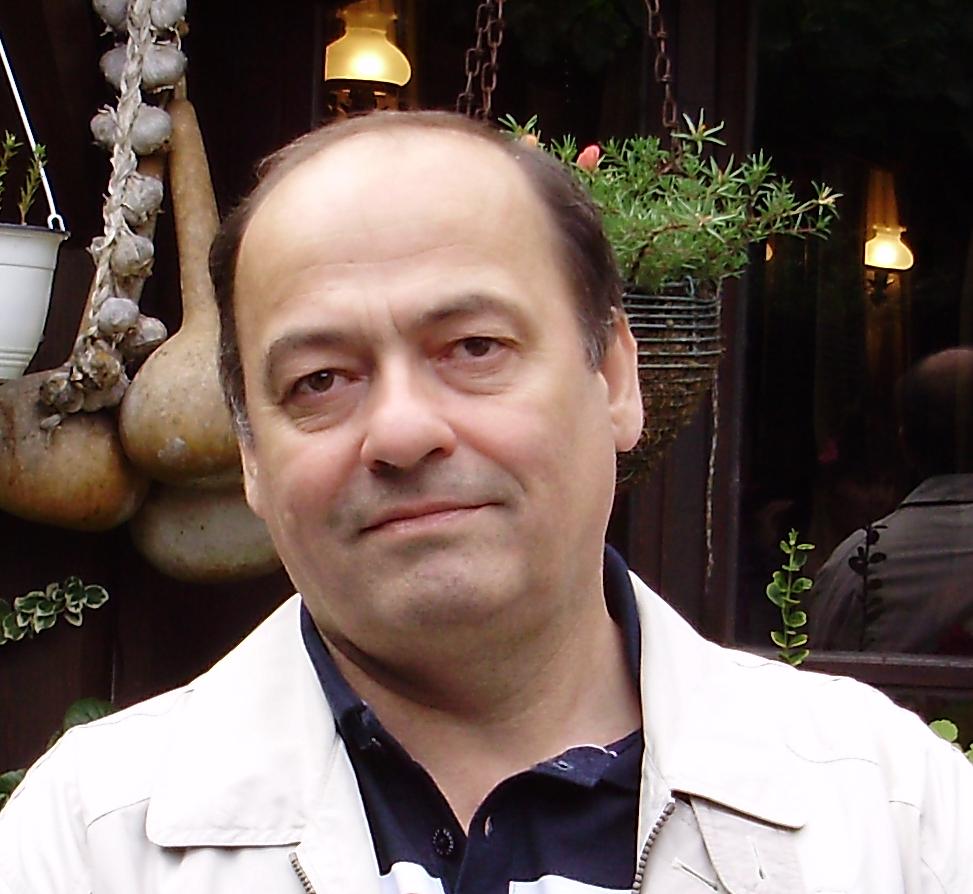
Dimitar Dimitrov is an Assistant Professor at the Faculty of Theology , Sofia University, specializing in Bible Studies . His research bridges computational linguistics and theological analysis. Email: dimityr.dimitrov@theo.uni-sofia.bg Office: Room 7 Research Interests: He focuses on Natural Language Processing , Multimodal Learning , and Disinformation Detection , developing frameworks for analyzing narratives, persuasion techniques, and harmful content in news and social media. His work spans Artificial Intelligence , Computational Linguistics , and Digital Humanities . Recent Projects: Key contributions include the FRaN-X narrative exploration tool, the PolyNarrative dataset, and multimodal frameworks for meme analysis ( MOMENTA ). His work appears in top-tier venues like SemEval and ImageCLEF.
Dr. Laxima Niure Kandel is an Assistant Professor in the Department of Computer, Electrical, and Software Engineering at Embry–Riddle Aeronautical University. Her research spans wireless security, UAV detection, and cybersecurity, with a strong focus on AI-driven solutions for aviation and IoT systems. Her core research interests include: Wireless sensing and localization Machine learning applications in cybersecurity GPS spoofing detection for aviation RF fingerprinting for device authentication Adversarial resilience in deep learning models Recent publications (2025) demonstrate a dominant focus on transformer-based security models, UAV protection systems, and explainable AI. Over 80% of her latest work involves deep learning techniques applied to real-world threats like GPS spoofing, ADS-B attacks, and adversarial patches in autonomous vehicles.
Boyan Jekov is an Assistant Professor at the University of Library Studies and Information Technologies in Sofia, Bulgaria, where he is affiliated with the Faculty of Information Science. He is a member of Elena Shoikova's Lab and has established himself as a researcher with expertise in cybersecurity, artificial intelligence, Internet of Things, and quantum computing applications. His research interests span several critical technology domains: Cybersecurity and Security Operations Centers Artificial Intelligence applications for threat detection and response Internet of Things security frameworks Quantum communication and computing applications Data science and big data analytics Technology applications in education Professor Jekov's research output demonstrates a focus on cutting-edge security challenges, with recent publications through 2025 on autonomous AI architectures for Security Operations Centers and quantum computing applications for environmental issues. His work bridges theoretical computer science with practical applications across multiple domains including security infrastructure, healthcare, and educational technology. His publications show a consistent trajectory toward increasingly complex and interdisciplinary research problems. His scholarly contributions include 35 publications with 9,239 reads and 82 citations, reflecting steady research productivity over approximately a decade of academic work. His recent publications show increasing engagement with emerging technologies and interdisciplinary applications, particularly at the intersection of AI, cybersecurity, and quantum computing. Professor Jekov's research methodology appears to emphasize practical applications of advanced computing techniques to solve real-world problems, particularly in security domains and educational technology. His work often involves collaborative research with colleagues across different departments and institutions, demonstrating a team-oriented approach to complex technological challenges.
Prof. Rusi Marinov serves as Professor of Strategic Communications at New Bulgarian University's Department of Media and Communication. He teaches core courses including Communication and Smart Technologies, Strategic Communication, Interactive Communications, Crisis Management, and Cyber Crisis Management. His institutional affiliations extend to European networks such as ECREA, Europe Unlimited, The European Charter for Media Literacy, and Bulgaria's Union of Scientists. His research spans strategic communications with specialized focus on crisis management systems, smart technology integration, and knowledge transfer mechanisms. Prof. Marinov's work uniquely bridges communication theory with technological implementation, particularly examining how intelligent platforms transform crisis response protocols and information management during emergencies. His methodology emphasizes practical application of theoretical frameworks through interactive systems and real-time data analytics. Publication trends over the past two decades reveal progressive technological deepening - from foundational communication strategy frameworks (2004-2009) to current AI-driven crisis prevention platforms (2018-2020). Recent works demonstrate sophisticated integration of IoT, blockchain, and machine learning within communication architectures, reflecting industry evolution toward predictive rather than reactive crisis systems. Through his NBU courses and European network engagements, Prof. Marinov maintains active supervision of undergraduate research with emphasis on practical technology implementation. His professional activities with Europe Unlimited and ECREA suggest ongoing grant-supported work in digital communication policy, though specific funding details aren't publicly documented. Students gain direct exposure to emerging crisis technology platforms through his course structures.
Prof. Velina Slavova is a full Professor in the Department of Informatics at New Bulgarian University (NBU), where she has taught since 1995. Her international academic engagements include invited professorships at Université de Nantes (1998-2017), Université Française d'Égypte (2005-2012), and ongoing teaching at the Francophone Institute of Management in Sofia. Educational background comprises: Mechanical Engineer, Higher Institute of Mechanical and Electrical Engineering, Sofia Specialist in Applied Mathematics and Informatics Candidate of Technical Sciences Robotics specialization, École Nationale des Mines de Paris Cognitive Science specialization, New Bulgarian University Research focuses on interdisciplinary domains: Natural Language Processing : Emotion recognition, text analysis, computational semantics Cognitive Modeling : Language acquisition frameworks, concept formation Data Science Applications : Corpus linguistics, statistical text analysis Cross-disciplinary Studies : Psycholinguistics, computational social science Her work often bridges computer science with cognitive psychology and linguistics. Recent publications (2020-2023) predominantly investigate emotion recognition through linguistic features, child language acquisition patterns, and semantic role modeling, utilizing corpus-based statistical approaches across multiple languages. Professional leadership includes: Co-chair of International Conference on Cognitive Modeling in Linguistics (since 2007) Member of Scientific Council, Francophone University Agency (2004-2010) Regional Bureau of Experts, Francophone University Agency (2006-2016) Teaching spans fundamental and advanced topics: Core CS: Algorithms, Data Structures, Database Design Specialized: Natural Language Processing, Information Systems Practicums: Database implementation, programming Contact: Office hours Friday 13:00-15:00 & Saturday 14:30-17:30 (Building II, Room 712), email: vslavova@nbu.bg
Hristina Kostadinova is an Assistant Professor in the Department of Informatics at New Bulgarian University. She previously held positions as a Chief Assistant at NBU (2016-present) and Honorary Assistant roles at both NBU and American University in Bulgaria (2013-2015). Her educational background includes a PhD, Master's, and Bachelor's degree in Informatics from South-West University 'Neofit Rilski'. Her research focuses on three primary domains: E-learning systems : Development of adaptive courses, gamified training, and automated assessment tools Programming education : Innovative teaching methods for Java and other languages Educational technology : Implementation of Moodle-based solutions and conceptual mapping techniques Recent publications demonstrate strong emphasis on automated test generation, adaptive learning frameworks, and gamification in programming education for diverse audiences including children and vocational students. Her work consistently integrates pedagogical theories with technical implementations. No scientific awards are mentioned in available documentation. Current courses taught include Java programming and related technical subjects. No information is available regarding research grants, student advising, or laboratory affiliations.
Desislava Georgieva is an Assistant Professor in the Department of Informatics at New Bulgarian University (NBU), where she has been a full-time faculty member since 2005. She holds a PhD from Technical University of Sofia (2014) and dual Master's degrees in Architecture and Computer Technologies. Her research spans image processing , computer graphics , and 3D animation , with applied work in medical imaging, telemedicine, and cybersecurity. Recent publications demonstrate collaborations on medical device software, adaptive imaging algorithms, and educational methodologies. She teaches courses including Game Design , Animation Techniques , and Computer Animation , and has supervised multiple diploma students. Administrative roles include serving as program director and consultant at NBU. Contact: Office hours Tuesdays/Wednesdays (18:00-20:00, Room 712A) or email dvelcheva@nbu.bg .
Plamen Borisov Danailov serves as a Part-time Lecturer in the Department of Mathematics, computer science and natural sciences within the Faculty of Economics at Technical University - Gabrovo. Holding a Doctorate in Physical Sciences, his academic position bridges theoretical physics and practical engineering applications despite his placement within an economics faculty. His primary research interests focus on Electrical Engineering , Physics Education , Vibration Diagnostics , and Optoelectronic Sensors . Danailov's work demonstrates a consistent pattern of investigating signal processing techniques for electromechanical systems, particularly focusing on noise reduction and vibration analysis in electrical machines. His research methodology frequently employs optical sensing technologies for non-contact measurement and diagnostics. Analysis of his publication trends reveals a dual focus on both scholarly research and educational development. The majority of his scientific publications (approximately 70%) concern machine diagnostics and signal processing, while the remainder focuses on physics education methodology and textbook development. His work shows consistent productivity across two decades with publications spanning from 1999 to 2020. Danailov has been involved in three significant research projects: "Research on AC machines in terms of noise and vibration" (2015) "Development of electronic teaching materials for remedial physics training" (2013) "Research, monitoring and electromagnetic compatibility of power plants" (2009) His educational contributions include nine physics textbooks and laboratory workbooks designed for university instruction. Danailov frequently collaborates with colleagues including T. Iliev, N. Angelov, and D. Nedeva, suggesting established research partnerships within his institution.
Assoc. Prof. Dr. Boyan Kolev Zhekov serves as Associate Professor in the Department of Computer Science at the University of Information Technology and Management in Ruse (UniBIT), Bulgaria, with additional scientific supervision roles in doctoral programs at ISTICN and ASOIU. His institutional footprint spans teaching, research leadership, and cross-organizational collaboration in national IT research initiatives. Research activities concentrate on high-impact domains where theoretical computer science meets operational security challenges: Cybersecurity : Developing self-improving cybercrime investigation techniques and security assessment methodologies for information systems/networks, with specialized focus on EU tax administration data protection Blockchain Innovation : Researching secure multi-party computation applications and transaction identification systems for financial assets Big Data Ecosystems : Architecting analytical frameworks for IoT data and learning experience optimization using machine learning Human-Technology Integration : Modeling user experience in workflow management systems and examining legal-technical interfaces in electronic printing As a dedicated doctoral supervisor, Dr. Zhekov guides 11 candidates across these interconnected fields, with research outputs directly addressing Bulgaria's and the EU's evolving cybersecurity infrastructure needs. His supervision portfolio demonstrates exceptional versatility in bridging theoretical rigor with practical implementation in critical national security contexts.
Svetlana Nencheva Petrova is an Associate Professor at St. Cyril and St. Methodius University of Veliko Turnovo, affiliated with the Faculty of Economics and specifically the Department of Economic Theory and International Economic Relations. She holds a PhD and maintains active research in marketing applications across diverse sectors including government, NGOs, and tourism. Her research explores: Marketing transformations and consumer behavior shifts Political communication strategies and electoral branding Sustainable management of cultural institutions AI applications in branding and tourism economics Policy coordination during economic crises Her recent publications (2021-2024) demonstrate strong focus on: Contemporary marketing paradigms in public and NGO sectors Consumer experience economics and retail tourism Political messaging frameworks and campaign strategies AI-driven brand management solutions She leads the university's television project (UNIVT-TV) developing educational content and academic visibility initiatives.
Ivailo Saraliyski serves as an Assistant Professor in the Department of Arts and Design at New Bulgarian University (NBU), teaching core courses in Visual Media, Advertising and Vector Design (Adobe Illustrator), and Computer Layout Design of Printed Matter (InDesign). Concurrently, he operates as a creative director at CreateX digital agency, merging academic rigor with professional design practice. His academic credentials include: Bachelor's degree in Graphics from the National Academy of Arts (2016) Master's degree in Poster and Visual Communication from the National Academy of Arts (2018) Doctoral degree in Visual Arts from New Bulgarian University (2023) Saraliyski's research bridges historical art analysis and digital frontiers, with primary focus on Tarot symbolism's evolution from Renaissance to contemporary contexts. His work examines how Tarot iconography transforms across cultural movements while maintaining relevance in modern visual communication. Secondary research trajectories explore NFT ecosystems, generative art algorithms, and AI's disruptive impact on artistic originality, positioning him at the intersection of tradition and technological innovation in visual culture. His publication pattern (2022-2025) reveals a clear scholarly trajectory: early works establish foundational Tarot scholarship (2022-2023), while recent outputs pivot decisively toward digital disruption (2024-2025). This evolution demonstrates increasing engagement with blockchain art markets and machine learning's creative implications, reflecting broader shifts in art historical methodology toward technology-integrated analysis. Saraliyski maintains active artistic practice through exhibitions like "LET THERE BE LIGHT" (2020) and "LET THERE BE COLOR" (2021), while his professional role at CreateX facilitates real-world application of academic research. His office hours operate across physical (NBU II Building) and virtual (Google Meet) spaces, emphasizing accessibility for students navigating both traditional and digital art domains.
Dimitar Atanasov, PhD, serves as an Associate Professor in the Department of Informatics at New Bulgarian University (NBU), where he has taught since 2009 across multiple programs including Network Technologies, Informatics, Psychology, and Telecommunications. His academic foundation includes a PhD in Probability Theory and Mathematical Statistics (2007). His research spans Statistics, Probability Theory, and their applications in educational measurement, cognitive diagnosis, and stochastic modeling. Key focus areas include robust statistical estimation, branching processes, test equating, and psychometric modeling for educational assessment. He has developed original teaching materials for courses in statistics, probability, data warehousing, and game theory. At NBU, he teaches core courses including Probability Theory and Statistics, Applied Statistics, and specialized topics like Image Classification and Data Theory. His work demonstrates strong interdisciplinary connections between statistical methodology and practical applications in education, linguistics, epidemiology, and computer security. He actively contributes to the academic community as a member of the editorial board of Mathematics and Informatics journal and participates in the Bulgarian Statistical Society and Bulgarian Society for Research and Evaluation in Education. Professor Atanasov has collaborated on national and international projects, particularly in educational assessment systems. His technical expertise includes MATLAB programming for statistical simulation and algorithm development, with applications in test scoring, equating, and automated test assembly systems developed for institutions like Saudi Arabia's National Center for Assessment.
Slav Angelov is a Senior Lecturer in the Department of Informatics at New Bulgarian University (NBU), serving since September 2017. He teaches core courses including Applied Mathematics for Economists, Quantitative Methods in Management, Probability and Statistics, and Knowledge Extraction from Data, while contributing to NBU's joint program with the University of Sheffield. His academic credentials include: Master's degree with honors in Optimization from Sofia University "St. Kliment Ohridski" (2014) PhD in Computer Science and Informatics from NBU (2019), dissertation: "Computer Simulation and Assessment of Corporate Risks" Dr. Angelov's research focuses on statistical modeling and algorithmic development, with expertise in regression analysis (particularly multicollinearity solutions and cross-validation techniques), machine learning applications, and knowledge extraction systems. His work bridges theoretical statistics with practical implementations in energy forecasting and bioinformatics. His publication record reveals a consistent research trajectory centered on advancing regression methodologies across diverse domains. Key contributions include modified regression techniques for risk assessment and educational frameworks for data mining pedagogy, demonstrating dual expertise in methodological innovation and curriculum development. He has been an integral member of NBU's Center for Risk Management, leading analytical work on critical national infrastructure projects including the Belene Nuclear Power Plant, Balkan gas hub development, and long-term electricity consumption forecasting for Bulgaria through 2030.
Tamara Ilieva-Tsvetkova is a Senior Assistant Professor at the Department of Geodesy and Geoinformatics within the Faculty of Geodesy at the University of Architecture, Civil Engineering and Geodesy (UACEG) in Sofia, Bulgaria. She also serves as a Technical Associate at the Center for Quality and Accreditation and maintains her office in Cabinet 411P, with reception hours on Mondays from 11:30-12:30 during the winter semester of the 2025-26 academic year. Her educational background includes: Master's degree in Geodesy from UACEG, Sofia (2007) Master's degree in Marketing with specialization in "Advertising Management" from UNWE, Sofia (2015) Doctorate in "General, Higher and Applied Geodesy" from UACEG, Sofia (2019) Tamara Ilieva-Tsvetkova's research focuses on geospatial technologies and methodologies, with particular expertise in geodetic measurements, spatial databases, CAD and GIS systems development, engineering project management, and coordinate systems. She is proficient in English (excellent level) and Russian (basic level), and possesses extensive technical skills in AutoCAD, ArcGIS, QGIS, PostgreSQL with PostGIS, and web mapping libraries like Leaflet and OpenLayers. Her recent publications (2021-2024) show a strong trend toward web-based GIS applications, indoor positioning systems, climate change monitoring using geospatial data, and the integration of artificial intelligence with geospatial technologies. Her work spans practical applications in urban planning, transport infrastructure risk assessment, real estate management, and environmental monitoring, with a particular focus on Bulgarian territories. She is an active member of professional organizations: Chamber of Engineers in Investment Design Chamber of Engineers in Geodesy European Geosciences Union (EGU) Tamara Ilieva-Tsvetkova has participated in numerous research and construction projects: Upgrading information systems for AGKK (2013-2014) Information platform for environmental research and modeling at UACEG (2018-2019) Center of Excellence "Heritage BG" (2018-2023) Geodetic surveying for the South Stream gas pipeline Cadastral mapping for multiple Bulgarian villages and regions Geodetic survey for Sofia Metro expansion Geodetic survey for Sofia Airport infrastructure Her technical expertise spans multiple domains including geodetic measurement processing, GIS system development, spatial database management, and programming for geospatial applications using C#, SQL, JavaScript, and various GIS APIs.
Martin Evlogiev is an Assistant Professor at the Department of Architectural Technology, Faculty of Architecture, University of Architecture, Civil Engineering and Geodesy (UACEG) in Sofia, Bulgaria. He has been teaching since April 2022, with previous experience as a part-time lecturer from February to April 2022. His teaching responsibilities include courses on computer technologies in architecture, building construction, and architectural structures for various year levels. Dr. Evlogiev received his architectural education at UACEG, Faculty of Architecture, where he completed his Master's degree in Architecture specialization with a focus on "Public Buildings" between 2009 and 2015. His earlier education includes attending secondary schools "Lev Nikolaevich Tolstoy" (1997-2004) and "Alexander Sergeyevich Pushkin" (2004-2009) in Sofia. He further enhanced his expertise with a Specialized Course in Cultural Heritage Conservation at Ecole de Chaillot from 2017 to 2019. Martin Evlogiev's research focuses on the intersection of architecture and advanced digital technologies. His work explores how artificial intelligence, building information modeling (BIM), and 3D visualization tools can transform architectural design processes and education. He investigates both the technical applications and ethical implications of these technologies in architectural practice. His research spans from practical software implementation challenges to broader questions about how digital tools reshape creative workflows and professional standards in architecture. His recent publications demonstrate a strong focus on artificial intelligence applications in architecture, with particular attention to visualization techniques, ethical considerations, and design automation. He also conducts research on educational aspects of technology adoption in architectural curricula and explores specialized applications of BIM and virtual reality in architectural practice. Dr. Evlogiev has received numerous awards and recognitions for his work: November 2024: Special Prize by Chaos for great contribution at AEC Hackathon in Sofia October 2022: Nomination in the "Computer Graphics" category at International Computer Art Forum "Computer Space" November 2020: Audience Award at Sixth national exhibition-competition for graduate thesis December 2019: First Prize in Logo Competition for the "Bulgarian Flying Disc Federation" September 2014: First prize as part of "Niconsult" team in Competition for the reconstruction of the monument "1300 years of Bulgaria" December 2013: Audience Award at Sofia Architectural Hall October 2013: First Prize in "Architecture" - Highest Architectural Potential Award at ArchHackathon April 2013: Special Award at Positive/Negative Competition May 2013: Third prize at "Keep caml & make DVOR" competition With extensive professional experience in architectural practice since 2013, Dr. Evlogiev brings real-world insights to his academic work. He has worked at firms including "Archont" (2019-2025), "Ivo Petrov Architects" (2015-2019), and "Niconsult" (2014-2015). His practical experience spans architectural design, computer-generated architecture, and internships at various architectural studios. He is also actively involved in research projects, including the "Sozopol 2021 Architectural Studio" analyzing the historic center of Sozopol. Dr. Evlogiev is a member of several professional organizations including CAB (with PPP), SAB ("SPA 15" Company, where he serves as Deputy Chairman), and BANHA. He is currently pursuing doctoral studies independently since 2025 and continues to develop his expertise in advanced architectural technologies.