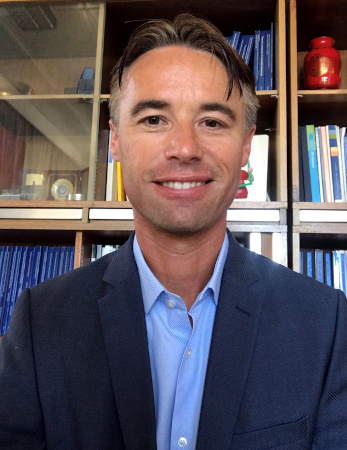
Marian Verhelst is a Professor at KU Leuven's Faculty of Engineering Science, renowned for her research in hardware-efficient computing and dedication to STEM education. Her work spans hardware acceleration for machine learning, edge AI, and in-memory computing, with a focus on energy optimization and algorithm-hardware co-design. Her research interests include: Designing flexible hardware for ultra-low-power edge AI systems Optimizing sparsity-aware architectures for deep learning workloads Advancing chiplet-based and 3D memory technologies Co-designing algorithms and hardware for probabilistic AI Pioneering STEM outreach through KU Leuven InnovationLab Recent publications (2023–2025) demonstrate strong trends in: Hardware-software co-optimization for edge ML systems Efficient data movement in heterogeneous accelerators Low-precision and sparse computation techniques RISC-V based customizable SoCs Sustainable AI accelerator design Awards & Honors: Young Academy of Europe Award (2021) for science communication and STEM advocacy She leads significant educational initiatives, including the KU Leuven InnovationLab which has engaged 150 schools and 13,000 students since 2014. The program develops hands-on STEM projects (e.g., AI-powered wheelchairs, sustainable energy systems) and provides teacher training to inspire youth in engineering.
Lenka Benova is a Researcher at the Institute of Tropical Medicine, Antwerp , where she serves as Unit Head in Reproductive and Maternal Health. She is a quantitative population health scientist with interdisciplinary training in management, economics, Middle East studies, demography, and epidemiology . Her career includes project coordination with Médecins Sans Frontières in Nigeria, West Bank, and South Sudan, as well as leading health pillar design in Egypt's conditional cash transfer program (2008-2010). Education: MA in Middle East studies (American University in Cairo) MSc in Demography and Health (London School of Hygiene & Tropical Medicine) PhD in Population Health (London School of Hygiene & Tropical Medicine) Her research focuses on health-seeking behavior in low- and middle-income countries, particularly reproductive/maternal health , with methodological interests in innovative data capture, self-reported indicator validity, and geospatial modeling . Her recent work examines maternal healthcare provision discontinuities in urban Sub-Saharan Africa through system dynamics and geospatial approaches. She teaches on Masters course modules and supervises PhD students , contributing to projects like: modeling maternal care accessibility in Guinea, analyzing fertility transitions in DR Congo, and evaluating hospital data utility for community epidemiology. Her research appears in journals such as Bioinformatics , BMC Pregnancy and Childbirth , and Scientific Reports , focusing on public health, maternal care, and health equity.
Frank Canters is a Professor of cartography, GIS, and remote sensing at the Department of Geography of Vrije Universiteit Brussel (VUB), leading the Cartography and GIS Research Group. His research focuses on urban remote sensing, spatial modeling of urban environments, and urban ecosystem services. He is renowned for pioneering the Canters projection, a minimum-error world map projection, and has contributed extensively to urban land-use mapping and decision-support systems for urban planning. His work spans over three decades, with 281+ publications and collaborations across multiple disciplines. Key areas include urban form dynamics, remote sensing applications for vegetation and land-use analysis, and spatial justice in green infrastructure distribution. He has supervised 83 students and developed tools like the Q-LavHA plugin for volcanic hazard modeling. Recent research highlights include integrating public perceptions into green space accessibility models, assessing allergenic potentials of urban greenery via LiDAR, and advancing machine learning approaches for urban vegetation mapping. His contributions bridge geospatial technologies with urban sustainability and policy.
Robrecht Abts is a researcher at KU Leuven’s Manufacturing Processes and Systems (MaPS) group, affiliated with the De Nayer Campus. His work bridges electromechanics, materials science, and advanced manufacturing techniques. His research focuses on structure, behavior, and sustainability of materials , with particular emphasis on thermal analysis in additive manufacturing processes like fused filament fabrication (FFF). This includes leveraging deep learning for real-time thermal data interpretation and optimizing electrical discharge machining (EDM) through adaptive pulse classification. Recent publications highlight his expertise in Threshold-free machine learning pipelines Thermal modeling in 3D printing COMSOL simulations for manufacturing processes
Prof. Tom Van Gerven is a chemical engineering specialist at KU Leuven's Process Engineering for Sustainable Systems (ProcESS) group. His research focuses on process intensification using alternative energy forms (ultrasound, microwaves, light) for sustainable metallurgy, mineral carbonation, and solvent extraction applications. He leads innovations in low-grade ore processing and carbon capture technologies. Key Research Areas: Process intensification, green metallurgy, CO₂ utilization, and advanced crystallization techniques Recent Work: 2025 publications highlight reactor optimization, mineral carbonation of industrial residues, and acoustic/microwave-assisted separations Technical Expertise: CFD modeling, sonochemical reactors, ionic liquid extraction, and environmental impact analysis
Kevin Van Geem is a full professor at Ghent University's Faculty of Engineering and Architecture, leading the Laboratory for Chemical Technology (LCT) and directing the Center of Sustainable Chemistry. His research focuses on thermochemical reaction engineering, transitioning fossil-based processes to renewable feedstocks, and integrating machine learning with chemical analysis. Director of Ghent University's pilot plants for steam cracking and chemical recycling Author of over 400 publications and founder of a spin-off company Specializes in kinetic modeling, process intensification, and sustainable chemistry His work spans chemical recycling, olefin production, and advanced analytical techniques for complex hydrocarbon mixtures. Recent articles highlight AI-driven catalysis, pyrolysis of polymers, and plasma-assisted CO2 utilization. Scientific awards include: Fulbright Research Scholar He bridges academia and industry through patented technologies and collaborative pilot-scale projects.
Piet Desmet is a full professor at KU Leuven's Faculty of Arts, serving as vice rector of KU Leuven, Kulak Kortrijk Campus, and academic director of the Office of the Academic Director, Bruges Campus. He leads multiple research divisions including itec and its Language and Technology subdivision, and is a member of Leuven.AI - KU Leuven Institute for Artificial Intelligence. As general coordinator of itec and academic director of the imec smart education research program, he oversees significant research initiatives spanning multiple campuses. Desmet's research focuses on the intersection of language learning and technology, with particular expertise in Second Language Acquisition and Technology, Computer-assisted Language Learning (including AI-based chatbots), Learning Analytics, and Language Technology and Corpus Linguistics. His work explores intelligent feedback systems, linguistic complexity prediction, adaptive testing, and natural language processing applications for educational contexts. His research spans theoretical linguistic frameworks to practical educational implementations, with a strong emphasis on empirical validation of technological interventions in language learning. Analysis of Desmet's recent publications reveals a strong trajectory toward integrating artificial intelligence with language education, particularly through conversational AI and learning analytics. His work increasingly focuses on chatbot-assisted language learning, adaptive assessment systems powered by large language models, and the application of computational linguistics to educational problems. The publications demonstrate a consistent methodological approach combining theoretical linguistics with empirical educational research, often employing eye-tracking, ERP studies, and learning analytics to evaluate effectiveness. Desmet actively supervises numerous PhD students and leads multiple major research projects including Smart Education at Schools (2025-2026), Enhancing EFL Learners' Speaking Ability through Chatbot-Assisted Dynamic Assessment Powered by LLMs (2024-2028), and the Flanders Ed Tech Hub (2022-2025). His research portfolio demonstrates significant funding success across multiple national and international initiatives focused on educational technology and language learning. As head of itec (an imec research team at KU Leuven), Desmet leads a substantial research ecosystem focused on smart education technologies. The itec team collaborates extensively with Leuven.AI and the KU Leuven Educational Research Institute (LIVO), creating a multidisciplinary environment that bridges computational linguistics, educational psychology, and artificial intelligence. Recent initiatives include the 'AI in Education' online training course and the network for Edtech and Learntech in Flanders.
Sven De Rijcke is a Full Professor at the Faculty of Sciences , Ghent University , affiliated with the Department of Physics and Astronomy (WE05). His research focuses on galaxy formation and evolution , particularly dwarf galaxies , disc galaxies , and numerical simulations involving dark matter, star formation, and gravitational lensing. Key research themes: dwarf galaxy dynamics, spiral structure in discs, cosmological simulations, and interstellar medium analysis. Recent publications (2020–2025) highlight work on primordial black holes , spiral eigenmodes , and ultra-diffuse galaxies , with affiliations to European framework programs (e.g., PRODEX-13, SUrvey Network) and regional grants. His supervised doctorates include Michele Mastropietro (2021), Eric Muires (2026), and Shivangee Rathi (2021), among others. Funding sources include the Research Foundation - Flanders (FWO) and the Special Research Fund . No explicit scientific awards are listed, but his roles as promotor and administrative supervisor underscore his academic mentorship.
Annick Hubin is a Professor in the Department of Sustainable Materials Engineering at the Faculty of Engineering, Vrije Universiteit Brussel. She serves in additional leadership roles including R&D Central management and as Head of a Research Group. Her work focuses on electrochemical processes with applications in materials engineering, corrosion science, and sustainable technologies. Her research interests span electrochemical kinetics, thermodynamics of aqueous solutions, electrode processes, electroreduction of metals and alloys (plating, extraction, refining, recycling), and environmental electrochemistry. She specializes in investigating basic electrochemical reactions using techniques such as potentiometric titrations, voltammetry, chronoamperometry, chronopotentiometry, and impedance measurements. Her work also examines mass transport in electrochemical processes and the action of organic inhibitors for metal deposition or dissolution reactions. Her recent publications reveal a strong focus on corrosion science, battery technologies, and electrochemical materials. There is a clear trend toward applying advanced characterization techniques and machine learning to solve complex problems in electrochemistry and materials science. Her research increasingly addresses sustainability challenges, particularly in battery technology and low-carbon solutions. Professor Hubin actively supervises doctoral students and participates in numerous research projects, demonstrating her commitment to mentoring the next generation of scientists and engineers. She has secured substantial research funding for projects spanning fundamental and applied research in materials engineering. She leads or participates in several significant research initiatives including DESTINY (Low-carbon solutions network), fundamental research on sulfide-based all-solid-state batteries, and projects focused on atmospheric corrosion prediction using machine learning. Her laboratory appears to specialize in electrochemical characterization and materials development for energy applications.
Ingrid Van Keilegom is a Full Professor at the Faculty of Economics and Business (FEB) at KU Leuven. She is a member of the LISS – KU Leuven Institute of Sports Science and serves as a program director for the POC Master in Statistics. Senior academic staff member of FEB Council and Campus Council Observer in Faculty of Science Council Member of LStat General Assembly Her research focuses on Survival Analysis and Nonparametric Regression , with expertise in: Dependent Censoring Cure Models Measurement Error Correction Quantile Regression Multivariate Statistical Inference Causal Surrogacy Metrics Recent publications emphasize copula-based methods, quantile regression for censored data, and applications to biomedical and economic forecasting. Key projects include instrumental variable approaches for endogeneity in cure models, bankruptcy prediction via machine learning, and measurement error modeling in multivariate settings. Notable affiliations: Centre for Efficiency and Productivity Analysis Collaborations in pharmaceutical statistics and actuarial science
Miryam de Lhoneux is an Assistant Professor at the Department of Computer Science , Faculty of Engineering Science , KU Leuven . She is affiliated with interdisciplinary institutes including Leuven.AI and LILI (KU Leuven Interdisciplinary Language Institute). Active in Multilingual Natural Language Processing and Fair AI research Member of the Faculty of Engineering Science Council and Computer Science Department Council Her research focuses on neuro-symbolic methods , language adaptation , and typological diversity in NLP. Recent projects include: Neuro-Symbolic Methods for Fair Multilingual NLP (2023-2027), Graph-Based Instance Selection for Multi-Modal Data (2024-2028), and Unit of Representation in Multilingual Modeling (2025-2028). Her publications span topics including code-mixed data analysis , English bias in LLMs , and sociolinguistically informed interpretability . She teaches courses in Advanced Natural Language Processing and Language Engineering Applications .
Jetmir Haxhibeqiri is a Postdoctoral Researcher at Ghent University 's Faculty of Engineering and Architecture , Department of Information Technology. His work focuses on Time-Sensitive Networking (TSN) over wireless systems, WiFi optimization, and Industrial IoT solutions. Key projects: IMEC Postdoctoral Fellowship Collaborations: Jeroen Hoebeke (UGent), Ingrid Moerman (UGent), Xianjun Jiao (UGent) Research Interests : Wireless network coordination, SDN integration for heterogeneous networks, low-latency communication, and machine learning applications in network optimization. Specialized in WiFi-LPWAN coexistence , In-Band Network Telemetry , and Cross-Technology Synchronization . Recent Publications : 2025 work on Wi-Fi-UWB synchronization, 2024 studies on coordinated spatial reuse in WiFi 7, and 2022 research on hardware-efficient PTP clock synchronization. Contributions span from theoretical models to practical implementations in industrial environments. Technical Expertise : Network densification strategies, interference management, and performance evaluation of large-scale wireless deployments. Developed simulation frameworks for LoRaWAN and WiFi TSN, with a focus on ns-3 validation. Education : PhD in Industrial Wireless Communication (2019, Ghent University).
Bert D'Espallier is a Professor at KU Leuven's Faculty of Economics and Business (FEB), based in the Finance Research Group at the Brussels campus. He serves on the FEB Council and Campus Council FEB Brussels, contributing to institutional governance. His research centers on microfinance and informal savings groups , examining financial/social performance, ethical dilemmas in hybrid organizations, and gender dynamics. Key areas include sustainable finance, donor impacts on social enterprises, and development finance, with emphasis on financial inclusion and poverty alleviation through community-based finance mechanisms. Recent publications (2024-2025) reveal a cohesive research program using advanced methodologies (survival analysis, machine learning, longitudinal studies) to analyze savings groups globally. Dominant themes include autonomy-performance relationships, sustainability determinants, and social potential of informal finance, bridging finance, development economics, and social impact assessment. No scientific awards were documented in the provided sources. D'Espallier supervises 5 PhD students (2 at KU Leuven, 3 at University of Agder) and leads multiple funded projects including 'Contextual performance of informal financial associations' (2020-2025) and 'Sabbatical for informal savings groups research' (SAB/22/036), supported by FWO grants and development industry partnerships. He collaborates with the CERCEM research group at UiA (Norway) and leverages the SAVIX-VSLA database for large-scale analysis of savings groups, actively engaging with development organizations to translate research into policy.
Lien Smeesters is a postdoctoral researcher at the Department of Applied Physics and Photonics, Vrije Universiteit Brussel (VUB). Her work focuses on advancing optical technologies for applications in climate monitoring, food safety, and industrial photonics. She is part of Brussels Photonics, a research group specializing in optical design and engineering. Her research interests include spectroscopy, LiDAR systems, space-based imaging, and the development of novel optical devices. Notably, she contributed to projects like the GRADΞD SBO initiative aimed at additive manufacturing process control. She has presented at international conferences such as SPIE Photonics Europe and organized events like the Belgian Photonics Online Meetup 2022. Education: Master's and PhD in Applied Physics and Photonics (VUB). Her awards include the Best Student Paper Award (2014), Photonics21 Student Innovation Award (2017), and EO Educational Award Finalist (2016). She has supervised master’s theses on topics like optical design for climate monitoring and tunable lenses in camera systems. Her lab work involves collaborations on projects such as wide-field-of-view cameras for Earth radiation monitoring and polymer lightguide fabrication.
Tom Goethals is an FWO Junior Postdoctoral Fellow affiliated with the Department of Information Technology at Ghent University , where he conducts research in edge computing, container networking, and decentralized systems. Current role: IMEC Postdoctoral Researcher Research focus: Secure and intelligent edge service management for decentralized IoT applications His work explores edge intelligence , orchestration frameworks , and AI-driven network optimization , with trends in lightweight virtualization (e.g., Feather), Kubernetes adaptation for edge environments, and intent-based decentralized orchestration. Publications emphasize scalability, security, and energy efficiency in fog-native workflows. Scientific Awards : FWO Junior Postdoctoral Fellowship He collaborates with researchers like Bruno Volckaert and Filip De Turck on projects funded by the Research Foundation - Flanders (FWO) , including grants for edge container networking and decentralized learning frameworks. His projects align with Ghent University’s focus on smart city infrastructure and edge-to-cloud systems.