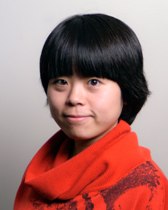
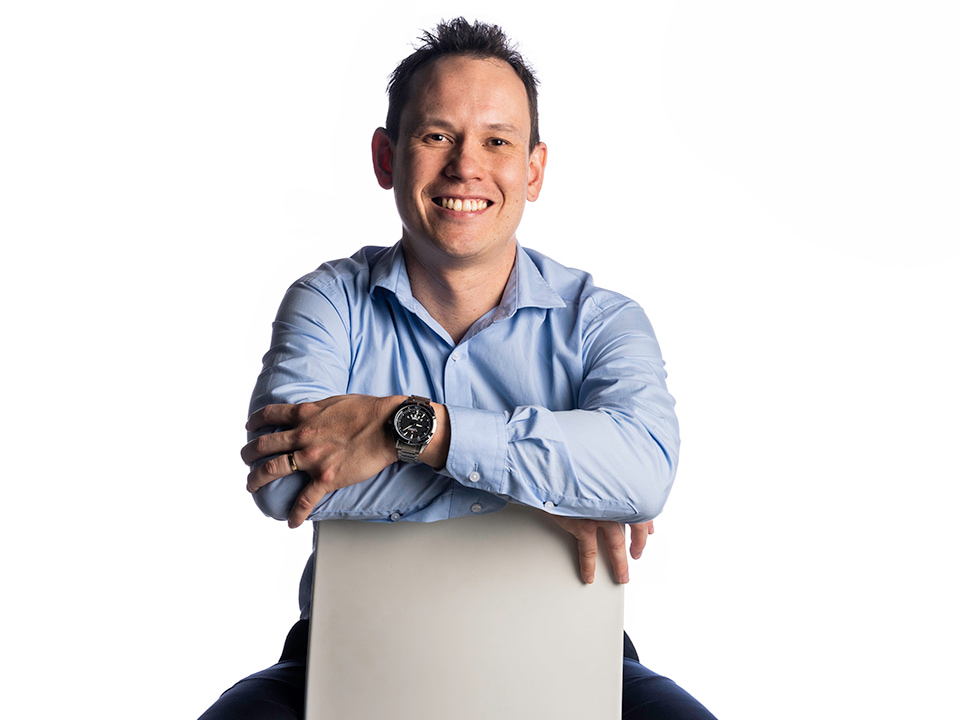
Dr. Matthew Brookhouse is a Senior Lecturer at the Fenner School of Environment & Society, part of the Australian National University's Institute for Climate, Energy & Disaster Solutions. With a PhD in Dendroclimatology from ANU, he specializes in using forest structural complexity and tree-ring analysis to understand climate interactions and ecological responses in Australian subalpine environments. Research Focus: Sub-alpine ecology, Dendrochronology, CO2 responsiveness in eucalypt species Teaching: First-year research methods with emphasis on statistical application, advanced modeling and field botany Projects: Leading collaborative snow-gum dieback research and dendrochronological monitoring initiatives His publications span 2006-2025 with recent emphasis on machine learning applications for forest monitoring, tropical tree-ring chronologies for climate change, and climate sensitivity in Australian alpine ecosystems. Key collaborations include institutions like Australian Nuclear Science and Technology Organisation and University of Canberra researchers. Current projects focus on snow-gum woodland dieback mechanisms, high-resolution dendrometric monitoring, and integrating dendrochronology with environmental policy frameworks. He maintains active supervision of research students and contributes to both undergraduate and postgraduate curriculum development.
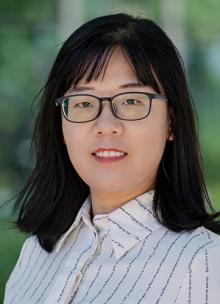
Yang Song is an ARC Future Fellow and Scientia Associate Professor at the School of Computer Science and Engineering , University of New South Wales (UNSW) . She serves as Associate Head of School (Research) and Co-Director of iCinema , focusing on AI and Computer Vision applications for social good. Education: BEng in Computer Engineering (Nanyang Technological University, Singapore), PhD in Computer Science (UNSW, 2013) Research Areas: Biomedical image analysis, human-centred AI, graph data modeling, neuro-symbolic learning, and AI trustworthiness. Her work develops domain-specific deep learning models for radiological segmentation, histopathology cancer analysis, and 3D reconstruction. Recent projects address explainability in LLMs, fairness in AI, and human-robot interaction frameworks. With over 200 peer-reviewed publications in top venues like CVPR , MICCAI , and NeurIPS , her research spans biomedical imaging, robotics, and general multimodal AI. Scientific Awards include: 2024: ARC Industrial Transformation Research Hub for Human-Robot Teaming 2023: Google Inclusion Research Award 2022: NHMRC Ideas Grant for computational brain imaging 2021: UNSW Engineering Research Excellence Award 2020: Scientia Fellowship (UNSW) 2019: ARC Future Fellowship She supervises 24 current PhD/MPhil students and has graduated 15 advisees, including placements at Harvard University and Siemens Healthineers. Her grants include collaborations with Surf Life Saving Australia and industry partnerships for AI-driven solutions.
Professor Irena Koprinska is a faculty member at the School of Computer Science, University of Sydney, specializing in Machine Learning, Data Mining, and Neural Networks. Her research focuses on practical applications in education, health, and energy sectors. She has received multiple awards, including the Dean’s Award for Outstanding Teaching (2017, 2008) and Best Paper Awards at CHI 2019 and other conferences. Koprinska has supervised 11 PhD and over 60 Honours students, many of whom have won prestigious scholarships like the Google Fellowship. Education: PhD and MSc in Computer Science, MEd in Higher Education. Research Interests: Develops algorithms for pattern extraction and predictive modeling in healthcare (e.g., sleep apnea prediction), education (student behavior analysis), and energy (solar power forecasting). Her work bridges algorithmic innovation with multidisciplinary collaboration. Publications: Over 100 articles in top journals/conferences, emphasizing applications of machine learning in health, energy, and education. Recent works include deep learning for sleep apnea and ensemble methods for solar forecasting. Awards: Highlighted awards include the Dean’s Teaching Awards, Best Paper recognitions, and the Thompson Research Fellowship (2018). Advising & Grants: Currently supervises Hanxue Yao. Previously led initiatives like the Data Science for Social Good workshop at ECML PKDD. Served as Associate Head for Research Education and Sub-Dean for Teaching & Learning. Labs/Teams: Leads the Computer Human Adapted Interaction Research Group, focusing on human-centric technology solutions.
Nurul Alam is a Lecturer in Accounting at the University of Sydney Business School. His research focuses on machine learning applications in finance and accounting, corporate distress prediction, and financial reporting. He holds a PhD from the University of Sydney, where he investigated machine learning models for US corporate bankruptcies. His teaching excellence has earned over 15 awards, including multiple Dean’s Citations and nominations for the Wayne Lonergan Award for Teaching Excellence. Education Master of Commerce (Finance & Accounting), University of Sydney Bachelor of Business Administration (Finance & Banking), University of Rajshahi, Bangladesh Research Interests Machine Learning and Deep Learning in accounting and finance Big Data analytics for corporate financial decision-making Accounting fraud detection mechanisms Financial reporting standards and regulations Current Projects Corporate bankruptcy prediction using survival models and AI Deep Learning applications in panel data analysis for firm distress Machine learning variable selection in corporate finance Accounting fraud patterns among lower/mid-level employees Teaching Contributions Financial Accounting B (ACCT3011) Quantitative Methods for Accounting (QBUS5002) Quantitative Business Analysis (BUSS1020)
Professor Behzad Fatahi is a distinguished academic in Civil and Environmental Engineering at the University of Technology Sydney (UTS), specializing in geotechnical engineering, railway infrastructure, and sustainable construction technologies. With a career spanning over 16 years at UTS, he has served as Deputy Head of School - Teaching and Learning (2024-present), Head of Discipline (2020-2024), and School Research Coordinator (2012-2017). His research focuses on unsaturated soil mechanics , dynamic soil-structure interaction , and green infrastructure solutions . Academic Appointments : Professor (2024-present), Associate Professor (2017-2024), Senior Lecturer (2011-2017), Lecturer (2008-2011) Research Leadership : Supervised 21 PhD students to completion, developed groundbreaking techniques for landfill waste reuse and tyre-derived aggregates in railway construction His work on seismic resilience of LNG tanks and bioengineered soil stabilization has received international recognition, including the 2023 Best Research Paper Award at the Australasian Association for Engineering Education conference. Professor Fatahi's industry experience includes geotechnical engineering roles at Coffey International and SES Engineering prior to academia. Key Research Contributions : Developed green corridor models for railway lines using coupled flow-deformation equations Pioneered AI-integrated teaching frameworks for civil engineering education Advanced machine learning techniques for intelligent compaction and structural buckling analysis As a Category 1 supervisor , he mentors graduate researchers in Civil Engineering , Geomechanics , and Earthquake Engineering . His peer-reviewed work (>240 publications) demonstrates technical excellence and innovation across multiple geotechnical domains.
Associate Professor Steven Lu is a faculty member at the University of Sydney Business School, serving as Deputy Head of Discipline (Education). He holds a PhD in Marketing from the University of Toronto, an MA in Economics from York University, and a BA from Nankai University. His research focuses on quantitative modeling, machine learning, and big data analytics applied to digital economy challenges such as digital retailing, search advertising, and blockchain. He co-directs the Consumer Insights Research Group and is affiliated with the Sydney Institute of Agriculture. Dr. Lu has published in top journals including Marketing Science , Production and Operations Management , and Journal of Retailing . His awards include the CNS Vithala Rao Award, ANZMAC Best Paper Awards (2022-2024), and the 2021 Vice Chancellor's Teaching Award. He teaches courses on machine learning in marketing, marketing research, and new product development. He leads research grants such as 'The Era of Mobile Payment' (2021) and 'Digital Transformation of Food Sensory Quality' (2017). His advising focuses on topics like neural recommender systems, e-coupon effectiveness, and heterogeneous treatment effects analysis.
Dr. Mark Gardner is a Research Fellow in Clinical Imaging at the ACRF Image X Institute, part of the University of Sydney's Sydney School of Health Sciences and Faculty of Medicine and Health. His work focuses on advancing radiation therapy and medical imaging technologies, with particular emphasis on improving treatment accuracy and patient comfort. Gardner holds a PhD from Flinders University, completed in collaboration with the Medical Device Research Institute, and has held research roles at the Cystic Fibrosis Airway Research Group (CFARG). His current projects include the Nano-X radiation therapy device and the Remove the Mask initiative , which aims to eliminate immobilization masks in head and neck cancer treatments. Gardner is affiliated with organizations like the IEEE Engineering in Medicine and Biology Society and the American Association of Physicists in Medicine. Research interests span radiation oncology, translational research in medical imaging, and device innovation. His work integrates advanced imaging techniques (e.g., synchrotron X-rays, cone-beam CT) with machine learning and wearable sensors to address challenges in respiratory therapy and tumor targeting. Notable contributions include developing real-time motion tracking for radiation therapy and improving mucociliary transport measurements. Awards: FameLab 2020 State Finalist, 2018 Medtech e-Challenge Winner, 2017 3MT Runner-Up Grants/Projects: Nano-X radiation therapy development, Remove-the-Mask surface-guided system Collaborations: Industry partnerships, multi-institutional research networks Gardner advises Chen Cheng on real-time head/neck motion monitoring during radiation therapy. His lab contributes to open-source tools and preclinical imaging advancements, bridging engineering and clinical oncology.
Dr. Chenming Zhang is an Advanced Queensland Industry Research Fellow at the School of Civil Engineering, The University of Queensland. His research focuses on hydrological processes in coastal and terrestrial groundwater systems, with particular emphasis on evaporation-driven mass and heat transport in soils and tailings, and hydrogeochemical dynamics in aquifers and mine waste systems. Specializes in IoT-based environmental monitoring Develops numerical models for coastal aquifer dynamics Conducts field and laboratory experiments on tailings behavior Research interests span coastal hydrology, groundwater modeling, mine waste management, and environmental monitoring. He works on contamination transport, aquifer protection, and climate impacts on water systems. Recent publications analyze: Iron curtain formation in subterranean estuaries Sea water intrusion mechanisms Salinity dynamics in tidal wetlands Smart sewer monitoring systems Scientific awards include the prestigious Advanced Queensland Industry Research Fellowship. He supervises multiple PhD projects on mine waste hydrology and coastal aquifer management, with notable collaboration on: Evolution Mining's gold tailings projects ARC Discovery Projects on coastal processes Grange Resources' PAF cell instrumentation His work combines field measurements, laboratory testing, and computational modeling to address critical environmental challenges in mining and coastal zones.
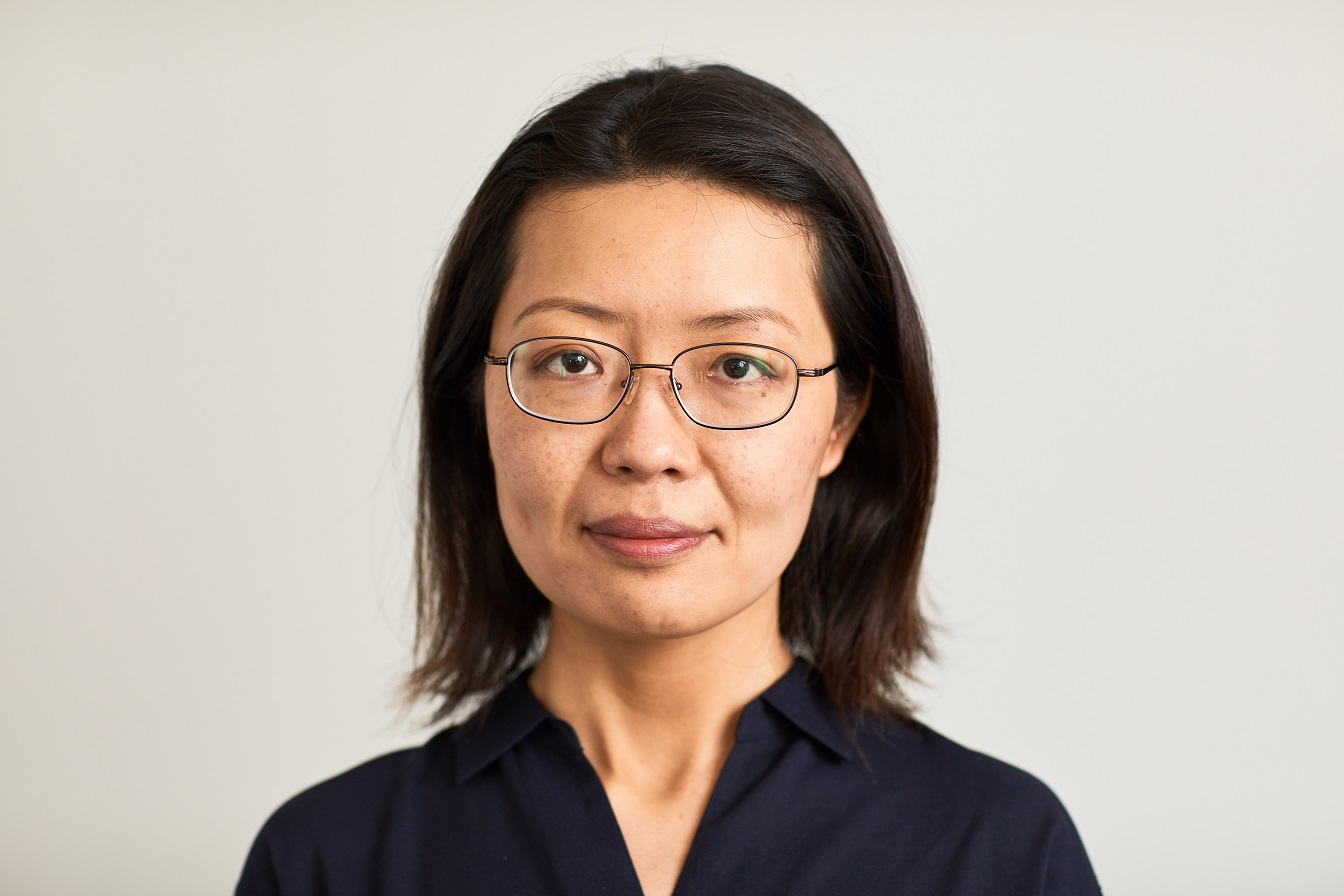
Xuan Liang is a Lecturer in Statistics at the Research School of Finance, Actuarial Studies and Statistics (RSFAS), Australian National University. With a PhD from Peking University and postdoctoral experience at Monash University, his research focuses on spatial statistics, nonparametric modeling, and environmental data analysis. Education: PhD in Statistics (Peking University, 2017), BSc in Statistics (Zhejiang University, 2012) His work addresses methodological challenges in spatial panel data analysis, network modeling, and air pollution quantification. He has developed novel techniques for meteorological confounder adjustment in air quality assessments and contributed to distributed data analysis methods. Recent research trends include: Advancing quasi-score matching for spatial econometric models Improving subbagging algorithms for big data Creating robust distributed data aggregation frameworks Refining spatial autoregressive panel data methodologies Scientific contributions include: ANU Vice-Chancellor’s Citation for Outstanding Contribution to Student Learning (Early Career), 2022 CBE Teaching Commendation for Outstanding Teaching, 2020 Co-development of the ggmatplot R package for matrix visualization Co-inventor of Chinese patent 201811183512.0 for air quality assessment He teaches advanced courses in time series analysis, regression modeling, and mathematical statistics at ANU, while maintaining active research collaborations in econometrics and environmental statistics.
Tracy Xiao Liu is a Professor at the Department of Economics, School of Economics and Management, Tsinghua University. Her research focuses on behavioral market design and the intersection of economics and computer science (Econ-CS), utilizing experimental methods to explore decision-making mechanisms, incentive structures, and behavioral spillovers. Her publications span journals such as Management Science , Games and Economic Behavior , and Journal of Economic Behavior & Organization . Key themes include behavioral economics, game theory, public goods, and experimental studies on market design, incentive contracts, and social preferences. Recent work examines AI-driven economic rationality (GPT models), energy policy impacts, and virtual red packet dynamics in online groups. Tracy collaborates with scholars across institutions, including her husband Baoping Liu (Peking University, harmonic analysis). Her experimental research bridges microeconomic theory with real-world applications in education, pensions, and crowdsourcing platforms.
Alana Clifton-Cunningham is a dedicated educator and researcher in fashion and textile design at the University of New South Wales, Faculty of Arts, Design & Architecture. With over two decades of experience in higher education, she has established herself as a leader in sustainable and innovative design education. Her work bridges traditional craftsmanship with cutting-edge technologies, creating experiential learning environments that prepare students for contemporary design practice while addressing global sustainability challenges. Educational Background: 2021 | UNSW - Learn to Lead: Progress Needs Resilient Leaders 2019 | UTS - Graduate Certificate in Higher Education Transdisciplinary Learning 2008 | UNSW (COFA) - Master of Design (Hons) Research 2002 | UTS - Graduate Certificate in Higher Education Teaching and Learning 2001 | TAFE - Diploma of Marketing Management 1993 | UTS - Bachelor of Design (Hons) (Fashion and Textile Design) Clifton-Cunningham's research focuses on sustainable fashion practices, with particular emphasis on circular economy principles in textile production and garment design. Her work explores scalable models for textile remanufacturing, clothing waste reduction, and sustainable workwear systems. She is deeply engaged in addressing clothing sizing issues and standards in Australia, advocating for more inclusive approaches to fit and body diversity. Her commitment to equity, diversity, and inclusion underpins all aspects of her leadership and teaching, making her a strong advocate for responsible design futures that prioritize both environmental sustainability and social justice. Her publication record demonstrates a consistent focus on the intersection of design education, cultural exchange, and sustainable practices. Notable works include her 2022 book chapter on cross-cultural textile workshops in India, her 2018 analysis of undergarment technology evolution, and her contributions to exhibitions like 'Out of Hand' at the Powerhouse Museum. These works collectively highlight her emphasis on hands-on, experiential learning that connects students with real-world sustainability challenges and cultural contexts. Research Grants: 2024 | Redesigning Clothing Waste Using a Circular Design Framework - LP230200929 $220,473K 2024 | Department of Community and Justice - $17,900 2024 | Education Focussed Community of Practice (PVCESE) - $2,500 2023 | Department of Community and Justice - $15,900 2023 | Education Focussed Community of Practice (PVCESE) - $6,995 2017 | AbbVie Pharmaceutical Pty Ltd, HS Support Garments: Chief Investigator - $35,000 Clifton-Cunningham actively supervises research in fashion and textile design, with a focus on sustainable practices and innovative design processes. Her extensive industry network, including partnerships with major fashion labels, brings real-world insight into the classroom. She has led international global studios, including immersive programs in India where students collaborate with artisans. Her current ARC Linkage project 'Redesigning Clothing Waste Using a Circular Design Framework' represents a significant contribution to sustainable fashion research. Her creative practice is reflected in numerous exhibitions, including the Seoul International Fashion Art Biennale (2016, 2018), Wangaratta Contemporary Textile Awards, and the Powerhouse Museum's 'Out of Hand' exhibition. These artistic endeavors complement her academic work, demonstrating the practical application of her research interests in sustainable and innovative textile design.
Dr. Feras Dayoub is a Senior Lecturer at the School of Computer and Mathematical Sciences (Faculty of Sciences, Engineering and Technology) at the University of Adelaide , specializing in Embodied AI and Robotic Vision within the Australian Institute for Machine Learning (AIML) . He co-directs the CROSSING French-Australian laboratory for human-autonomous agent teaming and holds an Adjunct position at the Queensland University of Technology (QUT) , serving as an Associate Investigator at its Centre for Robotics . Previously, he was a Chief Investigator at the ARC Centre of Excellence for Robotic Vision . His research focuses on advancing reliable deployment of computer vision and machine learning on mobile robots in real-world environments. Applied projects include agricultural automation , environmental conservation , and autonomous infrastructure monitoring . He has published extensively on topics like object detection , domain adaptation , 3D representation learning , and vision-language navigation , with a particular emphasis on robustness in dynamic and partially observed environments. Dr. Dayoub is also an educator specializing in programming , computer vision , and robotic perception . He contributes to open-source robotics research through tools like AARK (Autonomous Racing Toolkit) and has led teams developing solutions for precision agriculture (e.g., Deepfruits fruit detection system) and environmental monitoring (e.g., Crown-Of-Thorns starfish detection ). Key Collaborations : CROSSING Lab, QUT Centre for Robotics Research Themes : Embodied AI, Robust Perception, Domain Adaptation
Dr. Kenji Fujita is a Research Fellow at the Kolling Institute, University of Sydney, specializing in ageing, pharmacology, and pharmaceutical care quality. He holds a PhD, MScMed (ClinEpid), and BPharm from the University of Sydney. Previously a pharmacist in Japan, he leads international initiatives in the Pharmaceutical Care Network Europe (PCNE) and the International Pharmaceutical Federation (FIP). His work focuses on deprescribing strategies, polypharmacy, and developing quality indicators for healthcare services. Dr. Fujita’s research integrates big data analysis, statistical modeling, and machine learning to address challenges in geriatric pharmacotherapy. Current projects include validating frailty indices, evaluating deprescribing interventions in older adults, and developing NLP tools for clinical documentation analysis. He has also contributed to assessing organizational readiness for guideline implementation in community pharmacies. Awards include the 2023 Outstanding Poster Presentation Award at the IAGG Asia/Oceania Congress and 2022 Best Poster at the Japanese Society of Social Pharmacy. He has secured grants such as the 2024 electronic frailty index project and the 2021 systems-approach to medication review initiative. Dr. Fujita collaborates with global networks like J-HOP (Japan Home Visiting Pharmacy Association) and leads multidisciplinary teams across Australia and Europe. His lab focuses on translating data-driven insights into actionable clinical practices to improve medication safety and quality in ageing populations.
Professor Michael Milford is a robotics and computer vision expert at Queensland University of Technology (QUT), serving as Joint Director of QUT's Centre for Robotics. His research bridges robotics, neuroscience, and computer vision, focusing on biologically inspired navigation systems for autonomous vehicles and drones. He has pioneered projects like SeqSLAM and RatSLAM, emphasizing the synergy between biological intelligence and robotic systems. Research Interests: Milford explores navigation algorithms inspired by animal behavior, energy-efficient neural networks, and autonomous systems. His work aims to create robots capable of operating in dynamic environments through interdisciplinary collaboration with institutions like MIT, Harvard, and NASA's Jet Propulsion Laboratory. Awards & Recognition: Awarded the 2019 Batterham Medal and a $2.7M Australian Laureate Fellowship for his project on GPS-independent positioning systems. His work has produced highly cited papers in robotics and computer vision, including breakthroughs in visual SLAM and place recognition under varying conditions. Teaching & Collaboration: Milford mentors students in robotics and AI, launching initiatives like the STEM Storybook to inspire youth. He collaborates globally, emphasizing cross-disciplinary research to bridge gaps between fundamental and applied sciences. Labs & Projects: Leads QUT's Centre for Robotics, advancing technologies for autonomous systems. His projects explore neuromorphic computing, SLAM systems, and bio-inspired navigation, with applications in defense, transport, and environmental monitoring.
Professor Heiko Spallek is Head of School and Dean at the University of Sydney’s Sydney Dental School, leading the school’s integration with the Faculty of Medicine and Health. He also serves as Academic Lead for Digital Health and Health Service Informatics at the faculty level. His research focuses on advancing dental informatics, teledentistry, and evidence-based practice, while advocating for improved oral health policy and public health initiatives. He holds roles including director at Community Connections Australia and membership in the Charles Perkins Centre. Education: DMD, Dr. med. dent., MSBA(CIS), FACD, FAIDH Leadership: Oversees Sydney Dental School’s academic and clinical programs, emphasizing interprofessional education and digital health innovation. Research interests include leveraging big data and machine learning in dentistry, improving access to oral healthcare through teledentistry, and addressing systemic issues in dental education and policy. He has led projects on laser dentistry applications, dental caries prevention, and healthcare workforce regulation. Notable contributions include the OpenWide conference series, the BigMouth dental data repository, and advocacy for equitable dental funding in Australia. Grants include initiatives on oral hygiene in aged care and analysis of healthcare advertising perceptions. Media engagements highlight his role in public discourse on dental access and policy, including commentary on Australia’s dental crisis and aged care reforms. He actively promotes interdisciplinary collaboration through platforms like the Dental Informatics Online Community. Labs/Teams: Directs the Sydney Dental School’s research programs in informatics and public health, collaborating with national and international networks such as the National Dental PBRN.