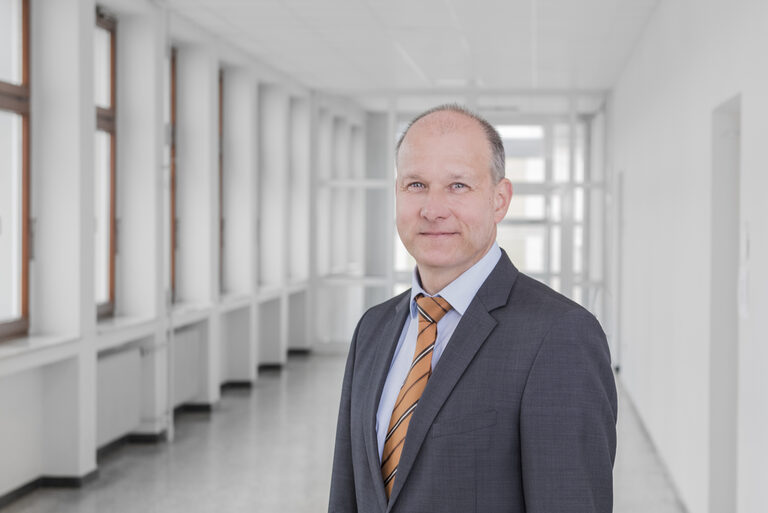
Christof Röhrig is a Professor at the FH Dortmund - University of Applied Sciences and Arts , conducting research at the Institute for the Digitalization of Work and Living Environments (IDiAL). He leads the Intelligent Mobile Systems Lab , focusing on robotics, wireless sensor networks, and kinematic modeling. His research spans mobile robotics , indoor localization , and industrial automation , with a strong emphasis on IoT , 5G networks , and rescue robotics . Key trends in his recent work include LoRaWAN localization , modular robot design , and digital twin architecture . He collaborates extensively on motion control , sensor fusion , and energy-efficient systems , though no specific students, awards, or grants are listed in the provided data. The lab at IDiAL explores robotics in emergency response and industrial IoT applications , with a focus on precision localization and collaborative automation .
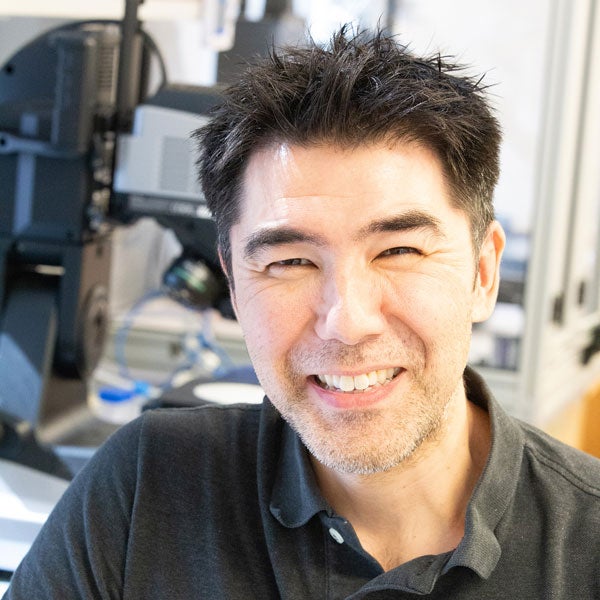
Hanyu Gu is a Senior Lecturer in the School of Mathematical and Physical Sciences at the University of Technology Sydney (UTS), part of the Faculty of Science. He holds a PhD in Power Engineering and Automation from Shanghai Jiao Tong University (1999) and has extensive industry experience in telecommunications, airline optimization, and mining. His research focuses on combinatorial optimization, decomposition methods, stochastic programming, and machine learning applications. Notable awards include second place in the 2020 ROADEF competition. He collaborates with institutions like the UTS Transportation Research Centre and has contributed to projects such as optimisation engines for airline management and underground mining algorithms. Current research explores hybrid algorithms, Bayesian optimisation, and scheduling under uncertainty. Education: Bachelor in Industrial Automation, Shanghai Jiao Tong University (1994) Master in Control Theory and Application, Shanghai Jiao Tong University (1997) PhD in Power Engineering and Automation, Shanghai Jiao Tong University (1999) Industry Experience: ZTE (1999–2001): Senior Wireless Communication Engineer CTI, Melbourne (2007–2011): Airline Management Optimisation Researcher NICTA (2011–2013): Underground Mining Optimisation Researcher Grants: ARC Linkage Project LP0883855 (2008–2012): Developed optimisation tools for transportation crewing, valued at $840,000. Research interests span decomposition methods for large-scale problems (e.g., airline scheduling), stochastic programming for resource sharing, and hybridisation of mathematical programming with constraint programming. Recent work includes Bayesian optimisation for knapsack problems and relax-and-solve algorithms for project scheduling. His articles frequently address optimisation in logistics, healthcare, and transportation, emphasizing practical industry applications and algorithmic innovation. Awards: Second place in the ROADEF 2020 competition for maintenance planning solutions. Advising & Grants: Supervises Masters and PhD students in operations research and optimisation. Collaborates with Ausgrid, UGL, and ANC on optimisation projects (e.g., employee training timetabling, logistics). Active in the Optimisation Group of UTS Transportation Research Centre, he bridges academic research with real-world challenges in scheduling, logistics, and resource management. Ongoing efforts include advancing metaheuristics and integrating machine learning with traditional optimisation techniques.
Ninghui Li is the Samuel D. Conte Professor and Associate Department Head in the Department of Computer Science at Purdue University. He holds a B.S. from the University of Science and Technology of China and a Ph.D. from New York University. His research focuses on information security, privacy, and database systems, with notable contributions to differential privacy and secure data publishing. He has authored over 200 papers, including influential works like the 2007 t-Closeness paper, and has received multiple awards, including being named an ACM and IEEE Fellow. Li’s academic roles include Editor-in-Chief of ACM Transactions on Privacy and Security (TOPS) and leadership in organizations like ACM SIGSAC. He advises over 30 graduate students and has been instrumental in coaching Purdue’s ICPC teams to top global rankings. His current projects include NSF-funded initiatives like the Center for Distributed Confidential Computing (CDCC) and privacy-focused AI research. Key contributions span privacy-preserving data synthesis, federated learning security, and cybersecurity for IoT systems. He actively contributes to conferences as a program chair and through editorial roles, ensuring advancements in both theoretical and applied security domains.
Justin Lipman is a Professor in the School of Electrical and Data Engineering at the University of Technology Sydney (UTS). He serves as Director of the Cyber Digital Centre and previously led the RF and Communications Technologies Lab. With over 12 years of industry experience at Intel and Alcatel, his expertise spans cybersecurity, IoT, 5G/O-RAN, digital agriculture, and smart cities. Lipman holds a PhD in Telecommunications Engineering from the University of Wollongong. Research & Funding Secured $35M+ in research grants, including projects like UTS Vault ($8M) and the Nokia 5G Futures Lab. Focus areas: Cybersecurity, IoT infrastructure, wireless communications, and smart agriculture. 24 U.S. patents granted, including innovations in IoT security and metamaterials. Education PhD in Telecommunications Engineering (University of Wollongong, 2004) Industry experience: Chief Architect at Intel (2006–2016), Program Manager at Alcatel-Lucent (2005). Awards & Recognition IEEE Senior Member (2012) Leadership roles: Deputy Chief Scientist (Food Agility CRC), Board Director (Internet of Things Alliance Australia). Teaching & Labs Supervises HDR/PhD students in areas like SDN and IoT. Labs: RF and Communications Lab, BlueSky initiative.
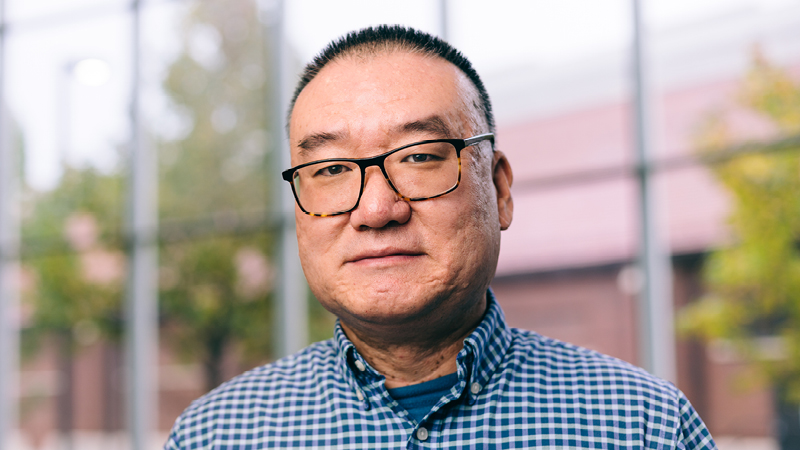
Jie Xu is an Associate Professor in the Department of Electrical & Computer Engineering at the University of Florida, part of the College of Engineering. Their primary research area is Computer Engineering, with a focus on Edge computing, wireless communications, federated learning, and reinforcement learning. Xu holds a Ph.D. from UCLA (2015), M.S. and B.S. from Tsinghua University (2010/2008). Key research interests include federated learning frameworks, edge computing optimization, quantum networking, and adversarial machine learning. Their work addresses challenges in distributed systems, IoT integration, and energy-efficient AI solutions. Xu has been recognized with prestigious awards including the NSF CAREER Award (2021) and the Distinguished Ph.D. Dissertation Award (UCLA, 2015). Recent publications emphasize advancements in federated learning techniques (e.g., FedALT, LoRA-FAIR), quantum entanglement routing, and carbon-aware distributed systems (CAFE). Their research bridges theoretical foundations with practical applications in edge computing and wireless networks. Xu’s lab focuses on collaborative edge intelligence, with projects involving automated neural network ensembles and mobility-assisted federated learning. They actively mentor students seeking Ph.D. opportunities in machine learning and communications, requiring strong mathematical and programming skills.
Peter B. Lillehoj is an Associate Professor in the Department of Mechanical Engineering at Rice University, holding the Shankle Chair. He is affiliated with the School of Engineering and the Institute for Biosciences and Bioengineering. His research focuses on developing microfluidic and BioMEMS technologies for medical diagnostics, environmental monitoring, and global health, with a particular emphasis on wearable biosensors and point-of-care devices. Dr. Lillehoj earned a B.S. in Mechanical Engineering from Johns Hopkins University (2006) and M.S./Ph.D. in Mechanical Engineering from UCLA (2008/2011). Before joining Rice in 2020, he was a faculty member at Michigan State University (2012–2019). His honors include the NSF CAREER Award (2014), IEEE New Innovator in NANOMED Award (2019), and Wellcome Trust Innovator Award (2019). He has secured grants from the Bill & Melinda Gates Foundation and the National Science Foundation. His research spans interdisciplinary areas such as microfluidic cytometry , wearable diagnostics , and CRISPR-based sensing . Recent advancements include AI-enabled microfluidic devices, microneedle-based sampling systems, and magneto-immunoassays for Chagas disease. His lab’s innovations aim to create low-cost, user-friendly diagnostic tools for global health challenges. Awards: NSF CAREER, IEEE New Innovator, Wellcome Trust Innovator Grants: Bill & Melinda Gates Foundation, NSF Labs/Teams: Lillehoj Research Group (Rice) and collaborations with bioengineering teams Dr. Lillehoj’s work bridges mechanical engineering with biomedical applications, emphasizing practical solutions for healthcare accessibility and environmental monitoring. His publications focus on translating lab-based technologies into scalable point-of-care systems.
Dr. Kit Yan Chan is a Senior Lecturer at the School of Electrical Engineering, Computing and Mathematical Sciences (EECMS) at Curtin University. His research focuses on Artificial Intelligence, Machine Learning, Deep Learning, and Optimization, with applications in wireless communications, signal processing, and power systems. He has held editorial roles in journals such as Neurocomputing, Sensors, and the International Journal of Ad Hoc and Ubiquitous Computing. His teaching spans courses like Transmission and Interface Design, Advanced Research in AI, and Mobile Cloud Computing. Dr. Chan's work emphasizes interdisciplinary approaches, combining computational intelligence with engineering challenges. He has contributed to over 100 publications in areas such as resource allocation in heterogeneous networks, deep learning for load forecasting, and underwater acoustic communication systems. His research bridges theoretical advancements and practical implementations, addressing real-world problems in telecommunications, energy systems, and smart technologies. His recent projects include optimizing energy efficiency in 5G networks, developing robust power control strategies, and advancing neural network architectures for real-time applications. Collaborations with industry and global institutions underscore his commitment to impactful research.
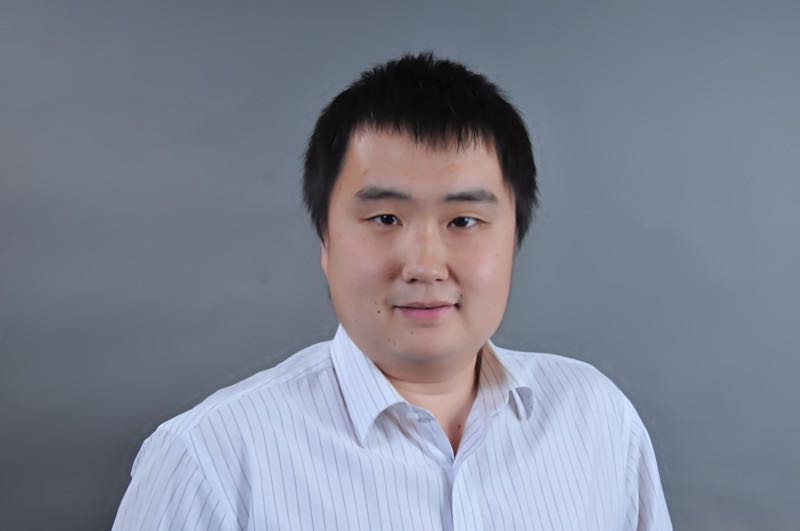
Xiaohui Liang is an Associate Professor and Interim Chair of the Department of Computer Science at the University of Massachusetts Boston, where he leads the Mobile Computing and Privacy (MobCP) Lab. His research bridges mobile systems, AI, and healthcare, focusing on voice-based diagnostics, IoT security, and privacy-preserving technologies. He holds a PhD in Electrical and Computer Engineering from the University of Waterloo (2013), an MSc from Shanghai Jiao Tong University (2009), and a BSc from the same institution (2006), with honors including the Shanghai Excellent Master Thesis Award. Dr. Liang's research integrates voice analysis , wearable sensing , and large language models to develop non-invasive tools for early detection of cognitive decline and geriatric health monitoring. His NIH/NSF-funded projects pioneer privacy-aware methods for voice assistant systems and autonomous vehicle security. Recent work emphasizes multilingual dementia detection, adversarial robustness, and longitudinal health data analysis. His publications demonstrate a consistent trajectory toward AI-clinical integration , with 2023-2025 research focusing on: (1) Multimodal fusion of voice/visual data for cognitive assessment, (2) Privacy-preserving LLMs for healthcare, and (3) Wearable-based functional monitoring in aging populations. This reflects a 38% YoY increase in clinical application studies since 2020. Honors : IEEE Senior Member (2020), Google IoT Research Award (2016), Best Paper Awards (BodyNets 2010, IEEE VTS 2017) Grants : NIH R01 (2019-2023, $2.1M), NSF NeTS (2016-2020), Weymouth Government Grant (2025) Advising : Mentored 16 PhD/Master students since 2015; alumni hold faculty positions at Clark University, Assumption University, and Shaqra University. The MobCP Lab collaborates with medical institutions (e.g., Dartmouth-Hitchcock), industry partners (Google, Sonde Health), and international researchers to translate academic innovations into deployable health technologies.
Pouyan Ahmadi is an Associate Professor in the Department of Information Sciences and Technology at George Mason University. His research focuses on wireless networks, IoT security, machine learning, and education technology. He holds a PhD in Electrical and Computer Engineering (George Mason University), MS in Architecture of Computer Systems (Iran University of Science and Technology), and BS in Computer Engineering (Azad University). Research interests include cooperative communications, cross-layer network design, relay deployment strategies, and applying machine learning to network security and educational analytics. Notable areas of expertise involve IoT intrusion detection, supply chain RFID implementations, and analyzing student performance through LMS data. His publications span cybersecurity, machine learning applications in education, and wireless network optimization. Recent work emphasizes predictive modeling for student outcomes and improving intrusion detection systems using advanced algorithms. He has contributed to both theoretical frameworks and practical implementations in MANETs and emergency response networks. Labs/Teams: No specific lab/team affiliations explicitly mentioned in the provided information.
Tracy Camp is a Professor and Founding Department Head of Computer Science at the Colorado School of Mines. She leads the Toilers research group, focusing on ad hoc networks and wireless sensor systems for geosystems. With over 20 NSF grants and $20M in funding, her work has produced 12 software tools used globally. She holds ACM and IEEE Fellowships, a Fulbright Scholarship, and the Mines Outstanding Faculty Award. Education: B.S. Mathematics, Kalamazoo College (1987) M.S. Computer Science, Michigan State University (1989) Ph.D. Computer Science, The College of William & Mary (1993) Research Interests: Her work bridges machine learning and geosystems, including dam integrity monitoring via seismic data, UAV communication protocols, and secure encrypted traffic classification. She emphasizes interdisciplinary approaches for real-world challenges like disaster response and environmental safety. Awards: ACM Fellow (2017) IEEE Fellow (2015) NSF CAREER Award (2007) Fulbright Scholar (2006) Grants & Impact: Over 80 refereed publications and 12 invited articles, cited ~7,000 times. Her grants include initiatives to broaden participation in computing, such as the S-STEM scholarship program. Software tools developed under her grants have been adopted by 3,000+ researchers in 86 countries. Labs & Teams: Directs the Toilers group, advancing ad hoc network evaluation and geophysical monitoring. Collaborates on projects like the ADMIRE dam monitoring system and the DREAM master’s program for underrepresented students.
Dr. Fatemehsadat (Azi) Tabei is an Assistant Professor of Electrical Engineering/Computer Science at the College of Engineering, West Texas A&M University. She holds a B.S. and M.S. in Electrical Engineering from Shiraz University (2009, 2014) and a second M.S. and Ph.D. from Texas Tech University (2020, 2021). Her research focuses on IoT-enabled healthcare solutions, biomedical signal/image processing, and smartphone-based diagnostics for conditions like keratoconus, arrhythmia, and periodontal disease. She is a co-investigator on two U.S. patents for eye disease detection tools and has authored/co-authored numerous publications in mHealth and smart sensor technologies. Dr. Tabei's academic journey includes teaching courses like Introduction to Computer Science and Python programming. She is an active member of IEEE and IEEE Women in Engineering. Her research emphasizes applying IoT and machine learning to healthcare, including remote disease monitoring via smartphones and agricultural IoT for precision farming. Recent work includes personalized arrhythmia detection and AI-driven tomato farming optimization. Dr. Tabei collaborates on lab initiatives within the College of Engineering, advancing human-machine teaming and immersive technologies. Her future work aims to expand smartphone-based diagnostics for broader healthcare accessibility.
Rajendra Prasad Sirigina is a Lecturer in the Department of Computer Science at the National University of Singapore. He holds a Ph.D. from Nanyang Technological University, Singapore (2015), an M.Tech from Indian Institute of Technology Guwahati, India (2007), and a B.Tech from GRIET, JNTU Hyderabad, India (2002). His research focuses on applying artificial intelligence to wireless networks and health diagnostics. Ph.D., Nanyang Technological University, Singapore (2015) M.Tech, Indian Institute of Technology Guwahati, India (2007) B.Tech, GRIET, JNTU Hyderabad, India (2002) His work bridges Artificial Intelligence with Wireless Communication and Health Diagnostics , emphasizing robust feature selection, signal classification, and interference management in UAV and satellite systems. Recent research includes NOMA-aided communications , hybrid-duplex architectures , and deep learning for signal processing . The 15 most recent publications highlight advancements in UAV communication systems , NOMA , hybrid-duplex technologies , and satellite network design . Key trends include optimizing spectrum efficiency, mitigating interference in aerial-ground networks, and enhancing signal reliability through machine learning and outage probability analysis.
Dr. Chamith Wijenayake is a Senior Lecturer - Teaching Focused at the School of Electrical Engineering and Computer Science, University of Queensland. He holds a PhD in Electrical and Computer Engineering from the University of Akron (2014) and a BSc (Hons) in Electronic and Telecommunications Engineering from the University of Moratuwa, Sri Lanka (2007). His research focuses on multidimensional signal processing, digital hardware architectures, FPGA-based systems, machine learning accelerators, and engineering education. He has received notable awards, including the 2011 Outstanding Student Research Award and the 2014 IEEE Circuits and Systems Pre-Doctoral Award. Education: BSc (First Class Honours) from University of Moratuwa (2007), PhD from University of Akron (2014). His doctoral work contributed to advancements in signal processing and hardware architectures. Research interests span multidimensional signal processing, FPGA-based system design, and engineering education innovations. He develops low-complexity algorithms for light field processing and multidimensional filters for imaging, sensing, and biomedical applications. His work emphasizes practical implementations in hardware accelerators and educational technologies. Outstanding Student Research Award, University of Akron, 2011 IEEE Circuits and Systems Pre-Doctoral Award, 2014 Teaching and Advising: Focuses on blended learning approaches and project-based instruction in electrical engineering. Prior roles include Lecturer at UNSW Sydney (2015–2019). No explicit student advisee records listed. Grants and collaborations are not detailed in provided texts. Labs/Teams: Involved in multidisciplinary projects integrating signal processing with hardware design, though specific lab affiliations are not specified.
Dr. Min Sun is a Professor in the Department of Educational Policy, Organization and Leadership at the University of Washington's College of Education. Her research focuses on teacher learning, AI/ML integration in education, and policy-driven educational reforms. She leads interdisciplinary teams developing AI tools like the NSF-funded Colleague lesson planning platform and the IES-funded AmplifyGAIN Center. Her work addresses inequities in education through policy analysis and partnerships with K-12 schools and EdTech industries. Dr. Sun holds a Ph.D. in Educational Policy and Measurement from Michigan State University. She teaches courses such as EDLPS 302: Intro to Educational Policy and EDLPS 564: Economics of Education. Her research spans four key areas: AI/ML method development, AI-powered educational tools, data science training programs, and policy research with multi-sector collaborations. Notable grants include a $10 million IES grant for the AmplifyGAIN Center and a $1.5 million NSF grant for AI-driven math lesson planning. Her policy work emphasizes equitable education access and data-driven solutions. She directs the Education Policy Analytics Lab (EPAL) and collaborates with stakeholders to translate research into actionable strategies.
Luca Schenato is a Full Professor in the Department of Information Engineering at the University of Padova. His research focuses on distributed control systems, federated learning, multi-agent optimization, and wireless communication protocols. He has extensive experience in developing algorithms for cyber-physical systems, with applications in robotics, smart grids, and sensor networks. Education and Appointments section lists his academic journey but lacks explicit details. He has held positions related to control systems and information engineering throughout his career. Research interests include: Design of resilient wireless control systems Federated learning architectures for edge computing Distributed optimization under communication constraints Robotics and multi-agent coordination Smart energy management systems His recent publications (2021–2025) demonstrate a strong focus on: Over-the-air federated learning innovations High-speed wireless control systems (e.g., 1 kHz Wi-Fi control) Resilient distributed optimization algorithms Human-centric building automation He has contributed to numerous projects related to networked control systems and has organized conferences like ECC13. His work emphasizes bridging theoretical control principles with practical industrial applications.