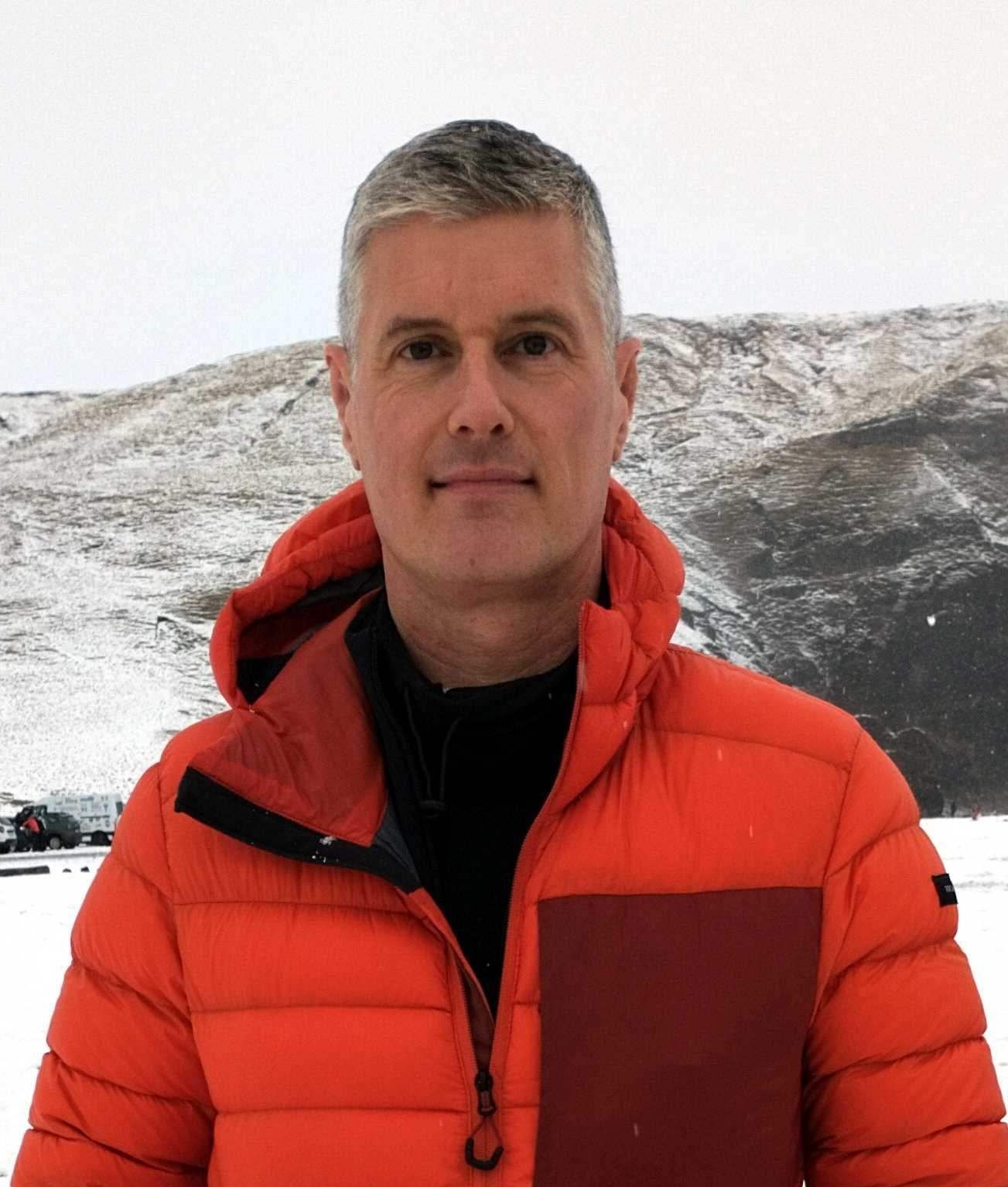
Nicolas Vignais is a Professor at the University of Rennes 2's Laboratory for Movement, Sport, and Health (M2S) and holds a concurrent position as an Associate Professor at the University of Paris-Saclay's Faculty of Sport Sciences (CIAMS Laboratory). His academic trajectory includes prior roles as an Assistant Professor at the University of Technology of Belfort-Montbéliard and a PostDoc at McMaster University. He earned his doctorate in Biomechanics from the University of Rennes 2. His research integrates biomechanics , physical ergonomics , and sports science , with emphases on: Human motion analysis using inertial sensors and VR Musculoskeletal modeling for exoskeleton control Ergonomic interventions in healthcare/industrial settings Sports performance quantification via instrumented wearables Recent publications demonstrate prolific output in human-robot interaction (15+ exoskeleton studies), biomechanical sensing (novel force/EMG methods), and applied ergonomics (hospital/industrial validation). Work consistently intersects engineering, physiology, and computational modeling. He leads the M2S Laboratory, focusing on movement innovation across sports, rehabilitation, and occupational domains. No awards or student supervision details are documented in available sources.
Guillaume Mercere is a Full Professor in Automatic Control and Systems at ENSIP (Ecole Nationale Supérieure d'Ingénieurs de Poitiers), University of Poitiers. He maintains dual affiliations with Laboratory LIAS at both ENSIP in Poitiers and ISAE-ENSMA in Chasseneuil, conducting research in system identification and control theory. Professor Mercere teaches automatic control and signal processing at the Master's level, with additional expertise in numerical optimization, machine learning, and time series analysis. His teaching materials are available upon request, reflecting his commitment to educational transparency. Research Focus: Model learning, system identification, estimation theory, state space modeling, gray box modeling, linear parameter varying (LPV) systems, linear fractional representation (LFR), and subspace-based methods Application Areas: Electrical engineering, aeronautics, heat transfer, flexible/cable-driven manipulators, vehicle tire/road interactions, and image processing Analysis of his recent publications reveals a strong emphasis on recursive estimation methods (particularly total least squares), theoretical developments in LPV system representations, predictive control methodologies, and noise covariance estimation for Kalman filtering. His work bridges theoretical advances in identification methodologies with practical applications across multiple engineering domains, demonstrating both depth and breadth in his research program. Professor Mercere leads the Automatic Control Team at Laboratory LIAS, where he collaborates with researchers on theoretical and applied projects. His research group focuses on developing identification methodologies with practical implementation in real-world engineering systems, maintaining an active publication record through 2025 that demonstrates ongoing contributions to the field of system identification and control engineering.
Clément QUINTON is an Associate Professor at the University of Lille, affiliated with both Inria and the CRIStAL laboratory (Centre de Recherche en Informatique, Signal et Automatique de Lille). He is an elected member of the laboratory council and maintains offices in both the Inria building (Room B312) and the M3 building (Room 224) at the Cité Scientifique campus. Dr. QUINTON is a member of the Spirals research team and holds the HDR (Habilitation à Diriger des Recherches), a French academic qualification that allows him to supervise PhD students. Dr. QUINTON's research spans several areas within computer science, with a primary focus on parallel computing, polyhedral models, and hardware acceleration. His work bridges theoretical computer science with practical applications in embedded systems and biomedical monitoring. He has made significant contributions to the fields of: Polyhedral compilation and loop optimization techniques High-level synthesis for FPGA-based hardware acceleration Systolic array design and parallel architectures Disruption-tolerant wireless sensor networks for biomedical applications Sustainable software engineering and cloud configuration Application of Large Language Models to software development Analysis of Dr. QUINTON's publication history reveals a consistent research trajectory that began with foundational work in parallel algorithms and systolic arrays, evolving toward more contemporary applications involving FPGA acceleration, polyhedral compilation, and biomedical sensor networks. His recent work shows increasing interest in sustainable computing, cloud architectures, and the application of Large Language Models to software engineering challenges. This evolution demonstrates his ability to adapt theoretical computer science concepts to address emerging technological challenges. Dr. QUINTON has supervised numerous PhD students whose research aligns with his expertise: Virginie Amand: Sustainable software services using large-scale models Alexandre Bonvoisin: Frugal software architectures for cloud-native microservices Tristan Coignion: Energy impact of Large Language Models for code Edouard Guegain: Software optimization through configuration (defended September 2023) Brell Péclard Sanwouo Chekam: Automatic detection and correction of side-channel vulnerabilities in cryptographic libraries Nada Zine: Complex and self-adaptive software systems Maxime Huyghe: Sustainable software services development based on Language Models (LLM) As a member of the Spirals research team at Inria and CRIStAL, Dr. QUINTON contributes to a collaborative environment focused on software engineering, system architecture, and sustainable computing. His work bridges theoretical computer science with practical applications in healthcare monitoring, cloud computing, and energy-efficient software development.
José Rouillard is a Lecturer-Researcher in Computer Science (section 27) at Université de Lille, affiliated with the CRIStAL laboratory (Centre de Recherche en Informatique, Signal et Automatique de Lille) where he works in the Brain-Computer Interface (BCI) research team. His academic position combines teaching responsibilities with active research in human-computer interaction, particularly focusing on novel interface technologies and assistive applications. Dr. Rouillard's primary research interests center around Brain-Computer Interfaces with particular expertise in Steady-State Somatosensory-Evoked Potentials (SSSEP). His work explores multimodal interaction techniques, virtual reality integration with BCI systems, and applications for individuals with motor disabilities such as Duchenne muscular dystrophy. Recent publications (2023-2024) demonstrate continued innovation in BCI technology, including Wizard of Oz studies on user perception, advanced SSSEP recording techniques with cEEGrid systems, and multimodal cobot interaction frameworks using MQTT protocol. His research bridges theoretical neuroscience with practical applications for assistive technologies. As an educator, Dr. Rouillard has created one of the most comprehensive App Inventor 2 teaching resources available, with 76 detailed projects covering the full spectrum of mobile application development. His course materials progress from basic applications to advanced implementations involving Bluetooth communication with Arduino, Firebase database usage, and AI APIs including OpenAI's ChatGPT and DALL-E. His teaching spans multiple academic years, with documented student projects from 2013 through 2023 across various Master's programs including MMD IAE, MIAGE, and e-Services. Supervised PhD thesis: "Hybrid brain-machine interface to overcome disability caused by Duchenne muscular dystrophy" (Alban Dupres, 2016) Supervised PhD thesis: "Filtrage somesthésique pour des interfaces cerveau-ordinateur utilisant des stimulations vibro-tactiles" (Jimmy Petit, 2022) Dr. Rouillard maintains a strong educational presence through his extensive online resources, including YouTube video tutorials, NextCloud file sharing for course materials, and detailed project guides. His student projects demonstrate practical applications of mobile development across diverse domains including health monitoring, gaming, social networking, and educational tools. The breadth of his educational impact is evident in the hundreds of student applications documented from 2013-2023, showcasing his commitment to practical, hands-on learning in computer science education.
Laurent Rambault is an Associate Professor with HDR (Habilitation à Diriger des Recherches) in Automatic Control and Systems at the University of Poitiers, France. He is affiliated with the Laboratory of Sensor Application Engineering (LIAS) at both ENSIP (École Nationale Supérieure d'Ingénieurs de Poitiers) and ISAE-ENSMA. His research focuses on advanced control systems, fault detection, and signal processing applications in electrical machinery and industrial processes. Dr. Rambault's primary research interests include sensorless control and fault detection in electrical machines, particularly induction motors and permanent magnet synchronous machines. He has developed significant expertise in tacholess order tracking methods, digital twin development for predictive maintenance, and advanced signal processing techniques for condition monitoring. His work bridges theoretical control systems with practical industrial applications across wind energy systems, industrial vacuum processes, and fluid dynamics. His research methodology often combines traditional signal processing with emerging machine learning techniques to improve diagnostic capabilities. His recent publications (2020-2024) demonstrate a clear progression toward more sophisticated diagnostic methodologies, with increasing integration of Physics-Informed CNNs alongside traditional signal processing approaches. His work shows strong industrial relevance, particularly in predictive maintenance applications for manufacturing and renewable energy sectors. The consistent publication record across high-impact journals reflects his sustained contribution to the field of electrical machine diagnostics. Dr. Rambault maintains active research collaborations with colleagues including Sebastien Cauet, Erik Etien, and Anas Sakout, as evidenced by his extensive co-authorship patterns. His laboratory work at LIAS focuses on developing advanced control strategies and diagnostic tools with direct industrial applications. The research group maintains strong connections with industry partners to ensure practical implementation of theoretical advances in control systems.