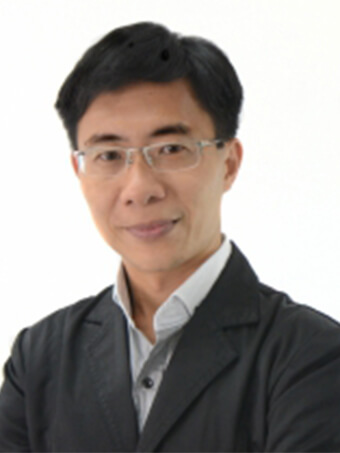
Prof. Songlin Ding is a Professor of Manufacturing Engineering at RMIT University's School of Engineering. He joined RMIT in 2005 as a Lecturer, progressing to Senior Lecturer (2009), Associate Professor (2015), and Professor (2020). He currently manages the Master of Engineering (Manufacturing) program. His research focuses on advanced manufacturing technologies, including CAD/CAM, geometric modeling, and machining of difficult materials like synthetic diamonds and titanium alloys using CNC and non-traditional methods. He pioneered the 'adaptive iso-planar' machining strategy, now widely adopted in CAD/CAM software. His work on high-speed machining of ultra-hard materials and additive manufacturing has been supported by ARC, CRCs, Victorian Government, and industry. Teaching interests include advanced manufacturing technologies and supervision of projects in areas like electrical discharge machining, additive manufacturing, and robotic applications. He coordinates over 20 courses and has published >100 papers in manufacturing, mechanical, and control engineering. Key contributions include developing post-processing techniques for additive manufacturing biomedical components and creating novel cutting tools for robotic bone tumor excision. His research emphasizes industry impact, particularly in aerospace and medical applications.
Dr Niranjan Janardhanan is a Lecturer in the Department of Management at the London School of Economics and Political Science (LSE). He holds a PhD in Management from the University of Texas at Austin (2018), focusing on organizational behavior. Prior to academia, he worked in semiconductor manufacturing, financial services, and consulting roles across Asia and Europe. His research explores how employees construct and express identities in teams and organizations, with a focus on managing multiple work identities in uncertain environments. He has reviewed for journals like Journal of Applied Psychology and conferences such as the Academy of Management. Dr Janardhanan’s research interests include team cognition, identity work in crises, and the interplay between role expectations and moral decision-making. His work has been published in top-tier journals such as Organization Science and Journal of Applied Psychology . He integrates social network theory and field theory to analyze team dynamics, particularly in contexts involving conflict, precarity, and technological integration. His recent studies investigate human-AI collaboration norms and the impact of collective affect during organizational crises. Education details include a Bachelors and Masters in Electrical Engineering from the National University of Singapore and an MBA in Strategy & Leadership from the Indian School of Business. His interdisciplinary background bridges technical domains with organizational behavior, informing his research on leadership training, skill gaps in retail sectors, and systemic approaches to organizational development. Key themes across his work include the navigation of identity congruence, ethical dilemmas in roles, and leveraging cross-understanding for team performance. While no specific grants or awards are listed, his contributions to peer review and conference participation highlight his active role in advancing organizational behavior scholarship.
Professor Arokia Nathan is affiliated with the Department of Engineering at the University of Cambridge , where he holds the Chair in Photonic Systems and Displays. His work bridges semiconductor device engineering, flexible electronics, and intelligent systems. Specializes in Thin-Film Transistors (TFTs) for displays and sensors Key contributions to digital microfluidics and neuromorphic computing Focus on ultra-low-power and high-frequency CMOS circuits Advances in oxide semiconductor materials and hybrid electronics Recent publications highlight trends in neuromorphic perception , flexible battery technologies , and RF/wireless communication systems . His research also emphasizes bioinspired robotics , wearable electronics , and intelligent IoT devices .
Timo Seppälä is a University Lecturer in Digital Operations at Aalto University's School of Science, Department of Industrial Engineering and Management. His research focuses on global value chains, supply chain management, and digital technology implementations in technology- and service-based businesses. He explores platformization of supply chains, collaborative innovation management for complex digital ecosystems, and the implications of artificial intelligence platforms across industries. Global Value Chains Digital Platforms & Ecosystems Artificial Intelligence Governance Blockchain Applications in Industry Recent publications highlight trends in AI diffusion monitoring, blockchain-based systems for industrial applications, and sustainability challenges in digital economies. His work spans empirical analysis of corporate digitalization, platform governance, and multi-actor value creation. No scientific awards are currently documented.
Dr. Jed Pitera is an Adjunct Assistant Professor at the University of California, San Francisco (UCSF) Department of Pharmaceutical Chemistry and currently serves as the strategy co-lead for Accelerated Discovery in Sustainable Materials at IBM Research - Almaden. He has spent over two decades at IBM Research, applying computational tools and machine learning to materials R&D challenges. Caltech (Biology, Chemistry) University of California, San Francisco (Ph.D. in Biophysics) ETH Zurich (Postdoctoral work in computational physical chemistry) His research focuses on leveraging AI, machine learning, high-performance computing, and quantum computing for advanced materials discovery, particularly in sustainability applications such as carbon capture, energy storage, and PFAS replacement. He also works on improving the sustainability of existing materials in semiconductor manufacturing and directed self-assembly techniques. His work spans computational physical chemistry, polymer science, and AI-driven approaches to material design. His publications demonstrate a focus on AI-driven materials discovery (6 papers), directed self-assembly applications (4 papers), semiconductor manufacturing (4 papers), computational modeling (4 papers), and sustainability-focused research (5 papers). Notable trends include integrating robotics with AI for materials discovery and developing lifecycle assessment tools for sustainable design. Dr. Pitera leads the Accelerator Technologies project at IBM and contributes to the IBM Safer Materials Advisor initiative. He has collaborated with researchers across multiple institutions, including Dan Sanders, Brandi Ransom, Seiji Takeda, and Teodoro Laino.
Joel Sokol is the Harold E. Smalley Professor in the H. Milton Stewart School of Industrial and Systems Engineering at Georgia Tech. He serves as Director of the interdisciplinary Master of Science in Analytics (MSA) degree, offered both on-campus and online. His academic journey began with a Ph.D. in Operations Research from MIT (1999), followed by bachelor's degrees in Mathematics, Computer Science, and Applied Sciences in Engineering from Rutgers University (1994). Education Ph.D. in Operations Research (MIT, 1999) B.S./B.A. in Mathematics, Computer Science, Applied Sciences in Engineering (Rutgers, 1994) Dr. Sokol's research focuses on Sports Analytics , Health Informatics , and Supply Chain Optimization . He pioneered the LRMC (Logistic Regression/Markov Chain) method for NCAA basketball tournament predictions, which has become an industry standard. His work extends to organ transplantation logistics, maritime shipping networks, and semiconductor manufacturing optimization, blending machine learning with traditional operations research techniques. The articles reflect his interdisciplinary expertise: 2025 introduced a Smart Stadium Testbed for real-time sports analytics, while 2024 addressed Language Model Safety . Earlier publications (2023–2018) focused on transplant survival modeling, vaccine scheduling, and maritime logistics, showcasing his ability to apply analytics to diverse domains. Scientific Awards EURO Management Science Strategic Innovation Prize (2008) Cozzarelli Prize finalist (non-sports research) Georgia Tech's highest teaching awards (multiple years) INFORMS and IISE recognitions for curriculum development As a leader in analytics education, Sokol co-founded the INFORMS Sports Operations Research section and served as INFORMS Vice President of Education. His work has practical applications in professional sports, healthcare, and industry, with methodologies adopted by teams, medical institutions, and global logistics networks.
Dr. M M Manjurul Islam is a Research Associate in Artificial Intelligence for Smart Manufacturing at Ulster University's School of Computing, Engineering and Intelligent Systems. His research focuses on applying advanced AI techniques to solve critical challenges in manufacturing systems, with particular expertise in fault diagnosis, predictive maintenance, and semiconductor production optimization. His research interests span Artificial Intelligence , Smart Manufacturing , Fault Diagnosis , Machine Learning , Deep Learning , Predictive Maintenance , and Semiconductor Manufacturing . He has made significant contributions to the application of convolutional neural networks, support vector machines, and generative adversarial networks in industrial settings, particularly for bearing fault diagnosis and wafer defect classification. Dr. Islam's recent publications (2023-2025) demonstrate a strong focus on practical AI applications in manufacturing, with multiple chapters in the Springer Series in Advanced Manufacturing. His work shows an evolving trajectory from traditional machine learning approaches to more sophisticated deep learning and explainable AI techniques, with increasing emphasis on semiconductor manufacturing challenges and trustworthy AI systems. His research contributes to UN Sustainable Development Goals, particularly in industrial innovation and infrastructure. He is an active member of professional organizations including IEEE and Advance HE, serving as Chair for both networks. According to Scopus data, Dr. Islam has accumulated 1,706 citations with an h-index of 16, reflecting the impact of his research in the field. His publication record shows consistent productivity, with research outputs spanning from 2015 to anticipated publications in 2025.
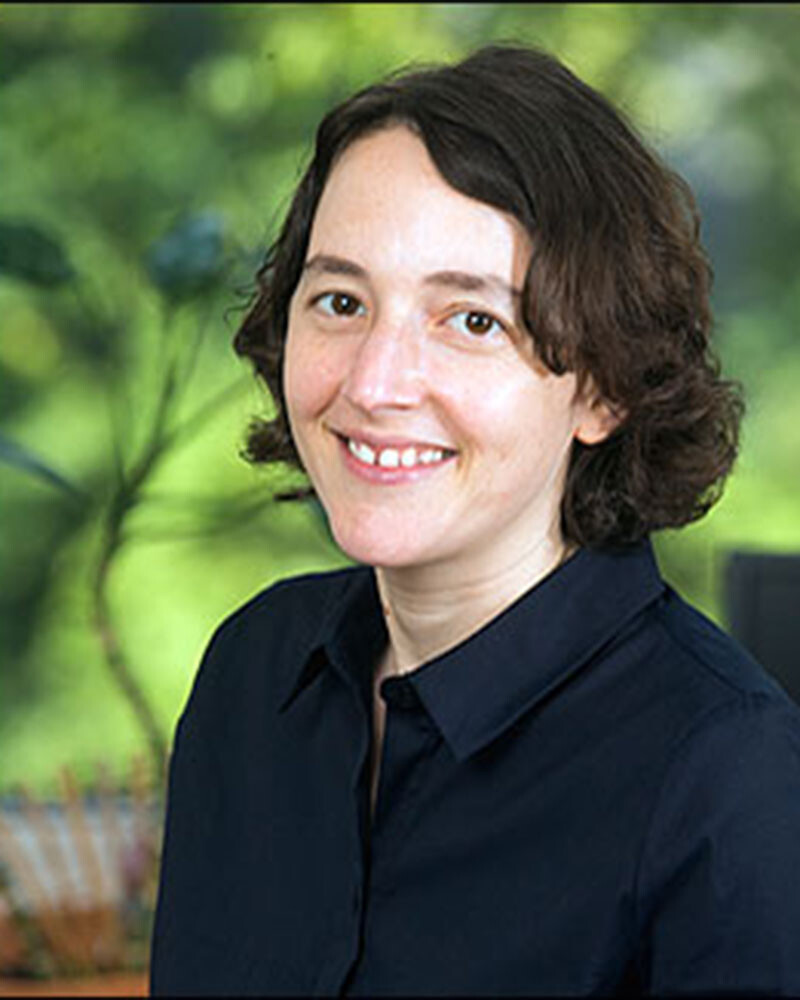
Professor Michelle Y Simmons AO is a Laureate Fellow and Director of the Centre of Excellence for Quantum Computation and Communication Technology at UNSW Sydney. She founded Silicon Quantum Computing (SQC), Australia's first vertically integrated quantum computing company, and pioneered atomic electronics by creating devices in silicon with atomic precision. Research focuses on quantum computing, spin qubits, and atomic-scale engineering Key achievements: first quantum gates with donor atoms, 3D atomic chip architecture Recent publications highlight advancements in silicon qubit fabrication, quantum coherence, multi-qubit control, and noise mitigation. These works emphasize scalable architectures and practical quantum computing solutions. Scientific awards include: 2023 Prime Minister’s Prize for Science 2023 Swiss Erna Hamburger Prize 2022 AmCham Alliance Award 2021 Bakerian Medal 2018 Australian of the Year 2017 L’Oréal-UNESCO Laureate Her leadership in quantum research has secured major industry partnerships (CBA, Telstra, Commonwealth Bank) and driven the development of silicon-based quantum technologies. Current work involves optimizing spin qubit performance and exploring applications of quantum computing in materials science and information processing.
Olin Hartin serves as a Professor of Practice in Arizona State University's School of Electrical, Computer and Energy Engineering, leveraging over 30 years of Fortune 500 industry experience in science and technology. Based at the Tempe campus (GWC 340, Mailcode 5706), he maintains an active research profile with 25 patents and more than 60 scholarly publications. His academic credentials include: Ph.D. in Electrical Engineering M.S. in Electrical Engineering M.S. in Physics B.S. in Physics Hartin's research centers on advanced device technologies and materials, with demonstrated expertise in nanoengineering, RF circuit design, and semiconductor physics. His work bridges theoretical modeling with practical fabrication challenges, particularly in gallium nitride transistor development and electromagnetic compatibility. Recent projects address thermal management in high-power devices and noise isolation techniques for mixed-signal integrated circuits, driven by industry applications in wireless infrastructure. Analysis of his publication history reveals sustained focus on GaN HEMTs since 2010, with increasing emphasis on machine learning applications for FPGA deployment. His work consistently targets real-world implementation challenges, reflecting his industry background through patents in antenna design, ESD protection, and RF component optimization. Professional recognition includes: Senior Member of IEEE In teaching, Hartin supervises senior design laboratories (EEE 488/489) and instructs core courses including Hardware Design Language/Programming Logic (EEE 333), Circuits II (EEE 334), and Machine Learning with FPGA Deployment (EEE 405). His industry perspective enriches curriculum development, though specific grant funding details are not publicly documented. While no dedicated research lab is specified, his patent portfolio indicates ongoing collaboration with semiconductor industry partners.
Dr. Luiz Felipe Aguinsky is a Lecturer in Computational Nanoelectronics and Deputy Group Leader of the DeepNano Research Group at the University of Glasgow. He holds a PhD (Dr. techn.) from TU Wien, Austria, where he specialized in semiconductor fabrication process modeling. As an Erwin Schrödinger Fellow at ETH Zurich, he developed machine learning-enhanced models for memristors. His research focuses on computational nanoelectronics, combining advanced simulation techniques with cutting-edge materials science. Education: PhD (Dr. techn.) in Microelectronics, TU Wien (Austria), 2019 (with distinction) Erwin Schrödinger Fellowship at ETH Zurich's Computational Electronics Group (2021–2023) Research Interests: His work integrates machine learning with atomistic simulations to address challenges in semiconductor manufacturing. Key areas include: High-performance TCAD for nanofabrication processes Quantum transport and neuromorphic computing Applied computer graphics for nonimaging applications Level-set methods for surface evolution modeling Publications Trends: Recent work emphasizes knudsen diffusion modeling for nanofabrication, atomic layer deposition simulations, and plasma etching optimization. Cross-disciplinary methods like ray tracing and machine learning feature prominently in his latest projects. Awards & Fellowships: EUROSOI-ULIS Best Poster Award (2021) Erwin Schrödinger Fellowship (FWF, 2023–2025) Professional Activities: Active member of IEEE Nanotechnology Council's Modelling & Simulation Technical Committee. Co-author of over 15 peer-reviewed publications since 2019, with contributions to IEEE NANO, SISPAD, and EuroSOI conferences. Labs/Teams: Leads computational modeling efforts in the DeepNano Research Group, collaborating globally on TCAD innovations for next-generation semiconductor devices.
Ramon Canal is a Professor at the Universitat Politècnica de Catalunya (UPC), affiliated with the Barcelona School of Informatics and the Computer Architecture Department. He has served as Vice Dean of postgraduate studies and leads the VirtuOS (Virtualization and Operating Systems) research group. His academic background includes BSc, MSc, and PhD from UPC, with thesis supervision by Antonio González (UPC) and James E. Smith (University of Wisconsin-Madison). He completed sabbaticals at Harvard University (2006-2007) and University of Cyprus (2019-2020). Education: PhD, MSc, BSc in Computer Engineering (UPC) Research focus: Microarchitecture security, reliability across circuit/system levels, cloud optimization Recent publications address privacy in IoT, secure hardware accelerators, and safety-critical systems. His work contributes to the DRAC project (2019-2022), Red-RISCV network, and Horizon's Vitamin-V project. Awards include HiPEAC Paper Awards, IEEE Senior Member status, Fulbright recognition, and multiple education excellence accolades. Scientific Honors HiPEAC Paper Award (ISCA-44, 2017) IEEE Senior Member (2016) Best Paper Nominee (ICCD-32, 2014) UPC Outstanding PhD Award supervision (2011) He advises current MSc students and has mentored multiple PhD graduates. Professional activities span academic leadership, research collaborations with Barcelona Supercomputing Center (BSC), and technical contributions to reliability analysis frameworks like RECIPE and FRACTAL.
Damon L. Woodard is a Professor in the Department of Electrical and Computer Engineering at the University of Florida (UF) and serves as Director of the Florida Institute for National Security (FINS) and the Applied Artificial Intelligence (AAI) Group. His research focuses on applied artificial intelligence, hardware security, and biometrics, with particular emphasis on adversarial AI, AI-enabled hardware assurance, and explainable AI (XAI). He holds IEEE and ACM Senior Member status and is a Kavli Frontiers Fellow. Education: Ph.D. in Computer Science and Engineering, University of Notre Dame M.E. in Computer Science and Engineering, Penn State University B.S. in Computer Science and Computer Information Systems, Tulane University Research Interests: Dr. Woodard explores cutting-edge areas such as AI hardware acceleration, multi-modal AI systems, and counter-AI strategies. His work bridges cognitive science and technology through projects like text stylometry and psychological analysis frameworks. Key focus areas include semiconductor reverse engineering, hardware trojan detection via SEM imaging and machine learning, and secure IoT biometric systems. Highlighted Awards: National Academy of Science Kavli Frontiers Fellow IEEE Senior Member ACM Senior Member AAAI Membership Leadership & Contributions: As FINS Director, he oversees national security initiatives integrating AI and hardware assurance. His AAI Group develops resource-efficient AI solutions for constrained environments. Notable projects include the SECURE segmentation metric for IC reverse engineering and the MaGNIFIES GAN framework for electronic system inspection. Labs & Teams: Leads the Applied Artificial Intelligence Group and collaborates across disciplines through FINS, fostering innovation in AI-driven security and semiconductor integrity.
Joel E. Cohen is the Abby Rockefeller Mauzé Professor at The Rockefeller University, where he leads the Laboratory of Populations. With over five decades of research experience, Cohen has pioneered innovative mathematical approaches to study biological populations and variability. His work bridges mathematics, biology, and environmental science, fundamentally changing how scientists understand population dynamics and the significance of biological variability. Dr. Cohen's research focuses on developing new mathematical tools to address population problems in demography, epidemiology, and ecology. He has made seminal contributions to the understanding of heavy-tailed distributions that describe extreme events like hurricanes and disease outbreaks, challenging traditional statistical approaches. His laboratory has conducted groundbreaking research on the spatial distribution of human populations in relation to geophysical factors, with unexpected practical applications ranging from soap formulation to semiconductor manufacturing. Cohen has also developed mathematical models for Chagas disease control in rural Argentina and created algorithms to predict international migration patterns. Analysis of Cohen's recent publications reveals a sustained focus on Taylor's law of fluctuation scaling, population dynamics, and ecological statistics. His work consistently demonstrates how abstract mathematical concepts can transform our understanding of biological systems, from cellular processes to global population trends. The research spans theoretical mathematics to practical applications in disease control, conservation biology, and environmental management. Olivia Schieffelin Nordberg Prize for excellence in writing in the population sciences (March 1997) Gheorghe Lazar Prize of Romanian Academy (December 2000) As director of the Laboratory of Populations, Cohen has led research on human population growth, infectious diseases, food webs, and international migration. His methods for assessing the uncertainty of population projections have been applied in court cases for predicting future claimants of asbestos-related diseases. Cohen's laboratory has collaborated with the United Nations Population Division on migration studies and developed mathematical models that account for more than half of the variability in annual migration numbers among 229 countries. Current research directions include understanding how demographic, economic, and cultural changes interact with Earth's physical, chemical, and biological environments. The Laboratory of Populations employs a multidisciplinary approach that combines mathematical modeling, statistical analysis, and field studies to address complex population issues. Their work exemplifies how basic quantitative research on populations frequently yields unexpected practical applications, demonstrating the profound connections between theoretical mathematics and real-world challenges in public health, environmental science, and resource management.
Johnson Goh Kuan Eng is an Adjunct Professor affiliated with the National University of Singapore and based at the Institute of Materials Research and Engineering (IMRE), A*STAR . His research spans quantum physics, materials science, and nanotechnology, with a focus on 2D materials and quantum computing. Department: Quantum Technologies for Engineering (IMRE, A*STAR) Email: phygkej@nus.edu.sg , gohj@imre.a-star.edu.sg Research Interests: Dr. Goh's work investigates quantum confinement in 2D systems, dielectric properties for quantum devices, and nanofabrication techniques like scanning probe microscopy and molecular beam epitaxy. His studies also explore defect engineering, carrier injection, and spin-valley coupling for quantum computing applications. Publication Trends: His recent articles (2020–2021) emphasize 2D transition metal dichalcogenides (WS2, MoS2), leveraging quantum effects for next-generation electronics and computing. Topics include vacancy-induced conductivity tuning, contact optimization, and machine learning applications in material breakdown prediction. Advising & Collaborations: The text does not provide explicit details about advisees or grants, but his publications highlight collaborations with institutions like the University of New South Wales, A*STAR, and NUS.
Sharon M Weiss is the Cornelius Vanderbilt Professor of Engineering and holds joint appointments in Electrical Engineering, Materials Science & Engineering, and Physics at Vanderbilt University's School of Engineering. She directs the Vanderbilt Institute of Nanoscale Science and Engineering. Her research focuses on light-matter interaction, silicon photonics, porous silicon biosensors, and nanotechnology. She earned a B.S., M.S., and Ph.D. in Optics from the University of Rochester. Her work spans advanced photonic crystal designs, ultra-sensitive biosensors, and radiation-tolerant optical components for aerospace applications. Recent projects include photonic metacrystals for high-Q cavities and porous silicon sensors for rapid diagnostics. She has pioneered integration of phase-change materials like VO₂ in silicon photonics for ultrafast optical switching. Publications emphasize subwavelength photonics, biosensing innovations, and space-qualified optoelectronics. Her lab develops hybrid waveguides, nanobeam cavities, and AI-enhanced sensing systems. Collaborations include NASA and industry partners for biomedical and defense applications.


.JPG)