Honghai Liu is a Professor at the University of Portsmouth, UK, with a career spanning over two decades in interdisciplinary research at the intersection of physics, physiology, and biomedical engineering. His affiliations include prestigious institutions like the University of Aberdeen and King’s College London, and he is a member of the Institute of Electrical and Electronics Engineers (IEEE) and Institution of Engineering and Technology (IET). Research Interests: His work focuses on Autistic intervention Multi-modal sensing Medical devices and systems Human motion analytics Machine learning Intelligent robotics and control Stroke rehabilitation Recent publications highlight applications of biomedical engineering in stroke recovery analysis, autism screening protocols, and wearable sensor technology for muscle-computer interfaces. Scientific Awards: Fellow of IEEE (2020) Fellow of IET (2011) His research spans neuroscience, robotics, and control systems, with notable contributions to fatigue-sensitivity analysis and adaptive vehicle suspension technologies.
Assoc. Prof. Ozan Özdenizci is a faculty member at the Institute of Machine Learning and Neural Computation, TU Graz, Austria. His research focuses on robustness, safety, and efficiency in machine learning, particularly in adversarial robustness, spiking neural networks, and privacy-aware learning. He holds a PhD from Northeastern University (2016), and MSc/BSc degrees from Sabancı University (2010/2008). Previously, he served as a postdoc at TU Graz (2016–2020) and a research group leader at Montanuniversität Leoben (2020–2023). Affiliations: TU Graz (2023–present), Montanuniversität Leoben (2020–2023), TU Graz Postdoc (2016–2020) Education: PhD (Northeastern University, 2016), MSc/BSc (Sabancı University, 2010/2008) Research Interests: Developing ML systems with robustness guarantees, efficient deep learning (e.g., spiking networks), and privacy-aware mechanisms. Key areas include adversarial defense mechanisms, sparse network design, and neuromorphic computing applications. His work bridges theoretical foundations with practical implementations in computer vision and autonomous systems. Recent Contributions: Advances in privacy-aware lifelong learning (ICLR 2025), robust spiking networks (TMLR 2024), and weather-resistant vision models (TPAMI 2023). His research emphasizes trade-offs between model efficiency, robustness, and scalability. Awards: Top Reviewer at NeurIPS 2023, Outstanding Reviewer at ICML 2022/ICLR 2022 Labs/Teams: Member of Graz Center for Machine Learning (GraML) and ELLIS Unit Graz
Elmar Rückert is a Professor at the Chair of Cyber Physical Systems at Karlsruhe Institute of Technology. His work focuses on robotics, machine learning, and industrial automation with applications in environmental science and data-driven systems. Recent activities include invited talks on topics like Bayesian Optimization for control systems and deep learning in robotics. Research interests span tactile robot learning, privacy-aware AI, and sensor fusion for autonomous systems. He has published extensively in venues like IEEE International Conference on Robotics and AAAI Conference on Artificial Intelligence, with a strong emphasis on practical applications in industrial processes and environmental monitoring. Key contributions include the EnvoDat dataset for robotic spatial reasoning and methods for skill disentanglement in RKHS. His collaborative work extends to material science and environmental chemistry through partnerships on technology-critical element analysis.
Ao.Univ.Prof. Margrit Gelautz is an Associate Professor at TU Wien's Computer Vision research department (E193-01), affiliated with the Institute for Software Technology and Interactive Systems (E188). Her work focuses on computer vision applications in autonomous driving, robotics, and 3D reconstruction. She leads projects on driver monitoring systems, vulnerable road user detection, and human-robot interaction. Recent research includes 3D bounding box prediction, synthetic data-driven pose estimation, and real-time sensor systems. She advises over 20 graduate students and collaborates on automotive platforms integrating vision-based safety systems. Her contributions span sensor fusion, stereo matching algorithms, and interactive video tools. Key projects include multimodal sensor-lighting systems for traffic safety, 3D scene completion, and intelligent workflow design for low-cost 3D film production. Her work emphasizes practical applications like in-cabin monitoring systems and adaptive lighting control. She develops semi-automatic annotation tools for traffic datasets and explores nonverbal communication in human-robot interaction using platforms like Pepper humanoid robots.
Alexey Ignatiev is an Associate Professor in the Optimisation research group at Monash University's Faculty of Information Technology. Previously, he was a postdoctoral researcher and researcher at the University of Lisbon's Faculty of Sciences, focusing on SAT/SMT-based decision procedures. He holds a Ph.D. from the Matrosov Institute for System Dynamics and Control Theory (Russian Academy of Sciences), where his thesis explored parallel CDCL-BDD integration. His research emphasizes formal methods in AI, including explainable AI (XAI), SAT-based reasoning, and optimization for applications like software upgradability, model-based diagnosis, and fault localization. His work spans over 100 publications, with notable contributions to MaxSAT solving (RC2 solver), neuro-symbolic frameworks (NEUSIS), and rigorous explanations for machine learning models. He has collaborated extensively with institutions like the University of Lisbon and Monash University, contributing to advancements in formal verification and interpretable machine learning.
Thomas Eiter is a Professor at TU Wien's Institute of Logic and Computation. His research focuses on declarative programming paradigms, knowledge representation, and artificial intelligence. He leads projects in neurosymbolic systems, answer set programming (ASP), and stream reasoning, with applications in visual question answering, scheduling optimization, and semantic scene generation. Eiter has contributed to foundational work in ASP semantics, computational complexity, and hybrid reasoning frameworks. His work bridges logical formalisms with practical AI challenges, emphasizing explainability and scalability. Projects like ALASPO and neurosymbolic integration showcase his focus on advancing both theoretical and applied aspects of AI. Projects: HumanE AI Network, WASP, REWERSE Research Themes: Neurosymbolic AI, Answer Set Programming, Stream Reasoning Notable achievements include pioneering work on semiring-based reasoning frameworks and developing efficient ASP solvers like Alpha. His contributions span over 471 publications, emphasizing interdisciplinary applications in computer vision, robotics, and automated planning.
Robert Sablatnig is an Associate Professor and Head of the Institute of Visual Computing & Human-Centered Technology at TU Wien. He leads the Computer Vision Lab and previously served as Head of the Institute of Computer Aided Automation (2005-2017). His roles include overseeing research in 3D computer vision, machine learning, and applications in industry and cultural heritage preservation. He holds a PhD (1997) and Habilitation (2003) from TU Wien, with a thesis focus on shape-based machine vision and visual inspection. Education: PhD in Computer Science (TU Wien, 1997), Habilitation in Applied Computer Science (TU Wien, 2003) Bachelor's/Master's/High School: Completed at Vienna University of Technology and BG/BRG Lerchenfeldstrasse, Klagenfurt. Research interests span 3D vision techniques, robot vision, deep learning applications, and heritage preservation through imaging technologies. He has authored/co-authored over 300 scientific publications and edited 17 conference proceedings. His work bridges theoretical advancements with practical applications in automation and cultural heritage. Professional affiliations include the Austrian Association for Pattern Recognition (OAGM/IAPR), IEEE, and roles as a certified expert witness in computer vision. Teaching focuses on computer vision applications, methodological foundations, and seminars for graduate students. Current courses include 'Scientific Presentation and Communication' and 'Dissertantenseminar'.
Haisen Zhao is a Professor at Shandong University (SDU), affiliated with the School of Computer Science and Technology and the Interdisciplinary Research Center. His research focuses on geometric processing and digital fabrication, including additive and subtractive manufacturing. He completed his PhD at SDU in 2018 under Baoquan Chen, followed by postdoctoral research at the University of Washington (with Adriana Schulz) and IST Austria (with Bernd Bickel). He has authored over 20 top-tier publications in venues like ACM SIGGRAPH/Asia and IEEE TVCG, and holds multiple patents. Education: PhD in Computer Science (2018, SDU), Master’s (2014, SDU), and Bachelor’s (2011, SDU). Key awards include the CCF Doctoral Dissertation Award (2019) and Shandong Natural Science Award (2020). He leads a research group focused on advanced manufacturing techniques, advising PhD and Master’s students in areas like robotics, computer-aided design, and fabrication optimization. Teaching responsibilities include courses on computer graphics, human-computer interaction, and advanced topics for both undergraduates and graduates. His lab actively explores hybrid manufacturing strategies, inverse design methods, and robotic fabrication systems. Recent projects include neural accessibility learning for CNC machining and generative design for microstructure fabrication.
Franz Maier is a Professor at the University of Applied Sciences Wels, affiliated with the Research Center Wels Center of Excellence Automotive/Mobility. His expertise spans material science, mechanical engineering, biomechanics, and computer simulation. He holds a BSc, MSc (implied via DI title), and PhD. His research focuses on composite material draping simulations, finite element analysis, and AI-driven manufacturing processes. Key research interests include reinforcement learning applications in draping automation, defect detection in simulations, and biomechanical studies of soft tissues. He has presented work at international conferences on topics like colorectal biomechanics and osteoarthritis progression. His recent publications (2023-2025) emphasize AI integration into manufacturing processes, including surrogate models for FE simulations and reinforcement learning for woven fabric automation. Collaborations involve robotics and sensor technologies for precision manufacturing. Maier collaborates with institutions on multiscale biomechanics and has contributed to advancements in composite material processing. His work bridges computational modeling with real-world manufacturing challenges, emphasizing automation and defect mitigation.
Chengxi Li is a postdoctoral researcher at TU Wien focusing on robot learning algorithms to develop universal cross-body systems enabling autonomous human-machine interaction in real-world applications. His work emphasizes interactive robots that intuitively learn tasks through reasoning about execution. Key projects include the INVERSE initiative, which explores robots that invert tasks via reasoning about their execution. Current research trends are centered on advancing autonomous systems and human-robot collaboration. No specific awards or grants are documented in the provided text. Dr. Li's team, Team Chengxi Li , likely coordinates these research efforts, though specific lab or team details are not elaborated here.
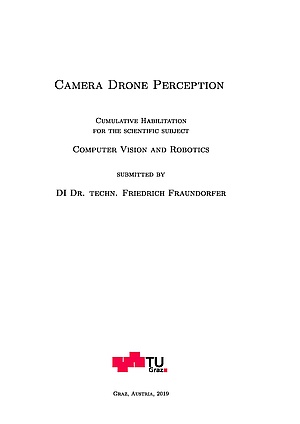
Friedrich Fraundorfer is a Professor at Graz University of Technology, specializing in 3D Computer Vision and Autonomous Systems at the Institute of Computer Graphics and Vision (ICG). He has held academic positions at institutions including ETH Zurich, University of North Carolina at Chapel Hill, and Technische Universität München, where he served as Deputy Director of the Chair of Remote Sensing Technology. Research : Focuses on Micro Aerial Vehicle (MAV) autonomy, Visual-Inertial Fusion, and Multi-View Geometry. Projects : Led EU-funded SFly (autonomous MAVs for search-and-rescue), SNF MAV (camera-only 3D mapping), and VCharge (vision-based self-driving cars). Teaching : Offers courses like 'Camera Drones' and 'Mathematical Principles in Vision.' His Pixhawk project created open-source MAV platforms adopted globally. Key Collaborations : With NVIDIA, Volkswagen AG, University of Zurich, and German Space and Aerospace Center (DLR). His students (e.g., Dominik Hirner, Rafael Weilharter) have published on lightweight CNNs for stereo vision and self-supervised 3D reconstruction.
Dipl.-Ing.Dr.nat.techn. Gerhard Moitzi is a researcher at the University of Natural Resources and Life Sciences (BOKU Vienna) , specifically affiliated with the Experimental Farm Groß-Enzersdorf and the Institute of Agricultural Engineering . His work focuses on agricultural engineering , soil compaction mitigation , and energy efficiency in farming practices . With a career spanning over two decades, Moitzi has contributed to understanding soil tillage systems , field traffic-induced compaction , and carbon sequestration in agricultural soils . He has led multiple research projects funded by the European Commission , Austrian Research Promotion Agency (FFG) , and Federal Ministries , including studies on CO2 emissions and ammonia mitigation in farming contexts. His recent publications (2023-2025) highlight innovations in soil compaction analysis , drone-based crop monitoring , and sustainable nitrogen management . Moitzi employs multispectral imaging , machine learning , and life cycle assessment to evaluate agricultural impacts. He actively participates in international conferences like ALVA Jahrestagung and EGU General Assembly , emphasizing climate-resilient farming and precision agriculture .
Lars Mehnen serves as a Senior Lecturer and Researcher at the University of Applied Sciences Technikum Wien (UAS Technikum Wien) in Austria, where he has been teaching since 2019 in Computer Science and previously from 2003-2019 in Biomedical Engineering. His academic career includes significant roles at Vienna University of Technology as University Assistant (2004-2007) and Research Assistant (1998-2002), along with leadership positions in major international space initiatives including QB50 (2010-2013), GENSO (2006-2010), and SSETI (1999-2006). TU-Wien: Dipl.Ing. in Computer Engineering and Medical Informatics Dr. Techn. from Institute for Fundamentals and Theory of Electrical Engineering and Institute of Technical Mathematics Mehnen's research spans multiple domains with particular expertise in Artificial Intelligence, Evolutionary Algorithms, and Sensor Technology. His work in explainable and non-parametric evolutionary algorithms represents cutting-edge contributions to AI methodology. In biomedical engineering, he has developed innovative magnetoelastic skin curvature sensors for cardiovascular monitoring and other medical applications. His teaching portfolio is exceptionally diverse, covering Statistics (parametric and non-parametric), Artificial Intelligence, Aerodynamics (particularly for sports equipment), Physics for game engineering, and extensive programming topics including Java, C/C++, Python, and functional programming languages. His publication record from 2001-2024 shows a clear evolution from early work on magnetostrictive bilayer sensors toward more recent applications of machine learning in biological classification, medical diagnostics, and educational technology. The 2024 publication on ChatGPT's diagnostic accuracy for medical conditions demonstrates his engagement with the latest AI developments. His research consistently bridges theoretical computer science with practical applications in healthcare, sports engineering, and space technology. Mehnen has been deeply involved in European collaborative projects throughout his career, including QB50 (EC F7), GENSO (ESA initiative), and B-Sens (EC-Project in 5th framework). These projects involved coordination with numerous universities and institutions across Europe, demonstrating his ability to lead international research collaborations. His work on the SSETI Express satellite project resulted in the successful launch of a micro-satellite at the end of 2005. At UAS Technikum Wien, Mehnen contributes to curriculum development across multiple domains including statistics, AI, programming, and physics. His research on paraglide control systems demonstrates application of his expertise to sports safety technology, while his recent work in teaching analytics shows commitment to improving educational outcomes through data-driven approaches.
Simon Kranzer is a Senior Lecturer and Head of Research Group at the Department of Information Technologies and Digitalisation, FH Salzburg. His work bridges academic research and practical application in digital transformation. Location: Campus Urstein, Room 425 Contact: simon.kranzer@fh-salzburg.ac.at | +43-50-2211-1316 Research Focus: Digital Twins for industrial systems Collaborative Robotics (Co-Bots) in retail Knowledge Transfer between academia and industry Operational Technology (OT) Security Data Acquisition and Visualization Programming Language Applications in industrial contexts Research Trends: Recent publications show expertise in retail automation (service robots, customer behavior analysis), industrial digital twins, and OT security. Earlier work spans GIS-SCADA integration, medical software implementation, and 3D microstructure analysis. Collaborative Projects: Active in interdisciplinary living labs, smart factory bootcamps, and 5G-based robotics exploration.
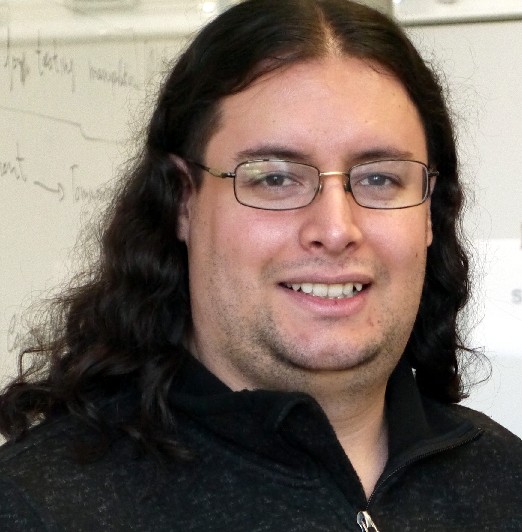
Matias Valdenegro-Toro serves as Assistant Professor for Machine Learning at the Bernoulli Institute within the Faculty of Science and Engineering at the University of Groningen. His research focuses on enabling robots to achieve human-like perception, with expertise spanning Deep Neural Networks, Reinforcement Learning, and underwater robotic vision systems. Previously, he held positions as a Researcher at the German Research Center for Artificial Intelligence (DFKI) in Bremen and as a Marie Curie Fellow at Heriot-Watt University's Ocean Systems Lab. His academic credentials include a PhD in Electrical Engineering from Heriot-Watt University (2019), a Master of Science in Autonomous Systems from Hochschule Bonn-Rhein-Sieg (2014), and an Engineering Degree from Universidad Tecnologica Metropolitana (2009), preceded by four years of professional industry experience. Valdenegro-Toro's research integrates Machine Learning and Robotics to solve real-world perception challenges, particularly in underwater environments where his PhD work developed neural network systems for detecting submerged marine debris. His commitment to environmental protection drives his focus on ocean conservation through robotic technology, while his technical contributions emphasize Uncertainty Quantification in neural networks and robust Robot Vision solutions. His scientific recognition is highlighted by the prestigious Marie Curie Fellowship , awarded through the European Commission-funded Robocademy Initial Training Network (FP7-PEOPLE-2013-ITN). As an educator, he supervises Master's students in Hochschule Bonn-Rhein-Sieg's Autonomous Systems program and has taught at the University of Bremen. He actively contributes to the academic community through invited tutorials on computer vision paper writing at ICCV/CVPR and mentoring workshops for LatinX researchers at AAAI/AISTATS, reflecting his dedication to inclusive AI education. His collaborative research spans institutions including DFKI's Robotics Innovation Center and Heriot-Watt University's Ocean Systems Lab, focusing on practical deployment of perception systems for autonomous underwater vehicles in marine conservation applications.