Gabriella Casalino is an Assistant Professor at the University of Bari Aldo Moro, Department of Computer Science, and a key researcher at CILAB - Computational Intelligence Lab. Her work focuses on Computational Intelligence methods for interpretable data analysis, particularly in eHealth, Data Stream Mining, and eXplainable Artificial Intelligence (XAI) within medical and educational domains. She has contributed to innovative approaches in smartphone-based health monitoring, fuzzy logic applications, and remote vital sign detection via photoplethysmography. Education : Ph.D. in Computer Science, with advanced training at institutions like Universitat de Girona and Université de Mons. Research Trends : Recent publications highlight applications of evolving granular computing, neuro-fuzzy systems, and explainable AI in hypertension prediction, bipolar disorder monitoring, and educational data analysis. Key subfields include remote health monitoring, medical data streams, and hybrid AI models. Grants : Research funded by AIRC (Italian Cancer Research Foundation), focusing on computational methods for healthcare challenges. Labs & Collaborations : Active in CILAB, collaborating on projects involving mHealth solutions, cardiovascular risk assessment, and intelligent educational systems.
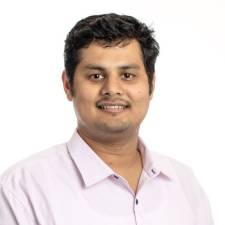
Dr. Bikram Banerjee is a Lecturer in Remote Sensing and Geospatial Science at the University of Southern Queensland, affiliated with the School of Surveying and Built Environment. He holds a PhD from UNSW, MTech from IIRS NRSA, and BTech from West Bengal University of Technology. His research focuses on geospatial technologies, machine learning applications in environmental monitoring, and precision agriculture. He is associated with the Centre for Agricultural Engineering, Centre for Crop Health, and Centre for Sustainable Agricultural Systems. Key research interests include UAV-based remote sensing for mine spoil characterization, hyperspectral imaging for crop phenotyping, and integrating IoT/ML for agricultural solutions. His work bridges environmental science, geotechnical engineering, and agricultural technology. Recent publications explore coal spoil analysis, mine safety automation, and vegetation health monitoring using advanced sensor technologies. Dr. Banerjee has supervised doctoral research on mobile laser scanning for underground mines, UAV-LiDAR applications, and proximal sensing for crop phenotyping. His research outputs have garnered over 2,327 views and 1,160 downloads, reflecting significant impact in geospatial and agricultural domains. He actively contributes to interdisciplinary projects addressing environmental sustainability and resource management challenges.
Yang Liu is an incoming Assistant Professor at Florida State University (Fall 2025) and currently a Senior Research Associate and Affiliated Lecturer in the Department of Computer Science and Technology at the University of Cambridge. She holds a B.E. in Software Engineering from Xi’an Jiaotong University (2016) and a Ph.D. in Computer Science from City University of Hong Kong (2020), advised by Prof. Zhenjiang Li. Her research focuses on intelligent mobile/wearable sensing technologies, combining AI and signal processing to advance applications in human-computer interaction (HCI), smart health, and IoT. She has received notable awards such as the 2024 N2Women Rising Star Award and the 2021 ACM SIGBED Doctoral Thesis Award. Research interests span mobile systems, AI-driven wearable sensing, privacy in human interactions, and healthcare monitoring. Key projects include RespEar (earable-based respiratory monitoring), SmarTeeth (toothbrushing tracking), and WearIoT (privacy-aware wearable systems). She mentors students in areas like biomedical signal processing and secure wearable systems. Teaching includes Mobile/Wearable Systems courses at Cambridge and previously at City University of Hong Kong. Education: B.E. Software Engineering, Xi’an Jiaotong University (2016) Ph.D. Computer Science, City University of Hong Kong (2020) Grants & Services: Organizing roles in ACM SIGCOMM, IEEE ICPADS, and multiple conference TPCs. Invited talks at Columbia University, Purdue University, and others. Her work bridges mobile computing with health applications, addressing both technological innovation and societal impacts through over 30 peer-reviewed publications and industry collaborations.
Syed Ahmar Shah is a Senior Research Fellow (Associate Professor) and the Director of Innovation at the Usher Institute within the College of Medicine and Veterinary Medicine at the University of Edinburgh. He holds a tenured academic position and leads the DIME group (Data-driven Innovation in MEdicine). His work bridges biomedical engineering, data science, and clinical medicine, with a focus on improving healthcare through technological innovation. Dr. Shah completed his educational journey with a BEng in Electronics Engineering from GIK Institute of Engineering Sciences and Technology in Pakistan, followed by an MSc and DPhil (PhD) in Biomedical Engineering and Biomedical Signal Processing and Machine Learning, respectively, from the University of Oxford. His academic credentials reflect his interdisciplinary expertise spanning engineering, data science, and medicine. His research interests center around the application of advanced data analytics to healthcare challenges. Specifically, he focuses on signal processing for time-series analysis and filtering, machine learning for classification, regression, and clustering tasks, and the development of digital health systems for chronic disease management. His work particularly targets chronic respiratory conditions like COPD and asthma, where he applies data mining techniques to electronic health records to identify patterns and develop predictive models. Dr. Shah's publication portfolio includes over 60 peer-reviewed articles in prestigious journals such as The Lancet, Brain, BMJ Open, Thorax, IEEE Transactions, JMIR, and JACI. His recent work demonstrates a strong trajectory in applying artificial intelligence to predict asthma attacks, analyze long COVID outcomes, and develop tools for personalized COPD care, particularly for women. His research often involves large-scale data analysis from national healthcare databases across the UK, Brazil, and Scotland, enabling cross-country comparisons of disease patterns and healthcare system responses. Florence Nightingale Award for Excellence in Healthcare Data Analytics (2023) As an active supervisor, Dr. Shah is open to PhD supervision enquiries and has contributed to training the next generation of researchers at the intersection of data science and healthcare. His DIME research group serves as a hub for innovative projects that combine engineering approaches with clinical medicine to address pressing healthcare challenges. Dr. Shah also engages with industry through data science consulting, offering expertise in developing intelligent algorithms for businesses with large datasets, particularly in healthcare but extending to other domains as well.
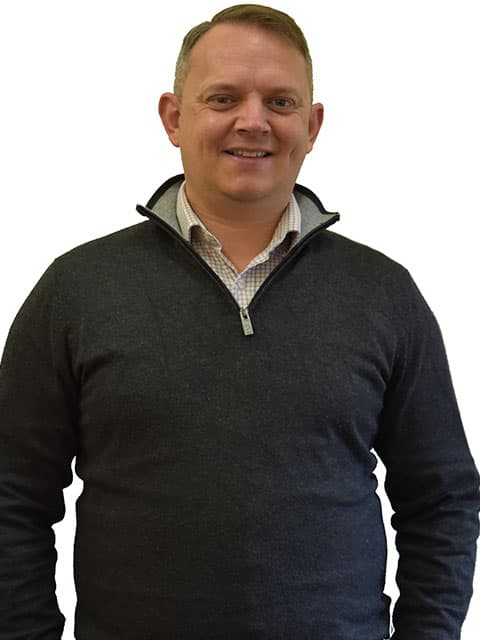
Dr. Craig Hancock is a Research Professor in Geospatial Engineering with 15 years of research experience in Surveying and Geodesy. His expertise spans GNSS error mitigation, structural monitoring, and geospatial techniques for digital construction. He has supervised 10 PhD students and published over 80 academic papers. Education: BSc and PhD in Surveying/Geomatics Key Projects: Principal Investigator for projects on GNSS error mitigation, structural health monitoring, and marine economy technology. His research focuses on three core areas: GNSS error categorization and mitigation (particularly ionospheric effects), structural and environmental change monitoring, and geospatial data acquisition for BIM and digital construction. Recent work includes improving 3D modeling accuracy, UAV-based GNSS spoofing detection, and BIM-enabled facility management in healthcare infrastructure. His articles explore topics like sensor optimization, structural dynamics, and geospatial data fusion. Grants include £150k for bridge deformation studies and £9k for ionospheric error analysis. He actively contributes to teaching and enterprise initiatives, integrating geospatial technologies with industry needs.
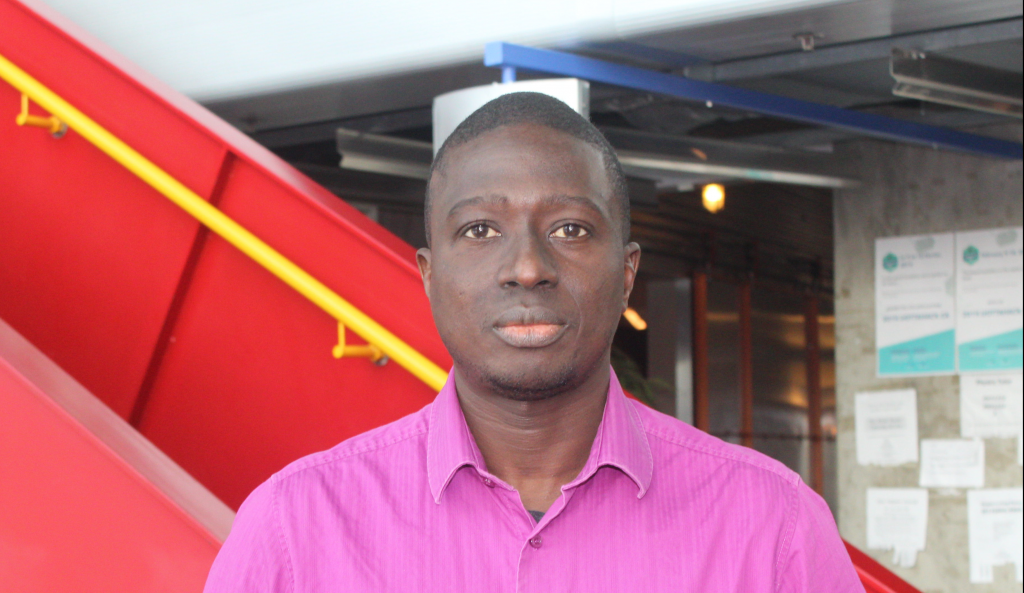
Dr. Ousmane Seidou is a Full Professor in the Department of Civil Engineering at the University of Ottawa, where he has served since 2007. He leads the Hydraulics Lab and holds affiliations with the Faculty of Engineering's Centre for Indigenous Community Infrastructure. His academic journey includes a PhD from École Polytechnique de Montréal (2002) and postdoctoral research at the Institut National de la Recherche Scientifique, Quebec. Dr. Seidou specializes in climate change impacts on water resources, hydrological modeling, and transboundary water management. Education: Ph.D. in Civil Engineering (Hydraulics), École Polytechnique de Montréal (2002) M.Sc. in Water Resources Engineering, École Polytechnique de Montréal (2002) Postgraduate Diploma in Hydroinformatics, École Inter-États des Ingénieurs de l'Équipement Rural (1998) Undergraduate Degree in Civil Engineering, École Mohammadia d'Ingénieurs (1996) Research Focus: Dr. Seidou’s work integrates hydrological modeling with climate adaptation strategies, emphasizing Africa’s water security. Key areas include: Climate change impacts on river basins (e.g., Niger, Congo) Development of flood early warning systems in West Africa Water-Energy-Food-Environment (WEFE) nexus frameworks Environmental flow estimation in wetland ecosystems He leads international projects involving multi-country collaborations and agencies like the United Nations Development Programme and the World Bank. Recent Projects: Principal Investigator for the Niger Basin Authority’s WEFE Nexus initiative Technical leadership in the Dutch-funded BAM-GIRE project (Mali/Guinea wetlands) Development of flood early warning systems for Niamey and Gaya (Niger) Teaching: Courses include Climate Change Impacts on Water Resources, Advanced Hydrological Modeling, and Water Resources Management. He mentors PhD students in hydrology and climate adaptation. Grants & Funding: Secured multi-million-dollar projects with organizations like Wetlands International and the UAE-BELEM Programme. Recent funding includes $135,000 for hydrological modeling tools in the Niger Basin. Labs/Teams: Director of the Hydraulics Lab at the University of Ottawa. Active in global initiatives like the Global Goal on Adaptation (GGA) indicator development under the Paris Agreement.
Michael Everett is an Assistant Professor at Northeastern University with a joint appointment in the Department of Electrical & Computer Engineering and the Khoury College of Computer Sciences. He directs the Autonomy & Intelligence Laboratory, focusing on certifiable learning machines at the intersection of robotics, deep learning, and control theory. His research emphasizes safety, reliability, and efficiency in robotics applications like off-road navigation and social environments. Education: PhD in Mechanical Engineering, Massachusetts Institute of Technology (2020) SM in Mechanical Engineering, MIT (2017) SB in Mechanical Engineering, MIT (2015) Research Interests: Robotics and motion planning Control theory and neural network verification Reinforcement learning applications Certifiable safety guarantees for autonomous systems Navigation in dynamic/human environments Awards: Runner-Up: Best Paper Award (ICML 2022) Winner: Best Student Paper (IROS 2017/2023) Editors’ Top 5 Published Articles (IEEE Access 2021) Lab & Contributions: The Autonomy & Intelligence Lab develops algorithms for high-speed off-road autonomy, socially aware navigation, and neural feedback verification. His work includes the RAMP planning pipeline and Evora traversability learning framework. He collaborates with Google’s PAIR team on trustworthy AI.
Eric Frew is a Professor in the Department of Aerospace Engineering Sciences at the University of Colorado Boulder. He holds leadership roles including Director of the Autonomous Systems Interdisciplinary Research Theme (ASIRT) and former Director of the Research and Engineering Center for Unmanned Vehicles (RECUV). His research focuses on autonomous systems, heterogeneous unmanned aircraft systems, and optimal distributed sensing. He earned his PhD from Stanford University in 2003, and has been a faculty member at CU Boulder since 2004. Education: PhD, Aeronautics and Astronautics, Stanford University, 2003 MS, Aeronautics and Astronautics, Stanford University, 1996 BS, Mechanical Engineering, Cornell University, 1995 Research Interests: Networked unmanned systems Optimal distributed sensing Controlled mobility in sensor networks Miniature self-deploying systems Guidance and control of unmanned aircraft in complex atmospheric phenomena Notable Awards: Outstanding Mentor Award (2023) AIAA Associate Fellow (2013) NSF CAREER Award (2009) Grants and Labs: Leads the Center for Autonomous Air Mobility and Sensing (CAAMS), and has conducted field campaigns such as TORUS (Targeted Observation by Radars and UAS of Supercells). His work integrates theoretical research with practical deployment of autonomous systems for environmental monitoring and severe weather studies. Labs/Teams: Active in CAAMS and RECUV, collaborating with industry/government on pre-competitive research in autonomous air mobility and sensing.
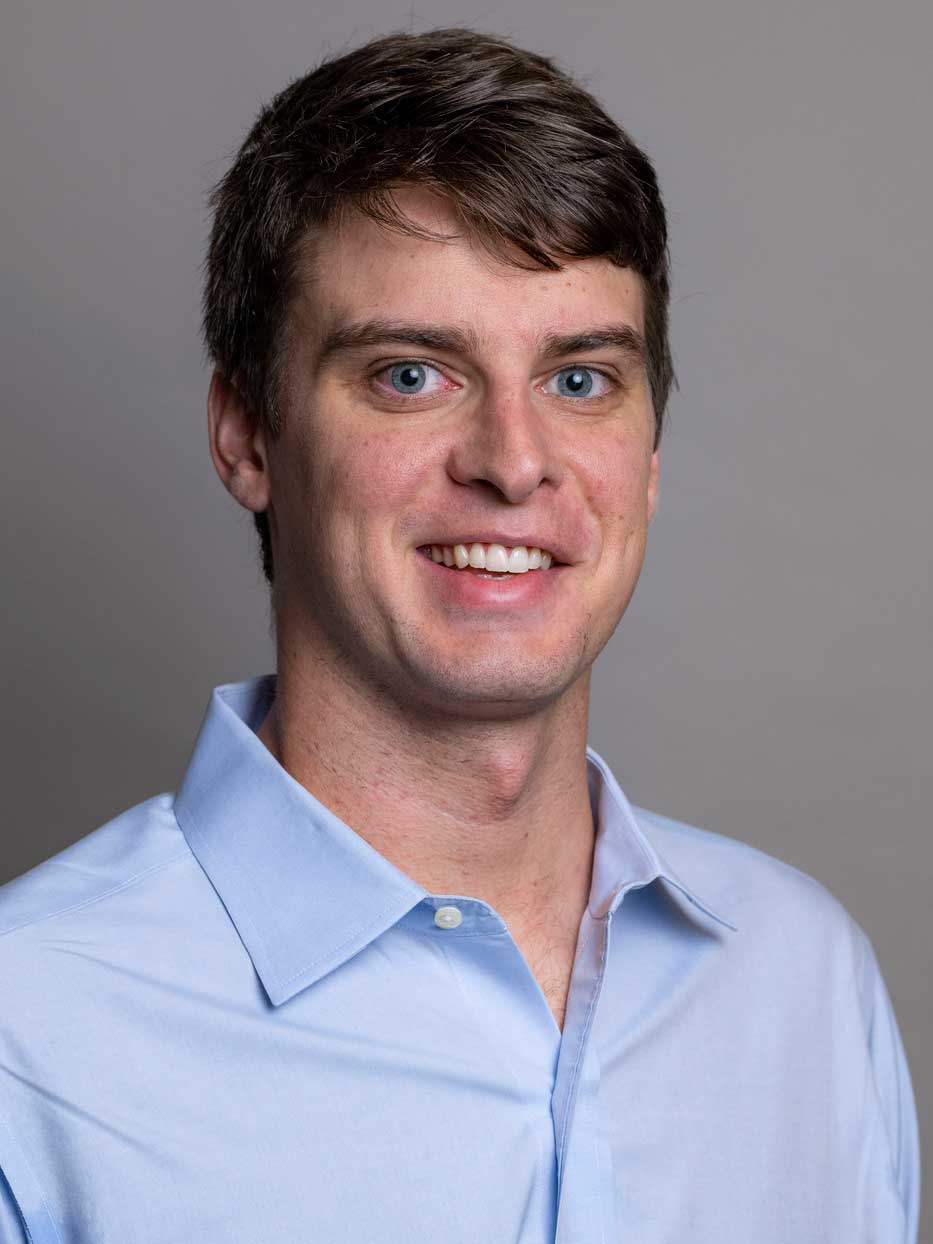
Tyler Schartel serves as an Associate Research Scientist in Conservation Ecology at the Illinois Natural History Survey, University of Illinois Urbana-Champaign. His research integrates computational methods with field ecology to address freshwater conservation and invasive species challenges. Research interests span: Freshwater mussel biodiversity and ecosystem health Machine learning applications for species distribution modeling Invasive pest risk assessment (vineyard moths, Xylella vectors) Protected lands effectiveness for conservation targets His work emphasizes algorithmic rigor in ecological informatics and climate-driven disease forecasting. Recent publications reveal strong trends in computational ecology: improving machine learning stability for cross-dataset species-richness modeling (2025), optimizing Maxent background selection for freshwater systems (2024), and developing climate-informed risk frameworks for agricultural pests (2022-2023). Key methodological contributions focus on predictor discriminability metrics and vector tolerance thresholds.
Prof. Chong-Yu Xu is a Professor of Hydrology at the University of Oslo's Department of Geosciences, affiliated with the Section for Geography and Hydrology (GeoHyd). He has held this position since 2005, having previously served as an Associate Professor at Uppsala University (1998–2005) and Assistant Professor (1994–1998). His research focuses on hydrological modeling, climate change impacts, regional evapotranspiration, and uncertainty analysis. He teaches courses such as GEO4310 (Stochastic Methods in Hydrology) and GEO4320 (Hydrological Modelling). Education: BSc in Hydrology (Nanjing University, 1978–1982), MSc in Regional Hydrological Modeling (Free University Brussels, 1986–1988), and PhD in Hydrological Modelling (Free University Brussels, 1988–1992). He has been honored with prestigious awards, including the NHF Lifetime Achievement Award (2022) and IWA Publishing Award (2022). He serves as an honorary professor at institutions like Hohai University and is a doctoral supervisor at multiple universities. His research spans global, regional, and local hydrological modeling, with a focus on climate change adaptation and water resource management. He leads projects such as the NORHED-II initiative on climate change and ecosystem management in Malawi and Tanzania. His work bridges theoretical hydrology with practical applications, including flood risk reduction and hydropower optimization. Publications highlight advancements in hydrological extremes, non-stationary drought assessment, and AI-driven flood prediction. Collaborative efforts with international networks like the Nordic Hydrological Association underscore his global impact in hydrological sciences.
Patrick Singleton is an Associate Professor in the Department of Civil and Environmental Engineering at Utah State University, specializing in transportation research. His work bridges travel behavior, safety analysis, and health impacts of transportation systems, with a focus on active transportation and data science applications. Academic Background: PhD in Civil and Environmental Engineering (Portland State University, 2017) Research Areas: Travel behavior, transportation-electrification, pedestrian safety, health-wellbeing in transport Recent research trends emphasize data-driven approaches to pedestrian and bicycle safety, transportation electrification, and the impact of environmental factors like air quality on travel patterns. His lab develops tools for pedestrian data analysis and systemic safety improvements. Scientific recognition includes multiple UDOT awards and a 2017 Best Paper award. He mentors graduate students in transportation modeling and safety analysis.
Sohag Kabir is an Associate Professor in the School of Computer Science, Artificial Intelligence, and Electronics at the University of Bradford. He leads the MSc Big Data Science and Technology, MSc Artificial Intelligence and Machine Learning, and MSc Applied Computer Science and Artificial Intelligence programs. He holds a Ph.D. in Computer Science from the University of Hull (2016), an M.Sc. in Embedded Systems, and a B.Sc. in Computer Science and Engineering. Dr. Kabir's research focuses on safety, reliability, and security assurance of cyber-physical autonomous systems. His work includes model-based safety analysis, probabilistic risk assessment, dynamic reliability analysis, and stochastic modeling. Current projects address IoT security, machine learning certification for automotive systems, and dependability frameworks for complex systems. His publications demonstrate consistent focus on developing integrated frameworks for system dependability, with recent work emphasizing IoT security, autonomous vehicle safety, and AI certification challenges. Dr. Kabir has contributed to multiple EU-funded projects including DEIS (Dependability Engineering Innovation for Cyber-Physical Systems) and MAENAD (Model-based Analysis & Engineering of Novel Architectures for Dependable Electric Vehicles).
Karen Joyce is an Associate Professor at James Cook University (JCU) with expertise in remote sensing and environmental monitoring. She holds a PhD in Geographical Sciences from the University of Queensland (2005). Her work focuses on developing remote sensing tools for applications in marine, coastal, and savanna ecosystems. Notable contributions include advancing drone technology for coral reef mapping, mangrove phenology modeling, and disaster management integration. She co-founded She Maps, a social enterprise promoting women in STEM through drone education, and GeoNadir, emphasizing geospatial innovation. Education: PhD in Geographical Sciences (University of Queensland, 2005) Key Roles: Co-Founder of She Maps and GeoNadir Former Geomatic Engineering Officer in the Australian Army Her research interests center on optimizing remote sensing models to quantify Earth observation data, with applications in coral reef health, mangrove ecosystems, and invasive species management. Recent projects include She Flies Drone Camps to build STEM confidence in girls and hyperspectral drone technology for bathymetric mapping. Her publications emphasize drone-based data acquisition, spectral analysis for coral cover, and automated image processing using tools like Google Earth Engine. Despite no listed academic awards, her work has significant practical impact in conservation and disaster preparedness. Key grants include projects like 'Is satellite technology telling the truth? Perspectives from a coral reef' (2015–2017) and 'Developing hyperspectral drone technology' (2016–2017). She collaborates extensively with institutions like the Australian Army, New Zealand conservation agencies, and Kakadu National Park researchers.
Dr. Conrad Childs is an Assistant Professor/Lecturer in Structural Geology at University College Dublin (UCD), School of Earth Sciences. He holds a PhD from the University of Liverpool (2000) and has held roles including Senior Research Fellow at UCD's Fault Analysis Group (2000–2009) and Research Fellow at the University of Liverpool (1997–2000). His research focuses on fault zone dynamics, basin evolution, and structural geology with emphasis on offshore Ireland. Key interests include fault geometry, hydraulic properties, numerical modeling, and tectonostratigraphic evolution of sedimentary basins. Education: BSc Geology, University College Cork (1985) MSc Structural Geology & Rock Mechanics, Imperial College London (1986) PhD, University of Liverpool, 'The structure and hydraulic properties of fault zones' (2000) Research Interests: 3D geometry and evolution of faults Basin analysis and offshore Ireland's structural evolution Fault seal capacity and hydraulic properties Integration of deep learning with seismic interpretation Impact of basement fabrics on basin development Teaching: Coordinates modules such as 'Applied Structural Geology,' 'Field Geology Level 1,' and 'Geoscience Research Project,' emphasizing hands-on structural analysis and fieldwork. Grants: Led the PRTLI 5 grant (2011–2016) supporting PhD research in Earth Sciences. Active in collaborative projects addressing fault reactivation risks and subsurface storage potential. Awards: No specific awards listed, though his extensive publications highlight sustained research excellence. Labs & Collaboration: Part of UCD's Fault Analysis Group, contributing to interdisciplinary studies on fault zone mechanics and basin evolution.
Erik Prytz is a Senior Associate Professor in Cognitive Science at the Department of Computer and Information Science (IDA) at Linköping University. His research focuses on applying human factors principles to improve safety-critical systems, particularly in emergency response domains such as first aid, disaster medicine, and prehospital care. He holds a PhD in Human Factors Psychology and has served in roles including Director of the Forum Securitatis graduate school and Program Chair for the Cognitive Science BSc program. Education: PhD in Human Factors Psychology (Old Dominion University, 2014), MSc in Cognitive Science (LiU, 2010). Research Interests: Simulation-based training, stress and mental workload, emergency responder teamwork, and human-system interaction in crisis scenarios. His work emphasizes interdisciplinary collaboration, combining cognitive science, computer science, and medicine to enhance emergency response systems. Recent projects explore driver behavior toward emergency vehicles, ad-hoc responder group dynamics, and optimal placement of bleeding control kits in public spaces. He contributes to initiatives like the Center for Advanced Research in Emergency Response (CARER) and the Forum Securitatis graduate school. Erik’s teaching includes courses on human factors, distributed cognition, and emergency response systems. He actively participates in curriculum development and quality assurance committees within the Faculty of Arts and Sciences.