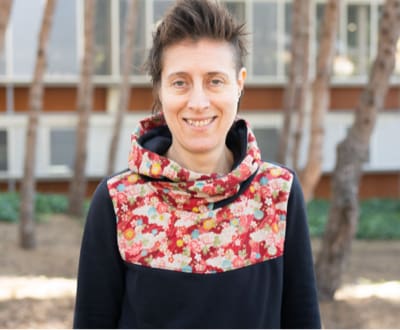
Alina Roitberg is a Junior Professor (Assistant Professor) at the University of Stuttgart , affiliated with the Faculty of Computer Science, Electrical Engineering and Information Technology . Her research focuses on advancing computer vision, machine learning, and robotics applications, particularly in human activity recognition, domain adaptation, and synthetic data generation. She explores challenges in action understanding, cross-domain generalization, and real-world deployment of AI systems in fields like healthcare, autonomous vehicles, and industrial automation. Her work emphasizes robust learning under noisy conditions, multimodal data fusion, and ethical AI applications. Recent projects include foundational studies on large language models in construction (AEC), video-based muscle group estimation, and improving driver activity recognition for autonomous vehicles. She also investigates circular factory design through uncertainty-aware process optimization and human-robot interaction. Dr. Roitberg's contributions span academic publications and industrial collaborations, addressing both theoretical advancements and practical implementations. Her research bridges computer vision techniques with real-world problems, emphasizing scalability and ethical considerations in AI deployment.
Miguel F. Anjos is Professor and Chair of Operational Research at the School of Mathematics, University of Edinburgh , and holds the NSERC-Hydro-Québec-Schneider Electric Industrial Research Chair on Optimization for Smart Grids at Polytechnique Montréal. He received his B.Sc. (1992), M.S. (1994), and Ph.D. (2001) from McGill, Stanford, and Waterloo respectively. Research Theme Head of Data and Decisions at Edinburgh Founding Director of Trottier Institute for Energy Editor-in-Chief of Optimization and Engineering Research Interests: His work bridges mathematical optimization with smart grid applications , focusing on conic optimization, optimal power flow, demand response, and facility layout. He applies these techniques to energy storage, electric transportation, and industrial systems. Scientific Awards: Méritas Teaching Award (2012) Humboldt Research Fellowship (2009) Queen Elizabeth II Diamond Jubilee Medal (2013) Elected Fellow of EUROPT and Canadian Academy of Engineering Academic Service: Served on Mathematical Optimization Society Council, SIAM Activity Group on Optimization, INFORMS Optimization Society Vice-Chair, and Mitacs Research Review Committee. Hosts benchmark datasets: QAPLIB, FLPLIB, Jones Benchmark.
Roland N. Horne is the Thomas Davies Barrow Professor of Earth Sciences at Stanford University and Senior Fellow at the Precourt Institute for Energy. He holds positions in the Department of Energy Science & Engineering and is an Affiliate at the Stanford Woods Institute for the Environment. With degrees from the University of Auckland (BE, PhD, DSc), Horne has established himself as a leading expert in geothermal reservoir engineering and energy production optimization. His research focuses on inverse problems in reservoir modeling, including tracer analysis of fractures, computer-aided well test analysis, production schedule optimization, and automated history matching. Horne has made significant contributions to understanding geothermal reservoir engineering and multiphase flow of boiling fluids through porous materials and fractures. The analysis of his recent publications (2023-2025) reveals a strong emphasis on enhanced geothermal systems (EGS), with particular focus on flexible operations, economic modeling, and advanced characterization techniques. His work increasingly incorporates machine learning approaches for reservoir analysis and has expanded into microbial tracing methods for interwell connectivity assessment. There's also significant attention to US geothermal resource potential and integration into the broader energy transition. Honorary Member of the Society of Petroleum Engineers Member of the US National Academy of Engineering Multiple SPE Distinguished Lecturer appointments (1998, 2009, 2020) John Franklin Carl Award recipient Five Best Paper awards from Geothermal Resources Council Patricius Medal from German Geothermal Society Core Values Award from Women in Geothermal (2023) Horne has supervised 60 PhD and 135 MS students throughout his career. His current teaching includes undergraduate and graduate courses in Fundamentals of Energy Processes, Geothermal Reservoir Engineering, Mass and Energy Transport in Porous Media, and Well Test Analysis. He previously served as President of the International Geothermal Association (2010-2013) and Technical Program Chair for multiple World Geothermal Congress events. Horne maintains active research collaborations worldwide, including with the University of Tokyo (where he was a Fellow of the School of Engineering in 2016) and China University of Petroleum. His current research group focuses on advancing EGS technologies and developing more accurate reservoir characterization methods for geothermal applications.
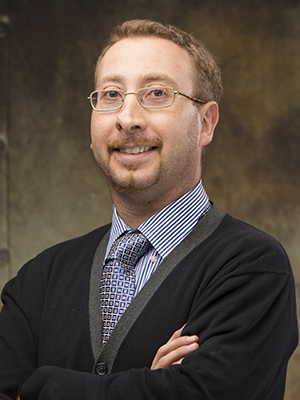
Kannan Srinivasan is the H.J. Heinz II Professor of Management, Marketing and Business Technology at Carnegie Mellon University's Tepper School of Business, a position he has held since 1999. Prior to joining CMU, he taught at the business schools of the University of Chicago and Stanford University. His academic career spans over three decades with significant contributions to marketing science and data analytics. His educational background includes: Ph.D. in Management from University of California Los Angeles (1986) MBA in Marketing/Finance from Xavier School of Management, Jamshedpur, India (1980) BA in Engineering from University of Madras, Chennai, India (1978) Srinivasan's research focuses on advanced data analytics models applied to marketing problems, with particular expertise in internet-generated large-scale data analysis. His work bridges the gap between theoretical marketing models and practical business applications, especially in the areas of algorithmic pricing, consumer behavior analysis, and AI-driven marketing strategies. He has pioneered research in dynamic pricing systems, location-aware marketing technologies, and the economic implications of AI in consumer markets. Analysis of his recent publications reveals a strong trend toward examining the intersection of artificial intelligence, consumer welfare, and market dynamics. His work increasingly focuses on ethical implications of AI in marketing, algorithmic bias, and the socioeconomic impacts of digital platforms across various sectors including real estate, social media, and e-commerce. His scientific achievements include: Elected Fellow of the Informs Society of Marketing Science (2013) for lifetime contribution to the field Served as President of the Informs Society of Marketing Science Holds multiple patents related to time and location aware dynamic push content, dynamic pricing, and online advertising Srinivasan has advised numerous doctoral students whose careers have led them to faculty positions at top institutions including Duke, Harvard, Columbia, Yale, University of Chicago, Wharton, University of Michigan, and Indian Institute of Management Bangalore. He has extensive consulting experience with large firms and startups, translating academic research into practical business applications. His professional service includes editorial roles at prestigious journals including Management Science, Marketing Science, and Quantitative Marketing and Economics, as well as significant committee service within CMU including the Elliott D. Smith Award Committee and various Dean's Advisory committees. His research is organized around several key initiatives focused on applying advanced analytics to solve complex marketing problems, with particular emphasis on developing interpretable AI models that balance business objectives with consumer welfare considerations.
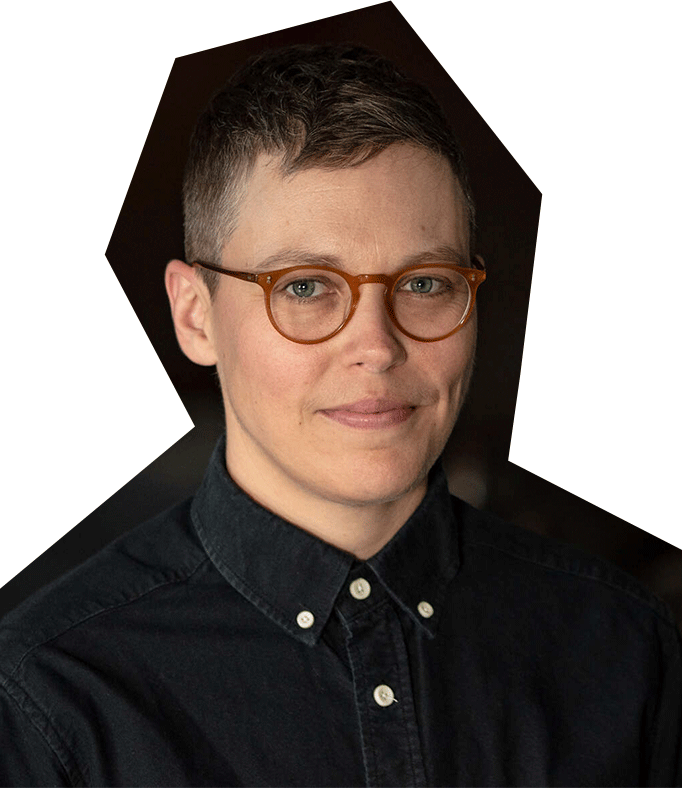
Nica Ross is an Associate Professor of Video & Media Design and Director of The Frank-Ratchye STUDIO for Creative Inquiry at Carnegie Mellon University's School of Drama in Pittsburgh, Pennsylvania. With a background in cinema and advanced photographic studies, Ross brings a unique interdisciplinary approach to their work, blending technology, performance, and critical theory to explore how social constructions are reinforced by technology and performance. Ross holds a B.A. in Cinema from San Francisco State University and an M.F.A. in Advanced Photographic Study from The International Center of Photography-Bard College program. Their educational background has informed their practice as both an artist and educator, with a focus on critical applied learning and transdisciplinary collaboration. Through humor and play, Nica Ross creates participatory video installations and games that challenge social constructions reinforced by technology and performance. Their creative research focuses on “social machines” that reveal and interrogate cultural constructs, with particular attention to queer theory, gender non-conforming experiences, and the politics of visibility. Ross emphasizes liveness, human connection, and critical examination of tools and contexts in their teaching and artistic practice. Ross's recent work shows a trajectory moving from traditional video and media design toward increasingly interactive and participatory forms that engage audiences directly in questioning social constructs. Their projects increasingly incorporate game mechanics, queer theory, and critical examinations of surveillance technologies, often using RGB color systems and immersive environments to challenge perceptions of reality. Ross has received notable recognition including the Frank-Ratchye Fund for Art @ the Frontier, the Lighthouse Fellowship, and residency at Baxter Street CCNY. These awards support their innovative work at the intersection of technology, performance, and social critique. As Director of The Frank-Ratchye STUDIO for Creative Inquiry, Ross connects with researchers and creators across Carnegie Mellon University, fostering transdisciplinary practice and critical engagement with technology. Their leadership in this space has created opportunities for collaborative projects that challenge conventional boundaries between art, technology, and social inquiry. Ross's work often involves collaborative teams and labs, including partnerships with musicians like Geo Wyeth, artists like Ginger Brooks Takahashi, and technical collaborators at Carnegie Mellon's Panoptic Dome. These collaborations result in immersive installations, interactive games, and critical explorations of technology's role in shaping social reality.
Dr Ronojoy Adhikari is a Lecturer in the Department of Applied Mathematics and Theoretical Physics (DAMTP) at the University of Cambridge, affiliated with the Faculty of Mathematics. His research focuses on statistical physics, soft matter, stochastic processes, Bayesian inference, and machine learning. He has taught Mathematical Biology (2018–2021) and Electrodynamics (2021–2023). His work bridges theoretical frameworks with experimental insights, addressing phenomena such as active matter dynamics, non-equilibrium thermodynamics, and stochastic modeling of biological systems. Key contributions include studies on autophoretic particles, path probabilities in stochastic systems, and Bayesian approaches to epidemiological modeling. His research group, part of the Soft Matter program at DAMTP, explores interdisciplinary topics like colloidal crystallization and enzymatic network kinetics. Notable publications highlight investigations into fluctuating hydrodynamics, entropy production measurements, and the mechanics of rigid inclusions on curved surfaces. His interdisciplinary approach integrates computational methods (e.g., lattice Boltzmann simulations) with mathematical rigor to understand complex systems. While no awards are explicitly listed, his extensive publication record underscores sustained academic impact. Ongoing research includes projects on path probabilities, active particle dynamics, and the interplay between geometry and material behavior in Cosserat solids. Advising and grants are not explicitly detailed in the provided texts, but his role as a faculty member suggests involvement in student supervision and collaborative projects. His work frequently appears in top journals like Physical Review Letters , Journal of Fluid Mechanics , and Science Advances , reflecting high-quality contributions to theoretical and applied physics.
Andrew Thomas Campbell is a Professor and Albert Bradley 1915 Third Century Professor in the Department of Computer Science at Dartmouth College. His research focuses on ubiquitous computing, machine learning, and mental health, particularly using mobile and wearable sensors to assess and manage mental illnesses. He leads the StudentLife project, which tracks college students' mental health over four years, and co-directs the HealthX Lab. Campbell's work has received prestigious awards, including the ACM UbiComp 10-Year Impact Award for pioneering mobile sensing in mental health. He previously held tenure as an Associate Professor at Columbia University and has industry experience at Google and Verily. His research spans $42M in grants from NIH, NSF, and corporate partners, emphasizing technology-driven solutions for mental health challenges. Education: B.Sc. from Aston University, M.Sc. from City University, Ph.D. from Lancaster University. He teaches CS 1 Introduction to Programming and mentors numerous students. Awards include the Dean of the Faculty Award for Mentoring (2025) and multiple ACM Test of Time Awards. His lab collaborations involve跨学科 teams addressing mental health through AI and sensing technologies.
Professor Adrian Hilton is a distinguished faculty member at the University of Surrey, serving as Director of the Centre for Vision, Speech and Signal Processing (CVSSP) and Director of the Surrey Institute for People-Centred AI. He is affiliated with the School of Computer Science and Electronic Engineering and leads the Visual Media Research Lab (V-Lab). His research focuses on pioneering next-generation 4D computer vision technologies that enable machines to understand and model dynamic real-world scenes. Key areas include 3D/4D shape capture, computer vision, machine learning, graphics, and animation for applications in sports analysis, film/TV production, virtual reality, and medical imaging. His work bridges the gap between real and computer-generated imagery, with notable contributions in volumetric capture, motion capture, and free-viewpoint video. Hilton's recent publications demonstrate a strong trend toward multimodal integration, particularly combining audio and visual processing for spatial audio applications, while advancing 4D reconstruction techniques for human performance capture. His work increasingly incorporates transformer architectures and neural rendering techniques for improved illumination estimation, shadow modeling, and multi-view consistency. Scientific Awards and Recognition Two EU IST Innovation Prizes Manufacturing Industry Achievement Award Royal Society Industry Fellowship (2008-2011) Royal Society Wolfson Research Merit Award in 4D Vision (2013-2018) Fellow of the Royal Academy of Engineering (FREng) Fellow of the International Association for Pattern Recognition (FIAPR) Fellow of the Institution of Engineering and Technology (FIET) Hilton actively mentors PhD and post-doctoral researchers through his leadership of CVSSP, which has a grant portfolio exceeding £31M and comprises 170 researchers. He has successfully commercialized several technologies, including systems used by the BBC for sports commentary visualization. His research collaborations span major industry partners including BBC, BT, Sony, Framestore, and The Foundry. He co-founded the G3 Games forum and the CVMP Conference on Visual Media Production, demonstrating strong engagement with the creative industries. Current research projects include the S3A Programme Grant in Future Spatial Audio and InnovateUK's ALIVE project for 360 video reconstruction.
Lena Funcke is an Assistant Professor of Theoretical Physics at Bonn University. Her research focuses on quantum computing, lattice field theory, and machine learning applications in physics. She explores topics such as topological phases, gauge theories, and quantum simulations. Her work bridges high-energy physics and computational methods, with a particular emphasis on overcoming noise challenges in quantum algorithms and leveraging machine learning for optimization tasks. Funcke’s research projects include C01 and C03, focusing on Hamiltonian lattice formulations and quantum computing methods for gauge theories. She investigates hybrid approaches combining Monte Carlo simulations with quantum computing to study quantum electrodynamics and topological systems. Her contributions highlight the interplay between theoretical physics and cutting-edge computational tools. Her publications span quantum algorithms for particle physics experiments, error mitigation strategies, and the application of normalizing flows to complex systems like the Hubbard model. She actively contributes to advancing the theoretical foundations of quantum computing and its practical implementation in solving fundamental physics problems.
Daniela Calvetti is the James Wood Williamson Professor in the Department of Mathematics, Applied Mathematics, and Statistics at Case Western Reserve University. Her research focuses on large-scale scientific computing, computational inverse problems, uncertainty quantification, and predictive modeling in neuroscience, metabolism, and cellular physiology. She holds a PhD from the University of North Carolina-Chapel Hill. Her work integrates advanced mathematical techniques with biomedical applications, including brain energy metabolism modeling, MEG/EEG source reconstruction, and computational methods for medical imaging. Notable contributions include Bayesian hierarchical algorithms for inverse problems and interdisciplinary collaborations bridging mathematics with neuroscience and physiology. Recent research highlights include developing sparsity-promoting Bayesian models for tomography, computational frameworks for neuromuscular control variability, and predictive models of disease dynamics like post-pandemic COVID-19 recurrence. Her methodologies emphasize statistically inspired preconditioning and adaptive meshing techniques to enhance computational efficiency in solving complex inverse problems. Dr. Calvetti has published extensively across computational science, inverse problems, and biomedical applications. She leads a research group advancing interdisciplinary computational methods with applications in neuroscience, virology, and metabolic systems.
Binil Starly is an Adjunct Professor at North Carolina State University's Edward P. Fitts Department of Industrial and Systems Engineering, part of the College of Engineering. He leads the Data Intensive Manufacturing Laboratory (DIME Lab), focusing on digital-physical integration in manufacturing, additive manufacturing, and biofabrication. His work emphasizes democratizing manufacturing access through machine learning and smart systems. Starly holds a B.S. in Mechanical Engineering from the University of Kerala (2001) and a Ph.D. from Drexel University (2006). He previously worked at the University of Oklahoma on tissue engineering platforms. His research spans digital factories, smart manufacturing, and biometrology, with over 45 journal publications. His awards include the NSF CAREER Award (2009), SME Young Manufacturing Engineer Award (2011), and multiple teaching/research recognitions at NC State. He teaches courses on product development, additive manufacturing, and Python for industrial engineers. Starly’s research trends emphasize blockchain in manufacturing ecosystems, cybersecurity for IoT devices, and knowledge graphs for service discovery. He co-leads the Functional Tissue Engineering (FTE) Program, integrating regenerative medicine with scalable manufacturing processes. His grants focus on smart manufacturing innovation, blockchain platforms, and real-time bioprinting monitoring. He advises 7 graduate and 3 undergraduate students, having guided 22 M.S. and 6 Ph.D. students. His outreach includes online courses on smart manufacturing and Python programming through NC State’s Wolfware Outreach. The DIME Lab develops advanced manufacturing technologies, including digital twins for industrial metaverse applications and machine authentication systems. Collaborations span academia, industry, and government to advance personalized manufacturing solutions.
Michael Daniele is an Associate Professor at North Carolina State University, jointly appointed in the Department of Electrical & Computer Engineering and the Joint Department of Biomedical Engineering . His research focuses on bioelectronics engineering, particularly in developing microsystems for monitoring, mimicking, and augmenting biological functions. He leads the @BiointerfaceLab , exploring wearable/implantable biosensors, microphysiological systems, and process analytical technologies for biomanufacturing. Education : Ph.D. in Materials Science & Engineering (Clemson University, 2012) Bachelor's in Materials Science & Engineering (Rutgers University, 2009) Research Highlights : Developing "injury-on-a-chip" models for coagulation studies Pioneering hydrogel microneedles for diagnostic devices Advancing light-controlled peptide ligands for protein purification Collaborating with Novartis on viral vector manufacturing Award Recognition : 2024 William F. Lane Outstanding Teaching Award 2019 NSF CAREER Award 2022 University Faculty Scholar Grants & Initiatives : Co-leader of the NC-Viral Vector Initiative (2023–present) NSF-funded projects in biosensor integration and biomanufacturing His work bridges engineering and medicine, with applications in gene therapy, wearable diagnostics, and precision agriculture.
Dr. Mohammad Naraghi is a Professor and Associate Department Head for Academics in the Department of Aerospace Engineering at Texas A&M University. He leads the Nanostuctured Materials Lab , focusing on advanced nanomaterials for aerospace applications. His work integrates material science principles to develop lightweight, high-performance materials for structural, energy storage, and smart textile systems. Education: Ph.D., Aerospace Engineering (2009), University of Illinois at Urbana-Champaign M.S., Civil Engineering (2004), Sharif University of Technology B.S., Civil Engineering (2004), Sharif University of Technology Research Interests: Graphitic carbon nanomaterials, bio-inspired composites, experimental nanomechanics, and polymer nanofiber processing. His lab explores multifunctional materials for aerospace applications, including self-healing polymers, structural batteries, and sustainable carbon fiber recycling. Publications: Dr. Naraghi has authored over 150 peer-reviewed articles, with recent work focusing on carbon nanomaterial synthesis, self-healing vitrimers, and all-electric aircraft sustainability . His studies bridge nanoscale mechanics and macroscale applications, emphasizing scalability and industrial relevance. Awards: Best Paper Award (2009) for nano viscoelastic composites research Roger A. Strehlow Memorial Award (2009) for outstanding research First Place in Sandia MEMS Design Competition (2007) Advising & Grants: Leads NSF-funded projects on sustainable materials and structural energy storage. Advises graduate students in aerospace and materials engineering. Collaborates with Sandia National Labs and industry partners on advanced composite development. Labs & Facilities: Directs the Nanostuctured Materials Lab, equipped with advanced nanomechanical testing systems, electrospinning setups, and characterization tools for nanoscale materials analysis.
Dr. Elisabet Romero is a Group Leader at the Institute of Chemical Research of Catalonia (ICIQ) , where she leads research in bio-inspired solar energy conversion . Her work focuses on designing chromophore-protein assemblies capable of efficiently converting sunlight into electrochemical energy, mimicking natural photosynthesis. She is supported by prestigious grants, including an ERC Starting Grant and a Marie Curie Fellowship . Education: PhD in Biophysics, VU Amsterdam (2011) Master’s in Chemistry, Institute of Advanced Chemistry of Catalonia BSc in Chemistry (Physical Chemistry specialization), University of Barcelona (2003) Research Interests: Dr. Romero’s research lies at the intersection of physical chemistry, photophysics, and sustainable energy . She investigates the quantum mechanical principles underlying energy and electron transfer in photosynthetic systems, applying this knowledge to engineer artificial systems for solar fuel production. Her group uses ultrafast spectroscopy techniques like transient absorption and 2D electronic spectroscopy to probe femtosecond-scale dynamics. Publications & Research Trends: Her recent publications reflect a strong trend in de novo protein design for artificial light harvesting , excitonic coupling in chromophore systems , and quantum effects in biological energy transfer . Collaborative work with leading institutions highlights her role in advancing synthetic biology and quantum bio-inspired materials. Scientific Awards: European Research Council (ERC) Starting Grant Marie Curie Fellowship Advising and Grants: Dr. Romero mentors a dynamic team of PhD students, postdoctoral researchers, and master’s students . Her group has secured competitive funding from the ERC, Severo Ochoa Programme, and Marie Skłodowska-Curie Actions , supporting innovative research in renewable energy technologies. Labs and Teams: Her laboratory at ICIQ is equipped with state-of-the-art ultrafast spectroscopy facilities. The team fosters a collaborative and inclusive environment, combining rigorous scientific inquiry with social engagement and cultural exchange.
Prof. Akshat Tanksale is a Professor in Chemical & Biological Engineering at Monash University, leading the Catalysis for Green Chemicals group. He specializes in heterogeneous catalysis for CO2 and biomass conversion into sustainable fuels/chemicals. His roles include Deputy Director of the ARC Research Hub for Carbon Utilisation and Recycling, and Carbon Theme Leader of the Woodside Monash Energy Partnership. Education: PhD (2008, University of Queensland) in nanomaterials/chemical reaction engineering, followed by postdoctoral research at UQ on biomass-to-fuels and hydrogen storage. Joined Monash in 2011. Research Focus: Innovating low/negative carbon emission technologies via catalyst design and CCU processes. Key areas include CO2 valorisation, biomass depolymerisation, and nanomaterials for energy storage (e.g., Zn-air batteries). His work aligns with UN SDGs addressing climate action and sustainable energy. Projects: Active in 11 projects (2021–2029), including leadership in carbon recycling via direct air capture and syngas conversion to acetic acid. Collaborates internationally on catalyst development and CO2 conversion. Awards: Multiple recognitions including Dean’s Award for Innovation (2020), Caltex Award (2018), and Australia-India Science & Tech Award (2010). Active in professional service, chairing IChemE Research Working Groups. Teaching: Offers courses CHE2162 (Mass/Energy Balances) and CHE3165 (Separation Processes).