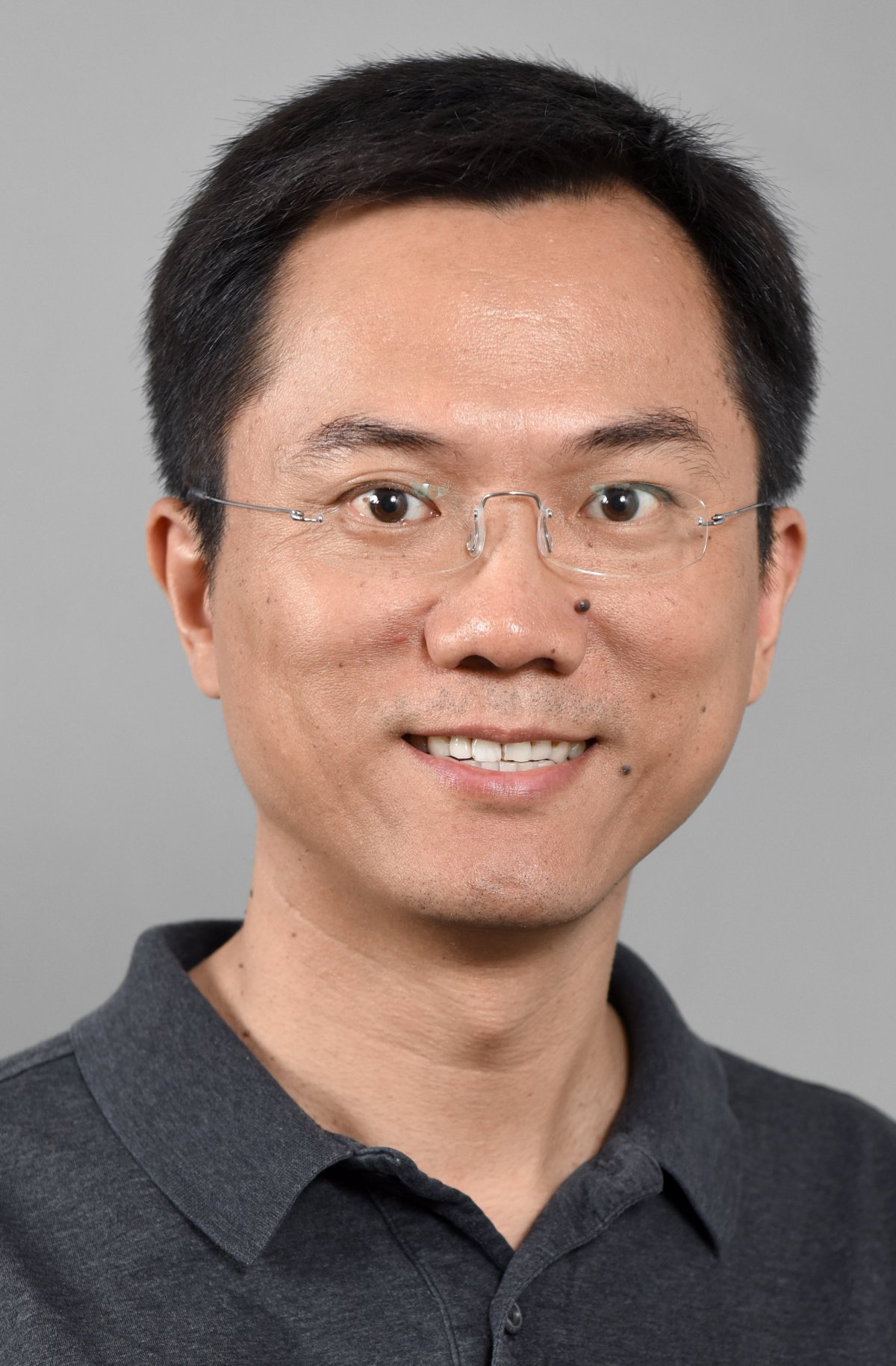
Gaurav Arya is a Professor in the Thomas Lord Department of Mechanical Engineering and Materials Science at Duke University, with additional appointments in the Department of Chemistry and Biomedical Engineering. His research laboratory employs physics-based computational tools to investigate biological and soft-material systems at the molecular scale. Ph.D. from University of Notre Dame (2003) B.Tech. from Indian Institute of Technology Delhi (1998) Research focuses on: Molecular modeling and simulations Statistical mechanics DNA nanotechnology Viral DNA packaging Chromatin biophysics Polymer-nanoparticle composites Recent research trends emphasize AI-driven materials discovery and programmable DNA nanostructures. Key grants include: NSF DMREF: Architecting DNA nanodevices (2023-2027) DOE Mesoscale Self-Assembly (2020-2027) UC San Diego Ligand-Nanocrystal Interlayer Studies (2024-2027) Scientific contributions: Featured in 2025 Nature Communications on DNA superstructures 2022 Science Advances on DNA nanodevice reconfiguration 2021 PNAS on viral DNA packaging motors
Lynne Grewe serves as a Professor in the Department of Computer Science at California State University, East Bay, where she maintains active research and teaching responsibilities with current office hours and contact information. Her work bridges theoretical computer science with real-world applications across healthcare, education, and emergency response domains. Her research portfolio centers on three interconnected thrusts: Medical Technology : Development of computer vision systems for stroke detection through facial pattern analysis (StrokeChange), infrared-based disease monitoring, and assistive navigation tools for the visually impaired (Seeing Eye Drone) Educational Innovation : Creation of multimodal systems like ULearn that detect student frustration using deep learning, alongside community college partnerships to broaden participation in computing Sensor Fusion Applications : Integration of multi-modal data for disaster response, infrastructure monitoring, and mobile health platforms using advanced machine learning techniques Publication analysis reveals consistent evolution toward real-time, deployable systems—particularly mobile health applications and educational tools—while maintaining foundational work in sensor fusion. Her 2020-2024 output shows increasing emphasis on healthcare applications (40% of recent work) and educational technology (25%), often combining computer vision with mobile platforms. Grewe demonstrates significant commitment to educational equity through the Faculty in Residence program, collaborating with community colleges to prepare underrepresented students for computing careers. Her Google partnership and focus on practical applications indicate strong industry engagement, though specific grant details aren't documented in source materials. Current projects suggest ongoing expansion into in-situ health monitoring and AI-driven educational support systems.
Dr. Uchenna Daniel Ani is a Lecturer in Cyber Security at the School of Computer Science and Mathematics, Keele University. He leads the MSc Cyber Security programme and chairs the School Taught Programme Ethics Committee. Previously, he was a Senior Research Fellow at the PETRAS National Centre of Excellence for IoT Systems Cybersecurity at University College London (UCL), focusing on cybersecurity in critical infrastructure systems. Dr. Ani holds a PhD in Industrial Control System Cybersecurity from Cranfield University, UK, and degrees from the University of Bedfordshire. His research emphasizes socio-technical security analysis, cybersecurity risk assessment, and the intersection of technical solutions with human and policy factors. Key projects include 'Analytical Lenses for Internet of Things Threats' and 'Modelling for Socio-Technical Security,' collaborating with transport and water infrastructure organizations. His research interests span ICS/IoT Cybersecurity, security modelling/simulations, human-factor security, and digital forensics. He actively contributes to cybersecurity policy and standards development, advising on IoT-enabled infrastructure resilience. Dr. Ani is a Fellow of the Higher Education Academy and member of IET/ACM. Teaching includes modules on Human Factors of Cyber Security, Cryptography, and Cloud Computing. He advocates STEM education through mentoring and public engagement, including roles as a STEM Ambassador and IET Young Professional Ambassador.
Lamine M. Mili is a Professor in the Bradley Department of Electrical and Computer Engineering at Virginia Tech. His expertise spans power systems, signal processing, and robust estimation theory. He holds an IEEE Fellowship (2016) for contributions to robust state estimation in power systems. Mili's research focuses on advancing methodologies for power system reliability, control, and integration of renewable energy sources. His work includes studies on dynamic state estimation, nonlinear dynamics, bifurcation theory, and quantum computing applications. He has contributed extensively to resilience engineering and computational social science in power systems. Mili’s recent articles address challenges in smart grids, quantum circuit error prediction, and multifractal signal analysis in EEG. His research often combines advanced statistical techniques with real-world grid data, emphasizing robustness and adaptability in dynamic environments. Education: Ph.D., University of Liège, 1987 M.S., University of Tunis, 1983 B.S., Swiss Federal Institute of Technology, Lausanne, 1976 Research Interests: Power system stability and control State estimation and robust filtering Quantum computing for power systems Resilience and cyber-physical-social systems Nonlinear dynamics and bifurcation analysis His recent publications reflect a focus on hybrid power systems, probabilistic methods, and data-driven approaches for grid optimization. The 2025 articles highlight advancements in photovoltaic state estimation, quantum error prediction, and robust modulation techniques. Mili’s work often bridges theoretical models with practical grid applications, emphasizing uncertainty quantification and real-time monitoring.
Evelyne Knapp is a Researcher at the ZHAW School of Engineering, Zurich University of Applied Sciences, within the Organic Electronics & Photovoltaics research focus area. Her work centers on advanced materials science, semiconductor physics, and machine learning applications in energy systems. She has led major projects such as 'Uncertainty quantification in ML Prediction for PV Quality Assurance' and contributed to innovations in perovskite solar cell optimization, organic semiconductor characterization, and device simulation models. Her research interests span photovoltaic technologies, charge transport phenomena, and optoelectronic device development. Key areas include: Perovskite solar cell performance analysis and degradation mechanisms Machine learning-driven parameter extraction for semiconductor materials Electro-thermal modeling of organic light-emitting devices Frequency-domain analysis of large-area solar cells Knapp's publications (over 30 peer-reviewed articles) demonstrate expertise in device simulation, material characterization, and interdisciplinary approaches merging computational methods with experimental data. Recent work highlights include: Advancing ML techniques to identify limiting parameters in perovskite solar cells Developing inverse models for solar cell parameter estimation Quantifying charge transport dynamics in organic semiconductors Her contributions have been presented at leading conferences including the IEEE Photovoltaic Specialists Conference and the Society for Information Display Symposium.
Dr. Srikanthan Ramesh serves as an Assistant Professor in the School of Industrial Engineering and Management within Oklahoma State University's College of Engineering, Architecture and Technology. Since establishing the Advanced Materials and Additive Manufacturing Laboratory in August 2022, he has led interdisciplinary research at the intersection of materials science, physical phenomena, and advanced manufacturing technologies, with applications spanning healthcare, aerospace, and electronics sectors. His educational foundation includes a Ph.D. in Mechanical and Industrial Engineering from Rochester Institute of Technology (2022) and an M.S. in Industrial and Manufacturing Systems Engineering from Iowa State University (2017). This academic background enables his innovative approach to manufacturing science. Dr. Ramesh's research program focuses on biological and micro-scale additive manufacturing (bio-AM), specializing in biomaterial development for tissue engineering and regenerative medicine. His work integrates computational fluid dynamics, machine learning, and real-time process monitoring to achieve precise control over mechanical, biological, and electrical properties of manufactured structures. He develops experimental tools and process frameworks for droplet-based and extrusion-based AM systems, with particular emphasis on wound healing applications and space-compatible microelectronics. Analysis of his 14 publications from 2020-2025 reveals a strong trajectory toward AI-driven manufacturing solutions, with increasing emphasis on multi-objective Bayesian optimization for bioink design, aerosol jet printing process refinement, and bioprinted tissue construct development. His recent work demonstrates sophisticated integration of machine learning with physical manufacturing processes to solve complex biomedical challenges. His scientific recognition includes: Doctoral Dissertation Pitch Competition (Runner-up), IISE, 2021 Best Oral Presentation, Graduate Showcase, Rochester Institute of Technology, 2019 Gilbreth Memorial Fellowship, IISE, 2018-2019 Wakonse College Teaching Fellowship, Iowa State University, 2018-2019 Graduate Research Excellence Award, Iowa State University, 2017 Best Overall Oral Presentation, Nano@IAstate, Iowa State University, 2017 Dr. Ramesh currently leads significant research initiatives including as Principal Investigator for an NSF REU Site on Additive Manufacturing and Cybersecurity ($464,606, 2025-2028) and a NASA EPSCoR Travel Grant for aerosol jet printing in space missions (2024-2025). As Co-PI on an NSF grant for Privacy-aware Collaborative Design in additive biofabrication ($599,981, 2025-2028), he develops frameworks for mass personalization in medical applications while addressing data security challenges. These projects support his lab's mission to advance manufacturing science through rigorous experimentation and computational innovation. The Advanced Materials and Additive Manufacturing Laboratory operates as a collaborative hub where Dr. Ramesh directs research teams in developing novel biomaterials, optimizing printing processes, and creating functional prototypes for wound dressings, liver tissue models, and space-rated microelectronics. The lab's interdisciplinary approach combines expertise in materials characterization, computational modeling, and machine learning to push the boundaries of what's possible in additive manufacturing for critical applications.
Mircea R. Stan is a Professor of Electrical and Computer Engineering at the University of Virginia, serving as Director of Computer Engineering and Virginia Microelectronics Consortium (VMEC) Professor. He leads the High-Performance Low-Power (HPLP) lab and is an associate director of the Center for Automata Processing (CAP). His research focuses on AI hardware, Processing in Memory, Low Power Design, Cyber-Physical Systems, and Spintronics. Education: Ph.D. (1996) and M.S. (1994) from UMass Amherst; Diploma (1984) from Politehnica University, Bucharest. Research interests include energy-efficient computing architectures, IoT systems, and emerging technologies like magnetic skyrmions and memristors. He has pioneered work on asynchronous stochastic computing, thermal-aware microarchitecture, and microfluidic cooling for 3D-ICs. Key awards include the 2024 A. Richard Newton Technical Impact Award, 2018 ISCA Influential Paper Award, and IEEE Fellow (2014). He has held editorial roles at IEEE TVLSI, IEEE TNano, and IEEE Design & Test. Notable contributions include the HPLP lab’s advancements in low-power logic computing, the VCRFID framework for Industry 4.0, and thermal-aware design tools like Hot-LEGO and Cool-3D.
Mark D. Smucker is a Professor in the Department of Management Science and Engineering at the University of Waterloo , cross-appointed with the David R. Cheriton School of Computer Science (Faculty of Math). His research focuses on designing and evaluating interactive information retrieval systems, including search engines and recommendation systems. He co-organized the TREC Health Misinformation Track (2019–2022) and currently leads the TREC DRAGUN Track, addressing trustworthiness assessment of news. He holds a PhD in Computer Science from the University of Massachusetts Amherst, a Master's from the University of Wisconsin-Madison, and dual Bachelor's degrees in Physics and Computer Science from Iowa State University. His teaching includes courses like Search Engines (MSCI 541/MSE 541) and Introduction to Computer Programming (MSCI 121/MSE 121), emphasizing practical programming and information systems design. He has received awards including the ACM SIGIR 2012 Best Paper Award and the University of Waterloo Engineering Society Teaching Excellence Honourable Mention (2014). His work bridges theory and practice, with contributions to evaluation methodologies like time-based calibration of metrics and preference graphs. He collaborates on projects like the TREC tracks to improve search systems' real-world applicability, particularly in health contexts and misinformation detection.
Jitendra Malik is the Arthur J. Chick Professor of Electrical Engineering and Computer Sciences (EECS) at the University of California, Berkeley, with affiliations in Bioengineering, Cognitive Science, and Vision Science groups. He previously served as Chair of the Computer Science Division (2002-2004) and Department Chair of EECS (2004-2006 and 2016-2017). He also worked part-time as Research Director and Site Lead at Facebook AI Research (Meta Inc.) during 2018-2019. Education : B.Tech in Electrical Engineering (IIT Kanpur, 1980), PhD in Computer Science (Stanford, 1985) Current Research : Computer Vision, Robotics, Machine Learning, Computational Modeling of Human Vision, and Biological Image Analysis Making significant contributions to computer vision , robotics , and machine learning , Malik’s work includes foundational algorithms like anisotropic diffusion , normalized cuts , and R-CNN . His recent research focuses on embodied AI agents , dexterous manipulation , 3D scene reconstruction , and vision-language-action models . His publications have received 11 best paper awards , including test-of-time awards like the Longuet-Higgins Prize (3x) and Helmholtz Prize (3x). Malik has mentored over 80 PhD students and postdoctoral fellows , many of whom hold prominent positions at institutions like MIT, Caltech, Google, and Meta. His lab’s work spans computer vision , robot learning , and 3D modeling , with applications in autonomous systems, medical imaging, and computational biology. Scientific Awards Presidential Young Investigator Award (1989) Distinguished Alumnus Award, IIT Kanpur (2008) IEEE PAMI-TC Distinguished Researcher (2013) K.S. Fu Prize, IAPR (2014) ACM-AAAI Allen Newell Award (2016) IJCAI Award for Research Excellence (2018) IEEE Computer Society Pioneer Award (2019) Fellow, IEEE, ACM, AAAS Member, National Academy of Engineering and National Academy of Sciences As a leader in sensorimotor learning and humanoid robotics , Malik has pioneered approaches for vision-based quadcopter control , humanoid locomotion , and visuo-tactile perception , further advancing the field of artificial intelligence and computational vision .
James Gross is a Professor at the School of Electrical Engineering and Computer Science at KTH Royal Institute of Technology, Stockholm. He leads research in mobile systems and networks, with a focus on 5G/6G, edge computing, and performance evaluation. He is Associate Director of KTH's Digital Futures center and a board member of the Innovative Centre for Embedded Systems. Previously, he directed the ACCESS Linnaeus Centre (2016–2019) and was Assistant Professor at RWTH Aachen University. PhD, TU Berlin (2006) Studies: TU Berlin, UC San Diego His research lies at the intersection of wireless networking, edge computing, and mathematical performance modeling. Key areas include ultra-reliable low-latency communications (URLLC), age-of-information, network calculus, and resource allocation. He applies these to 5G/6G, cyber-physical systems, and industrial IoT. His work combines theoretical modeling with real-world implementation and standardization impact. The recent publications highlight a strong focus on deterministic and reliable communications for future networks. Topics include hierarchical inference at the edge, age-of-information optimization, finite blocklength coding, and integration of TSN with wireless systems. There is a clear trend towards AI/ML for resource management and semantic communications, reflecting the evolution of intelligent edge networks. Best Paper Award, ACM MSWiM 2015 Best Demo Paper Award, IEEE WoWMoM 2015 Best Paper Award, IEEE WoWMoM 2009 Best Paper Award, European Wireless 2009 ITG/KuVS Dissertation Award, 2007 James Gross has supervised PhD students such as Samie Mostafavi and advises numerous master's projects. His research has been funded by national science foundations in Germany and Sweden, the ICT TNG SRA, Linnaeus ACCESS Centre, DFG-funded UMIC Centre, German Ministry of Science, and various industry partners. His work has led to patents and influenced wireless standards. He is involved in initiatives like the TECoSA project on trustworthy edge computing and organizes summer schools on Edge AI and 6G. His lab conducts experimental research on edge computing testbeds (e.g., Ainur, ExPECA) and wireless performance evaluation.
Rajeev Jaiman is a Professor in the Department of Mechanical Engineering at the University of British Columbia's Faculty of Applied Science. A graduate of IIT Bombay (B.Tech) and the University of Illinois at Urbana-Champaign (M.S., Ph.D. in Aerospace Engineering), he holds the NSERC/Seaspan Industrial Research Chair in Intelligent and Green Marine Vessels (IGMVs) and is recognized as a SNAME Fellow. PhD in Aerospace Engineering from University of Illinois, Urbana-Champaign Senior Member of AIAA and member of APS, ASME, SNAME, and USACM His research focuses on fluid-structure interaction , computational mechanics , and data-driven modeling for marine/aerospace applications. Current work includes: High-fidelity multiphysics simulations Machine learning integration for fluid dynamics Phase-field methods for interface capturing Bio-inspired structural optimization Flow control techniques for vortex-induced vibration Recent publications emphasize graph neural networks for fluid dynamics prediction, phase-field modeling of complex interactions, and machine learning applications in multiphase flows. Research trends show strong interdisciplinary connections between computational mechanics, ocean engineering, and data science. Scientific awards include: NSERC/Seaspan Industrial Research Chair Fellow of The Society of Naval Architects and Marine Engineers (SNAME) As director of the Computational Multiphysics Laboratory, he develops high-performance computing frameworks for marine , aerospace , and biomechanics applications. His work spans numerical algorithms, HPC-based solvers, and bio-inspired design optimization.
Yu [Kevin] Cao is the Louis John Schnell Professor in the Department of Electrical and Computer Engineering at the University of Minnesota. His research focuses on microelectronics co-design for energy-efficient computing, spanning integrated circuit design, semiconductor physics, and machine learning methodologies. He leads the Microelectronics Co-design Research Group and actively collaborates with institutions like Georgia Institute of Technology, Sandia National Laboratories, and Notre Dame. His research interests include AI hardware acceleration , in-memory computing , cryogenic CMOS design , and 3D integration of heterogeneous chiplets . Current initiatives explore reconfigurable on-package systems for AI, spiking neural networks on neuromorphic hardware, and low-temperature logic technologies. Recent publications and projects highlight advancements in AI accelerators , RRAM-based compute-in-memory , graph convolutional networks , and 3D integration . His group develops tools like MN-SIM 2.0 for memristor modeling and investigates novel materials for neuromorphic systems. Grants include collaborative NSF funding for chiplet-based AI systems, CoCoSys center funding from SRC, and DOE/Sandia projects on neuromorphic hardware. Future work emphasizes scalable co-design frameworks for intelligent systems and heterogeneous integration challenges.
Manuel Wimmer is a Full Professor and Head of the Department of Business Informatics – Software Engineering at Johannes Kepler University Linz, Austria. He also serves as the Program Director for the Business Informatics master's program since 2019. His academic leadership extends to representing JKU Linz in the AutomationML society and leading significant research initiatives. Dr. Wimmer received his Ph.D. and Habilitation from TU Wien. His academic journey includes: Research associate at the University of Malaga, Spain Visiting professor at the University of Marburg, Germany Visiting professor at TU Munich, Germany Assistant professor at the Business Informatics Group (BIG), TU Wien, Austria Professor Wimmer's research focuses on Model-Driven Software Engineering and its applications, particularly in the emerging field of Digital Twins . His work bridges theoretical foundations with practical industrial applications, with special emphasis on model transformations, runtime modeling, and the integration of artificial intelligence techniques into model-driven approaches. More recently, he has been exploring the intersection of model-driven engineering with quantum computing, investigating how modeling principles can be applied to quantum software development. His recent publications reveal a strong trend toward Digital Twin engineering, with approximately 40% of his 2023-2025 publications focusing on various aspects of Digital Twin technology. Another significant strand of his work involves the application of AI and machine learning techniques to enhance model-driven engineering processes. The emergence of quantum software engineering as a research direction is also notable in his most recent publications, demonstrating his ability to identify and explore cutting-edge research frontiers. From 2017-2023, Professor Wimmer led the Christian Doppler Laboratory on Model-Integrated Smart Production (CDL-MINT), where he developed engineering approaches for digital twins. He is also the co-author of the influential book "Model-driven Software Engineering in Practice" (2nd edition, 2017). Professor Wimmer is actively involved in the organization of major scientific events including the IEEE International Conference on Quantum Software (QSW) and the International Conference on Engineering Digital Twins (EDTconf), demonstrating his leadership in these emerging research communities. His research has practical applications across various domains including smart cities, industrial automation, tunneling/construction, and quantum computing. The MATISSE project represents a significant multi-partner effort to develop a framework for federated digital twins of industrial systems.
Stefan Rass is a Professor at the Institute of Networks and Security within the Faculty of Engineering & Natural Sciences at Johannes Kepler University Linz (JKU), where he leads the LIT Secure and Correct Systems Lab. As Principal Investigator for FFG-funded projects including reSilienz (digital supply chain resilience, 2023–2025) and ITPUK (AI signature verification, 2022–2024), he bridges theoretical game theory with practical cybersecurity solutions for critical infrastructures and robotics systems. His research spans game-theoretic security models (patrolling games, defense-in-depth strategies), quantum cryptography (QKD network architectures), and cyber deception frameworks like Honeyquest for measuring honeypot effectiveness. Recent work addresses robotics security benchmarking (RobotPerf), cryptographic instruction chaining for control flow protection, and risk assessment methodologies for interdependent infrastructures. His mathematical decision-making approach integrates bounded rationality and stochastic modeling to solve real-world security challenges. Professor Rass actively shapes the field through program committee roles (ARES 2023), peer reviews, and invited talks on security transparency. His current projects focus on cost-benefit-aware monitoring for cyber-physical systems and quantum key distribution standardization, reflecting Austria’s strategic priorities in digital resilience. The LIT Secure and Correct Systems Lab under his direction develops foundational theories while deploying tools for industrial applications, particularly in critical infrastructure protection and secure robotics workflows.
Dr David Walker is a Senior Lecturer in Computer Science at the University of Exeter and a member of the Institute for Data Science and Artificial Intelligence . He also contributes to the Environmental Intelligence @Exeter research network. Education: PhD in Computer Science, University of Exeter (2008–2013) BSc (Hons) in Computer Science, University of Exeter (2004–2007) Research Interests Dr Walker’s work sits at the intersection of multi-objective optimisation , evolutionary computation , explainable AI and hyper-heuristics . He develops algorithms and visual analytics that help engineers and scientists understand complex optimisation landscapes, with recent emphasis on renewable-energy planning (especially offshore wind farms) and trustworthy AI systems. Publication Trends Between 2022 and 2025 he produced a prolific stream of articles on explainable optimisation , many-objective wind-farm design and visual analytics for evolutionary algorithms . These works combine rigorous algorithmic innovation with real-world case studies, demonstrating a clear trajectory toward transparent, human-centred AI for engineering decision-making. Scientific Awards No specific awards or fellowships are mentioned in the provided material. Advising & Funding No explicit list of PhD students, post-docs or grant awards is supplied. Laboratory & Teams Dr Walker is affiliated with the Institute for Data Science and Artificial Intelligence and the Environmental Intelligence @Exeter network, indicating collaborative, interdisciplinary research environments.