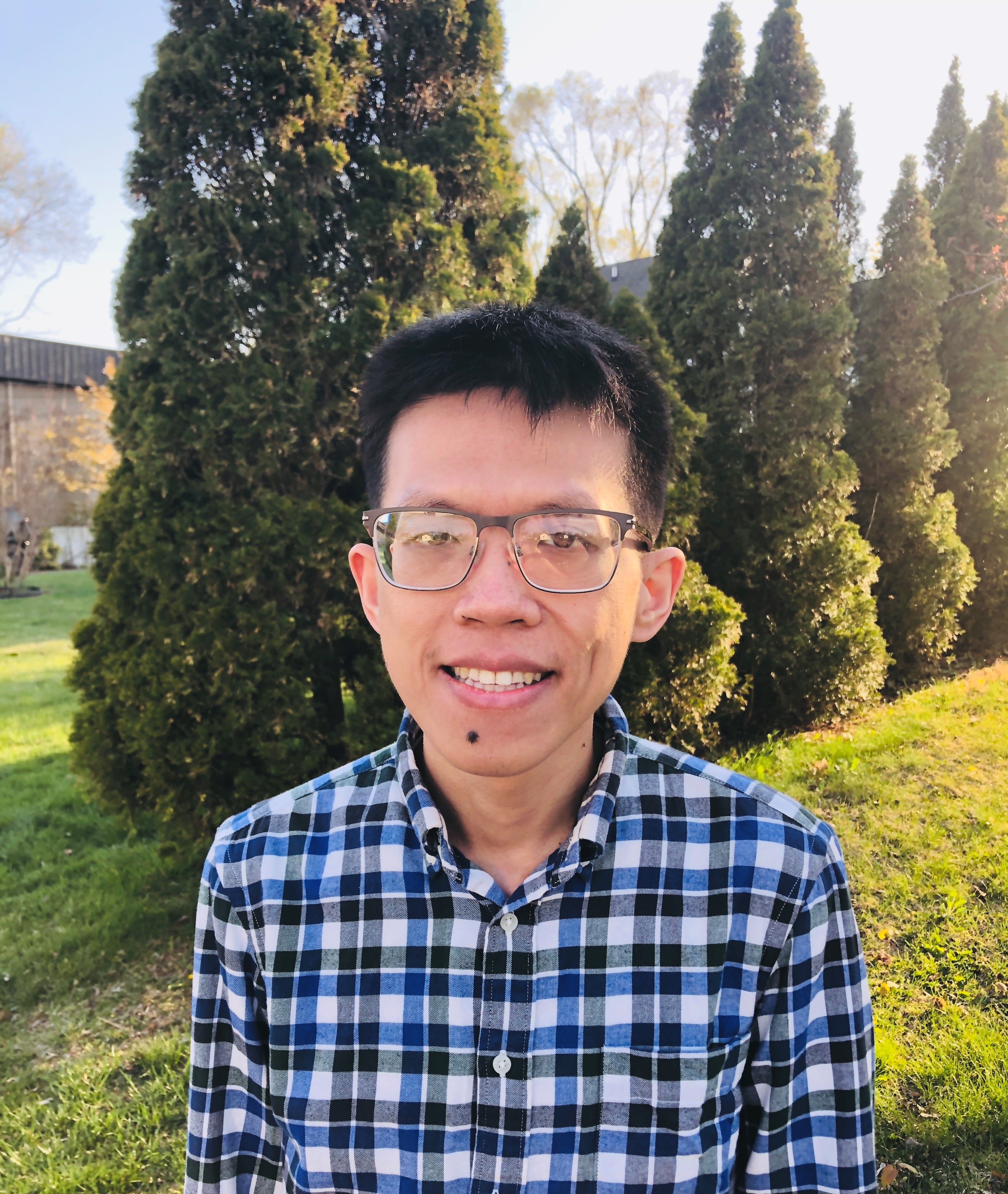
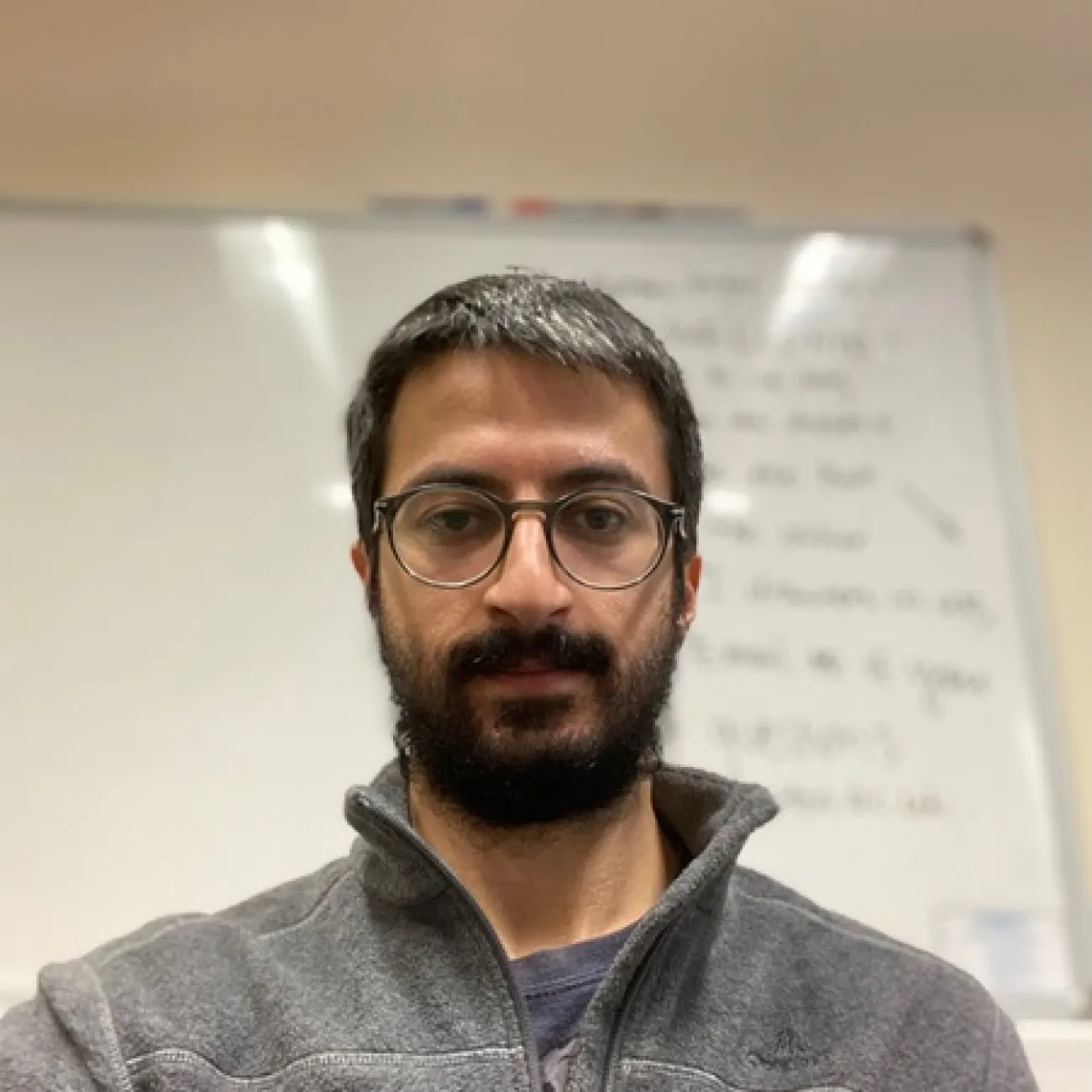
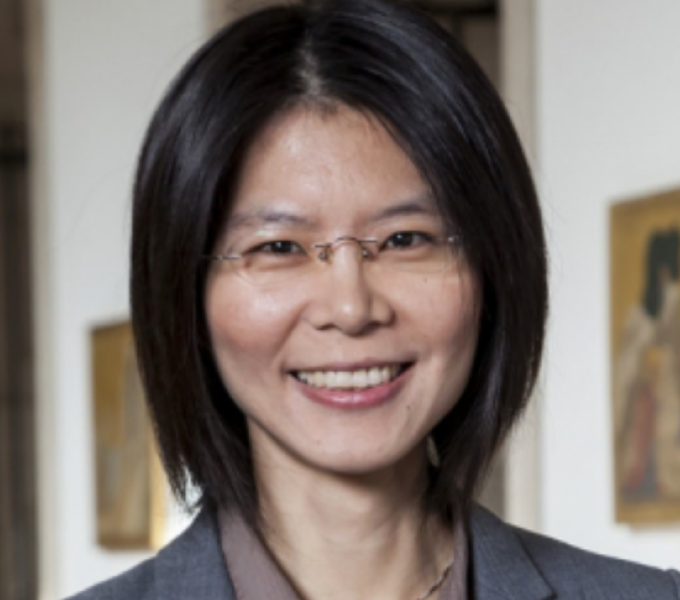
Richard Breen is a Professor of Sociology and Fellow of Nuffield College at the University of Oxford. His career includes prestigious roles such as William Graham Sumner Professor of Sociology at Yale (2007–15), Official Fellow at Nuffield College (2001–06), and Professorial positions at the European University Institute and Queen's University Belfast. He specializes in social inequality, mobility, and quantitative methods. Research focuses on intergenerational mobility, causal inference in observational data, and the intersection of demography and inequality. Notable contributions include methodologies for analyzing sibling data and addressing collider bias. Awards: Fellow of the British Academy, Member of the Royal Irish Academy, and Member of Academia Europaea. Teaching & Advising: Supervises doctoral/master's students on inequality, mobility, and methodological topics. Emphasizes causal effects estimation and quantitative techniques. Labs/Teams: No specific lab mentioned, but collaborates widely on international projects analyzing inequality trends and policy impacts.
Georgina Hall serves as Assistant Professor of Decision Sciences at INSEAD, holding the prestigious Patrick and Valentine Firmenich Fellowship for Business and Society. She officially joined the institution in September 2019 after completing a postdoctoral position at INRIA's DYOGENE team from January to September 2019. Her educational background includes a PhD from Princeton University's Department of Operations Research and Financial Engineering (2018), where she was a Gordon Y.S. Wu fellow under Professor Amir Ali Ahmadi's supervision. She earned both her Bachelor of Science (2011) and Master of Science (2013) from Ecole Centrale Paris, where she was valedictorian. Dr. Hall's research focuses on optimization theory, particularly polynomial optimization , semidefinite programming , and convex relaxations of NP-hard problems . Her work bridges theoretical mathematics with practical applications in business decision-making. She has made significant contributions to shape-constrained regression using sum of squares polynomials, demonstrating how semidefinite programming hierarchies can effectively fit shape-constrained polynomials to noisy data. Her recent publications reveal a research trajectory that increasingly connects optimization theory with machine learning applications and supply chain decision-making. The 2025 Operations Research paper on shape-constrained regression represents her theoretical contributions, while the Management Science paper demonstrates practical business applications of her optimization framework. Her scientific recognition includes: Médaille de l'Ecole Centrale from the French Académie des Sciences Princeton School of Engineering and Applied Sciences Award for Excellence 2016 Informs Computing Society Prize for Best Student Paper Multiple teaching awards from Princeton University Patrick and Valentine Firmenich Fellowship for Business and Society Dr. Hall teaches Probability and Statistics at the PhD level and has received significant recognition for her teaching excellence, including the Princeton University's Engineering Council Teaching Award and the Excellence in Teaching Award from the Princeton Graduate School. Her research has practical applications in areas including optimal transport maps for color transfer tasks and estimating optimal value functions for conic programs, with real-time applications in inventory management contract negotiation.
Professor Li-Chun Zhang is a faculty member in Social Statistics at the University of Southampton. His research focuses on graph sampling, analysis of integrated data, statistical uses of administrative sources, population size estimation, and machine learning. Research Interests Graph sampling Analysis of integrated data Statistical uses of administrative sources Population size estimation Machine learning Recent Research Trends Recent publications highlight his work on improving road safety data in Oman, census methodologies, graph spatial sampling, categorical linkage-data analysis, and robust capture-recapture techniques using administrative data. His research emphasizes statistical innovation in multisource data integration and machine learning applications. Supervision Jillian Delaney (PhD Social Stats & Demo PT) Luciano Perfetti Villa (PhD Social Stats & Demo) Dadi Liu (PhD Social Stats & Demo) Contact Email: L.Zhang@soton.ac.uk
Pei-Hsun Hsieh is a Postdoctoral Researcher at the University of Pennsylvania, focusing on political and social behavior in democratic societies. They hold a Ph.D. in Political Science from Stony Brook University (2023) and specialize in examining public perceptions of government influence, electoral behavior, and policy support for inequality and climate change mitigation. Doctoral Degree: Political Science, Stony Brook University, 2023 Dr. Hsieh combines theory-driven and data-driven methodologies, including natural language processing, statistical modeling, economic games, and agent-based simulations. Their work explores the intersection of political economy, social norms, and environmental policy through large-scale social media analysis and behavioral experiments. Key research trends include analyzing how crises like pandemics affect climate change discourse, redistributive preferences under merit-based systems, and the role of emotions in policy debates. Publications span journals like PNAS, Journal of Environmental Psychology, and Humanities and Social Sciences Communications. Teaching includes Computational Text Analysis for Social Sciences , covering machine learning and NLP techniques. Current projects investigate plant-based diets as climate solutions, sanction effectiveness in international politics, and the dynamics of norm strength in cooperative settings. Affiliated with the Center for Social Norms and Behavioral Dynamics and the Philosophy, Politics, and Economics program at UPenn, they apply computational methods to understand political behavior, policy preferences, and institutional trust.
Dr. Teresa Brunsdon is a Senior Lecturer in the Department of Statistics at the University of Warwick, part of the Faculty of Science. She holds a PhD in Time Series Analysis of Compositional Data from the University of Southampton (1997) and has over three decades of academic experience, including 31 years at Sheffield Hallam University before joining Warwick in 2019. Education: BSc in Mathematics Sciences, Loughborough University MSc in Applied Statistics, University of Southampton PhD in Time Series Analysis of Compositional Data, University of Southampton Research Interests: Time Series Analysis Compositional Data Analysis Machine Learning Applications (e.g., interpretable classifiers) Statistical Methodology Education Technology in Data Science Teaching: Delivers core modules such as Introduction to Statistical Practice (ST952) and Designed Experiments (with Advanced Topics) (ST305/ST410) at Warwick. Publications: Focuses on time series methodologies, compositional data, and applications in social media and language processing (e.g., Sinhala documents). Recent work explores ethical AI and interpretable machine learning. Affiliations: Office: MSB 2.11 Email: teresa.brunsdon@warwick.ac.uk Office Hours: Monday 16:30–17:30 and Thursday 11:30–12:30
Paul A. Parker is an Assistant Professor in the Department of Statistics at the University of California, Santa Cruz, specializing in Bayesian methodology, official statistics, and modeling of dependent data structures. His work bridges advanced statistical theory with critical applications in government surveys, environmental monitoring, and social sciences. Education: Ph.D. in Statistics, University of Missouri, 2021 M.A. in Statistics, University of Missouri, 2018 B.S. in Applied Mathematics, University of Idaho, 2014 Dr. Parker's research integrates Bayesian frameworks with modern machine learning to address challenges in spatial, temporal, and functional data analysis. He develops innovative models for small area estimation under informative sampling, with significant contributions to official statistics through applications like the U.S. Census Bureau's Household Pulse Survey and soil health assessment protocols. His methodological work enables more accurate analysis of complex survey data while accounting for heteroskedasticity and non-Gaussian structures. Recent publications reveal a strong pattern of applying spatial deep learning and heterogeneous modeling to environmental monitoring (soil carbon mapping) and government statistics (health insurance coverage estimation). His work consistently focuses on computational efficiency for real-world implementation in federal statistical systems. Scientific Awards: U.S. Census Bureau Dissertation Fellowship University of Missouri Population, Education and Health Center Interdisciplinary Doctoral Fellowship Dr. Parker actively mentors graduate researchers including current PhD candidates Ethan Pawl, Qi Wang, and Sho Kawano, and former MS students Adam Slivinsky and Jacobo Pereira-Pacheco. His research is supported by grants from federal statistical agencies, particularly the U.S. Census Bureau, focusing on improving small area estimation methodologies for national surveys. He collaborates extensively with agricultural scientists through the Soil Health Assessment Protocol and Evaluation (SHAPE) project, developing statistical frameworks for dynamic soil health indicators. His work with the U.S. Census Bureau's Center for Statistical Research and Methodology continues to influence methodological standards for official statistics, particularly in longitudinal survey design and spatial modeling of environmental data.
Dr. Maciej Beręsewicz serves as a Professor in the Department of Statistics at Poznan University of Economics and Business (UEP), holding key institutional roles including Member of the Competition Committee for "Mini-grants for Research," University Evaluation Team, and Rector's Committee for Academic Teacher Awards. His office is located in Building C, Room 406, with contact email Maciej.Beresewicz@ue.poznan.pl and phone 61 854 36 80. His research centers on representative methods, non-random samples, public statistics, big data applications, and statistical package development. He specializes in methodological innovations for non-probability surveys, capture-recapture modeling, and integrating administrative/online data sources into official statistics frameworks. Recent publications demonstrate a cohesive trajectory in survey methodology, particularly calibration techniques for probability/non-probability sample integration, quantile estimation, and job vacancy analysis using online advertisements. His R packages ( nonprobsvy , singleRcapture ) operationalize these methods for practical statistical implementation. Prof. Beręsewicz maintains significant external engagements through the Central Statistical Office of Poland (Real Estate Price Statistics Team, Quality Group), Baltic-Nordic-Ukrainian Network on Survey Statistics (Scientific Committee), and international bodies including the International Association of Official Statisticians and International Association of Survey Statisticians.
Luis Sanchez Fernandez is a Full Professor at the Department of Telematics Engineering, Carlos III University of Madrid. His research focuses span Smart Cities, Semantic Web, and Distributed Systems. Contact information includes email luis.sanchez@uc3m.es and office location 4.1.F08 in Leganés. His research program integrates Blockchain Governance , Urban Mobility Analysis , and Complex Systems Modeling . Recent work examines approval-based voting mechanisms in decentralized networks and fractional transport equations for physical simulations. Publications demonstrate a strong emphasis on fair algorithm design for societal applications. Key article themes show convergence of Smart City Data Integration Multiwinner Election Algorithms Cellular Automaton Dynamics Semantic Annotation Frameworks As Deputy Director of Teaching Affairs, he leads curriculum innovation in Telematics Engineering. His educational background includes a Doctorate from Universidad de Salamanca, focusing on Wikipedia as a teaching resource in higher education.
Christoforos Anagnostopoulos serves as an Honorary Senior Lecturer in the Department of Mathematics at Imperial College London's Faculty of Natural Sciences, teaching advanced courses in statistical modelling, graphical modelling, and official statistics while concurrently acting as Chief Data Scientist for the streaming data analytics start-up ment.at. His academic foundation includes: BA Hons in Mathematics from Pembroke College, Cambridge University (2003) MSc in Learning from Data from the University of Edinburgh's Informatics School MSc in Logic and Algorithms from the University of Athens PhD in "A statistical framework for streaming data analysis" from Imperial College London His research program specializes in computational statistics with emphasis on streaming data analysis, encompassing streaming classification, adaptive filtering, stochastic approximation, graphical modelling, and online non-parametric methods. These methodologies bridge theoretical statistics with practical applications in machine learning, artificial intelligence, and official statistics for measuring societal well-being. He maintains active affiliations with Imperial's Dynamic Networks, Machine Learning, and Statistics in Finance research groups, complemented by private consultancy work in security and e-commerce sectors.
Emmanuel Sirimal Silva is a PGR student affiliated with the Business School at Bournemouth University. His primary research focuses on time series analysis and forecasting using Singular Spectrum Analysis (SSA). He previously served as a part-time Lecturer in Statistics and Econometrics (September 2013–September 2015) and led the BU Statistical and Mathematical Support Centre (June–September 2015). Silva holds an MSc in Risk Management (University of Southampton, 2012) and a BSc in Economics and Actuarial Science (University of Southampton, 2011). His research spans applications of SSA in diverse domains, including tourism economics, energy consumption, and financial markets. Notable contributions include forecasting U.S. tourist arrivals, gold prices, and post-2008 recession trade dynamics. Silva has presented at international conferences such as the 34th International Symposium on Forecasting (Rotterdam, 2014) and collaborated on grants like the Santander Universities-funded project on probabilistic stochastic forecasting of Brazilian electricity prices. Teaching roles include unit leadership for courses like 'Basic Statistical Techniques' and 'Econometric Techniques' at the undergraduate level, alongside lecturing in postgraduate programs. His work bridges academic research with practical applications in risk management and data-driven decision-making.
Francesco Pantalone is a Lecturer in Official Statistics at the University of Southampton, affiliated with the Statistical Sciences Research Institute (S3RI) and the Methodological Innovation group. His research focuses on survey methodology, official statistics, and environmental surveys, with particular attention to sampling design impacts and variance estimation in complex surveys. He teaches courses including STAT1003, STAT2007, STAT6125, and RESM6007, covering quantitative methods and data analytics. His recent work includes advancements in spatial sampling algorithms, M-quantile regression applications, and census coverage estimation. Supervising PhD student Jillian Delaney, his contributions span both methodological development and practical applications in official statistics.
Yu-Run Lin is an Associate Professor at the University of Pittsburgh's School of Computing and Information, holding secondary appointments in the Political Science and Computer Science departments. He serves as Research & Academic Director at the Institute for Cyber Law, Policy, and Security (Pitt Cyber). His research focuses on computational social science, social/political networks, and visual analytics for network data, with applications in disaster response, misinformation detection, and public algorithm accountability. He leads the PICSO Lab and has contributed to over 100 publications across top venues like ICWSM, WWW, and IEEE Transactions. Key awards include the Best Paper Award (2020) and Honorable Mention (VAST 2014). Education: PhD in Informatics, Arizona State University (2010). Postdoctoral training at Harvard University and Northeastern University. Research Interests: Lin investigates how groups react to social/political events using social media, cellphone data, and mixed methods. His work bridges computational methods with social theory to understand network dynamics, algorithmic fairness, and crisis communication. Recent projects include modeling food insecurity, analyzing conspiratorial narratives, and developing tools like FairSight and TribalGram. Grants & Awards: NSF-funded work on digital accountability of public officials, grants for opioid overdose forecasting (CASTNet), and support from the KDD Humanitarian Mapping Workshop. Awards include the 2020 Best Paper Award and multiple conference recognitions. Labs & Teams: Directs the PICSO Lab, collaborating on AI ethics, disaster analytics, and computational social science. Engages with interdisciplinary teams in Pitt Cyber and the Collaboratory Against Hate.
Alessandro Polli is a confirmed researcher (Ricercatore confermato) in Economic Statistics at the Department of Social and Economic Sciences, Sapienza University of Rome. He teaches three courses: Quantitative Methods for Time Series Analysis (1st semester), Economic Statistics (2nd semester), and Statistical Methods and Models for Time Series and Panel Data (2nd semester). His office is located in room 108 of the department, with weekly office hours held every Wednesday from 2:00 PM to 5:00 PM. Polli holds a PhD in Economic Analysis, Mathematics and Statistics of Social Phenomena from Sapienza University of Rome. His academic foundation combines rigorous statistical training with social science applications, enabling interdisciplinary research at the intersection of data science and socioeconomic analysis. His primary research focuses on Economic Statistics with specialized expertise in Time Series Analysis and Text Mining methodologies. Polli applies these techniques to examine migration patterns, gender statistics, security perception, labor market dynamics, and political discourse. His work bridges quantitative methods with social science inquiry, particularly through the analysis of textual data from social media, official statistics, and political communications to derive actionable socioeconomic insights. Analysis of his recent publications reveals a consistent trajectory in developing and applying text mining techniques to social phenomena. His research demonstrates increasing sophistication in emotional text mining, temporal validity assessment of sentiment analysis, and integration of machine learning with traditional statistical models. Key thematic clusters include migration discourse in European elections, government crisis dynamics, vaccine sentiment analysis, and automation impacts on Italian labor markets, all characterized by methodological innovation in handling complex textual datasets. Professional engagements include: Consultant to the Historical Research Office of the Bank of Italy Consultant to the Presidency of the Council of Ministers - Guarantee Commission for Statistical Information Member of the Istat quality circle for territorial statistics Referee for international scientific journals including Lexicometrica and Social Indicators Research While specific student advising activities are not documented in available sources, his institutional roles indicate significant contributions to national statistical policy and quality assurance. His collaborative work with major Italian institutions demonstrates applied research impact on official statistics and policy development, particularly in migration and territorial statistics.
Lingxiao Wang is an Assistant Professor in the Data Science department at New Jersey Institute of Technology (NJIT). His academic background includes a Ph.D. in Computer Science from UCLA (2021), an M.S. in Statistics from the University of Washington (2016), and a B.S. in Mathematics and Applied Mathematics from the University of Science and Technology Beijing (2014). His research interests align with his interdisciplinary training, likely focusing on computational methods, data analysis, and statistical modeling. No specific publications or awards are listed in the provided information. No advising, grants, or lab affiliations are mentioned. For further details, his contact information is available via NJIT's official channels.
Dr. HRMJ (Ron) Wehrens is the Business Unit Manager of Biometris at Wageningen University & Research. He holds a PhD in Chemometrics from Radboud University Nijmegen (1994). Previously, he served as an assistant and associate professor at the Universities of Twente and Nijmegen, and led the Biostatistics and Data Analysis group at Fondazione Edmund Mach in Italy (2010–2014). His expertise spans biometrics, statistical methods, multivariate analysis, algorithms, and software engineering, focusing on quantifying biological processes through advanced data analysis techniques. Expertise Areas: Classification & Cluster Analysis Regression Analysis Multispectral Imagery Algorithm Development Statistical Modeling Professional Availability: Full-time role with availability across all weekdays (see schedule details on official profile).