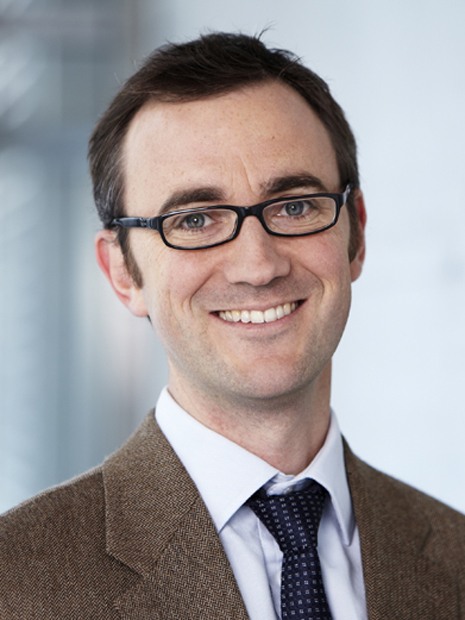
Dr. Adam Softley-Brown is a Research Fellow in Particle Physics at the University of Sheffield 's School of Mathematical and Physical Sciences. His work focuses on experimental particle astrophysics and direct dark matter searches using liquid-xenon detectors within the LZ collaboration and XLZD collaboration . Operates at Sanford Underground Research Facility (USA) Develops next-generation multi-tonne liquid xenon detectors for dark matter and neutrino physics Advocates for UK hosting of future experiments at Boulby Underground Laboratory His research involves minimizing radiation backgrounds through material selection and veto systems to enhance sensitivity for dark matter and neutrinoless double-beta decay detection. Recent publications highlight advancements in signal processing , calibration techniques , and detector design for liquid xenon time projection chambers. Key collaborations include XENON and DARWIN projects. Contact: adam.m.brown@sheffield.ac.uk
Milan Rakita is an Associate Professor of Practice in the School of Engineering Technology at Purdue University. His office hours are held in Knoy 140 on Mondays (10:30–12:30), Tuesdays (10:30–12:30), Wednesdays (10:30–12:30), and Thursdays (1:30–3:30), with additional availability by appointment. He joined Purdue in 2014 and has held roles as Clinical Assistant Professor and Visiting Instructor. Prior to Purdue, he was a researcher at the Vinca Institute of Nuclear Sciences in Serbia and held tenure-track positions at the University of Novi Sad. Education PhD , Mechanical Engineering Technology, Purdue University (2013) MSc , Mechanical Engineering, University of Novi Sad, Serbia (2005) MEng , Mechanical Engineering, University of Novi Sad, Serbia (2000) Research Focus Rakita's work centers on optimizing industrial manufacturing processes, with emphasis on: Machining simulation and troubleshooting Metal forming techniques Solidification processing Ultrasonic-assisted manufacturing (e.g., shot peening, extraction) Die-casting efficiency (lubrication, cooling) His research bridges computational modeling, experimental validation, and industrial implementation to enhance sustainability and efficiency. Publications & Recognition Rakita has co-authored over 30+ publications spanning materials science, manufacturing, and engineering education. Key trends include ultrasonic processing (40% of recent works), die-casting optimization (30%), and educational pedagogy (15%). He received the Best Paper Award from the American Foundry Society (2013) for work on magnesium alloy solidification. Industry & Consulting He has led projects with major automotive firms including: Stellantis : Cryogenic machining for aluminum/steel tool life (2020–2021) Fiat Chrysler : Ultrasound-assisted die casting, pulsed lube systems (2015–2017) 30+ projects via Purdue Technical Assistance Program (2007–2010) covering stress analysis, tool design, and process optimization. Professional Affiliations American Foundry Society American Welding Society
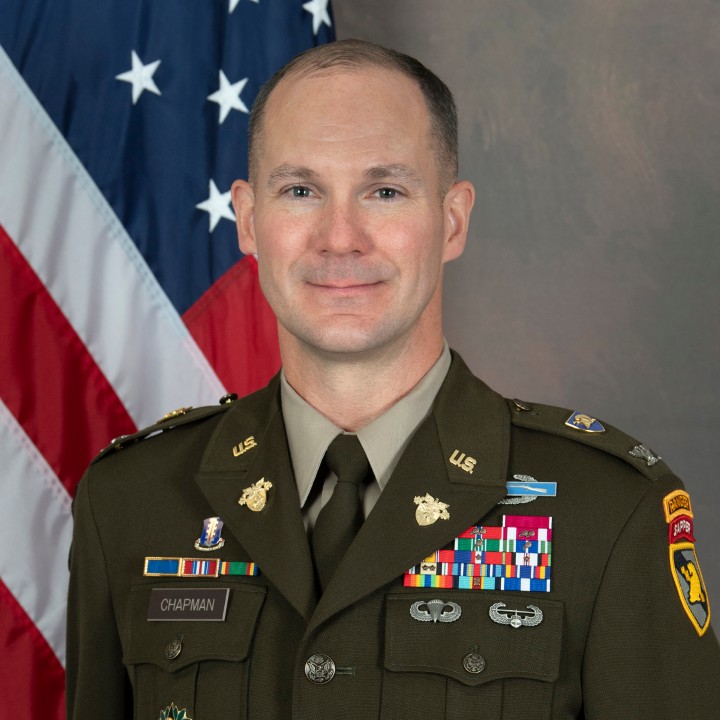
Pete Chapman (COL) is a United States Military Academy graduate (1998) with a PhD in Nuclear Engineering from North Carolina State University. Currently serving as Department Head at West Point since 2024, he has held academic roles including course director (2010-2014) and core physics program director (2019). BS Engineering Physics (West Point) MS Nuclear Science and Engineering (MIT) PhD Nuclear Engineering (NC State) COL Chapman's research focuses on nuclear material detection , particle identification methodologies , and machine learning applications in nuclear security contexts. His recent work explores advanced algorithms for radiation sensor optimization and fissile material imaging. Publications trend analysis reveals consistent focus on machine learning integration in nuclear detection systems (2019-2022), with increasing emphasis on multi-detector array optimization and unsupervised classification techniques. Scientific Awards: Legion of Merit Bronze Star (with two oak leaf clusters) Meritorious Service Medal (with two oak leaf clusters) Combat Infantry Badge Parachutist Badge Air Assault Badge Ranger Tab Sapper Tab
Neil G Harris is a Professor in the Department of Neurosurgery at the University of California, Los Angeles (UCLA) School of Medicine . His research focuses on traumatic brain injury (TBI) , neuroimaging , and rehabilitation strategies , with particular emphasis on biomarker development , functional connectivity , and metabolic interventions . Current NIH-funded projects: R01NS116383 (Co-PI), UH3NS106945 (PI), UH3NS106945 (PI) Key collaborations: Richard Staba (UCLA), Fernando Gomez-Pinilla (UCLA), Paul Vesna (UCLA) Research interests span neurotrauma , neuroplasticity , and advanced neuroimaging techniques . His work integrates multicenter preclinical studies through consortia like TOP-NT and EpiBioS4Rx . Recent publications highlight MRI harmonization , BDNF mimetics , and epileptogenesis biomarkers . Grants include continuous NIH support since 2007, with leadership roles in U01NS082320 and R01NS055910 . He contributes to neurotrauma common data elements and preclinical standardization .
Dr Monica Rivas Casado is a Reader in Environmental Systems Engineering at the Cranfield Environment Centre , School of Water, Energy and Environment, Cranfield University. With a PhD in applied geostatistics and an MSc in Environmental Water Management, she specializes in UAV-based environmental monitoring systems for flood risk, climate disasters, and ecosystem services quantification.
Charlotte BECQUART is Professor at Centrale Lille Institute, University of Lille, France, and member of the Physical Metallurgy and Materials Engineering team within the Materials and Transformations Unit (UMET, CNRS UMR 8207). Since 1993 she has conducted research on atomic-scale modeling of irradiation damage in metallic alloys using ab initio, molecular dynamics and kinetic Monte Carlo methods. Education & Background Metallurgy and thermodynamics applied to development, modeling and surface treatments. Working at École Nationale Supérieure de Chimie de Lille since 1993. Research Focus Her work centers on understanding irradiation damage at the atomic scale, particularly embrittlement mechanisms in Pressurized Water Reactor (PWR) vessel steels and materials for fusion reactors such as tungsten divertor components. She employs advanced simulation techniques including ab initio calculations, molecular dynamics and kinetic Monte Carlo methods to study deformation, phase change and damage phenomena. Research Trends Recent publications demonstrate a strong emphasis on multi-scale modeling of irradiation effects in metallic systems, statistical analyses of displacement cascades, nanocavity diffusion in tungsten, radiation-induced segregation at grain boundaries, and development of machine-learned interatomic potentials for complex alloys. The research spans nuclear materials, computational materials science and advanced alloys for energy applications. PhD Supervision She has successfully supervised 12 defended theses since 2012 and currently co-directs 3 ongoing doctoral projects (2022–2025) focusing on mesoscopic scale modeling of irradiated steels, multi-scale modeling of shape memory alloys and oxide-cladding interface characterization for future nuclear fuels. Affiliations & Teams UMET – Materials and Transformations Unit, CNRS UMR 8207, University of Lille. Physical Metallurgy and Materials Engineering research team. Collaborates with EDF, CEA and international fusion programs.
Lydell Andree Wiebe is a Professor in the Department of Civil Engineering at McMaster University's Faculty of Engineering. He specializes in earthquake engineering, seismic design of steel structures, and resilient infrastructure systems. His academic credentials include a BASc (2005) and PhD (2013) in Civil Engineering from the University of Toronto, and an MSc in Earthquake Engineering (2008) from the ROSE School in Pavia, Italy. His research focuses on developing innovative structural systems such as controlled rocking braced frames and masonry walls to enhance seismic resilience. Key areas include performance-based design, structural dynamics, and risk assessment of infrastructure under seismic loads. He actively contributes to professional committees, including the CSA S16 Technical Committee (Steel Structures) and the Canadian Association for Earthquake Engineering. Dr. Wiebe's recent publications (2020–2025) emphasize seismic loss mitigation, optimization of controlled rocking systems, and machine learning applications in structural engineering. His work integrates experimental testing with advanced computational models to improve design methodologies for earthquake-resistant structures. Awards & Honors: GJ Jackson Fellowship Award (2005) HA Krentz Research Award (2015) McMaster Faculty of Engineering Teaching Excellence Award (2017) McMaster Students Union Teaching Award (2014, 2017) He teaches courses including Steel Structures , Seismic Design and Analysis , and Introduction to Civil Engineering , reflecting his commitment to education and mentorship.
Polly Fordyce is an Associate Professor at Stanford University with joint appointments in the Departments of Bioengineering and Genetics . She is a Chan Zuckerberg Biohub Investigator , Sarafan ChEM-H Institute Scholar , and member of interdisciplinary institutes including Bio-X , Wu Tsai Neurosciences Institute , and SPARK at Stanford . Ph.D. in Physics from Stanford University (2007) B.A. in Physics and Biology from University of Colorado at Boulder (2000) Postdoctoral work in Biophysics at University of California San Francisco (2014) Her research focuses on microfluidic platform development for quantitative biophysics and biochemistry studies. Key projects include: SPARKfold for protein unfolding kinetics STAMMPPING to map activation domain-coactivator interactions MRBLEs for spectral multiplexing in assays Dropception for high-throughput droplet sorting Her 15 most recent publications span protein stability analysis , transcription factor specificity , droplet microfluidics , organoid phenotyping , and plant biosynthesis pathway discovery . These works frequently employ machine learning and multiplexed assays to address biophysical questions. Scientific recognition includes: 2024 President's Award for Excellence Through Diversity 2023 Eli Lilly Award in Biological Chemistry 2023-2028 NIH Pioneer Award (DP1) 2017-2022 Chan Zuckerberg Biohub Investigator 2016-2021 NIH New Innovator Award (DP2) She advises 33 doctoral students and postdoctoral researchers, and leads the Stanford Microfluidics Foundry (2015-present).
Son Dang is an Assistant Professor of Petroleum and Geological Engineering at the University of Oklahoma , focusing on advanced energy systems and subsurface fluid dynamics. His research bridges experimental and computational techniques to address critical challenges in energy production and carbon neutrality. Education: B.S., Petroleum Engineering, University of Oklahoma, 2012 M.S., Petroleum Engineering, University of Oklahoma, 2015 Ph.D., Petroleum Engineering, University of Oklahoma, 2019 Research Interests span material characterization, petrophysics, enhanced oil recovery (EOR), geo-storage, and mass transport in nanoporous media. His work emphasizes hydrogen storage, CO2 sequestration, and unconventional reservoir optimization. Scientific Contributions include pioneering studies on hydrogen diffusivity in depleted reservoirs, CO2 injection-induced geomechanics, and machine learning applications for rock typing. He employs nuclear magnetic resonance (NMR) spectroscopy and molecular simulations to unravel fluid-rock interactions at microstructural scales. Publications reveal a focus on energy transition technologies, with 15 recent works covering topics from supercritical CO2 fracturing to NMR-based diffusion analysis. These studies highlight his expertise in integrating experimental data with computational models to improve subsurface energy systems.
Prof. Dr. Jess Snedeker is a Professor at ETH Zurich and the University of Zurich, where he holds joint chairs in the Department of Health Sciences and Technology (ETH) and the Department of Orthopedics (UZH). He leads the Laboratory for Orthopedic Biomechanics, focusing on interdisciplinary research in musculoskeletal health. His research spans three primary domains: (1) mechanical and biological mechanisms of tendon disease and healing, (2) micro-scale cell-biomaterial interactions for therapeutic applications, and (3) clinical biomechanics for innovating orthopedic implant design. This work integrates engineering principles with medical science to address complex challenges in tendon repair and regenerative medicine. Snedeker's recent publications (2023–2025) emphasize tendon biomechanics , bioprinting , surgical implants , and AI-driven pathology analysis , reflecting a strong focus on translational solutions for musculoskeletal disorders. Recurring themes include growth factor therapies, biomaterial scaffolds, and computational modeling.
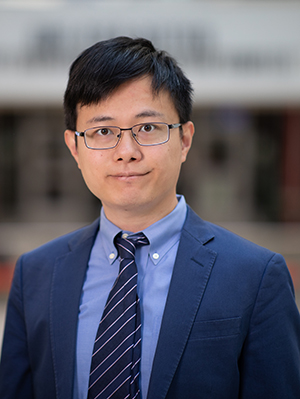
Liu Yang is an Assistant Professor in the Department of Nuclear Engineering at Texas A&M University, affiliated with the Scientific Machine Learning for Advanced Reactor Technologies (SMART) Lab. His academic work focuses on multiscale modeling, uncertainty quantification, and intelligent control systems for nuclear reactors. Ph.D., North Carolina State University (2018) M.S., China Institute of Atomic Energy (2013) B.S., Tsinghua University (2010) His research interests emphasize advanced computational methods for reactor systems, data-driven engineering decision-making, and machine learning applications in nuclear technology. While his primary affiliation is in nuclear engineering, his Google Scholar publications suggest interdisciplinary work spanning skeletal biology and molecular signaling pathways. Recent publications highlight trends in developmental biology, including studies on Notch signaling, cartilage homeostasis, and genetic factors in scoliosis. These works span both computational and experimental approaches, with applications in disease modeling and tissue repair mechanisms. American Nuclear Society American Society of Mechanical Engineers
Dr Chi-Ho Ng is a Research Fellow at the School of Mechanical and Mining Engineering , The University of Queensland . His research focuses on advanced materials processing, particularly in additive manufacturing and surface treatments of titanium alloys. Bachelor (Honours) in Production Technology, Hong Kong Polytechnic University Masters in Manufacturing Technology, Cranfield University PhD in Materials Engineering, The University of Queensland His research interests include: Additive manufacturing techniques (wire arc, laser powder bed fusion) Hot isostatic pressing for defect elimination and microstructure control Laser-based surface modification (nitriding, alloying) Biomedical applications of titanium alloys and coatings Use of machine learning for porosity analysis in 3D-printed materials Recent publications highlight his work on β-fleck defect characterization, cryogenic coolant applications, and machine learning-assisted porosity analysis in titanium alloys. He actively supervises projects related to piezoelectric materials for biomedical applications and has received funding from the Australian Nuclear Science and Technology Organisation for process optimization research.
Leif Handberg is an Associate Professor at KTH Royal Institute of Technology's Division of Media Technology and Interaction Design. He serves as course responsible and examiner for multiple courses including Introduction to Media Technology (DM1581), Engineering Training Courses (DM1998, DM1999), and various degree projects in Computer Science and Media Technology. His research explores the intersection of media technology, human-computer interaction, and cultural experiences. Key focus areas include presence production systems, telepresence applications, mediated performances, collaborative workspaces, and cultural heritage technologies. His work often involves experimental approaches to remote interaction and public engagement through technology. Publications demonstrate evolving research from industrial printing technologies (1990s) to advanced mediated presence systems (2010s), with recent works focusing on artistic applications in unique environments like nuclear reactors and cultural heritage sites. Awards: First prize, Nodem Award 2008 for Digital Excellence in Museums Communication (The Mediated Museum Project) Handberg contributes to KTH's experimental spaces including the R1 Experimental Performance Space and Presence Lab, where he has curated impact events like TEDxKTH conferences and artistic installations such as Opera Mecatronica and Vibragera performances.
Amy Herr is the John D. & Catherine T. MacArthur Professor in the Department of Bioengineering at the University of California, Berkeley. She leads the Herr Lab, affiliated with the Biological Systems & Engineering Division at Lawrence Berkeley National Laboratory, the Chan Zuckerberg Biohub, QB3, and the Jacobs Institute of Design Innovation. Research Interests: The Herr Lab focuses on engineering tools for single-cell and sub-cellular analysis, combining bioengineering, chemical engineering, and analytical chemistry to address challenges in clinical diagnostics, proteomics, and bioanalytical separations. Their work emphasizes scale-dependent physics, "mathematization" of biology, and AI-driven biomedical innovation. Scientific Awards: Visionary of the Year award (Berkeley Chamber of Commerce) National Academy of Inventors Fellow Grants & Collaborations: Herr is a Chan Zuckerberg Biohub Investigator, receiving unrestricted funding for biomedical research. She co-leads the Bakar BioEnginuity Hub, a campus-wide initiative for STEM entrepreneurship, and contributes to N95Decon research consortium on mask decontamination.
Aslak Joutsi Johannes Fellman is a Doctoral Researcher in Materials Physics at the University of Helsinki, affiliated with the Doctoral Programme in Materials Research and Nanosciences. His work focuses on computational materials science, particularly radiation damage in nuclear materials like tungsten and iron. Active participant in the INNUMAT project (European Commission, 2022–2026) Recipient of Kulturfonden grants (2023–2024) Research interests span multiscale modeling, radiation-induced defect formation, and machine learning applications in materials science. Recent publications emphasize molecular dynamics simulations of radiation damage mechanisms in ferromagnetic and liquid iron, as well as tungsten under cascade overlap with voids and vacancy clusters. His scholarly output includes three peer-reviewed articles since 2019, with contributions to Journal of Physics: Condensed Matter and Journal of Nuclear Materials . Collaborations involve researchers from Finland, Sweden, and international institutions, utilizing computational methods to advance understanding of material behavior under extreme conditions.