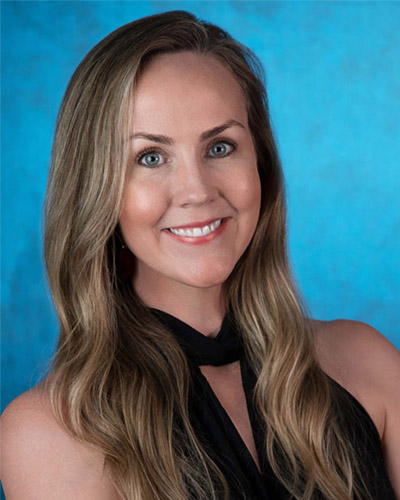
David Hanff is a Researcher at Erasmus MC within the Department of Radiology & Nuclear Medicine. His work focuses on medical imaging applications in orthopedics, oncology, and artificial intelligence. Research Interests: Development of AI-driven segmentation tools for soft-tissue tumors Radiomics analysis in bone and adipose tissue tumors MRI applications for cartilage and hip morphology studies Validation of automated diagnostic imaging systems Article Trends: Recent publications highlight expertise in combining radiomics, deep learning, and multi-center validation frameworks to improve tumor differentiation and segmentation accuracy. Collaborations: Works extensively with institutions across Europe on automated imaging methods, as evidenced by international co-authorships.
Michelle L Halls is an Associate Professor at Monash University's Monash Institute of Pharmaceutical Sciences, where she leads the Spatial Organisation of Signalling Laboratory. A Viertel Senior Medical Research Fellow (2020-2025) and former NHMRC RD Wright Fellow (2014-2019), her career spans postdoctoral training at the University of Cambridge after completing her PhD in Molecular Pharmacology at Monash University (2007). Her research focuses on G protein-coupled receptors (GPCRs), investigating how their spatial organization within protein scaffolding networks enables highly localized signaling in subcellular compartments. This work has driven innovations in targeted drug development that surpass traditional cell-surface receptor therapies. Current projects explore GPCR dynamics in metastatic cancer, nuclear hormone receptor activation, and lipid-binding protein interactions. Key publications in Nature , Science Advances , and Nature Chemical Biology highlight her contributions to spatial proteomics and AI-driven drug discovery. Her work aligns with UN Sustainable Development Goals through biomedical advancements. Awarded: ASCEPT Achievement Award (2024), British Pharmacological Society Geoffrey Burnstock Prize (2023), Faculty of Pharmacy and Pharmaceutical Sciences Future Research Leader Award (2019), and Young Investigator Award (2012). Michelle actively organizes academic events like the ASCEPT Drug Discovery Symposia and chairs the Her Research Matters Collective for gender equity in senior academic roles. Her methodological expertise combines high-resolution microscopy, mass spectrometry, and advanced drug delivery systems.
Francesca Pastore is a Researcher at the Royal Holloway, University of London , contributing to the Centre for Particle Physics and Astronomy and Experimental Particle Physics groups. She actively collaborates with the ATLAS detector project at CERN. Researcher in particle physics, focusing on detector simulation and collider experiments Contributor to ATLAS experiments at the Large Hadron Collider (LHC) Active in computational methods for high-energy physics Her research spans experimental and computational aspects of particle physics, including: Deep generative models for photon shower simulation Track reconstruction software optimization in LHC Run 3 Higgsino decay analysis for supersymmetry Flow decorrelations in heavy-ion collisions Hadronic event shapes in multijet systems Francesca's recent publications highlight trends in machine learning for detector simulations and precision measurements in collider physics . She is currently a Researcher on the Experimental Consolidated Grant for RHUL 2024 , funded by the Science & Technology Facilities Council (STFC). The project runs from 1 October 2025 to 30 September 2029, with ongoing collaboration involving 22 X users and 181 Mendeley readers.
Gilles Brassard is a Professor at the Department of Computer Science and Operations Research , Université de Montréal. His research spans the interdisciplinary field of Quantum Information Science , integrating computer science and quantum theory. PhD in Theoretical Computer Science, Cornell University MSc in Computer Science, Université de Montréal Brassard's research interests include: Quantum Cryptography Quantum Teleportation Quantum Entanglement Simulation Quantum Algorithms Local-Realistic Interpretations Quantum Communication Complexity The articles reflect his expertise in quantum information, with recent trends focusing on: Quantum key distribution in adversarial settings Classical simulation of quantum phenomena Quantum-enhanced cryptographic protocols Nonlocality and foundational quantum theory Privacy-preserving systems Experimental quantum implementations Scientific accolades include: Micius Quantum Prize (2019) Wolf Prize in Physics (2018) Officier, Ordre national du Québec (2017) Officer, Order of Canada (2014) Fellow of the Royal Society (2013) Killam Prize (2011) Gerhard Herzberg Canada Gold Medal (2009) Brassard has supervised numerous PhD and postdoctoral researchers, many of whom hold prominent positions globally, and his work has been commercialized in quantum cryptography.
Dr. Yurui Fan is a Senior Lecturer in Flood and Coastal Engineering at Brunel University's Civil and Environmental Engineering department within the College of Engineering, Design and Physical Sciences . His work bridges cutting-edge hydroinformatics with climate change adaptation strategies. Key Affiliations: Brunel University, Royal Society-funded projects, Canadian institutions (University of Regina, NSERC, CFI) Research Interests focus on four core areas: Water and environmental systems analysis using advanced computational models Hydroclimatic extremes through compound risk assessment frameworks Hydroinformatics integrating machine learning and copula methods Climate change impacts on water resources and infrastructure Publication Trends show a strong emphasis on climate-water-energy-food nexus systems (7/15 articles), machine learning applications in hydrology (5/15), and copula-based uncertainty quantification (4/15). Recent work explores Bayesian Vine Copula approaches and multi-criteria optimization under dual uncertainties. Awards & Grants include a Royal Society International Exchanges grant (2020-2022, £11.5k) and multiple Canadian funding sources like NSERC, CFI, and provincial ministries.
Liliana Teodorescu serves as a Reader in the Department of Electronic and Electrical Engineering within Brunel University London's College of Engineering, Design and Physical Sciences. Previously, she held research positions at Istituto Nazionale di Fisica Nucleare (INFN) in Pisa, Italy, and as a Visiting Researcher at Stanford Linear Accelerator Centre (SLAC) and Thomas Jefferson National Accelerator Facility (Jefferson Lab) in the USA. Her academic credentials include: BSc. Degree in Nuclear Physics Ph.D. Degree in Experimental Particle Physics Postgraduate Certificate in Learning and Teaching in Higher Education (PGCert/MSc) Teodorescu's research bridges physics and computer science, with core expertise in Particle and Nuclear Physics, Radiation Detection instrumentation, and advanced computational methods. She pioneered Gene Expression Programming applications in particle physics prior to the mainstream AI revolution and develops physics-inspired algorithms for experimental systems. Current work focuses on Monolithic Active Pixel Sensors for the ePIC experiment at Brookhaven National Laboratory's Electron Ion Collider and AI extensions for real-world problem solving. Her scientific recognition includes Fellowship in the Higher Education Academy (HEA) and membership in the Institution of Engineering and Technology (IET). She actively serves the research community through organizing major international events including the 33rd CERN School of Computing and 14th ACAT Workshop at Brunel, and as a grant reviewer for the Royal Society and UKRI. Teodorescu has secured substantial research funding as Principal Investigator for UKRI Infrastructure Fund grants supporting the EIC project, EPSRC machine learning grants, and STFC doctoral training awards. She mentors doctoral researchers and serves as Departmental Industrial Placement Coordinator, developing industry partnerships for student work placements. Her collaborative research contributions include co-authoring the CMS Collaboration's Higgs boson discovery (providing experimental basis for the 2013 Nobel Prize in Physics) and Babar Collaboration's CP violation measurements (contributing to the 2008 Nobel Prize in Physics).
Professor Alain Plante holds a faculty position at the University of Pennsylvania within the Department of Earth & Environmental Science under the College of Liberal and Professional Studies. Since joining in 2007, he has served as the Undergraduate Chair and Faculty Director of the University Scholars program at the Center for Undergraduate Research and Fellowships (CURF). BSc in Environmental Engineering (University of Guelph) MSc in Soil Science (University of Guelph) PhD in Soil Science (University of Alberta) His research focuses on soil organic matter cycling and global carbon dynamics , using integrative biological, chemical, and physical methods. He investigates carbon stabilization mechanisms across diverse environments including Mongolia, Puerto Rico, Iceland, and the Susquehanna River Basin. Key themes include: Organo-mineral associations Microbial carbon processing Climate change mitigation through soil management Urban soil sustainability Agroforestry carbon balance Recent publications highlight applications of thermal analysis , machine learning , and isotopic databases to understand soil carbon persistence. His work spans field measurements in tropical forests, coal mine soils, and fjord systems. Scientific recognition includes the Francis E. Clark Distinguished Lectureship (2019). He teaches foundational courses in environmental science, soil science, biogeochemistry, and sustainability, with international field seminars in Iceland.
John Kildea is an Assistant Professor in the Department of Oncology at McGill University and a Medical Physicist at the McGill University Health Centre (MUHC) Cedars Cancer Centre. He is an associate member of the Medical Physics Unit, Department of Physics, and Department of Biomedical Engineering at McGill University. His work bridges clinical practice, translational research, and education in medical physics. Academic Background: Physics (Queen's University Belfast), Astrophysics (University College Dublin), Postdoctoral Fellowships in Gamma-Ray Astronomy (McGill University, Harvard-Smithsonian Center for Astrophysics) Research Programs: Patient-Centered Health Informatics (Opal patient portal, data donation, mHealth) ROKS (Radiation Oncology Knowledge Sharing: AI in treatment planning, incident learning systems) NICE (Neutron-Induced Carcinogenic Effects: neutron dosimetry, Monte Carlo modeling, DNA damage studies) His research involves collaborations with the School of Computer Science at McGill, Canadian Nuclear Laboratories, the Canadian Nuclear Safety Commission, and Detec Inc. He has supervised 1 postdoc, 4 PhD candidates, 14 M.Sc. students, and 33 undergraduates. Key software projects include Opal (Quebec eHealth award), Depdocs, SaILS, and AEHRA. Funding sources include NSERC, Canadian Space Agency, and Canadian Nuclear Laboratories. Scientific Awards Quebec eHealth solution of 2019 Prix d'excellence–ministers' choice award (highest Quebec healthcare accolade) Trottier-Webster Innovation award (RI-MUHC)
Prof. Dr. Mustafa Ersel Kamaşak is a Professor at the Department of Computer Engineering , Istanbul Technical University . His academic journey includes a PhD in Electrical and Computer Engineering from Purdue University and a MA in Electrical and Electronic Engineering from Bogazici University . His research interests span Signal Processing , Biomedical Engineering , Image Processing , Machine Learning , and Total Variation Regularization , with a focus on applications in Medical Imaging , Geospatial Analysis , and Logistics Optimization . His recent work includes 2024 studies on barcode detection and mandibular morphology analysis , 2023 research on Antarctic sea level monitoring , and 2022 projects on fluorescence microscopy restoration . Notable projects led by him include Automatic Detection and Transfer of Document Types (TTO, 2021), Telehealth Equipment Development (TTO, 2019-2021), and Directional Total Variation Model (TUBITAK, 2016-2017). His work has been cited 18 times (Scopus h-index: 22).
Renaud Jolivet is a Full Professor with specialized remit in MACSBio Systems Biology & Bioinformatics within the Faculty of Science and Engineering at Maastricht University. His academic profile demonstrates extensive expertise spanning computational neuroscience, systems biology, and bioinformatics, with particular focus on brain modeling, neurotechnology, and molecular imaging. Dr. Jolivet's research interests center on computational modeling of neural systems, with emphasis on energy metabolism in the brain, microglial function, and neurodegenerative processes. His work bridges theoretical neuroscience with practical applications in medical imaging and aging research. His research spans multiple scales from molecular interactions to whole-brain computational models, with particular attention to the relationship between information processing and energy consumption in neural systems. Analysis of his recent publications reveals a strong trajectory in computational neuroscience with increasing focus on aging, neurodegeneration, and the societal implications of neurotechnology. His work demonstrates consistent integration of computational approaches with experimental neuroscience, particularly in modeling hippocampal function, microglial activity, and brain energy metabolism. The publications also show growing interest in science policy and the ethical dimensions of emerging neurotechnologies. Dr. Jolivet holds significant secondary appointments including Chair of the Science & Technology Committee at EBRAINS, Associate Editor at IEEE Transactions on NanoBioscience and Frontiers in Neuroscience, and ERA Forum Stakeholder Expert Representative at the European Commission. These roles highlight his influence in shaping European neuroscience research policy and infrastructure. His research program appears to focus on developing computationally efficient models of brain function that maintain physiological accuracy while being tractable for large-scale simulation. This approach enables investigations into complex phenomena like aging, neurodegeneration, and neural network dynamics that would be intractable with more detailed biophysical models.
Morten Scheibye-Knudsen is an Associate Professor in the Department of Cellular and Molecular Medicine at the University of Copenhagen's Faculty of Health and Medical Sciences. He leads the Scheibye-Knudsen Group within the Molecular Aging Program at the Center for Healthy Aging, focusing on DNA damage and repair mechanisms in aging. His research aims to develop interventions that promote healthier aging and address age-associated diseases including Alzheimer's, Parkinson's, and cardiovascular conditions. Dr. Scheibye-Knudsen's research primarily investigates how DNA damage leads to changes in cellular metabolites and how replenishing these molecules might alter aging rates in model organisms. His work spans multiple methodologies including in silico analyses, in vitro biochemistry, molecular biology, and in vivo mouse models. Key research areas include cellular senescence, mitochondrial function, metabolic pathways in aging, and neurodegenerative disease mechanisms. His laboratory has made significant discoveries connecting DNA damage signaling to organismal aging processes. His recent publications demonstrate a strong focus on applying advanced technologies like deep learning to aging research, with studies examining cellular senescence patterns, breast cancer risk prediction, altitude effects on aging, and progeria phenotyping. The research output shows increasing interdisciplinary collaboration, combining computational approaches with traditional molecular biology techniques. Dr. Scheibye-Knudsen holds several significant professional roles beyond his academic position: he is president of the Nordic Aging Society, chief editor at Frontiers in Aging, owner of MSK Consulting, and serves as CSO for the Healthy Longevity Clinic. He also consults for BOLD Longevity Growth Fund and Deep Longevity, demonstrating strong industry connections in the longevity field. His laboratory, the Scheibye-Knudsen Group, operates within the Center for Healthy Aging at the University of Copenhagen, focusing on translating basic research on DNA damage into potential interventions for age-related conditions. The group's mission statement explicitly aims to 'discover interventions leading to healthier, happier and more productive lives,' reflecting a practical, intervention-focused approach to aging research.
Dr. Michele Caselle is a Researcher at the Karlsruhe Institute of Technology (KIT), specifically at the Institute for Process Data Processing and Electronics (IPE). He coordinates the program subtopic "Detection and Measurement" and "Beam Physics Instrumentation" within the Detector Technologies and Systems (MT-DTS) of the Helmholtz Association. He serves as Principle Investigator in the TANGERINE and ACCLAIM innovation programs, Local coordinator of the PANDA experiment at GSI, and is a member of the International Research Program RD 50 at CERN and the CMS experiment at CERN. Dr. Caselle obtained his Master's Degree in electronic engineering with a specialization in microelectronics from the Polytechnic of Bari in 1998, followed by a PhD in microelectronics from the same institution in 2006. He completed a Post-Doctoral position at the Physics Department of the University and INFN Bari (2006-2008). Prior to joining KIT in 2011, he worked at CERN's Microelectronics Group (2008-2011) and held positions at GSI including Head of Department for Experiment Electronics (2019). His research focuses on advanced silicon sensors and electronic design , high-density interconnection technologies and packaging , commissioning of complex detector systems , and high-resolution beam diagnostics . Dr. Caselle has led research groups designing and producing cutting-edge silicon detectors for large physics experiments at CERN and GSI, including the CMS pixel detector for the Phase 1 upgrade. He has also developed beam diagnostic detector systems for synchrotron and free electron laser accelerator machines, and data acquisition systems for next-generation photon science experiments. Dr. Caselle's recent publications demonstrate a strong focus on detector technologies, particularly in silicon-based detectors, data acquisition systems for particle physics experiments, and the application of machine learning techniques to accelerator physics problems. His work spans both theoretical development and practical implementation of detector systems for major international experiments. As Principle Investigator for the TANGERINE and ACCLAIM programs, Dr. Caselle leads efforts in next-generation silicon detectors and the application of artificial intelligence and machine learning to scientific challenges. His coordination of the national program subtopic within the Helmholtz Association's Detector Technologies and Systems highlights his leadership role in advancing detector technologies across Germany. Dr. Caselle has been instrumental in developing several key detector systems, including the KALYPSO line camera for MHz repetition rate applications, the ToASt ASIC for the PANDA experiment's strip detectors, and radiation-hardened silicon sensors for high-luminosity environments. His work bridges the gap between fundamental detector research and practical implementation in major physics experiments.
Blas Salvador Dominguez is an Assistant Professor at the University of Cádiz, affiliated with the Department of Automation, Electronics, Architecture and Computer Networks Engineering and the TEP940 Applied Robotics research group. His work focuses on Robotics, Microfluidics, and Biomedical Devices, particularly in applications such as neonatal monitoring and wearable health sensors. PhD in Microfluidic Radiopharmaceutical Systems (University of Seville, 2019) Research interests include Smart Insoles , Anthropomorphic Prostheses , and Microfluidic Reactors . Recent publications highlight advancements in deep learning for weld inspection , edge-cloud neonatal monitoring , and PDMS-based sensors . Collaborations with the Institute of Electron Microscopy and Materials (IMEYMAT) underscore his interdisciplinary approach. Scientific awards are not explicitly listed, but his work has been supported by projects in Production Technologies and Applied Robotics . He has contributed to 15+ publications spanning wearable sensors, radiopharmaceutical synthesis, and PCB-MEMS integration.
Elizabeth S. Sooby, Ph.D., is an Associate Professor in the Department of Mechanical Engineering at the Margie and Bill Klesse College of Engineering and Integrated Design, University of Texas at San Antonio. She specializes in nuclear materials science and thermodynamic modeling, with a focus on advanced nuclear fuels and accident-tolerant fuel systems. Her research encompasses oxidation behavior, microstructural analysis, and neutron diffraction studies. Dr. Sooby's publications highlight expertise in uranium-based compounds, TRISO particles, molten salt reactors, and fuel-cladding interactions. Key themes include phase equilibrium modeling, high-temperature corrosion, and materials for next-generation nuclear technologies. Scientific Awards: G.T. Seaborg Postdoctoral Fellow (Los Alamos National Laboratory)